Wesam Hamada: “I want to keep Hind’s voice alive, because hers is the voice of all the children of Gaza”

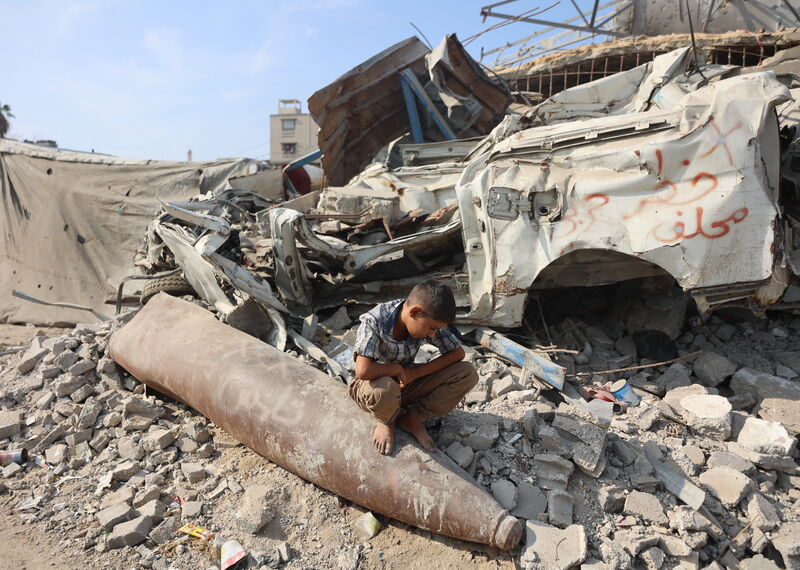
On 29 January 2024, five-year-old Hind Rajab was brutally killed, along with her four cousins, uncle and aunt, by the Israeli military as they attempted to flee a neighbourhood in Gaza City. The two Palestinian Red Crescent paramedics who went to Hind’s rescue were also killed by the Israeli military.    

Hind’s mother, Wesam Hamada, was talking to her on the phone as the little girl, with Israeli soldiers nearby, hid out of sight and pleaded to be rescued. The recording of Hinds emergency call with the Palestinian Red Crescent volunteers was used as the basis of the Oscar-nominated film, “Hind Rajab’s Voice”.

At an international conference organized by The European Palestinian Network in Copenhagen, Denmark, Wesam Hamada tells Amnesty International about her daughter’s last words, why she feels compelled to keep Hind’s memory alive and her wishes for Gaza’s children.

What were some of Hind’s last words to you, and do you hold the world responsible for her terrible death?

I’m scared… come and get me.

She said a sentence that tore my heart apart: ‘Mum, they’re lying. Stay with me!’ At that moment, I realized the betrayal. An ambulance was sent to her. It didn’t make it. It was bombed. That means one thing: it wasn’t allowed to save a life.

I don’t blame the world’s population, but I hold the silence responsible. The silence that makes the crime possible and makes it easy to repeat it.

Hind’s story is unimaginably heart-breaking and devastating. Where do you find the strength to keep going?

I get my strength from Hind. She was so strong when she was trapped in the car for hours. She kept talking on the phone even though she was injured, freezing and hungry. She kept talking to stay alive. She tried to calm me down even though she knew she was surrounded by Israeli soldiers, there was gunfire, and she was in a very dangerous situation. She is much stronger than me.

What would you like the world to know about your daughter, Hind?

Hind was a very strong and smart girl. She wanted to be a doctor so she could heal children. Not only in Gaza, but all over the world. If Hind were alive today and she saw all the terrible things that are happening to the children of Gaza, she wouldn’t be able to handle it.

Even though a ceasefire was announced late last year, the suffering in Gaza continues. What are Palestinians in Gaza experiencing right now?

The first proof that the genocide continues every day is the many people who are being killed. My family and friends tell me that they can’t get what they need. There is no access to water, there is no electricity, food or medicine. The health system has collapsed and there is no access to education for children.

The genocide has not stopped, and normal life has not returned to Gaza.

Every woman, every child, every person in Gaza is still a target.

A mother, sits on dappled peach steps with her young daughter and son. They smile at the camera.

L-R Hind Rajab, Iyad and Wesam Hamada

Why is it important for you to attend public events to speak about Hind and what she went through?

As the mother of Hind and Iyad, I have a big responsibility. I want to keep Hind’s voice alive, because it is not only her voice but the voice of all the children of Gaza.

It brings hope to the children of Gaza when they see that people are behind them. Not just with supportive slogans, but with real change. When emergency aid reaches them in Gaza and when hospitals and schools reopen.

Your daughter’s story is told in the Oscar-nominated film, The Voice of Hind Rajab. What does it mean to you that Hind is remembered in this way?

The film represents not only Hind’s story, but the stories of thousands of children in Gaza. More than 20,000 children have been killed in Gaza. The film documents this crime. And this documentation will be there for generations to come.

How has the strength and resilience of children in Gaza revealed themselves to you?

We were hiding in a basement with 75 other family members. The Israeli military was very close. The children were very hungry. They hadn’t eaten anything for nine hours. To keep the children quiet and make sure they would not be found by the soldiers, I promised that I would cook them a really good meal if we survived. At night, the Israeli military withdrew. But I couldn’t keep my promise because we had no more food. I apologized to the children many times. They simply replied that it was okay and that they would be fine.

What do you wish for the children of Gaza?

I am not asking for the impossible. I am asking for something very simple: that the life of a Palestinian child will be protected as if it was the life of your own child.

If the law cannot save a child, then it is a law that must be held accountable. And if the world only acts when the victim looks like its own children, then the world needs a new conscience.

Hind is no longer here, but her story is a responsibility. And a responsibility is not maintained with words, but with actions.

I ask you to imagine, just for a few seconds, the extent of the pain that mothers in Gaza bear when they lose their children. Imagine the bitterness of the pain, when you can’t save your child, or simply reach them, or know what their last moments were like. This pain lives in mothers every single day and with every breath they take.

End Israel’s genocide against Palestinians in Gaza

The post Wesam Hamada: “I want to keep Hind’s voice alive, because hers is the voice of all the children of Gaza” appeared first on Amnesty International.
Côte d’Ivoire: Pregnant women among those detained without cause since October 2025 crackdown

Five months on from opposition protests banned by the authorities that saw hundreds of people arrested, including pregnant women, some are still being held even though they had no involvement in the protests, while others have been convicted in unfair trials, Amnesty International said today.

In October 2025, a few days before the presidential election, hundreds of people, including protesters and passersby, were arrested during the crackdown on protests. Several of them have been convicted in unfair trials in which they were denied a lawyer. Dozens of others, including a pregnant woman, remain in pretrial detention, according to lawyers. 

“Today, five months after their arrest, people are still being held solely because they happened to be in the vicinity of the protests. The Ivorian authorities must order their release,” said Marceau Sivieude, Amnesty International’s Regional Director for West and Central Africa.

“According to our information, several of the prisoners detained since October 2025 have not been allowed to see family members or lawyers, and are not receiving adequate medical care. We are very concerned about the situation of three women who, despite being in the advanced stages of pregnancy, are being held at the Abidjan prison complex.”

These women were caught up in raids while going about their daily business.

Lawyer Sylvain Tapi

Pregnant and held without cause for five months

Two of the pregnant women were convicted a few days after their arrest in October 2025 for ‘disturbing public order’, ‘participating in an unauthorized demonstration’, and ‘gathering on public roads’.

One of the women, a street seller and mother of four who is currently in the late stages of pregnancy, was arrested on 11 October while selling fruit juice near the site of a protest. She was sentenced on 16 October to three years in prison. Her family has been denied visitation rights. The second, a mother of five currently six months pregnant, was arrested on 11 October while in possession of a t-shirt bearing the colors of an opposition party, and sentenced on 22 October to the same punishment.

“These women were caught up in raids while going about their daily business. They are in an environment that is not conducive to a healthy pregnancy. They are severely affected both mentally and physically,” said their lawyer Sylvain Tapi. 

Both women have appealed their sentences and are awaiting the date of their appeal hearing.

A third woman, who is currently seven months pregnant, is being held in pretrial detention. She went out on 20 October to buy cookies and witnessed protesters fleeing from members of security forces. She took refuge in her home, where she was beaten and taken away by policemen, according to her relatives.

The Ivorian authorities must respect the Nelson Mandela Rules for the treatment of prisoners.

Marceau Sivieude, Amnesty International’s Regional Director for West and Central Africa

Right to a fair trial must be guaranteed

Amnesty International has documented the cases of two men arrested near the protests who were tried and sentenced to three years in prison a few days after their arrest without legal representation. Both men were arrested on their way to work.  One of them was searched and found to be carrying a membership card for an opposition party, according to his relatives who visit him in prison.

“In cases where offences have not been formally established, charges against prisoners must be dropped and they must be released immediately. Trials in the first instance and on appeal must be held as quickly as possible and with due regard for the rights of the defence. The Ivorian authorities also have the duty to ensure appropriate medical care for those detained, including prenatal care and facilitate family visits,” said Marceau Sivieude.

“The use of blanket bans on protests in October 2025 was a stark failure of the Ivorian authorities to uphold the rights to freedom of peaceful assembly, as stated by Amnesty International. We urge the Ivorian authorities to release all prisoners detained only for participating in peaceful protests.”

“Authorities must guarantee and ensure the human rights of everyone including the rights to liberty, freedom of expression and peaceful assembly, and uphold the country’s international human rights obligations under the African Charter on Human and Peoples’ Rights and the International Covenant on Civil and Political Rights. They must also respect the Nelson Mandela Rules for the treatment of prisoners.”

Background

On 2 October 2025, a few weeks before the presidential election, the National Security Council banned gatherings and deployed 44,000 members of the security forces across the country. On the same day, the prefect of Abidjan, the economic capital of Côte d’Ivoire, banned a peaceful gathering planned for 4 October by opposition parties to denounce the exclusion of two candidates from the presidential election.

On 11 October, groups of young people attempting to gather peacefully were dispersed with tear gas. Authorities reported 237 arrests in Abidjan and 18 in Dabou, about 50km from Abidjan, on that day.

On 12 October, two opposition parties called for daily demonstrations. On 16 October, the public prosecutor reported  the arrest of approximately 700 people. On the same day, around 50 people were sentenced to three years in prison for disturbing public order, among other charges.

Following the presidential election on 25 October, Alassane Ouattara was declared the winner in the first round.

The post Côte d’Ivoire: Pregnant women among those detained without cause since October 2025 crackdown appeared first on Amnesty International.
Three abortion rights defenders share their stories of hope

Across the world, governments and other actors are rolling back on decades of progress on gender equality, including access to abortion. But people are fighting back, determined to protect the rights so many have fought so hard to achieve.    

As the Commission on the Status of Women holds its 70th session, three courageous human rights defenders from Burkina Faso, Poland and the United States share their strategies to protect access to abortion, their hopes for the future and the reasons why they believe that, despite the many increasing challenges, humanity must always win. 

Cécile Yougbare, activist in Côte d’Ivoire: “I refuse to let women die from clandestine abortions when solutions exist”   

Cécile Yougbare, a Black woman with braided hair wearing a white top blazer, looks to the side as she smiles. She is an activist in Côte d'Ivoire

I am a human rights defender. I specialize in challenges related to women’s health because several factors, such as unsafe abortions, continue to cause preventable deaths among girls and women. 

For 20 years, both through my community and professional commitments, my fight has focused on women’s rights and sexual and reproductive health rights, including access to safe abortions, working for the organisationMédecins du Monde.  

Abortion rights advocates face many challenges, including psychological and physical violence.  Abortion still is a taboo subject that carries a lot of stigma. Even where the law allows it in countries such as Benin, social and religious stigma persists.

I come from a very religious, Catholic family. In my family, we were taught about the Church and prayer, and many of my relatives who are priests and nuns expect us to embody the virtue of people who do not encourage abortion. When you go against these “family values” and beliefs, you can be subjected to personal attacks and psychological violence. However, my faith does not prevent me from working for social justice and saving lives by reducing preventable deaths due to unsafe abortions.   

Challenges  

Legal frameworks are restrictive and sometimes contradictory, which often leads to delays or a total lack of care.   

The rollback on funding is also a great challenge. Most funds for humanitarian organizations today explicitly exclude abortion or impose restrictions while anti-rights movements receive increasing support. The fear of losing funds and insecurity overall is forcing many activists to self-censor.   

Advocacy is one of our main strategies, complemented by evidence gathering. We collect evidence on maternal deaths to show the authorities that people are dying from preventable causes.   

At the community level, we work to simplify legal language to transform a taboo subject into one of public health and human dignity.  

Inspiration   

My commitment is fuelled by the stories of women who have survived clandestine abortions and by the gaze of young women who realise that they finally have the right to decide for themselves.   

My motivation is simple: I refuse to let young women die from clandestine abortions when solutions exist. I am very proud to be an advocate, because defending sexual and reproductive rights means defending human dignity, freedom of choice and equality.   

Kinga Jelińska, activist from Poland: “We are creating a different way to approach health care, based on trust and dignity”   

Kinga Jelińska, activist from Poland looks at the camera as she is holding a blister pack of medication. She has blond hair and is wearing a black jacket and a green scarf.

©Amnesty International.

I live in Amsterdam, Netherlands, although I am originally from Poland.  

In Poland, abortion was something hidden. In the Netherlands, it is available until 22 weeks of gestation. This made me realise that things could be done differently and motivated me to work for abortion to be accessible to all. I have always been a human rights activist, and women’s rights is something very close to my heart and soul.   

A faulty paradigm   

There is something fascinating about working on abortion because trying to regulate it doesn’t make sense. The whole paradigm seeks to exclude someone.   

Limiting access to abortion has to do with politics, stigma, patriarchy and misogyny. When safe abortions are denied, people resort to unsafe methods, which are often deadly.  

Reclaiming power   

I work with the international feminist activist organisation Women Help Women.   

We focus on self-managed abortion because it is a practical game changer, but also a political project of autonomy to fight against patriarchy and medicalisation.  

We run a global online support service and send the medicines (Mifepristone and Misoprostol) to those who request them from us all over the world. In my country, Poland, we are the largest provider of abortion care. In 2024, the government reported 128 abortions were carried out. In contrast, we hear from 130 people a day. We are creating a different way to approach health care, based on trust and dignity.   

Politics of care   

We are human rights defenders. If someone says to you, “I need help,” it would be absolutely inhumane to say, “I’m not going to help you.”   

A colleague in Poland, Justyna Wydrzyńska, had a criminal court case for assisting with an abortion that did not even take place. This exposes the crisis in the system because it criminalises empathy. In Poland, there is constant harassment of abortion rights defenders and no political will to protect us. It’s about harassing us to the point of exhaustion.   

Organizations like Amnesty International act as both watchdog and amplifier — they expose human rights violations and make sure the world cannot ignore them. Access to safe abortion, including self-managed abortion, is not a grey zone or a political debate; it is a clear human rights issue rooted in bodily autonomy, health, and dignity. Amnesty helps ensure that this reality is named, documented, and defended at a global level. 

The belief that we can imagine and do things better motivates me. My recipe for sustainable activism is having positive imagination mixed with a little bit of anger.  

We have the tools and knowledge to provide good care. If we walk together towards the feminist practice of self-managed abortion, we can make a difference. I am very proud to be a human rights defender and abortion provider. It is about autonomy, care, support and solidarity.   

Erin Grant,Abortion Care Networkco-Executive Director: “Our primary strategy is to build community”  

Erin Grant, a Black woman with braided hair and glasses, is looking at the camera smiling as she is sitting with her hands on her lap. She is the co-Executive Director of Abortion Care Network.

I’m the co-executive director, alongside Nikki Madsen, of the Abortion Care Network. We are the only membership organisation for independent abortion providers in the United States. ACN is an organisation, and the independent abortion providers are the human rights defenders as they deliver the majority of publicly available abortion care in the country, along with their allies.  

A devastating situation   

Since the fall of Roevs Wade (the ruling that guaranteed the right to abortion in the United States), the situation is devastating: 100 abortion clinics have closed, and only 14% of US counties have an abortion provider.   

The ruling created a state where abortion is essentially banned for a large number of people, especially those who are already marginalised: racialised people, low-income people, people with disabilities, and those living in rural areas. The system in the US has always been designed to serve the wealthy white elite, and the rest of us have been left behind. 

The bans and constant harassment are working as they were intended: making abortion access more difficult, risky, expensive, inequitable, and now in some cases criminalized. 

People are now forced to travel extreme distances, often thousands of miles, which takes time, money, and resources.  

There is also a growing concern about digital surveillance and the legal risks involved in traveling out of state to receive care. This adds a layer of fear and insecurity.   

Independent clinics are our ‘front line.’ They are the constant target of attacks, protests, and harassment.  

Abortion is not a legal or illegal issue; abortion exists, with or without clinics.   

Building community   

Our primary strategy at ACN is to counteract the isolation imposed by anti-rights actors by building community. We share resources, best practices, and provide emotional support.  

Our tagline is “Stronger Together,” and ACN believes that abortion providers need spaces that are designed to keep them in community with each other, normalize the care they provide, and further opportunities for the clinics, workers, and the people they serve.  

A vital issue   

The anti-abortion movement uses a very strong playbook of tactics to strip away the rights of people who are seen as “other.” In the US, there is a strong white supremacist movement that promotes the idea that if you are not blonde, blue-eyed, thin, able-bodied, and if you do not reproduce, you are not worthy of decent community care. I do not believe that.  

Everyone deserves the opportunity to make their own decisions and to trust their own body. Reproductive health access and the right to bodily autonomy, like abortion, should be a vital issue, just like access to water, food, or decent housing.   

Amnesty International is an important ally in connecting abortion care as a form of human rights work. Abortion Care Network has ally members who don’t provide abortion care, and they are crucial to the reproductive health, rights, and justice landscape, like lawyers, artists, researchers, and advocates. They also ensure that independent abortion providers feel seen and supported. Allies are critical. Amnesty International has a pivotal role to play in declaring abortion care and reproductive autonomy as a cornerstone of human rights and connecting the global story of the right to health. Amnesty International’s immeasurable reach ensures that everyone knows abortion providers are brave, resilient people, doing vital, generational work. 

The post Three abortion rights defenders share their stories of hope appeared first on Amnesty International.
Global: Amnesty chief calls on states to step up resistance to attacks on gender justice and women’s rights at CSW70

New briefing highlights acts of humanity and solidarity gaining momentum in the face of attacks

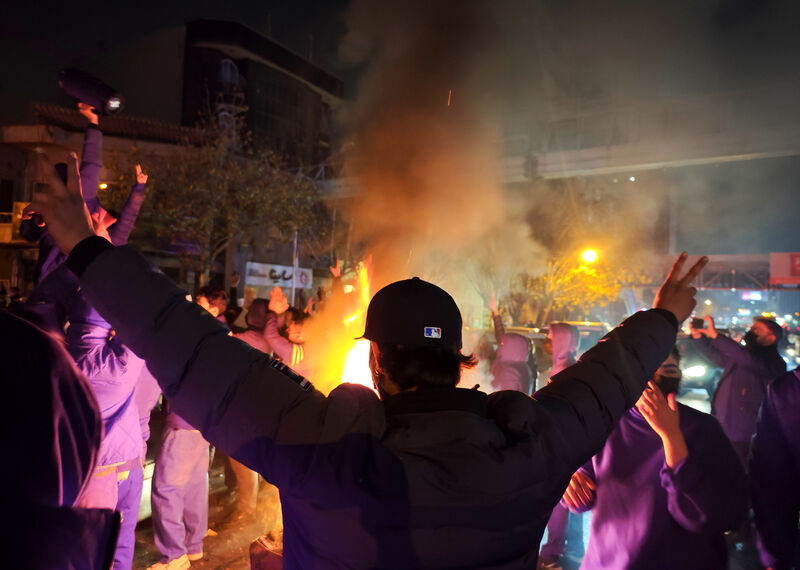
In the face of the global backlash against gender justice, and in the midst of the Epstein files scandal, an Amnesty International delegation led by Secretary General Agnès Callamard will call for more robust efforts to protect and advance the rights of women and girls at the 70th session of the Commission on the Status of Women (CSW70), which takes place in New York from March 9 to 19.

The Amnesty delegation will engage with UN member states, officials and civil society partners to press for strengthened access to justice for survivors of gender-based violence and meaningful accountability for its perpetrators, for protection of sexual and reproductive rights and stronger safeguards for women human rights defenders.

“This year’s Commission on the Status of Women comes at a particularly urgent time, with gender justice under attack across much of the globe and many women human rights defenders and feminist organisations unable to enter the United States,” said Agnès Callamard.

“Well-funded, highly coordinated anti-rights movements, directly supported or emboldened by the United States, Russia and too many other governments, are working to roll back decades of progress.

“Powerful states are weaponizing gender to justify repression and adoption of punitive laws. Corporate and other non-state actors are planting the seeds of moral panic by spreading hateful narratives and disinformation. Together, those forces aimed at control of women’s bodily autonomy, imposing a violent denial of rights, instilling fear and contributing to the shrinking of civic space.

“At the same time, the so-called ‘Epstein Files’ have exposed global criminal networks of the world’s most powerful men in politics, finance and culture who, for decades, have engaged with impunity in large-scale sexual exploitation and abuse of women and girls, corrupting governments, markets and societies, while entrenching abusive power. It is truly sickening to see how survivors are confronted with daunting barriers to truth, remedy and redress, as well as further victimization through the nonconsensual public disclosure of sensitive data. Grotesquely, the same structural inequality, misogyny and systemic impunity that impede their access to justice continue to shield those responsible for their abuse, as well as for wider abuse of women’s and girls’ rights the world over including the organised attacks on gender rights.

Powerful states are weaponizing gender to justify repression and adoption of punitive laws. Corporate and other non-state actors are planting the seeds of moral panic by spreading hateful narratives and disinformation. Together, those forces aimed at control of women’s bodily autonomy, imposing a violent denial of rights, instilling fear and contributing to the shrinking of civic space.

Agnès Callamard, Amnesty International’s Secretary General

“CSW70 presents a critical opportunity for women human rights defenders, gender activists and member states to resist the systemic attacks on gender justice and women’s rights by naming the forces and actors behind the attacks, actively organising against them through collective actions and ensuring that accountability mechanisms can function as intended, without fear or favour.”

New briefing demonstrates global resistance

In a new briefing published today, Amnesty International highlights how, in one of the most challenging periods for women’s rights in recent history, global resistance against governments’ attacks on gender rights and their suppression of dissent is gaining momentum.

“The last year has shown that even when states fail in their duties to deliver, the collective power of communities can still defend, uphold and advance gender justice. Far from accepting defeat, or cowering to those threats, women, girls, LGBTI people and those who support them are standing tall and stepping up their work to expose, denounce and resist human rights abuses,” said Agnès Callamard.

“We are witnessing thousands of everyday acts of courage, leadership and solidarity. Our briefing documents the dedication of brave individuals fighting, for example, to secure a landmark court ruling affirming access to abortion for rape survivors in Malawi, demanding accountability for Israel’s genocide against Palestinians, and resisting censorship in Afghanistan and China. Others are battling to extend sexual and reproductive rights in Latin America and ensure LGBTI people can exercise their rights to peaceful assembly in Hungary.

“Their examples show us that another world is possible. Their voices are particularly important this year, when due to safety concerns, border violence, visa and access restrictions alongside the funding crisis caused by the slashing of aid, so many partner organizations and human rights defenders cannot be present at CSW in New York. These pervasive inequities are severely limiting meaningful access to multilateral spaces.”

The last year has shown that even when states fail in their duties to deliver, the collective power of communities can still defend, uphold and advance gender justice. Far from accepting defeat, or cowering to those threats, women, girls, LGBTI people and those who support them are standing tall and stepping up their work to expose, denounce and resist human rights abuses

Agnès Callamard

The briefing, “Humanity Must Win: and it does when we stand together for gender justice”, details campaigns and initiatives from across the world that, despite systematic backlash by authorities, are nonetheless exposing human rights violations, promoting solidarity and driving progress towards accountability and justice.

The briefing outlines those human rights initiatives, including in:

  • Afghanistan, where women journalists, including Zahra Joya, founder of Rukhshana Media, continue to resist the Taliban’s sweeping restrictions that have erased women from public life. Their reporting gives visibility to women who cannot speak openly, from the protesters who write their messages of resistance on walls in Kabul, to survivors of violence whose stories rarely reach the outside world.
  • Burkina Faso, where, in 2025, following persistent civil society campaigning, the country adopted long-awaited reforms setting the minimum age of marriage at 18 and establishing consent between the two parties as the basis for any marriage.
  • Gaza, where the brave work of human rights organizations helped expose the genocide committed by Israel, a step in the long road to justice. In March 2025, the UN Commission of Inquiry concluded that Israel has systematically used sexual, reproductive, and other gender-based violence against Palestinians and carried out “genocidal acts” by destroying women’s healthcare and reproductive health facilities and blocking access to essential care.
  • Hungary, where around 300,000 people defied the authorities’ ban of the Budapest Pride march in June 2025. Under new legislation, the authorities can ban any assemblies advocating for LGBTI+ rights and depicting LGBTI themes, fine participants, criminalize organisers and identify marchers through facial recognition technology.
  • Malawi, where, in 2025, Malawi’s High Court affirmed that denying a 14-year-old rape survivor access to a safe abortion violated her rights under the Gender Equality Act, in a landmark ruling that sets an important precedent in a country where abortion remains largely criminalized.
  • Latin America, where activists from across the region have continued to defy attacks and attempts to roll back on hard won sexual and reproductive rights, particularly access to safe abortions.

The post Global: Amnesty chief calls on states to step up resistance to attacks on gender justice and women’s rights at CSW70 appeared first on Amnesty International.

Lebanon: Israeli military’s overly broad mass evacuation orders sowing panic and fuelling humanitarian suffering

Responding to Israel’s use of repeated, overly broad evacuation orders across Lebanon over the past four days, including to more than 100 villages and towns in the country’s south and east, as well as the entirety of Beirut’s southern suburbs, displacing hundreds of thousands of people, Kristine Beckerle, Deputy Regional Director for the Middle East and North Africa at Amnesty International said today:

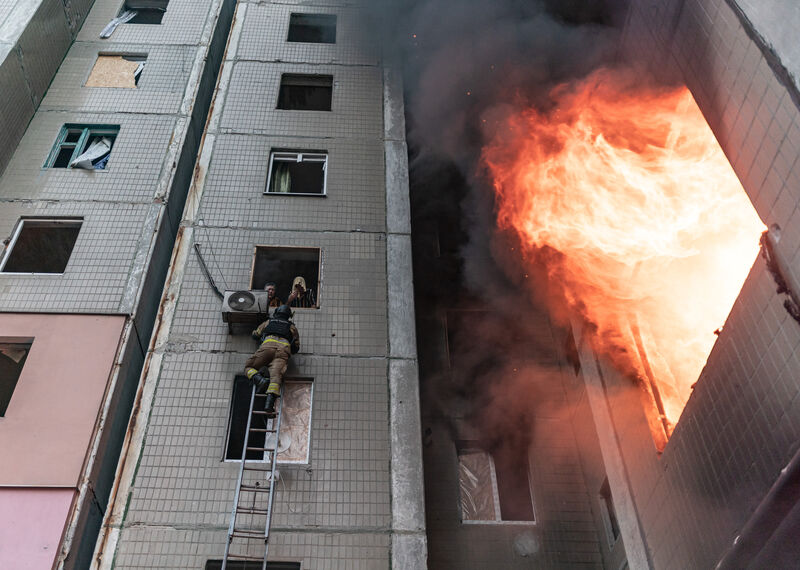
“Civilians in Lebanon are once again being ordered to flee en masse by a military that has repeatedly shown its willingness to inflict significant civilian harm through unlawful attacks in previous rounds of fighting. The sweeping evacuation orders have sown panic and terror, displaced hundreds of thousands of people and fuelled yet another humanitarian catastrophe for a population already exhausted and reeling from multiple crises.

“The overly broad warnings covering vast areas of Lebanon do not constitute effective guarantees of protection. They provide no meaningful information about where or when the Israeli military might strike and offer civilians nowhere near the level of guidance needed to make informed decisions about whether, or for how long, to flee. Many civilians, including older people, children, people with disabilities, cannot evacuate, or may have nowhere safe to go.

The sweeping evacuation orders have sown panic and terror, displaced hundreds of thousands of people and fuelled yet another humanitarian catastrophe for a population already exhausted and reeling from multiple crises.

Kristine Beckerle, MENA Deputy Director

“Issuing mass evacuation orders does not grant the Israeli military the right to treat these areas as open-fire zones, nor does it absolve Israel of its obligations under international humanitarian law to protect civilians and to take all feasible precautions to minimize harm to civilians, wherever they are. In the 24 hours since the mass evacuation order for Beirut’s southern suburbs, for example, the Israeli military has carried out repeated air strikes, many without warnings.

“The repeated use of overly broad warnings, paired with the Israeli military’s extensive destruction of civilian property in more than two dozen municipalities along Lebanon’s border both before and after a ceasefire was in place, raises serious concerns that some of these mass evacuation orders are intended to forcibly displace civilians, which is prohibited by international humanitarian law.

“The absolute impunity that Israel has enjoyed after previous rounds of fighting has paved the way for these same violations of international law to recur, once again placing civilians at grave risk. We urge parties to the conflict to uphold their obligations under international humanitarian law, to protect civilians and to refrain from unlawful attacks.”

Background

Less than 100 hours after fighting escalated in Lebanon, according to the Norwegian Refugee Council, more than 300,000 people had been displaced across the country. As of 6 March, Lebanon’s Public Health Emergency Operations Centre, affiliated with the Ministry of Public Health, announced that 217 people had been killed and 798 injured since fighting escalated on 2 March, and that more than 110,000 of those displaced were in collective shelters.

Between 3-6 March the Israeli military issued a series of evacuation orders instructing residents of entire towns and villages in south Lebanon and areas of the Bekaa Valley to evacuate. These included one on 5 March in which Israel’s military ordered the entire population living south of the Litani River to leave “immediately” for their “safety”.

On 5 March, the Israeli military issued another blanket evacuation order, this time to all the residents of Dahieh, the densely populated southern suburbs of Beirut. As residents scrambled to flee, roads were clogged for hours, with fear-gripped residents escaping in cars or on foot carrying whatever they could.

Hezbollah and Israel engaged in cross-border hostilities after the group launched attacks into northern Israel following the outbreak of hostilities between Israel and Hamas in the occupied Gaza Strip in October 2023. Despite a ceasefire being agreed in 2024, Israel continued carrying out near-daily strikes, primarily in southern Lebanon and the Bekaa region, killing at least 127 civilians while the ceasefire was in place.

On 2 March 2026, Hezbollah launched a series of attacks into Israel in response to the killing of Iranian Supreme Leader Ali Khamenei following a US-Israeli attack on Iran. Since October 2023, Amnesty International has documented Israel’s unlawful attacks on civilians and civilian objects, use of white phosphorous and its extensive destruction in Lebanon’s border villages, as well as Hezbollah’s repeated firing of unguided rockets into civilian areas in Israel. All must be investigated as war crimes.

The post Lebanon: Israeli military’s overly broad mass evacuation orders sowing panic and fuelling humanitarian suffering appeared first on Amnesty International.