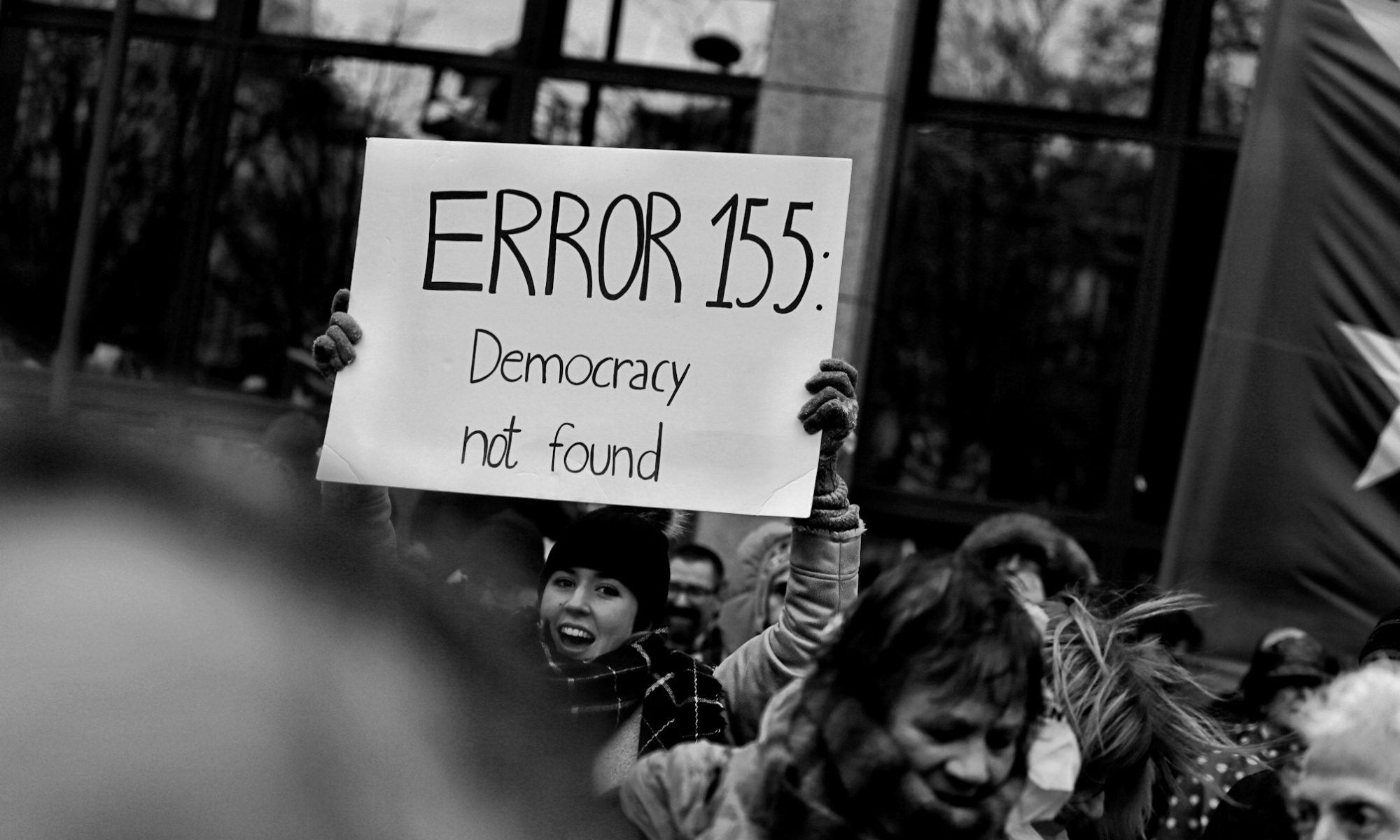
Madagascar: Immediately end repression of Gen Z activists and protect right to protest

Reacting to an intensifying campaign of repression against Gen Z activists and civil society members by Madagascar’s military authorities, which took power following a coup in October 2025, Amnesty International’s Regional Director for East and Southern Africa, Tigere Chagutah, said:

“Malagasy authorities are using deliberately vague charges of criminal conspiracy, threats to national security and destabilization of the state to silence Gen Z activists and civil society members. No one should face arbitrary arrest, detention or enforced disappearance simply for voicing their concerns about the running of their country.

Malagasy authorities are using deliberately vague charges of criminal conspiracy, threats to national security and destabilization of the state to silence Gen Z activists and civil society members.

Tigere Chagutah, Amnesty International’s Regional Director for East and Southern Africa

“These authoritarian practices constitute clear violations of the rights to freedom of expression, association and peaceful assembly. They are aimed at entrenching a climate of fear, while evading accountability over government policies, appointments, and the management of public resources.

They must also respect, protect and facilitate the right of assembly during protests planned for 18 April.

Tigere Chagutah

“The authorities in Madagascar must immediately end arbitrary arrests, disclose the fate and whereabouts of all those forcibly disappeared, and unconditionally release all individuals detained solely for exercising their rights. They must also respect, protect and facilitate the right of assembly during protests planned for 18 April.”

Background

Madagascar’s military authorities seized power in October 2025 following youth-led protests in 2025 demanding improved service delivery, particularly access to water and electricity, as well as more effective and inclusive governance.

The new authorities promised reforms but instead, they have deepened repression, under the pretext  of a zero-tolerance anti-corruption campaign and used broadly framed charges of criminal conspiracy, threats to national security and destabilization to target and silence Gen Z activists, civil society members and those linked to the previous regime.

The post Madagascar: Immediately end repression of Gen Z activists and protect right to protest appeared first on Amnesty International.

Burkina Faso: Dissolution of more than a hundred NGOs and associations shows intensifying crackdown on civil society

Reacting to the announcement of the dissolution of 118 NGOs and associations in Burkina Faso, Ousmane Diallo, Senior Researcher on Sahel at Amnesty International’s Regional Office for West and Central Africa, said:

“We are alarmed and deeply concerned by this flagrant attack on the right to freedom of association. Dissolving NGOs and associations is at odds with the Constitution of Burkina Faso, which guarantees freedom of association and union. The various constitutional amendments have never questioned this principle.

“This dissolution is also entirely inconsistent and incompatible with Burkina Faso’s international human rights obligations including under the African Charter on Human and Peoples’ Rights and the International Covenant on Civil and Political Rights to which it is a state party.

This dissolution is part of a much broader effort to silence civil society through a combination of repressive tactics.

Ousmane Diallo, Senior Researcher on Sahel at Amnesty International’s Regional Office for West and Central Africa

“Civil society organizations play a critical role in the promotion and protection of human rights and the rule of law. Authorities must immediately rescind this decision and allow them to freely carry out their work without fear of reprisals.

“This dissolution is part of a much broader effort to silence civil society through a combination of repressive tactics that include abusive legislation, intimidation, harassment, arbitrary detention, and prosecution of human rights defenders and activists.

“Authorities must end their restrictions on civic space and attacks on human rights and uphold the country’s international human rights obligations and commitments.”

Background

On 15 April 2026, Burkina Faso’s Ministry of Territorial Administration and Mobility announced the dissolution of 118 NGOs and associations “in accordance with current legal provisions,” as well as a ban on their activities, without any further justifications.  

On 29 January 2026, all political parties were dissolved after three years of suspension.

In November 2025, a presidential decree required all national and international NGOs to close their accounts with commercial banks and transfer them to a newly created state-controlled bank, within the National Treasury, leading to the risk of arbitrary freezing of funds, financial surveillance, and targeted sanctions.  

Burkina Faso has been ruled by a military regime following two coups in January and September 2022. In May 2024, the military transition, which was scheduled to end on 2 July 2024, was extended by five years.

The post Burkina Faso: Dissolution of more than a hundred NGOs and associations shows intensifying crackdown on civil society appeared first on Amnesty International.

France: Decision to deny entry to veteran Palestinian human rights defender a blatant assault on human rights

The decision by French authorities to deny visa access to prominent Palestinian human rights defender and General Director of Al-Haq, Shawan Jabarin, who was due to travel to the country this week as part for an advocacy trip, is an alarming setback for human rights.

Al-Haq, the oldest Palestinian human rights organisation and a pioneer of the human rights movement in the Middle East, is one of three prominent Palestinian human rights organizations – alongside the Gaza-based Al-Mezan and the Palestinian Centre for Human Rights (PCHR) –  facing US government sanctions for their work with the International Criminal Court (ICC). In 2021, Al-Haq was also unlawfully criminalised by Israel after decades of smear campaigns and attacks against the organisation and its staff.

“It is both shameful and deeply troubling that a human rights defender who has dedicated his life to pursuing justice for international crimes is denied entry into the Schengen area, while individuals wanted for war crimes and crimes against humanity are able to travel freely. This stark and absurd double standard should prompt urgent reflection among European states on their commitment to accountability and the consistent application of international justice,” said Agnès Callamard, Secretary General of Amnesty International.

“It is both shameful and deeply troubling that a human rights defender who has dedicated his life to pursuing justice for international crimes is denied entry into the Schengen area, while individuals wanted for war crimes and crimes against humanity are able to travel freely.” 

Agnès Callamard, Secretary General of Amnesty International

“Al-Haq, Al-Mezan and the Palestinian Centre for Human Rights have made an immense contribution to the global human rights movement, courageously and rigorously documenting abuses, speaking out for victims, and defending the very universal values that France claims to uphold.  In 2018, France awarded Al-Haq the prestigious French Republic Award in recognition of its human rights work, which was received by Mr. Jabarin himself. We urge the French authorities to reverse their decision immediately and commit to granting visa access to Mr Jabarin,”said Alexis Deswaef, President of International Federation for Human Rights (FIDH).

Alongside the three Palestinian organisations, the US sanctions list also includes eight ICC judges, three ICC prosecutors and the UN Special Rapporteur on the Situation of Human Rights in the Occupied Palestinian Territory.

“In 2025, Israeli Prime Minister Benjamin Netanyahu, wanted by the ICC for war crimes and crimes against humanity in Palestine, was welcomed in Hungary, and a Libyan ICC fugitive was able to enter and leave Italy, thereby entering and leaving the Schengen zone without arrest or objection from other Schengen area states. In the meantime, human rights defenders seeking to support justice are being punished and prevented from doing their legitimate human rights work,” said Alison Smith, CICC Secretariat Director.

Several countries, including France, have spoken out publicly against the sanctions, with French President Emmanuel Macron directly requesting President Trump to lift the sanctions against French ICC Judge Nicolas Guillou. They have also denounced Israel’s criminalisation of human rights organisations. France must maintain this stance and refuse to be perceived as caving to US sanctions or Israeli designations.

In October 2025, a month after the US designation against the Palestinian organisations, Shawan Jabarin’s Schengen visa application was rejected by “one or several EU member states” on the ground that he would be a “threat to public policy or internal security”. On 10 April 2026, Mr Jabarin was scheduled to travel to Europe for a series of public engagements about the sanctions and concrete steps the EU and its member states could take to support and protect the ICC and those cooperating with it. These engagements are being conducted together with the directors of PCHR and Al Mezan and several international NGOs. Given his prior Schengen visa rejection, Mr Jabarin applied for national visas from the countries he was supposed to visit: Belgium, France and the Netherlands.

At the eleventh hour, France denied his national visa, preventing him from participating in upcoming briefings with the French Parliament, civil society organisations and the French Ministry of Foreign Affairs. Further, France’s delay in providing a response to Belgian and Dutch authorities prevented Mr Jabarin from participating in several planned engagements at the European Parliament and at the Belgian Ministry of Foreign Affairs. The Netherlands and Belgium did subsequently issue a national visa that enables Mr Jabarin to participate in the remaining planned engagements in the Netherlands. However, the refusal by France has already prevented Mr Jabarin from participating in some engagements and restricted his conduct of essential human rights and advocacy work, including on the impact of sanctions on the international justice ecosystem.

This denial of a visa sends an extremely alarming message from France, especially in the context of the global shrinking space for human rights work worldwide and the escalating attacks on international law itself. The refusal to issue a visa is yet another example of restrictions against human rights defenders. If linked to US sanctions or Israeli designations, it would be an extremely worrying escalation in the extra-territorial application of sanctions against those working on justice and accountability.

Signatories:

  • Amnesty International
  • Coalition for the International Criminal Court
  • International Federation for Human Rights (FIDH)
  • No Peace Without Justice
  • Avocats Sans Frontières
  • ECCHR
  • Euromed Rights

The post France: Decision to deny entry to veteran Palestinian human rights defender a blatant assault on human rights appeared first on Amnesty International.
Cuba: Authorities must now release those detained for political reasons and end repression

One month after the Cuban authorities announced the imminent release of 51 detainees and following the recent announcement of a pardon for 2,010 people on 2 April 2026, Amnesty International warns that the measures remain marked by a lack of transparency and discretion, with no guarantee of full release or genuine respect for human rights. The organization reiterates its call for the immediate and unconditional release of all people detained for political reasons and an end to the repression of those who are simply exercising their human rights.

To date, the Cuban authorities have not published a complete official list of the people granted releases or pardons. Experience from previous processes shows that opaque and discretionary measures can leave people under arbitrary restrictions, constant surveillance, bans on leaving the country and the permanent threat of being sent back to prison, perpetuating a climate of control and fear.

“The Cuban authorities continue to administer freedom as if it were a discretionary concession and not an obligation of the state. It is time to replace partial, opaque, revocable and unwarranted announcements with the immediate and unconditional release of all people imprisoned solely for exercising their human rights, and the definitive cessation of the use of freedom as a political bargaining chip”, said Ana Piquer, Americas director at Amnesty International.

The Cuban authorities continue to administer freedom as if it were a discretionary concession and not an obligation of the state.”

Ana Piquer, Americas director at Amnesty International.

Amnesty International recalls that the processes of release or pardon do not replace the state’s obligation to end arbitrary detention, overturn unjust sentences or fully compensate victims. In particular, it stresses that no person should be deprived of their liberty, or have their rights restricted, for expressing critical opinions, demonstrating peacefully or reporting on the reality of the country.

To date, none of the people recognized by Amnesty International as prisoners of conscience in Cuba – Luis Manuel Otero Alcántara, Maykel Castillo Pérez (Osorbo), Félix Navarro Rodríguez, Saily Navarro Álvarez, Roberto Pérez Fonseca, Loreto Hernández García and Donaida Pérez Paseiro – have been released.

Following the announcement of pardons, human rights organizations monitoring the situation in the country have been unable to verify the release of any person detained for political reasons.

These new announcements come against a backdrop of intensifying state repression. In March 2026, social protests broke out in the city of Morón, province of Ciego de Ávila, amid prolonged blackouts, fuel shortages and the sustained deterioration of living conditions. According to information documented by the human rights organization Cubalex, at least 85 people were arrested after protests during the month of March, including at least two teenagers.

The crackdown has also intensified against digital content creators, as well as their families. In recent weeks, Amnesty International has documented threats, surveillance, arbitrary detentions and pressure against young people who use social media to question the authorities from within the island.

For example, content creators from the digital media channel El4tico, who were subjected to warrantless searches of the house where they produced their content, remain arbitrarily detained

and face criminal proceedings for reporting; young people from the Fuera de la Caja project, whose relatives reported intimidation by state security; and the reprisals and criminalization reported by Ana Bensi and her mother, in a context of harassment linked to their social media activity.

“The repression in Cuba is not only directed against those who protest or against historical figures of dissent. It also targets young people who report, comment or create content, and deliberately punishes their mothers, fathers and relatives as a form of coercion. This use of the family environment to sow fear reveals the extent of the closure of civic space in Cuba”, said Ana Piquer.

The repression in Cuba is not only directed against those who protest or against historical figures of dissent. It also targets young people who report, comment or create content, and deliberately punishes their mothers, fathers and relatives as a form of coercion.”

Ana Piquer, Americas director at Amnesty International.

All this occurs in the midst of a crisis due to the deterioration of living conditions that continue to affect access to basic rights and services such as electricity, food, medicine, transport and other essential goods, deepening the daily suffering of the population.

Amnesty International reiterates that no measure, internal or external, should aggravate the suffering of the Cuban people. In this regard, the organization maintains its rejection of unilateral external coercive measures that worsen living conditions on the island, while stressing that they do not exempt the Cuban state from its obligation to respect, protect and guarantee human rights.

The announcement of contact and conversations between officials from Cuba and the United States adds a new political dimension to the current context. On 13 March, Miguel Díaz-Canel publicly confirmed that representatives of both governments had held exchanges to address bilateral differences and identify possible areas of cooperation, without detailing their content. For Amnesty International, any dialogue process must centre around the human rights and humanitarian needs of all people in Cuba, without discrimination.

“Human rights are non-negotiable: the future of Cuba must be agreed and determined with full accountability, justice and reparations to those who live under repression, scarcity and a lack of freedoms”, concluded Ana Piquer.

Human rights are non-negotiable: the future of Cuba must be agreed and determined with full accountability, justice and reparations to those who live under repression, scarcity and a lack of freedoms.”

Ana Piquer, Americas director at Amnesty International.

For more information or to arrange an interview, please contact press@amnesty.org

The post Cuba: Authorities must now release those detained for political reasons and end repression appeared first on Amnesty International.

Kazakhstan: Sentencing of 19 activists over peaceful Xinjiang protest a travesty of justice

Reacting to the conviction and sentences of 19 activists in Kazakhstan for participating in a peaceful protest against human rights abuses in China’s Xinjiang region, Marie Struthers, Amnesty International’s Director for Eastern Europe and Central Asia, said:

“The Kazakhstani authorities must immediately release the 19 activists as they are imprisoned solely for peacefully exercising their human rights. Authorities must quash their convictions and sentences. Criminalizing peaceful protest under the vague pretext of ‘inciting discord’ is a travesty of justice and an affront to international human rights standards.  

Criminalizing peaceful protest under the vague pretext of ‘inciting discord’ is a travesty of justice and an affront to international human rights standards

Marie Struthers, Amnesty International’s Director for Eastern Europe and Central AsiaKazakhstan: Sentencing of 19 activists over peaceful Xinjiang protest a travesty of justice

“Amnesty International has received information indicating that several of those convicted and sentenced have serious health conditions. We call on the authorities to provide immediate access to appropriate medical care while they remain in detention.”

“Authorities should ensure and uphold the human rights of everyone in the country including the rights to freedom of expression, association and peaceful assembly.”

Background

On 13 April 2026, a court in Taldykorgan convicted 19 activists linked to the Atajurt movement over a peaceful protest held in November 2025 near the city of Almaty. Eleven activists were handed five-year prison sentences on charges of “inciting interethnic or social discord” (Article 174 of the Criminal Code), including two women defendants given suspended prison sentences due to having young children. Eight others were given non-custodial “restrictions of freedom” sentences. All defendants were additionally banned from public or political activities for three years.

During the demonstration the participants, ethnic Kazakhs from Xinjiang Uyghur Autonomous Region (XUAR), criticized human rights violations by Chinese authorities in Xinjiang and called for the release of Kazakhstani citizen Alimnur Turganbay, detained in China since July 2025. Protesters burned Chinese flags and a portrait of China’s  President Xi Jinping. Following a diplomatic complaint from the Chinese consulate, Kazakhstani authorities escalated initial administrative charges to criminal prosecution.

The post Kazakhstan: Sentencing of 19 activists over peaceful Xinjiang protest a travesty of justice appeared first on Amnesty International.