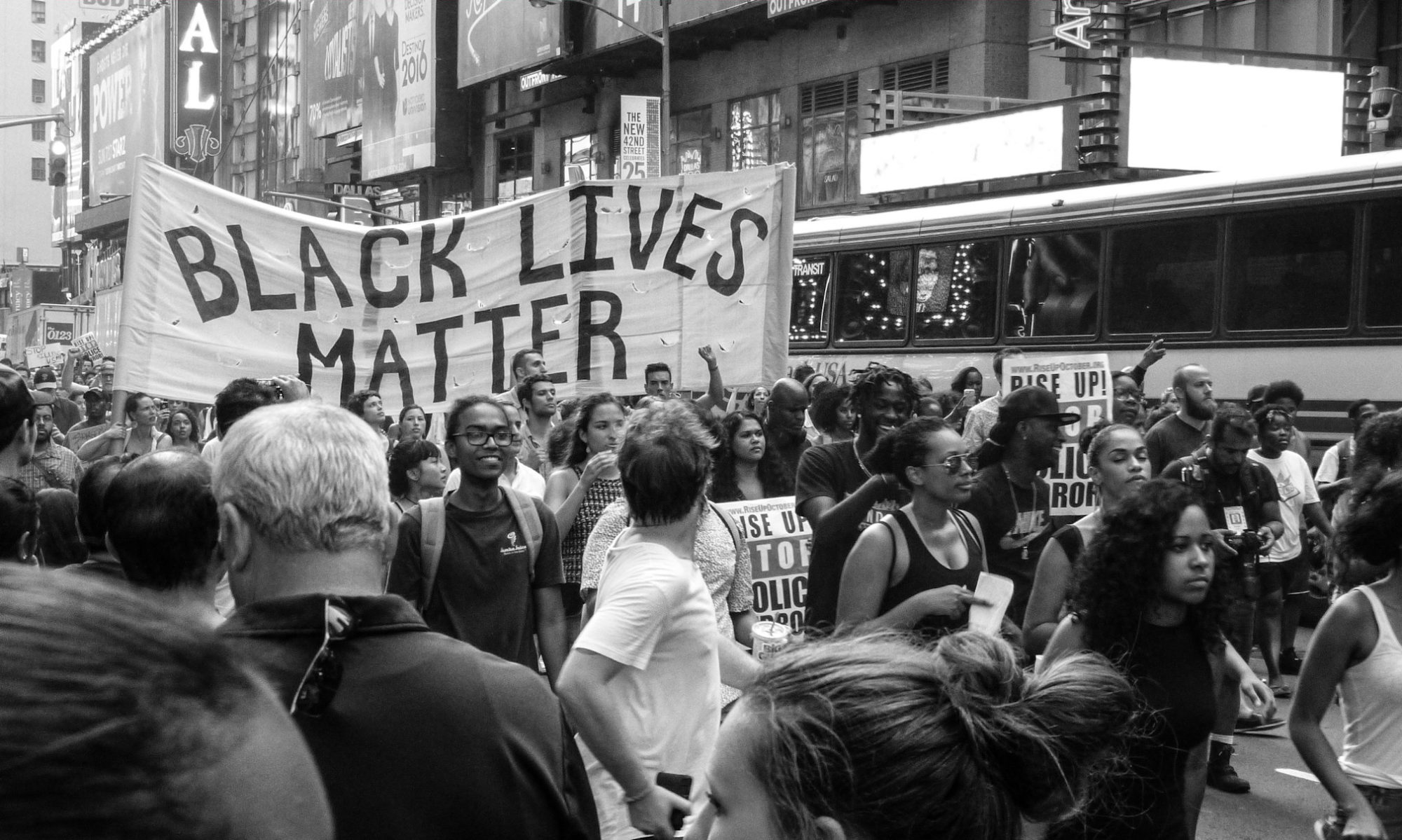
Amnesty fordert im Vorfeld der Konferenz von der deutschen Bundesregierung eine deutliche Kurskorrektur, um die Menschenrechte weltweit zu verteidigen.
Slovenia: Amnesty joins Constitutional Court challenge to stop vulnerable communities being stripped of critical social support
Slovenian authorities must amend the ‘Security Law’ and end punitive seizures of social assistance which disproportionately affect the Roma community, said Amnesty International today as the Legal Network for the Protection of Democracy, a collaboration of NGOs Amnesty International Slovenia is a part of, filed an appeal to Slovenia’s Constitutional Court.
This harmful law is being used to target individuals and communities that already face daily discrimination, exclusion and poverty
The Act on Urgent Measures to Ensure Public Security, rushed through parliament last November, granted the Tax Office new powers to seize social assistance from individuals who have at least three unpaid fines for minor offences over the past two years. In January, more than 1,000 individuals and their families had critical social assistance seized, leaving many unable to afford food and other basic necessities.
“Just months after coming into force, this harmful law is being used to target individuals and communities that already face daily discrimination, exclusion and poverty,” said Esther Major, Amnesty International’s Deputy Director for Research in Europe.
“As predicted, these unjustified measures are disproportionately affecting Roma communities, violating their right to social security and leaving some families with no social support at all.”
Unlike ordinary enforcement regimes, the Security Law imposes no effective limits on how much social assistance can be taken and lacks provisions to protect the most vulnerable. The law lacks crucial safeguards regarding the recovery of outstanding fines in the context of social security and thus significantly expands the powers of the Tax Authority, as well as unduly infringes upon affected individuals’ rights to social security, access to legal remedy and privacy.
Access to social assistance should never be weaponised to penalize individuals, families or communities
As a result of the January seizures, families – including children – already on the poverty line have been pushed into destitution. Many people only learned of the seizure of their social assistance when they sought to access it at the bank. Centers for Social Work, an organization which offers advice and assistance to social security recipients, did not receive notification of the January seizures either, in breach of a requirement in the new law.
“Access to social assistance is a right for everybody, regardless of their circumstances, and should never be weaponised to penalize individuals, families or communities,” said Esther Major.
“Authorities must immediately stop enforcing these punitive measures, ensure adequate social assistance is restored to those affected and amend the law to comply with Slovenia’s human rights obligations.”
Background
The appeal was prepared and filed by the Legal Network for the Protection of Democracy, a collaboration between four NGOs, including Amnesty International Slovenia.
The Act on Urgent Measures to Ensure Public Security was passed in November 2025, as a knee jerk response to a fatal incident in the city of Novo Mesto a few weeks earlier involving a member of the Roma community.
The safeguards which exist in the context of cost recovery in other contexts which mean that the Tax Office could only recover outstanding fines by seizing no more than two thirds of an individual’s salary and leave them with a minimum of 76% of the minimum wage were not put in the new Act. Following the passing of the law, the Tax Authority immediately increased its cooperation with police in confiscating the cars of Roma individuals with debts. Two appeals against these confiscations have so far been filed.
On 14 January, the Supreme Court filed a motion to the Constitutional Court asking it to rule on the constitutionality of provisions in the Security Law that prolong the maximum length of pretrial detention from two to three years.
On 23 January, police announced that in Ljubljana and Novo Mesto they are introducing two high-risk security areas where they will have greater powers to monitor and record data under the Security Act.
Slovenia is a party to a number of international and regional human rights treaties which oblige it to guarantee an adequate level of social security to everybody without discrimination to ensure an adequate standard of living.
For more information contact press@amnesty.org
Amnesty International have issued an Urgent Action on this today.
The post Slovenia: Amnesty joins Constitutional Court challenge to stop vulnerable communities being stripped of critical social support appeared first on Amnesty International.
CAR: Special Criminal Court at serious risk of closure in 2026 due to lack of funding
- Court’s closure would fail victims & survivors and represent “a catastrophic setback” in country’s fight against impunity
- Court staff already reduced by 25%
The Special Criminal Court (SCC) of the Central African Republic is at serious risk of closure in 2026, potentially depriving thousands of victims and survivors of war crimes and crimes against humanity of justice and reparations, Amnesty International said today. The organization is calling on states to make urgent financial contributions to the court to ensure its crucial operations can continue.
The Special Criminal Court is doing essential work, with 15 investigations and three trials ongoing.
Marceau Sivieude, Amnesty International’s Regional Director for West and Central Africa
The SCC, which relies solely on voluntary contributions from states and international organizations, has endured massive budget cuts over the past year. Without additional funding, the court, which has a mandate to investigate and prosecute crimes under international law committed during conflicts in the Central African Republic, will run out of money in June.
“Thousands of Central African civilians were killed, raped, abducted, maimed, injured, displaced, or had their homes burned down during waves of violence and armed conflict since 2003. For these victims and survivors, the SCC represents a hope for justice, which is now compromised. The court is doing essential work, with 15 investigations and three trials ongoing, and over 30 persons currently wanted. Its closure would be a catastrophic setback in the fight against impunity in the Central African Republic. It must continue its work,” said Marceau Sivieude, Amnesty International’s Regional Director for West and Central Africa.
“Victims are excluded from their own trials, as the court no longer has the means to cover their transportation and accommodation costs. The possibility of cases being frozen or simply abandoned is no longer a hypothesis, it is a founded fear. Victims fear that justice will be extinguished due to lack of resources,” said a member of a local survivors’ association.
“The decline in funding has a significant impact. Financial partners are no longer responding to our needs, yet those partners are essential. This affects those most directly concerned, namely the victims who are seeking justice,” said the representative of another survivors’ association.
Fewer staff and minimal operations due to lack of funding
The SCC was severely affected by the withdrawal of funding by the United States, which was the second biggest donor to the court after the United Nations (UN). The only current donors are the UN, through its peacekeeping mission and its development agency, and the European Union (EU). Due to the liquidity crisis faced by the UN, it cannot guarantee its planned contributions for 2026.
This drastic funding reduction has already profoundly affected the court’s functioning and jeopardizes its very existence, with serious repercussions for ongoing proceedings and the services provided to victims and witnesses. For this calendar year, only the EU has pledged a funding contribution. Some European states are also examining the possibility of providing funding, however they have not yet committed to making new contributions, and neither has any other state.
National courts do not have the resources and capacity to carry out the mandate entrusted to the Special Criminal Court.
Marceau Sivieude, Amnesty International’s Regional Director for West and Central Africa
The court has already had to make a quarter of its staff redundant, particularly its foreign experts, between August and September 2025, according to information gathered by Amnesty International. There is now only one team of judicial police officers left to investigate, down from four previously, while there are 15 ongoing investigations into cases involving war crimes and crimes against humanity. The witness protection section has lost more than half of its staff, potentially reducing the court’s ability to prevent reprisals against witnesses.
“Victims and survivors of crimes under international law have a right to truth, justice, and reparations. We call on all partner states of the Central African Republic to urgently commit financial and human resources to the SCC so that justice can be served for these victims and survivors. Without this, impunity will prevail,” said Marceau Sivieude.
“National courts do not have the resources and capacity to carry out the mandate entrusted to the SCC, despite the efforts made by the Central African authorities. If the SCC closes, having arrested and prosecuted in person only a few low-level persons, and not the leaders most responsible, and for a few recent incidents, it will have largely failed in its mission and disappointed the hopes and expectations of the Central African people.”
Background
The SCC, inaugurated on 22 October 2018, is a hybrid court supported by the UN, composed of Central African and foreign prosecutors and judges.
On 19 April 2022, it opened its first trial, against three former members of an armed group for war crimes and crimes against humanity. Since then, four trials have taken place, two of these cases are still in the appeal phase. Two other trials are currently pending in first instance.
The SCC issued an arrest warrant for former President François Bozizé in 2024, which has not yet been executed, although the case was sent to trial in January 2026 even in the absence of Bozizé. Over 30 persons are currently wanted by the court in connection with ongoing investigations or proceedings.
The SCC began its second five-year term on 22 October 2023. It is due to end in October 2028.
The post CAR: Special Criminal Court at serious risk of closure in 2026 due to lack of funding appeared first on Amnesty International.
Hong Kong: Conviction of ‘wanted’ activist’s father a ‘disturbing escalation’
Responding to a Hong Kong court’s conviction of the father of US-based pro-democracy activist Anna Kwok under the city’s Article 23 law, Amnesty International Hong Kong Overseas spokesperson Joey Siu said:
“This conviction is the first time a family member of a ‘wanted’ pro-democracy activist living abroad has been convicted under Hong Kong’s national security laws. It marks a disturbing escalation in the Hong Kong government’s repressive use of ‘Article 23’.
“The absurd bounty placed on Anna Kwok’s head due to her activism is already a brazen attack on her freedom of expression. Now, as Hong Kong authorities stoop to a new low, her father faces jail solely for an alleged attempt to handle an insurance policy.
“This apparently politically motivated conviction of an activist’s close relative also sets a dangerous precedent, designed to terrify and silence others who continue to speak out about Hong Kong issues from overseas.
“Hong Kong authorities must immediately release the father of Anna Kwok, as well as all others accused of assisting activists in exile, unless they can show they have committed an internationally recognized crime.”
Background
The father of Anna Kwok was today convicted of attempting to deal with funds linked to an “absconder”, an offence under the Hong Kong’s Safeguarding National Security Ordinance, often referred to as the ‘Article 23’ law.
Anna Kwok is a US-based Hong Kong activist wanted for “colluding with foreign forces”, with national security police offering a reward of HK$1m (US$128,000) for information leading to her capture. She is one of the 34 activists in exile targeted with a bounty.
In late 2024, Hong Kong’s Secretary for Security Chris Tang invoked his powers under Article 23 to cancel Kwok’s Hong Kong passport, declare her an “absconder”, and prohibit her from dealing with funds, other financial assets or economic resources in Hong Kong, along with six of the other exiled activists.
Since Hong Kong’s National Security Law came into effect in June 2020, the human rights situation in the city has deteriorated dramatically, with the freedoms of expression, peaceful assembly and association among the rights under sustained attack.
The city’s Article 23 law, enacted in March 2024, has further squeezed people’s freedoms and enabled authorities to intensify their crackdown on peaceful activism in the city and beyond.
The post Hong Kong: Conviction of ‘wanted’ activist’s father a ‘disturbing escalation’ appeared first on Amnesty International.
Munich Security Conference: Amnesty chief warns attacks on international law are undermining global security
Amnesty International’s Secretary General Agnès Callamard will attend the Munich Security Conference from 13 to 15 February, where she will be available for interview and will call on world leaders and senior officials to collectively resist the predatory attacks on international law that are severely undermining global security.
“It’s already clear that 2026 will be a year of immense global security challenges. The Trump administration’s act of aggression against Venezuela and its ongoing threats of military action in Colombia, Greenland, Iran and Mexico have laid bare its ‘might-is-right’ approach to foreign policy and complete disregard for international law. At the same time, Israel has refused to end its genocide against Palestinians in the occupied Gaza Strip, despite the supposed ceasefire, and Russia’s war of aggression against Ukraine is set to drag on into its fifth year, with no end in sight to the unlawful attacks on Ukrainian civilians,” said Agnès Callamard.
World leaders must find their backbones and seize on forums like the Munich Security Conference as opportunities to plot collective resistance to the attacks on international law that endanger us all.
Amnesty International’s Secretary General Agnès Callamard
“Now is not the time for states to imitate, appease, or capitulate in the face of bullies. The military aggressions and economic bullying of some states, coupled with the complicity and cowardice of many, have brought the multilateral, rules-based order to its knees. But this does not mean it was or is an illusion. And it certainly does not mean we should abandon the principles behind it. The safety of billions of people around the world relies on us revindicating the post-World War II spirit and strengthening international law and human rights protections. This means, for example, reforming the UN Security Council’s veto and membership rules, protecting bodies like the International Criminal Court, and rethinking the international legal system to make it fit for purpose in today’s tumultuous world.
“World leaders must find their backbones and seize on forums like the Munich Security Conference as opportunities to plot collective resistance to the attacks on international law that endanger us all. The bullies must be stopped. Humanity must win.”
Information for journalists
Hundreds of decision-makers and opinion leaders from around the world will meet to discuss security policy challenges at the 62nd Munich Security Conference, which runs from 13 to 15 February. Agnès Callamard will be available for media interviews on a range of human rights issues, including:
- The importance of revindicating and revitalizing multilateralism and the rule-based order
- The European Project and role of the EU in the current environment
- Israel’s ongoing genocide against Palestinians in Gaza
- The USA’s military action in Venezuela and its threats against Greenland and other countries
- Russia’s war of aggression against Ukraine
- The conflicts in Sudan, Democratic Republic of the Congo and Myanmar
- The security implications of new technologies and autonomous weapons systems
The post Munich Security Conference: Amnesty chief warns attacks on international law are undermining global security appeared first on Amnesty International.
