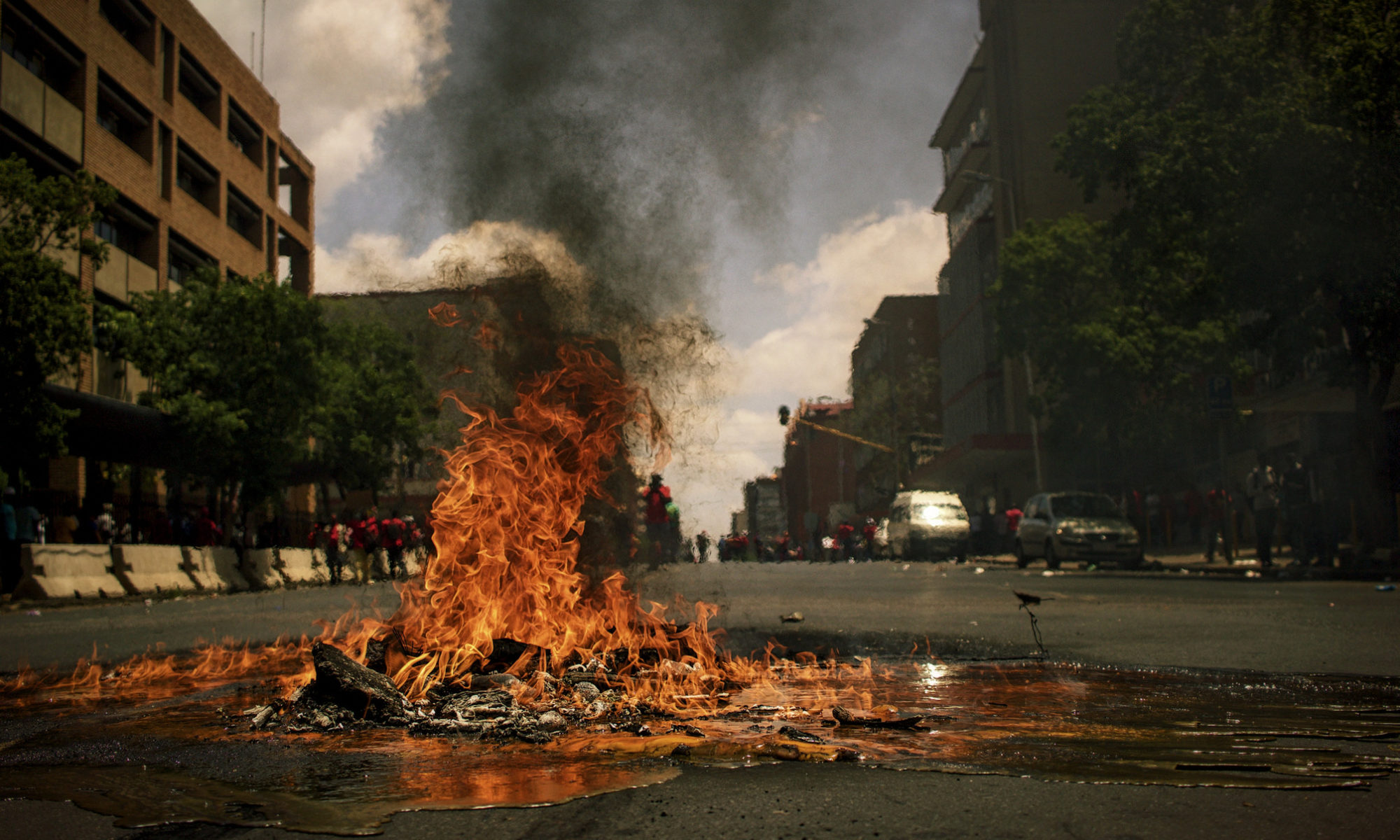
USA/Iran: Trump’s warning that USA will attack Iran’s power plants is a threat to commit war crimes

Responding to statements by United States President Donald Trump that the USA would postpone strikes on Iran’s power plants and energy infrastructure by five days pending the outcome of discussions on the “resolution of hostilities”, Erika Guevara-Rosas, Amnesty International’s Senior Director of Research, Advocacy, Policy and Campaigns, said

“President Donald Trump must retract deeply irresponsible threats of acts that would unleash catastrophic harm on millions of civilians. The decision to not proceed with such attacks must be based on the USA’s obligations under international humanitarian law to avoid civilian harm – not the outcome of political negotiations. Going through with such attacks would cause devastating long-term consequences and severely undermine the international legal framework designed to protect civilians in wartime.

“The Islamic Republic of Iran’s authorities must also retract their threats to retaliate by striking power plants used by the USA and Israel as well as economic, industrial, and other energy infrastructure in Gulf Cooperation Council (GCC) states. They must end all unlawful attacks against energy infrastructure and desalination facilities in the GCC states. Desalination plants are critical for ensuring drinking water supply to millions of civilians in an arid region. They must further end unlawful attacks on commercial vessels in Strait of Hormuz. Iranian authorities must also immediately restore full internet access.

President Trump must immediately retract these dangerous threats and commit the US to upholding international humanitarian law.

Erika Guevara-Rosas, Amnesty International

“Intentionally attacking civilian infrastructure such as power plants is generally prohibited. Even in the limited cases that they qualify as military targets, a party still cannot attack power plants if this may cause disproportionate harm to civilians. Given that such power plants are essential for meeting the basic needs and livelihoods of tens of millions of civilians, attacking them would be disproportionate and thus unlawful under international humanitarian law, and could amount to a war crime.

“By threatening such strikes, the USA is effectively indicating its willingness to plunge an entire country into darkness, and to potentially deprive its people of their human rights to life, water, food, healthcare and adequate standard of living, and to subject them to severe pain and suffering.  

“When power plants collapse, horrific consequences cascade instantly. Water pumping stations would stop functioning, clean water would become scarce, and preventable diseases would spread. Hospitals would lose electricity and fuel, forcing surgeries to be cancelled and life-support machines to shut down. Food production and distribution networks would collapse, deepening hunger and causing widespread food scarcity. Many businesses would also shut down with devastating economic consequences including mass unemployment.  

“Causing catastrophic harm to the civilian electrical capacity – at a time when the Iranian authorities’ deliberate prolonged internet shutdown has already left Iran’s population isolated – would sever people’s last remaining connection to the outside world, including access to satellite television, at a time of extreme danger.

“President Trump must immediately retract these dangerous threats and commit the US to upholding international humanitarian law.”

Background

On 21 March, US President Donald Trump issued a 48-hour ultimatum to the Islamic Republic of Iran to reopen the Strait of Hormuz, warning that the United States would “obliterate” Iranian power plants, “starting with the biggest one first,” if the Iranian authorities failed to comply. The Islamic Republic of Iran said it would retaliate by targeting the “power plants of the occupying regime [USA] and the power plants of regional countries that supply electricity to USA bases, as well as the economic, industrial, and energy infrastructure in which Americans hold shares” if Trump follows through with his threat.

 On 23 March, Trump stated on social media that discussions with Iranian officials had taken place aimed at de‑escalating hostilities across the Middle East. He added that he had ordered a five‑day postponement of any planned military strikes against Iranian power facilities.

Attacks by the Islamic Republic of Iran have already caused harm to civilian essential infrastructure in GCC countries. On 8 March, Bahrain’s Ministry of Interior announced that an Iranian drone had caused material damage to a water desalination plant. The vice president of Bahrain’s Electricity and Water Authority told state TV that the attack did not affect water supplies or the capacity of the water network.

On 19 March the International Maritime Organization’s Council condemned threats and attacks by the Islamic Republic of Iran and the closure of the Strait of Hormuz.  As of 24 March, the IMO confirmed 18 incidents impacting commercial vessels in the “Strait of Hormuz and the Middle East”, some leading to deaths and injuries of seafarers in addition to damage.

As of 6 March, Iranian authorities stated that Israeli-USA strikes had killed 1332 people. On 15 March, the Ministry of Health stated that among those killed were 223 women and 202 children. At least 21 people have been killed across GCC states (six in Kuwait, two in Bahrain, two in Saudi Arabia, eight in the United Arab Emirates (UAE) and three in Oman). According to media reports attacks by the Islamic Republic of Iran have so far led to the death of 15 people in Israel. In the occupied West Bank, the Islamic Republic’s  attacks have killed three people.

The post USA/Iran: Trump’s warning that USA will attack Iran’s power plants is a threat to commit war crimes appeared first on Amnesty International.

Kyrgyzstan: Authorities must drop trumped up charges against Makhabat Tazhibek-kyzy following her release from prison

Responding to a decision by a court in Kyrgyzstan to release investigative journalist and Temirov LIVE editor-in-chief Makhabat Tazhibek-kyzy from custody and subject her to a travel ban pending a retrial, Marie Struthers, Amnesty International’s Eastern Europe and Central Asia Director, said:

“While Makhabat Tazhibek-kyzy’s release from prison is a long-overdue step towards justice that allows her to reunite with her son, it does not erase the human rights violations she has already endured and those she faces with possible retrial.”

“The Kyrgyzstani authorities should immediately drop all charges and lift the travel ban against Makhabat Tazhibek-kyzy, and provide her with an effective remedy for the violations she has already suffered.

“The targeting of Makhabat Tazhibek-kyzy, and earlier, of her colleagues from Temirov LIVE and Ayt Ayt Dese media projects, sends a chilling message to investigative journalists across the country. No journalist should be prosecuted solely for reporting on matters of public interest. The authorities must abide by Kyrgyzstan’s international human rights obligations and provide a safe environment for independent journalism and ensure full respect for the right to freedom of expression.”

The targeting of Makhabat Tazhibek-kyzy, and earlier, of her colleagues from Temirov LIVE and Ayt Ayt Dese media projects, sends a chilling message to investigative journalists across the country. No journalist should be prosecuted solely for reporting on matters of public interest

Marie Struthers, Amnesty International’s Eastern Europe and Central Asia Director

Background

On 23 March, the Lenin District Court of Bishkek ordered Makhabat Tazhibek-kyzy’s release after more than two years’ detention, replacing her custodial measure with a travel restriction. The decision followed a ruling by the Supreme Court on 10 March to overturn her previous conviction and retry her case.

Makhabat Tazhibek-kyzy was arrested in January 2024 along with other journalists and media workers associated with Temirov LIVE and Ayt Ayt Dese, two independent media projects that have investigated alleged corruption in Kyrgyzstan. She and her colleague Azamat Ishenbekov faced trumped up charges of “inciting mass unrest,” and were sentenced to six and five years’ imprisonment respectively, on 10 October 2024. Makhabat’s husband, prominent investigative journalist Bolot Temirov, had previously been stripped of his Kyrgyzstani citizenship and forced into exile. Azamat Ishenbekov was released on 9 April 2025 by presidential pardon.

The post Kyrgyzstan: Authorities must drop trumped up charges against Makhabat Tazhibek-kyzy following her release from prison appeared first on Amnesty International.

Americas: States intensify crackdown on civil society through “anti-NGO laws” 

Several countries across the Americas are adopting restrictive legal frameworks to weaken, control, and even dismantle civil society organizations, Amnesty International said today as it launched its new report Tearing Up the Social Fabric: Impact of restrictive laws on civil society organizations in the Americas.

Between 2024 and 2025, Ecuador, El Salvador, Nicaragua, Paraguay, Peru and Venezuela adopted or reformed legal frameworks that impose disproportionate controls on civil society organizations (CSOs), directly affecting their ability to support communities, defend human rights, operate, and access resources.

“What we are seeing is a worrying regional pattern. So-called ‘anti-NGO laws’ reflect the rise of authoritarian practices aimed at silencing critical voices and consolidating power at any cost,” said Ana Piquer, Americas Director at Amnesty International.

What we are seeing is a worrying regional pattern. So-called ‘anti-NGO laws’ reflect the rise of authoritarian practices aimed at silencing critical voices and consolidating power at any cost.”

Ana Piquer, Americas Director at Amnesty International.

A regional pattern to silence critical voices

Amnesty International’s comparative analysis identified common elements across the laws adopted in the region.

In all countries analysed, the approval of these laws was preceded by campaigns of stigmatization against civil society organizations and human rights defenders. Authorities, legislators and allied voices labelled these organizations as “internal enemies”, “foreign agents” or “anti-patriotic”, fuelling public distrust and creating a climate of intimidation. In some cases—such as in Paraguay—this included racist and misogynistic rhetoric, fostering an environment of fear and self-censorship.

These laws were also adopted without adequate public consultation or dialogue. Although justified in the name of transparency or the prevention of financial crimes, in most cases sufficient regulatory mechanisms already existed to achieve these goals. The speed of their approval, the lack of evidence supporting alleged risks, and the absence of impact assessments reveal that their real purpose is to expand state control over civil society.

Vague provisions, arbitrary controls and disproportionate sanctions

The laws analysed include broad and ambiguous definitions such as “public order”, “political activity”, “social interest” or “distortion of objectives”, allowing discretionary interpretation and enabling selective enforcement against critical organizations and individuals.

They also establish administrative registration systems that condition the operation of organizations on state approval, without clear deadlines and under opaque criteria. These mechanisms amount to prior authorization, which is prohibited under international human rights standards.

In addition, organizations are required to comply with repetitive and excessive obligations, including detailed financial and operational reports, inventories, and prior notifications on the use of funds. These requirements not only duplicate existing regulations, but also divert human and financial resources away from their core work.

In Venezuela, for example, administrative discretion and impossible requirements have hindered the work of human rights organizations by imposing registration processes under opaque criteria, demanding sensitive information, and threatening sanctions.

Control over funding is another central element. Restrictions on access to international cooperation, abusive taxation—such as in El Salvador—and prior authorization requirements to receive funds have undermined the sustainability of essential projects, particularly those related to human rights, gender, the environment and Indigenous peoples.

In some contexts, banks and donors have conditioned their relationships on compliance with these laws, leading to the reduction or cancellation of programmes that support vulnerable populations.

Risks to safety and criminalization

These laws also require the disclosure of detailed information about donors, beneficiaries and staff, without effective data protection safeguards. In hostile environments, this exposes human rights defenders, LGBTIQ+ people, survivors of violence and Indigenous communities to increased risks of surveillance and persecution.

Moreover, several legal frameworks establish disproportionate sanctions with wide discretionary powers, including excessive fines, freezing of bank accounts, confiscation of assets, suspension or cancellation of legal status, and even criminal penalties.

In Peru, a civil society organization could be dissolved solely for legally representing victims of human rights violations in litigation against the state.

In Nicaragua, these measures have led to the mass closure of thousands of organizations. In other countries, such as Ecuador, cases of suspension, intervention or bank account blockages have been documented as forms of pressure.

An impact beyond organizations

Civil society organizations play a fundamental role in the social fabric and in the day-to-day protection of human rights. In many cases, they document state abuses, provide legal support to victims, defend Indigenous territories against extractive projects, support survivors of gender-based violence, promote transparency, and monitor electoral and judicial processes.

When these organizations are silenced or dismantled, communities lose essential allies in their efforts to seek justice, access information and defend their rights.

Human rights defenders interviewed by Amnesty International described a severe deterioration in their ability to act, influence public policies and support communities.

Many reported emotional exhaustion, reduced activities, forced migration or self-censorship. In some cases, prolonged harassment has led to exile.

“Freedom of association is a gateway to the exercise of other rights. When civil society organizations are dismantled, entire communities lose support, representation and avenues to seek justice. Without a strong and independent civil society, people cannot enjoy or defend their human rights,” said Rosalía Vega, Director of Amnesty International Paraguay.

When civil society organizations are dismantled, entire communities lose support, representation and avenues to seek justice. Without a strong and independent civil society, people cannot enjoy or defend their human rights.” 

Rosalía Vega, Director of Amnesty International Paraguay.

An urgent call to reverse the shrinking civic space

Amnesty International concludes that the laws analysed fail to comply with international obligations on freedom of association, freedom of expression, privacy and the right to defend human rights.

Rather than strengthening transparency, these frameworks contribute to the shrinking of civic space and reinforce authoritarian practices.

The organization calls on governments in the region to:

  • Repeal or amend laws that violate freedom of association.
  • End stigmatizing rhetoric against civil society organizations and human rights defenders.
  • Ensure that any regulation of CSOs complies with the principles of legality, necessity and proportionality.
  • Facilitate access to national and international funding without undue restrictions.
  • Refrain from criminalizing the legitimate work of human rights defenders.

Amnesty International also calls on the Financial Action Task Force (FATF) and the donor community to reject the misuse of financial standards as a pretext to restrict civil society.

“Protecting the right to organize is protecting the very heart of human rights,” concluded Ana Piquer.

“Protecting the right to organize is protecting the very heart of human rights.”

Ana Piquer, Americas Director at Amnesty International.

For more information or to arrange an interview, please contact press@amnesty.org

The post Americas: States intensify crackdown on civil society through “anti-NGO laws”  appeared first on Amnesty International.

Sylvie Njobati: “The campaign #BringBackNgonnso isn’t just for my grandfather, it is for my people too”

In 2018, Sylvie Njobati’s grandfather told her about a sacred ancient artefact known as Ngonnso, stolen by the Germans during the colonial period from 1884 to 1916, and donated to Berlin’s Ethnological Museum, by German Military Officer, Kurt Von Pavel.

Ngonnso was seen as a cultural cornerstone for the Nso people, an ethnic group from the Northwest Region of Cameroon, embodying their history and identity.

Keen to see it returned to its rightful home during his lifetime, Sylvie’s grandfather asked her if she could try and bring it back to Cameroon.

Determined to make her grandfather proud, Sylvie launched the campaign #BringBackNgonnso and embarked on a lifechanging mission…

My grandfather was 75 when he bestowed a mission on me, involving a sacred wooden statue called Ngonnso.

Ngonnso was the founding mother of the Nso people. After her death, a wooden statue of her took on great significance and it was seen as a cultural cornerstone for the Nso people. During our conversations, my grandfather told me how it was taken by German colonial officer Kurt Von Pavel in 1902 and donated to Berlin’s Ethnological Museum.

My grandfather was a pastor, a wise man and my rock. His last wish was to return to the big compound [villages that make up the Nso Kingdom] he had abandoned, find Ngonnso and return it to its rightful place. But given his age, he needed my help. It was an opportunity to reconnect with my culture, and a history that had been intentionally denied as I didn’t have access to that kind of knowledge

When I agreed to the mission, I didn’t know much about Ngonnso. We were never taught about it in school, however after researching the importance of it myself, I realised it was an opportunity to educate other people. If I could bring Ngonnso back, it would show how my people had survived the colonial era.

This mission wasn’t just for my grandfather; it was for my community too.

Starting the campaign

My community had been trying to return Ngonnso for close to 30 years. I started organizing talks in churches, local community groups and schools, where we talked about the restitution of Ngonnso.  A key part of my campaign was film – and I knew if I wanted my campaign to reach my people and my community, I had to take them to Germany without them having to physically travel there. I filmed a piece with my grandfather, granting me this mission, and it captured the essence of the campaign. It was very powerful as it helped people understand the importance of objects, especially in the context of Cameroon.

Having started conversations with the community, the next step was to connect with the Germans and, most importantly, the institutions with the power to make decisions. To bring the campaign to life, I created a Facebook account –  “the official restitution page for Ngonnso”. From there, a social media campaign was born, using the hashtag #BringBackNgonnso.

I researched institutions and individuals working on decolonization in German and contacted them, including the Prussian Cultural Heritage Foundation, the supposed owner of Ngonnso. In less than two weeks, I had a meeting with the German contact point for collections of colonial artefacts. During our conversation, I learnt an individual nor a community member could ask for restitution – it had to be done by the king, the local government, the president or the embassy.

The time to act is now

In 2021, Ngonnso was going to be on exhibition in Germany at the museum the, Humboldt Forum For us, this was sacrilege. I decided to go to Germany to make my voice heard. During my visit, I met the President of the Prussian Cultural Heritage Foundation, where I presented the official restitution letter.  I played a clip of my grandfather saying how he would love to see Ngonnso returned. The room fell quiet. It was an incredible moment. My request of restitution was finally acknowledged and I was promised help going forward.

I played a clip of my grandfather saying how he would love to see Ngonnso returned. The room fell quiet. It was an incredible moment. My request of restitution was finally acknowledged.

Sylvie Njobati

Sadly, during that week of meetings, my grandfather passed away. It was a difficult week, as I’d wanted to bring back Ngonnso before he passed. I felt so mad and questioned whether I’d been too slow. But in our culture, when someone passes on, they transcend. The passing of my grandfather reminded me that life is fragile. If you have to do something, then it now is the time. 

I felt energized and motivated to keep going. After that, things moved quickly – we had a workshop in 2021, compiled the results in 2022 and by June of the same year, the decision to return Ngonnso to Cameroon had been confirmed.

I called our King to tell him, but I couldn’t stop thinking about my grandfather. When I returned to Cameroon, I wrote a letter to my grandfather and took it to his grave. I spoke to him and said I had brought good news. I knew he was smiling, wherever he was – he’s still smiling at me right now.

Restitution is a priority for my country

That was four years ago. Prior to my campaign, Cameroon was not interested in restitution. But now it’s a priority for them and they’ve created a commission in charge of illegally exported goods.

 Ngonnso is still not back in Cameroon and it’s all to do with politics. The next step involves negotiations between Germany and the state of Cameroon. It’s frustrating as a lot of other people have passed without being able to see this happen.

I’ve learnt a lot from participating in this campaign and travelling to Germany. I have walked through museums, reliving the experiences of my ancestors. It inspires me to continue the fight, as I can reimagine what it was like then.

Reshaping the narrative

At the moment, it feels like we’re in the midst of a colonial resistance. We’re fighting for restitution and for reparations and we’re resisting so history doesn’t repeat itself. For me, restitution doesn’t just mean the physical return of objects. It also means reclaiming our stories and reshaping our narrative, so we can tell our own stories.

Reparations aren’t seen as a two-way street. Survivors and victims of these colonial crimes are having to fight for reparation, while the perpetrators – such as Germany in this case – fail to take any kind of initiative. We need to make space in our hearts to repair and heal, otherwise these conversations won’t amount anything.

To me reparatory justice also takes the form of access to information and awareness raising, at a community level. Having recently attended the Wakati Wetu Festival, alongside organizations such as Amnesty International, I hope we can help build and support campaigning at a grassroots level so conversations aren’t just taking place among a privileged few.

Sometimes, I feel as though I have exhausted all avenues as many of the people who were pushing for the return of Ngonnso have now passed away, but it just reminds me that I need to push harder. It can be exhausting at times, but I feel hopeful that Ngonnso will be returned in 2026.

To mark International Day for Elimination of Racial Discrimination, Amnesty International is launching a series of Perspectives titled ‘Voices of Reparatory Justice’. In this series, we speak with artists, activists and leaders who share their stories of repair and resilience in fighting against the negative impacts of historical injustices, slavery, and colonialism.  Despite existential challenges, their journey to secure dignity and rights of racialised groups, restores hopes for our collective future, humanity must always prevail. This is one of those stories. Find out more about our work.

learn about descent-based discrimination and
how to tackle it

The post Sylvie Njobati: “The campaign #BringBackNgonnso isn’t just for my grandfather, it is for my people too” appeared first on Amnesty International.