Global: European states must retract outrageous attacks on UN Special Rapporteur Francesca Albanese

Reacting to calls by ministers and officials in France and Czechia for Francesca Albanese, the UN Special Rapporteur on the situation of human rights in the Palestinian Territory occupied since 1967, to resign, Amnesty International’s Secretary General Agnès Callamard said:

“It is reprehensible that ministers in Austria, Czechia, France, Germany and Italy have attacked the UN Special Rapporteur on the Occupied Palestinian Territory, Francesca Albanese, based on a deliberately truncated video to misrepresent and gravely misconstrue her messages – as is clear from watching her original address in its entirety.

“The ministers that have spread disinformation must act beyond merely deleting their comments on social media – as some have done. They must publicly apologize and retract any calls for Francesca Albanese’s resignation. Their governments must also investigate how this disinformation happened with a view to preventing such situations.

“If only these ministers had been as loud and forceful in confronting a state committing genocide, unlawful occupation and apartheid as they have in attacking a UN expert. Their cowardice and refusal to hold Israel accountable stand in stark contrast to the Special Rapporteur’s unwavering commitment to speaking truth to power.

“The Special Rapporteur’s commitment to objectively investigate facts based on hard evidence and apply international law has been vital in exposing Israel’s ongoing violations of Palestinians’ rights and the complicity of third parties. The calls for her to resign are the latest in a series of alarming personal attacks and attempts to silence her – and must be categorically rejected. This campaign to discredit her only serves as a smokescreen to deflect attention away from Israel’s genocide in Gaza, its system of apartheid and unlawful occupation of the Occupied Palestinian Territory.

“Despite a drop in Israeli air attacks and some limited improvements in the cross-border movement of goods and people since the truce in October 2025, there has been no meaningful change in the conditions Israel is inflicting on Palestinians in Gaza and no evidence to indicate that Israel’s intent has changed. The genocide is ongoing.

“Israeli military operations in the occupied Gaza Strip have continued, killing over 590 Palestinians since October 2025. The estimated death toll of Palestinian victims since October 2023 now stands at over 72,000.

Not only does this allow Israel to violate international law with impunity, but it also effectively undermines the integrity of crucial international human rights mechanisms that were adopted to protect us all.

Amnesty International’s Secretary General Agnès Callamard

“Israel has also significantly escalated the cruel and unlawful closures that it has imposed on Gaza for over 18 years. Israeli military operations to effectively create a no-go zone across nearly 60 percent of the Gaza Strip have further worsened conditions. In the occupied West Bank, including illegally annexed East Jerusalem, attacks by Israeli forces and state-backed settlers have killed more than 1,100 Palestinians and displaced tens of thousands since October 2023.

“This outrageous injustice persists despite the International Court of Justice repeatedly ordering Israel to take all measures within its power to prevent genocidal acts, and its Advisory Opinion that Israel’s occupation is unlawful and must end as soon as possible. Let’s also not forget that the International Criminal Court has issued arrest warrants against Israel’s prime minister and the former minister of defense for war crimes and crimes against humanity.

“Instead of upholding their legal obligations under international law to protect Palestinians, third states have decided at best, to look away, and at worst, to arm the perpetrators of genocide and war crimes while attacking those who tirelessly condemn Israel’s impunity and the material gain to be made by state and non-state actors from supporting Israel’s violations of Palestinians’ rights.

“Not only does this allow Israel to violate international law with impunity, but it also effectively undermines the integrity of crucial international human rights mechanisms that were adopted to protect us all.

“This is a critical moment for humanity, with international law and human rights institutions under attack like never before. The use of misinformation to further delegitimize them poses a profound threat to human rights and the rule of law itself.

“This is the precise moment that states such as Austria, Czechia, France, Germany and Italy should be taking a stand. They must demonstrate their commitment to upholding their legal obligations to stop Israel’s genocide and bring its decades-long international crimes to an end. This means actively supporting UN mechanisms and respecting the autonomy of UN-appointed independent human rights experts. They must act to hold Israel accountable for its ongoing genocide, apartheid and unlawful occupation, rather than joining the shameful bandwagon of weaponizing disinformation against this Special Rapporteur.”

Background

On 7 February, UN Special Rapporteur on the situation of human rights in the Palestinian Territory occupied since 1967, Francesca Albanese, spoke at a forum in Doha organized by Al Jazeera. She said:

“The fact that instead of stopping Israel, most of the world has armed, given Israel political excuses, political sheltering, economic and financial support […] We who do not control large amounts of financial capitals, algorithms and weapons, we now see that we as a humanity have a common enemy, and freedoms, the respect of fundamental freedoms is the last peaceful avenue, the last peaceful toolbox that we have to regain our freedom.”

These comments were misconstrued as describing Israel as that “common enemy”. Albanese rejected these accusations and clarified her comments on social media that “the common enemy of humanity is the system that has enabled the genocide in Palestine, including the financial capital that funds it, the algorithms that obscure it and the weapons that enable it”.

On 11 February, the French Foreign Minister Jean-Noel Barrot made a statement calling for the Special Rapporteur to resign. This was followed by similarly harmful statements from Austrian, Czech, German and Italian ministers.

The post Global: European states must retract outrageous attacks on UN Special Rapporteur Francesca Albanese appeared first on Amnesty International.
Colombia: Four months after the attack on Yendri Velásquez and Luis Peche, justice remains pending 

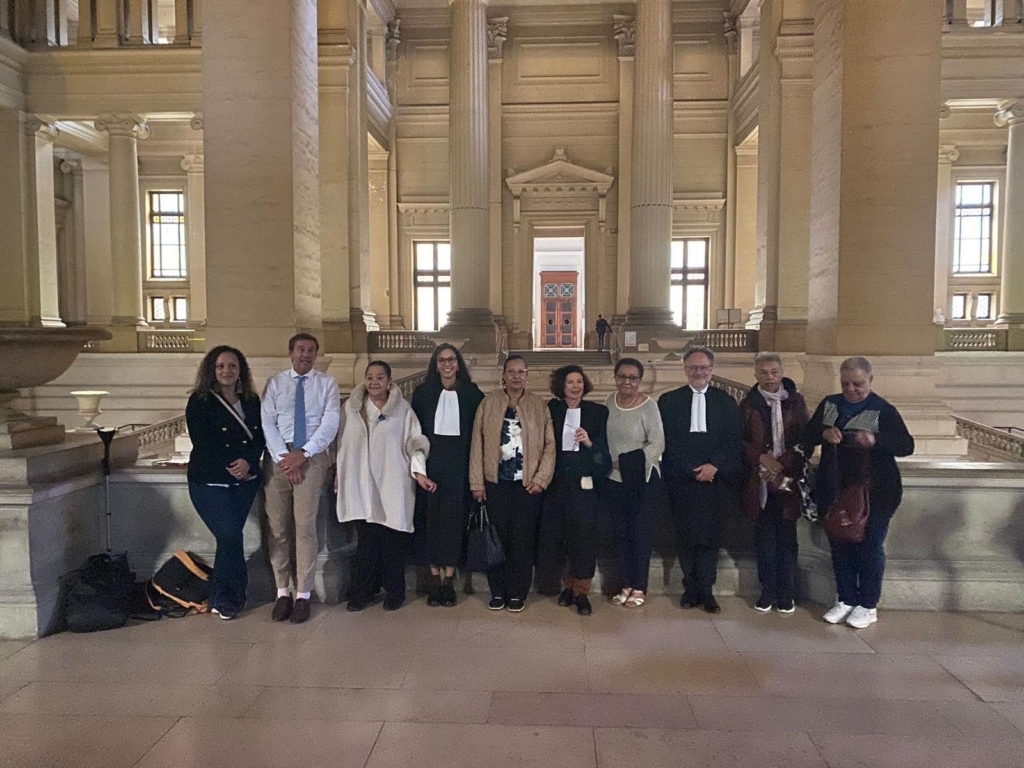
Four months after the armed attack against Venezuelan activists Yendri Velásquez and Luis Peche in Bogotá, the authorities have yet to present clear progress in the investigation or guarantee full protection measures, warns Amnesty International, while expressing concern over the risks faced by many Venezuelans who have been forced to flee their country without receiving adequate international protection. 

“This attack cannot be treated as an isolated case. It reflects the risks faced by migrants and refugees, especially those who have been targeted for their activism. The state’s obligation is to protect and investigate urgently. Every day without progress deepens the harm,” said Valentina Ballesta, America’s Deputy Director for research at Amnesty International.  

This attack cannot be treated as an isolated case. It reflects the risks faced by migrants and refugees, especially those who have been targeted for their activism. The state’s obligation is to protect and investigate urgently. Every day without progress deepens the harm.” 

America’s Deputy Director for research at Amnesty International. 

Colombia is the main host country for Venezuelans displaced by the prolonged human rights crisis in their country. In this context, Amnesty International recalls that states receiving migrants and refugees have clear obligations under international law: they must not only allow entry or stay in their territory, but also ensure effective access to asylum-seeking procedures without unreasonable delay, adopt timely protection measures against foreseeable risks to life and integrity, and investigate and punish acts of violence with due diligence. 

“The case of our colleague Yendri Velásquez and Luis Peche illustrates how administrative barriers to the timely recognition of refugee status generate risks — particularly for people who defend human rights and who should therefore be subject to special protection, given they face particular risks,” said Marcos Gómez, Amnesty International’s Venezuelan section director.  

The case of our colleague Yendri Velásquez and Luis Peche illustrates how administrative barriers to the timely recognition of refugee status generate risks — particularly for people who defend human rights and who should therefore be subject to special protection.” 

Marcos Gómez, Amnesty International’s Venezuelan section director.  

Four months after the attack, Amnesty International warns that the lack of clear and effective investigative results prolongs the suffering of the victims and sends a dangerous message of tolerance toward such attacks — particularly in a country like Colombia, which has faced a longstanding crisis of violence against human rights defenders. Impunity is also a form of violence; when states fail to investigate seriously and promptly, they breach their duty to protect, and erode trust in institutions.  

“People live in fear in Venezuela, and those of us outside the country do too. The state has the responsibility to protect us and to investigate what happened. We will continue to speak out because silence will not protect us,” said Yendri Velásquez, Amnesty International member. 

People live in fear in Venezuela, and those of us outside the country do too. The state has the responsibility to protect us and to investigate what happened. We will continue to speak out because silence will not protect us.”

Yendri Velásquez, Amnesty International member. 

Amnesty International urges Colombia’s Attorney General’s Office to advance immediately with a thorough and impartial investigation into this attack; ensure adequate protection measures for the victims; and reaffirm in practice its commitment to international protection for those seeking safety.  

Likewise, we remind the migration authorities of Colombia and across the Americas that international protection is not a discretionary concession: it is a legal duty and an ethical responsibility. Amnesty International will continue to monitor this situation and demand justice for any attack against people in need of international protection. 

For more information or to request an interview, please contact: press@amnesty.org 

The post Colombia: Four months after the attack on Yendri Velásquez and Luis Peche, justice remains pending  appeared first on Amnesty International.

UK: Court draws ‘line in the sand’ against misuse of terrorism powers

In response to the judgment in the judicial review of the proscription of Palestine Action, Tom Southerden, Amnesty International UK’s Law and Human Rights Director, said:

“Today’s ruling is a vital affirmation of the right to protest at a time when it has been under sustained and deliberate attack. The High Court’s decision sends a clear message: the government cannot simply reach for sweeping counter‑terrorism powers to silence critics or suppress dissent. We welcome this judgment as an essential check on overreach and a powerful reminder that fundamental freedoms still carry weight in UK law.

“We are relieved – and encouraged – that the Court has recognised the dangers of treating direct action as terrorism. This decision halts a pattern of escalating restrictions, aggressive policing tactics, and an ever-expanding definition of what constitutes ‘terrorism’. It draws an important line in the sand against attempts to narrow the democratic space and undermine public confidence in the right to speak out.

This decision sends a clear message: the government cannot reach for sweeping counter‑terrorism powers to suppress dissent

“The implications are profound. Thousands of peaceful protesters – including those involved in the Defend Our Juries campaign – have been arrested for something that should never have been a crime. This ruling offers hope not only for them, but for anyone who believes that challenging those in power is a legitimate and necessary part of public life.

“A healthy democracy depends on people being able to organise, protest, and demand accountability without fear of being branded a threat. Today’s outcome strengthens that principle and underscores the importance of safeguarding our rights against disproportionate, politically motivated interference.

“Amnesty will continue to expose attempts to erode these freedoms, stand with those targeted for peaceful activism, and defend the right to protest wherever it is threatened. This decision marks an important step forward – and we will keep working to ensure the Government respects both the spirit and the letter of today’s ruling.”

Amnesty’s analysis of the judgment:

Amnesty International UK has welcomed today’s High Court judgment declaring the Government’s proscription of Palestine Action under terrorism legislation unlawful – a vital affirmation of the right to protest at a time when it has been under sustained and deliberate attack.

This ruling is a crucial defence of the right to protest at a time when it has been under sustained and deliberate attack

The Court was clear: the Home Secretary can’t reach for the nuclear option simply because it makes policing easier. Using proscription to criminalise people’s expressions of support or to hand police sweeping disruption powers was never what the policy allowed. The Court also found that the proscription resulted in a very significant and unjustified interference with freedom of expression and freedom of peaceful assembly (Articles 10 and 11 ECHR).

Kerry Moscogiuri, Amnesty International UK’s Chief Executive, said:

“Today’s ruling is a crucial defence of the right to protest at a time when it has been under sustained and deliberate attack.

“The High Court decision sends a clear message: the Government cannot simply reach for sweeping counterterrorism powers for its convenience, to suppress dissent and hand police more powers. Leaving such powers unchecked would keep the door wide open for future governments to wield this excessively sweeping legal framework in ever more draconian ways.

“We welcome this judgment as an essential check on overreach and a powerful reminder that fundamental rights still carry real weight in UK law.”

Human rights: interference, chilling effect, and proportionality

The Court held that while violent or nonpeaceful conduct falls outside the scope of protected protest, proscription went far beyond that. It criminalised peaceful protest and advocacy carried out under the “Palestine Action” banner, producing a severe chilling effect on lawful speech and assembly.

The judges concluded that ordinary criminal law was more than adequate to deal with unlawful acts, and that the breadth of proscription was disproportionate given the nature and scale of conduct said to meet the statutory definition of terrorism.

Amnesty International noted the Court’s emphasis that proscription is among the state’s most draconian measures and cannot be used as a shortcut to suppress political activism or association. The ruling underscores that Articles 10 and 11 ECHR require compelling justification, which was lacking here.

“We are relieved — and encouraged — that the Court has recognised the dangers of treating direct action as terrorism. This decision halts a pattern of escalating restrictions, aggressive policing tactics, and an ever-expanding definition of what constitutes ‘terrorism’. It draws a clear boundary against attempts to narrow the democratic space and undermine public confidence in the right to speak out,” Moscogiuri added.

Implications for democratic space

The ruling carries profound implications for the UK’s wider approach to protest and counterterrorism. The Court confirmed that sweeping terrorism powers must not be deployed to police protest movements and recognised the very real chilling effect created when people fear that lawful speech or assembly could be criminalised. It highlighted the particular risks faced by journalists, academics and civil liberties organisations — including Amnesty International — noting that section 12 offences have inhibited legitimate scrutiny, teaching and campaigning.

Together, these findings underline just how far-reaching and damaging the proscription’s impact has been, and why strict human rights safeguards are essential to prevent such overreach.

“A healthy democracy depends on people being able to organise, protest, and hold power to account without fear of being branded a threat. Today’s outcome reinforces that principle and shows why safeguarding our rights against disproportionate, politically motivated interference is essential,” says Moscogiuri.

Amnesty: We will keep defending the right to protest

Following today’s ruling, the Home Secretary has indicated that the government plans to appeal. Amnesty International urges the government to reconsider. The government must recognise the huge damage the proscription has caused to protest rights in the UK, respect today’s decision, and accept the proscription was wrong.

Amnesty International UK will continue to expose efforts to erode protest rights and to support those targeted for peaceful activism.

The post UK: Court draws ‘line in the sand’ against misuse of terrorism powers appeared first on Amnesty International.

Global: Governments must use new UN General Assembly resolution to turn ICJ’s Advisory Opinion on climate change into robust action

Governments must not squander the opportunity to turn the International Court of Justice’s 2025 Advisory Opinion on states’ obligations regarding climate change into robust climate action, Amnesty International said ahead of discussions to finalize a new UN climate change resolution.

Informal consultations on the draft resolution circulated by Vanuatu begin today. UN member states are expected to vote on the resolution at the end of March, marking three years since the UN General Assembly first requested the ICJ’s opinion.

“The resolution attempts to turn the ICJ’s interpretation of key legal standards into a practical roadmap for state accountability which is likely to trigger political pushback from higher income high emitting countries wary of their historical responsibility and financial liability,” said Candy Ofime, Climate Justice Researcher and Legal Advisor at Amnesty International.

Amnesty International is calling on governments to sponsor the resolution and secure its adoption in its current form.

The draft resolution gives unqualified support to the Advisory Opinion and urges states to meet the legal obligations that it clarified. These include:

  •  adopting national climate actions plans, known as nationally determined contributions, to limit global temperature rise to below 1.5°C above pre-industrial levels.
  • taking effective steps to cut emissions, such as ending subsidies for fossil fuel exploration, production and exploitation;
  • fully upholding their obligations to refrain from returning displaced individuals to a country where climate change impacts pose a risk to life, and to consider creating safe, regular and non‑discriminatory pathways and protection frameworks for persons displaced across borders by climate‑related factors;
  • for states that have violated their obligations, to provide full and prompt reparation for damage.

The ICJ in its landmark Advisory Opinion made clear that the full enjoyment of human rights cannot be ensured without protection of our climate system and other parts of the environment from the harms of human-induced climate change. We know that extracting and burning fossil fuels are the root cause, yet recent actions by major world leaders, including U.S. President Trump’s latest revocation of the “endangerment finding” on greenhouse gases, have weakened global climate action. This has included defunding key international climate bodies and rolling back multi-lateral climate cooperation,” Candy Ofime said.

This is a vital moment for states to show they stand on the side of climate justice – not delay, weaken, or turn away from their legal obligations and moral duty.

Candy Ofime, Climate Justice Researcher and Legal Advisor at Amnesty International

“Global cooperation, with those most responsible for climate change leading the way, is essential to equitably phase out fossil fuels, support a just transition for workers and others impacted by the phase out, protect groups and communities on the frontline of the climate crisis, and finance recovery from climate change-related loss and damage. Without it, climate impacts such as sea-level rise, salinization and coastal erosion, extreme heat, food insecurity, wildfires, violent storms, floods, and safe water shortages will intensify.

“This is a vital moment for states to show they stand on the side of climate justice – not delay, weaken, or turn away from their legal obligations and moral duty. The world cannot afford anything less. Humanity must win.”

Background

The zero draft has now been shared with all UN Member States and will be taken up during informal consultations on 13 and 17 February at the General Assembly in New York, giving every government the opportunity to shape this crucial resolution. A revised draft is expected in early March, followed by a window for states to add their sponsorship and move it toward adoption later in the month.

Amnesty International’s Climate Justice team will be available for media comments and interviews throughout this process, providing analysis as the draft evolves and urging governments to strengthen—not dilute—this landmark effort for global climate justice.

The post Global: Governments must use new UN General Assembly resolution to turn ICJ’s Advisory Opinion on climate change into robust action appeared first on Amnesty International.

‘In a world that forces us apart, we still choose each other’ – Valentine’s poem to Hong Kong activist Chow Hang-tung

Hong Kong human rights lawyer Chow Hang-tung is detained over her role in organizing the city’s Tiananmen crackdown vigil, for which she faces up to 10 years in jail under the National Security Law. Her partner and fellow activist, Ye Du, is living under police surveillance in the Chinese city of Guangzhou. Ahead of Valentine’s Day, here Ye Du shares a poem he has written to his imprisoned partner.

This poem was written last Mid-Autumn Festival, a Moon festival celebrated in Asia when the Moon is believed to be at its brightest. In our time, writing poetry is no longer just about expression or confession; it is an act of steadfast resistance. When meetings with a loved one are stubbornly blocked by authorities, and every message is filtered or intercepted, gazing at the same moon becomes the most immediate and unstealable form of intimacy. Even in a world that forces us apart, we still choose each other.

Even so, this poem had to be sent anonymously to get past deliberate censorship and reach Hang-tung. She later replied with a poem of her own, but its fate was the same as more than 10 letters she sent me in 2025. Only one miraculously made it through; the rest disappeared into invisible black holes. Even a simple card with “Happy Birthday” written on it was deliberately intercepted, as if even the most restrained expressions of feeling were considered dangerous. This was no accident. It is a clear sign of a new era arriving at what was once a harbour of freedom: emotions themselves are now treated as risks to be managed.

Revisiting this Mid-Autumn poem on Valentine’s Day is not about celebrating the holiday itself. Festivals are simply human-made markers in time, meant to remind us that our feelings have not been worn away by the years. As long as we continue to hold each other in our hearts, as long as there is a place reserved for one another, the authorities cannot achieve their true aim: making us accept separation as natural and silence as reasonable.

That moon, suspended by the wind above the city walls,
like a silver bowl brimming with night and untold stories,
sways gently, spilling light into silent streets and alleys.

The curve of water cupped by the city’s outline
is like a watchful eye, quietly gathering the streetlights
and reflecting distant glimmers.

Wind passes through the tall buildings,
carrying letters that were never sent.
Reaching out, I only grasp the edge of moonlight.
Between light and shadow, your silhouette
hides like a distant lantern across the shore, unreachable.

The city is like a map cut and rearranged,
its towers isolated like islands.
The sound of wind and sea separates one from another.

People pacing below each step
leave an unspoken shadow,
and invisible boundaries.

The distant lights are withdrawn.
Ships lie silent.
The sound drops to nothing but wind.
The streets that once stirred with life
now have even the light arranged into straight lines.

The moon still hangs high,
as if to remind me
that every hope
must be hidden in the night.

Wind sweeps past my window,
and I fold it into my breath,
into every unsent word,
into every quiet gaze,
as if letting it cross the city walls
and gently tap on your window.

The wind stops.
The moon still drifts, illuminating the city within my heart,
and lighting the streets that have been withdrawn,
the voices suppressed,
and the lights aligned into straight lines.

I take moonlight as stationery,
wind as paper,
folding them into countless small boats,
letting them
pass through the towers,
cross the harbour,
and float toward you.

Mid-Autumn, 2025

Protect human rights defenders in mainland China and Hong Kong

call on the Hong Kong authorities to release Chow Hang-tung

The post ‘In a world that forces us apart, we still choose each other’ – Valentine’s poem to Hong Kong activist Chow Hang-tung appeared first on Amnesty International.