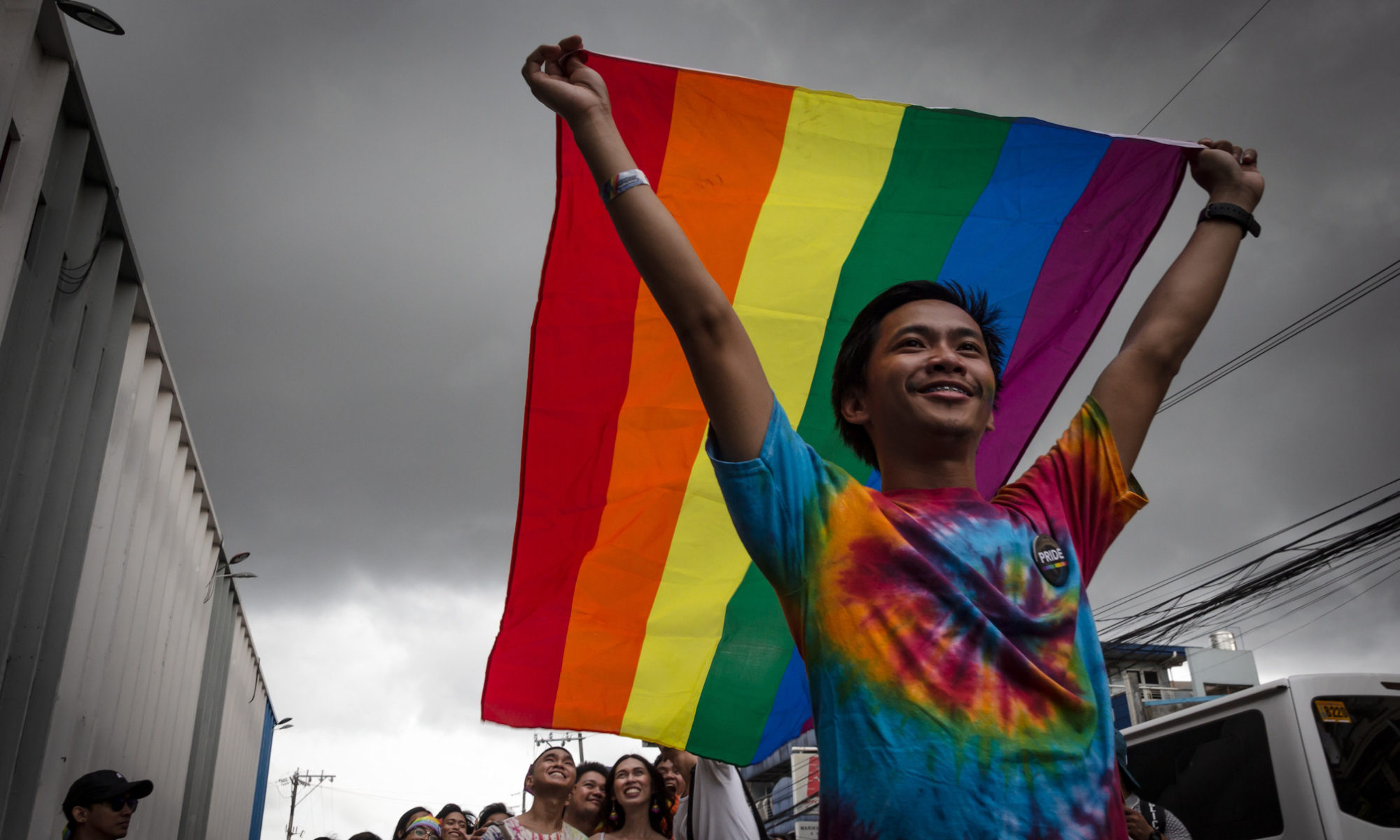
8 wins against gender-based discrimination, violence and injustice

Governments around the world are rolling back decades of progress on gender equality resulting in increasing attacks on reproductive rights, the silencing of feminist voices, funding cuts for women’s rights organizations, and much more.

Ensuring and strengthening access to justice for all women and girls is more important than ever, and will be top of the agenda when UN member states convene for the 70th session of the Commission on the Status of Women from 9 to 19 March.

Here are eight areas in which Amnesty International has been campaigning for gender equality and justice. These wins take different forms – from landmark court rulings and legal reforms to hard-won recognition, accountability and resistance in the face of injustice. As long as we don’t give up, humanity can – and will – win against discrimination, gender-based violence and injustice!

Burkina Faso

A young girl, wearing an orange dress, stands looking to the camera.

Zalissan, from Burkina Faso, was at risk of early forced marriage. She decided to speak to her father about the devastating impact it would have on her and her education. As a result, Zalissan’s father changed his mind and she was able to continue going to school.

Burkina Faso has one of the highest rates of early marriage in the world, often leading to girls being forced to drop out of school to take care of their homes and husbands. Girls who are married off at a young age are also more likely to suffer domestic violence and health complications in childbirth and pregnancy. Following years of campaigning by Amnesty International and its partners, Burkina Faso adopted long-awaited reforms in 2025, which set the minimum age for marriage at 18 for both girls and boys and established consent as the basis for any marriage. New provisions on inheritance rights, which eliminate gender discrimination against women and girls, also mark meaningful progress.

Dominican Republic

A group of women stand next to an immigration truck

The government of the Dominican Republic are deporting hundreds of pregnant and breast-feeding women back to Haiti.

In November 2025, Amnesty International published a report exposing the false narrative used by the government of the Dominican Republic to justify a crackdown on undocumented migrants that has seen hundreds of pregnant and breast-feeding women deported back to Haiti. It came after anti-immigration measures were announced by President Abinader, including a requirement that, in order to access hospital treatment, foreign patients must provide identification, a passport with a valid visa, a work card issued by the Directorate of Migration and proof of home address. Amnesty International continues to campaign for the repeal of these health protocols, which are deterring undocumented pregnant women from seeking ante- and postnatal care and placing their lives at risk. We are also calling for the suspension of the arbitrary detention and deportation of Haitians, particularly pregnant women and children, as a result of this new policy.

Haiti

People flee gang violence in the Petion-ville neighborhood of Port-au-Prince, Haiti.

During 2025, Amnesty International documented gang violence against girls and women in Port-au-Prince and other communities. In a report drawing on interviews with 112 people, including 51 children, Amnesty documented abuses and violations in eight communes of the West Department – from the recruitment and use of children in gangs, to rape and other forms of sexual violence meted out to women and girls. It also presented a summary of its findings to the office of Prime Minister Alix Didier Fils-Aimé in December 2024, in a bid to stop the cycles of violence and ensure justice for victims and their families. 

France

A group of women dressed in blue shout jubilantly.

Members of the feminist collective “Les Rosies” march in celebration of International Women’s Day in Paris.

Official statistics in France indicate that only 6% of victims report cases of rape, attempted rape and/or sexual assault. To find out why some of the most vulnerable in society do not come forward to report these crimes, Amnesty International interviewed migrant women, transgender women and sex workers about their experiences of attempting to report sexual violence in France. In its 2024 briefing, ‘Go Home, It’ll Blow Over’, Amnesty exposed how structural discrimination, stigma and institutional failures routinely prevent survivors from accessing justice, even within a legal system that formally guarantees their rights. The research found widespread refusals by police to register complaints, discriminatory treatment, lack of interpreters, inadequate support services, and harmful gendered and racialized stereotypes. For undocumented migrant women and sex workers in particular, reporting sexual violence can result in detention, deportation, or further abuse, creating a chilling effect that pushes survivors away from justice altogether.

Gaza

A group of women and children walk along a muddy path in Nur Shams refugee camp.

Women’s healthcare and reproductive health facilities in Gaza have been destroyed by Israel.

In March 2025, the UN Commission of Inquiry concluded that Israel has systematically used sexual, reproductive, and other gender-based violence against Palestinians and carried out “genocidal acts” by destroying women’s healthcare and reproductive health facilities and blocking access to essential care. In September 2025, it found that Israel had committed genocide in Gaza, including through the imposition of measures intended to prevent births. These findings followed Amnesty’s own December 2024 report “You Feel Like You Are Subhuman’: Israel’s Genocide Against Palestinians in Gaza”, which documented killings, serious bodily and mental harm, and conditions of life deliberately imposed to destroy Palestinians in Gaza, “in whole or in part,” including gendered harms resulting from the assault. Alongside women human rights defenders and feminist movements, Amnesty International continues to document abuses, advocate for accountability and mobilize support for Palestinian women and girls.

Malawi

In 2025, Malawi’s High Court ruled that denying a 14-year-old rape survivor access to a safe abortion had violated her rights under the Gender Equality Act. In its landmark judgment, the court awarded damages to the survivor and affirmed that access to a safe abortion is essential to protecting the lives, health and dignity of women and girls. The ruling set an important precedent in a country where abortion remains largely criminalized – the only exception is when it is performed to save the life of a pregnant woman. This colonial-era draconian law means many adolescents and survivors of sexual violence are left with no safe options.

Latin America

In 2025, the United Nations Human Rights Committee issued landmark rulings finding that Ecuador and Nicaragua violated the human rights of three girls who were raped, denied an abortion and forced into motherhood, and later that year issued a further ruling concerning Guatemala. In its far-reaching decisions, the committee found that the girls had been subjected to situations amounting to torture. For the first time, it recognized that forced motherhood interrupts and hinders girls’ personal, educational and professional goals, and severely restricts their right to a dignified life. The committee called for states to amend legislation to ensure access to safe, legal abortion, especially in cases involving sexual violence or risks to the life or health of the girl, woman or pregnant person – and to provide reparations for survivors to help them rebuild their lives. The cases form part of the ‘Girls, Not Mothers’ campaign, of which Amnesty International is a founding and active member.

Nepal

A group of women stand against the bright blue sky, holding yellow placards in the air

Alongside Dalit families and activists, Amnesty International continues to lobby the Nepali government to put in place effective protections for Dalit communities.

Despite laws prohibiting it, caste-based discrimination continues to be a feature of everyday life in Nepal. Not only does it fuel violence and prejudice against millions of Dalits and other members of minority communities, but it also robs them of justice as the police are less likely to promptly – or effectively – investigate crimes against minority groups. However, there was a breakthrough in 2023, when the West Rukum District Court delivered a historic verdict, convicting 26 individuals for murder and caste-based discrimination in the killing of Nabaraj BK and five others. The six men, many of whom were from the Dalit community, had been beaten to death by a mob in 2020 after allegations of Nabaraj’s inter-caste relationship with a girl from a dominant caste. Alongside Dalit families and activists, Amnesty International continues to lobby the Nepali government to put in place effective protections for Dalit communities.

humanity must win

Support women’s rights

The post 8 wins against gender-based discrimination, violence and injustice appeared first on Amnesty International.

Türkiye: Politically-motivated prosecution of Istanbul mayor raises serious fair trial concerns 

Ahead of the first hearing in the trial of Istanbul Mayor and presidential candidate, Ekrem İmamoğlu, and 406 other defendants on charges including bribery and extortion, Dinushika Dissanayake, Amnesty’s Deputy Director for Europe, said: 

“After almost a year behind bars in pretrial detention, Ekrem İmamoğlu will take to the dock to face an absurd array of 142 charges set out in an almost 4,000 page indictment and carrying a ludicrous jail term of more than 2,300 years.

Ekrem İmamoğlu will take to the dock to face an absurd array of 142 charges carrying a ludicrous jail term of more than 2,300 years

“This politically-motivated prosecution, which is based almost entirely on secret witness testimony, is riddled with serious international fair trial and rule of law issues. Hundreds of thousands of pages of evidence have been submitted to this mass trial where defendants’ and their legal representatives’ ability to mount an effective defence is almost impossible. This prosecution bears the hall marks of an attempt to intimidate political opponents of the government and silence wider dissent in the country.

“This mass trial is the most extreme example of the disturbing weaponization of Türkiye’s justice system, whose independence has now been almost entirely hollowed out. Turkish authorities must end this travesty of justice and uphold the rule of law and human rights of everyone in the country.”

Background 

Ekrem İmamoğlu is the elected Mayor of Istanbul and was declared as the presidential candidate of the opposition Peoples’ Republican Party (CHP).

He faces allegations including running a criminal organization, bribery, embezzlement, money laundering, extortion and tender rigging. If found guilty he could face up to 2,352 years behind bars. 

Most of the other 406 defendants in the trial worked for the Istanbul Metropolitan Municipality. 105 are currently in pretrial detention, and 170 have been released subject to judicial control orders. 

Ekrem İmamoğlu faces other prosecutions including an espionage investigation the trial for which is set to begin on 11 May and carries a prison sentence of up to 20 years. 

The hearing will take place on 9 March

The post Türkiye: Politically-motivated prosecution of Istanbul mayor raises serious fair trial concerns  appeared first on Amnesty International.

Nigeria: Government and oil firms must expedite investigation of gas leaks threatening to destroy Nigerian community

The Nigerian Government must immediately expedite their investigation into gas leaks across the Bille community in the oil-producing Niger Delta region, which are putting the lives of local residents in grave danger, warned Amnesty International.

In October 2025, fishermen from Bille, a coastal town in Rivers State, reported seeing bubbling water accompanied by a sulphurous smell in a mangrove swamp and river several kilometres away from the town. Within a week, scores of residents reported the same phenomenon at other sites including inside the town itself, while some said they were able to set fire to the air near where the gas was bubbling. The Bille community is located close to various sites of extensive oil and gas infrastructure, including oil wells and pipelines.

“The alarming number of reports of gas leaks across the Bille community is harrowing and the affected area appears to be expanding. The leaks are already contaminating the town’s drinking water, while a number of children at a local school have been forced to relocate after they fell ill and started vomiting,” said Isa Sanusi, Amnesty International Nigeria’s Country Director.

“The Nigerian government has a duty to protect Bille residents from human rights abuses, including any which may be caused by private actors, such as oil companies. Oil company infrastructure has previously been found to be impinging on a range of rights including the right to health and to a safe, clean, healthy and sustainable environment. The government needs to immediately identify the source of the leak and stop it – or take other measures to secure the community from a potentially catastrophic incident.”

Nigeria must take action and prevent further harm

The site of the bubbling methane is located close to extensive oil and gas infrastructure, including pipelines and wells, constructed and operated by the oil major Shell, but then sold to various Nigerian companies. An investigation of the gas leak has not been completed, so the source is not known. This is precisely why Nigeria must take urgent action to investigate and prevent further harm.

Residents are now desperate for Nigerian state agencies to take action, having reported the leaks widely. In December 2025, the National Oil Spill Detection and Response Agency (NOSDRA) sent a representative to conduct air quality tests at several sites, which found that methane levels at one site were 10,000 times higher than normal background methane levels.

Everyone in Bille is affected by the methane leak and something needs to be done urgently to save the lives of the residents.

Chairman of the Bille Council of Chiefs, Bennett Okpoki

“Everyone in Bille is affected by the methane leak and something needs to be done urgently to save the lives of the residents,” said Chairman of the Bille Council of Chiefs, Bennett Okpoki.

“The tests have revealed that there is a high level of methane and until now the Nigerian government has not done anything to remedy this situation. This is an indication that the life of Bille residents is not important to the government. We want the international community to step in and at least tell the government to do something about it.”

Oil companies must cooperate with the government

Going forward, Amnesty International is calling for oil companies to co-operate with the Nigerian government to prevent any further harm to this community.

“While it remains unknown whether oil and gas infrastructure has caused the methane leak, all oil and gas companies in the region must determine whether their current or former infrastructure could be contributing to the issue and fully cooperate with any forthcoming investigation by Nigerian authorities,” said Isa Sanusi.

“The choice to divest from or abandon certain infrastructure does not absolve any company from the responsibility to clean up and remedy any harm it may have caused. Urgent action needs to be taken now.”

Notes to editors

Amnesty International contacted Shell prior to publication and provided the company with an opportunity to respond. Shell replied that it “no longer owns or operates onshore oil and gas infrastructure in the Niger Delta” following the sale of its Nigerian subsidiary in 2025.

Amnesty International Nigeria contacted NOSDRA to request a report of the findings from this visit, but the regulatory agency declined to provide any materials until “investigations are completed”.

Amnesty International also contacted Nigeria’s Ministers of State for Petroleum Resources for comment on the government’s plans to protect the Bille community, but has not received a response as of the date of publication.

Background

Amnesty International has been supporting the residents of Bille and another community, Ogale, for more than ten years after their livelihoods had been destroyed and homes damaged by hundreds of oil spills caused by Shell. The pollution caused widespread devastation to the local environment, killing fish and plant life, and left thousands of people without access to clean drinking water.

The communities brought their claims in the UK courts where Shell repeatedly delayed the case arguing it had no legal responsibility for any of the pollution. In 2021 the UK Supreme Court then ruled that Shell can be held liable for the oil spills and leaks it has failed to clean up in the Niger Delta. A trial in the case is due to be held in 2027.

The post Nigeria: Government and oil firms must expedite investigation of gas leaks threatening to destroy Nigerian community appeared first on Amnesty International.