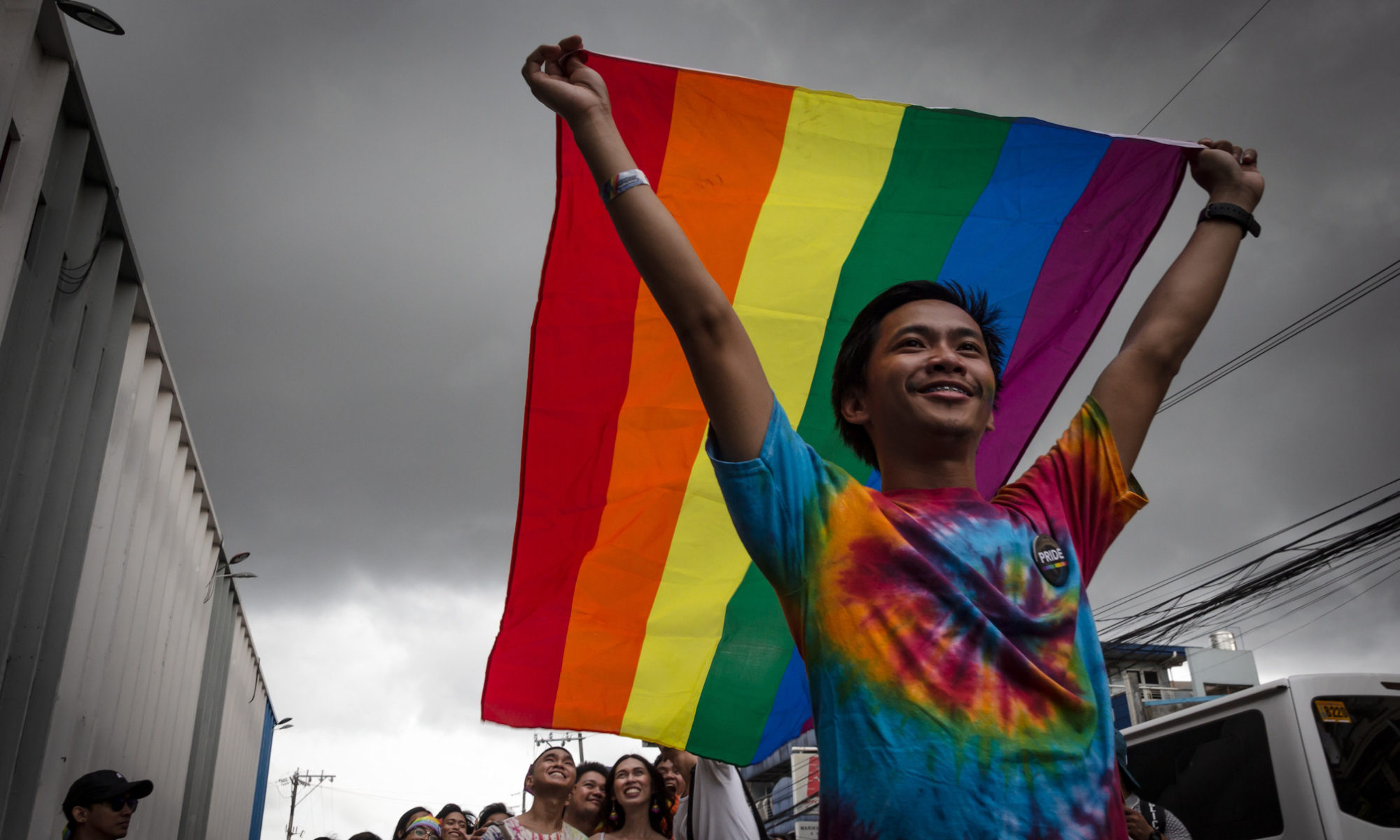
Der Amnesty-Bericht zur weltweiten Lage der Menschenrechte 2025/26 dokumentiert eine verschärfte globale Menschenrechtskrise.
Secretary General Agnès Callamard’s reflections on the state of human rights in 2025/26
Throughout 2025, voracious predators stalked through our global commons, hulking hunters plundering unjust trophies. Political leaders like Trump, Putin and Netanyahu, among many others, carried out their conquests for economic and political domination through destruction, suppression and violence on a massive scale.
As Amnesty International has long warned, a global environment where primitive ferocity could flourish has been long in the making. But in 2025, accelerants were recklessly poured over dry kindling, as sharp U-turns were taken away from the international order that had been imagined out of the ashes of the Holocaust and the utter destruction of world wars, and constructed slowly and painfully, albeit insufficiently, over these past 80 years.
Yet rather than confront the predators, in 2025 most governments opted for appeasement, including most European states. Some sought even to imitate the predator. Others ducked for cover under their shadow. A mere handful chose to stand up to them.
One firebreak after another was breached: through complicity in, or silence about, the commissions of genocide and crimes against humanity; and through imposition of crippling sanctions against those working to deliver justice. That’s how 2025 will be remembered: for its bullies and predators; for the pouring of the politics of appeasement onto burning betrayals of international obligations; for self-defeatism; for states playing with a fire that threatens now to burn us all and scorch the future too, for generations to come.
Not an illusion
Some might suggest that by 2025 there was little left to undermine, the now failing global system delivering little other than greater power to the already powerful Western world. Some claim 2025 simply laid bare a pleasant illusion.
Those narratives distort the history of the post-World War II order. They erase the masterful work of generations of diplomats and civil society activists the world over, who, often against the wishes of far more powerful actors, helped imagine, shape and advocate for that rule-based order, and never gave up demanding that the order live up to its stated purpose.
The 1948 adoptions of the Universal Declaration of Human Rights and the Genocide Convention, and the many other normative instruments debated and adopted over the subsequent 80 years, are no illusion. They are tangible manifestations of a post-world war order founded on a multilateral system of equal states, rooted in universal human rights, and dedicated to non-recurrence of atrocities.
We all know that the system’s promise remains unfulfilled, but it is not for the promise-breaker to declare that promise a fantasy.
Moreover, that system was never just in the hands of the powerful. At its very inception, smaller nations outmanoeuvred the large. It was they who ensured that the Universal Declaration promised human rights for all people universally, without distinction, and equally between men and women. In the years thereafter, waves of anti-colonial struggles and emancipatory movements took nourishment and additional legitimacy in those very affirmations, often against the wishes of Europe. It was the newest states of Africa, the Caribbean, Latin America, and Asia, who, along with civil society the world over, led the development of the Covenant on Economic and Social Rights, the Convention on the Right of the Child, and the Convention for the Elimination of Racial Discrimination, against the will of the United States of America.
Under the influence of international human rights instruments, these past 80 years have seen deep transformations of our world for the better. The direction of travel has bent towards greater justice, towards addressing power imbalances between states, towards recognition and protection of the rights of racialized and Indigenous peoples, of women, of LGBTI persons, and by enshrining in domestic laws universal commitments on substantive equality, sexual and reproductive rights, and labour rights, to name but a few.
Make no mistake: reports of the death of the international rule-based order are greatly exaggerated. But the death notices are issued not because the system is ineffective, inefficient or too slow, but because it is not serving the interests of the politically and economically powerful and their appeasers. They now wish us to believe it was all but a chimera, a pleasant fiction that has outlived its purpose.
This must be resisted by defending normative guardrails, disrupting the worst attacks against the 1948 rule-based order and transforming it for greater fulfilment and reach of its promises.
That resistance does not mean papering over the raging double standards that have dogged its implementation or discounting its ineffectiveness or paralysis. Nor does it mean ignoring the multiple violations of its universal promise, with millions denied its protections – including the Palestinian victims of Israel genocide, apartheid and occupation; Afghan women whose country has become an open-air prison; or Iranian protesters who, early in 2026 were subjected to perhaps the largest mass-killing in Iran’s recent history.
Nor does resisting Donald Trump or Vladamir Putin’s attacks on the rule-based order mean accepting China’s vision. That is no alternative, for China too has consistently rejected universal human rights, and monitoring of compliance with global conventions. The Chinese search for hegemony may take a different form and be delivered with different tools, but it has the same outcome: inequity and repression.
A new order in the making?
What alternative to the imperfect global experiment initiated in 1948 is on offer? The undermining of international law, attacks against the International Criminal Court (ICC), withdrawal from international conventions, abandonment of UN agencies. Having paralysed the UN Security Council through unconscionable abuse of their veto powers, the predators now assert that peace and security mechanisms don’t work and seek to replace them with self-serving alternatives.
The predatory world order discards racial and gender justice, mocks women’s rights, declares civil society a common enemy and rejects international solidarity. It directs an unprecedented hike in military investments, enables unlawful arms transfers and imposes sweeping cuts to international aid budget, risking millions of avoidable deaths and decimating thousands of organizations working for human rights, sexual and reproductive rights or press freedom.
This predatory alternative world order silences dissent and suppresses protests, deploys dehumanizing rhetoric, and facilitates hate crimes and the weaponization of the law. It is predicated not on respect for our common humanity, but on trade supremacy and technological hegemony.
At the beginning of 2026, the vision for that new order was expounded by US Secretary of State Marco Rubio as a Western alliance of Christian people led by the US, rooted unapologetically and proudly in a common heritage, romantically described throughout the speech. But the words cannot hide the facts: this is a history too of domination, colonialism, slavery and genocide.
In that “new” but all too familiar system, the predators and their appeasers rebuke, deter and persecute those seeking equality within and between states. Atonement for past injustices is mocked. War, not diplomacy, rules: Israel’s genocide against Palestinians in Gaza continues in spite of the so-called ceasefire; Russia’s crimes against humanity in Ukraine escalate; the USA engages in extraterritorial extrajudicial killings and unlawful attacks on Venezuela and Iran, and threats to take over Greenland; multiple crimes in the Democratic Republic of Congo, Myanmar and Sudan remain unchecked; and people in the Middle East are plunged again into a chaos that threatens to engulf more and more countries.
That is a vision for naked hegemony, for a world without a moral compass.
A turnaround in 2026?
Few states have found the courage to speak up against the roaring of cannons over diplomacy. Some joined the Hague Group, a bloc of states committed to “coordinated legal and diplomatic measures” in defence of international law and solidarity with the people of Palestine. Others contributed to South Africa’s genocide case against Israel. Canada called on the Middle Powers to come together and invest in collective resilience. A few, such as Spain, consistently denounced the dismantling of normative guardrails.
In early 2026, some European states appeared to take fuller measure of the risks, refusing to join the US and Israeli attacks on Iran and committing to protect strategic sovereignty, but along with the European Union fell short of reasserting the primacy of international law and universal rights.
Determination to stand up for global norms
A fear of retaliation for speaking out against the powerful is palpable the world over. But there was also much evidence throughout 2025 of governments continuing to lay down the brickwork of the allegedly “illusory” international rule-based order and of widespread civil society determination to stand up for and enhance global norms.
The Council of Europe established the Special Tribunal for the Crime of Aggression against Ukraine. The ICC issued arrest warrants against two Taliban leaders for the crime against humanity of gender-based persecution, and unsealed warrants against Libyan nationals accused of war crimes and crimes against humanity. A hybrid criminal court in the Central African Republic convicted six former members of an armed group for war crimes and crimes against humanity. The UN Human Rights Council established an independent investigative mechanism for Afghanistan. Rodrigo Duterte, former president of the Philippines, was handed over to the ICC under a warrant for the crime against humanity of murder. In the First Committee of the UN General Assembly, 156 states voted for negotiations on an international instrument on autonomous weapons systems. In July, the EU extended the scope of goods covered by its pioneering Anti-Torture Regulation. Significant progress was made in 2025 towards a binding UN tax convention. At COP30, civil society and trade union pressure helped adoption of a Just Transition Mechanism for the protection of workers and communities as countries shift to clean energy and a climate-resilient future. The International Court of Justice and the Inter-American Court of Human Rights issued advisory opinions affirming state human rights obligations to respond to climate damage. Colombia and the Netherlands agreed to co-host the First International Conference on Transitioning Away from Fossil Fuels in April 2026. Countrywide strikes and actions by dockworkers mounted in France, Greece, Italy, Morocco, Spain and Sweden disrupted arms shipment routes to Israel. The governments of Belgium, Bolivia, Canada, Colombia, Cuba, Honduras, Malaysia, Namibia, Slovenia, South Africa and Spain committed in 2025 to modify or halt arms trade with Israel. Women gained expanded abortion rights in Denmark, the Faroe Islands, Norway, Luxemburg, and Malawi. In Nepal, a youth-led uprising against corruption toppled the government.
Resist, we did. Resist, we must. And resist, we will.
This is not just another “challenging period”. It is the challenging moment, threatening to destroy all that was built up over the last 80 years. We the people will rise to this historical moment. We will have the ambition these times demand, and the courage to also change with them. We must do so as politicians and diplomats; as activists and consumers; as workers and producers; as an electorate and as investors; as persons of faith and people with the courage of our convictions. Together, we must build strong multi-stakeholder coalitions and encourage states to do the same.
Today “still we rise” means focusing on what must be defended as a matter of priority and at all costs, not only for the sake of our human rights but those of future generations too. In our resistance, we must also clearly identify what must be disrupted as a matter of absolute priority, among the tsunami of laws, policies, and practices unleashed by predatory State and non-State actors. Resistance also means getting clear about what must be transformed. Given the unprecedented pace and amount of change underway, we will have to turn once again to the power of our imagination and the daring of our creativity. We must imagine a transformed and transformative human rights vision for the world that we are becoming, not merely defend human rights in terms of the world we once were. Together, we must then lead that transformation into existence, with all our creativity, determination and resilience.
History is not just something that is done to us. It is also ours to make. And for the sake of humanity, it’s time to make human rights history.
Agnès Callamard
Secretary General
Find out more about the state of the world’s human rights
The post Secretary General Agnès Callamard’s reflections on the state of human rights in 2025/26 appeared first on Amnesty International.
Amnesty International calls on states to stop predatory, anti-rights order from taking hold in pivotal moment for humanity
- Predatory attacks on multilateralism, international law and civil society marked 2025
- The alternative on offer is a racist, patriarchal, unequal and anti-rights world order
- Protesters, activists and global bodies are working to resist, disrupt and transform
The world is on the brink of a perilous new era, driven by powerful states’, corporations’ and anti-rights movements’ assaults on multilateralism, international law and human rights, Amnesty International warned today upon launching its annual report, The State of the World’s Human Rights. States, international bodies and civil society must reject the politics of appeasement and collectively resist these attacks to prevent this new order from taking hold, the organization said in its assessment of the human rights situation in 144 countries.
“We are confronting the most challenging moment of our age. Humanity is under attack from transnational anti-rights movements and predatory governments determined to assert their dominance through unlawful wars and brazen economic blackmail,” said Amnesty International’s Secretary General, Agnès Callamard.
“For years, Amnesty International has denounced the gradual disintegration of human rights in every part of the world, warning of the consequences of flagrant rule-breaking by governments and corporate actors. We’ve also demonstrated time and again how double standards and selective compliance with international law have weakened the multilateral system and accountability.
This is a direct assault on the foundations of human rights and the international rules-based order by the most powerful actors for the purpose of control, impunity and profit.
Amnesty International’s Secretary General, Agnès Callamard
“What marks this moment as fundamentally different is that we’re no longer documenting erosion around the system’s edges. This is a direct assault on the foundations of human rights and the international rules-based order by the most powerful actors for the purpose of control, impunity and profit.
“The spiralling conflict in the Middle East is a product of this descent into lawlessness. Following the initial unlawful US-Israeli attacks in violation of the UN Charter, which triggered Iran’s indiscriminate retaliation, the conflict has quickly morphed into an open warfare against civilians and civilian infrastructure, exacerbating the already catastrophic suffering of people across the region. It is now engulfing countries around the world, impacting populations everywhere, and threatening the livelihood of millions. This is what happens when the norms, institutions and legal framework painstakingly built to safeguard humanity are hollowed out for the purpose of domination.”
“Amnesty’s 2025 annual report moves beyond warning of imminent breakdown to documenting a collapse now underway, and exposing its devastating consequences for human rights, global stability and the lives of millions in 2026 and beyond. It calls on states around the world to urgently reject the politics of appeasement embraced in 2025, overcome fear, and resist in words and actions the construction of a predatory world order.”
Get the Amnesty International Annual Report 2025/26
Predatory attacks are accelerating the destruction of international law
The State of the World’s Human Rights,and Amnesty International’s documentation so far this year,detail pervasive crimes under international law and mounting attacks on the international justice system, which are gravely harming the foundations that underpin human rights globally.
Israel has maintained its genocide against Palestinians in Gaza, despite the October 2025 ceasefire agreement, and its system of apartheid over Palestinians, while accelerating the expansion of illegal settlements in the occupied West Bank, including East Jerusalem, and taking steps toward annexation. Israeli authorities have increasingly allowed or encouraged settlers to attack and terrorize Palestinians with impunity, and prominent officials have praised and glorified violence against Palestinians, including arbitrary arrests and the torture of detainees.
The United States of America has committed over 150 extrajudicial executions by bombing boats in the Caribbean and the Pacific, and carried out an act of aggression against Venezuela in January 2026. Russia has intensified its aerial attacks on critical civilian infrastructure in Ukraine, while Myanmar’s military used motorized paragliders to drop explosive munitions on villages last year, killing dozens of civilians, including children.
The United Arab Emirates has fuelled the conflict in Sudan by providing advanced Chinese weaponry to the Rapid Support Forces, who seized control of El Fasher last October after an 18-month siege of the city and committed mass civilian killings and sexual violence. In the Democratic Republic of Congo (DRC), the M23 armed group, with the active support of Rwanda, captured the cities of Goma and Bukavu and unlawfully killed civilians and tortured detainees.
In early 2026, the USA and Israel’s unlawful use of force against Iran, in violation of the UN Charter, has triggered retaliatory Iranian strikes on Israel and Gulf Cooperation Council countries, while Israel has escalated its attacks on Lebanon. From the killing of over 100 children in an unlawful US strike on a school in Iran, to the devastating attacks by all parties on energy infrastructure, the conflict has endangered the lives and health of millions of civilians and threatens to inflict vast, predictable and long-term civilian and environmental harm, impacting access to energy, healthcare, food and water across an already turbulent region and beyond.
In Afghanistan, the Taliban escalated its predatory policies against the female population, with further bans prohibiting them from education, work and freedom of movement, while in Iran, the authorities massacred protesters in January 2026, in what was likely the most lethal such repression for decades.
The USA, Israel and Russia further undermined international accountability mechanisms, and the International Criminal Court (ICC) in particular, last year. The Trump administration enacted sanctions against ICC staff, collaborators and the UN Special Rapporteur on the Occupied Palestinian Territory, while Russian courts issued arrest warrants against ICC officials. Several other states withdrew or announced their intention to withdraw from the Rome Statute and treaties banning cluster munitions and anti-personnel mines.
To appease aggressors is to pour fuel on a fire that will burn us all and scorch the future for generations to come.
Agnès Callamard
The vast majority of states have been unwilling or unable to consistently denounce predatory acts by the USA, Russia, Israel or China, or to chisel out diplomatic solutions. The European Union and most European states appeased US assaults on international law and multilateral mechanisms. They have failed to take meaningful action to stop Israel’s genocide or end the irresponsible arms and technology transfers fuelling crimes under international law around the world. They have also been unwilling to enact blocking statutes to protect the targets of US sanctions, including on ICC judges and prosecutors. Italy and Hungary declined to arrest individuals subject to ICC warrants in their territory, while France, Germany and Poland implied they would do the same.
“World leaders have been far too submissive in the face of attacks on international law and the multilateral system. Their silence and inaction are inexcusable. It is morally bankrupt and will bring nothing but retreat, defeat and the erasure of decades of hard-fought human rights gains. To appease aggressors is to pour fuel on a fire that will burn us all and scorch the future for generations to come,” said Agnès Callamard.
“Some may be tempted to dismiss the system built over the last 80 years as nothing but an illusion. This is to ignore the hard-fought achievements towards the recognition of universal rights, the adoption of multiple international conventions and national laws protecting against racial discrimination and violence against women, enshrining the rights of workers and trade unions, and recognizing the rights of Indigenous Peoples. It is to forget the poverty addressed, the reproductive rights strengthened and the justice delivered when states chose to uphold the UN Charter and the Universal Declaration of Human Rights.
“The political and economic predators, and their enablers, are declaring the multilateral system dead not because it’s inefficient but because it’s not serving their hegemony and control. The response is not to proclaim it an illusion or beyond repair, but to confront its failures, end its selective application and keep transforming it so that it’s fully capable of defending all people with equal resolve.”
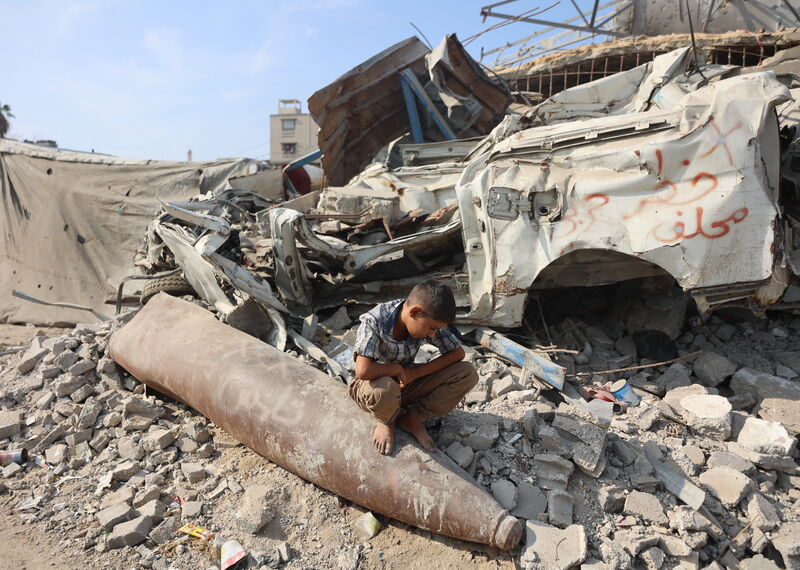
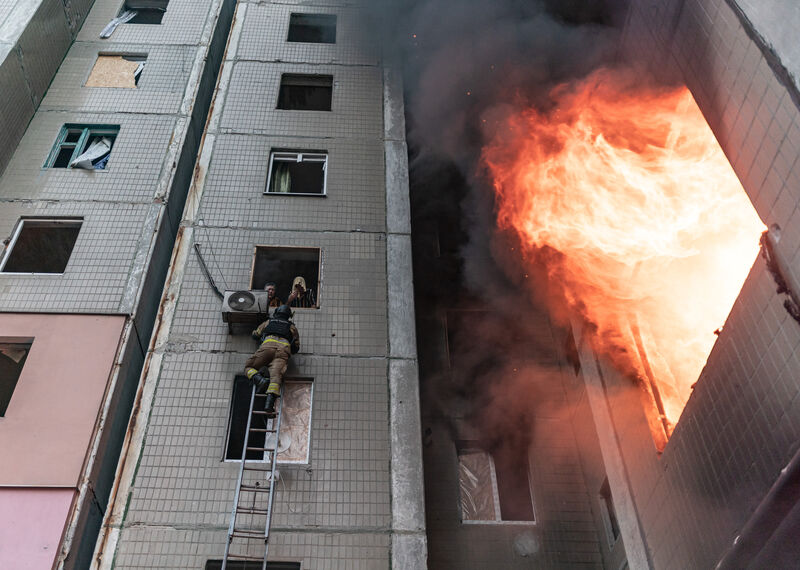
Ramped-up assaults on civil society spread around the world
The proliferation of attacks on civil society and social movements deepened in 2025, with sustained efforts to silence and disempower human rights defenders, organizations and dissenters spreading to almost every part of the world.
Authorities in Nepal and Tanzania were particularly brazen in their unlawful use of lethal force to repress protests expressing political and socio-economic grievances. The governments of Afghanistan, China, Egypt, India, Kenya, the USA and Venezuela, among others, also violently repressed protests, criminalized dissent through counterterrorism and security laws, or used abusive policing tactics, enforced disappearances or extrajudicial executions.
In the United Kingdom, authorities proscribed Palestine Action, a direct-action protest network primarily targeting Israeli arms manufacturers and their subsidiaries, under overly broad counterterrorism laws and arrested more than 2,700 people for peacefully opposing the ban. The UK High Court ruled this unlawful in February 2026. The government is appealing the decision.
Turkish authorities detained hundreds of peacefully protesters after the arrest of Istanbul mayor and presidential candidate Ekrem İmamoğlu, who is among over 400 people facing politically motivated prosecution under alleged corruption charges.
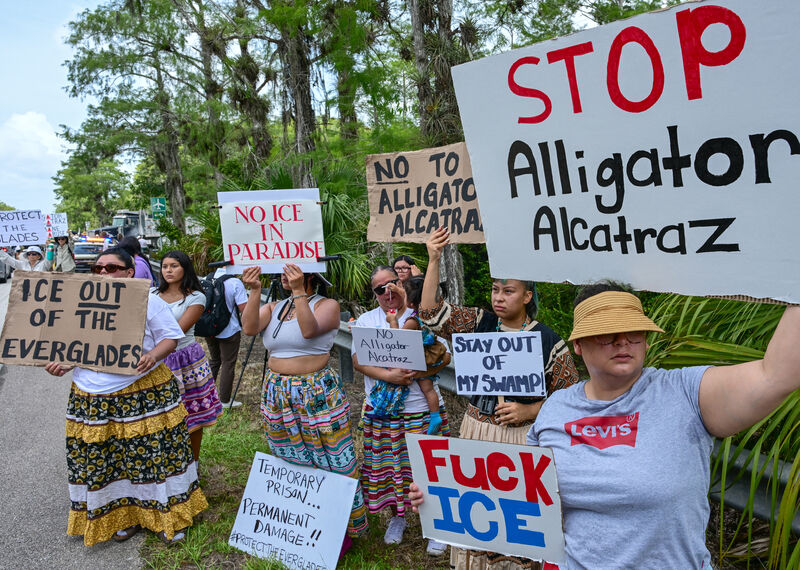
US authorities launched an unlawful clampdown on migrants, refugees and asylum seekers, committing unnecessary and excessive use of force, racial profiling, arbitrary detention, and practices that amounted to torture and enforced disappearance. In Latin America, states such as Ecuador, El Salvador, Nicaragua, Paraguay, Peru and Venezuela adopted or reformed legal frameworks that impose disproportionate controls on civil society organizations directly impacting their ability to operate, access resources, support communities and defend human rights.
Many governments, facilitated by corporate actors, used spyware and digital censorship to restrict freedom of expression and the right to information. US authorities used AI-powered surveillance tools to target foreign students expressing solidarity with Palestinians with arrest and deportation. Serbia’s government used spyware and digital forensics tools against student protesters, civil society and journalists. Kenyan authorities systematically deployed technology-facilitated repression tactics, including online intimidation, threats, incitement to hatred and unlawful surveillance, to suppress youth-led protests.
The USA, Canada, France, Germany and the UK, among others, announced or enacted sweeping cuts to international aid budgets, despite knowing they would likely result in millions of avoidable deaths, and in several cases while committing to massive parallel hikes in military expenditure. This has had a catastrophic impact on NGOs’ efforts to advance press freedom, climate resilience, and gender justice, to protect refugees, migrants and asylum seekers, and to provide healthcare and sexual and reproductive rights.
Many states continued to resist reining in the aggressive tax avoidance and evasion by billionaires and corporate giants while weakening further restraints on corporate power. In the USA, strategic lawsuits against public participation had a chilling effect on civil society, with one such lawsuit resulting in a court ordering Greenpeace to pay a fossil fuel company $345 million (reduced from an initial $660 million).
In a context dominated by the US president describing climate change as a “scam”, governments did nowhere near enough to address climate displacement, equitably transition away from fossil fuels, or adequately ramp up finance for climate action – even as the UN Environment Programme warned that the world is on track to reach 3°C above pre-industrial levels by 2100.
“What alternative do the bullies and predators offer to the imperfect global experiment they’re so intent on destroying? The world order they propose is one that mocks and discards racial, gender and climate justice, treats civil society as an enemy, and rejects international solidarity. It is built on silencing dissent, weaponizing the law and dehumanizing those deemed ‘others’. Their vision of the world is predicated not on respect for our common humanity, but on military force, trade domination and technological hegemony. It is, ultimately, a vision with no moral compass,” said Agnès Callamard.
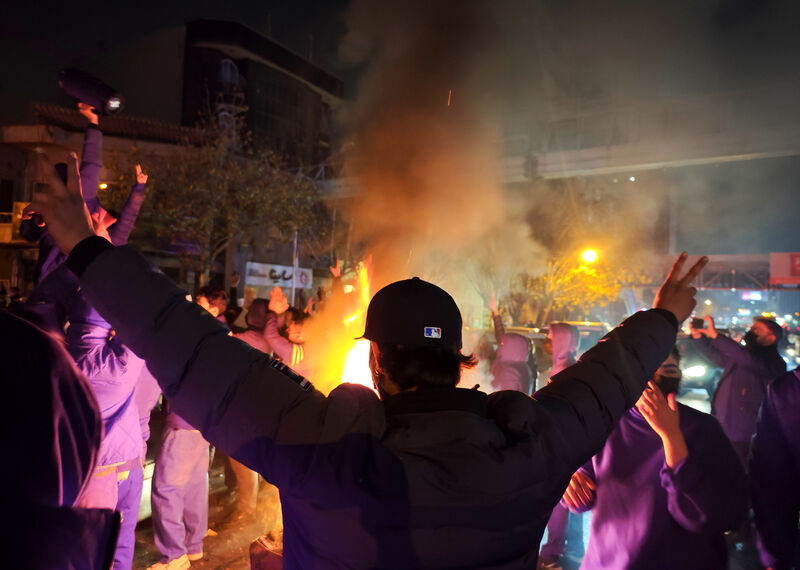

Protesters, civil society and international bodies lead efforts to resist, disrupt and transform
Undeterred by adversity, millions around the world are resisting injustice and authoritarian practices.
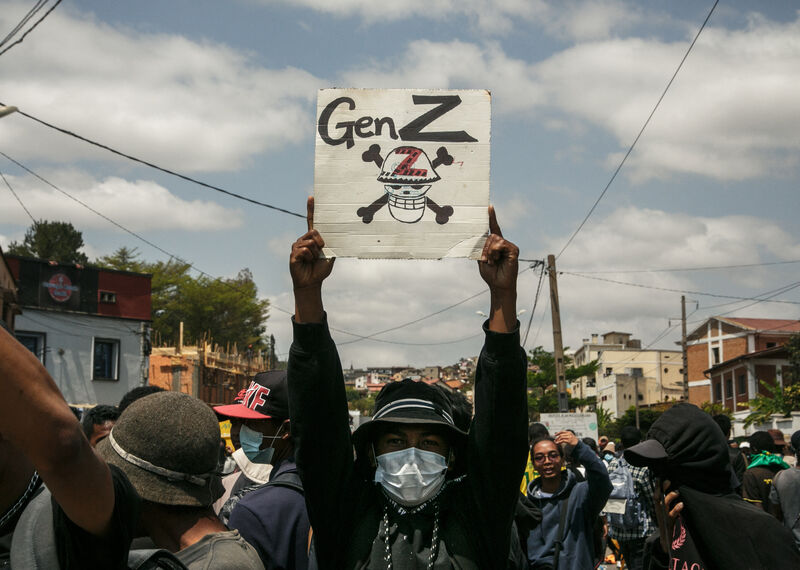
Gen Z protests swept over a dozen countries in 2025, including Indonesia, Kenya, Madagascar, Morocco, Nepal and Peru, and around 300,000 people defied Hungary’s ban on Budapest Pride to defend LGBTI rights. Throughout early 2026, demonstrators from Los Angeles to Minneapolis have organized street by street and block by block against violent and highly militarized US immigration enforcement raids.
Mass demonstrations against Israel’s genocide spread around the world last year and humanitarians from over 40 countries launched flotillas to show solidarity with Palestinians. Global activism against the flow of arms to Israel expanded, with dockworkers in France, Greece, Italy, Morocco, Spain and Sweden seeking to disrupt arms shipment routes. Activism and legal pressure also led several states to restrict or ban arms exports to Israel.
While many governments appeased attacks on international justice, several states and bodies bucked this trend by demonstrating their commitment to multilateralism and rule of law. A growing number acknowledged that Israel was committing genocide and several states joined the Hague Group, a collective committed to holding Israel accountable for violations of international law, and contributed to South Africa’s case against Israel before the International Court of Justice (ICJ).
The Philippines handed former president Rodrigo Duterte over to the ICC to face charges of the crime against humanity of murder, and the court issued warrants against two Taliban leaders for gender-based persecution. The Council of Europe and Ukraine agreed to establish the Special Tribunal for the Crime of Aggression against Ukraine, and a hybrid court in the Central African Republic convicted six former members of an armed group for war crimes and crimes against humanity.
For the sake of humanity, the time to make history is now.
Agnès Callamard
The UN Human Rights Council established an independent investigative mechanism for Afghanistan and a fact-finding mission and Commission of Inquiry on Eastern DRC, and expanded the mandate of its fact-finding mission on Iran. Significant progress was made toward a binding UN tax convention and a Crimes Against Humanity Convention, and the ICJ and the Inter-American Court of Human Rights issued landmark advisory opinions affirming state human rights obligations to respond to climate damage.
More states have started speaking out against authoritarian practices and attacks on the rules-based order in 2026, with the Spanish government notably taking principled stands, but such calls must be backed up with decisive and sustained action.
“From city streets to multilateral forums, 2025 brought powerful displays of resistance and solidarity from protesters, diplomats, political leaders and many others around the world. We must build on their example and courage and forge bold coalitions to reimagine, rebuild and re-centre the global order around human rights, the rule of law and universal values,” said Agnès Callamard.
“Let 2026 be the year we assert our agency and demonstrate that history is not merely something imposed upon us; it is ours to make. And for the sake of humanity, the time to make history is now.”
Find out more about the state of the world’s human rights
The post Amnesty International calls on states to stop predatory, anti-rights order from taking hold in pivotal moment for humanity appeared first on Amnesty International.
Madagascar: Immediately end repression of Gen Z activists and protect right to protest
Reacting to an intensifying campaign of repression against Gen Z activists and civil society members by Madagascar’s military authorities, which took power following a coup in October 2025, Amnesty International’s Regional Director for East and Southern Africa, Tigere Chagutah, said:
“Malagasy authorities are using deliberately vague charges of criminal conspiracy, threats to national security and destabilization of the state to silence Gen Z activists and civil society members. No one should face arbitrary arrest, detention or enforced disappearance simply for voicing their concerns about the running of their country.
Malagasy authorities are using deliberately vague charges of criminal conspiracy, threats to national security and destabilization of the state to silence Gen Z activists and civil society members.
Tigere Chagutah, Amnesty International’s Regional Director for East and Southern Africa
“These authoritarian practices constitute clear violations of the rights to freedom of expression, association and peaceful assembly. They are aimed at entrenching a climate of fear, while evading accountability over government policies, appointments, and the management of public resources.
They must also respect, protect and facilitate the right of assembly during protests planned for 18 April.
Tigere Chagutah
“The authorities in Madagascar must immediately end arbitrary arrests, disclose the fate and whereabouts of all those forcibly disappeared, and unconditionally release all individuals detained solely for exercising their rights. They must also respect, protect and facilitate the right of assembly during protests planned for 18 April.”
Background
Madagascar’s military authorities seized power in October 2025 following youth-led protests in 2025 demanding improved service delivery, particularly access to water and electricity, as well as more effective and inclusive governance.
The new authorities promised reforms but instead, they have deepened repression, under the pretext of a zero-tolerance anti-corruption campaign and used broadly framed charges of criminal conspiracy, threats to national security and destabilization to target and silence Gen Z activists, civil society members and those linked to the previous regime.
The post Madagascar: Immediately end repression of Gen Z activists and protect right to protest appeared first on Amnesty International.
Burkina Faso: Dissolution of more than a hundred NGOs and associations shows intensifying crackdown on civil society
Reacting to the announcement of the dissolution of 118 NGOs and associations in Burkina Faso, Ousmane Diallo, Senior Researcher on Sahel at Amnesty International’s Regional Office for West and Central Africa, said:
“We are alarmed and deeply concerned by this flagrant attack on the right to freedom of association. Dissolving NGOs and associations is at odds with the Constitution of Burkina Faso, which guarantees freedom of association and union. The various constitutional amendments have never questioned this principle.
“This dissolution is also entirely inconsistent and incompatible with Burkina Faso’s international human rights obligations including under the African Charter on Human and Peoples’ Rights and the International Covenant on Civil and Political Rights to which it is a state party.
This dissolution is part of a much broader effort to silence civil society through a combination of repressive tactics.
Ousmane Diallo, Senior Researcher on Sahel at Amnesty International’s Regional Office for West and Central Africa
“Civil society organizations play a critical role in the promotion and protection of human rights and the rule of law. Authorities must immediately rescind this decision and allow them to freely carry out their work without fear of reprisals.
“This dissolution is part of a much broader effort to silence civil society through a combination of repressive tactics that include abusive legislation, intimidation, harassment, arbitrary detention, and prosecution of human rights defenders and activists.
“Authorities must end their restrictions on civic space and attacks on human rights and uphold the country’s international human rights obligations and commitments.”
Background
On 15 April 2026, Burkina Faso’s Ministry of Territorial Administration and Mobility announced the dissolution of 118 NGOs and associations “in accordance with current legal provisions,” as well as a ban on their activities, without any further justifications.
On 29 January 2026, all political parties were dissolved after three years of suspension.
In November 2025, a presidential decree required all national and international NGOs to close their accounts with commercial banks and transfer them to a newly created state-controlled bank, within the National Treasury, leading to the risk of arbitrary freezing of funds, financial surveillance, and targeted sanctions.
Burkina Faso has been ruled by a military regime following two coups in January and September 2022. In May 2024, the military transition, which was scheduled to end on 2 July 2024, was extended by five years.
The post Burkina Faso: Dissolution of more than a hundred NGOs and associations shows intensifying crackdown on civil society appeared first on Amnesty International.