Fast-food chain Jack in the Box began testing its new Unchicken Sandwich at locations in Reno, Nevada, and Monterey and Salinas, California. The sandwich, which is available in spicy or classic flavors, will be available at these locations until December 12.
The current Raised & Rooted filet on Jack’s Unchicken Sandwich contains no milk, eggs or other animal products, catering to our flexitarian and vegetarian consumers. While the filet is 100% plant based, the sandwich does have egg-based mayonnaise so it is not Certified Vegan.
The sandwich comes with lettuce and tomato, and it can be made vegan by asking for no mayo. (You can bring it home and add your favorite vegan mayo instead.) At $6.99 for a combo with fries and a drink, it’s similar in price to other sandwiches on the menu.
Rising consumer demand has paved the way for more vegan fast-food options, which will only continue to increase. Jack in the Box’s announcement follows multiple successful tests of KFC’s vegan Beyond Fried Chicken, a result of nearly two decades of PETA action against the company. After being pushed by PETA, many other major chain restaurants have launched vegan items, including Carl’s Jr., Del Taco, and Dunkin’, making it easier than ever to go vegan. If you’ve been thinking about trying to eat more compassionately, our mentor program can help:
PETA has a long history of supporting Pride marches and protests against racism, and now it’s putting up an ad that links every form of injustice, from homophobia to denying rights to immigrants to speciesism—the belief that, despite their complex social structures and intelligence, all other animal species are inferior to humans.
Although other animals differ from humans in various ways, those differences do not justify exploitation. It’s as indefensible as denying women the right to vote because they’re different from men or forcing children to work in sweat shops because they’re powerless to defend themselves. Other animals are the same as humans in the ways that matter: They feel pain, joy, love, fear, and despair—and only tyranny allows them to be exploited in laboratories, in the meat and dairy industries, on fur and wool farms, at roadside zoos and marine parks, and wherever else they’re treated as commodities rather than individuals.
“Bigotry and bullying are always wrong—the identity of the victim is irrelevant,” says PETA President Ingrid Newkirk. “PETA is encouraging everyone to challenge prejudice, confront cruelty, and work hard for a fair and peaceful world for all.”
Because of prejudice, billions of cows, chickens, pigs, and other animals are cut to pieces in slaughterhouses every year; highly social monkeys are caged alone in laboratories; sheep are beaten with metal shears and mutilated on wool farms; and tigers are whipped to force them to perform.
To erode speciesism, PETA recommends buying only cosmetics and household products that weren’t tested on animals, choosing vegan foods and fashions, avoiding entertainment that uses animals, and otherwise rejecting all forms of animal exploitation.
The ad is located at a bus shelter on 16th Street N.W., 75 feet south of M Street N.W., facing south. PETA is also placing the ad in Baltimore, and the group offers a T-shirt and lawn sign featuring the same message at the PETA Shop.
PETA’s motto reads, “Animals are not ours to experiment on, eat, wear, use for entertainment, or abuse in any other way.” For more information, please visit PETA.org or follow the group on Twitter, Facebook, or Instagram.
PETA has filed a notice in Monterey County Superior Court to appeal a court decision dismissing PETA’s lawsuit against the Monterey Zoo and its president, Charlie Sammut, a case involving the use of canes to threaten and control the elephants it exploits.
PETA’s lawsuit alleges that the Monterey Zoo engages in unlawful business practices by using the canes in violation of California’s ban on bullhooks—weapons that resemble a fireplace poker with a sharp hook on one end—and other devices “designed to inflict pain for the purpose of training or controlling the behavior of an elephant.” It asks the court to order the roadside zoo to stop using such objects immediately.
“Elephants never forget the pain they’ve been through, so they suffer every day that they live under the threat of continued violence,” says PETA Foundation Deputy General Counsel Caitlin Hawks. “Every other business in California complies with the state’s ban on controlling elephants with weapons, and PETA is asking the court to compel the Monterey Zoo to do the same.”
PETA’s lawsuit also alleges that the Monterey Zoo violates California’s worker protection laws by controlling elephants using old, circus-style “free contact,” in which handlers share the same unrestricted space with elephants and use domination, force, and punishment to make them obey. The California Division of Occupational Safety and Health cited the Monterey Zoo after a June 2018 incident in which a handler took “aggressive action” toward an elephant named Paula, who stepped on, “began thrashing,” and threw the handler, who was hospitalized.
In its dismissal, the court ruled that the Monterey Zoo’s use of weapons on elephants somehow falls under the protection of “free speech”—a notion that PETA will correct before the court of appeals.
PETA—whose motto reads, in part, that “animals are not ours to use for entertainment”—opposes speciesism, which is a human-supremacist worldview. For more information, please visit PETA.org or follow the group on Twitter, Facebook, or Instagram.
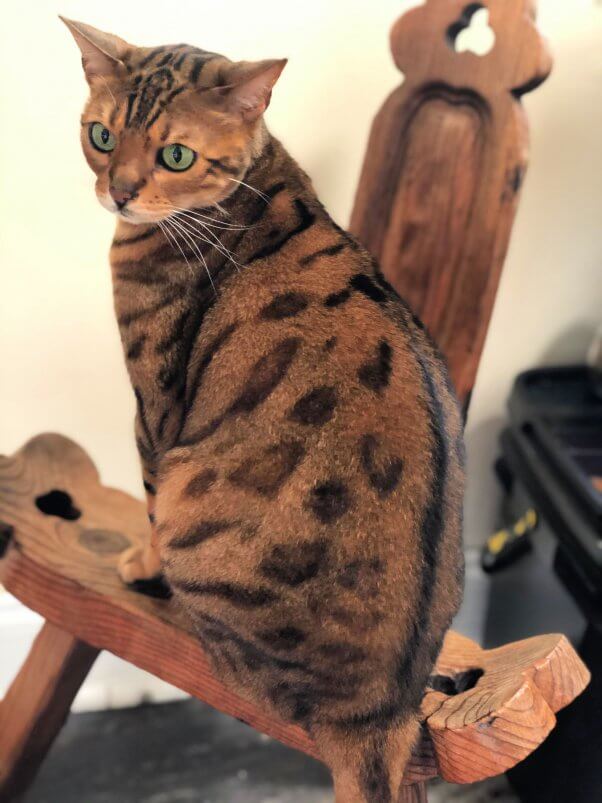
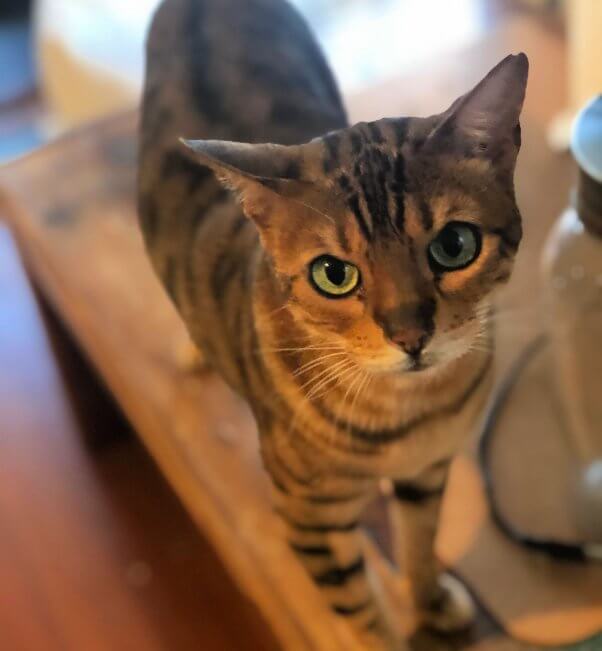
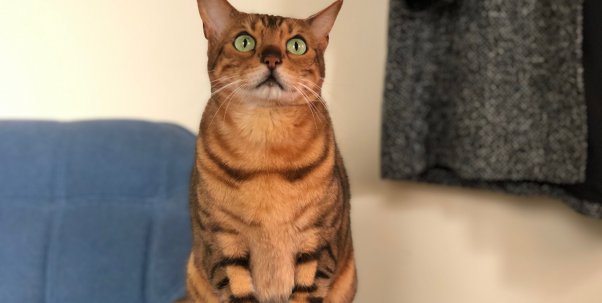
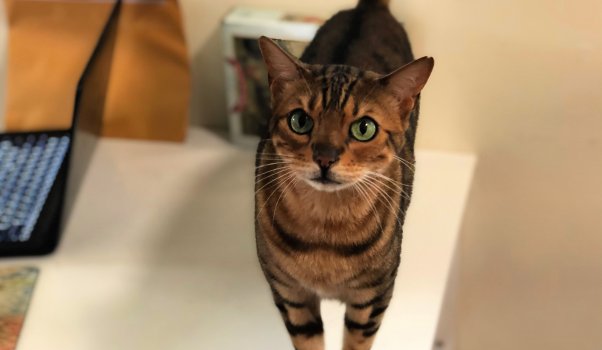
Judging by her stunning good looks, which are perhaps surpassed only by her sparkling personality, it’s little wonder that Indigo’s former guardians fell hard for her and jumped at the chance to adopt her.
Things went great at first, but as can happen with any young family, circumstances changed. Kids came along, as well as more animals, and then hard times caused by COVID-19 hit. Fortunately, when the family realized that they simply didn’t have the time or resources to care for Indigo properly, they reached out to PETA for help.
While this 8-year-old Bengal cat mix is undoubtedly a beauty queen, she’s no diva. She may look like royalty, but as her foster family can attest, she’s not too grand to let her hair down and play with dogs, cats, and kids alike.
Perfection on four legs, Indigo is more proof (as if it were needed) that there is nothing “wrong” with homeless animals. They usually become homeless through no fault of their own, e.g., because their guardians lose their jobs, get evicted, get divorced, or experience other life-altering events that have nothing to do with the animals themselves.
November is “Adopt a Senior Pet” Month, but you don’t have to wait until then to tune your dial to Adopt@PETA.org and find out how to give this “Indigo girl” a reason to sing a happier song.
Coconut milk is a popular choice for those who don’t want to support cruelty to animals by using cow’s milk. However, the process of obtaining coconuts for milk and other products can involve the appalling treatment of primates.
Where Coconut Milk Comes From
There are about 80 varieties of coconut palms, which are distinguished by characteristics such as “dwarf” or “tall.” The palms are grown on plantations and farms as far north as Hawaii and as far south as Madagascar, but the world’s top producers of the fruit are in Southeast Asia.1,2
Coconut water and coconut milk are two different products. Coconut water is found naturally within young, green fruits. Coconut milk is made by grating flesh from a brown, mature coconut, soaking it in water and then straining it to produce a milk-like consistency. Coconut milk has long been a staple of Asian cuisine, and the worldwide trend toward healthier food has led to a boom in sales of alternatives to cow’s milk, with an estimated market value in the billions of dollars.3 Thailand, one of the world’s largest exporters of coconuts, exported $395 million worth of coconut milk in 2019.4
Pig-tailed macaques, Macaca nemestrina, are a highly social species of primate found in the rainforests of Southeast Asia.5 Humans have been kidnapping pig-tailed macaque infants from their homes in nature, raising them, and forcing them to harvest coconuts and other fruit for centuries.6 One psychologist visited Thailand in 1967 to witness how monkeys were used for this purpose and wrote for the journal Science, “The training is based exclusively on punishment and avoidance of punishment.” He reported that monkeys were chained and strangled as part of the process and that “[t]he monkey gradually learns that if he keeps working on the coconut, he will not be unbalanced, choked, or whipped… [A] lesson was always terminated because the trainer was tired, not because the monkey had mastered a step. Food might be given afterwards, but generally not by the trainer, and often after considerable delay.” He remarked on the long hours the animals were forced to harvest coconuts. “What keeps them working for several consecutive hours, particularly when they are in treetops 25 meters above their master?” he asked. “Fear is certainly one factor, since an animal who stops working is whipped.”7
Decades later, nothing has changed on some of these farms.
A recent study published in PLOS ONE of more than 100 tourist attractions in Thailand found that where monkeys were forced to harvest fruit and/or to put on shows, they were found to be in cages and leashed with “impossible or extremely limited social contact between conspecifics … [an] absence of environmental enrichment, fundamental lack of hygiene, mistreatment by handlers and severe stress or discomfort as a result of show activities or intense interaction with visitors.” The study concluded that “[d]ue to missing accountability and limited regulation, valid concerns exist that the demand for wild animals through tourism is having a negative impact on the conservation of wild species and that the existing captive wild animals are suffering through inadequate husbandry conditions.”8
PETA Asia Investigation
In 2019, PETA Asia investigators visited eight farms where monkeys are forced to pick coconuts as well as several monkey-training facilities and a coconut-picking competition.
Monkeys were seen transported in cramped cages that were barely large enough for them to turn around in, and others were left in locked cages in the back of a pickup truck for extended periods of time, with no shelter from the driving rain. Denied the freedom to move around, socialize with others, or do anything else that would be natural and important to them, these intelligent animals were seen pacing and circling endlessly on the barren, trash-strewn patches of dirt where they were chained.
Investigators documented monkeys tethered by the neck with a metal collar, being forced to climb up and down the palm trees, which were as tall as 80 feet.
One investigator learned that if monkeys try to defend themselves, their canine teeth may be pulled out.
To earn more money with these animals, some trainers also forced them to participate in circus-style shows in which they entertained paying visitors by riding bicycles, shooting basketballs, and performing other demeaning and meaningless tricks.
Please visit PETA.org to learn more about this investigation.
Where Coconut Water Comes From
Coconut water in Thailand typically comes from coconuts grown on dwarf trees, including the Nam Hom variety, so harvesting them doesn’t require monkey labor.9 But that doesn’t necessarily mean that monkeys won’t be used. PETA has confirmed, however, that Harmless Harvest is among the companies that don’t use monkey labor for coconut water.
What You Can Do
Please, make sure that your coconut products don’t come from any companies that exploit monkeys, including Chaokoh.
Following PETA Asia’s investigation, more than 25,000 stores worldwide—including Food Lion, Walgreens, Duane Reade, Morrisons, Asda, Tegut, and Albert Heijn—will no longer sell Chaokoh products, and the majority will no longer buy any coconut products derived from Thai monkey labor.
Sign our petition urging Chaokoh to obtain its coconuts from farms that don’t use monkeys and stop supporting this cruel industry.