These Brands Shed Exotic Skins After Hearing From PETA

PETA’s work to change speciesist norms is giving the fashion industry a much-needed makeover. We’ve persuaded over two dozen companies to make the compassionate decision to ban exotic skins—and more are joining them all the time. Check out this list of brands that have banned exotic skins, from top lingerie retailer Victoria’s Secret to high-end designer Vivienne Westwood. Check back often to see which new companies have made this kind commitment!

The following companies banned exotic skins after hearing from PETA:

  • Adolfo Domínguez
  • Ahold Delhaize brands (including Bol.com)
  • Alexandre Birman
  • Ann Inc.
  • Arcadia Group (which owns Topshop)
  • ASOS
  • bebe
  • Chanel
  • Diane von Furstenberg
  • H&M
  • HUGO BOSS
  • Jil Sander
  • Karl Lagerfeld
  • L Brands (which owns Victoria’s Secret)
  • Mango
  • Nike
  • Nine West
  • Overstock.com
  • Paul Smith
  • Puma
  • PVH Corp. (including its brands Tommy Hilfiger and Calvin Klein)
  • Samuel Hubbard
  • Victoria Beckham

Why Companies Must Ban Exotic Skins

Animals are not ours to wear. In never-before-seen footage, a PETA Asia investigation revealed that horrific suffering is stitched into every item made with exotic skins: Workers seal pythons’ mouths and anuses with constriction bands, cut a hole in their head or tail, and then inflate them to death with an air compressor. Crocodiles are electroshocked, stabbed, inflated, and likely skinned alive just to make bags, shoes, belts, and other accessories that are sold around the world.

Cruelty is rampant in the exotic-skins industry. PETA and our international affiliates have exposed other cruel ways in which animals are killed for their skin:

  • Snakes are commonly nailed to trees, decapitated, or cut open and then skinned alive.
  • Workers kill crocodiles by ramming a metal rod down their spine.
  • Lizards are clubbed over the head, or their spine is severed with a chisel.

Take Action for Animals Used for Fashion

Using animals for clothing or accessories is a dying business. As people everywhere learn how animals suffer in the fashion industry, companies, fashion design universities, and even entire cities are banning animal-derived materials. You can do your part by always opting for stylish and sustainable vegan fabrics—and PETA makes it easy!

Although many companies have made the ethical decision to ban exotic skins, others are still holding out.

‘Skinned Snakes’ Protest Louis Vuitton

PETA members in Beverly Hills, California, urged kind shoppers to stay away from Louis Vuitton’s “killer” looks until it agrees to “bag” the use of exotic skins.

Tens of thousands of people have urged luxury brand LVMH—Louis Vuitton’s parent company—to ditch exotic skins, and you can join them. It takes only a minute using your phone or computer—so what are you waiting for?

Urge Louis Vuitton to Drop Exotic Skins Now!

The post These Brands Shed Exotic Skins After Hearing From PETA appeared first on PETA.
Race Bettors Cash In While the Winning Horse Dies on the Track

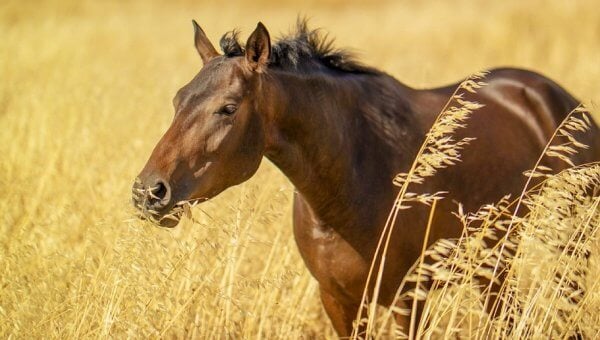
When a 5-year-old Thoroughbred crossed the finish line first in the $1.5 million Dubai Golden Shaheen race, what happened next should have stopped everyone cold: Zenden collapsed and died. But the bettors don’t seem to have paused for a moment—they cashed in on his “victory.”

Above, you can see how Zenden, a Kentucky-bred horse who was based in Florida, spent the final moments of his life: being whipped repeatedly by jockey Antonio Fresu while the two came down the final stretch of the race. Then, while presenting clear signs of a severe injury to his front left leg, he reportedly sustained a compound fracture and was euthanized on the track, mere minutes after winning the race and setting a track record. Even as his body was being taken away, money was changing hands.

This is not the first time a horse has broken down and died on the track immediately after a race.

After placing second in the 2008 Kentucky Derby, Eight Belles was euthanized on the track because she’d fractured both her front ankles. Bettors were able to turn in their winning tickets for money, and the owner, trainer, and jockey still profited.

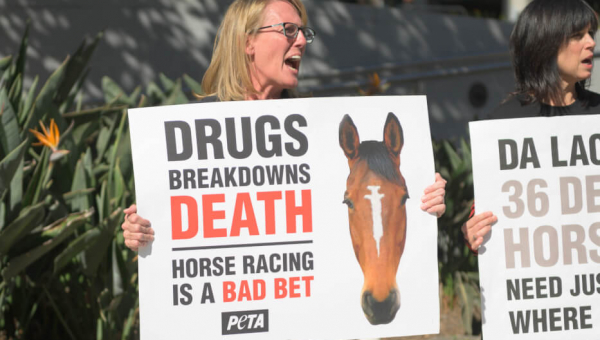
This exploitation sums up the blood sport perfectly, just as drugs, slaughterhouses, and the catastrophic breakdowns of horses do.

Just recently, an exposé revealed that 78 Thoroughbreds have died on tracks in Pennsylvania since January 2020—and that millions of tax dollars paid for it. Last month, a jockey and a trainer were called out for smiling for photo ops while sitting on top of dead horses. And in an interview, a jockey named Robby Albarado let slip a vile comment making light of domestic abuse—right after violating whipping rules. We don’t need any more reminders that some trainers, owners, and jockeys view the horses they run as disposable—we need reform.

PETA Is Cracking Down on Horse Racing Cruelty

Horses feel the same things we do: joy, pain, and fear. So we need to work to make the sport safer for them and create positive change from the inside out.

While horse racing can never be entirely safe for the animals, a zero-tolerance drug policy, synthetic tracks, a ban on whipping, allowing horses to race competitively only after their third birthdays, and other reforms would make a world of difference. PETA advocates for these changes through shareholder activism, action alerts, and working directly with the horse racing industry.

It’s too late for Zenden and countless others, but with your help, we can prevent more horses from being forced to run with injuries as well as being whipped and run to their own grave. Click below to get involved with the vital changes to the racing industry that PETA’s helping to make:

The post Race Bettors Cash In While the Winning Horse Dies on the Track appeared first on PETA.

PETA’s New Fishy Billboard Set to Make Waves in Indianapolis

“I’m ME, Not MEAT.” That’s the message from the fish who appears on PETA’s latest billboard, which just went up outside a local Long John Silver’s restaurant to encourage the company to help meet the skyrocketing demand for healthy and sustainable food by dishing up vegan fish.

“Most fast-food chains are now offering delicious vegan options, so selling a faux-fish sandwich should be a no-brainer,” says PETA Executive Vice President Tracy Reiman. “PETA’s billboard will help people sea the gentle and inquisitive animals behind every fish sandwich or shrimp taco.”

PETA is ramping up its efforts following the release of the Netflix documentary Seaspiracy, which examines the global fishing industry and challenges the notion of “sustainable” fishing. The group has praised the film for explaining how humans’ actions cause widespread environmental destruction.

More fish are killed for food each year—billions in U.S. waters alone—than all other animals combined. These animals who are now known to feel pain as acutely as mammals do, to have long-term memories, and to sing underwater are impaled, crushed, suffocated, or cut open and gutted, all while conscious. Aquafarms, holding thousands of fish prone to becoming infested with lice from being raised in filthy and cramped enclosures, create an environmental disaster.

PETA—whose motto reads, in part, that “animals are not ours to eat” and which opposes speciesism, a human-supremacist worldview—notes that today, many faux-fish options are available, including Gardein’s Golden Fishless Filets, Good Catch’s Plant-Based Tuna, New Wave Foods’ new plant-based shrimp, and Sophie’s Kitchen’s Vegan Crab Cakes.

The billboard is located next to the Long John Silver’s restaurant at 7140 Pendleton Pike.

For more information, please visit PETA.org or follow the group on Twitter, Facebook, or Instagram.

The post PETA’s New Fishy Billboard Set to Make Waves in Indianapolis appeared first on PETA.

The Connection Between the Suez Canal Blockage and Animals Stuck on Ships

The Ever Given container ship that was stuck in the Suez Canal for nearly a week may be floating again, thanks to salvage teams, but its freedom means nothing for the estimated 200,000 animals who are trapped on the roughly 20 live-export ships that the logjam has been blocking.

What Is Live Export?

The live-export trade treats animals as commodities rather than as the living, feeling individuals they are: Sheep and cows who are unwanted and discarded by the wool and dairy industries, respectively, are crammed onto ships like pieces of luggage and forced to endure long, grueling journeys halfway around the world, only to be slaughtered for meat and leather upon arrival. During transport, these animals are often denied sufficient food and water, can fall and be trampled to death, or can even drown if the ship sinks.

Live Export and the Suez Canal

Many of the live-export ships stuck in the Suez Canal are carrying sheep and cows—most likely castoffs from the wool and dairy industries, deemed “excess” or “useless” and therefore shipped off to be killed for their skin and flesh. These animals have been suffering on crowded ships in the gridlocked Suez Canal for days, and even though the Ever Given has been freed, it’s unclear when the ships carrying animals will be able to continue their journeys. Whether or not enough food and water will be available to these animals during their now prolonged hellish trip remains to be seen.

It’s not up to humans to deem an animal “useful” or “excess” in the first place.

The idea that sheep deserve either to stay put and be sheared or to be shipped around the world and slaughtered for their flesh is a speciesist one. Sheep are not ours to use or abuse for wool, meat, or any other reason. And the importance of cows—who have been known to shed tears over loved ones’ deaths—has nothing to do with the price of their flesh and everything to do with the fact that they’re sentient beings deserving of respect and compassion. If you wear wool or leather or eat meat, live export is yet another reason to go vegan.

Animal rights activists (including the one in the video above) took to spots along the Suez Canal to remind everyone of this and to echo PETA’s call for a ban on live export.

The Suez Canal’s live-export nightmare is one in a series of tragedies. In 2019, more than 14,000 sheep drowned in the Black Sea after a live-export ship traveling from Romania to Saudi Arabia capsized. In 2018, roughly 2,400 sheep died—mostly from heat stress—while being shipped from Australia to the Middle East. In 2012, 22,000 sick sheep suffered horrifically aboard two live-export ships—again, heading from Australia to the Middle East—after they were turned away in Bahrain and forced to endure an additional 14 days at sea.

What Is PETA Doing to End Live Export?

For decades, PETA and our affiliates have been exposing live export’s connection to the wool trade—revealing the hideous fate that sheep face after a miserable life spent being used for their fleece—and successfully persuading brands and consumers to ditch wool.

After undercover investigative footage revealed the handling and slaughter conditions endured by sheep exported to the Middle East and North Africa from Australia, the Australian government suspended its export trade to Egypt and sent a delegation to the Middle East to investigate the abuse inflicted on Australian sheep there. India later banned live export—a move that we’re urgently calling on the Australian government to follow. And most recently, PETA Australia wrote to the New Zealand Government—which is expected to make a decision on the future of live export any day—urging it to adopt a total ban on live-animal export from the country.

In 2020, a Manfred Karremann investigation released by PETA Germany revealed how cows, sheep, and other animals are forced onto ships for weeks-long, arduous trips. Some of them are so weak that they’re unable to exit the ship by themselves. Workers hoist the animals with cranes, their entire weight hanging by one leg. Since a grown bull weighs over 1,000 pounds, this can cause excruciatingly painful joint dislocations and broken legs. All this torment is inflicted just so the animals can be slaughtered—sometimes while still conscious—upon arrival.

Animals don’t deserve this mistreatment, which is why PETA urges everyone to check labels and to leave items on the shelf if they see the word “leather” or “wool.”

We Need to Be Animals’ Salvage Teams—Let’s End Live Export

Together, we can take action to help end this cruel trade. Click below to urge the Australian minister for agriculture to end the live export of animals:

Call For an End to Hellish Live Export

Helping these animals can also be as simple as leaving lambs, sheep, and cows off your plate …

Get a Vegan Starter Kit

… and their skin and fleece off your back …

How to Wear Vegan

… as well as spreading the message: Tell your friends and followers on Facebook and Twitter to make a difference in sheep’s and cows’ lives, too.

The post The Connection Between the Suez Canal Blockage and Animals Stuck on Ships appeared first on PETA.