After students at John W. North High School filmed a teacher seeming to mock Native Americans by chanting and dancing in headgear, PETA’s humane education division, TeachKind, sent a letter to the school principal today, urging her to implement TeachKind’s free social justice curriculum designed to encourage empathy toward others—regardless of race, gender, sexual identity, age, ability, or species.
“TeachKind’s resources help educators set an example of compassion for everyone,” says PETA Senior Director of Youth Programs Marta Holmberg. “These lessons can help teach young people how to reject oppression and bigotry and be more open to getting along with ‘others’ of all kinds.”
In its letter, TeachKind notes that developing empathy for animals can be a key step toward rejecting In its letter, TeachKind notes that developing empathy for animals can be a key step toward rejecting discrimination and violence against all sentient beings, including humans from other cultural backgrounds and religions. With bullying and youth violence rampant in school communities today, it’s vital that educators be equipped with the tools and training to encourage students to embrace diversity.
TeachKind—whose motto reads, in part, that “animals are not ours to abuse in any way”—opposes speciesism, a human-supremacist worldview. For more information, please visit TeachKind.org or follow the group on Facebook or Instagram.
Following news first heard in 2020 that Ringling Bros. circus is coming back, PETA wrote to Chief Operating Officer Juliette Feld Grossman, urging her to proceed without animals—and it appears that she listened. Below, please find a statement from PETA Foundation Director of Captive Animal Law Enforcement Rachel Mathews in response to Ringling’s animal-free circus, slated to appear in 2023:
Ringling is back, but this time, PETA may just be in attendance, because the company has abandoned the chains, cages, and whips in favor of hiring only human performers—who are allowed to go home to their families at night. The animal-free version of Ringling may well inspire any remaining animal-abusing circuses to let aerialists, jugglers, clowns, and other talented human performers shine under the big top.
PETA—whose motto reads, in part, that “animals are not ours to use for entertainment”—opposes speciesism, a human-supremacist worldview. More information about Ringling’s former facility is available here.
On Tuesday, PETA supporters joined by enormous, can’t-be-missed alpaca, sheep, and other puppets will cause mayhem outside the Urban Outfitters store on Main Street and loudly demand that Urban Outfitters and its other brands—including Anthropologie and Free People—leave alpaca fleece, wool, leather, down, mohair, and cashmere on their original owners.
When: Tuesday, October 26, 12 noon
Where: Urban Outfitters, 401 W. Main St., Lexington
“Urban Outfitters stores are graveyards for animals who were beaten, cut up, and killed,” says PETA Executive Vice President Tracy Reiman. “PETA is calling on Urban Outfitters’ brands to honor the company’s consumer pledge of sustainability and ethics by selling only vegan materials—which would be easy to do, because they already stock them.”
PETA—whose motto reads, in part, that “animals are not ours to wear”—opposes speciesism, a human-supremacist worldview.
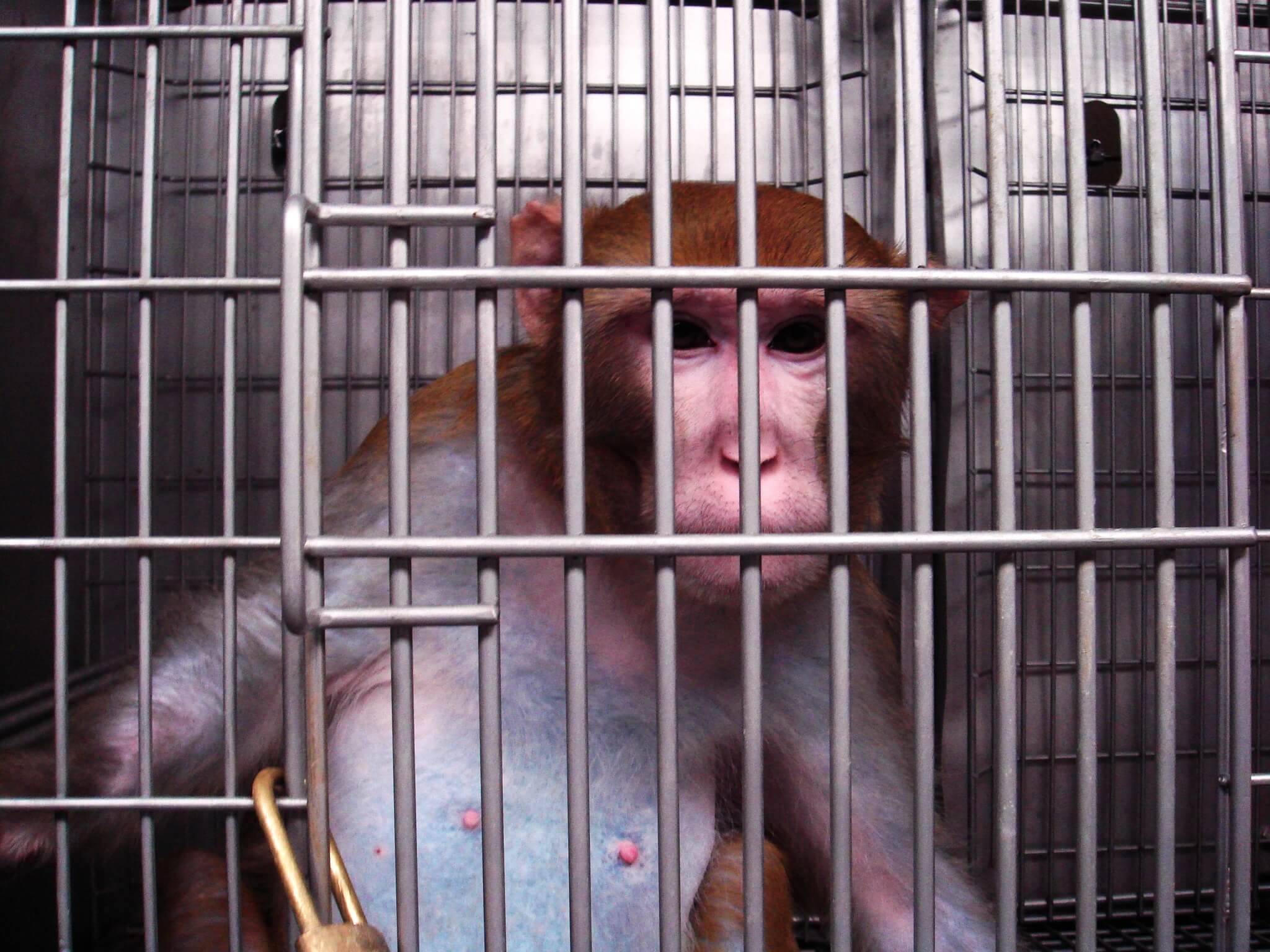
Federal reports obtained by PETA reveal flagrant and ongoing violations of federal animal welfare guidelines and show that OHSU experimenters and staff, including those at the Oregon National Primate Research Center (ONPRC), are clearly incapable of providing the monkeys and other animals they hold with even the most basic protections. It’s time they were held to account.
OHSU boasts that its laboratories “transform science every day,” yet federal records show that the same people it lauds in those laboratories have done the following:
Failed to notice that a monkey had escaped during the transfer of two monkeys to a different enclosure (The young monkey became trapped between a wall and a row of cages and died.)
Failed to notice that two monkeys had been locked inside a cage destined for a high-temperature washing machine, where they were exposed to 180-degree temperatures and scalded to death
Botched a brain surgery, cutting into a marmoset’s skull improperly (The monkey was then deprived of veterinary care for days and developed a brain infection. In 2020, another monkey suffered the same fate.)
Killed 12 mice after failing to seat a cage properly, causing a water valve leak that flooded the cage and drowned every mouse inside it
Allowed four mice to die of dehydration after failing to notice that they had no access to water
Denied a monkey pain medication and antibiotics
Failed to administer a second dose of pain medication during a cerebral spinal fluid collection from 12 monkeys
OHSU can’t even keep its own experimenters corralled, records show.
Several experimenters deviated from the protocols previously approved by the university’s own committee charged with ensuring compliance with minimal welfare standards for animals used in experiments that cause pain and almost always end in the animals’ death. One experimenter had two protocols suspended after numerous recurring incidents of noncompliance. They were later reinstated.
Records show that a ferret was euthanized after an experimental brain surgery went awry, causing “unexpected anatomical complications,” which were not further identified. The same experimenter used unapproved methods and improper materials to carry out euthanasia, stored sterile supplies in unsterile containers, failed to document training of laboratory staff, and failed to assure occupational health compliance. The experimenter also failed to maintain veterinary records or notify veterinary staff as directed by protocol when animals were in need of veterinary care.
There is no reason for a single one of these painful incidents, many of them deadly, to have occurred, except that the culture inside OHSU laboratories—which have received more than $1.5 billion in taxpayer money from the National Institutes of Health since 2018—apparently foments a callous disregard for both animals and the rules.
OHSU must begin taking the issue seriously and institute a zero-tolerance policy for experimenters and their staff who fail to comply with animal welfare regulations or directives from veterinary staff—as well as a zero-tolerance policy for staff who fail to provide animals with food, water, or appropriate shelter.
After receiving a complaint from PETA and conducting an inspection on August 26, the U.S. Department of Agriculture (USDA) cited Animal Haven Zoo—a roadside zoo in Weyauwega, Wisconsin—for several violations of the federal Animal Welfare Act.
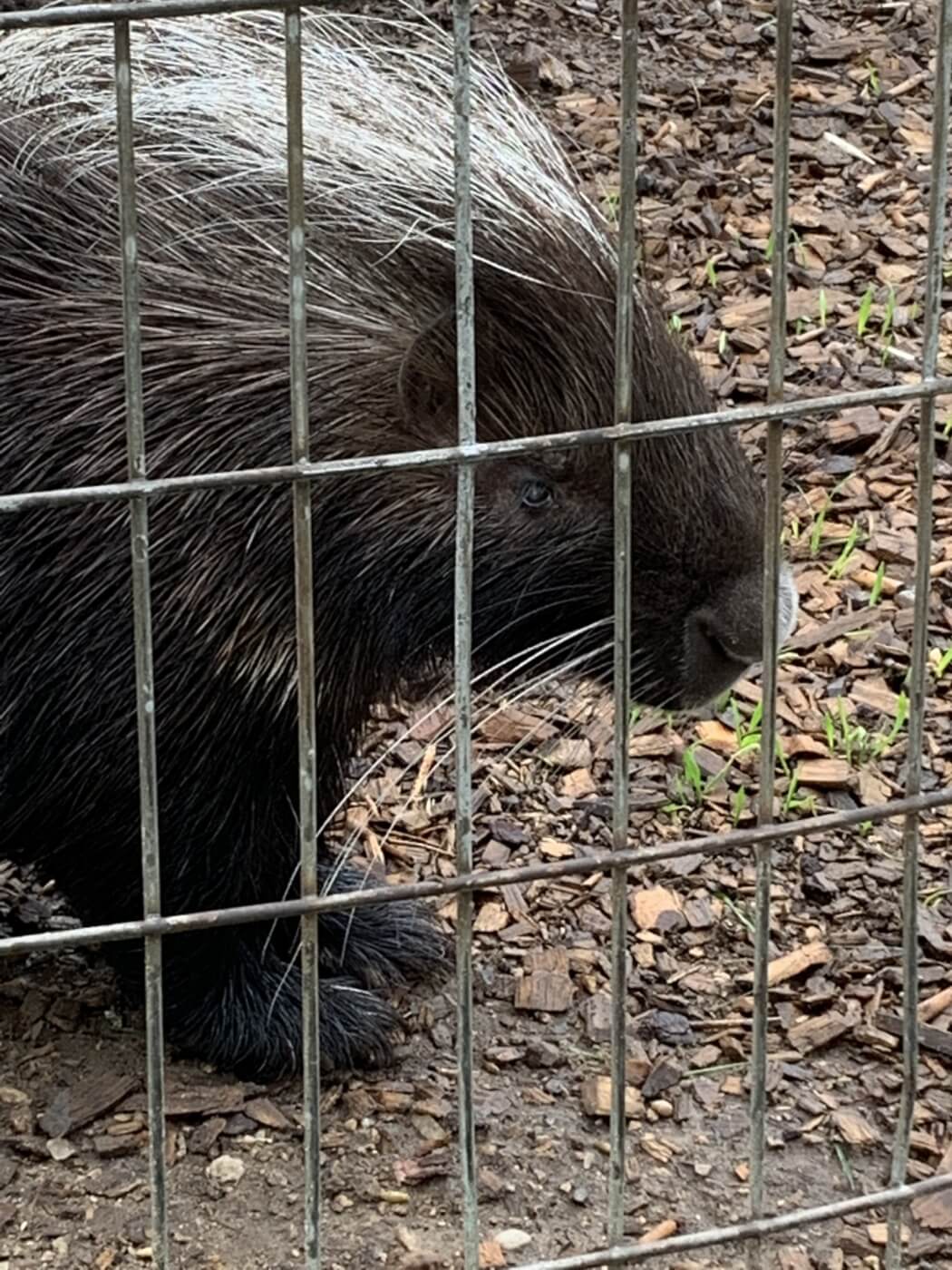
Porcupine with cloudy right eye
Just how bad is Animal Haven Zoo? The feds cited it for a number of troubling animal welfare concerns, including its glaring failures to do the following:
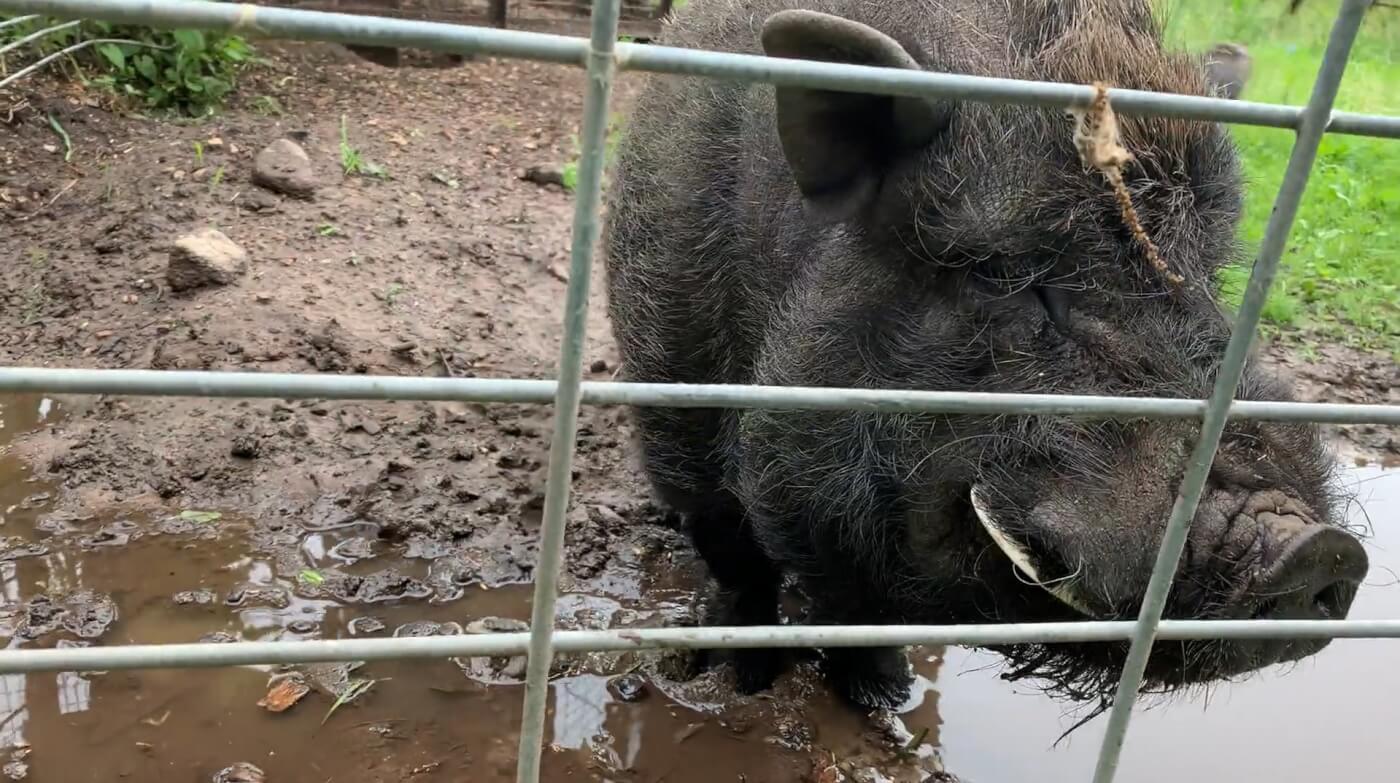
Provide adequate veterinary care to numerous sick or injured animals, including a rabbit with eye and ear discharge and missing hair on the back left foot, a rabbit with a scab and missing hair on the nose, a pig whose tusk was growing into his cheek, a porcupine with eye discharge and cloudy eyes, a goat with an abnormally growing rear hoof, and an alpaca with overgrown front nails
Pig with right tusk growing into cheek
Provide a liger with water for about 20 hours (When given water during the inspection, this animal drank for over four minutes.)
Provide a group of nine rabbits who lacked sufficient shade and shelter from the elements with adequate shelter
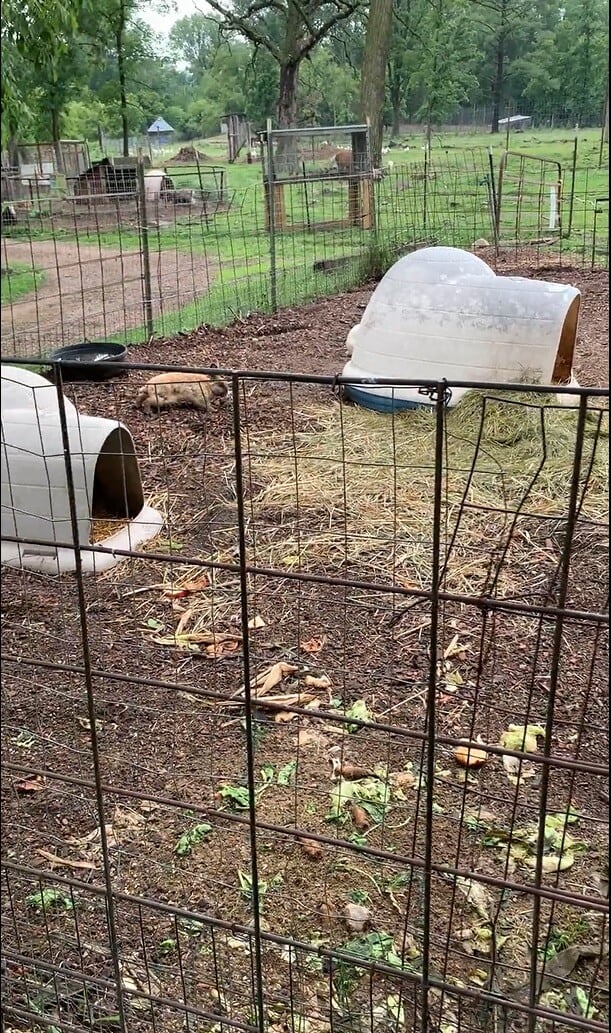
Remove waste from two rabbit enclosures, which the licensee admitted had not been cleaned in “at least a week,” resulting in “an excessive accumulation of rotten food and soiled waste that was covered in flies”
Rabbits with piles of rotten food and soiled waste in their enclosure
Maintain rabbit enclosures in good repair (One pen was found to have loose wire mesh with points sticking out, and a hutch had protruding screws—both of which posed a risk of injury to the rabbits.)
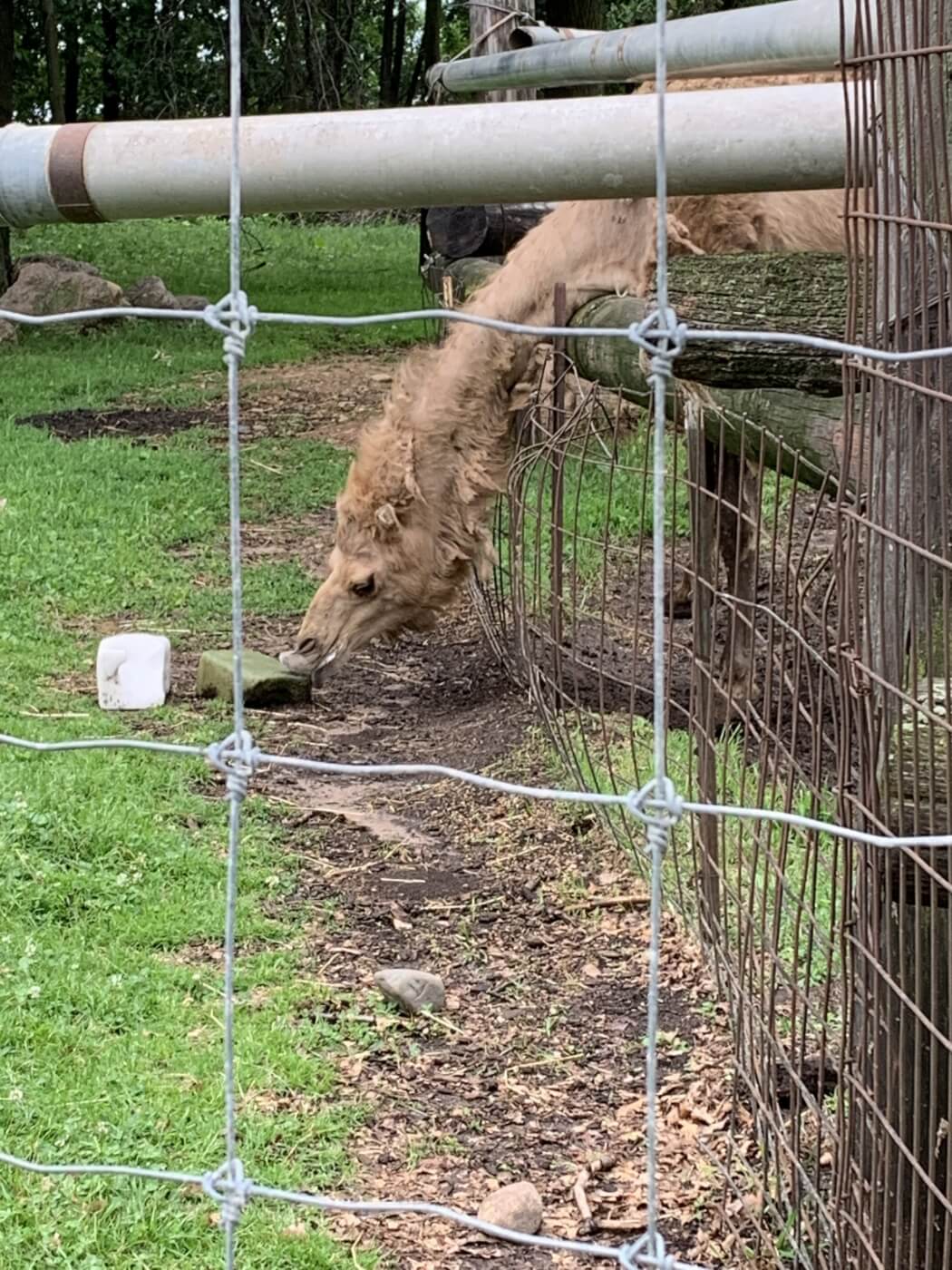
Maintain other enclosures in good repair, including bent or broken wire fencing with sharp points in the camel and muntjac enclosures; fencing damaged by fallen branches in a sheep enclosure; a large hole with loose wires in a deer enclosure gate; bent, leaning, and disconnected fencing in another deer enclosure; and a leaning support post between the bison and wolf enclosures
Bent and broken fencing with sharp points in camel enclosure
Animal Haven Zoo’s Poor Track Record
Animal Haven Zoo was previously cited for transporting and exhibiting a newborn tiger cub at a local school, where children were allowed to interact with him. According to the USDA, “[p]ublic exhibition of young tigers less than 4 weeks old puts them at risk for getting sick.”
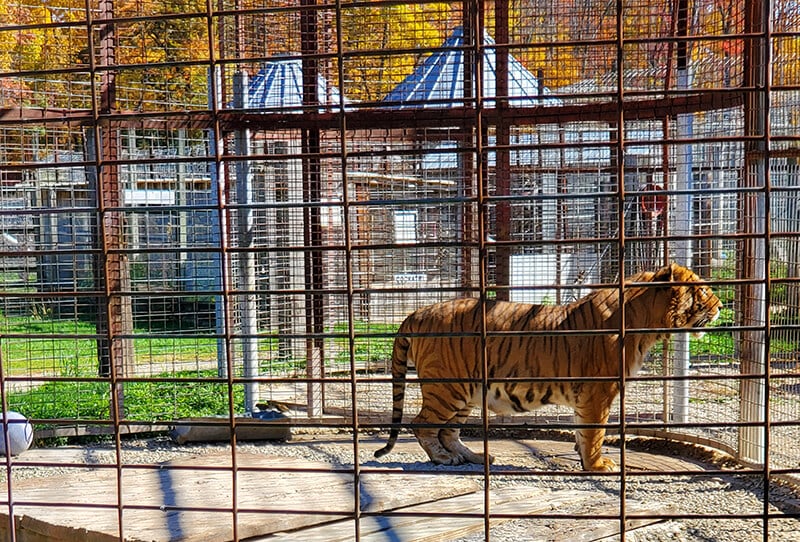
In addition, the facility has acquired big cats from shady dealers such as “Joe Exotic” and confines them and other animals to paltry, dilapidated cages with no enrichment and where they’ve been observed pacing—a sign of psychological distress.
What You Can Do for Rabbits, Tigers, Pigs, and Others at Animal Haven Zoo
Never buy a ticket to Animal Haven Zoo or any other roadside zoo where animals languish in miserable conditions. Then, share this post to let your friends, family members, and social media followers know why they should do the same.
Want to do more?
Please urge Animal Haven Zoo to send the animals it exploits to reputable facilities where they can finally get the care that they desperately need.