Here’s Why You Should NEVER Visit the Austin Aquarium

At the Austin Aquarium—a shoddy strip-mall aquarium owned by the notorious Covino family—visitors are allowed to “get up close and personal” with sensitive wildlife who don’t want to be pet, poked, or prodded at by humans. The dilapidated petting zoo has been in hot water for filthy and unsafe enclosures, failing to notify a veterinarian after observing animals’ abnormal behaviors, and more.
These startling animal welfare issues are just business as usual for members of the Covino family. SeaQuest, a chain of direct-contact aquariums owned by Vince Covino is plagued by concerns, including hundreds of animal deaths, legal violations, and dozens of injuries to staff and the public. It appears that the Austin Aquarium—which has close ties to Vince’s brother, Ammon Covino—is no different than the other junky exhibits owned by the Covinos.

Keep reading to see why you should never visit the Austin Aquarium, or any facility owned by members of the Covino family:

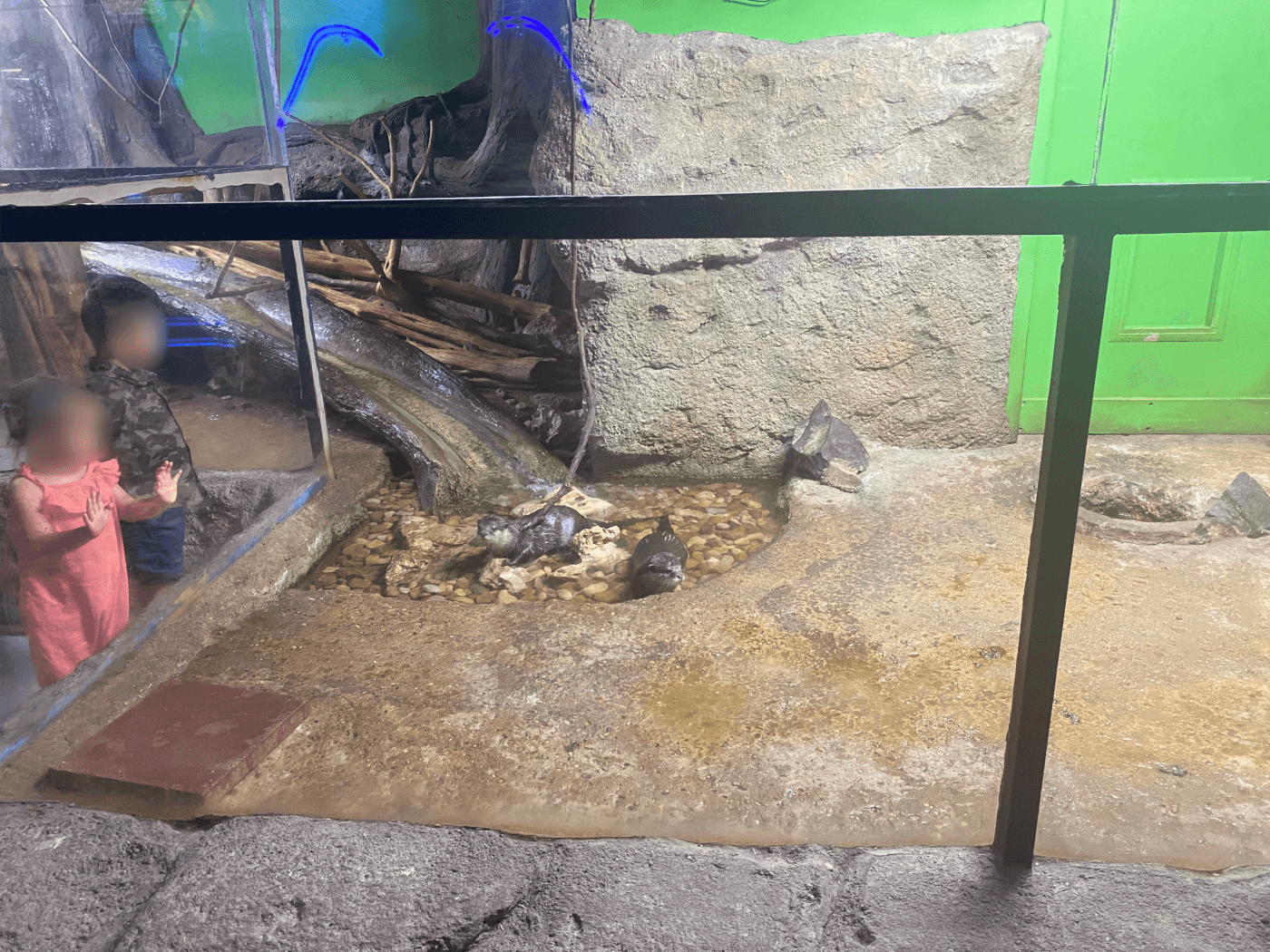
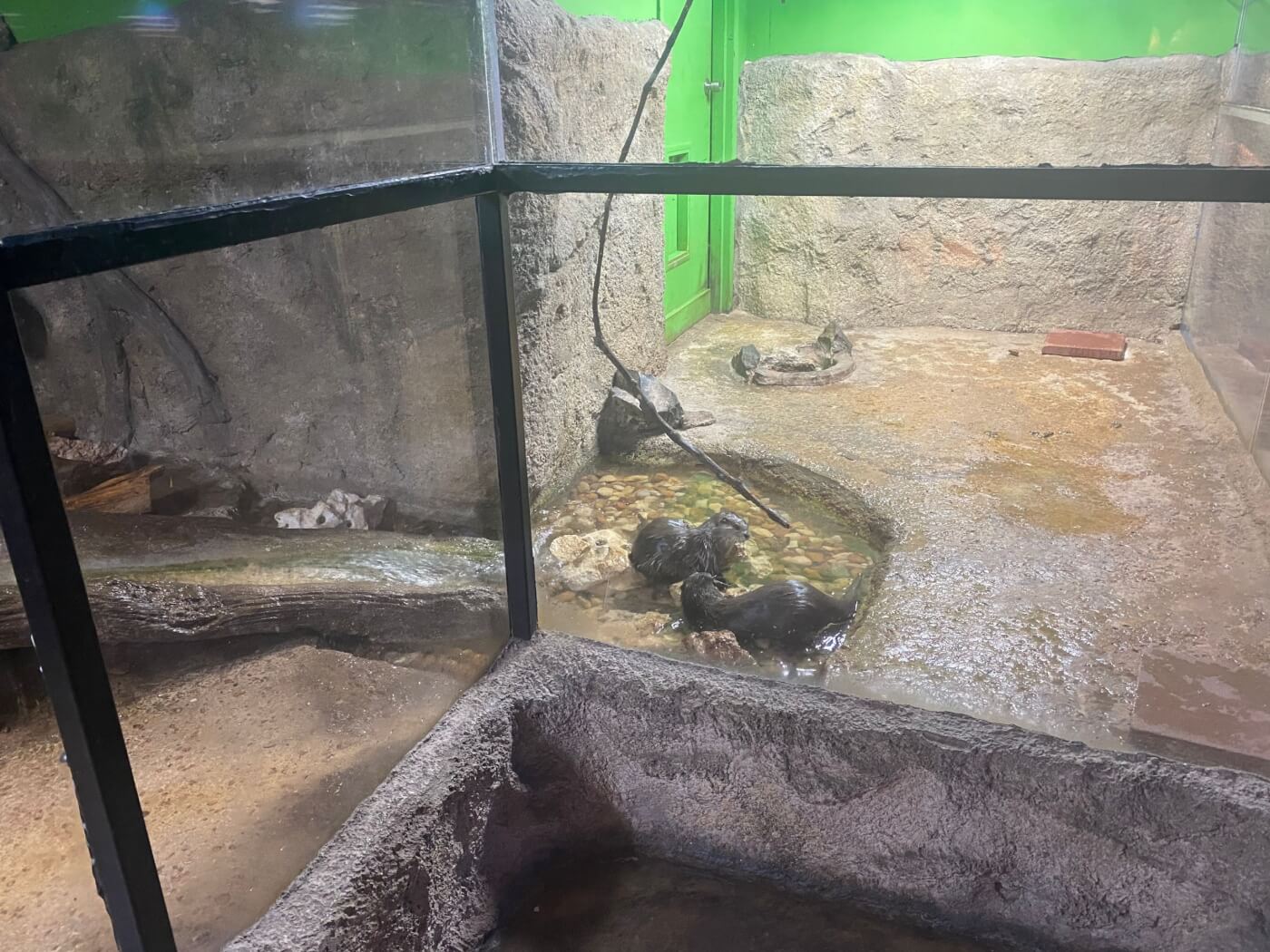
  • Two otters—Scooter and Sadie—were observed exhibiting abnormal, repetitive behaviors at the Austin Aquarium. Scooter was observed “constantly sucking his right front foot,” which remained in his mouth even when he was walking throughout the exhibit. Sadie was seen tossing her head while “repetitively running in a circle around one area of the exhibit.”
    • Stereotypic behaviors in animals at roadside zoos and other cruel establishments—like the ones reportedly observed in Scooter and Sadie—are often a sign of mental anguish known as zoochosis. This condition is a common indicator of poor welfare.
    • In March 2022, the U.S. Department of Agriculture (USDA) slapped the Austin Aquarium with a citation for violating the federal Animal Welfare Act for not contacting a veterinarian. The facility’s animal care manager reportedly said that Scooter “always sucked his foot and they had expected him to outgrow it,” and that Sadie began her repetitive behavior after they changed her public feeding “from twice a day to allowing it all day.”
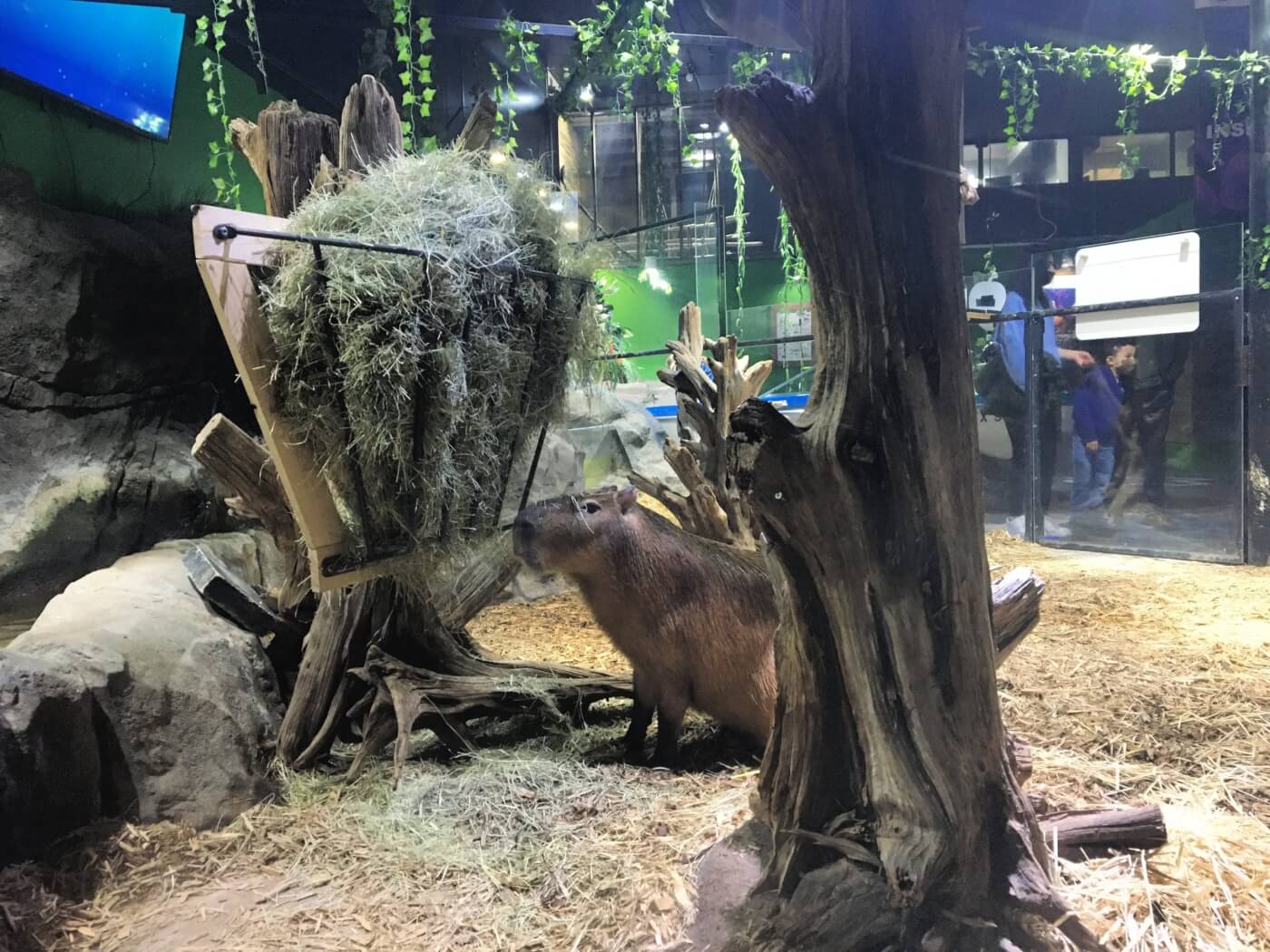
  • A USDA inspection report revealed that the capybara enclosure’s pool was “cloudy,” “brown/yellowish in color,” and had “fecal matter floating around.” The pool apparently had no filtration system, relying “solely on [manual] water changes.”
    • The accumulation of waste in animals’ enclosures can increase their risk of contracting dangerous diseases.
    • In January 2022, the USDA cited the Austin Aquarium for not adequately cleaning the capybara enclosure.
  • A room where two miniature pigs were held reportedly had “pitted and eroded areas,” with debris “accumulating in the eroded area of the floor,” making sanitation difficult.
    • In May 2021, the USDA cited the facility for failing to maintain the flooring in the animal quarantine room in good repair.
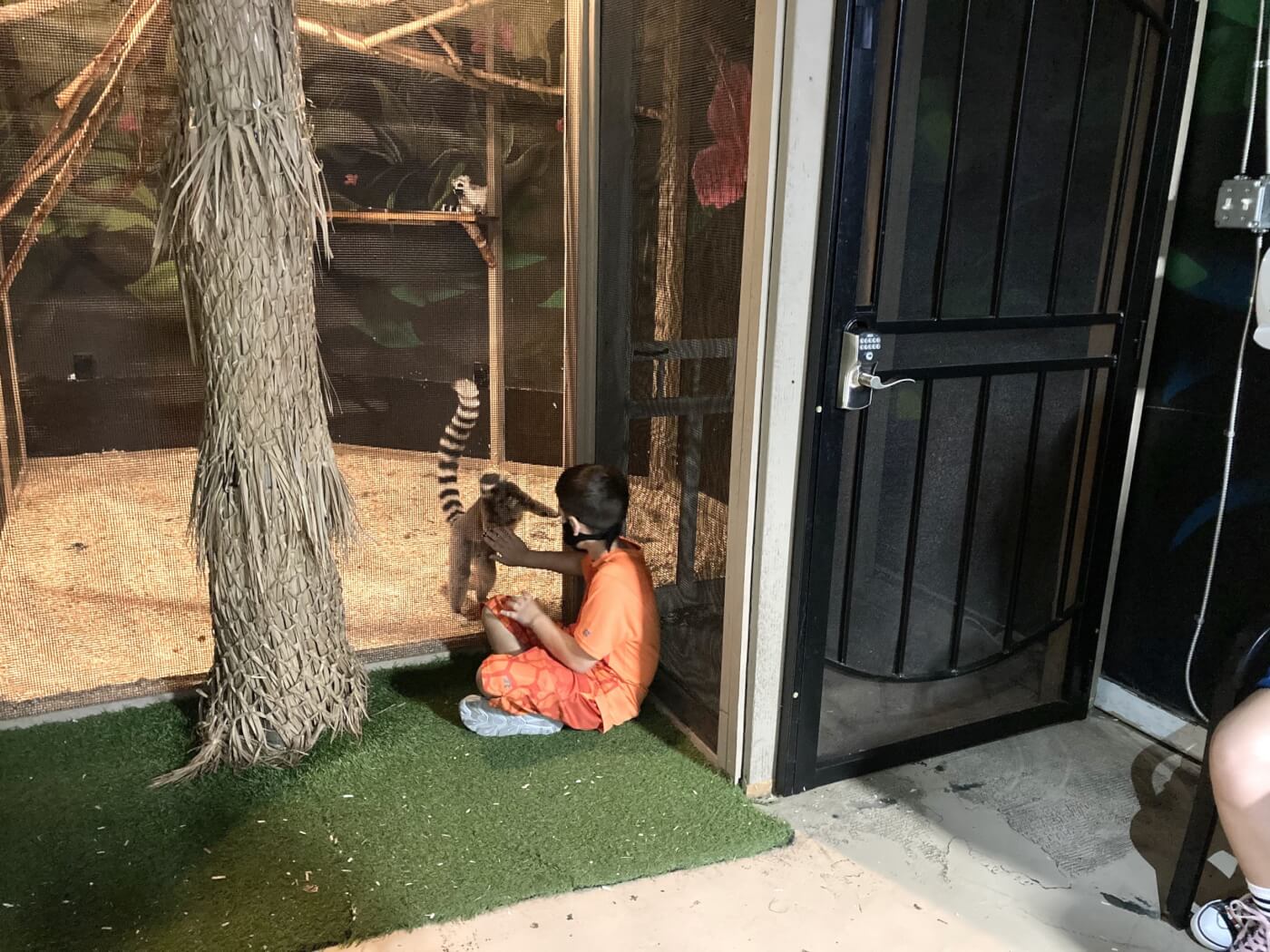
  • In 2019, the parents of a 10-year-old girl who was allegedly bitten by a lemur filed a lawsuit against the Austin Aquarium.
    • Lemurs, like all other primates, have complex social hierarchies and will bite out of instinct to establish dominance. Their bites have been known to injure humans, which is one reason why they should never be used for public interaction.
    • Close contact with lemurs poses a serious threat to both humans and the animals, as the risk of transmitting zoonotic diseases is very high.
  • Kangaroos and rabbits who had ear problems were reportedly undergoing “treatment recommended by a facility employee,” but a veterinarian was not consulted before beginning treatment and there was no vet exam to determine the cause of the ear problems in the kangaroos, according to a May 2019 inspection report.
  • According to another report, a metal hook was exposed at the top of the coatimundi enclosure that could cause an animal to become caught or entangled; the coatimundi and red ruffed lemur enclosures lacked effective barriers that would ensure the safety of the animals and the public; and the room holding the kinkajou enclosure had black debris along the walls and doorframe.
    • In September 2018, the Austin Aquarium received 4 citations from the USDA for failing to fix these potential hazards.

Our Fellow Animals Don’t Want to Be Trapped at Shopping Mall Aquariums—Speak Up!

Animals don’t want to be kept in small, dirty enclosures, forced to interact with humans, or gawked at. Never visit the Austin Aquarium or any other shady mall aquarium or roadside zoo.

Take action now to tell the Covino family to send the animals to reputable sanctuaries:

The post Here’s Why You Should NEVER Visit the Austin Aquarium appeared first on PETA.

Feds Cite Austin Aquarium for Denying Otters Needed Care

The Austin Aquarium is in hot water after it failed to contact a veterinarian when two young otters it was exhibiting began to display abnormal behavior, prompting the U.S. Department of Agriculture (USDA) to cite the facility for failing to meet the minimal care standards of the federal Animal Welfare Act (AWA). According to the just-released inspection report obtained by PETA, one otter was observed constantly sucking on his right foot and the other otter was seen running around in circles nonstop in one area of the exhibit, both clear signs that something was amiss.

“Otters at the Austin Aquarium have been left to suffer because this greedy tourist trap can’t be troubled to consult a vet on a regular basis,” says PETA Foundation Associate Director of Captive Animal Law Enforcement Michelle Sinnott. “PETA is calling on everyone to avoid this shady petting zoo and is urging the aquarium to retire the animals there to reputable facilities.”

The Austin Aquarium has a history of failing to consult veterinarians: In 2019, a USDA inspection revealed that the petting zoo had foregone vet guidance and instead administered its own treatment to a kangaroo with ear problems.

The aquarium is also closely tied to Ammon Covino, who has spent time in federal prison for conspiracy to commit wildlife trafficking. He was sent back to prison twice for violating parole restrictions on exhibiting fish or other wildlife—including by working at the Austin Aquarium—and then lying to his parole officer. Because of his conviction, Covino cannot legally get a federal exhibitor’s license; his wife’s name is now on the Austin Aquarium’s formal business filings. Meanwhile, Covino’s brother Vince owns the disreputable roadside aquarium chain SeaQuest. Last year alone, the USDA cited SeaQuest locations for allowing a wallaby to drown, hitting otters with a metal bowl, and allowing situations in which a child was bitten by a capybara and an adult was bitten by a sloth.

PETA—whose motto reads, in part, that “animals are not ours to use for entertainment”—opposes speciesism, a human-supremacist worldview that fosters violence toward other animals. For more information, please visit PETA.org or follow the group on Twitter, Facebook, or Instagram.

The post Feds Cite Austin Aquarium for Denying Otters Needed Care appeared first on PETA.

Feds Cite Local Aquarium Over Freezing Lemur, Giraffe Near Death

The Houston Interactive Aquarium & Animal Preserve has landed in hot water with the U.S. Department of Agriculture (USDA), which recently issued the facility six citations for failing to meet the most minimal care standards of the federal Animal Welfare Act. The citations include feeding a young giraffe a diet that led to a life-threatening neurological condition, leaving a lemur in an unheated outdoor enclosure in freezing temperatures, and leaving a capybara on a gap-riddled wooden floor with no bedding whatsoever, as PETA has learned through the agency’s just-released inspection report.

“The animals at the Houston Interactive Aquarium have suffered from malnourishment, freezing temperatures, and distressing, forced public contact, simply so that this exploitative facility can make a buck,” says PETA Foundation Associate Director of Captive Animal Law Enforcement Michelle Sinnott. “PETA is calling on everyone to shun such shady petting zoos and condemn their mistreatment of animals.”

This roadside zoo is closely tied to Ammon Covino, who has spent time in federal prison for conspiracy to commit wildlife trafficking and cannot legally get a federal exhibitor’s license—but has nonetheless appeared in more than 150 videos about the facility’s development posted by Houston Interactive Aquarium & Animal Preserve, which has Covino’s wife’s name on its formal business filings. Meanwhile, his brother, Vince Covino, owns the notorious roadside aquarium chain SeaQuest. Last year alone, the USDA cited SeaQuest locations over the drowning of a wallaby, otters being hit with a metal bowl, and incidents in which a child was bitten by a capybara and an adult was bitten by a sloth.

PETA—whose motto reads, in part, that “animals are not ours to use for entertainment”—opposes speciesism, a human-supremacist worldview that fosters violence toward other animals. For more information, please visit PETA.org or follow the group on Twitter, Facebook, or Instagram.

The post Feds Cite Local Aquarium Over Freezing Lemur, Giraffe Near Death appeared first on PETA.

Update From PETA: Feds Find Trapped, Dying Steer After Collision at JBS

A new violation at the JBS slaughterhouse near Plainwell suggests that the company just can’t or won’t learn from its mistakes. The U.S. Department of Agriculture (USDA) recently shut down slaughter operations at JBS after a steer endured a slow, excruciating death while trapped with his head pinned beneath his own shoulder. When the USDA investigated the incident further, it determined that a worker had run cattle through the facility at a “fast rate of speed” until they collided with another group, knocking the steer down into the contorted position that slowly killed him.

This incident follows several other animals’ prolonged deaths at JBS, including six cows who were repeatedly shot in the head, leaving them still conscious and in severe pain, as some of them looked around or even jumped around after the first shot.

PETA—whose motto reads, in part, that “animals are not ours to eat or abuse in any other way”—opposes speciesism, a human-supremacist worldview. For more information, please visit PETA.org or follow the group on Twitter, Facebook, or Instagram.

The post Update From PETA: Feds Find Trapped, Dying Steer After Collision at JBS appeared first on PETA.

Sponsors Under Fire as Iditarod Punishes Mushers Who Stopped Dogs From Freezing to Death

The 2022 Iditarod dog-sled race ended in a debacle over officials’ shameful decision to demote and impose fines on mushers who took dogs indoors during a potentially fatal storm, and PETA has fired off letters to the Iditarod’s last remaining sponsors calling on them to stop supporting the deadly race. One letter went to Gregory B. Maffei, president and CEO of Liberty Media, whose Alaska-based subsidiary GCI is a sponsor. The other letter recipients include locally based Northrim Bank, Juneau-based Alaska Brewing Company, Providence Medical Group, and two other Liberty Media subsidiaries, the Atlanta Braves and Formula 1 racing.

“No reputable company would want to be associated with an event that actually punishes people for taking action to prevent dogs from freezing to death,” says PETA Executive Vice President Tracy Reiman. “PETA is calling on Liberty Media and all other remaining sponsors to stop propping up this deeply disturbing, cruel race.”

PETA notes that this year’s Iditarod was saturated with chaos and cruelty. Two dogs went missing—one of whom has still not been found and whom the Iditarod is failing to help search for—a musher was apparently forced out of the race after dogs he used were found in poor condition, and dogs were attacked and one was killed during training before the race even began. Nearly 250 dogs were pulled from the trail due to exhaustion, illness, or injury, leaving the remaining ones to work even harder to pull the mushers.

Just this year, Millennium Hotels and Resorts and Nutanix joined ExxonMobil—a former major sponsor that had paid the race $250,000 a year—as well as Jack Daniel’s, Coca-Cola, Wells Fargo, Alaska Airlines, and 14 other companies that have cut ties with the Iditarod. PETA’s campaign to push Liberty Media to do the same has included enlisting a pack of its supporters to wear husky masks and howl outside the company’s headquarters, purchasing stock in order to exert pressure at Liberty’s annual meetings, and sending Maffei 150 “bloody” dog collars—representing each of the dogs run to death in the race since it began.

PETA—whose motto reads, in part, that “animals are not ours to use for entertainment”—opposes speciesism, a human-supremacist worldview. For more information on PETA’s investigative newsgathering and reporting, please visit PETA.org or follow the group on Twitter, Facebook, or Instagram.

The post Sponsors Under Fire as Iditarod Punishes Mushers Who Stopped Dogs From Freezing to Death appeared first on PETA.