
PETA Statement on Sentencing of ‘The Monkey Whisperer,’ Chris Brown’s Monkey Dealer

Earlier today, a federal judge in Tampa, Florida, sentenced exotic-animal dealer Jimmy Wayne Hammonds (aka “The Monkey Whisperer”) to five years of probation, including less than a year of home detention, and a $90,000 fine. Hammonds pleaded guilty in March to a felony charge of conspiracy to commit wildlife trafficking—stemming from his notorious sale of a capuchin monkey to singer Chris Brown—and three counts of violating the Endangered Species Act for selling endangered cotton-top tamarins to individuals in Alabama, South Carolina, and Wisconsin. Please see the following statement from PETA Foundation Associate Director of Captive Animal Law Enforcement Michelle Sinnott in response to the sentencing:

This brazen career criminal got off easy, but the conviction alone should be enough to keep him out of the monkey-exploitation business as long as federal officials do their jobs and revoke his federal Animal Welfare Act license. PETA is calling on the U.S. Department of Justice to use this case as a jumping-off point to relentlessly pursue the other Hammondses of the world and hold them accountable for trafficking animals for a buck.

PETA sent a letter to the U.S. Department of Agriculture urging the agency to revoke Hammonds’ federal Animal Welfare Act license, which would prohibit him from legally selling exotic animals for the pet trade. In 2017, PETA alerted California officials to Brown’s unlawful possession of the capuchin, which resulted in the animal’s seizure by the state and two misdemeanor charges levied at Brown. According to the search warrant affidavit, it was PETA’s complaint regarding Brown that triggered law enforcement to investigate Hammonds.

For more information, please visit PETA.org or follow the group on Twitter, Facebook, or Instagram.

The post PETA Statement on Sentencing of ‘The Monkey Whisperer,’ Chris Brown’s Monkey Dealer appeared first on PETA.

Allbirds Is All Wrong on Wool: Company’s Claims to Face PETA Probe

At Allbirds’ first-ever annual meeting this Friday, PETA—which recently purchased stock in the company—will call out the retailer for duping shoppers into believing the sheep it uses for wool live “the good life,” despite being subjected to industry-standard practices such as mutilation, castration, and eventual slaughter. The group is urging the wool-focused shoe purveyor to stop making false “humane” claims about its products and end its sourcing of cruelly obtained and ecologically destructive wool.

“Every pair of Allbirds sneakers represents misery and death for gentle sheep, yet the company is misleading customers with bogus claims,” says PETA Executive Vice President Tracy Reiman. “PETA is calling on Allbirds to run from humane- and green-washing its products by taking a page out of the vegan fashion playbook.”

PETA U.S. and international PETA entities have documented cruelty to sheep while visiting 117 wool operations worldwide, revealed in 14 exposés. Even on “sustainable” and “responsible” farms, workers beat, stomped on, cut open the skin of, and slit the throats of conscious, struggling sheep. By switching to sustainable vegan materials, such as the eucalyptus tree fiber that it’s already using, Allbirds could save lives and make good on its promises to fight the climate catastrophe.

PETA—whose motto reads, in part, that “animals are not ours to wear”—opposes speciesism, a human-supremacist worldview that fosters violence against other animals. For more information, please visit PETA.org or follow the group on Twitter, Facebook, or Instagram.

PETA’s shareholder question follows.

Allbirds claims that the sheep whose wool it uses live “the good life.” This could not be further from the truth. In the wool industry, lambs’ ears are mutilated, their tails are chopped off, and the males are castrated—all within weeks of birth. When these sheep no longer produce enough wool to be profitable, they’re slaughtered and skinned. This is not the idyllic life evoked by Allbirds’ slogan.

Allbirds jokes that shearing is just a “haircut.” Do haircuts leave customers with injuries and gaping wounds? PETA entities have released undercover investigative videos from over 100 wool operations around the world—including self-proclaimed “responsible” farms—showing that workers routinely punch and kick terrified sheep, strike them in the face with their electric clippers, stomp on their heads and necks, and shear them so violently that they end up bleeding from the eyes, nose, and mouth, with portions of their skin shredded like ribbons. On a so-called “sustainable” and “regenerative” farm, workers tried to kill fully conscious sheep by hacking at their necks with a dull blade. Does that sound like the good life?

The use of wool also violates Allbirds’ stated goal of reversing climate change through better business. Producing just 1 kilogram of unprocessed wool can generate the same volume of greenhouse gas emissions as driving 100 miles, which makes the wool industry a major contributor to the climate catastrophe.

My question is this: If Allbirds truly wants sheep to enjoy “the good life,” when will it stop using wool, which is a product of cruelty?

The post Allbirds Is All Wrong on Wool: Company’s Claims to Face PETA Probe appeared first on PETA.

Dogs’ Hot-Car Deaths Prompt PETA TV Plea Featuring Elisabetta Canalis

After four dogs reportedly died when they were left inside a hot car in New Smyrna Beach while their owner had lunch, PETA plans to hit local TV airwaves with an emergency message from actor Elisabetta Canalis reminding people of the deadly consequences of leaving animals in vehicles unattended. Even on a 75-degree day, the temperature inside a parked car can soar to 94 degrees in just 10 minutes, and on a 90-degree day, it can get up to 109 degrees in just minutes. As the temperature climbs, dogs endure agonizing symptoms: They go into shock, vomit blood, urinate, and have diarrhea and can experience multi-organ failure, cardiopulmonary arrest, fluid buildup in the lungs, muscle tremors, seizures, unconsciousness, and finally, death.

PETA urges everyone to be on the lookout for dogs who are in need of assistance in extreme temperatures, including those who may be experiencing heatstroke symptoms, and advises people to do the following:

  • Touch the pavement before walks to ensure that it won’t burn dogs’ foot pads.
  • Be alert to a long, curled-up tongue and heavy panting, as dogs can’t sweat as humans can and heat builds up inside their bodies.
  • Walk only in the shade or on earth or grass, and never leave animals outdoors in extreme heat or, as Canalis pleads, inside vehicles.

“Four dogs were cooked alive inside a hot car, and countless others are at risk of suffering similar fates during summer’s scorching temperatures,” says PETA Senior Vice President of Cruelty Investigations Daphna Nachminovitch. “PETA is asking people to keep animals indoors where it’s cool and to do whatever it takes to save the life of a dog in distress.”

Last summer, PETA fieldworkers discovered the body of a dog who had died after being left chained up in the hot sun, and there have been similar reports nationwide. A law-enforcement officer mistakenly left a dog inside his patrol car, and the K-9 succumbed to heat prostration and died. In 2021, 59 dogs reportedly died from heat-related causes. (The actual figure is likely far higher, as most heat-related companion animal deaths go unreported.)

PETA—whose motto reads, in part, that “animals are not ours to abuse in any way”—opposes speciesism, a human-supremacist worldview. For more information on PETA’s newsgathering and reporting, please visit PETA.org or follow the group on Twitter, Facebook, or Instagram.

The post Dogs’ Hot-Car Deaths Prompt PETA TV Plea Featuring Elisabetta Canalis appeared first on PETA.

Covance Cruelty—Here’s How PETA Has Squared Up to the Shady Supplier and Lab-for-Hire

Covance—a longtime PETA target that is both a laboratory-for-hire and a shady dealer of monkeys, dogs, and rabbits to laboratories—has been subpoenaed by the U.S. Department of Justice over alleged monkey trafficking.

Covance’s Cruelty as an Animal Supplier and Contract Testing Facility

Covance began by breeding and selling dogs, rabbits, and monkeys for experimentation as well as importing and warehousing monkeys and testing everything from new pharmaceutical drugs and industrial chemicals to cosmetics on monkeys, dogs, rabbits, and other animals for client companies.

At one point, Covance was one of the world’s largest contract testing companies and the largest importer of monkeys into the U.S. for use in experiments (in Covance’s own laboratories and to sell to other labs). The company also boasted about being one of the largest purveyors of purpose-bred dogs for experimental use.

For decades, PETA has vigorously campaigned against Covance, including publishing damning investigations into multiple Covance facilities and getting help from Sir Paul McCartney.

Here’s How PETA Squared Up to Covance:

  • In 1989, Covance—then known as Hazleton Laboratories—imported three shipments of monkeys infected with Ebola. The buildings housing the monkeys (in Reston, Virginia) were evacuated, the monkeys were killed, and the premises were sealed and sanitized. PETA subsequently joined forces with the International Primate Protection League in calling for a ban on importing monkeys for experimentation.
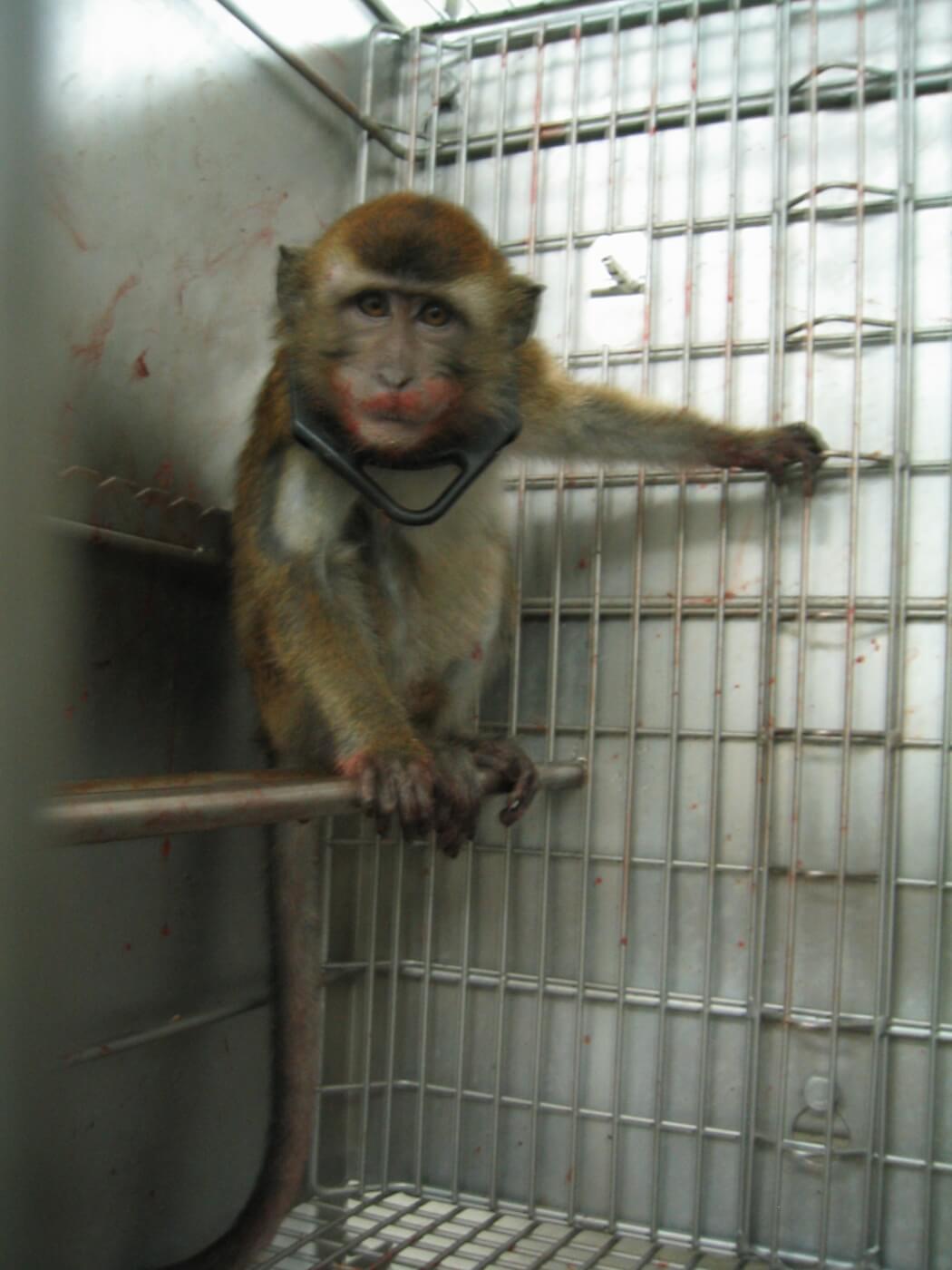
  • In May 2005, PETA released the findings of an 11-month undercover investigation into a Covance facility in Vienna, Virginia. The video footage from the investigation revealed workers tormenting monkeys, hitting them, throwing them against cages, and screaming at them. The facility deprived sick and injured monkeys of veterinary care. Experimenters dosed monkeys with experimental compounds. The investigator also noted monkeys suffering from laboratory-induced insanity (indicated by excessive rocking and spinning) as well as sick and dying primates. PETA filed complaints with federal agencies, and the U.S. Department of Agriculture (USDA) cited and fined Covance for serious violations of the federal Animal Welfare Act.

  • After PETA released our 2005 investigation report, Covance attempted to stop PETA Europe from distributing the video footage. A U.K. judge described the footage as “highly disturbing,” noting the stark difference between Covance’s claims regarding its treatment of animals and the horrific abuse revealed in our investigation. The judge permitted PETA Europe to continue showing the investigation footage, and Covance was required to pay PETA Europe to cover legal fees.
  • In July 2005, PETA bought stock in Covance to take a seat at the table and speak up for animals suffering in Covance laboratories.
  • In August 2005, we mobilized activists—including Sir Paul McCartney—to campaign against the company’s plans to build a new laboratory in Chandler, Arizona. We met with city officials and editors of local papers, held news conferences, organized protests, and did much more. Although the Chandler laboratory opened in March 2009, the company announced in May 2012 that it would be closing the facility due to weak demand for its early development toxicology services.
  • In 2010, Covance closed its Vienna laboratory, where PETA had blown the lid off the shocking abuse of monkeys. The cruel company’s plans to build a new $175 million laboratory complex in Prince William County’s technology park were also scuttled.
  • PETA has extensively documented Covance’s numerous and egregious violations of animal welfare laws, including the following:
    • In December 2021, Covance was cited after staff broke the limb of a monkey through careless and apparently violent mishandling. The company was cited for similar incidents in July 2021, May 2019, and September 2015.
    • In June 2019, Covance was cited after staff failed to feed 25 macaques for a period of six days. Two of the monkeys had to be euthanized.
    • In June 2016, the USDA fined Covance $31,500 after 13 macaque monkeys died of hyperthermia in two separate incidents in which no one noticed that thermostats had malfunctioned.
    • In March 2012, Covance was cited for housing a monkey in isolation for nearly eight months, with no explanation for why this animal was being denied companionship.
    • In February 2012, the USDA cited the company because a monkey died after becoming entangled in an “enrichment” device in his cage.
    • And there have been other incidents.

animal torture devices used on monkeys in labs covance

  • Covance’s CEO, Paul Kirchgraber, was named one of the 12 worst CEOs for animals in laboratories on PETA’s “Dirty Dozen” list. We called out the executive for Covance’s widespread abuse of other animals.
  • Covance was featured in PETA’s list of “Terrible 10” companies that capture, breed, and sell sensitive monkeys to U.S. laboratories for experimentation. We called out the company—which, at one point, was the largest importer of primates into the U.S.—for collecting millions of tax dollars from the National Institutes of Health, which conducts its own extremely cruel and wasteful experiments on monkeys.
  • In 2016, PETA called attention to the possibility that the colonies of monkeys imprisoned in Covance’s open-air facility in Alice, Texas, could function as a reservoir of the Zika virus. In a shareholder resolution to the company, we called on it to report to stockholders about its plans to address the public-health threat posed by the virus at its facility.
  • In 2022, nearly every major airline refuses to transport other primates destined for laboratories, thanks to our relentless campaigning.

How to Help PETA Free Animals Stuck at Covance

Our fellow primates don’t want to be bred for experimentation or abducted from their homes and shipped to laboratories, where experimenters lock them inside cages and conduct painful, traumatizing experiments on them. You can help them by telling airlines such as EGYPTAIR to stop transporting them to their deaths:

The post Covance Cruelty—Here’s How PETA Has Squared Up to the Shady Supplier and Lab-for-Hire appeared first on PETA.