Experiments on Animals Don’t Help Humans Who Struggle With Addiction

What Is a Substance Use Disorder?

A substance use disorder (SUD) occurs when someone is using one or more substances in a way that affects their brain chemistry and behavior, impairing their ability to stop or regulate their use of the substance(s). SUDs may keep using the substance(s) despite negative consequences, such as poor health outcomes, relationship difficulties, or problems at work. Addiction is the most severe form of SUD.

People suffering from SUDs may struggle with alcohol and other depressants, opiates and other narcotics, tobacco products, cannabis, or stimulants, such as cocaine and methamphetamine.

How Many People Have SUDs?

According to the most recent National Survey on Drug Use and Health, “In 2020, 40.3 million people aged 12 or older (or 14.5%) had an SUD in the past year, including 28.3 million with alcohol use disorder, 18.4 million with an illicit drug use disorder, and 6.5 million with both alcohol use disorder and an illicit drug use disorder.”

It’s common for individuals with SUDs to have other mental health conditions, such as anxiety, depressive disorders, attention-deficit/hyperactivity disorder, post-traumatic stress disorder, and schizophrenia, among others. Sometimes individuals develop SUDs when attempting to self-medicate these co-occurring conditions. Genetics may also be a risk factor for SUDs.

SUDs can happen to anyone, regardless of age, sex, race, ethnicity, or socioeconomic status.

How Are SUDs Treated?

SUDs are chronic, treatable conditions, but only about 10% of people who need treatment receive it.

The most common treatment for SUDs is behavioral therapy, which may occur privately or in a family or group setting. Individuals may undergo outpatient counseling or inpatient rehabilitation in a full-time facility. Medications that reduce craving for and/or blunt the effects of substances (making them less appealing), such as naltrexone, buprenorphine, methadone, disulfiram, or acamprosate, may also be available for individuals with alcohol and/or opioid use disorders.

What Happens During Substance Use and Addiction Experiments on Animals?

Such experiments on animals often involve forcing them to ingest substances via laced water, injection, or forced inhalation.
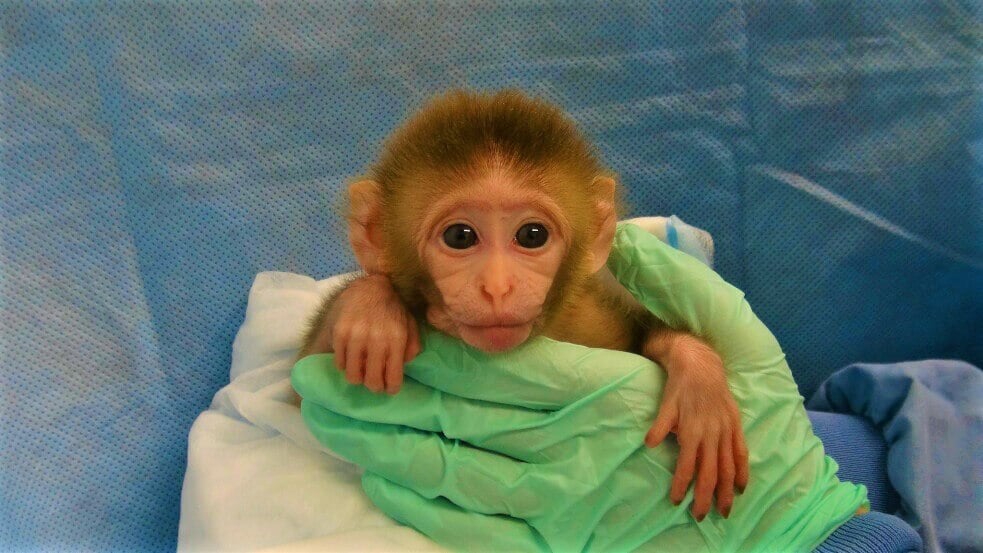
Baby rhesus macaque held by gloved hands

For example, experimenters injected Japanese quails with methamphetamine, watched them have sex, and then forced them to undergo drug withdrawal. Others injected baby rats with ketamine and ethanol. You can even see how they described their “work” in their own words. (Warning: it’s not pretty.)

Other animals used in SUD experiments are forced to administer drugs to themselves. In some self-administration protocols, an experimenter performs surgery on an animal to insert a catheter into their jugular vein. This catheter is attached to a tube through which cocaine or other drugs are infused when the animal pushes a lever. The drug then enters directly into their bloodstream.

In recently published studies on monkeys, experimenters trained animals to self-administer fentanyl and heroin and to binge drink ethanol and inject themselves with cocaine.

Making Animals ‘Addicted’ in Experiments Doesn’t Help Humans Struggling With Addiction

Humans with SUDs have vastly complex experiences that can’t be simulated by using animals in a laboratory setting. Key components of addiction, such as social and environmental factors and language, are fundamentally impossible to model in nonhuman animals. This is partially due to the bleak, extremely limited, and species-inappropriate conditions in which experimenters keep animals in laboratories. According to experts, “it is difficult to argue that it truly models compulsion, when the alternative to self-administration is solitude in a shoebox cage.”

And when experimenters give the animals used in SUD experiments the rare opportunity to decide for themselves, many of them choose sugar or social interaction over the drug being studied. Even among animals with very heavy previous drug use, only about 10% continued to give themselves a drug when they had the option to make another rewarding choice, which is not typically true of humans who suffer from SUDs.

Because animals are poor models for human SUDs, their use has failed to produce treatments to help humans with this condition. There isn’t a single medication available to treat stimulant use disorders, despite many experiments on animals intended to help develop one. The therapies available for smoking, alcohol use, and opioid use were developed primarily from clinical observations of humans rather than experiments on animals.

Human-Relevant SUD Research and Treatment Is Needed

Human-relevant methods, like those detailed below, can provide researchers with answers they’ll never get by torturing other animals.

Scientists at the University of Connecticut are using stem cells donated by alcoholic and non-alcoholic human subjects to study the effects of alcohol on a specific receptor in the brain. Their results were at odds with some of the findings from experiments on animals.

A type of human stem cell that can be collected non-invasively from patients with SUDs and other accompanying conditions has been used to model these disorders, opening the door to drug discovery and new precision medications.

Human brain imaging has also been used to study the brain circuitry of individuals with SUDs.

The funds currently used to support ineffective substance abuse studies on animals must instead be used for human-relevant, non-animal research and to aid human-relevant drug prevention, rehabilitation, and mental health programs.


For an accurate diagnosis of suicidality, depression, alcohol problems, or other mental illnesses, consult a qualified healthcare professional. If you are in crisis or think that you may have an emergency, call your doctor or 911 immediately. If you’re feeling suicidal, thinking about hurting yourself, or concerned that someone you know may be in danger of hurting themselves, call the National Suicide Prevention Lifeline by dialing 988. This free service is available 24 hours a day, seven days a week, and is staffed by certified crisis-response professionals. If you’re located outside the U.S., call your local emergency line immediately.

The post Experiments on Animals Don’t Help Humans Who Struggle With Addiction appeared first on PETA.
Will Maxwell Frost Make PETA’s HQ His D.C. Home?

When PETA heard last night that Gen Z Congressmember-elect Maxwell Frost was having trouble finding housing in D.C., the group offered up a free one-month stay in its Dupont Circle office, which is truly nonpartisan—right down to the elephant in the front yard and the donkey above the reception desk.

PETA tweeted to Frost, “We want to help—be our guest! PETA offers you a place in our vegan, nonpartisan D.C. office with a private room, shower, mini-kitchen, and free WiFi Enjoy a month of peace & quiet in a place where supremacism is out and kindness is in!” And in a DM to him, PETA offered to welcome him to D.C. with a delicious vegan meal—complete with vegan pie and ice cream—from one of its favorite local restaurants, NuVegan.

PETA—whose motto reads, “Animals are not ours to experiment on, eat, wear, use for entertainment, or abuse in any other way”—opposes speciesism, a human-supremacist worldview. For more information, please visit PETA.org or follow the group on Twitter, Facebook, or Instagram.

The post Will Maxwell Frost Make PETA’s HQ His D.C. Home? appeared first on PETA.

Education Conference Wrap-Up: PETA’s TeachKind Shines This Fall With Empathy Lessons

Autumn tends to be associated with calmness, coziness, reflection, learning, and … empathy? Throughout fall 2022, PETA’s humane education division, TeachKind, has been busy helping K–12 teachers connect with respect for animals. By attending, tabling at, and presenting at education conferences around the country, we’ve focused on outreach to educators, building empathy, and getting the word out about humane, non-animal dissection.

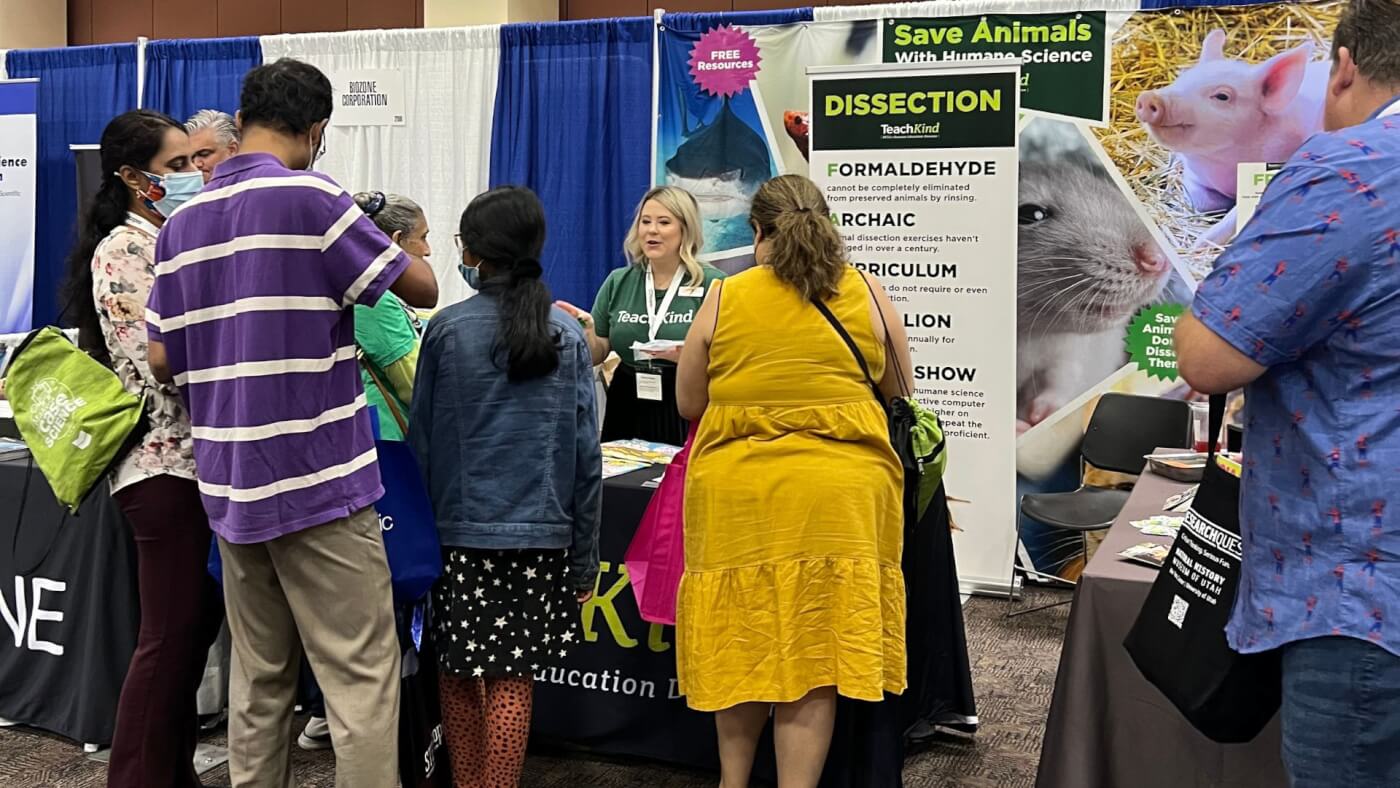
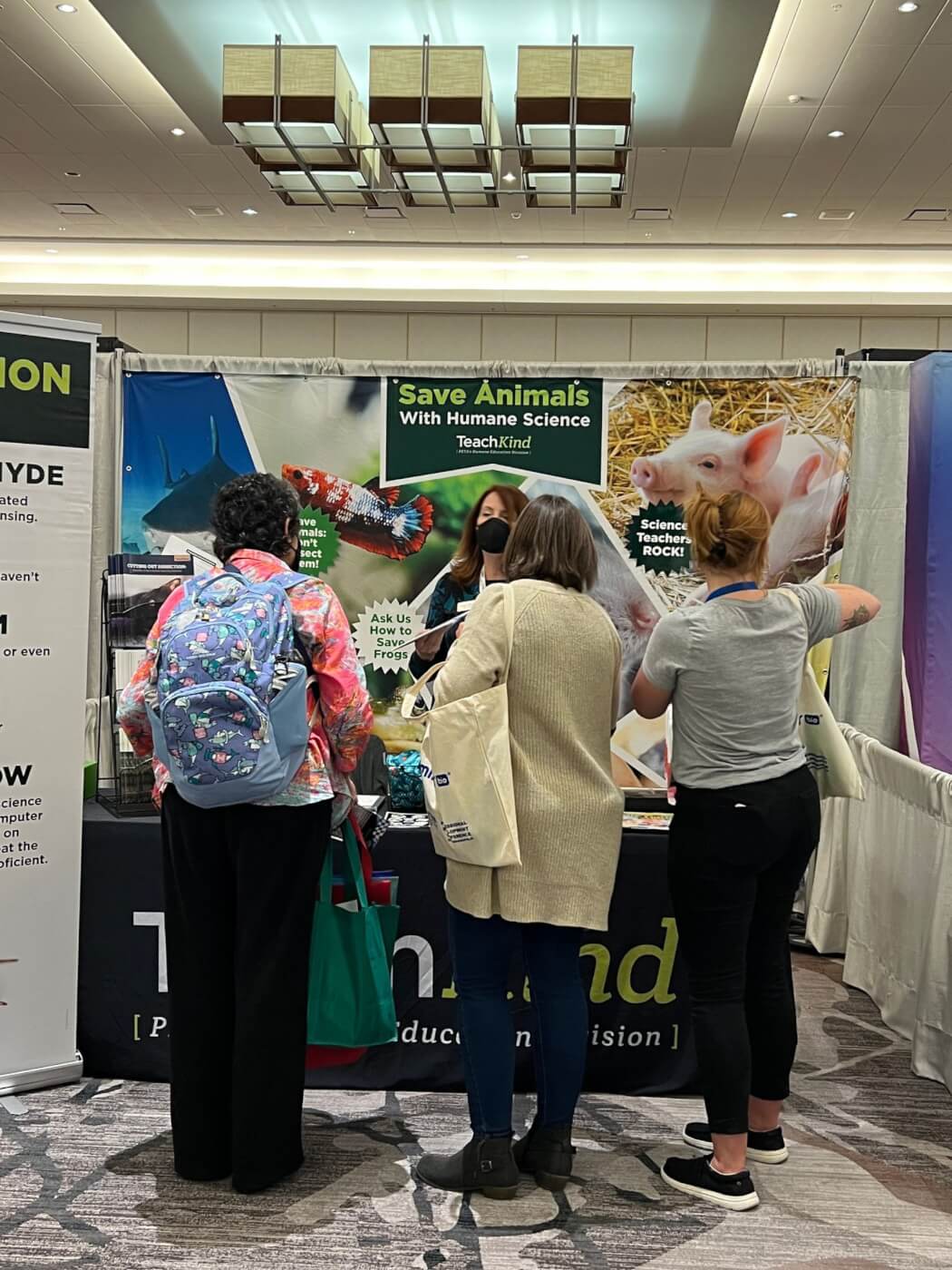
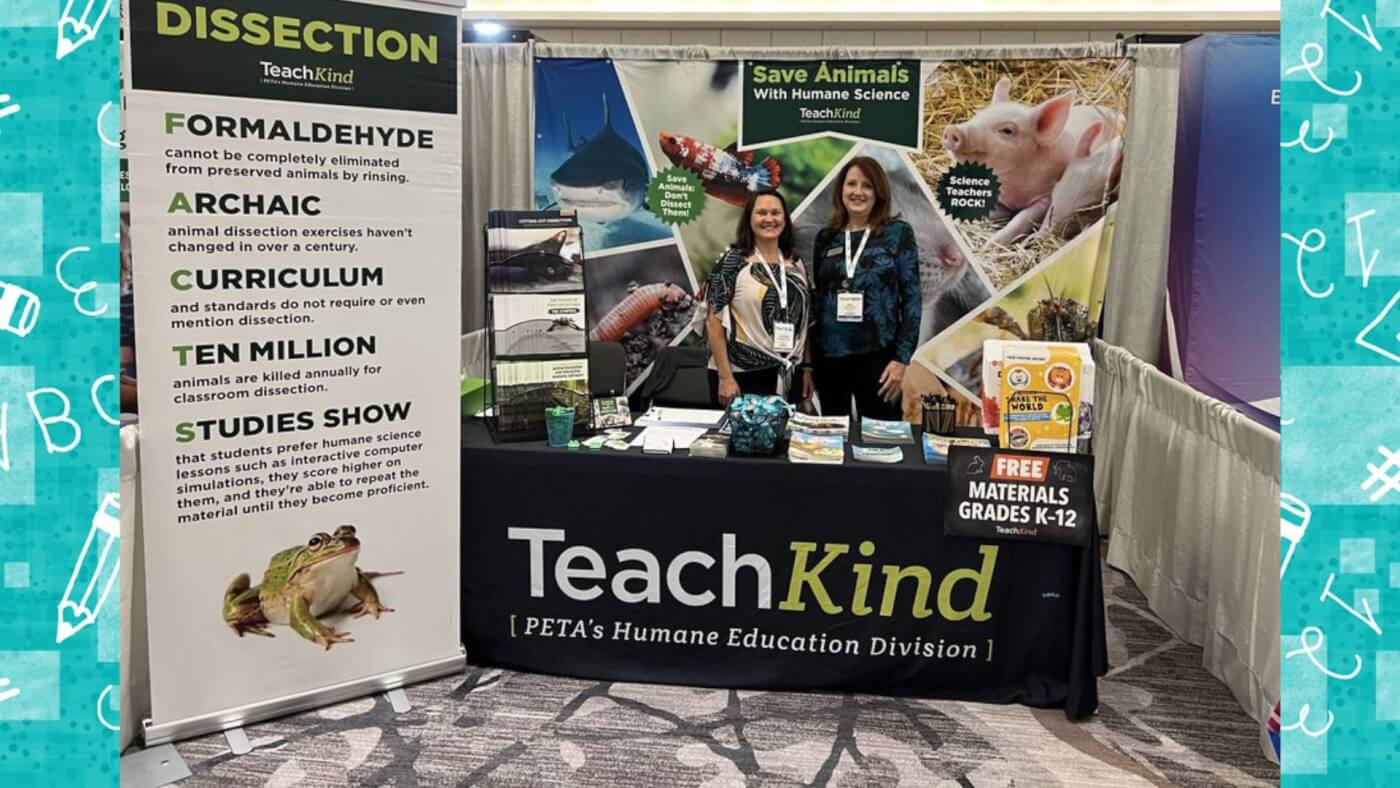
education conference exhibit booth with TeachKind staff, animal-free dissection poster, and free teacher resources

California Science Education Conference Welcomes TeachKind

Furthering PETA’s focus on ending experiments on animals, TeachKind exhibited and presented a workshop at the annual California Science Education Conference from October 14 to 16 in Palm Springs.

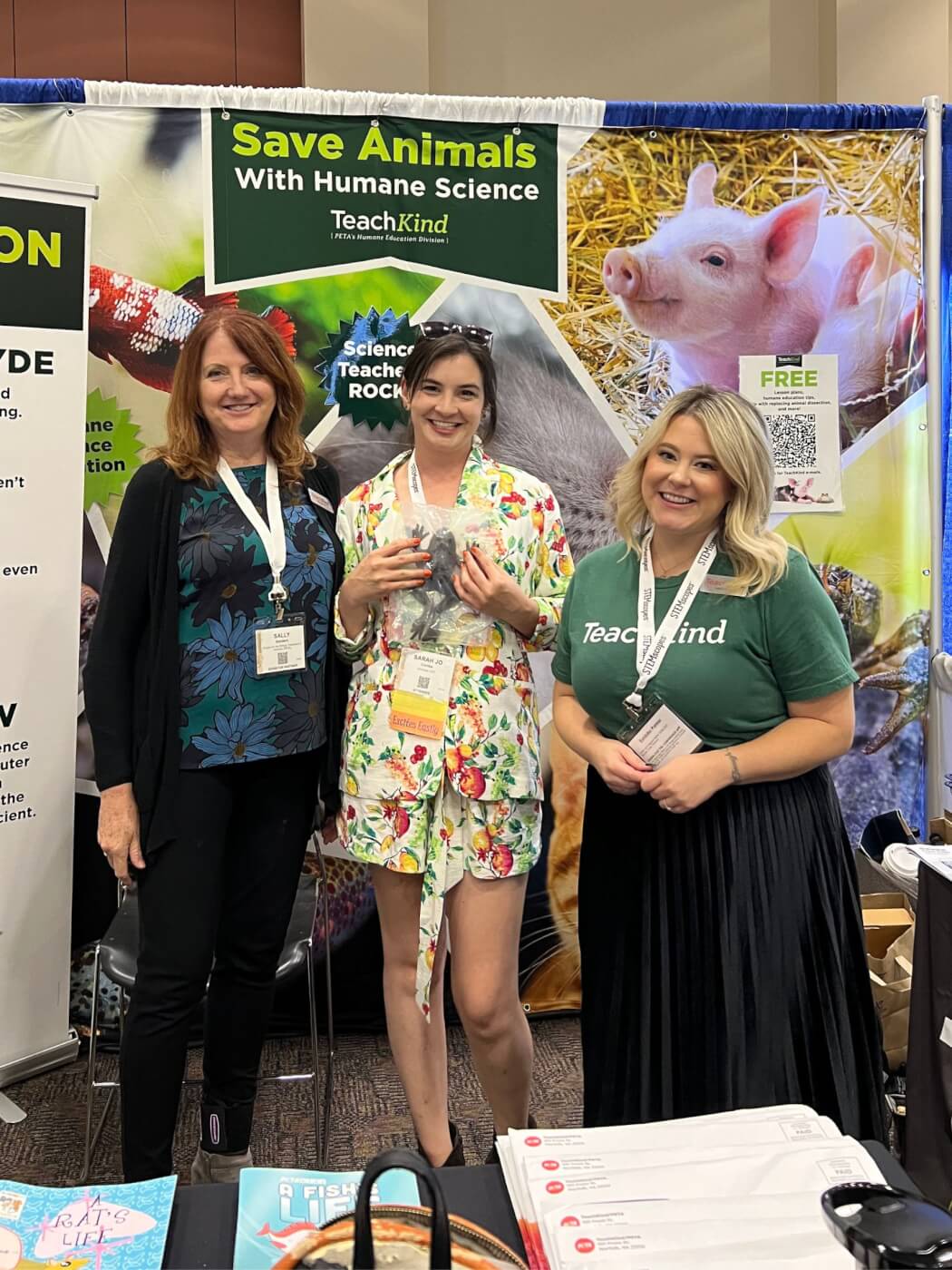
education conference CASE with two TeachKind staffers and a teacher holding a SynFrog

We interacted with teachers from all grade levels who were grateful for free resources supporting empathy in the classroom—including copies of Share the World and Challenging Assumptions, our signature empathy-building curricula for primary and secondary educators, respectively. The first day, staffers Sam, Kayla, and Sally greeted a constant stream of intrigued educators. During the conference, the staff met at least six vegan teachers thankful for our presence.

education conference CASE with TeachKind staffer talking to teachers at exhibit booth

Featuring new, animal-free materials, we attracted many life-science teachers eager to prioritize compassion and replace animals used for dissection. One forensics science teacher said that although her students wanted to dissect animals, she was opposed. The TeachKind staff brought up the link between kids’ hurting animals and committing future acts of violence against humans, and the teacher was excited to create a lesson for her students exploring the troubling connection.

TeachKind Sets Up Shop at a Top Florida Education Conference

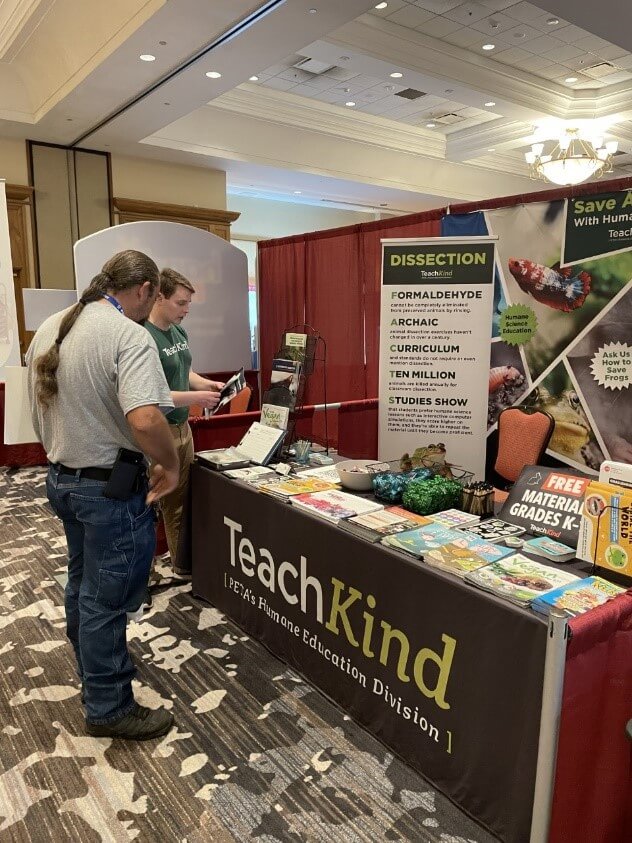
Next, we attended the 75th annual Florida Association of Science Teachers (FAST) conference from October 27 to 29 in St. Augustine. There, the theme was “75 Years of FAST,” celebrating the organization’s anniversary and the evolution of science education.

At FAST, TeachKind staffers Sally and Andrew talked with many Florida educators interested in empathy-building and non-animal dissection resources. We also met a few professors who educate science teachers, and we presented a workshop session called Dissection: Evolving Views and Practices to align with the conference’s theme. Fourteen science teachers attended our workshop, where two synthetic, whole-body SynFrog models and two “Bringing Home the Bagels” canvas bags—made to promote anti-speciesist language—were awarded as door prizes.

education conference TeachKind exhibit booth at FAST with staffer talking to a teacher

We also had a great interaction with district-level administrators from Florida’s St. Johns County School District, where a shark was hung from the rafters of a school earlier this year. TeachKind responded to the incident at the time, and our staffers were able to have a follow-up call with other administrators from this district during the conference.

The editor of the FAST newsletter and journal was especially interested in TeachKind’s resources and invited us to submit articles for the annual journal and activities for the quarterly newsletter.

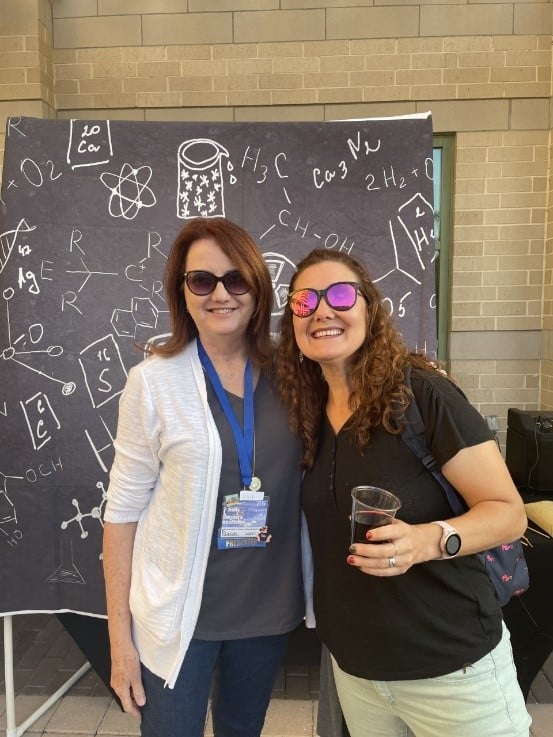
education conference where TeachKind staffer and teacher met up

New York Education Conference Hears TeachKind’s Newest Animal-Free Dissection Ideas

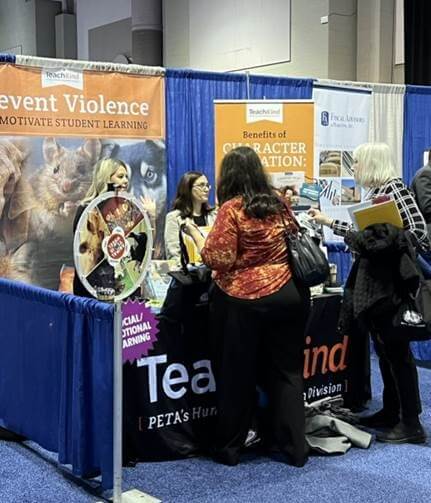
From October 27 to 29, TeachKind’s Kayla and Sam attended the 2022 New York State School Boards Association (NYSSBA) Annual Convention & Education Expo in Syracuse. Here, we gave a presentation titled Building Character and Achievement Through Compassion for Animals.

The conference saw about 2,000 attendees, most of them current NYSSBA members. Tons of people stopped by the TeachKind booth to give thanks for our vital work in preventing violence and helping animals. One notable visitor was a clinical psychologist and board member who was elated to share the animal-free resources with her students and with teachers she knows.

education conference TeachKind exhibit booth at NYSSBA with staffers talking to teachers

TeachKind Was a Hit at the Indianapolis Biology Community’s Education Conference

We then exhibited at the annual Professional Development Conference of the National Association of Biology Teachers from November 10 to 13 in Indianapolis. Staffers Sam and Sally talked with many biology teachers and other science teachers interested in non-animal dissection methods and empathy-building resources.

education conference TeachKind exhibit booth at NABT in Indianapolis with staffers talking to teachers

TeachKind was also glad to give away a SynFrog to a middle school teacher who was thrilled to show her students.

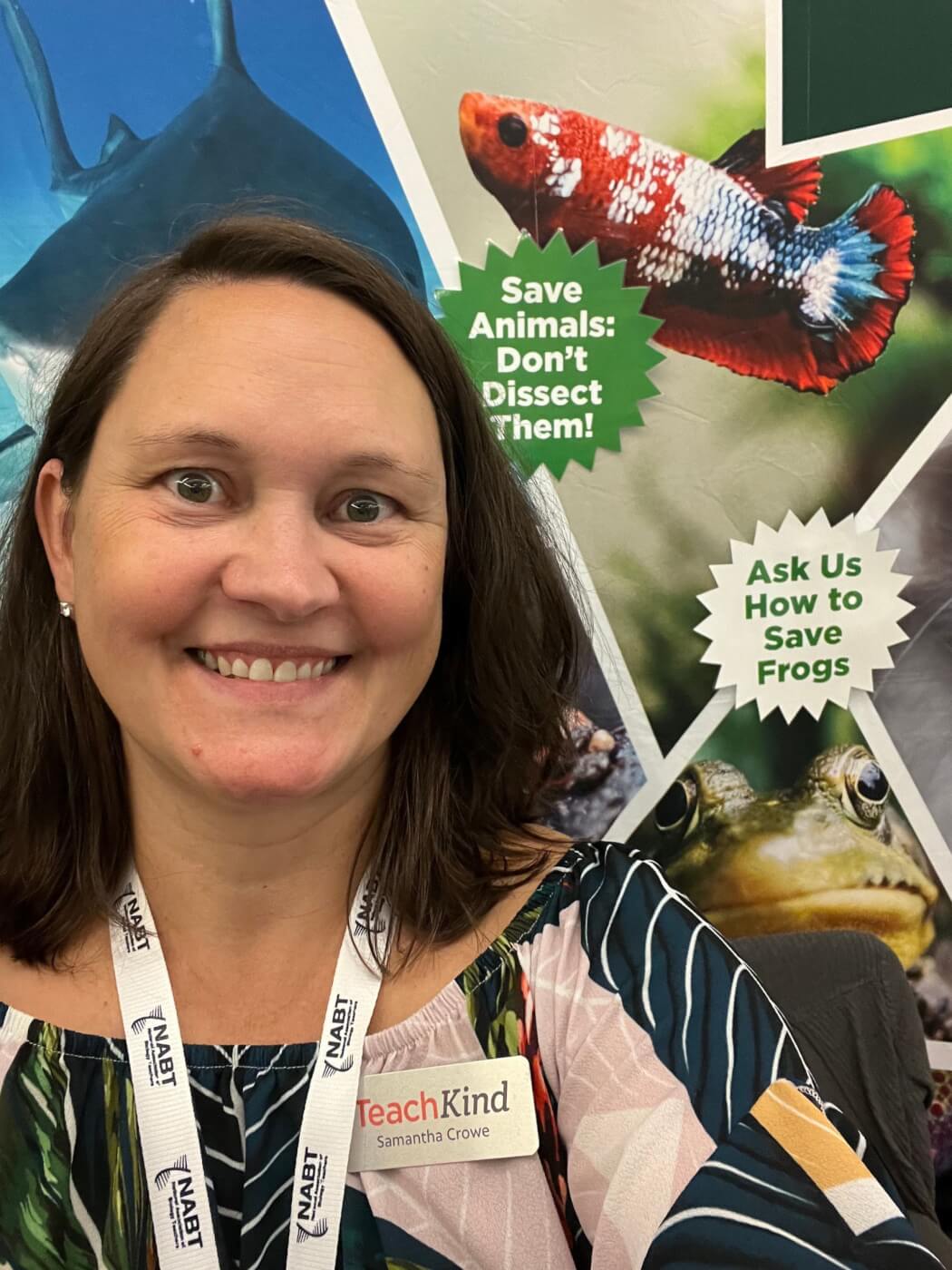
education conference TeachKind exhibit booth with staffer Samantha Crowe

Conferences that TeachKind presented at earlier this year include the Association for Supervision and Curriculum Development’s Annual Conference in Chicago in March, where we networked with school leaders from all over the country; the National School Boards Association’s conference in San Diego in April, where our popular “Rescue Stories” reading comprehension worksheets made their conference debut; the Mindful SEAD Education Leadership Summit, an online gathering hosted by the Nevada Department of Education in June; and the National Science Teaching Association’s National Conference in Houston in July.

Relearn Respect for Animals, and Find Out More About TeachKind

This fall, TeachKind succeeded at sparking compassion for animals, and we look forward to inspiring schools, educators, and parents to do even more to end speciesism in 2023. You can start by signing up for our state-of-the-art science education pilot program that teaches students dissection using more effective, ethical, economical non-animal methods.

Learn more about TeachKind and how humane education lessons help kids and animals:

Sign Up for TeachKind’s E-Mails, and Follow Us on Instagram

The post Education Conference Wrap-Up: PETA’s TeachKind Shines This Fall With Empathy Lessons appeared first on PETA.

Feds Wallop Local Roadside Zoo With $13.5K Fine After Complaint From PETA

After PETA alerted the U.S. Department of Agriculture to several animals in need of urgent veterinary care at Indian Creek Zoo, the agency issued the roadside zoo a penalty of $13,500 for multiple alleged violations of the federal Animal Welfare Act (AWA), including failing to maintain enclosures, which allowed a baboon to bite an employee and a porcupine to escape, never to be found.

Other violations involve the roadside zoo’s repeated failure to provide adequate veterinary care and to communicate with the attending veterinarian regarding the condition of multiple sick and injured animals in its custody. These include a tayra and a rabbit with hair loss and reddened skin, a goat who was limping and had a swollen leg joint, and multiple underweight white-tailed deer, including one with overgrown hooves and another with diarrhea that was rolling down and staining the animal’s rear legs.

“Animals were left covered with their own waste and denied much-needed veterinary care at Indian Creek Zoo,” says PETA Foundation Director of Captive Animal Law Enforcement Michelle Sinnott. “Cutting corners, exhibiting ailing animals, and endangering everyone with shoddy enclosures is unacceptable, and PETA will continue to track this hellhole and loop in the feds at every turn.”

PETA—whose motto reads, in part, that “animals are not ours to use for entertainment” and which opposes speciesism, a human-supremacist worldview—notes that Indian Creek Zoo has received 18 citations for AWA violations since 2015.

For more information on PETA’s investigative newsgathering and reporting, please visit PETA.org or follow the group on Twitter, Facebook, or Instagram.

The post Feds Wallop Local Roadside Zoo With $13.5K Fine After Complaint From PETA appeared first on PETA.