
The post Not Your Average Nativity: PETA Illustration Reveals Animals’ Christmas Wish appeared first on PETA.
Video: Ukraine Gives Thanks as Wounded Dog and Cat Refugees Are Treated in New Vet Clinic
Catch this wonderful message from Kharkiv, Ukraine.
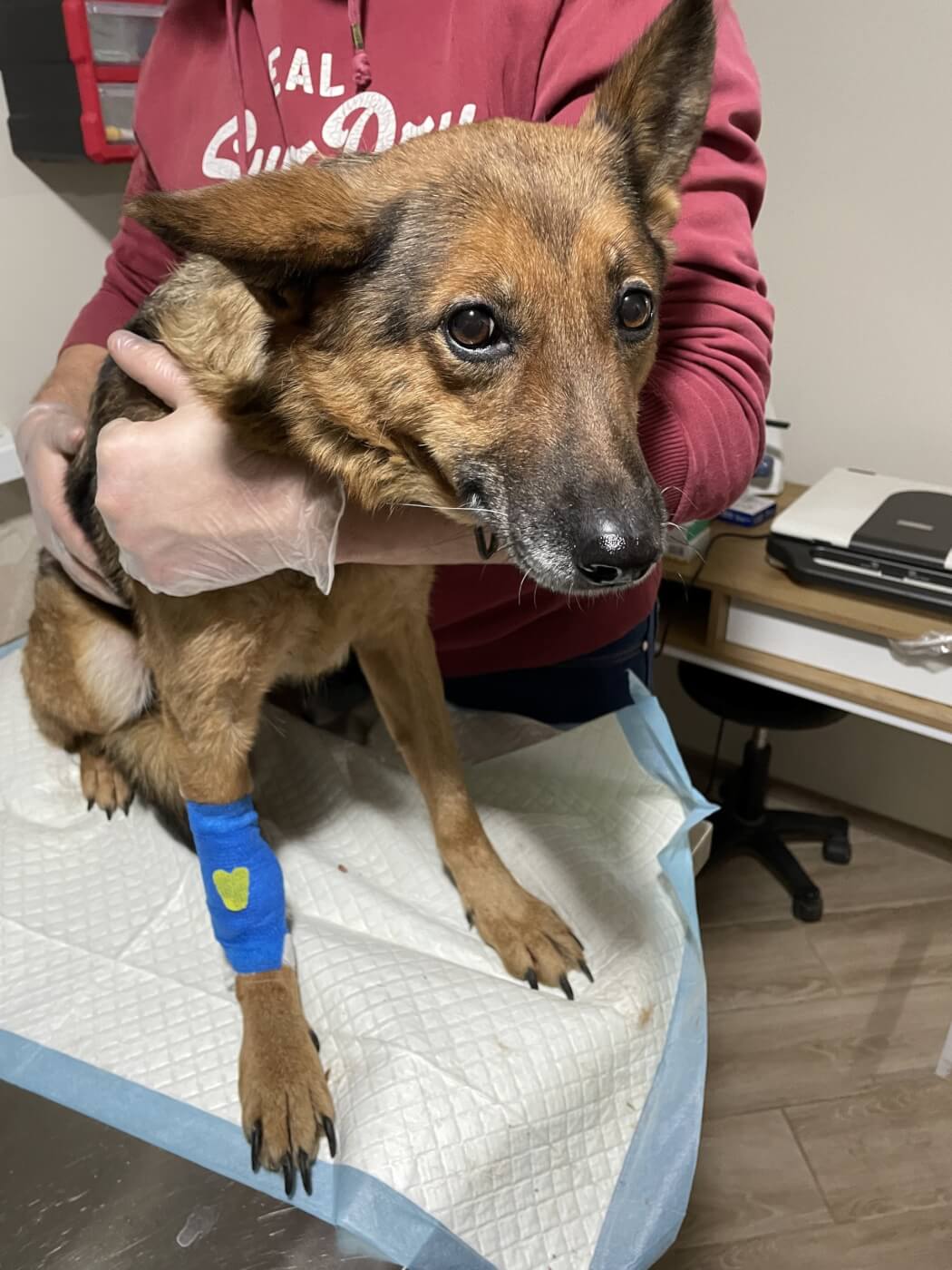
Animal Rescue Kharkiv (ARK) has been pulling animals out of shelled buildings and rescuing abandoned cats and dogs in eastern Ukraine since the war started. It provides veterinary care even though large sections of its clinic were reduced to rubble as a result of being hit by Russian missiles. Now, thanks to wonderful Global Compassion Fund supporters, it’s able to give lifesaving care and shelter to even more animals in a newly rebuilt clinic—especially vital now that Ukraine’s temperatures have dropped to below zero! Watch below as ARK gives a heartwarming, festive duzhe dyakuyu (“thanks very much”):
PETA Germany and ARK are evacuating animals from eastern Ukraine, only about a kilometer (or a half-mile) from the Russian border. Many abandoned dogs and cats are in desperate need of food as well as veterinary care for wounds, things these two brave groups’ ground “troops” will continue to provide as long as necessary and despite all odds.
If you’d like to help animals around the world this winter, please donate to the Global Compassion Fund today.
The post Video: Ukraine Gives Thanks as Wounded Dog and Cat Refugees Are Treated in New Vet Clinic appeared first on PETA.
The CDC Risks Epidemic by Letting Diseased Monkeys Into the U.S.
NBC News reporter Stephanie Gosk just took viewers into the dark underworld of the nasty international trade in monkey flesh, which nets big money for sellers and new victims for U.S. laboratories. Don’t miss seeing PETA primate scientist Dr. Lisa Jones-Engel make the ethical and scientific case for shutting down this despicable pipeline.
But there’s more to the story—and it could threaten your life.
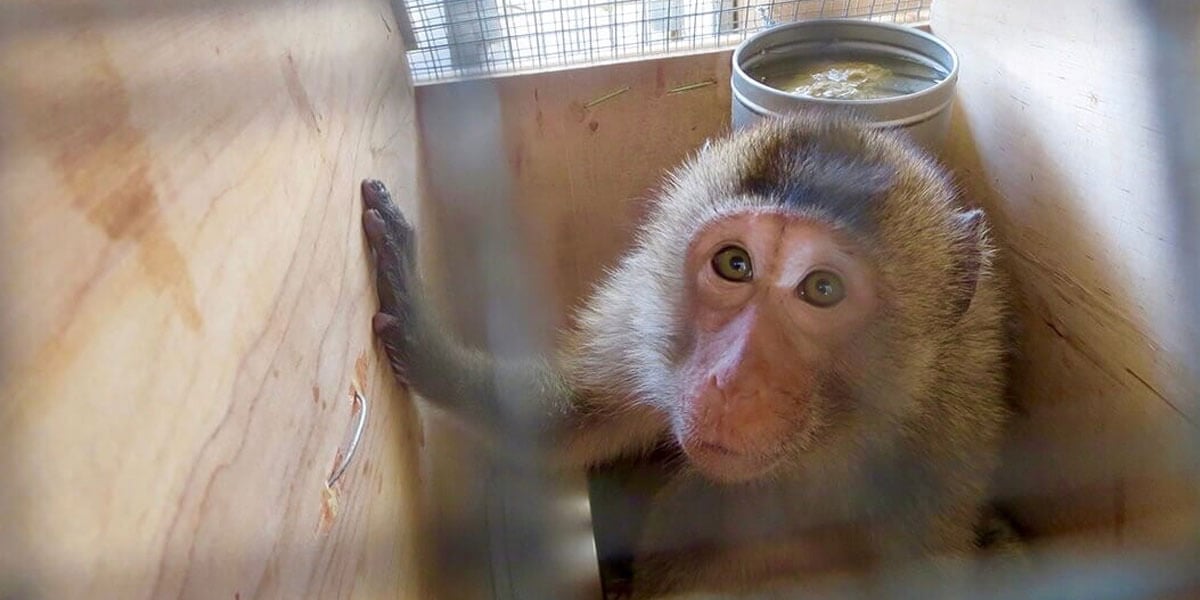
As reported by The Guardian, PETA recently obtained damning information revealing that the Centers for Disease Control and Prevention (CDC) has known that a host of nasty and highly contagious bacteria, including one classified as a bioterrorism agent, regularly enter the U.S. in shipments of monkeys imported for laboratory experiments and that the agency hasn’t bothered to notify the public or state officials.
In July, the CDC alerted officials in the Mississippi Delta region to the presence of a bioterrorism agent, a type of bacteria that causes the disease melioidosis, in the soil and water. Melioidosis is associated with a potentially lethal respiratory disease that can kill 10% to 50% of those infected. Yet CDC officials said publicly that the agency had no idea how the bacteria got there, even though it clearly understood that shipments of monkeys were one possible source.
Because of this deception, PETA wrote to CDC officials today, demanding that the agency stop playing with fire and immediately ban the importation of all monkeys destined for laboratories across the country in order to eliminate this potential source of the next pandemic.
According to the CDC’s own documents, the agency knew this bacteria was infecting monkeys in Southeast Asia and being carried into U.S. facilities, most recently in 2021.
The bacteria was detected in sick monkeys at Tulane National Primate Research Center in Louisiana in 2015. But the CDC blamed staff error, not imported macaques, even though two years earlier, an imported monkey had brought that same bioterrorism agent into the CDC’s own monkey colony.
On top of the evidence PETA uncovered, a case report just published by individuals working at the CDC, the Texas Department of State Health Services, and monkey-importer Inotiv’s primate quarantine facility in Texas revealed that during 2021, at least four monkeys imported from Cambodia into Texas were released from quarantine labs despite being infected and likely shedding this deadly pathogen. At least six monkeys imported into the U.S. in 2020 and 2021 have been infected with the bacterium.
Documents also show that the CDC knew that imported monkeys carry tuberculosis and other easily transmitted unnamed viruses that cause diarrhea so violent that it sheds the lining of the gut.
The CDC never bothered to make a public announcement about the inherent dangers of these viruses, which have the potential to spark a new pandemic.
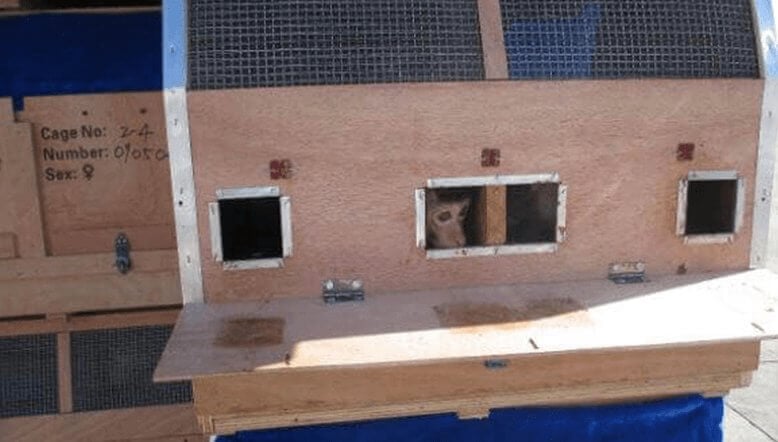
The agency’s own documents make it glaringly obvious that many of the 100,000 monkeys imported during the COVID-19 pandemic have been moved throughout the U.S., carrying dangerous diseases that can cause severe illness and even death in humans. It’s like playing with matches in a lighter fluid factory.
Coupled with the devastation of wild macaque populations and the zoonotic-disease threat that imported and/or domestic colonies of primates pose to humans, it’s time the CDC did the responsible thing.
What You Can Do
The CDC could shut down all importation of monkeys today, but it chooses instead to keep supporting this violent industry steeped in pain and continues to endanger human health.
Please join more than 45,000 PETA supporters and demand that the CDC end monkey importation immediately.
The post The CDC Risks Epidemic by Letting Diseased Monkeys Into the U.S. appeared first on PETA.
Presents-Single Column-Living-EOY-12172022
Give a Great Gift
That Helps Animals—a PETA Present!
PETA Presents are virtual gifts that promote compassion for animals. Check out our holiday gifts,
and schedule your e-card just in time to celebrate.
The post Presents-Single Column-Living-EOY-12172022 appeared first on PETA.
Berlin Hotel Aquarium Bursts, Killing 1,500 Fish
What if you were among a crowd of 1,500 people unexpectedly submerged in water and uncertain whether you’d be able to breathe again? That is the human equivalent of what each fish experienced early on the morning of December 16 when a downtown Berlin hotel’s 50-foot-high aquarium burst, scattering suffocating sea life everywhere. This is a wake-up call for everyone in Berlin and around the world to reexamine speciesism and take action for animals displayed as if they were nothing more than hotel wall art.
As hundreds of thousands of gallons of saltwater spilled through shattered glass into the hotel lobby and onto the street, 1,500 tropical fish were forced to endure rapid pressure changes and violently propelled in every direction. One hundred firefighters closed off the compromised area around the Radisson Collection Hotel, located near the central square of Alexanderplatz. Guests were evacuated, including two who were rushed to the hospital, reportedly to have shards of glass removed.
As it was just 19 degrees Fahrenheit outside, multiple observers reported seeing many of the fish frozen to death on the street. Designed to wrap around an elevator, the central, cylindrical tank that burst—known as the AquaDom and built in 2003—held 264,000 gallons of saltwater, and almost all the fish hurled from it were deemed unlikely to survive. Rescuers focused instead on saving imperiled fish from smaller, surrounding aquariums in the building, as the incident caused a power outage. While the hotel attempts to restore power, it has a backup plan in place for temporarily relocating the surviving animals.
Die FDP-Abgeordnete @sandra_weeser war auch im Radisson Blu als der #Fischtank explodiert. Hier ihr Video. Gleich erzählt sie davon live auf @welt pic.twitter.com/JicUaRXSeb
— Robin Alexander (@robinalexander_) December 16, 2022
The cause of the rupture remains uncertain, but the general consensus is reportedly that some sort of technical defect led to the incident. What is clear is that no fish should ever have been confined this way. Animals exist for their own reasons, not to provide needless and exploitative ambience.
PETA Germany is exploring legal action against this death-trap hotel aquarium and is requesting that a memorial be built at the site to honor the 1,500 marine animals.
The post Berlin Hotel Aquarium Bursts, Killing 1,500 Fish appeared first on PETA.