Never Trust Animal Breeders: Logan Paul’s Pig Is Another Reminder

When Logan Paul bought Pearl the pig, he said the sellers told him she was a “mini pig”—a species that doesn’t exist. Two years later, after being rehomed more than once, she was found loose in a field, suffering from a life-threatening infection, along with the body of another pig.

Although Pearl is now receiving care at The Gentle Barn where she will spend the rest of her life, her story is just the latest cautionary tale that proves animals are a lifetime commitment, should never be bought or bred, and should never be adopted by anyone who isn’t willing and able to provide them with appropriate lifetime care.

PETA Hopes Pearl the Pig’s Story Helps End the Teacup Pig Myth

“Mini pigs,” “teacup pigs,” and “micro pigs” don’t exist. Pigs sold under these labels are usually malnourished potbellied piglets who, when they’re fed properly, grow to normal pig size, sometimes exceeding 100 pounds. These deceptive names are examples of false advertising and are used by breeders who treat animals as a commodity to be bought and sold, not as the individuals they are.

Just like “purebred” dogs—animals bred to have certain genetic traits or features—pigs who are intentionally bred to keep them small can, according to a report by Rachel Virginia, suffer from “a host of health issues resulting from reduced genetic diversity, such as squished snouts, which cause breathing problems later in life.” Breeders also underfeed these animals in order to stunt their growth and then instruct their guardians to feed their new companions a restricted diet, too.

Pearl is now safe at a sanctuary that will be able to provide her with the love, space, food, and care she needs to thrive.

Make Sure You’re Ready for a Lifelong Commitment Before You Adopt

Pet stores and breeders are major players in an uncaring and deadly industry. Treated as disposable merchandise, countless animals, including falsely labeled pigs like Pearl, are bred into the pet trade every year. They’re ultimately sold to anyone willing to pay for them, and the resulting animal suffering is immeasurable. With millions of homeless animals in U.S. shelters at any given time, there’s no such thing as “responsible breeding,” and if someone is profiting from the sale of an animal, you can bet that animal welfare was never their priority. That’s why PETA is on a mission to end animal suffering in the pet trade. Together, we can break the cycle of breeding and buying that drives the U.S. companion animal overpopulation crisis.

If you’re certain that you have the time, money, ability, desire, and dedication needed to provide an animal with a lifetime of care, please give an animal a second chance at life and love by adopting from a shelter.

The post Never Trust Animal Breeders: Logan Paul’s Pig Is Another Reminder appeared first on PETA.
vsk-email-grab-011123

Save Lives by Going Vegan!

Need a little help going vegan? Download our FREE vegan starter kit with meal tips, recipes, health advice, and more!


By submitting this form, you are agreeing to our collection, storage, use, and disclosure of your personal info in accordance with our privacy policy as well as to receiving e-mails from us.

The post vsk-email-grab-011123 appeared first on PETA.

The USDA Is Asking for Public Comments After PETA Petition Demands Stronger Regulations

After PETA sent our petition for rulemaking to the U.S. Department of Agriculture (USDA) in 2022, calling on it to adopt new regulations for large carnivores, including a requirement for environmental enrichment, the agency has published an Advance Notice of Proposed Rulemaking (ANPR) and is soliciting public comments on certain updates to rules regarding contact, handling, and housing requirements of captive wild animals. The ANPR is, in part, a response to our petition, and we’re committed to contributing information to help guide the agency’s changes through this public comment period.

The amount of harm uncovered at roadside zoos in recent years—including the deaths of five sugar gliders in a pipe at the despicable SeaQuest Fort Worth and the conditions at the “fetid and dystopic” Tri-State Zoo that led to the rescue of 78 animals—shows the pressing need for more regulation before exhibitors receive licenses to keep and show sentient beings.

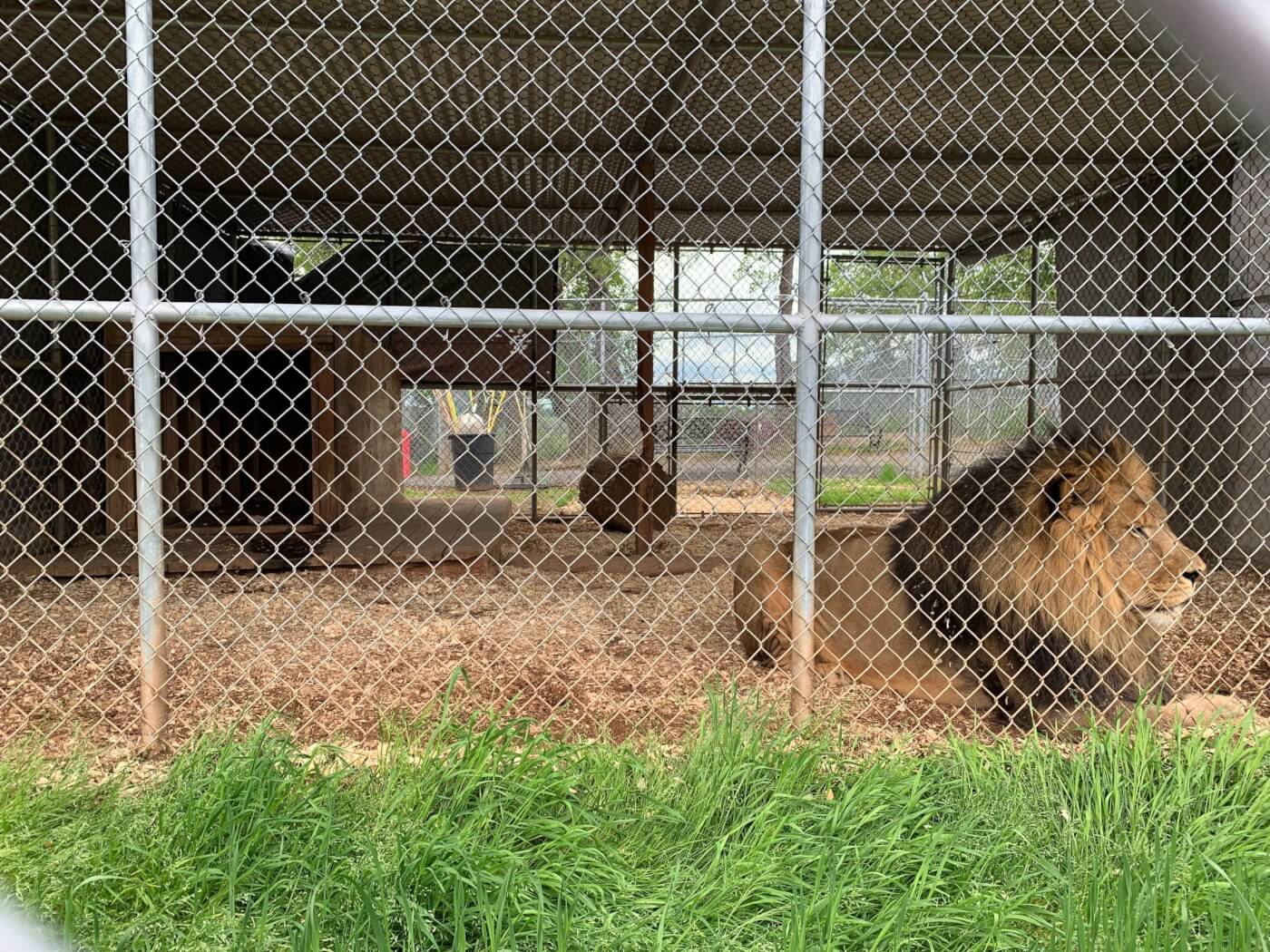
an adult male lion, laying in a barren enclosure looking to the right of frame. the enclosure is fenced in with wire metal lawn fence.

Making Contact Requirements Clear

One change proposed in the ANPR would clarify the requirements for exhibitors to demonstrate “adequate experience and knowledge” of the species being maintained and to maintain “sufficient distance and/or barriers between the animal and the general viewing public.”

It’s extremely important that these proposed changes be implemented, because of the sheer number of citations that the USDA issues to roadside zoos for animal and human injuries involving USDA-regulated species. Additionally, animals—such as the bear cubs at Yellowstone Bear World and Oswald’s Bear Ranch—are tormented by despicable exhibitors during dangerous public handling events.

Our 2022 petition specifically called on the USDA to publish targeted regulations for the care, handling, and transportation of big cats, bears, wolves, wolf-dog hybrids, and hyenas.

Requiring Stimulating Enclosures

Another proposal would require programs of environmental enrichment for all USDA-regulated animals in the custody of an exhibitor, which could help alleviate boredom and psychological distress for animals who are subject to extreme distress without stimulation or a semi-natural habitat.

PETA Will Stay Involved

In the coming months, PETA’s legal, animal welfare, and veterinary experts will be preparing comments urging the USDA to adopt strict requirements for federal Animal Welfare Act licensees to prove that they have sufficient experience and knowledge of the species they are responsible for, to prohibit public contact with all USDA-regulated wild animals, and to establish stringent requirements for meaningful, daily environmental enrichment for animals.

We will also offer detailed guidelines to PETA members and supporters so they can submit their own comments to the USDA on these critically important proposals. The ANPR is now open for public comment, with comments due on March 10.

Speak Up for Animals Today

In the meantime, please take the opportunity to speak out against the tourist trap animal exhibitors and shoddy roadside zoos around the country, which cause animals to continue to suffer.

The post The USDA Is Asking for Public Comments After PETA Petition Demands Stronger Regulations appeared first on PETA.

Victory! Sheriff’s Deputy Charged With Felony Cruelty to Animals After 3 Dogs’ Deaths

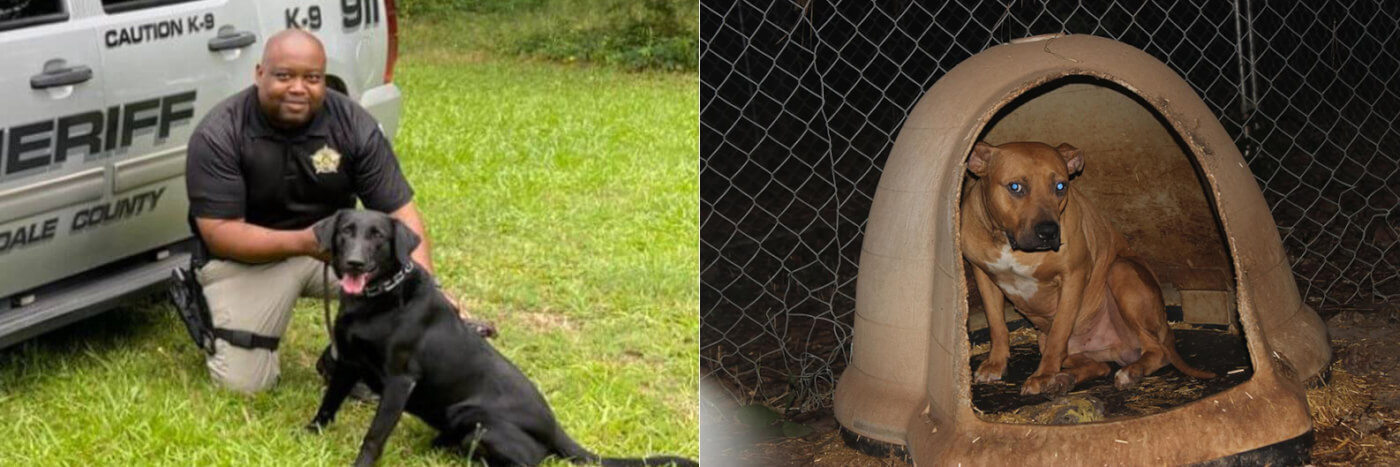
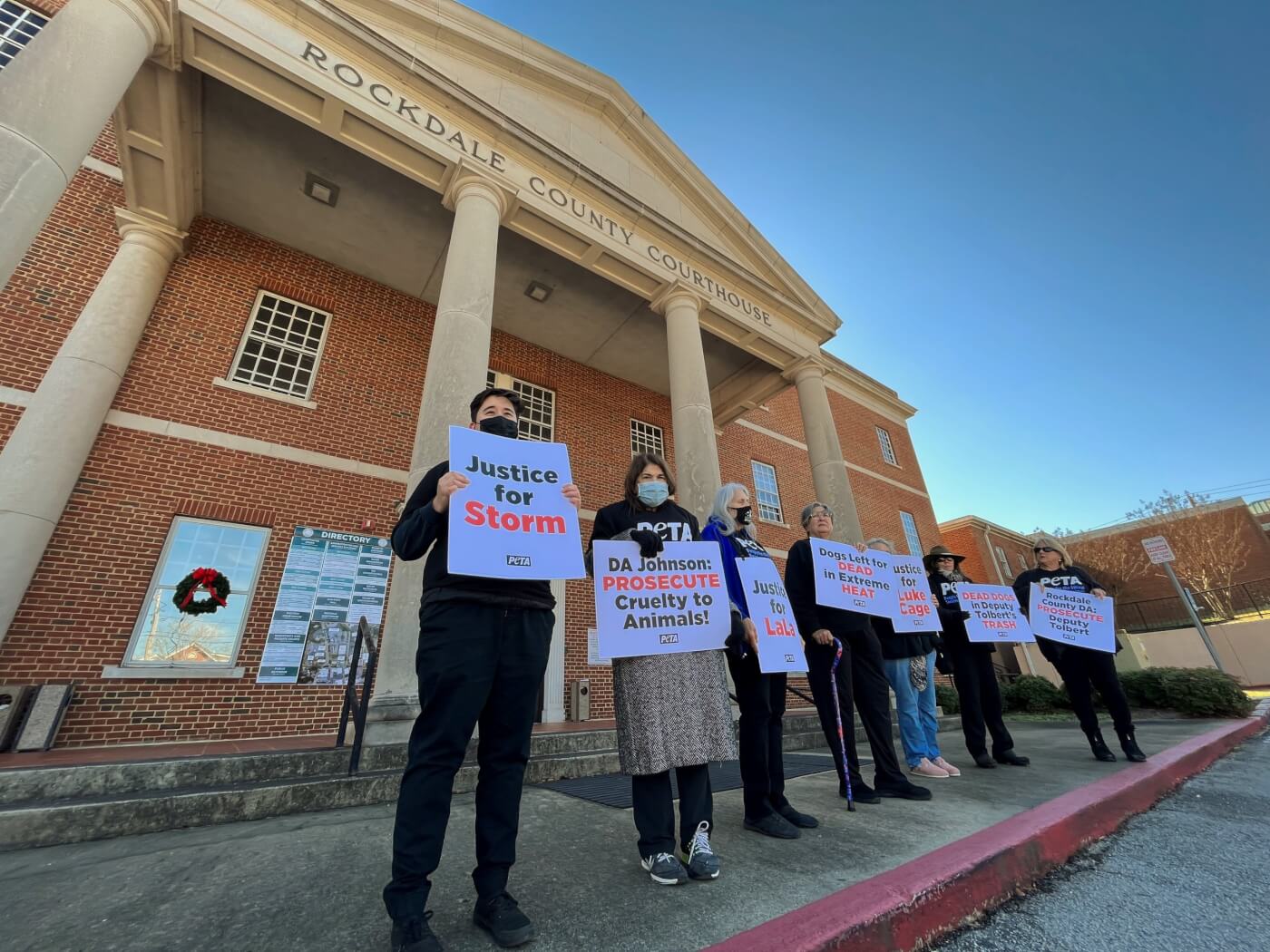
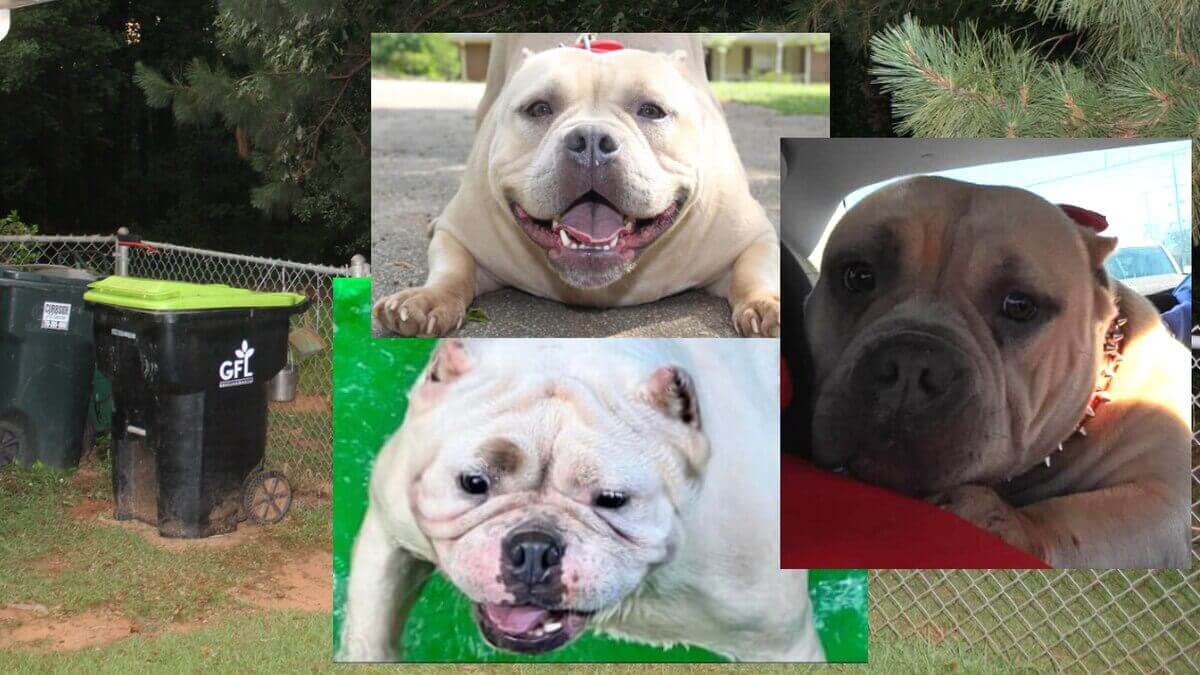
Eric Tolbert, a sheriff’s deputy in Rockdale County, Georgia, admittedly left his three American bullies—Luke Cage, Storm, and LaLa—to die of heatstroke over the course of two days in June when temperatures reached a sweltering 95 degrees. Then, as he told one of the sheriff’s office investigators, he “trashed ’em,” and the decomposing remains of two of the dogs were found in garbage bins on his property. Now, following three months of action by PETA, during which we sent letters, held demonstrations, and encouraged supporters to take action, Rockdale County District Attorney Alisha Johnson has finally charged Tolbert with cruelty to animals.

These dogs depended on Tolbert for protection, but he left them to suffer and die. Breathing-impaired breeds (BIBs) like American bullies are twice as likely to experience heatstroke as other dogs. Tolbert kept Luke Cage, Storm, and LaLa crated without adequate ventilation in a squalid outdoor shed, where the walls were stained with urine and moldy feces had piled up beneath the crates. After the first dog died, Tolbert couldn’t even be bothered to keep the other two safe indoors. Instead, he left them in the shed while he went to work the next day, and they died, too.

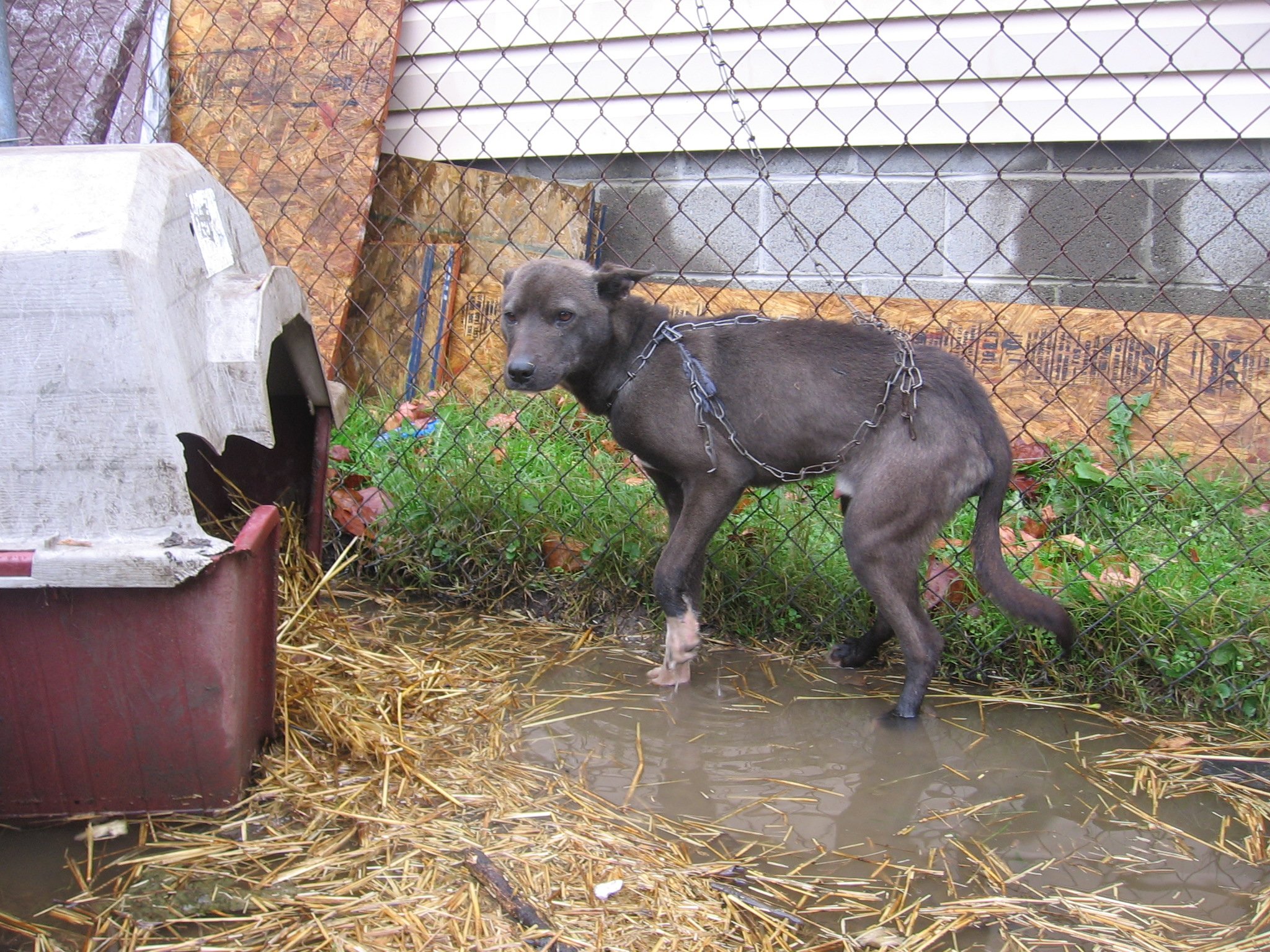
At the time of their deaths, Tolbert was a K-9 handler for the sheriff’s office. Investigators found his assigned K-9 partner, a black Labrador retriever named Aegis, along with another dog, apparently a pit bull owned by Tolbert, kept in squalid, feces-littered pens with dirty water buckets. Although Aegis was removed by county officials, the other dog was not. His condition and whereabouts are currently unknown.

Following a thorough investigation, the sheriff’s office demoted Tolbert from his position as a K-9 handler, and while nothing can be done to truly get justice for Luke Cage, Storm, and LaLa, the three counts of felony aggravated cruelty to animals and two counts of misdemeanor cruelty to animals against Tolbert is a massive victory. Thank you for taking action to ensure that he’s held accountable for the suffering of his dogs and for helping to prevent others from being abused.

dog heatstroke protest

How to Help BIBs Like American Bullies

Humans breed BIB dogs like Luke Cage, Storm, and LaLa to have certain physical traits, to the detriment of the dogs’ quality of life. Breeders and sellers know that flat-faced dogs will suffer but still exploit them for profit.

The solution is simple: Bulldogs, other BIBs, or any dogs should never be bred or purchased. All “purebreds” (flat-faced or not) suffer from congenital and often painful conditions. If you have the time, money, patience, and love to care for an animal for life (which could be for more than 15 years), please adopt one from a shelter. If you already have a BIB dog, please commit to making their life as fulfilling, healthy, and comfortable as you can—but pledge never to buy another one.

The post Victory! Sheriff’s Deputy Charged With Felony Cruelty to Animals After 3 Dogs’ Deaths appeared first on PETA.

Urgent From PETA: Flood Survival Tips for Animals in Santa Barbara

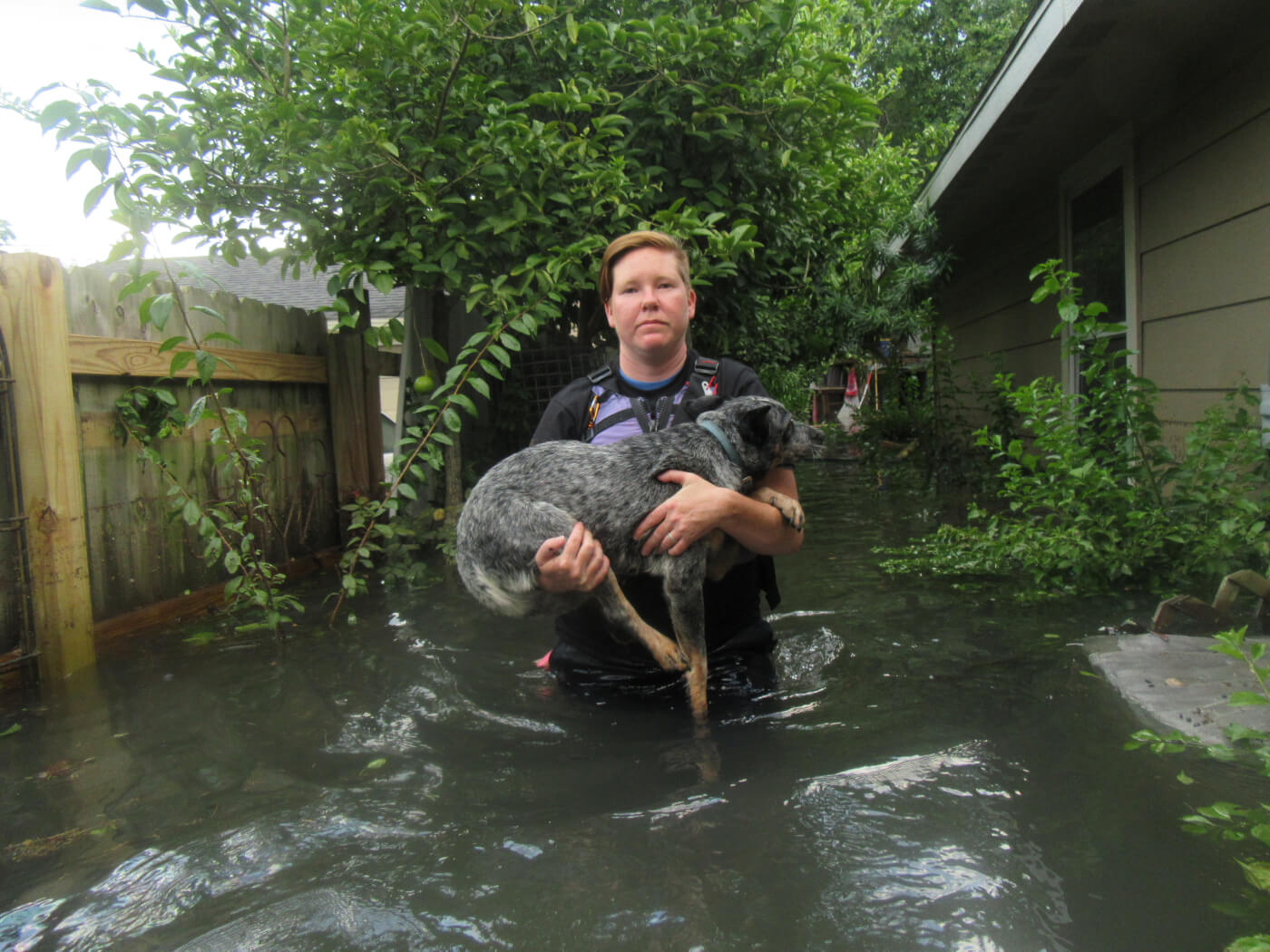
Since the Santa Barbara area is under a flood watch and an evacuation warning has been issued, animals could die if left behind.

Never leave animals outdoors, tied up, crated, caged, in hutches, or confined in any way, as they will be unable to flee rising waters. Anyone who sees animals in distress and is unable to help should note their locations and alert authorities immediately.

Anyone who evacuates and intentionally abandons animals to fend for themselves may be prosecuted.

PETA has released a natural disaster–preparedness PSA featuring Dean Winters. It will remind everyone to make plans to ensure the safety of their animal companions. For more information, please visit PETA.org or follow us on Twitter, Facebook, or Instagram.

The post Urgent From PETA: Flood Survival Tips for Animals in Santa Barbara appeared first on PETA.