
The post Meat Is NOT “Green.” Kiss Them. Don’t Eat Them! Go Vegan. (Cow) appeared first on PETA.
PETA Scientists’ Roadmap to Animal-Free Research Gets COVID-Era Update
PETA scientists have just released a new edition of the groundbreaking Research Modernization Deal (RMD), the world’s first comprehensive plan for phasing out the use of animals in experimentation. The update is packed with new, cutting-edge information and reflects the latest scientific developments and regulatory changes since the RMD was first introduced in 2018.
The RMD provides detailed information about the pressing need to transition toward human-relevant research, and this new edition outlines non-animal methods for studying COVID-19. It also adds tools and recent studies to persuade government agencies to fund more modern, animal-free research and calls for an increased focus on education and training.
Hands-on training for early-career researchers is essential, as are mandatory courses on new approaches, to helping scientists expand their understanding of emerging technology in their fields.
“Experiments on animals are failing, but the capabilities of cutting-edge, animal-free research methods outlined by PETA scientists are increasing every day,” says PETA neuroscientist Dr. Emily Trunnell. “With the extra training tools laid out in this year’s RMD, researchers will be more prepared to innovate and save lives.”
The RMD presents the U.S. government’s own evidence that 95% of all new medications that test safe and effective in animal tests fail in human clinical trials. Failure rates are even higher in specific disease research areas, including Alzheimer’s disease (96.6%), cancer (96.6%), HIV/AIDS vaccines (100%), and strokes (100%). Studies show that 90% of basic research, most of which involves animals, fails to lead to treatments for humans—yet the National Institutes of Health spends nearly half its annual budget on animal studies.
The new RMD also highlights recent major legislative victories, such as the FDA Modernization Act 2.0’s promise to open the door to non-animal methods for testing drugs and the European Parliament’s near-unanimous support for an action plan to phase out animal experiments.
PETA—whose motto reads, in part, that “animals are not ours to experiment on”—opposes speciesism, a human-supremacist worldview. For more information on PETA’s investigative newsgathering and reporting, please visit PETA.org, listen to The PETA Podcast, or follow the group on Twitter, Facebook, or Instagram.
The post PETA Scientists’ Roadmap to Animal-Free Research Gets COVID-Era Update appeared first on PETA.
Amanda Seales: Strut That Mutt. Celebrate Mutts: Adopt. Don’t Buy.
The post Amanda Seales: Strut That Mutt. Celebrate Mutts: Adopt. Don’t Buy. appeared first on PETA.
New USDA Rule Takes First Steps to Protect Birds; PETA Celebrates
It’s been a long road, but the U.S. Department of Agriculture (USDA) has now finalized rules that establish minimum standards for humane handling, care, treatment, and transportation standards for birds who are not bred for use in research and whom Congress added to the federal Animal Welfare Act more than 20 years ago. Below, please find a statement from PETA Foundation General Counsel for Captive Animal Law Enforcement Brittany Peet:
Although PETA celebrates today’s news that the USDA has finally provided birds with some protections, these long-overdue standards fall far short of addressing their unique needs, such as requiring adequate space for flight. PETA will continue to campaign for stronger safeguards and will be watching closely to ensure that the USDA is, at the very least, enforcing these new regulations.
PETA—whose motto reads, in part, that “animals are not ours to abuse in any way”—opposes speciesism, a human-supremacist worldview. For more information, please visit PETA.org, listen to The PETA Podcast, or follow the group on Twitter, Facebook, or Instagram.
The post New USDA Rule Takes First Steps to Protect Birds; PETA Celebrates appeared first on PETA.
Progress! The USDA Finally Passes Bird Protection Rule After 20 Years of Dragging Its Feet
More than 20 years after Congress demanded that the U.S. Department of Agriculture (USDA) provide basic protections for birds, the agency finally published a rule establishing humane handling, care, treatment, and transportation standards for birds not bred for use in experiments.
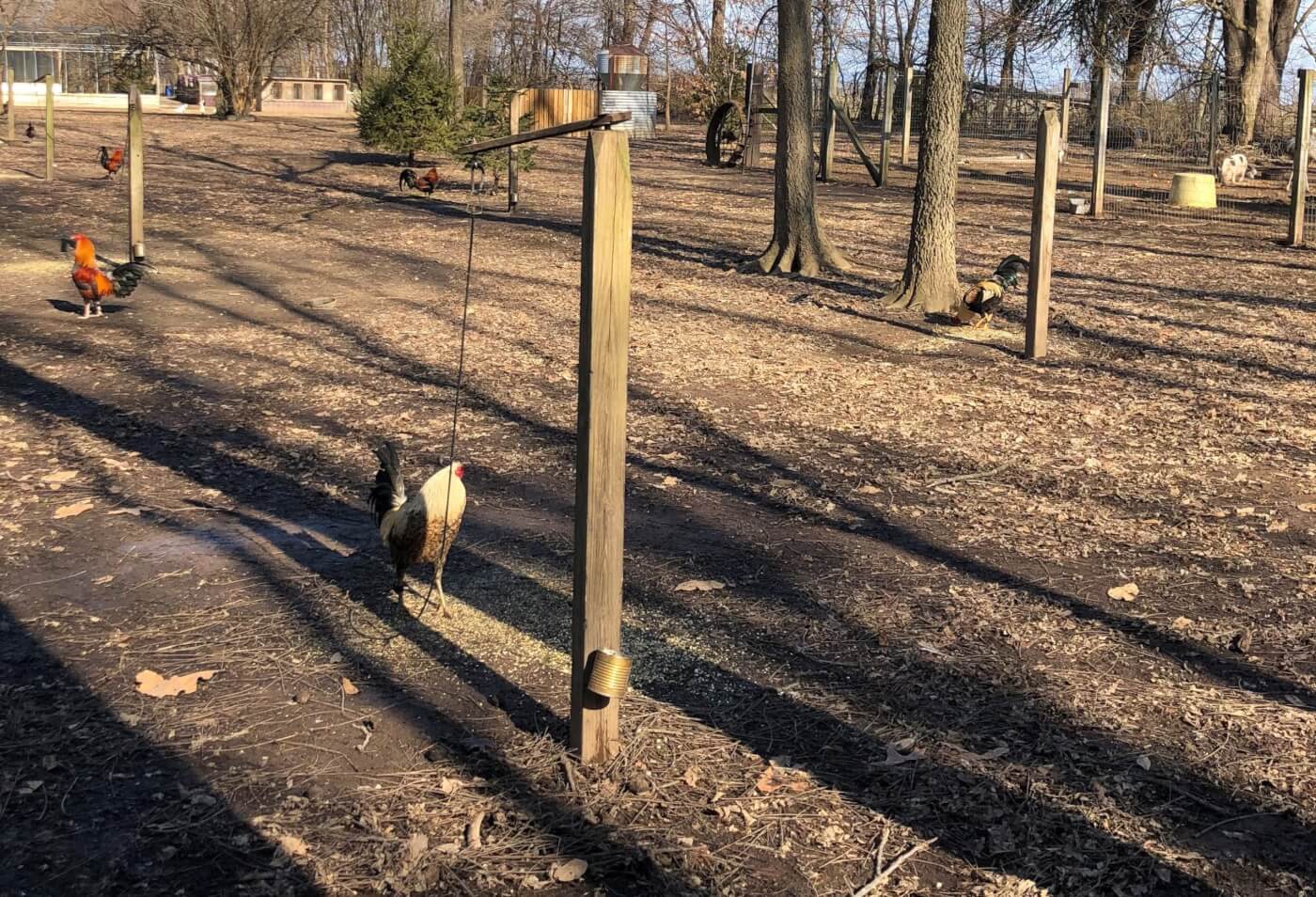
Commonsense protections for birds would help these roosters at Walnut Prairie Wildside in Illinois, who languish, tethered in place, with no access to shelter.
In May 2022, after the agency published a proposed rule, PETA submitted recommendations to help ensure captive birds’ welfare, asking that the USDA amend the rule to offer stronger protections for birds.
After decades of failing to include any minimum protections as required by the federal Animal Welfare Act (AWA), the USDA has finally adopted protections for birds. Unfortunately, the final rule only “strongly discourages” certain practices that could harm birds’ health and welfare and falls short of addressing the unique needs of birds, such as failing to explicitly require space for flight. PETA will continue to push for stronger regulations until birds receive appropriate protections under the AWA.
Here’s What YOU Can Do to Help Birds
This new rule is a step in the right direction, but our work is far from done. Take action for birds suffering at roadside zoos and in laboratories:
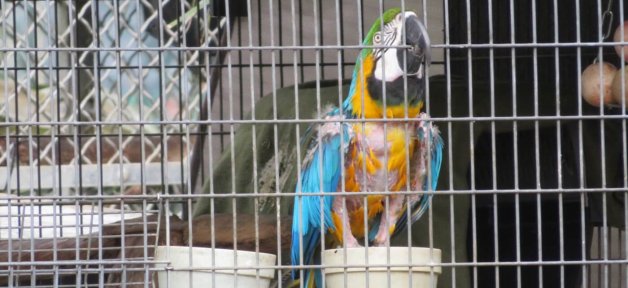
Members of the public will also be able to report inhumane conditions for birds to the USDA. Current licensees must comply with this new rule by August 20, 2023, and new licensees now subject to regulation who previously had been allowed to operate without a license must obtain one and comply with this new rule by February 21, 2024. USDA inspectors can no longer turn a blind eye to regulated birds’ suffering, and when facilities fail to do the minimum required by these regulations, there’s now a mechanism for serious repercussions—including warnings, civil penalties, and suspension or revocation of licenses.
The post Progress! The USDA Finally Passes Bird Protection Rule After 20 Years of Dragging Its Feet appeared first on PETA.