Amid Probe by Feds, Charles River Fights Transparency, Pays Execs Lavishly, Calls Monkeys ‘Pests’

Even as Charles River Laboratories is under federal investigation for possible illegal importation of monkeys who were allegedly pulled from their forest homes and falsely labeled as captive-bred, the company is fighting efforts to force it to come clean to shareholders. PETA’s commonsense shareholder proposal calls for transparency on the origin of imported monkeys, but in its just-released proxy statement, the mega laboratory supplier says no.

Charles River admits “that recent events have raised questions regarding non-human primate importation practices.” One question, PETA points out, involves the 1,000 monkeys the company imported into the U.S. who remain in limbo after the U.S. Fish & Wildlife Service stopped their sale to laboratories. PETA is pressing the company to release the monkeys to Born Free USA’s Texas sanctuary and pay for their lifetime care. The company has so far refused to meet with PETA and Born Free.

Charles River’s top six executives have raked in more than $86 million over the past three years alone, which would cover the cost of these animals’ care. In a February briefing, the company’s CEO, James Foster, blatantly lied to shareholders, calling these monkeys—from whom they rake in billions in profit—mere “pests” in their native homes. Foster failed to say that the experimentation industry has driven two macaque species to the brink of extinction.

“Charles River has raked in hundreds of millions of dollars in U.S. government contracts but so far has refused to turn over the money to care for the animals it reportedly may have brought here illegally,” says PETA primate scientist Dr. Lisa Jones-Engel. “If the company can pay executives’ bloated salaries, it can certainly afford to send these monkeys to a reputable sanctuary arranged by PETA and Born Free.”

PETA—whose motto reads, in part, that “animals are not ours to experiment on”—opposes speciesism, a human-supremacist worldview. For more information on PETA’s investigative newsgathering and reporting, please visit PETA.org, listen to The PETA Podcast, or follow the group on Twitter, Facebook, or Instagram.

The post Amid Probe by Feds, Charles River Fights Transparency, Pays Execs Lavishly, Calls Monkeys ‘Pests’ appeared first on PETA.

Blue Lobsters Have Better Luck, so PETA Releases Dye Kit to Save Them All

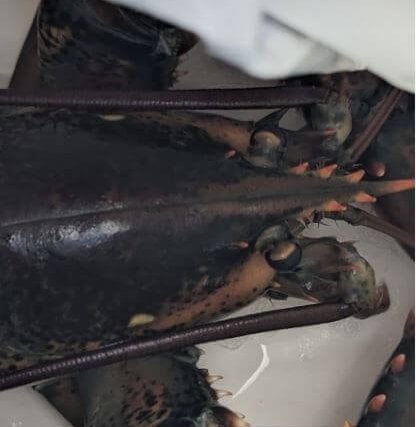
Because so many fishers have chosen to spare blue lobsters after catching them off the coasts of Maine, New Hampshire, and New Jersey and around the world, PETA is releasing a new dye kit that makes it possible to give all lobsters the same blue hue.

Now available for purchase on the PETA website, the chemical-free dye binds to lobsters’ shells for up to six months when squeezed into water—making it look like they have a rare genetic trait that occurs in just one out of every 2 million of them. The dye kit is nontoxic and easy to use and was sea-tested by PETA at an undisclosed location in Maine.

“We know many people share a soft spot for blue lobsters, though all lobsters share the same desire to enjoy their lives without suffering by being boiled to death,” says PETA President Ingrid Newkirk. “With this kit, PETA is empowering everyone to save lobsters’ lives.”

Lobsters are intelligent individuals who explore their surroundings, can remember other individual lobsters, and use complex signals to establish social relationships. If left alone, they can live to be more than 100 years old. A PETA investigation into a crustacean slaughterhouse revealed that live lobsters were impaled, torn apart, and decapitated—even as their legs continued to move. Chefs typically place lobsters into pots of boiling water while they’re still conscious—a practice so cruel that it has been banned in Switzerland—or to burn alive under the hot grill.

PETA—whose motto reads, in part, that “animals are not ours to eat” and which opposes speciesism, a human-supremacist worldview—offers a list of vegan seafood options on its website and a free vegan starter kit.

For more information, please visit PETA.org, listen to The PETA Podcast, or follow the group on Twitter, Facebook, or Instagram.

The post Blue Lobsters Have Better Luck, so PETA Releases Dye Kit to Save Them All appeared first on PETA.

Study Linking Meat to UTIs Prompts Launch of Shocking New PETA Ad

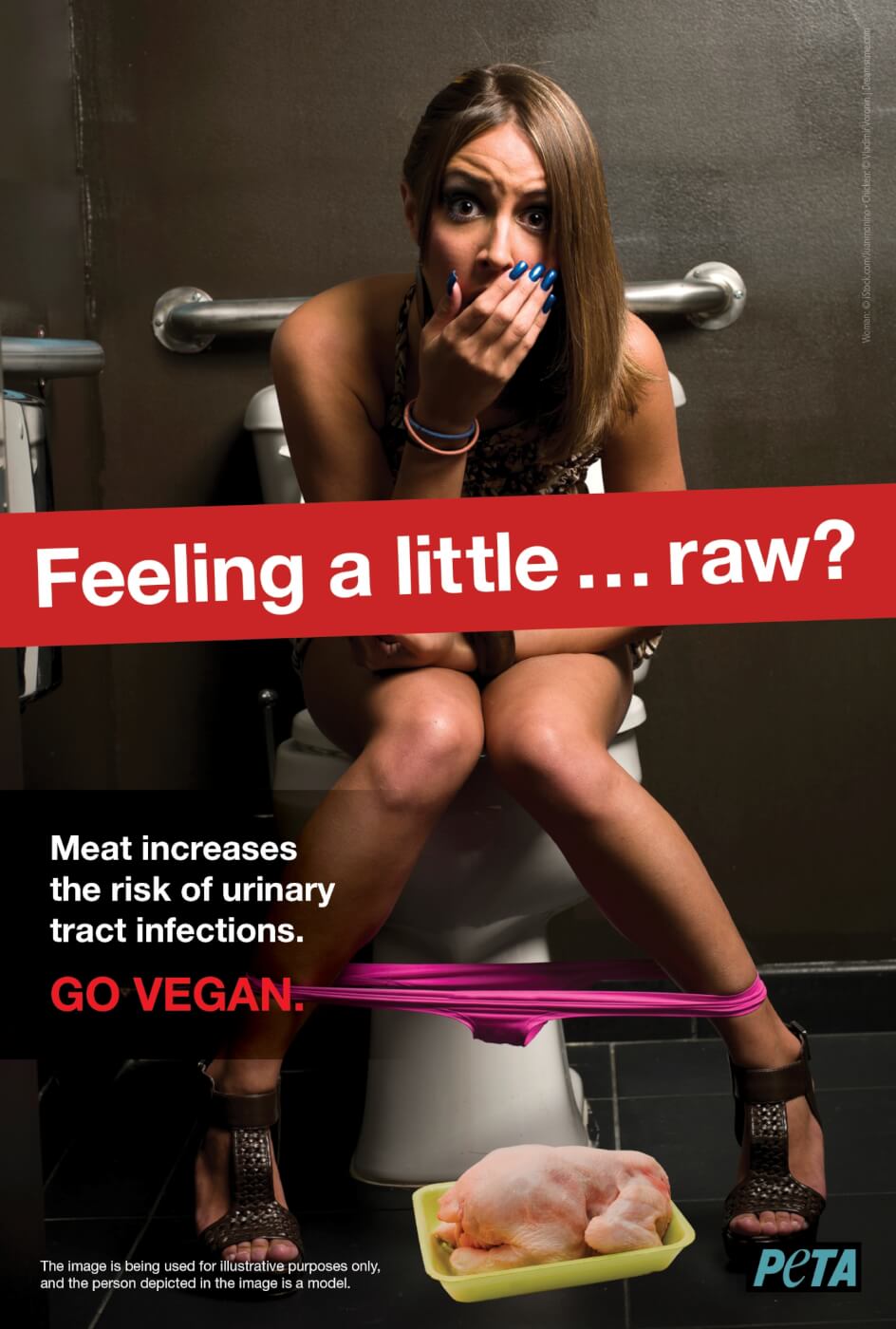
Meat-eaters in the City of Seven Wonders may be more likely to feel the sting than vegetarians or vegans. A recent study links urinary tract infections (UTIs) to meat consumption—using meat samples collected from grocery stores in Flagstaff, Arizona—and PETA now plans to use those findings to bolster its appeals to everyone to go vegan.

Check out this billboard we’ll be placing near pharmacies and medical clinics in Flagstaff:

PETA ad connects meat-eating to occurrence of UTIs

People have enough to deal with without a UTI, and animals don’t want to die, so PETA is reminding everyone that eating meat can come back to sting them. Going vegan is a painless and positive choice, and PETA stands ready to provide tips, recipes, and all manner of advice.

For years, researchers have known of a link between UTIs and E. coli, but the new study suggests that eating animal flesh could be responsible for a large number of cases—upwards of half a million each year in the U.S. In addition to carrying a risk of E. coli contamination, meat, eggs, and dairy contain no fiber and are loaded with artery-clogging saturated fat and cholesterol.

One Decision Helps Animals and Your Health: Go Vegan

Each person who goes vegan spares nearly 200 animals a year miserable lives on factory farms and terrifying, violent deaths in blood-soaked slaughterhouses.

There is no nutritional need for humans to eat any animal-derived products. All our dietary needs, even as infants and children, are best supplied by vegan foods. Going vegan can reduce the risk of developing many chronic degenerative diseases and conditions, including heart disease, cancer, obesity, hypertension, and diabetes.

Order a Free Vegan Starter Kit!

The post Study Linking Meat to UTIs Prompts Launch of Shocking New PETA Ad appeared first on PETA.

Two Dogs Found Dead, Others Reportedly ‘Swimming in Feces’ at Former AKC Judge’s Breeding Operation

A longtime breeder and former American Kennel Club (AKC) judge, James “Jim” Deppen, is under investigation for cruelty to animals after a rescue team found two dead dogs on his property in Northampton County, Pennsylvania, and seized more than a dozen others. One of the deceased dogs was reportedly found wrapped in plastic inside a barn.

These most recent allegations add to an alarming pattern of animal abuse—he was convicted of numerous counts of cruelty to animals in 2010 but was allowed to continue judging dog shows for another six years. During the 2010 trial, a veterinarian testified that a border collie seized from his kennel was so emaciated that “it is a surprise the body was functioning.”

The dogs recently found alive on the former judge’s property were allegedly “swimming in feces.” Officials reportedly seized 13 dogs, including animals who were confined to filthy conditions in a basement. The search warrant also indicated that dogs had been denied proper veterinary care. Deppen claims that the two dogs who died in his custody had gotten into a fatal fight in the barn where they were kept. 

The AKC Breeds Cruelty

As a national “purebred” dog registry, the AKC promotes and profits off dog breeders. Not only do breeders exacerbate the companion animal overpopulation crisis—because every dog or cat purchased from a breeder means one in a shelter loses a potential family—all “purebreds” also suffer from congenital and often painful health conditions.

White dog photo © Isselee | Dreamstime.com; Dog Behind Bars © iStock.com/Dan Brandenburg

Star the English bulldog won Best in Show at the 2022 AKC National Championship dog show, and French bulldogs were the most AKC-registered dog breed in 2022, but the flat face, large head, and narrow hips they were bred to have will likely cause them all a lifetime of suffering.

English bulldogs like Star, French bulldogs, boxers, pugs, and Cavalier King Charles spaniels are breathing-impaired breeds (BIB). They typically suffer from brachycephalic syndrome, which leaves many of them struggling just to breathe while they engage in normal activities. Going for a walk, chasing a ball, running, and playing—the things that make dogs’ lives joyful and fulfilling—are impossible for many BIB dogs. Breeding dogs to look a certain way and endure a lifetime of suffering is nothing to celebrate.

By enforcing breed standards that favor dogs’ appearance over their health, the AKC is partially responsible for the suffering of “purebred” dogs. The breeding industry is big business, and as long as there is money to be made by selling, showing, and breeding dogs, greedy breeders will keep on producing more—regardless of how much they cause dogs to suffer in the process.

The two dogs found dead on Deppen’s property were of his favorite breed—the Neapolitan mastiff, a giant dog prone to numerous skin problems as well as hip dysplasia, elbow dysplasia, bloating, cruciate ligament injury, and bone cancer. The breed’s standard requires loose skin and allows for cropped ears. Other dogs recently found in poor conditions on his property include German shorthaired pointers, for whom the AKC standard requires a docked tail. Ear-cropping and tail-docking are cruel, disfiguring surgeries that cause significant suffering.

Here’s What You Can Do

Don’t give your money to a breeder, a pet store, or anyone else selling an animal. If you’re prepared to care for an animal properly and for a lifetime, adopt from a shelter.

If you purchased a dog of an AKC-registered breed who struggles with their health or behavior or who died prematurely, let us know by clicking the button below: 

Do You Have an AKC-Registered Dog With Health or Behavioral Issues?

The post Two Dogs Found Dead, Others Reportedly ‘Swimming in Feces’ at Former AKC Judge’s Breeding Operation appeared first on PETA.

A Week in the Life of PETA’s Cruelty Investigations Department

Animal emergencies don’t take the day off. On holidays, weekends, and every other day of the year, PETA’s Cruelty Investigations Department (CID) receives dozens of phone calls from caring individuals reporting cases of animal abuse. When an animal is in trouble, our rescue team jumps into action. In an average week, CID caseworkers process more than 300 reports of cruelty. Here are just a few of the many animals we helped last season:

Week of November 7, 2022

A Halter Was Embedded in This Horse’s Face—Arizona

CID worked with local agencies and concerned citizens to secure this nearly wild horse, who was suffering from a terribly embedded halter on a Native American reservation in Blue Gap.

Dwarf Rabbit Needed Veterinary Care—Texas

We expedited emergency veterinary care and found shelter for a dwarf rabbit named Theodore, who was suffering from a painful urinary tract issue that his guardian couldn’t afford to continue treating.

theodore was heled by the cruelty investigations department

Rabbits don’t belong in the “pet” industry. These complex animals aren’t “starter pets,” and people who buy them rarely understand their specific needs.

Lon Jin Was Suffering Outside—California

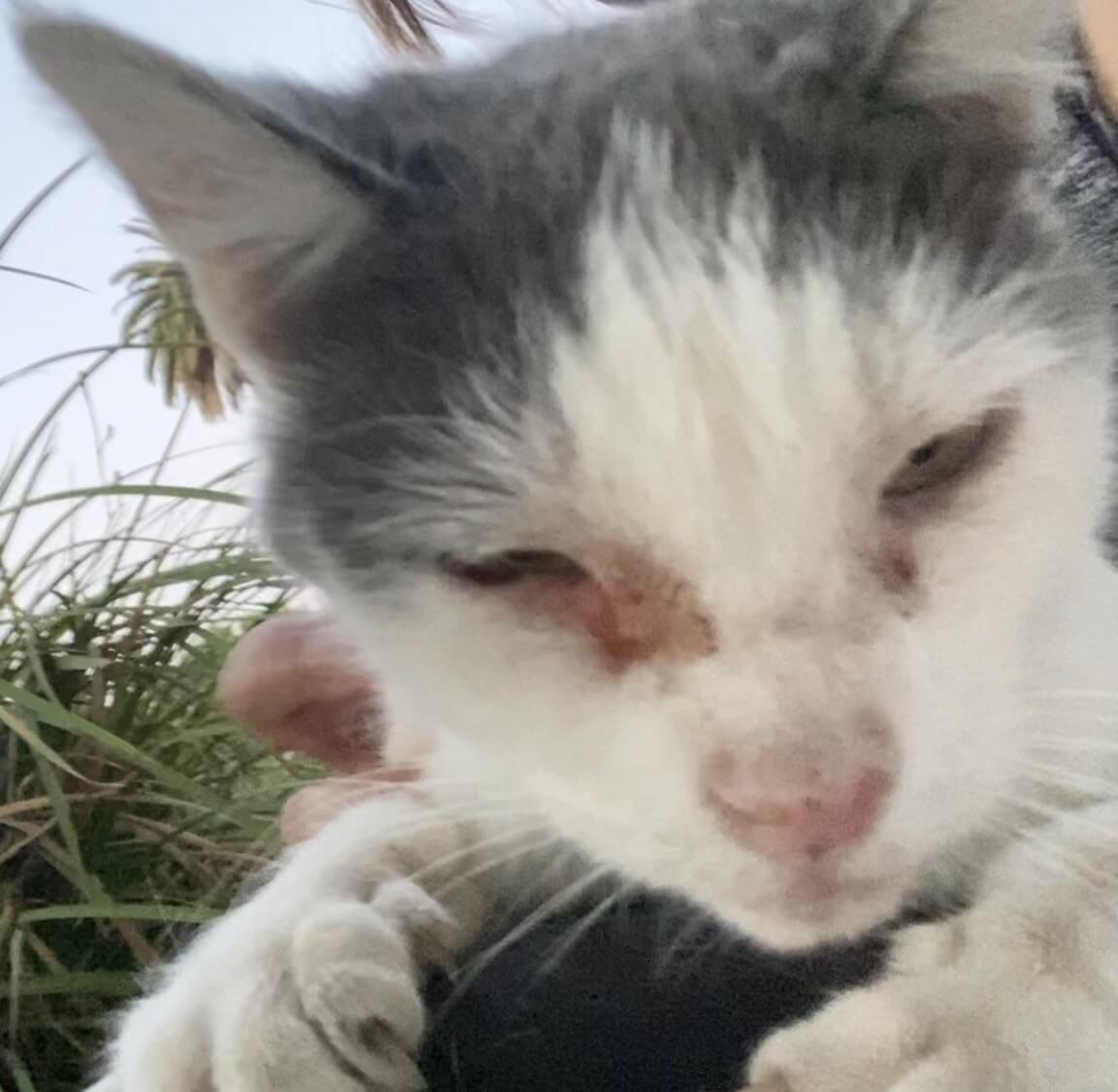
CID caseworkers compelled the owners of Lon Jin, a cat kept outdoors and suffering from severe congestion and eye discharge, to provide him with veterinary care.

After he was treated, we persuaded his guardians to allow him to live indoors, where he’s now thriving.

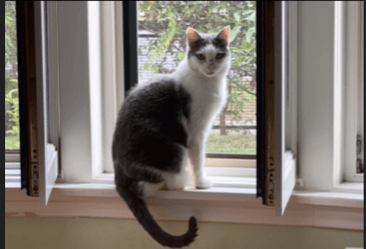
Cats who are kept indoors are safe from the many threats that roaming and “indoor/outdoor” cats face every time they step outside: infectious and deadly diseases, speeding cars, and cruel humans, to name just a few. And keeping cats indoors is safer for birds and other animals, too. Cats who are left outside unsupervised kill birds and other animals in colossal numbers—an estimated average of 14.7 billion every year in the U.S. alone.

Week of November 28, 2022

Injured Pelican Gets a Second Chance—Florida

We located a wildlife rehabilitator near Miami Beach for a pelican with a broken wing.

If you find an injured or orphaned wild animal, please read our Wildlife Emergencies page to make sure that they truly need help before attempting to capture and transport them.

Week of December 12, 2022

Caught on a Fence, This Dog Needed Help—Georgia

After our caller discovered a struggling, tethered dog unable to stand on her front feet after jumping over the fence of her pen, our emergency workers rushed to help, and they quickly untied her.

Help! There’s a Cat in That Tree—Maryland

After CID was notified that a stray cat had been stuck in a tree for four days, we quickly found an arborist to help the terrified feline down.

Week of December 19, 2022

Lobster Gets a Christmas Miracle—Maryland

We helped a caller arrange the successful live release of a lobster who had been cruelly brought to a “Secret Santa” gift exchange.

How You Can Help Animals in Your Community

These cases—just a small sampling of PETA’s Cruelty Investigations Department’s  nonstop work for animals everywhere—are a reminder of why it’s vital to report cruelty to animals immediately. Keep your eyes open for animals in need, be a nosy neighbor, trust your instincts, and always alert police or animal control officials right away if you know or suspect that animals are being abused or neglected.

PETA needs your help to prevent other animals from meeting a similar fate.

Report an Animal in Danger to PETA

The post A Week in the Life of PETA’s Cruelty Investigations Department appeared first on PETA.