PETA Statement re New Vet Policies Condemning Bush Track Horse Abuse

Please see the following statement from PETA Vice President Kathy Guillermo regarding new policies just made public by the American Veterinary Medical Association and the American Association of Equine Practitioners opposing unsanctioned horse racing following PETA’s video investigation into two bush tracks in Georgia.

Disease, drugging, and multiple other dangers: Leading U.S. veterinarians agree with PETA that the horrific drugging, electroshocking, whipping, and killing of horses uncovered by PETA’s Georgia bush track investigation must be stopped. Just-released new policies from the American Veterinary Medical Association and the American Association of Equine Practitioners confirm dangers to both the horses subjected to this abuse and to other horses who may be exposed to and infected with diseases brought into the states where unsanctioned racing is allowed. Georgia state officials must act now to shut down these races and prosecute all involved, before even one more horse is shot up with cocaine.

PETA—whose motto reads, in part, that “animals are not ours to use for entertainment or abuse in any other way”—opposes speciesism, a human-supremacist worldview. For more information, please visit PETA.org or follow the group on Twitter, Facebook, or Instagram.

The post PETA Statement re New Vet Policies Condemning Bush Track Horse Abuse appeared first on PETA.

ATU Bulldog Retirement Prompts PETA Call to End Use of Live-Animal ‘Ambassadors’

In response to reports that Arkansas Tech University (ATU) is retiring its current live bulldog “ambassador,” Jerry II, due to a debilitating hip condition, university alumni at PETA sent a joint letter this morning to ATU President Robin E. Bowen, urging her to show benevolence to bulldogs—a breathing-impaired breed (BIB) beset with an array of physical disabilities—by ending the school’s use of live animals. The group points out that dogs, just like all animals, are individuals with unique needs who shouldn’t be paraded in front of boisterous crowds and that BIBs live with the added stress of being constantly short of breath due to their purposely flattened, pushed-in snouts.

“When ATU fans shout, ‘Fight on!’ it shouldn’t mean ‘for oxygen,’” write the PETA staffers. “Instead of promoting dogs who can’t breathe and propping up the cruel breeding industry, ATU could instead partner with a local animal shelter to promote adoption and help find loving placements for homeless dogs.”

PETA—whose motto reads, in part, that “animals are not ours to use for entertainment” and which opposes speciesism, a human-supremacist worldview—notes that Jerry II’s hip ailment is hardly surprising, as bulldogs have been bred by humans to have unnaturally narrow hips that are prone to developing painful problems and prevent the dogs from mating and giving birth naturally.

For more information, please visit PETA.org, listen to The PETA Podcast, or follow the group on Twitter, Facebook, or Instagram.

PETA’s letter to Bowen follows.

April 3, 2023

Robin E. Bowen, Ed.D.

President

Arkansas Tech University

Dear President Bowen:

As proud Arkansas Tech University (ATU) alumni and representatives of People for the Ethical Treatment of Animals—PETA entities have more than 9 million members and supporters globally—we want to thank ATU for taking Jerry II’s debilitating hip condition seriously and acting in his best interests by retiring him. In that same spirit, we’re writing to request that ATU act in the best interests of all bulldogs and commit to never again using a bulldog or any other live animal as the school’s campus ambassador.

Hip dysplasia isn’t the only painful condition that bulldogs are prone to, due to decades of being purposely bred with deformities, all just to suit humans’ whims about an animal’s appearance. They are also afflicted by brachycephalic syndrome, which means that the breeding practices that produce their unnaturally flattened, pushed-in snouts also result in crumpled, constricted airways that leave them struggling just to breathe. That’s why it’s so common to see bulldogs panting and gasping for air, even when they’re sitting still. Appropriately, many countries refer to the breeding of breathing-impaired dogs as “torture breeding,” and countries like Norway and the Netherlands have passed laws restricting breeding them.

Breathing-impaired breeds’ (BIB) physical deformities cause them numerous issues, including fainting, dental problems, eye problems caused by misshapen skulls, laryngeal collapse caused by chronic stress on the cartilage, and strain on the heart from fighting for air. Because they can’t breathe properly, it can be tough or even impossible for them to run, chase a ball, or play with other dogs—much less be a healthy and robust ambassador at university functions. Most disturbingly, as a result of repeated, selected breeding for certain features, most bulldogs’ hips are too narrow to allow them even to mate, so breeding them requires forcible insemination—in other words, they are sexually manipulated and assaulted by breeders.

When ATU fans shout, “Fight on!” it shouldn’t mean “Fight for oxygen.” Instead of promoting dogs who can’t breathe and propping up the cruel breeding industry, ATU could instead partner with a local animal shelter to promote adoption and help find loving placements for homeless dogs. Just like all other animals, dogs are individuals, not “campus ambassadors” or “mascots.” They are living, feeling beings with their own unique personalities, relationships, and interests, and they shouldn’t be paraded in a noisy stadium or forced to endure the stress of a bustling college campus. We hope to hear that after considering how BIBs suffer, you’ve decided to do what’s best for Jerry II and other dogs like him by retiring ATU’s live-animal ambassador program.

Sincerely,

Klayton Rutherford                        Faith Robinson                     Katherine Nunez

Class of 2016                                 Class of 2016                        Class of 2016

The post ATU Bulldog Retirement Prompts PETA Call to End Use of Live-Animal ‘Ambassadors’ appeared first on PETA.

We Asked ChatGPT to Tell Us Why Humans Shouldn’t Eat Cheese—Here’s What It Said

We asked the artificial intelligence tool ChatGPT to write an article about five reasons humans should stop eating cheese, and here’s what it said:

When it comes to animal rights, cheese production is a topic of concern. Here are the top 5 reasons not to eat cheese.

1. Inhumane Treatment of Dairy Cows*

Dairy cows are often subjected to cruel living conditions in factory farms, confined to small spaces with limited access to fresh air, sunshine, and exercise. They are repeatedly impregnated to ensure a steady supply of milk, which takes a toll on their bodies. These cows suffer from physical and emotional stress, leading to shorter lifespans and various health issues.

2. Cruel Dehorning Practices

To prevent injury to farm workers and other animals, cows used by the dairy industry are often dehorned. This painful procedure involves the removal of the sensitive horn tissue or even the entire horn, often without anesthesia. It causes severe pain and distress, raising significant animal rights concerns.

3. Separation of Calves From Their Mothers

Calves are taken away from their mothers shortly after birth to prevent them from drinking their mother’s milk, which is designated for human consumption. This separation causes distress to both the calf and the mother. Calves are often raised in isolated, cramped conditions.

4. Veal Production

Male calves born in the dairy industry are considered a byproduct and are often used for veal production. They are typically confined to tiny pens and fed an iron-deficient diet, leading to anemia and weakness. This cruel practice is a direct result of the demand for dairy products like cheese.

5. Environmental Impact

Dairy farming contributes significantly to greenhouse gas emissions, deforestation, and water pollution. By opting for plant-based alternatives to cheese, you can significantly reduce your environmental footprint and promote the well-being of animals and the planet.

Understanding the animal rights concerns associated with cheese production can motivate a shift towards more ethical and sustainable food choices. By choosing vegan cheese, you can make a difference in the lives of animals and contribute to a more compassionate world.

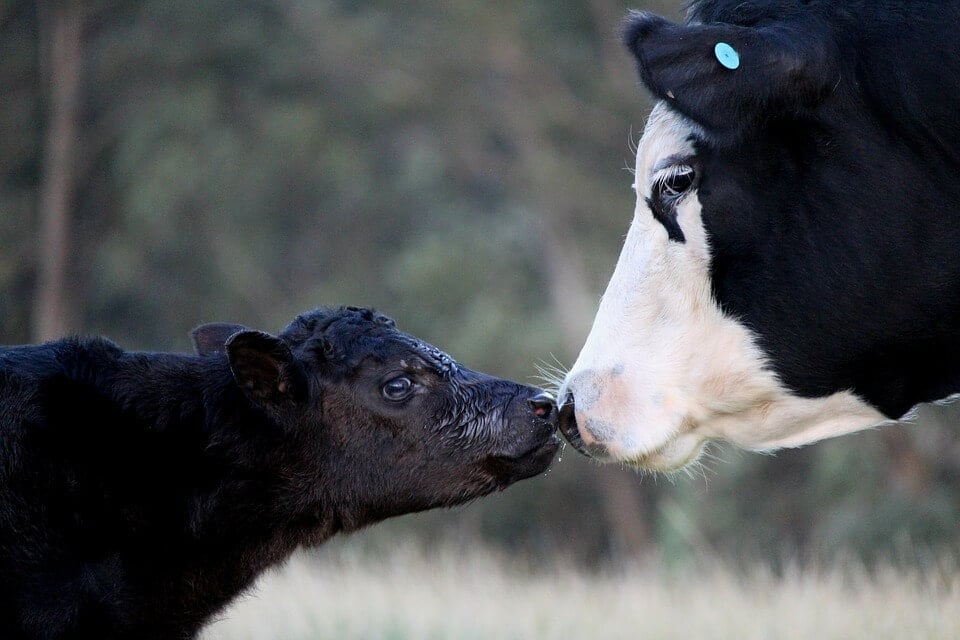
Mother cow touching noses with her calf

Just as humans produce milk to nurse their babies, mother cows make milk for their calves. Repeat after PETA: “Not your mom, not your milk.”

****

It’s speciesist to exploit our fellow animals for a quick bite of their flesh or something made from their mammary secretions. With dozens of stellar vegan cheese options on the market now, it’s easier than ever to live compassionately by going vegan.

We’ll help you get started:

*PETA avoids the term “dairy cow,” because it defines a sentient being in terms of the way humans exploit them, which is speciesist.

The post We Asked ChatGPT to Tell Us Why Humans Shouldn’t Eat Cheese—Here’s What It Said appeared first on PETA.

PETA ‘Hens’ to Put Free Vegan ‘Easter Eggs’ in Your Mouth

With Easter ahead and avian flu outbreaks causing egg shortages and skyrocketing prices, PETA supporters in chicken costumes will flock to the top egg-producing state in the country on Wednesday to give away samples of the new vegan hard-boiled WunderEggs along with cooking and baking recipes and vegan starter kits. They’ll also offer food for thought about why, even at Easter—a time to show mercy to others—hens in the egg industry are crammed into tiny wire cages and then slaughtered when their egg production slows.

When:    Wednesday, April 5, 12 noon

Where:    At the intersection of Court Avenue and Fourth Street, Des Moines

“Easter eggs are on our minds, so this is the perfect time to kick-start year-round kindness to hens by indulging in fluffy egg-free omelets, scrambles, and more,” says PETA President Ingrid Newkirk. “PETA urges anyone concerned about avian flu outbreaks to try the many varieties of vegan eggs, which are nutritious and delicious and never spread deadly viruses.”

PETA—whose motto reads, in part, that “animals are not ours to eat”—opposes speciesism, a human-supremacist worldview.

For more information, please visit PETA.org, listen to The PETA Podcast, or follow the group on Twitter, Facebook, or Instagram.

The post PETA ‘Hens’ to Put Free Vegan ‘Easter Eggs’ in Your Mouth appeared first on PETA.

PETA Member Crashes Shriners’ Black-Tie Gala to Slam Abuse by Circus

Hadi Shriners’ gala attendees encountered a surprise guest at their black-tie event this evening. A PETA supporter crashed the party at Bally’s Evansville Casino & Hotel over cruelty concerns, waving a sign proclaiming, “Hadi Shriners Support Animal Abuse.” The animal ally chanted and urged the Shriners to stop forcing tormented animals to perform in Shrine circuses, before being manhandled by security. Photos and video are available here.

The Hadi Shrine Circus is among the last remaining shows still exploiting wild animals who are confined to small crates, kept in shackles, and deprived of any semblance of a natural life. In 2022, the circus used elephants from Carson & Barnes—whose head trainer was caught on video viciously attacking an elephant with a bullhook until she screamed in pain—as well as camels, dogs, and ponies.

“Animals used for the Hadi Shrine Circus are forced to perform confusing, painful tricks under the threat of violence, over and over again,” says PETA Executive Vice President Tracy Reiman. “PETA is calling on Hadi Shriners to end their support of these horrifying animal acts, as other shrines have already done.”

Two top sponsors of the Hadi Shrine Circus—global health and nutrition company DSM and the world’s largest paint and coatings manufacturer, PPG Industries—recently confirmed to PETA that they had cut ties with the circus. The Sherwin-Williams Company also advised its local business groups to refrain from sponsoring the Hadi Shrine Circus in the future.

PETA—whose motto reads, in part, that “animals are not ours to use for entertainment”—opposes speciesism, a human-supremacist worldview.

For more information, please visit PETA.org, listen to The PETA Podcast, or follow the group on Twitter, Facebook, or Instagram.

Contact:
David Perle, 954-464-6553, DavidP@peta.org

#

The post PETA Member Crashes Shriners’ Black-Tie Gala to Slam Abuse by Circus appeared first on PETA.