
The post Kati Vegan Thai appeared first on PETA.
‘It’ Isn’t Right! Pronoun Pointers From PETA Explain How to Refer to Our Fellow Animals
Words carry immense power. That’s why we strive to identify racist, sexist, homophobic, transphobic, ableist, and speciesist phrases and eradicate them from our vocabulary—it’s the least we can do to show solidarity with disenfranchised groups. PETA even released a popular list of animal-friendly idioms to help people liberate their language and show more kindness for other species when they communicate.
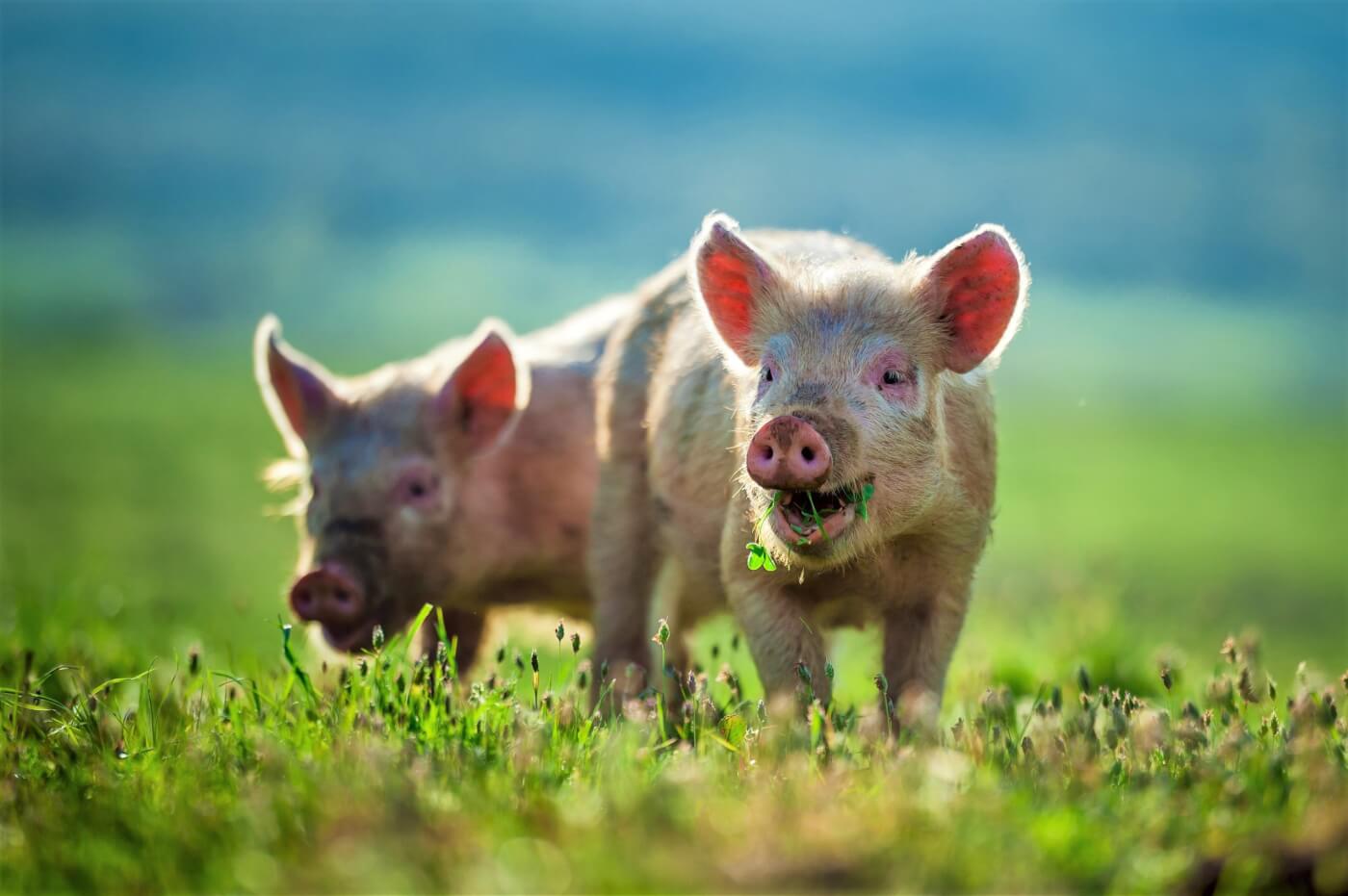
As an animal rights organization, PETA advocates for the ethical treatment of all animals. One easy way to show respect for all living, feeling beings is by using the appropriate pronouns when referring to our fellow animals. This means that you should always refer to animals as “he,” “she,” or “they.”
Using “it” as a pronoun for animals perpetuates harmful and disrespectful attitudes toward them.
All animals, including humans, are sentient beings with their own unique personalities, emotions, and experiences. Using “it” to refer to animals reduces them to mere objects or things, rather than acknowledging that they are individuals with inherent value and rights. Doing so implies that they are not worthy of respect and consideration, simply because they are members of a different species. This toxic mindset is an example of speciesism, a human-supremacist viewpoint that has negative real-world consequences for billions of animals each year.
By using appropriate pronouns such as “he,” “she,” or “they,” we recognize the individuality and dignity of animals and acknowledge their status as living, feeling beings deserving of respect and compassion.
This is a small but significant way to help create a more just and ethical world for all animals.
 © iStock.com/niromaks
Searching for other ways to help animals?
The post ‘It’ Isn’t Right! Pronoun Pointers From PETA Explain How to Refer to Our Fellow Animals appeared first on PETA.
New PETA Virtual Reality Experience Promises Close Encounters at UNM
To encourage empathy for animals who are mutilated and killed in university laboratories, PETA will visit the University of New Mexico (UNM) on Thursday to launch Abduction, a unique virtual reality experience landing on college campuses across the country. In this eerie experience, visitors enter a mysterious truck and put on a virtual reality headset. They seemingly find themselves stranded in the desert with a couple of fellow humans, abducted by aliens, taken aboard a spaceship, and subjected to a terrifying experience similar to what animals endure in laboratories. They watch as others are subjected to experiments—inspired by real tests done on animals—knowing that they’ll be next.
When: Thursday, April 6, 1 p.m.
Where: Student Union Building Mall 1, UNM, Albuquerque (See Google Maps link here.)
Watch the trailer here. Broadcast-quality footage of the Abduction virtual reality experience is available upon request.
At UNM, experimenters fed alcohol to pregnant mice before killing them, cutting off their heads, and cutting out their brains and the brains of their embryos. Other UNM experimenters repeatedly injected mice with a substance and collected blood from the animals by puncturing the sinuses behind their eyes. Experimenters then allowed the mice to breed and collected blood samples from their babies.
“Many students don’t know that on their own college campuses, frightened and confused animals are being tormented, mutilated, and killed in cold, barren laboratories, with no way to escape or even understand what’s happening to them,” says PETA Senior Director Rachelle Owen. “PETA is on a mission to open young people’s eyes to this cruelty, help them understand what it feels like, and motivate them to join our call for a switch to superior, non-animal research.”
Studies show that 90% of all basic research—most of which involves animals—fails to lead to treatments for humans, which is why PETA is pushing universities to pivot to sophisticated, human-relevant research methods.
Abduction—which was filmed in VR180 with assistance from the virtual reality creation studio Prosper XR—has stopped at several other college campuses from coast to coast.
PETA—whose motto reads, in part, that “animals are not ours to experiment on”—opposes speciesism, a human-supremacist worldview. For more information on PETA’s investigative newsgathering and reporting, please visit PETA.org, listen to The PETA Podcast, or follow the group on Twitter, Facebook, or Instagram.
The post New PETA Virtual Reality Experience Promises Close Encounters at UNM appeared first on PETA.
Why You Need to Celebrate a Vegan Easter This Year—and How
Everything You Need to Know to Celebrate a Vegan Easter
Why You Need to Celebrate a Vegan Easter This Year—and How
Celebrating a Vegan Easter This Year? These Tips Will Make It Stress-Free
These Tips Will Make Your Vegan Easter Stress-Free
Don’t Shell Out to the Meat and Egg Industries—Here’s How to Celebrate a Vegan Easter
The Best Tips for a Vegan Easter Are Only a Hop Away
Want to Take Your Vegan Easter to the Next Level? These Tips Will Show You How
This Is How You Can Sweeten Your Easter Celebration by Leaps and Bounds
Don’t Plan Your Easter Celebration Without Checking Out These Tips First
The post Why You Need to Celebrate a Vegan Easter This Year—and How appeared first on PETA.
Victory! Last Animals Rescued from NIH-Funded Colombian Hellhole Exposed by PETA
Yesterday, local authorities and the city of Cali’s Administrative Unit of Animal Protection seized all 180 mice still confined on the Caucaseco Scientific Research Center (Caucaseco) campus.
The mice, who would have been used in experiments funded by the U.S. National Institutes of Health (NIH), are now living at the city’s recently opened Animal Welfare Center.
The rescue follows a PETA-prompted seizure of 108 monkeys from the Fundación Centro de Primates (FUCEP), an NIH-funded laboratory on the same campus. Officials also recently shut down the campus for 10 days because the facility didn’t meet sanitary and safety regulations. Both Caucaseco and FUCEP are at the heart of an 18-month PETA investigation that drove Colombian authorities and elected leaders to act.
“Colombian officials took action after PETA provided evidence, and now all the animals have been rescued from this filthy, ramshackle torture center,” says Dr. Magnolia Martínez, PETA’s lead projects manager and congressional liaison. “PETA thanks Cali for what turned out to be the city’s largest animal rescue ever—and asks why the U.S. is still bankrolling this mess.”
Witnesses say the mice didn’t have enough water, and PETA’s investigation revealed that some had resorted to cannibalism. Former employees allege that because someone failed to separate males from females, the mouse population exploded to 700 between summer and fall 2021. As a result, there were up to 30 mice in boxes designed for a maximum of five. Sócrates Herrera Valencia and Myriam Arévalo Ramírez, the husband-and-wife owners of the facilities, allegedly ordered that more than half the mice be killed.
PETA had previously filed a complaint with NIH urging it to stop funding Caucaseco and FUCEP and requested that the National Institute of Allergy and Infectious Diseases investigate Herrera and Arévalo for apparent misuse of funds.
NIH spent $279 million in 2022 to fund 742 research grants in Colombia and 63 other countries, including Bangladesh, Brazil, China, and Vietnam. The agency has no oversight mechanisms for foreign organizations that receive American taxpayer money. A recent report from the U.S. Government Accountability Office revealed that NIH does not ensure that laboratories outside the U.S. comply with either local laws or NIH requirements.
PETA—whose motto reads, in part, that “animals are not ours to experiment on”—opposes speciesism, a human-supremacist worldview. For more information on PETA’s investigative newsgathering and reporting, please visit PETA.org, listen to The PETA Podcast, or follow the group on Twitter, Facebook, or Instagram.
The post Victory! Last Animals Rescued from NIH-Funded Colombian Hellhole Exposed by PETA appeared first on PETA.