Please see the following statement from PETA Vice President Kathy Guillermo on the Kentucky Board of Veterinary Examiners’ settlement agreement with veterinarian Heather Wharton concerning her injection of the stallion Laoban with unapproved substances in an effort to force him to breed, resulting in his death. PETA had filed a complaint with the board last year.
Veterinarian Heather Wharton’s license should be revoked, as PETA’s complaint requested, because her reckless behavior killed Laoban. He lost his life forever, but at least for three months, horses will be safe from this greedy woman. We hope the suspension and the $30,000 fine are enough to persuade her to see horses as the wonderful, vulnerable beings they are, not just something to use.
PETA—whose motto reads, in part, that “animals are not ours to use for entertainment or abuse in any other way”—opposes speciesism, a human-supremacist worldview. For more information, please visit PETA.org or follow the group on Twitter, Facebook, or Instagram.
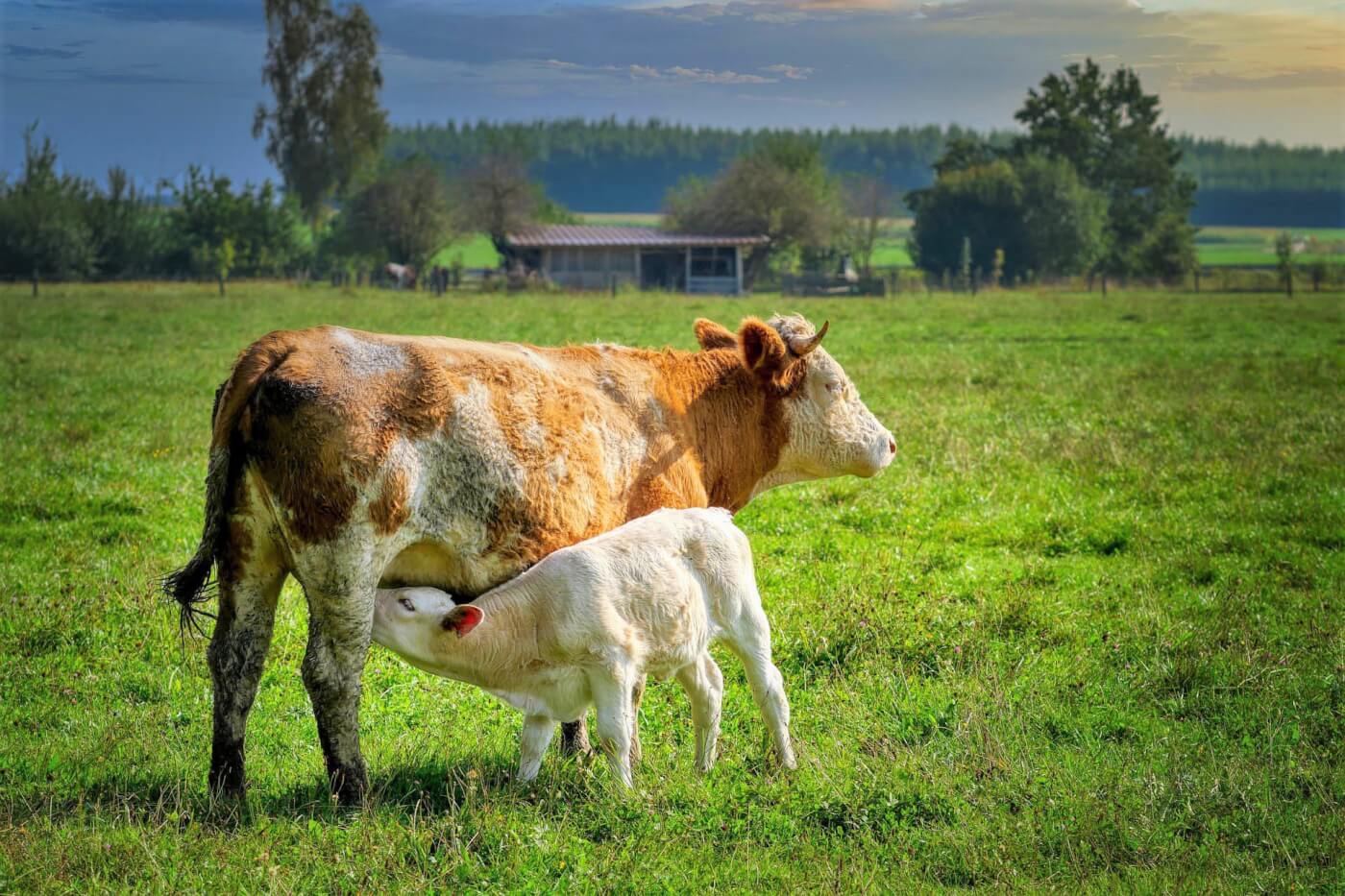
Like all cows used for their flesh, those raised for Wagyu beef are regarded by the beef industry as objects, not individuals. Workers send Wagyu cows to the same slaughterhouses that kill other cows, hang them up by one leg, and cut their throats before skinning and gutting them—sometimes while they’re still conscious.
Cows are gentle, curious, playful individuals who have complex relationships and experience emotions, just as humans do. They don’t want to die, whether it’s for a cheap fast-food burger or a Wagyu steak.
Recognizing the issues with animal-derived products, some vegan brands and restaurants now offer ethical versions of Wagyu beef—made with plants, not cow flesh.
Waygu “beef” is a tender, flavorful vegan option made from soy protein. Since its launch in 2019, it has received high praise from Japanese chefs, and it’s now available in grocery stores and sushi chains in the U.S. Waygu comes in Sukiyaki-style thin strips and Yakiniku-style thick strips, which can be used in a variety of culinary applications, including sushi rolls, pizza, noodle stir-fries, and sandwiches. They’re available in Teriyaki, Korean BBQ, and Plain flavors, and the thin strips are also available in an Umami flavor.
Next Meats has a variety of succulent vegan meat options, including Next Wagyu, a savory soy-based protein option with hints of garlic, soy sauce, onion, and chili. It’s perfect for traditional Japanese dishes, and it can be marinated and used in tacos, “beef” stroganoff, and many other dishes.
Eggplant and mushrooms are versatile ingredients, and the vegan sushi restaurant Shojin knows just how to infuse them with rich umami flavor. Its “Wagyu” nigiri is sure to impress anyone.
YouTuber Sauce Stache is known for stunning vegan meat recipes using techniques derived from molecular gastronomy, and this vegan Wagyu steak has to be one of his best creations. The recipe recreates Wagyu’s marbled effect by layering seitan with a coconut oil mixture.
Sauce Stache’s A5 Tofu Wagyu
Sauce Stache also created a tofu-based version of vegan Wagyu. Prepare it for your friends and family and you’ll be the talk of the town.
You may have heard of watermelon steak, but what about watermelon Wagyu? Okonomi Kitchen’s recipe uses salted, marinated watermelon to make a delicious vegan katsu.
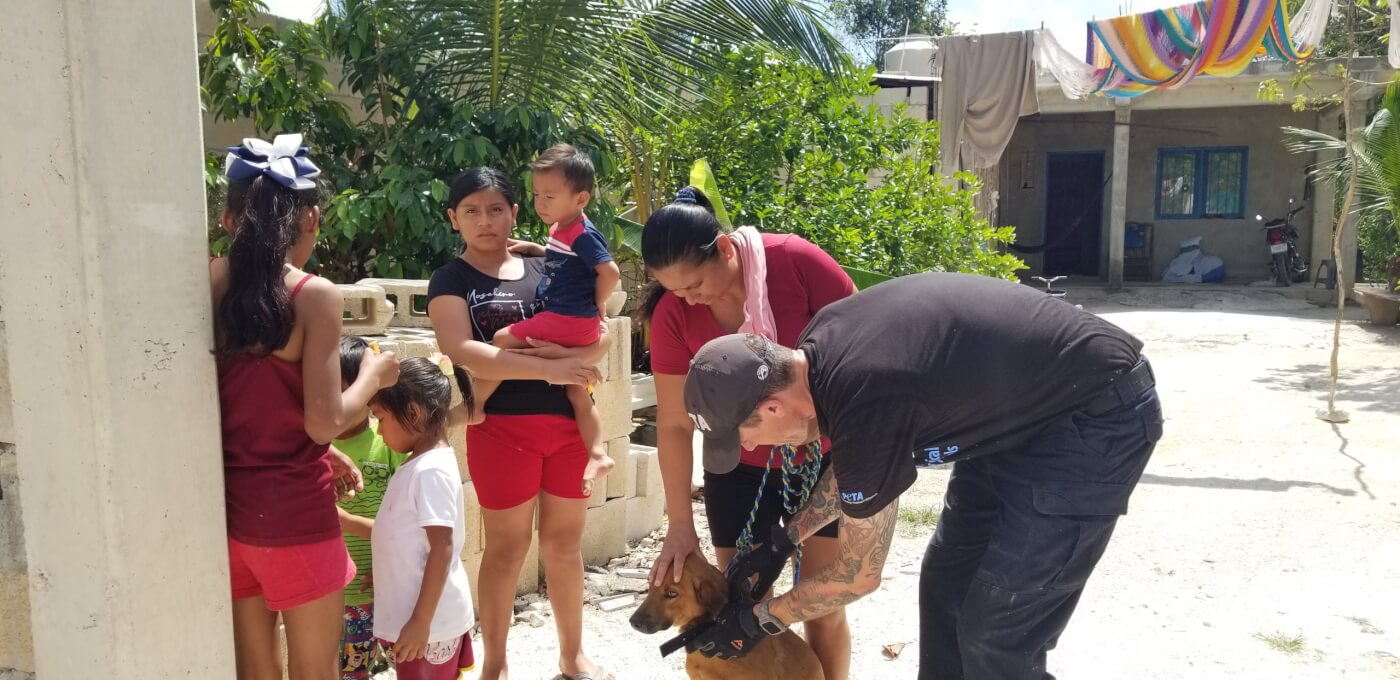
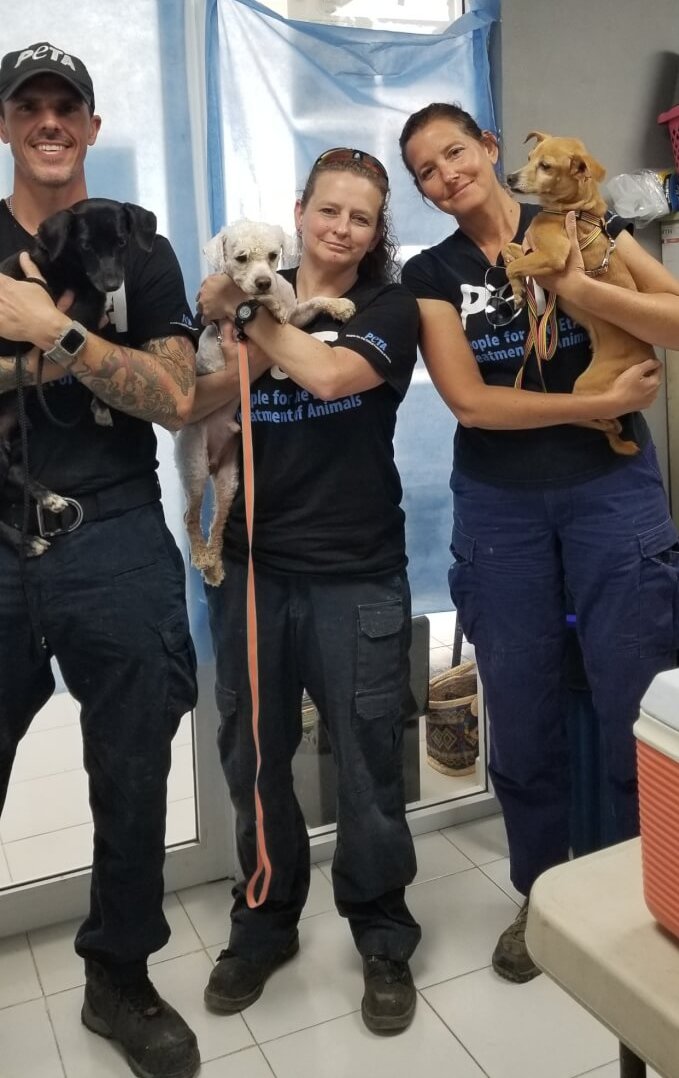
In a desperately poor part of Cancún called Colonia Avante, PETA fieldworkers were able to provide food, veterinary care, shelter, and much-needed TLC to dogs and cats, thanks to support from donors to PETA’s Global Compassion Fund (GCF).
Regions like Colonia Avante are called zonas irregulares because they aren’t officially part of a county—rather they’re large pieces of land people have built on that don’t receive the government services that other areas do. So when word spread that PETA Latino was partnering with the Cancún municipal shelter to offer direct help to companion animals in Colonia Avante, many guardians were eager to take advantage of the opportunity!
Teams have helped thousands of dogs and cats in Mexico during recent visits, and this latest trip was another rousing success. A total of 460 cats and dogs were sterilized during the two-day spay/neuter clinic, preventing thousands more animals from ending up on the streets—but that’s not all they accomplished.
Let’s meet a few of the animals whose lives GCF supporters have helped change.
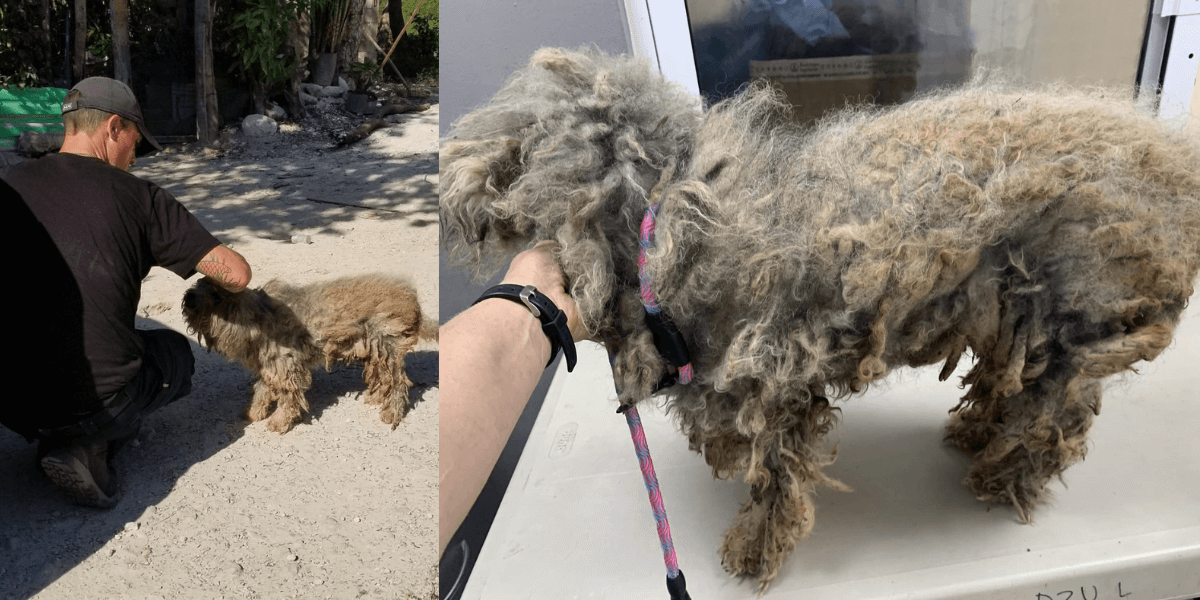
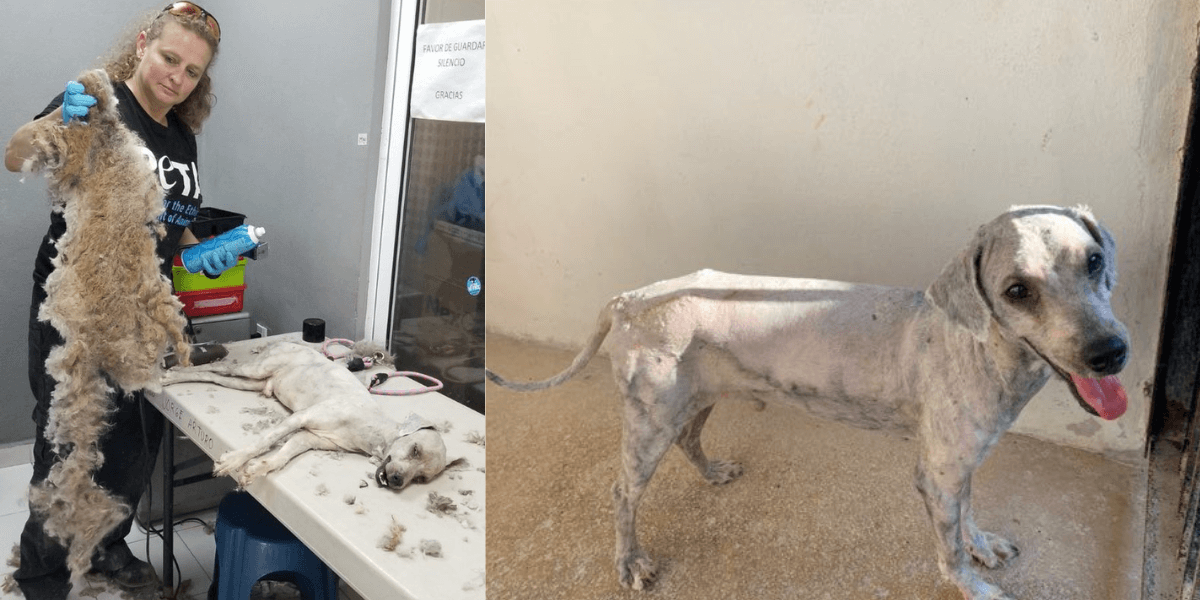
Fieldworkers found this dog wandering the streets covered in mats so severe that even walking was difficult, as the clumps of hair painfully pulled at his skin.
The team scooped him up, took him to the local animal shelter, and shaved him to provide him with some relief.
Matilda was abused and eventually abandoned and left to fend for herself by her former owner. Scared and alone, she was given a second chance when a kind woman took her in and brought her to our spay/neuter clinic.
Now, Matilda is in a safe, loving new home after a brief stay at a local shelter.
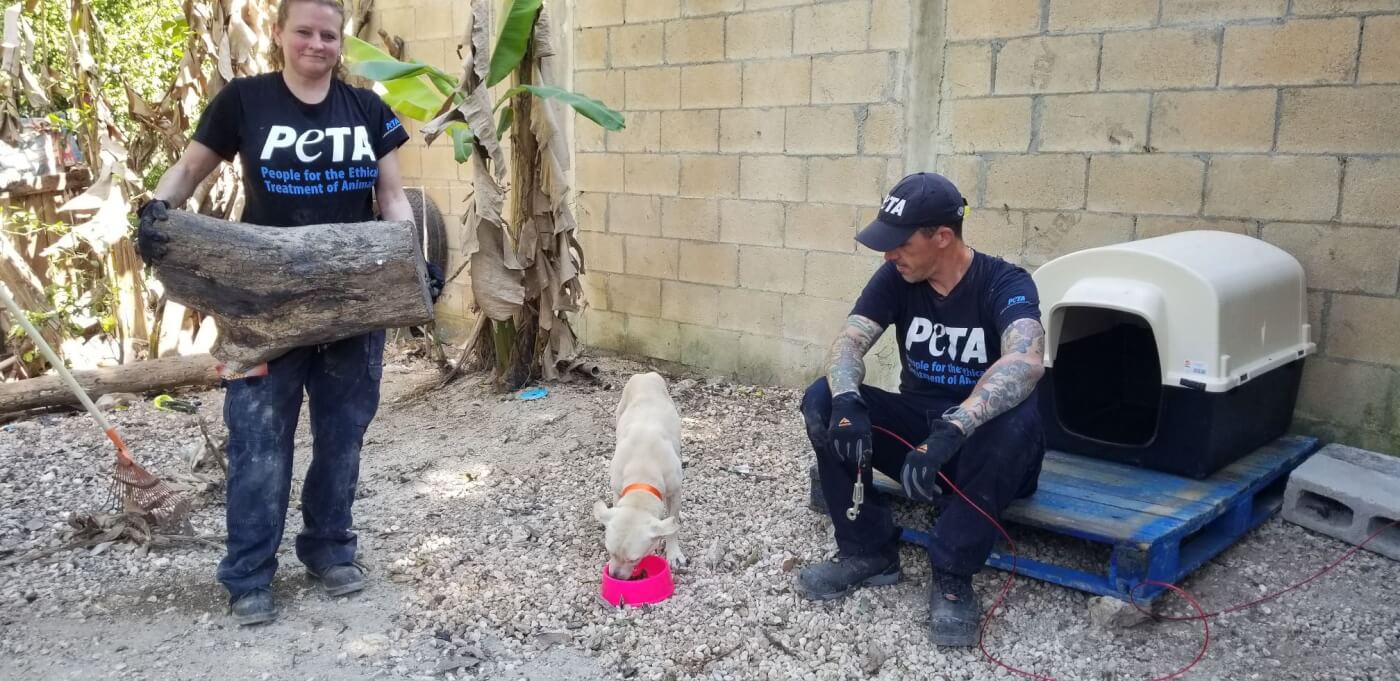
Fieldworkers came across a friendly dog named Snoopy confined to a rocky, garbage-strewn yard with no shelter from the elements.
The team cleaned up the yard and provided him with a new collar, a lightweight tether, and shelter—all of which he loved (although maybe not as much as his new food bowl).
Help Keep This Vital Work Going Strong!
PETA’s GCF helps power lifesaving rescue work, spay/neuter programs, educational campaigns, and more in countries on nearly every continent. You can help by making a special gift to the fund today:
What makes a person get a tattoo in their ear? A new PETA video shows pop-up participants explaining why they got a set of paw prints inked onto such a sensitive area: to honor dogs used in experiments who commonly don’t even have names, just a serial number tattooed in their ear in order to identify them. Each tattoo features paw prints belonging to Samson, who was one of 4,000 beagles rescued from laboratory supplier Envigo, which closed down following a PETA undercover investigation. Today, more than 60,000 other dogs in the U.S. are destined to be used and killed for laboratory experiments.
Participant Daniella Ramadei reveals, “I was trying to get myself in the headspace of being in a cage and feeling this sharpness all of a sudden tear into your ear and the sound vibrating through your body. It’s horrifying. I wanted to cry. It allows me to not only empathize with the animal but to tell others what it feels like.”
PETA notes that when Samson was released from Envigo, he needed urgent care for an ear infection, blood in his urine, and over a dozen diseased teeth—but he still enjoyed his first plush bed, his first selection of toys, and his first moments of peace and quiet. He’s still traumatized and sometimes wakes up barking from vivid dreams, but he’s learning how to play with other dogs, sniff new smells, observe squirrels and birds, and binge-watch TV shows on the sofa as a beloved member of his new family.
PETA—whose motto reads, in part, that “animals are not ours to experiment on”—opposes speciesism, a human-supremacist worldview. For more information on PETA’s investigative newsgathering and reporting, please visit PETA.org, listen to The PETA Podcast, or follow the group on Twitter, Facebook, or Instagram.