
Influenza D Is Everywhere—Will You Go Vegan Before It’s Too Late?

What is influenza D, and why is it everywhere? We’ve already covered how people who murder animals for their flesh are breeding infectious diseases, and a recently released NPR piece provides a new perspective on the matter.

The article covers a small study conducted from 2019 to 2020 that found that influenza D, a bovine flu that has infected 50% of cows across the U.S., had jumped to 90% of the workers on five dairy farms. A 2016 study of farms that raise cows for meat or dairy found that 18% of the nearby population who didn’t work on them had influenza D antibodies. This means the study participants had been infected with the virus.

You may be surprised that you’ve never heard of something that’s infected so many people. To date, the influenza D virus has had a minimal impact on human health. But that may change in the coming days, weeks, or months. How do we stop influenza D and other viruses from starting the next pandemic?

Pandemics Start With Animal Suffering

As we’ve continued to grapple with the deadly, globally detrimental COVID-19 pandemic, we’ve had to make many changes in our daily lives. We’re cautious about indoor gatherings, we socially distance, and we wear a mask when we’re ill.

One thing that hasn’t changed may be the most dangerous: animal farms, the ground zero for future disease outbreaks. Although more and more farms are using terms like “grass-fed” or “organic” in an attempt to persuade consumers that they’re small, safe operations through techniques known as “greenwashing” and “humane-washing,” there’s simply no way to exploit animals at scale without circulating disease. COVID-19 is just the latest in a series of zoonotic epidemics and pandemics that have plagued humans, and it certainly won’t be the last, given how the food industry treats animals.

Prevention Is the Best Medicine

The cramped, desolate lots where farmers imprison most animals exploited for food are accelerated breeding grounds for super-illnesses. The only reasonable course of action we can take to slow the rapid mutation of diseases like influenza D is to stop farming animals. If you work in the animal-farming industry, stop! There are better ways to make a living. And preventing the next pandemic means going vegan, protesting against animal agriculture, and engaging in other forms of activism to help shut down the meat, egg, and dairy industries.
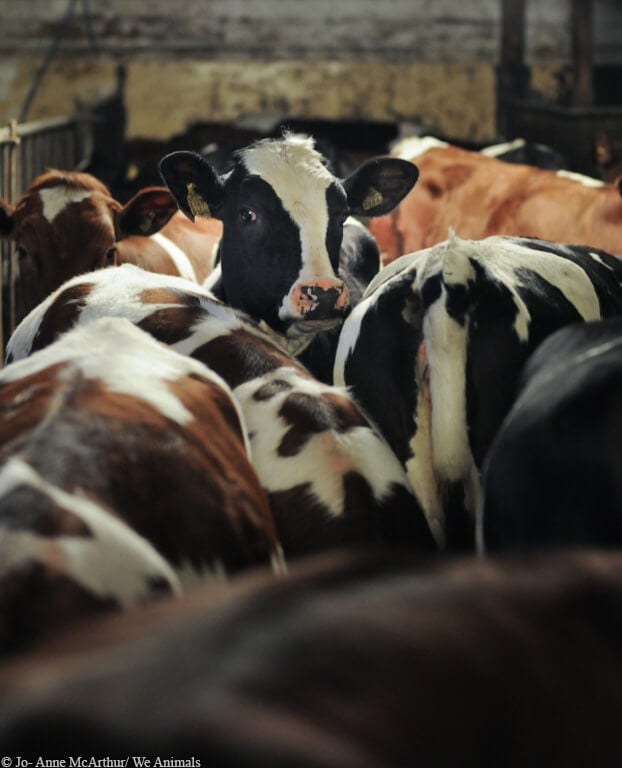
© Jo- Anne McArthur/ We Animals
In the meat industry, animals are imprisoned in a living hell, where disease runs rampant.

Justice for Animals Means a Safer Planet

Living vegan is the most powerful way you can help animals exploited on farms. By going vegan, you’ll save nearly 200 animals per year, sending a powerful message to the food industry that you don’t support dangerous and cruel animal exploitation.

PETA’s free vegan starter kit can help you make the switch. It’s packed with recipes, tips, and encouragement. As individual consumers, it’s up to us to create a more just and sustainable food system for humans and our fellow animals. Do your part to help prevent the next pandemic before it’s too late:

The post Influenza D Is Everywhere—Will You Go Vegan Before It’s Too Late? appeared first on PETA.
Victory! Retired Champion Racehorse Home Safe From Likely Slaughter

Great news! Any Given Saturday, the 19-year-old American stallion who ran in the 2007 Kentucky Derby and won the $1 million Grade 1 Haskell Invitational Stakes, has been safely returned home after eight years in South Korea. He now lives at Old Friends, a Kentucky sanctuary for retired racehorses. We’re overjoyed to see him where he belongs, and we’re grateful to his former owner Bill Casner and Old Friends for facilitating his rescue and return.

PETA conducted an undercover investigation into racehorse slaughter in South Korea, which showed that only 3% of retired racehorses transition to other “careers” after their short racing lives are over. Some mares are turned into breeding machines, but workers kill the vast majority.

Our exposé “K-Cruelty” revealed the horrors retired racehorses are subjected to in South Korea, sparking international outrage. This footage ultimately inspired Any Given Saturday’s safe return home.

South Korea’s horse slaughter industry, encouraged by the Korea Racing Authority (KRA), has claimed the lives of many horses, who all deserved to live out their days in peace. We were shocked and heartbroken to discover that another Kentucky Derby runner, Private Vow, had been slaughtered there, along with a son of Kentucky Derby winner Big Brown.

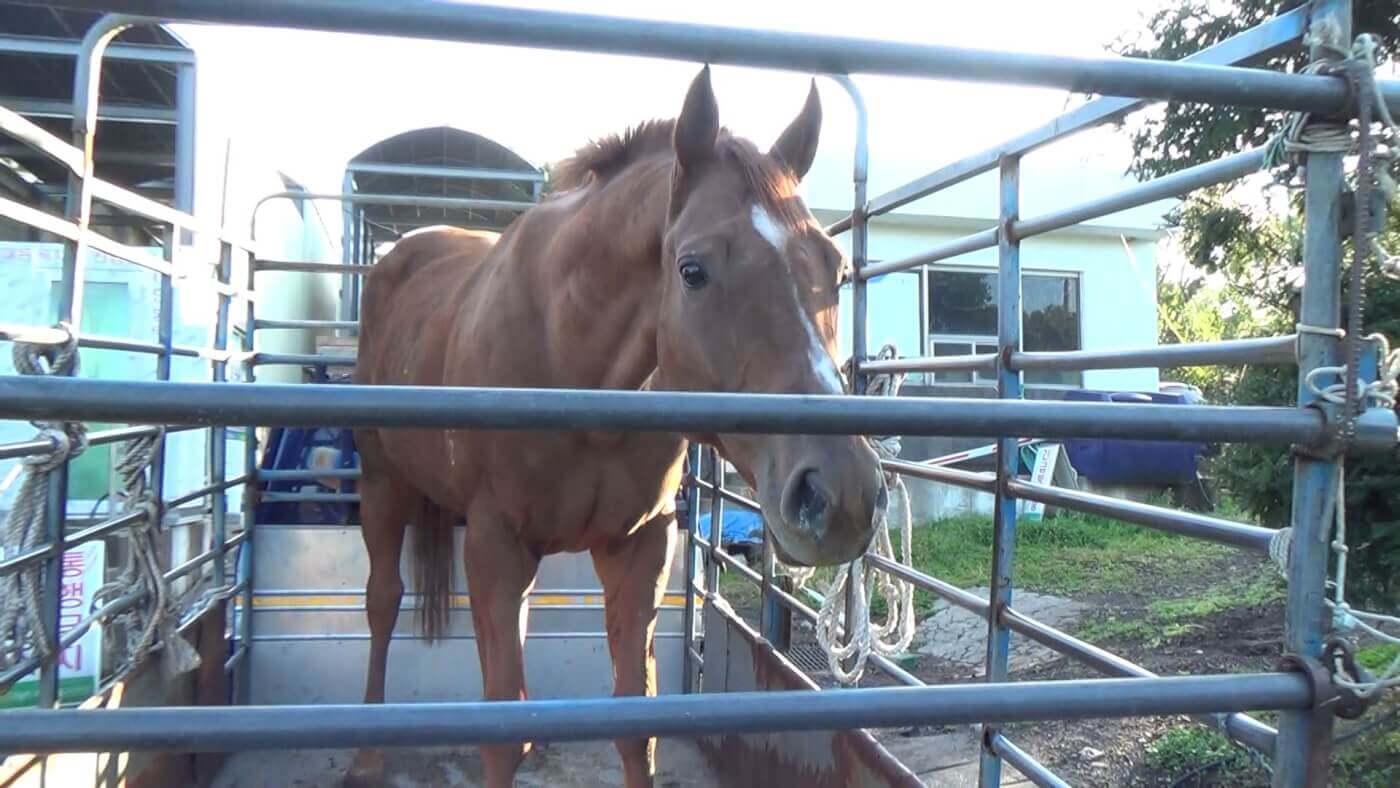
A brown horse in a trailer outside of a slaughter house.

Our investigators saw Dynamic Tank, son of Kentucky Derby winner Big Brown, just before he was killed.

Our investigation, which also revealed that the meat from slaughtered racehorses contained dangerous drugs, effectively eliminated racehorse meat from being sold for human consumption in South Korea, but our work isn’t over. Their corpses are now processed into items like pet food and beauty products instead. We’re demanding a humane system for racehorse aftercare.

Tell the KRA: No More!

We hope Any Given Saturday’s story will serve as a reminder that all horses deserve to be treated with kindness and respect, both during and after their racing careers.

Please write to the KRA and urge it to stop supporting and promoting horse slaughter. If it commits to developing a comprehensive retirement system modeled on the Thoroughbred Aftercare Alliance and designates a mandatory 3% of purse money toward retirement, most former racehorses in South Korea will be protected from the worst abuses they face now.

The post Victory! Retired Champion Racehorse Home Safe From Likely Slaughter appeared first on PETA.

Is PETA Hypocritical for Doing This? Find Out the Truth About the Animal Rights Organization

Is PETA hypocritical? One tactic we use to save animals is buying stock in companies with cruel practices. So does it make us hypocrites if we hold a stake in the success of companies such as SeaWorld, H&M, and Starbucks?

No, it definitely doesn’t, and here’s why: We’re not in it for the profits, if any—we buy the smallest amount of stock required, and we tend to do so at times when its value is tanking, all for a good reason. We believe these companies would be far more successful if they stopped exploiting animals. Becoming stockholders entitles us to bring proposals, or resolutions, to a vote as part of a company’s annual meeting process. That way, we can share information on animal issues and effect change from within—plus, companies are far more likely to listen to and be influenced by their shareholders.

What Changes Has PETA Achieved as a SeaWorld Stockholder?

PETA has owned stock in SeaWorld since 2013, and we’ve been urging the company to ban breeding and retire the orcas it holds captive to seaside sanctuaries ever since. The pressure we’ve been able to put on the company from within has helped us earn life-changing victories for animals. Our shareholder proposal for SeaWorld to end its orca-breeding program was among the many efforts that led the company to do just that, which means that the current generation of orcas will be the last to suffer in the marine park’s cramped tanks. Another proposal ended cruel “dolphin surfing,” in which trainers would ride on dolphins’ backs and stand on their faces in SeaWorld’s shows.

We’ve even suggested a bailout plan for the company that would save animals and its reputation. Our shareholder resolution urged SeaWorld to shift to a non-animal model, with rides, virtual reality exhibits, and other educational experiences that would allow visitors to learn more about marine life without paying to see imprisoned animals.

The True Hypocrites Are the Cruel Companies That Refuse to Change

Our shareholder resolutions have allowed PETA to call out the hypocrisy of many companies that continue to use animals to make a profit. Fashion brand H&M claims to care about animal welfare, yet it continues to sell clothing stuffed with down feathers, which are taken from birds whose throats are stabbed before their feathers are removed. Coffee chain Starbucks continues to charge more for vegan milks, even though it has admitted that bovine mammary secretions (aka “cow’s milk”) are a major contributor to the company’s carbon footprint—and of course, they cause calves to be removed from their loving mothers. These companies and others continue to harm animals when they could choose to do otherwise.


In 1987, PETA’s first shareholder resolutions targeted cosmetics and household-product manufacturers that conducted animal tests. Since then, with the support of our members, we’ve submitted shareholder resolutions covering many other issues with dozens of companies, from fashion brands that use animal skins to gaming companies that own racetracks. You can help us continue this vital work for animals by taking action today:

The post Is PETA Hypocritical for Doing This? Find Out the Truth About the Animal Rights Organization appeared first on PETA.

Historical ‘Mammoth Cheese’ Gets a Modern Makeover From PETA

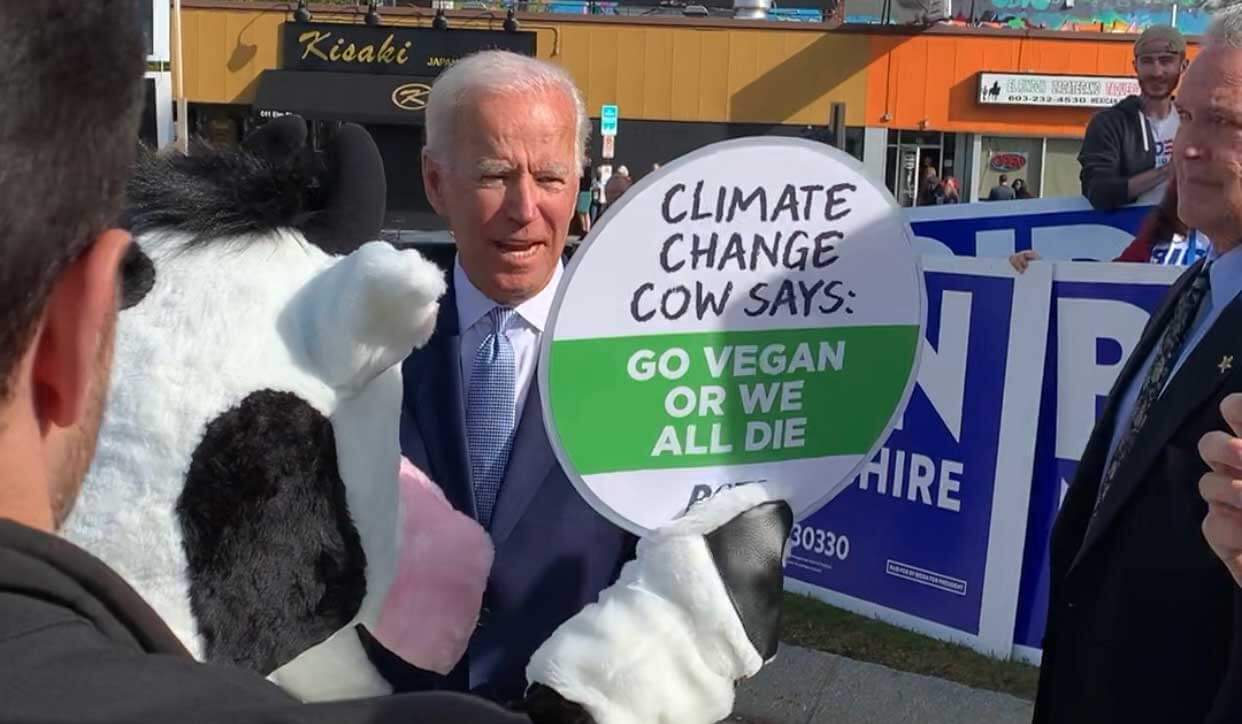
The first “mammoth cheese,” which weighed an astounding 1,235 pounds, was presented to President Thomas Jefferson in 1802. But times have changed. In Jefferson’s time, there was no factory farming. But in today’s dairy industry, mother cows live miserably in intensive confinement and are forcibly impregnated, only for their beloved calves to be taken away from them so that their milk can be sold for humans to consume. That’s why PETA is marking the historic cheese delivery (and National Cheeseball Day, April 17) with a special delivery to the “big cheese” himself, President Joe Biden: a mammoth wagonload of vegan cheese balls for him to enjoy and share.

president joe biden meets peta's climate change cow mascot

We’re also donating vegan cheese balls to the teachers and students at C.W. Harris and Ketcham elementary schools in Washington, D.C. Many of the district’s students are Black or Latino, up to 80% of whom are lactose intolerant.

PETA believes that these little cheese balls will help people make the switch to one of the many delicious and widely available vegan varieties of cheese.

The popularity of vegan cheese is skyrocketing as ever more Americans ditch dairy and new vegan cheeses become available all the time. A recent study showed that dairy consumption is down 20% among Gen Zers, 65% of whom say they want to follow a more plant-based diet.

Animal agriculture is the single largest source of U.S. methane emissions, which have 80 times the warming power of carbon dioxide. Cows used to produce milk for human consumption are forcibly impregnated over and over and mourn the loss of their babies. When their bodies wear out after just a few years, they’re sent to slaughter. Every person who goes vegan spares nearly 200 animals each year needless suffering and abuse.

Note: PETA supports animal rights, opposes all forms of animal exploitation, and provides the public with information on those issues. PETA does not directly or indirectly participate or intervene in any political campaign on behalf of or in opposition to any candidate for public office or any political party.

The post Historical ‘Mammoth Cheese’ Gets a Modern Makeover From PETA appeared first on PETA.

PETA Statement: Fresno State’s Live Bulldog Mascot Was Born to Suffer

Below, please find a statement from PETA President Ingrid Newkirk in response to news that Fresno State will swear in a new live bulldog mascot—a breathing-impaired breed—on Sunday:

“Shame on Fresno State for forcing a breathing-impaired breed with a grotesquely flat face to choke, cough, gag, and suffer in the sweltering heat as its “mascot.” If the university’s athletes suffered from deformed windpipes, they’d lose every game—and some of them would lose their lives from exertion. Continuing this trend will only inspire more people to support cruel breeders, and PETA reminds Fresno State that the “Passing of the Collar Ceremony” involves passing on debilitating deformities to dogs who can’t enjoy happy or healthy lives and urges the school to switch to a costumed human.”

PETA—whose motto reads, in part, that “animals are not ours to use for entertainment”—opposes speciesism, a human-supremacist worldview. For more information, please visit PETA.org, listen to The PETA Podcast, or follow the group on Twitter, Facebook, or Instagram.

The post PETA Statement: Fresno State’s Live Bulldog Mascot Was Born to Suffer appeared first on PETA.