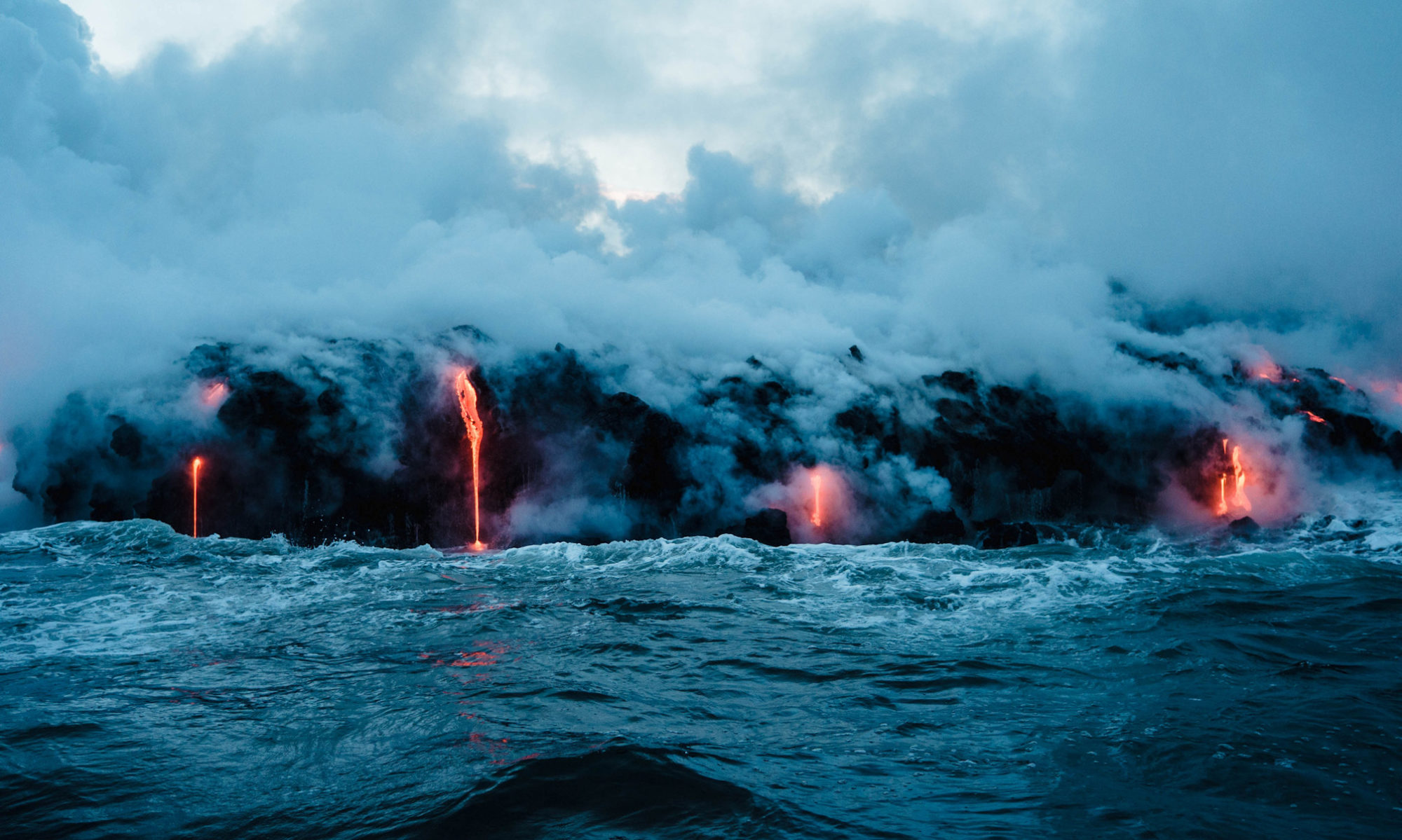

The effusive eruption of the volcano weakened for some time.
A lowered magma supply rate within the volcano’s main feeder pipe into the crater likely affects a decreased number of glowing rockfalls (111 over the past 24 hours) emanating from the actively growing summit lava dome. The diminished magma supply rate in the conduit relates to a shortening of the upper incandescent lava overflow. Accumulated viscous lava material in the dome becomes unstable and rolls down to the base of the edifice at about 4 km distance from the summit.
Visible glow and near-constant emissions of gas and small amounts of ash suggest continued rise of fresh magma.
Despite the reduced activity, three origin lava flow arms on the southeastern Bonga, southern Mi-isi and eastern Basud flank, keeping their steady length of 3.4 km, 2.8 km and 1.1 km from the summit, remain active.
Sulfur dioxide (SO2) emissions reached to a 1623 tonnes on 22 November.
The short-term electronic tilt and GPS monitoring continue to detect the northwest upper flank inflated. However, the long-term ground deformation in general suggests the ongoing uplifting of the edifice since 2020.
In order to mitigate the risk, people are forbidden to enter an area of 6 km distance from the summit crater due to impacts of rockfalls, pyroclastic falls and/or phreatic eruptions.
The alert level for the volcano remains at Level 3.
Source: Philippine Institute of Volcanology and Seismology volcano activity update 23 November 2023