I Saw Something. I Said Something.

I Saw Something. I Said Something.

Working on a movie set is both exhilarating and exhausting. There is always a ton of things happening at any given time. But late last year, while working on the set of a film called Crazy Alien, I saw something that will stay with me forever.

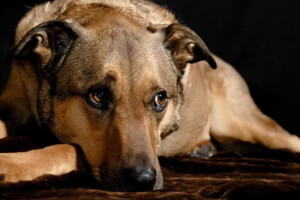
Filming a scene to depict a dog apparently being abducted by aliens, an animal handler tormented a German shepherd into a frenzy so the terrified dog would frantically bark. The dog was locked in a cage, suspended 20 feet in the air by an overhead crane, spun around by the crew, and then plunged into a frigid, fast-flowing river. After five to eight seconds, the director, Chinese filmmaker Hao Ning, yelled out “Cut!” He then decided to subject this poor dog to a second identical take.

I could not believe my eyes. As someone who has no influence on set, I felt helpless. At first, I didn’t know what to do, but the image of that howling dog kept running through my mind. I wanted someone to know what had happened—to be this dog’s voice. I decided I had to report it and provide footage to an organization that could take action.

I am grateful that PETA broke the news of what I saw. People all over the world are as aghast as I was to see what happens behind the scenes.

It makes no sense that some movie productions are still forcing animals to perform. With all the computer-generated imagery (CGI) routinely seen in movies these days, there is simply no reason to confuse, frighten, and exploit animals during the filming process. Crazy Alien appears to have a lot of CGI in it, so the dog scene is particularly egregious. And being plunged into cold water wasn’t the only time the dog was abused. Just prior to this scene, he was locked in the cage, lifted by the overhead crane, and violently spun in circles by the crew before solidly landing 40 to 50 feet away. This take happened around four to five times. For a couple of hours, this dog did not get a break.

For animals, life in the movies is far from glamorous. They have no way of understanding what is being asked of them and have no choice but to participate.

While animals in the U.S. are afforded some protections, animals in China and many other countries evidently have no legal safeguards whatsoever. I remember seeing the damning footage of a desperate dog struggling to stay out of the water during the filming of A Dog’s Purpose. The similarities to what I witnessed are chilling, and that movie was filmed in Canada. Since movie productions take place all over the world, what else is going on that we don’t know about?

But no matter when or where an animal is being used, oversight is inadequate at best, so whistleblowers are on the front lines of getting the word out about what’s happening. We must be the ones to speak up.

Crew members working behind the scenes in any aspect of the entertainment industry may not get to make the big decisions, but we have the power to make a big difference. If you see something that you know—or even think—is wrong, record it in any way possible. Contact PETA’s Animals in Film and Television confidential whistleblower hotline at 323-210-2233 or AFTV@peta.org. Never once did I doubt PETA’s ability to get this out to the world—something they do best—while also protecting my identity. Yours will be, too. Be confident, and do the right thing!

The post I Saw Something. I Said Something. appeared first on PETA.
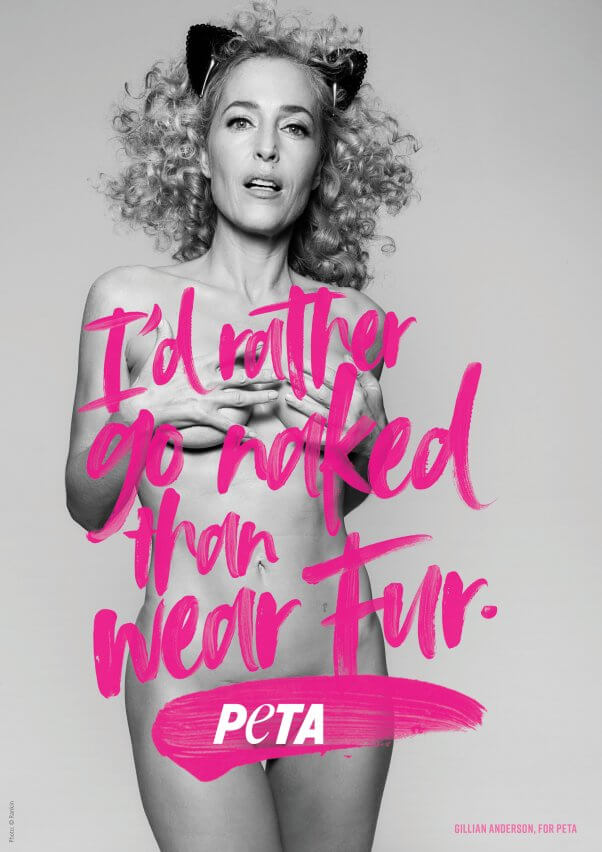
Gillian Anderson Embraces Naked Activism on International Women’s Day

Gillian Anderson Embraces Naked Activism on International Women’s Day

This is me. Naked. See that scar? Three children came out of there. And that “P”? That’s for Piper, my eldest—a tattoo to cover another scar from an ectopic pregnancy. That’s part of the story written on my body. Had the lens been wider, you’d have seen a scar from the time I kneeled on a shard of glass during a production of A Streetcar Named Desire in London. And if I’d turned sideways, you’d have been able to see lots and lots of cellulite and a mole in the shape of a continent. This is my body. It’s mine to do with as I please. And today, I’m using it to stand up for animals and their right to exist as they please—with their skin still attached, naturally.

My nakedness also makes a bigger statement. As an actor who is usually unusually modest, suddenly I find myself concerned that modern feminism has too many people confusing sexy with sexist. It’s easy to forget that, in the annals of activism, there is a history of women protesting naked, which has had little to do with being directly sexy and is ultimately about freedom of expression. Remember Lady Godiva, who rode nude to protest for peasants? And more recently, Cambridge economist Victoria Bateman appeared topless with “Brexit Leaves Britain Naked” written across her torso. I’m not that brave.

But I am in favor of doing whatever the fuck we want with our bodies to make a statement that is important to us.

This is my body. If I were clothed, would you be reading this?


Gillian Anderson is an Emmy, Screen Actors Guild, and Golden Globe award winner. She is also the co-author, with activist and author Jennifer Nadel, of We: A Manifesto for Women Everywhere (out now in paperback from Atria Books).

The post Gillian Anderson Embraces Naked Activism on International Women’s Day appeared first on PETA.

Museums Are Not Circus Freak Shows

Museums Are Not Circus Freak Shows

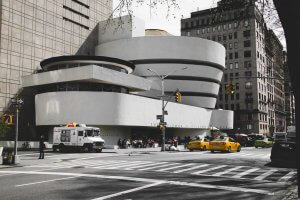
Most people agree that true works of art showcase an artist’s creativity and talent, rather than providing cheap shock value. The Guggenheim Museum in New York had to think hard about this when it was bombarded with complaints about a planned installation that included movies of previously staged cruel and gratuitous torment of animals, including tattooed pigs and a live display of insects and reptiles being eaten by their predators. The museum did an about-face and pulled these works by Chinese artists out of the show—and rightfully so.

One display that was to be a part of its “Art and China After 1989: Theater of the World” exhibition was a video of four pairs of “fighting” dogs straining to attack one another while chained to a treadmill. Even though the display is a video, real dogs were tormented to create it when it was filmed live in 2003. The increasingly agitated dogs are seen becoming more and more fatigued and eventually foaming at the mouth as they pull against their chains and struggle to reach each other.

No one should have had to point out to The Guggenheim that dogfighting is an ugly, violent, illegal activity and that featuring this blood sport, even as a metaphor for human violence, not only is unacceptable but also rewards the artist for having tormented the dogs.

In dogfights, two dogs are put in a pit where they are encouraged to rip each other to shreds. They may be injected with steroids, and some breeders go so far as to sharpen their dogs’ teeth, cut off their ears (to prevent the opposing dog from latching on), and add cockroach poison to their food so that they will taste bad when bitten. When not fighting, dogs are restricted by short heavy chains. If they won’t fight or they lose fights, they often become “bait” animals, and many are abandoned in alleyways, tortured for fun, set on fire, electrocuted, shot, drowned, or beaten to death, as people will recall from the Michael Vick case.

Another piece in the planned installation was a display at which visitors were shown caged insects and reptiles devouring each other. The third display shows two confined pigs, their bodies covered with nonsensical English words and invented Chinese characters, having sex before an audience.

To spin any of these as art is to set no limits on what art can be: Snuff videos were also once defended as art.

There is nothing intellectually provocative about these displays, and the fact that the animals are not willing participants in their use as props detracts from any stated broader meaning. The artists can defend them as esoteric imagery, but the suffering of dogs forced to fight, pigs restrained and tattooed, and animals confined with other animals for the sole purpose of allowing spectators to watch them be killed is incontrovertibly real. Anyone who finds pleasure in watching animals kill each other surely needs professional help.

The conversation that this spectacle has sparked is valuable, because myriad abuses perpetrated against animals in China—from bludgeoning dogs in order to procure leather for coat trim and gloves to paying to feed live animals to tigers at the zoo—are often incomprehensible. Video footage shows circuses chaining bear cubs up by the neck in order to train them to walk upright and animals on fur farms being killed by painful electrocution. Animal protection laws are non-existent. Withdrawing these pieces sends a strong message to China that its anti-animal antics are not acceptable and that animals are widely thought to deserve respect.

Art institutes could learn from the College Art Association, which has principles in place for artists engaging in any practice using live animals, including that “[n]o work of art should, in the course of its creation, cause physical or psychological pain, suffering, or distress to an animal.”

Museums should continue to provoke thought, discussion, and debate. But what they should not do is become circus sideshows.

The post Museums Are Not Circus Freak Shows appeared first on PETA.