USA: Amnesty International, S.T.O.P. Lawsuit Reveals NYPD Surveillance Abuses 

Language used maybe offensive to some readers 

  • Thousands of NYPD records secured by the rights groups detail expansive and unlawful surveillance of protesters, and Black, Indigenous and People of Colour communities. 

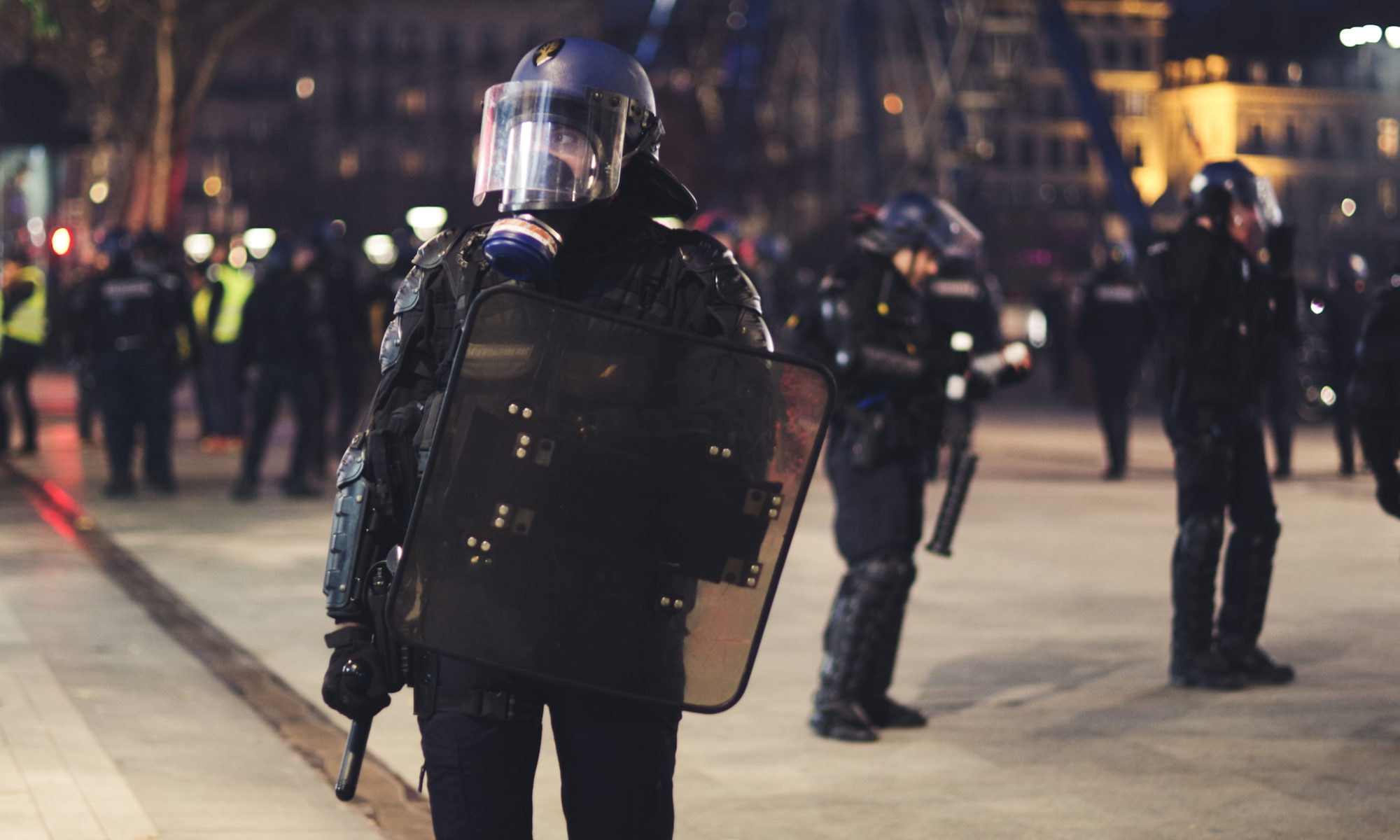
Records obtained by Amnesty International and the Surveillance Technology Oversight Project (S.T.O.P.), a New York-based privacy and civil rights group, after a five-year long lawsuit against the New York Police Department (NYPD) reveal concerning surveillance abuses against protesters and communities of colour, including the frequent use of rights-violating facial recognition technology.  

Analysis by Amnesty International and the S.T.O.P. of the over 2,700 documents to date reveals that facial recognition technologies (FRT) were used on several occasions by the NYPD, subjecting New Yorkers to invasive, flawed, and deeply discriminatory surveillance technologies. 

The documents further revealed that the technology had been used to identify individuals based on unsolicited reports by the public that deemed certain individuals suspicious on the basis of speaking a different language or wearing culturally distinctive attire. 

“New York promises to be a sanctuary city, but we’ve created nothing short of a surveillance state, 

Michelle Dahl, Executive Director at the Surveillance Technology Oversight Project.

“These costly, error-prone, and biased technologies are wasting billions of dollars. NYPD surveillance puts our neighbors at risk of false arrest, deportation, or even worse. It’s long past time that New Yorkers should see the dystopian ways that the NYPD watches all of us. Now is the moment for lawmakers to take action and hold the NYPD accountable, outlawing facial recognition and imposing true civilian oversight.” 

Facial recognition violates the right to privacy through mass image data scraping without knowledge and consent. It’s plagued by racial bias, disproportionately targeting Black and Brown communities, and suppresses peaceful protest and free expression through its chilling effect. For these reasons, hundreds of organizations consider the technology unlawful. Amnesty International and S.T.O.P. have long called for a ban on the use, development, production, and sale, of facial recognition technology for identification and mass surveillance by law enforcement and other government agencies.  

In its analysis of the disclosures, the groups found that NYPD surveillance frequently puts marginalized communities at risk. NYPD records also documented the profiling of New Yorkers based on language, ethnicity, and other protected characteristics. 

Initial findings from the disclosures of more than 2,700 NYPD documents show that:  

  • By 17 April 2020, the NYPD had already spent more than $5 million on facial recognition technology between 2019 and 2020, and is spending at least $100,000 more every year. 
  • The NYPD stopped tracking facial recognition accuracy in 2015 after finding the error rate was too high. 
  • NYPD Officers conspired with the US Marshalls Service to illicitly contract a controversial facial recognition firm to surveil a private Instagram account, in violation of the Department’s facial recognition policy.  
  • On 31 December 2019, facial recognition was used by the NYPD to target New Yorkers who were using slang to describe Times Square on social media, including: “NYE in Times Square is da BOMB,” in a clear overly broad and dangerous violation of the right to freedom of expression, and in a manner that ignores cultural and linguistic context.  
  • The NYPD has used facial recognition and selective enforcement against certain NYPD critics, such as on 1 February 2020 when they seemingly identified and arrested one person for “FTP” graffiti art, a common abbreviation for “fuck the police,” against the backdrop of heightened protest and dissent against police brutality.  
  • New Yorkers were racially profiled by the NYPD, and two men were wrongly targeted by facial recognition  at the New Year’s Eve celebration in Time Square on 31 December 2019, for not dancing and speaking a Middle Eastern language. The report prompting the facial recognition query stated: “They had no females with them, were not dancing like everyone else and they gave everyone an uneasy feeling… At one point one went in the bathroom and was yelling on his phone in a Middle Eastern language.”   
  • On 3 June 2020, the NYPD targeted a “controversial protestor on twitter” for political speech, even though they acknowledged the lack of exigent circumstance or any threats and resolved to continue monitoring all of their social media accounts, regardless. 
  • On 5 June 2020, the NYPD deployed facial recognition to identify a Black Lives Matter protester for hyperbolically writing “cops should die” in a social media post.  
  • On 22 April 2020, the NYPD used facial recognition to identify two singers purely because of content in their music video, effectively subjecting artists to a virtual line-up and violating their free expression.  

“The disclosures demonstrate multiple instances of discrimination and abuse, using facial recognition, which reinforce what our previous research has consistently shown to be a disregard for the safety of Black and Brown communities in New York City, 

Matt Mahmoudi, Researcher & Advisor on AI and Human Rights at Amnesty International.

“The NYPD has avoided scrutiny for too long and has benefited from a lack of transparency to unlawfully invest in and use facial recognition to curb people’s rights to privacy, equality and non-discrimination, and freedoms of expression and peaceful assembly.”    

Background  

In September 2020, Amnesty International filed a freedom of information request for NYPD records on its surveillance of the historic Black Lives Matter (BLM) protests of the same year. In 2021, the NYPD rejected Amnesty International’s request and administrative appeal. S.T.O.P and the leading litigation law firm Quinn Emanuel Urquhart & Sullivan, LLP then sued the NYPD on Amnesty International’s behalf, seeking a court order compelling release of the requested documents. In 2022, the New York Supreme Court for New York County ordered the NYPD to disclose more than 2,700 records about BLM surveillance.  

In 2022, Amnesty International, S.T.O.P., and partners in the New York ‘Ban the Scan’ coalition revealed that New Yorkers living in areas at greater risk of stop-and-frisk by police are subjected to greater facial recognition. The groups also showed non-white residents in the Bronx, Brooklyn and Queens face higher concentration of NYPD cameras. 

Currently, Amnesty International, S.T.O.P., and the ‘Ban the Scan’ coalition are calling on city council members to enact bans on facial recognition. This includes two measures that have already secured sponsorship by a majority of council members. Additionally, the organizations call on the NYPD and New York City mayor to commit to immediately ending use of the discriminatory, invasive, and error-prone technology. 

The post USA: Amnesty International, S.T.O.P. Lawsuit Reveals NYPD Surveillance Abuses  appeared first on Amnesty International.
Paloma: “When we protect our well-being, we lead with clarity and hope”

The digital world can be difficult to navigate, especially for young people. While it promises connection and belonging, it is full of risks, including potential harassment and violence.

On World Kindness Day, activist Paloma Navarro Candia, 19, from Argentina, shares how she’s protecting herself online, with the support of Amnesty International’s new workbook, Staying Resilient While Trying to Save the World Vol. 3.

The promise of a digital future still leaves behind those who need it most. My goal is to ensure that all children and adolescents can access and grow within safe, equitable, and sustainable digital spaces because digital transformation must also be a human transformation.

I was 11 when I discovered Amino, a social network that promised connection and belonging. At first, it felt like a refuge, but soon I saw how unsafe it could be. There was bullying, no real content moderation, and strangers much older than me sending inappropriate messages. My parents wanted to help, but they didn’t know how to.

The digital world was still new, confusing, and full of risks. That experience shaped my activism: it showed me that the Internet doesn’t change on its own, it needs people who question, humanize, and rebuild it.

For me, working for digital rights means creating spaces where technology amplifies possibilities to learn and participate without fear. As technology evolves, our rights must evolve too.

Digital rights in Argentina

In Argentina, young people face intertwined structural inequalities. Access to technology is still unequal, especially in rural or low-income areas. Many depend on public Wi-Fi or shared devices to study. And while misinformation and online violence continues to circulate and spread, the policies needed to address these risks are lagging behind.

The lack of comprehensive sex education leaves many adolescents vulnerable to misinformation about their rights and relationships, while hate speech and adultcentrism continue to silence youth voices. Economic instability only deepens this crisis, shaping our (lack of) opportunities.

Recently, my work on Nuestro Voto Cuenta (“Our Vote Counts”), a campaign on youth voting and disinformation supporting first-time voters across Argentina, revealed how hate speech and online hostility often discourage young people from participating in public life. Many of us also fall into cycles of misinformation fuelled by the addictive nature of social media. For activists, this reality is even more intense, constant exposure to distressing news leaves emotional traces that are hard to erase.

Teaching digital empathy

One of my main concerns is how the Internet affects our emotional well-being: the pressure to be constantly available, the new forms of violence in digital spaces, and the exposure to hate all shape how we see ourselves. Many of my friends have faced harassment, body shaming, or manipulation online. I’ve seen how these experiences silently damage self-esteem, trust and fuel shame. That’s why I believe we must not only teach digital literacy but also digital empathy, because the Internet should connect us and care for us by design.

I’ve learned that activism must include rest because caring for others begins with caring for yourself.

Paloma Navarro Candia

Being a young activist today is both empowering and exhausting. Information never stops, and the pressure to act, post, and respond can be overwhelming. There’s a constant sense of not doing enough.

I’ve learned that activism must include rest because caring for others begins with caring for yourself. Protecting mental health isn’t a luxury; it’s what makes long-term change possible. Activism is a marathon, not a sprint. When we protect our well-being, we lead with clarity, empathy and hope. For me, this means setting digital boundaries, learning to disconnect without guilt, and trusting others. Writing helps me process emotions and reminds me why I started.

Staying resilient

One of the projects closest to my heart is Staying Resilient While Trying to Save the World Vol. 3, a workbook created by and for young changemakers. It’s a companion that reminds us how emotional sustainability is part of activism. I contributed a chapter on Internet and mental health, exploring how digital environments influence our emotions. Social media can be overwhelming, but it also offers space to connect, create and find support. I wrote another chapter on gender-based digital violence based on the inspiring case of Olimpia, to show how to stay safe online, set boundaries, and understand that the Internet is not neutral – it shapes how we connect and how we heal.

Young people should read the new workbook Staying Resilient While Trying to Save The World, Vol 3, because it’s tailored to under 18s and reminds us that we’re not alone. Resilience isn’t about enduring everything, it’s about finding strength in connection. It invites activists to be honest about their struggles, to set limits, and to keep fighting with kindness toward others and toward themselves. When used with empathy and awareness, technology can amplify connection instead of division. Digital citizenship isn’t just about being online; it’s about participating with kindness, learning from one another, and building a more just, compassionate world together.

Connecting children with human rights leaders

Amnesty International has played a key role in empowering young activists like me. It offers tools, mentorship, and global networks that help transform ideas into real impact. Through training in campaign strategy and advocacy, Amnesty connects children, adolescents and youth with experienced human rights leaders and ensures that our voices aren’t just heard, they’re trusted. I believe in the power of alliances that cross borders, in the voices that multiply when they work together, and in futures built with empathy, knowledge, and shared purpose.

Over time, I’ve learned that leadership isn’t about having the loudest voice, it’s about active listening. My conviction is simple: ideas only matter when they become action and action only transforms when it begins with dialogue.

Staying Resilient While Trying To Save The World, Volume 1 and Volume 2 are also available to read.  

download amnesty’s Staying Resilient lesson plan

The post Paloma: “When we protect our well-being, we lead with clarity and hope” appeared first on Amnesty International.

OpEd: From an oil well to COP30

One of the girls who sued the Ecuadorian government to end gas flaring in the Amazon will attend the environmental summit to demand that the court ruling be enforced.

By: Leonela Moncayo

I was born in the Ecuadorian Amazon. My house faces an oil well. While other girls grew up with a view of mountains or parks, looked out at fiery monsters. Rather than the sunrise over the treetops, I saw the flame of a gas flare that never went out. 

For as long as I can remember, the air has smelled of smoke. Sometimes, while playing, I smelled an odour of burnt plastic. My friends and I thought this was normal, that it was just how the jungle smelled. I later realized that it wasn’t natural. It was pollution.

For as long as I can remember, the air has smelled of smoke. Sometimes, while playing, I smelled an odour of burnt plastic. My friends and I thought this was normal, that it was just how the jungle smelled. I later realized that it wasn’t natural. It was pollution.

Since I was very little, I have seen how oil extraction harms nature, spoiling the beauty of the plants, animals and water. I have also watched as people in my community and family fall ill. What hurts the most is the feeling that no one has taken responsibility for causing so much harm.

Living next to an active oil well changes your life.

When I was 11 years old, I went on a trip organized by the Union of People Affected by Texaco’s Oil Operations (UDAPT). The goal of the trip, which we called the “toxic tour,” was to show the impacts of oil extraction. I remember standing under a flare releasing gases that heat up the atmosphere, like methane, which traps 84 times more heat than CO₂. I looked at the ground and my heart clenched: there were thousands of dead and charred insects. Tiny, lifeless bodies. 

That’s when I knew I had to do something. 

I banded together with other girls and young people. With the support of UDAPT and the collective Eliminen los Mecheros, Enciendan la Vida [Remove the Flares, Ignite Life], we sued the Ecuadorian state to get rid of gas flares and protect our rights. And we won: the court ordered the state to put out those giant flames. 

We were girls, not experts. But we had the strongest thing: the truth. The court agreed with us, but its ruling did not bring justice.

To this day, the flares continue to burn.

***

Defending nature as young women has its consequences. When we try to give the world a true picture of the pollution and assault on human rights and nature, the first thing we get is criticism. Many do not want the truth to come to light. And it is worse when those of us speaking out are still legally children.

Defending nature as young women has its consequences. When we try to give the world a true picture of the pollution and assault on human rights and nature, the first thing we get is criticism. Many do not want the truth to come to light. And it is worse when those of us speaking out are still legally children.

They are always telling us that we are being manipulated by adults or that we are throwing a tantrum.

Several times police and military personnel — following government orders — have blocked roads to keep us from reaching meetings with authorities.

In February 2024, my family and I were victims of an attack. They tossed an explosive device into the entrance to my house. It had a piece of paper with a phrase on it, but the fire burned it up. They wanted to silence me.
Despite the insults, roadblocks and violence, we remain strong, courageous and determined to protect our rights and those of nature. 

Because if we do not, who will?

***

Being at the most important climate summit, the COP30 in Belém, Brazil, says to the world that there can be no talk of climate action while the Amazon continues to burn. This is the first COP in the Amazon, and that has to mean something. 

I did not come to Belém to ask for favours. I came to demand that the Ecuadorian state comply with the court ruling. I also came to remind all states to respect human rights and that caring for the environment is not an expense — it is the best social and cultural investment a government can make. 

Allowing pollution and rights violations is not a show of political strength; it’s a show of indifference.

By allowing climate inaction and pollution, world leaders — including the Ecuadorian authorities — are destroying the lives of humans and of thousands of species of plants and animals. 

The mestizo and Indigenous girls and young women of the Amazon are not usually heard in the media, but we have a voice, and our fire burns brighter than that of any oil well. 

We call ourselves Warriors for the Amazon.

We call ourselves Warriors for the Amazon.

If we can get everyone to understand the importance of climate justice, we can restore the Amazon. We can reforest its lands, restore its natural areas, let animals return to their habitat, and ensure that rivers run clean once again.

No one can silence us or force us to keep our mouth shut in the face of injustice. Courage is a skill we build through our actions. Defending our rights is a shield of strength that we are creating. Each and every person can create their own.

We all have that power.

The post OpEd: From an oil well to COP30 appeared first on Amnesty International.

Greece: Authorities must ‘drop baseless charges’ against rescue volunteer Seán Binder

On 4 December 2025, before the Court of Appeal of Lesvos, Greece, Seán Binder will stand trial for his work as a volunteer rescuer helping people in distress and at risk of drowning at sea. Alongside 23 other defendants, he faces criminal charges including membership of a criminal organization, money laundering, and smuggling (facilitation of irregular entry) and risks up to 20 years in prison if convicted.

The trial comes at the end of a long judicial process which started in 2018 with Seán’s arrest and has left him in limbo ever since. The case has contributed to a climate of hostility and intimidation against civil society organizations and individuals assisting people – many fleeing persecution or other dire circumstances – arriving via unsafe and irregular routes to Greece.

Commenting ahead of the trial, Seán Binder said: “When I was first arrested in 2018, it was devastating to realize I was in prison for nothing more than trying to assist people who were at risk. However, what is really frightening is that if I can be prosecuted for doing only what is normal, then so can you. In fact, there are many other humanitarians across Europe facing similar intimidation and harassment, indicating that my case is part of a wider pattern of states criminalising humanitarian work. Solidarity is on trial in Greece. These tactics are being used to control migration and have had a chilling effect on civil society.”

Esther Major Amnesty International’s Deputy Director for Research in Europe said: “Humanitarian workers like Seán Binder should never be prosecuted for showing compassion to people in dire need. Seán did what any of us would hope to do in his position: help people in danger in one of the deadliest sea routes in Europe. This is not just humane — it is lawful and necessary. It is farcical that this trial is happening at all the charges against Sean are baseless and should be dropped.”

Background

Seán Binder began volunteering for the search and rescue NGO ERCI on Lesvos in 2017 – a  dangerous year for people crossing the Mediterranean with over 3,000 people reported dead or missing. He worked patrolling the Greek coastline, spotting rubber boats in distress and assisting people who made it to shore.

In 2018, the Greek authorities arrested Seán and detained him for more than 100 days before releasing him on bail in December 2018. The Greek authorities also brought criminal charges against 23 other defendants linked to the search and rescue NGO. Between 2023-2024, the misdemeanour charges of forgery, espionage, and unlawful use of radio frequencies, were dropped against Seán and other defendants. The more serious felony charges, at the core of the upcoming trial, have remained pending.

In a 2020 report covering the way in which several European countries criminalize solidarity towards migrants and refugees, Amnesty International examined and criticized the charges against Seán. The organization has consistently called on the Greek authorities to drop the charges as they are unfounded, based on a wrong and abusive interpretation of anti-smuggling legislative provisions, and not backed by the evidence presented by the prosecutors.

Amnesty International representatives will be present at Seán’s trial and spokespeople are available on request.

For more information contact press@amnesty.org or +32 4836 80812

Free Humanitarians 

Amnesty International Report: Europe: Punishing compassion: Solidarity on trial in Fortress Europe 

Amnesty International campaign, Solidarity on trial: People in Europe are being targeted for helping refugees and migrants 

The post Greece: Authorities must ‘drop baseless charges’ against rescue volunteer Seán Binder appeared first on Amnesty International.

Israel must immediately halt legislation of discriminatory death penalty bill

In response to the passing of the first reading of a controversial new amendment to the Israeli Penal Law making it mandatory for  Israeli courts to impose the death penalty against individuals convicted of killing an Israeli “either  intentionally or recklessly” if the act is motivated by “racism or hostility towards the public” and “committed with the  objective of  harming the state of Israel or the rebirth of the Jewish people”, Amnesty International’s Senior Director for Research, Advocacy, Policy and Campaigns, Erika Guevara Rosas, said:

“There is no sugarcoating this; a majority of 39 Israeli Knesset members approved in a first reading a bill that effectively mandates courts to impose the death penalty exclusively against Palestinians. While the text of the bill does not specifically single out Palestinians, the mental element required for the offence concerned signals its primary victims are going to be Palestinians and would include those who committed the punishable offences before the law is passed.

“Knesset members should be working to abolish the death penalty, not broadening its application. The death penalty is the ultimate cruel, inhuman, and degrading punishment, and an irreversible denial of the right to life. It should not be imposed in any circumstances, let alone weaponized as a blatantly discriminatory tool of state-sanctioned killing, domination and oppression. Its mandatory imposition and retroactive application would violate clear prohibitions set out under international human rights law and standards on the use of this punishment.

The death penalty is the ultimate cruel, inhuman, and degrading punishment, and an irreversible denial of the right to life. It should not be imposed in any circumstances, let alone weaponized as a blatantly discriminatory tool of state-sanctioned killing, domination and oppression.

Erika Guevara Rosas, Amnesty International

“The shift towards requiring courts to impose the death penalty against Palestinians is a dangerous and dramatic step backwards and a product of ongoing impunity for Israel’s system of apartheid and its genocide in Gaza. It did not occur in a vacuum. It comes in the context of a drastic increase in the number of unlawful killings of Palestinians, including acts that amount to extrajudicial executions, over the last decade, and a horrific rise of deaths in custody of Palestinians since October 2023. Not only have such acts been greeted with near-total impunity but with legitimacy and support and, at times, glorification. It also comes amidst a climate of incitement to violence against Palestinians as evidenced by the surge in state-backed settler attacks in the occupied West Bank.

“It is additionally concerning that the law authorizes military courts to impose death sentences on civilians, that cannot be commuted, particularly given the unfair nature of the trials held by these courts which have a conviction rate of over 99% for Palestinian defendants.

“On paper, Israeli law has traditionally restricted the use of the death penalty for exceptional crimes, like genocide and crimes against humanity, and the last court-ordered execution was carried out in 1962.

“If approved, this bill will not only set Israel against the global trend towards abolishing the use of the death penalty, but also the stated goal of abolition enshrined in a key international treaty ratified by the country in 1991.

“The bill’s stipulation that courts should impose the death penalty on individuals convicted of nationally-motivated murder with the intent of ‘harming the state of Israel or the rebirth of the Jewish people’ is yet another blatant manifestation of Israel’s institutionalized discrimination against Palestinians, a key pillar of Israel’s apartheid system, in law and in practice.

“The international community must exert maximum pressure on the Israeli government to immediately scrap this bill and dismantle all laws and practices that contribute to the system of apartheid against Palestinians. Israeli authorities must ensure Palestinian prisoners and detainees are treated in line with international law, including the prohibition against torture and other ill-treatment, and are provided with fair trial guarantees. They must also take concrete steps towards abolishing the death penalty for all crimes and all people.”

The first reading of the bill passed by 39 votes to 16. Amnesty International opposes the death penalty in all cases without exception, regardless of the crime, the guilt, innocence, or other characteristics of the individual, or the method used. As of today, 113 countries have abolished the death penalty for all crimes, including seven since 2020.

The post Israel must immediately halt legislation of discriminatory death penalty bill appeared first on Amnesty International.