Georgia: Ruling party proposes laws to criminalize foreign funding for civic activity

Ahead of the parliamentary vote on legislative amendments announced by the Georgian Dream ruling party, which aim to further silence dissent and tighten control over those who receive foreign support for political and other civic activity, Denis Krivosheev, Amnesty International’s Deputy Director for Eastern Europe and Central Asia, said:

“The government’s proposed changes to the law on grants are highly damaging and signify Georgia’s further expansion of authoritarian practices to silence and criminalize dissent and entrench power. The amendments significantly broaden the definition of a grant to include any foreign funds or in-kind support for virtually anything that the government does not approve of, from political activism to analytical work and expert advice. If the law were to pass, no ‘grants’ will be allowed without the government’s express prior approval, and those who receive them otherwise risk being locked up.”

If the law were to pass, no ‘grants’ will be allowed without the government’s express prior approval, and those who receive them otherwise risk being locked up

Denis Krivosheev, Amnesty International’s Deputy Director for Eastern Europe and Central Asia

“This is nothing but a naked attempt to criminalize in Georgia virtually anything related to independent civil society, political opposition and engagement in public life outside of government control.

“Seeking, using and receiving foreign funding, remuneration or in-kind support is central to the functioning of civil society and is a right protected under international law. The Georgian authorities must drop these legislative proposals and bring the country’s legislation – already way out of sync – fully in line with its international human rights obligations, including the rights to freedom of association and expression.”

Background

On 28 January, the ruling Georgian Dream party announced legislative amendments which it said were aimed at making “significantly more difficult” the “financing of unrest, violence or revolutionary processes in Georgia from abroad.” In practice, these changes would further severely restrict or outlaw access to international or foreign funding or any in-kind support of independent voices. The proposals are expected to be adopted by Parliament after it reconvenes on 3 February.

Beyond expanding the definition of a “foreign grant”, the amendments require prior government approval for a wide range of funding, payment of salaries and consultancy fees, or in-kind support linked to vague and extremely broadly defined “political activity”. Criminal penalties for violations include prison sentences of up to six years, or up to 12 years in aggravated cases (such as involving “money laundering”).

The proposals also criminalize so-called “external lobbying” (presumably, lobbying on any Georgian matters abroad), disallow individuals working for foreign-funded organizations membership in political parties for eight years, and impose criminal penalties on the transfer of funds or other benefits if they are aimed at “influencing” political or public interests in Georgia.

The measures follow earlier waves of repressive legislation targeting media, civil society and political opposition, including the passage of legislation on “foreign influence” that had already imposed undue restrictions on access to foreign funding.

The post Georgia: Ruling party proposes laws to criminalize foreign funding for civic activity appeared first on Amnesty International.

Eswatini: Education minister’s anti-LGBTI remarks risk fueling discrimination in schools

Responding to media reports in which Eswatini’s Minister of Education and Training, Owen Nxumalo while making school visits during back to school visits in schools in the Hhohho Region, around Mbabane, is quoted as saying same-sex relationships have “no place” in schools and that LGBTI students should be expelled, Amnesty International’s Deputy Regional Director for East and Southern Africa, Flavia Mwangovya said:

“Eswatini’s authorities must publicly reject discriminatory rhetoric and urgently reaffirm that every student has the right to education in a safe, inclusive environment. Schools must be places of learning and protection, not spaces where children are threatened with exclusion because of who they are, or who they are perceived to be.

“Threatening students with expulsion on the basis of their real or perceived sexual orientation is discriminatory and profoundly harmful. Such statements by senior officials’ risk legitimizing stigma against already marginalized individuals, resulting in bullying, violence and children being driven out of school. The authorities in Eswatini must make clear that discrimination has no place in education and ensure safeguards to prevent harassment and to protect all students’ dignity and wellbeing.

Eswatini’s authorities must publicly reject discriminatory rhetoric and urgently reaffirm that every student has the right to education in a safe, inclusive environment. Schools must be places of learning and protection, not spaces where children are threatened with exclusion because of who they are, or who they are perceived to be.

Flavia Mwangovya, Amnesty International’s Deputy Regional Director for East and Southern Africa

“Amnesty International calls on the Ministry of Education and Training to guarantee that no student is expelled or otherwise punished on the basis of sexual orientation, gender identity or expression, or on the basis stereotypes and rumours. Authorities must ensure clear protections against bullying and violence, confidential reporting mechanisms and survivor-centred responses to complaints of intimidation, harassment and abuse.”

Background

On 27 January 2026, Eswatini’s Minister of Education and Training, Owen Nxumalo, made discriminatory remarks about same-sex relationships in schools during back-to-school visits. According to media reports, the minister said there is “no place” for same-sex relationships in schools and that LGBTI students should be expelled.

Amnesty International’s research has highlighted the repercussions of Eswatini’s lack of specific legal protections against discrimination based on sexual orientation and gender identity. It has documented how consensual same-sex relations between men remain criminalized under section 185(5) of the Criminal Procedure and Evidence Act, even though the law is widely reported to be largely obsolete in practice. The same research highlights widespread fear and discrimination, weak protection and accountability pathways when abuses are reported, as well as barriers to accessing services.

The post Eswatini: Education minister’s anti-LGBTI remarks risk fueling discrimination in schools appeared first on Amnesty International.
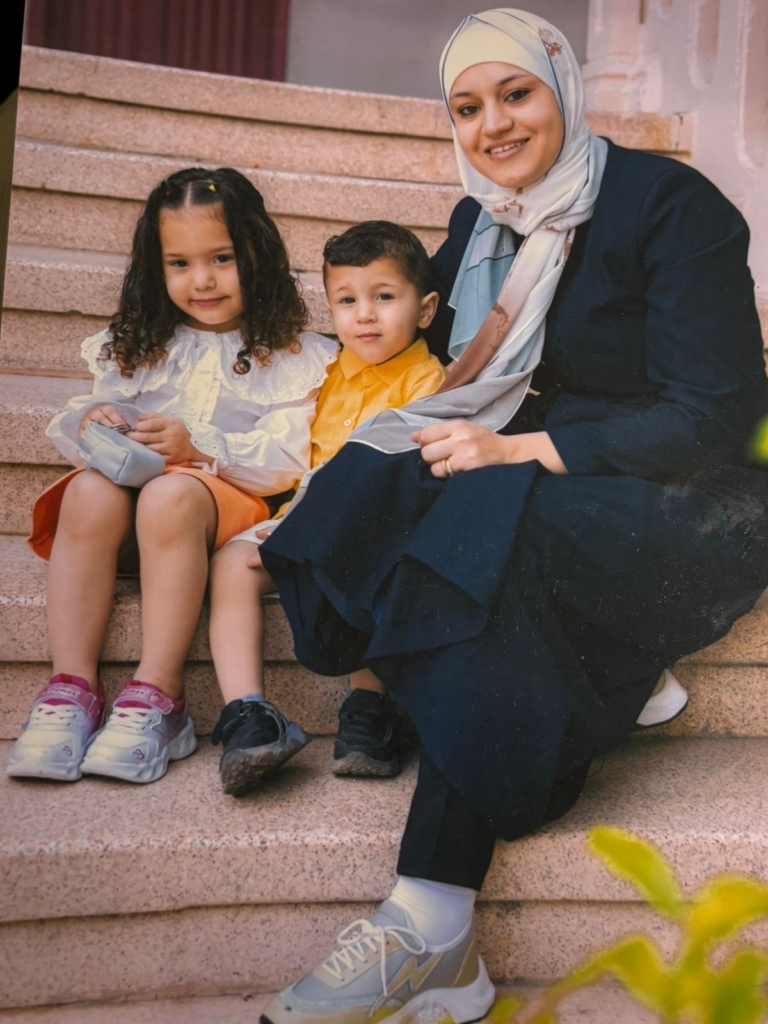
Kyrgyzstan: Authorities must free journalist Makhabat Tazhibek-kyzy and quash her wrongful conviction

On 2 February, Kyrgyzstan’s Supreme Court is expected to consider whether to resume proceedings against independent investigative journalist Makhabat Tazhibek-kyzy, after her defence lawyers filed a petition requesting a full re-examination of her wrongful conviction.

The petition, which ultimately seeks her immediate release, follows a legal opinion published by the UN Working Group on Arbitrary Detention in October 2025. It concluded that Makhabat Tazhibek-kyzy’s detention was arbitrary, violated multiple provisions of international human rights law and resulted directly from her lawful exercise of the right to freedom of expression.

Ahead of the Supreme Court hearing next week, Marie Struthers, Amnesty International’s Eastern Europe and Central Asia Director, said:

“The Kyrgyzstani authorities now have a clear and unavoidable choice: uphold their international human rights obligations or continue to defy them. The UN Working Group on Arbitrary Detention has unequivocally concluded that Makhabat Tazhibek-kyzy’s imprisonment is unlawful, her conviction must be quashed, and she must be immediately released and compensated for the violations suffered. There is nothing ambiguous, optional or symbolic about this decision.”

The UN Working Group on Arbitrary Detention has unequivocally concluded that Makhabat Tazhibek-kyzy’s imprisonment is unlawful, her conviction must be quashed, and she must be immediately released and compensated for the violations suffered

Marie Struthers, Amnesty International’s Eastern Europe and Central Asia Director

“Makhabat Tazhibek-kyzy’s continuous detention sends a chilling message to all independent voices in Kyrgyzstan that reporting on corruption and human rights abuses comes at the price of freedom.”

“The hearing before the Supreme Court is an opportunity to demonstrate that international law and Kyrgyzstan’s own Constitution are not mere words on paper.”

Background

Makhabat Tazhibek-kyzy was arrested along with 10 colleagues on 16 January 2024. They were charged with “calls for mass disorder” solely on the basis of their work for the independent investigative media projects, Temirov LIVE and Ayt Ayt Dese.  

On 10 October 2024, following a trial that failed to meet international fair trial standards, Makhabat Tazhibek-kyzy was sentenced to six years’ imprisonment. Appeal courts upheld the conviction.

The post Kyrgyzstan: Authorities must free journalist Makhabat Tazhibek-kyzy and quash her wrongful conviction appeared first on Amnesty International.
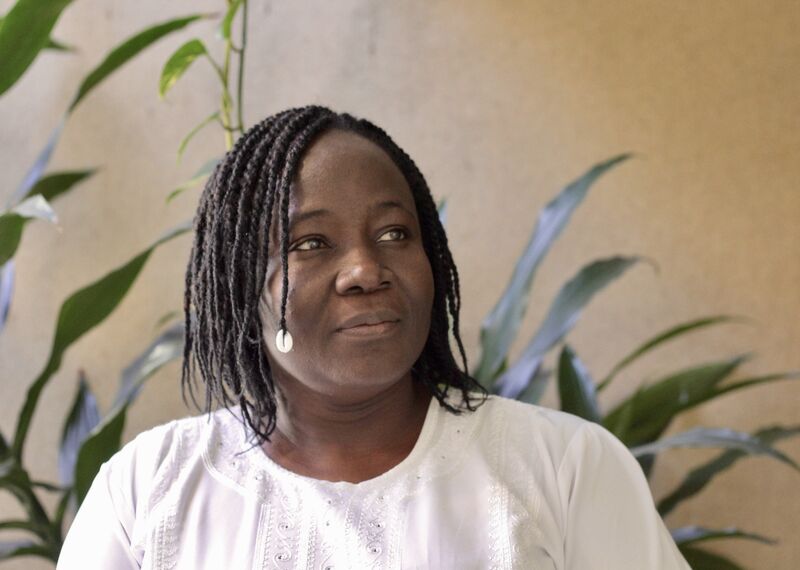
Italy: Cutro shipwreck trial begins after another deadly week in the Mediterranean

  • Amnesty International representatives will be present at the trial and spokespeople are available on request.

On 30 January, six Italian coastguard and custom officials will go on trial for failing to launch rescue operations which could have prevented a shipwreck that killed more than 90 people near the town of Cutro in southern Italy in February 2023.

At least 94 people, including 34 children, drowned in Italian territorial waters near Steccato di Cutro, Calabria, as the “Summer Love” vessel sank just metres from the Italian shoreline. An unknown number of people also went missing at sea.

Over 50 survivors and relatives of victims will be civil parties in the proceedings, as well as numerous NGOs. Amnesty International will observe the hearing, with Serena Chiodo, Campaign specialist on migration at Amnesty International Italy, present at the Crotone courthouse.

“This trial will try to establish any individual criminal responsibility for the deaths of dozens of people, including many children, which is fundamental to uphold the right of survivors and victims’ families to truth, justice and reparation. Crucially, it will also be an opportunity to shine a light on systemic failures and reckless decisions by the Italian authorities that may have contributed to the enormous loss of life,” said Serena Chiodo.

In the aftermath of the Cutro shipwreck, according to leaked documents, it emerged in recent years the government had unduly restricted the response to maritime distress calls regarding refugees and migrants, which could have contributed to the disaster. 

The trial comes amid a spate of deadly shipwrecks over the past week, with UN agencies estimating that hundreds of people may have drowned attempting to cross the Mediterranean.

“As recent days have once again shown, deadly shipwrecks in the Mediterranean are a brutal and ongoing reality. The Central Mediterranean continues to be one of the world’s most dangerous migration routes, exacerbated by European states’ failure to ensure adequate search and rescue operations and the ongoing crackdown on NGO rescue vessels by the Italian government.

“Those who drowned at Cutro could still be alive had authorities acted in line with their search and rescue obligations. Fewer people would be forced to make life-threatening journeys if European governments significantly increased access to safe and regular pathways for people fleeing desperate situations.”

Background

Between 25 and 26 February 2023, a wooden boat carrying about 200 people sank metres from the shore in the Italian region of Calabria. Local fishermen, like Vincenzo, volunteered in rescue efforts but for many people on board it was already too late.

International law imposes obligations on states in relation to search and rescue. These include ensuring arrangements for the prompt coordination of rescue operations and for the rescue of persons in distress at sea in their area of responsibility.

An investigation by Lighthouse Reports revealed information was available to Frontex and the Italian authorities several hours before the shipwreck, that could have prevented drownings, including in relation to bad weather conditions and the likely presence of refugees and migrants below deck.

Amnesty International highlighted shortcomings in relation to the authorities’ response to the incident and made recommendations for the Italian authorities in its calls for urgent review of search and rescue procedures and visa policies.

On 24 January, the International Organization for Migration (IOM) reported that the Central Mediterranean remains the deadliest migration route in the world, with at least 1,340 people losing their lives last year alone.

The post Italy: Cutro shipwreck trial begins after another deadly week in the Mediterranean appeared first on Amnesty International.

Egypt: Authorities must end crackdown on individuals discussing religious beliefs online

The Egyptian authorities have intensified their crackdown on religious expression online in recent months, said Amnesty International today, calling on the authorities to immediately and unconditionally release 23 people arbitrarily detained solely for peacefully exercising their right to freedom of religion and belief.

Over the past six months, security forces have arbitrarily arrested at least 29 people, including one woman, aged between 18 and their late fifties, across six governorates for having posted online content expressing religious views that do not align with state-sanctioned religious narratives, or simply for being members of social media groups discussing atheism and agnosticism and criticising mainstream religious beliefs. They are being investigated in connection with bogus charges of “contempt of religions” and “joining a group established in violation of law”. If convicted, they face up to five years in prison.

“Posting religious views online or taking part in discussions about belief or non-belief is not a crime. Yet the Egyptian authorities have intensified their crackdown on those discussing religious matters online in breach of the country’s international human rights obligations and more specifically the commitments the authorities made regarding freedom of religion during the country’s 2025 Universal Periodic Review at the UN Human Rights Council,” said Mahmoud Shalaby, Egypt and Libya Researcher at Amnesty International.

“Egyptian authorities must stop criminalizing discussions about religious beliefs, including those deemed as divergent from socially dominant views, or sometimes purely for reflecting and questioning them. Authorities must immediately and unconditionally release those arbitrarily detained solely for peacefully exercising their right to freedom of religion or belief.”

Between mid-July 2025 and 1 January 2026, security officials subjected those arrested to enforced disappearance for periods ranging between four and 56 days. At least four detainees reported to prosecutors during their pretrial detention renewal sessions that they had been subjected to torture and other ill-treatment following arrest, while at least 11 were denied their right to legal counsel of their choosing during the interrogation phase. One detainee died in custody, according to statements his fellow inmates made to prosecutors during a pretrial detention renewal session in early January 2026. Amnesty International was unable to obtain information about the cause of death.

Egyptian authorities must end their restrictions on the right to freedom of religion or belief and stop prosecuting people based on what they believe.

Mahmoud Shalaby, Amnesty International

Five were released in early December 2025 pending investigations. The remaining 23 people are held in pretrial detention.

Amnesty International spoke with a relative of one detainee, two lawyers at the Egyptian Initiative for Personal Rights, the Egyptian Commission for Rights and Freedoms and two other lawyers representing 13 of the defendants.

Police arrested most detainees at their homes and seized their laptops and mobile phones, including some devices belonging to family members, without presenting arrest warrants or explaining the reasons for arrest.

A litany of violations during arrest

Upon arrest, security forces concealed the fate and whereabouts of those detained, thereby subjecting them to enforced disappearance. They were held outside the protection of the law in unknown National Security Agency (NSA) facilities for periods ranging from four to 56 days, at heightened risk of torture and other ill-treatment, before security forces brought them before the Supreme State Security Prosecution (SSSP). During their enforced disappearance in NSA facilities, agents interrogated detainees while blindfolded for hours about their religious beliefs, including whether they were Muslim or Christian and whether they prayed.

Among those arrested, was one man who ran a YouTube channel featuring debates or critical discussions about religious ideas; for instance discussing commonly held beliefs in Islam and Christianity, including on the occurrence of signs ahead of Judgement Day. Another posted online content critical of a popular Islamic preacher, while another discussed cosmic justice. A third man shared content satirizing certain religious practices.

Security forces arrested Sherif Gaber, 32, a blogger and YouTuber, at his home in Cairo on 3 November 2025 and subjected him to enforced disappearance for around 56 days before bringing him before a prosecutor. Since 2013, authorities have repeatedly targeted Gaber for his online religious expression. Between 2013 and 2024, courts sentenced him in absentia on three separate trials to one, three, and five years in prison in connection with “contempt of religions” charges. He remains detained pending investigations.

SSSP prosecutors opened investigations against detainees on a range of charges, including joining a group established in violation of the law, exploiting religion to promote ideas harmful to national unity, contempt of religions, insulting religions through public means, and spreading false news. Prosecutors subsequently ordered their pretrial detention.

During one of the pretrial detention renewal sessions, held online in late 2025, three defendants told prosecutors that NSA agents had subjected them to electric shocks during their enforced disappearance. Prosecutors failed to promptly and effectively investigate these allegations by referring detainees for forensic examination and instead stated that they would summon them to an in-person session where they could “report whatever they want.”

Saeed Abo Mustafa, one of the detainees who had participated in online debates about religious beliefs, told prosecutors during his first pretrial detention renewal session that NSA agents beat him with their knees or foot hitting his back and stomach during his enforced disappearance in July 2025. Prosecutors dismissed his complaint, asking why he had not reported the abuse during his initial interrogation.

“The authorities are piling abuse upon abuse against those arbitrarily detained, from bringing absurd charges against them, to subjecting them to enforced disappearance and dismissing their serious allegations of torture and other ill-treatment. The Public Prosecution must immediately stop its complicity in NSA abuses by rubber-stamping arbitrary detention, and ensuring prompt, thorough, independent, impartial, transparent and effective investigations into all allegations of torture and other ill-treatment”, said Mahmoud Shalaby.

“Egyptian authorities must end their restrictions on the right to freedom of religion or belief and stop prosecuting people based on what they believe.”

Background

Religious minorities, including Coptic Christians, Shi’a Muslims and Bahá’ís, consistently face discrimination in law and/or practice in Egypt. Members of religious minorities, atheists and others not espousing state-sanctioned religious beliefs face threats and harassment including abusive summons and interrogations by the NSA and in some cases prosecution over vague “contempt of religions” charges.

State officials continued to discriminate against Christians by denying effective remedies for sectarian violence and imposing customary reconciliation processes that deprived them of compensation and sometimes led to their banishment.

Since March 2025, at least 15 members of the Ahmadi Religion of Peace and Light remain arbitrarily detained solely for peacefully exercising their right to freedom of religion. In April 2025, UN special procedures raised concerns with the Egyptian government over discrimination against the Baha’i community, including confiscation of cemeteries, denial of legal recognition and identity documents, and harassment of Baha’is.

The post Egypt: Authorities must end crackdown on individuals discussing religious beliefs online appeared first on Amnesty International.