
Tunisia: President must lift arbitrary travel bans

In the first month since his assumption of exceptional powers, Tunisian President Kais Saied has made widespread use of arbitrary travel bans in Tunisia while bypassing the judiciary, said Amnesty International, calling on the president to respect the right of Tunisians to freedom of movement. On 23 August, the president announced an extension to the suspension of parliament and the lifting of immunity for its members “until further notice”.

The organization has documented the cases of at least 50 people, including judges, senior state officials and civil servants, businessmen, and a parliamentarian, who were barred from travelling abroad over the past month without any judicial authorization, written order, reasons or timeframe for the ban. The total number facing travel bans since 25 July is likely to be far greater.

“President Kais Saied’s indefinite suspension of parliament cannot be a justification for violating rights and freedoms in the country or undermining the judiciary. Tunisian authorities have imposed unlawful and arbitrary travel bans against people in recent weeks without justification and in the absence of any judicial order, in a blatant violation of their right to freedom of movement,” said Heba Morayef, Director for the Middle East and North Africa at Amnesty International.

“Even under exceptional circumstances a person should be able to see and challenge the evidence on which a travel ban is based. If Tunisian authorities want these measures to be seen as legitimate steps in the name of fighting corruption or ensuring state security, they need to devise a narrow and accountable means of doing so that does not bar vast swathes of the public from traveling abroad.”

In a speech at Tunis airport on 16 August, President Kais Saied referred to recent criticism of the travel bans from Tunisian civil society groups and political parties, saying he had no intention of undermining the right to freedom of movement, which is “guaranteed under the constitution and international standards.” He justified the latest restrictions as part of efforts to prevent people who are suspected of corruption or of posing a security threat from fleeing the country.

However, Amnesty International’s review of 50 cases shows that those banned from travelling had no actual court case or open judicial investigation against them and that they were verbally informed by airport security officials who failed to present them with a judicial order as required by Tunisian law. This lack of a written decision or reasoning for the restriction of their freedom of movement also undermines their ability to appeal against the ban before a Tunisian court. Those banned from travel were verbally informed by airport security officials that this was a decision by the Ministry of Interior or in one case, a decision by “high officials in the presidential palace.”

Tunisian Law no. 75-40 of May 14, 1975, which regulates the issuance of travel documents clearly stipulates that judicial authorities are the sole entity authorized to issue a travel ban. The law also mandates that reasons be provided for the travel bans, that people be informed of the decision promptly, and that they have the right to challenge the decision.

On 19 August, 23 senior civil servants from auditing and inspection authority and 21 members of their families, who were going to Turkey for a group holiday, were barred from travelling. The group were all members of an association which condemned the sweeping bans in a statement published on its Facebook account. One member of the group, who asked not to be named, told Amnesty International that the border police left 30 of them, including children, waiting for five hours in a waiting room at Tunis airport, without food or water, did not present them with a written decision and did not explain the reasons for the travel bans. Border officials forced 14 other members of the group who had already boarded the plane to get off. None of the group had at any point been informed of any judicial proceedings against them – whether arrest warrants or summons to investigations.

“There was no justification for such humiliating treatment. We are all senior managers in the Tunisian public administration with no criminal record or pending judicial case, and we had informed all relevant authorities of this trip,” he said.

Even under exceptional circumstances a person should be able to see and challenge the evidence on which a travel ban is based.

Heba Morayef, Director for the Middle East and North Africa at Amnesty International

Zied Ajra, an architect and company director, was barred from travelling to Turkey for a holiday on 10 August. He told Amnesty International he was forced to wait for 45 minutes as officers made phone calls before verbally informing him he was barred from travelling because of “instructions from senior officials”. When he asked why, they said: “we don’t have any information,” and did not provide him with any written decision.

Skander Rekik, a businessperson and political activist,  was stopped at the airport while travelling to Turkey on 9 August and questioned by police about his business and his political activities. He was forced to wait two hours before he was told he was banned from travelling based on orders from “high officials at the presidential palace”. Rekik requested a written document to be able to challenge the decision, but the officers said they could not give him anything. He told Amnesty International that since 25 July, he had expressed views critical of the president’s exceptional measures on Facebook, including calling the President’s decision to suspend parliament a “coup.”

Imen Labidi, a judge at the first instance tribunal in Grombalia, a city 40km south of Tunis, was traveling to Turkey for a holiday on 6 August. She was forced to wait for two hours before being told she was barred from travelling due to an “information notice” from the Interior Ministry about her. She was aware of at least two other colleagues who were banned from travelling.

Anouar Benchahed, a member of the parliament from The Democratic Current party, was banned from leaving for France on 15 August. He told Amnesty International that police officers took his passport and kept him waiting for an hour before telling him a travel ban was imposed on him without further explanation.

Amnesty International urges President Saied and relevant authorities to end the use of arbitrary travel bans and respect freedom of movement as guaranteed under the International Covenant on Civil and Political Rights and the African Charter on Human and Peoples’ Rights, both of which Tunisia has ratified. Any restrictions on the right must be necessary and proportionate and subject to meaningful judicial review.

Background

On 25 July after a day of protests, President Saied announced plans to temporarily suspend parliament for 30 days invoking Article 80 of the constitution,  which he has interpreted as granting him the right to take exceptional measures in the case of an “imminent threat against the country’s security and independence”.  

The post Tunisia: President must lift arbitrary travel bans appeared first on Amnesty International.

Qatar: Failure to investigate migrant worker deaths leaves families in despair

Qatari authorities have failed to investigate the deaths of thousands of migrant workers over the past decade, despite evidence of links between premature deaths and unsafe working conditions, Amnesty International said today. The organization’s new report, In the Prime of their Lives, documents how Qatar routinely issues death certificates for migrant workers without conducting adequate investigations, instead attributing deaths to “natural causes” or vaguely defined cardiac failures. These certifications – described by one leading pathologist as “meaningless” – rule out the possibility of compensation for bereaved families, many of whom are already facing financial difficulties after losing their main breadwinner.   

Amnesty International highlighted the risks posed to workers by Qatar’s extreme climate, especially when combined with excessive and physically strenuous working hours. Qatar recently introduced some new protections for workers, but major risks remain and authorities have done little to investigate the scale of heat-related deaths. As well as consulting leading medical experts and reviewing government data relating to thousands of deaths, Amnesty analysed 18 death certificates and interviewed the families of six men, all of whom were between 30 and 40 when they died.   

When relatively young and healthy men die suddenly after working long hours in extreme heat, it raises serious questions about the safety of working conditions in Qatar.

Steve Cockburn

“When relatively young and healthy men die suddenly after working long hours in extreme heat, it raises serious questions about the safety of working conditions in Qatar. In failing to investigate the underlying causes of migrant workers’ deaths, the Qatari authorities are ignoring warning signs which could, if addressed, save lives. This is a violation of the right to life. They are also denying bereaved families their right to remedy, and leaving them with painful unanswered questions,” said Steve Cockburn, Amnesty International’s Head of Economic and Social Justice.  

“We are urging the Qatari authorities to fully investigate all deaths of migrant workers. If workers have been exposed to dangerous conditions such as extreme heat, and no other cause of death can be established, Qatar must provide families with adequate compensation, and take immediate action to strengthen protections for other workers. The failure to investigate, remedy and prevent the deaths of migrant workers is a breach of Qatar’s obligation to uphold and protect the right to life.”  

Epidemiological experts said that in a well-resourced health system, it should be possible to identify the exact cause of death in all but 1% of cases, but Amnesty’s review of data from major labour-sending countries found that the rate of unexplained migrant worker deaths in Qatar may be close to 70%. 

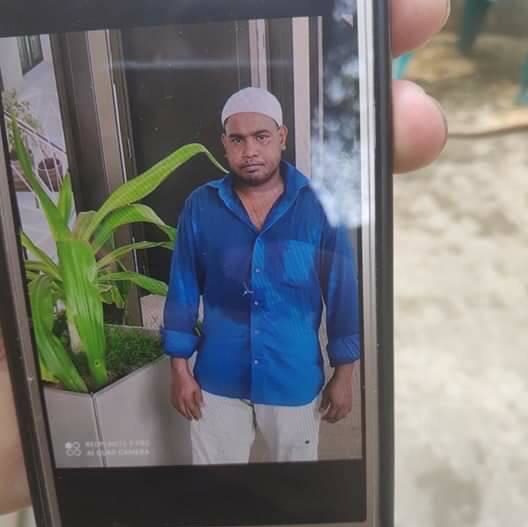
Sujan Miah © Private

The scale of unexplained deaths

Amnesty International reviewed 18 death certificates for migrant workers issued by Qatar between 2017 and 2021. Fifteen provided no information about underlying causes, instead using terms such as “acute heart failure natural causes”, “heart failure unspecified” and “acute respiratory failure due to natural causes”.   

These are phrases that should not be included on a death certificate without a further qualification explaining the underlying cause

Dr David Bailey

Similar phrases were used in reports for more than half of the 35 deaths which have been recorded as “non-work related” on World Cup facilities since 2015 – suggesting meaningful investigations were unlikely to have been carried out in these cases. 

Dr David Bailey, a leading pathologist and member of the WHO Working Group on death certification, told Amnesty International:   

“These are phrases that should not be included on a death certificate without a further qualification explaining the underlying cause. Essentially, everyone dies of respiratory or cardiac failure in the end and the phrases are meaningless without an explanation of the reason why.”   

Amnesty’s analysis of deaths data from multiple sources indicates that migrant worker deaths are going unexplained on a large scale. Official Qatari statistics show that over 15,021 non-Qataris – of all ages and occupations – died between 2010 and 2019, but data on cause of death is unreliable, due to the lack of investigations which Amnesty documented.  

The fact that a high number of deaths are categorized as ‘cardiovascular diseases’ in Qatar’s statistics may be obscuring a high number of deaths that are, in reality, unexplained. This is also indicated by deaths data from South Asian countries, where a large majority of migrant workers come from.   

For example, Bangladeshi government records show that 71% of deaths of Bangladeshi nationals in Qatar between November 2016 and October 2020 were attributed by Qatari authorities to “natural causes.”   

An investigation by the Guardian also found that 69% of deaths among Indian, Nepali and Bangladeshi workers, between 2010 and 2020, were attributed to natural causes. 

Sudden deaths

Yam Bahadur Rana © Private

Amnesty investigated the deaths of six migrant workers in detail – four construction workers, one security guard and one truck driver. None of the men had any known underlying health conditions, and all had passed mandatory medical tests before traveling to Qatar. None of their families have received compensation.  

Manjur Kha Pathan, 40, worked 12 to 13 hours a day as a truck driver. He had complained that the air conditioning in his cabin was faulty. Manjur collapsed at his accommodation on 9 February 2021, and died before the ambulance arrived.

Sujan Miah, 32, worked as a pipe fitter on a project in the desert. His workmates found him dead in his bed on the morning of 24 September 2020. On the four days leading up to Sujan Miah’s death, temperatures had exceeded 40°C.  

Tul Bahadur Gharti, 34, worked in construction. He died in his sleep on 28 May 2020, after working around ten hours in temperatures that had reached 39°C. 

Suman Miah, 34, worked in construction. He died on 29 April 2020, after completing a long shift in temperatures that reached 38°C.   

Yam Bahadur Rana, 34, worked as an airport security guard, a job which involved long hours sitting outside in the sun. He died at work on 22 February 2020. 

Mohammad Kaochar Khan, 34, worked as a plasterer. He was found dead in his bed on 15 November 2017.  

Amnesty International interviewed the men’s families in Nepal and Bangladesh. Family members emphasized their shock at the deaths, stressing that they had believed their relatives to be in in good health. Several described the extreme heat and difficult conditions their relatives had regularly been exposed to at work. 

I could not believe the news at first. I had talked to him a few hours earlier.

Sumi Akter, wife of Suman Miah

Yam Bahadur Rana’s wife Bhumisara said:   

“[My husband] had to sit in the sun for a long time. I feel like he had a heart attack due to dryness and heat because I never knew he was sick.”  

Tul Bahadur Gharti’s wife Bipana said:  

 “I had never heard him mention a single illness… it was hard to believe when I heard the news of his sudden death… My husband was set on fire. I feel like I’m burning in oil.”  

Tul Bahadur Gharti © Private

Health risks of extreme heat  

A state’s duty to protect the right to life, as well as its obligations to ensure healthy working and environmental conditions, includes adopting laws or other measures to protect life from reasonably foreseeable threats. One of the most well-documented and foreseeable risks to workers’ life and health in Qatar is exposure to extreme heat and humidity, which has been the subject of numerous reports. 

In 2019 the Qatari government commissioned a study into the issue by the Greece-base FAME Laboratory. It found that workers provided with only the minimal protections required by Qatari law at that time were at significantly higher risk of heat stroke than a group on a World Cup project, where workers generally have higher standards of protection.  

A 2019 study in the journal Cardiology found a correlation between heat and deaths of Nepali workers in Qatar, concluding that “as many as 200 of the 571 cardiovascular deaths [of Nepali migrant workers] during 2009-2017 could have been prevented” with effective heat protection measures.  

Until recently, the main protection against occupational heat stress in Qatar was a ban on outdoor working at certain hours, between 15 June and 31 August. There were no restrictions for the rest of the year. In May 2021, Qatar extended the summer working hours ban from 1 June to 15 September, and introduced other requirements including a prohibition on outdoor work when an index measuring heat and humidity reaches 32 degrees. The new legislation also gives workers the right to stop working and submit a complaint to the Ministry of Administrative Development, Labour and Social Affairs if they are concerned about heat stress.  

Professor David Wegman, an expert on health and safety in the construction industry, told Amnesty that though the new law is an improvement, it “falls far short of what is necessary for the protection of labourers who are subject to heat stress exposures of all types”.  

While the new regulations do provide some greater protections, critically they do not include mandatory rest periods proportionate to the climate conditions and nature of work undertaken. Instead, they grant workers the right to ‘self-pace’ in hot weather.  

Given the extremely unequal power relations between workers and employers in Qatar, experts consulted by Amnesty highlighted that relying on ‘self-pacing’ is unlikely to be feasible for many workers, and that workers’ safety is “critically dependant” on mandatory breaks.   

“All our dreams vanished”  

None of the families Amnesty interviewed were offered any form of post-mortem examination to identify the underlying cause of death of their loved ones. This meant it could not be determined whether working conditions had contributed, thereby precluding the possibility of compensation from either employers or Qatari authorities.  

All our dreams vanished when my brother passed away. He hoped to improve all of our living standards but most of his wages were used to repay the cost of migration. 

Didarul Islam, brother of Mohammad Kaochar Khan

Amnesty met Suman Miah’s family, including his two young children, at their home in Bangladesh. They heard about Suman’s death from his co-workers, and were not contacted by Qatari authorities or offered an autopsy.   

“I could not believe the news at first. I had talked to him a few hours earlier”, Suman’s wife, Sumi Akter, said.  

The Bangladeshi Welfare Board gave Suman’s family 300,000 Bangladeshi taka (approximately US$3,500), but this was used to pay off debts Suman had incurred from recruitment fees paid during his migration to Qatar. 

Mohammad Kaochar Khan had also paid recruitment fees to get his job in Qatar. His family had partly funded the 350,000 Bangladeshi taka (approximately US$4,130) fee by selling land and taking out loans. They were also provided with financial assistance by the Bangladeshi government, which they used to pay off Mohammad’s recruitment debt.   

Mohammad’s brother Didarul Islam told Amnesty:   

“All our dreams vanished when my brother passed away. He hoped to improve all of our living standards but we were never able to save any money, because most of his wages were used to repay the cost of migration.”  

The struggles these families are now facing illustrate the cycle of exploitation which continues to ensnare so many migrant workers in Qatar. Since being awarded the 2022 FIFA World Cup in 2010, Qatar has made several significant positive reforms to its labour laws. But weak implementation and enforcement mean that progress on the ground has been slow, and exploitation remains commonplace. Many migrant workers remain at the mercy of unscrupulous employers, who are allowed to commit abuses with impunity.   

Qatar is one of the richest countries in the world – not only can it afford to do far better, it has an obligation to do so.

Steve Cockburn

Amnesty International is calling on Qatar to strengthen its laws to protect workers from extreme heat, by introducing mandatory rest breaks in line with the risks they face, and to improve the investigation, certification and compensation of migrant workers’ deaths.  

“Qatar must establish a specialist team to properly investigate the death of every worker, and ensure that compensation is paid in any case where working conditions such as exposure to extreme heat cannot be ruled out as a contributing factor,” said Steve Cockburn.  

“Qatar is one of the richest countries in the world – not only can it afford to do far better, it has an obligation to do so.”  

Background

Experts outlined a range of techniques that are used to diagnose the cause of deaths in cases where exposure to extreme heat may be a factor. These include investigations into workplace conditions, workers’ medical history, and various medical examinations to rule out alternative causes of death.   

Official statistics show that 15,021 non-Qataris have died in the country between 2010 and 2019. This does not equate to the number of migrant workers who have died because of working conditions, as it includes people of all ages, occupations and causes.   

The government data also does not indicate how many workers have died in preparation for the World Cup. Qatar’s Supreme Committee on Delivery and Legacy says that 35 workers on World Cup projects they oversee have died since 2015, but there is no estimate of how many workers have died on other infrastructure projects linked to the delivery of the tournament.  

The post Qatar: Failure to investigate migrant worker deaths leaves families in despair appeared first on Amnesty International.
Poland/Belarus: Protect Afghans stuck at border

  • Spokespeople returned from visiting the border available for interview

Poland must allow entry and provide humanitarian assistance to a group of 32 people from Afghanistan who have been held at the border between Poland and Belarus without food, clean water, shelter and medicine for two weeks after being pushed back from Poland.

Polish and Belarussian border guards have been keeping the group trapped in a small area on the border, as both countries avoid responsibility for the four women, 27 men and one 15-year-old girl.

On 24 August an Amnesty International delegation visited Usnarz Górny, where the group has been held for 15 days. Amnesty International also obtained reports about the use of force and threats of violence by Polish border guards when pushing the group back to Belarus.

“These people are fleeing a desperate situation in Afghanistan. By surrounding them with armed border guards, Poland is showing a callous response to their plight.”

Aleksandra Fertlińska, Campaigner at Amnesty International Poland

Lawyers and health-workers have not been to allowed to access the group to assist them with their asylum claims. Human rights observers have also been denied direct access to them.

There are reports that Belarusian border guards are helping people to cross over into Poland and Lithuania. On 6 July President Alyaksandr Lukashenka of Belarus warned that he would not stop the crossing of people across the border.

Last week the Polish government announced changes to two laws; one on foreigners, and another on granting protection to foreigners. These changes will make it impossible for people crossing the border irregularly to be able to claim asylum in Poland. On 20 August, Poland’s Ministry of Interior issued an order to close its borders to persons entering the country “irregularly” and obliging them to immediately leave the territory of Poland until further notice.

Under EU and international refugee law, Poland is obliged to ensure individual assessment of all asylum claims. Amnesty International calls on Poland’s government to end pushbacks, repeal the amendment about the border closure, and to ensure access to territory to those seeking protection.

“Over the years, brazen violations of the rights of refugees and asylum-seekers have flourished at different EU borders in a climate of impunity. The reality is that pushbacks and fences have become a fundamental tenet of many European country’s migration policies.”

Aleksandra Fertlińska, Campaigner at Amnesty International Poland

“These people are trying to get to safety. The only appropriate response is for Poland and other EU countries at the border with Belarus to start meeting their international obligations, show solidarity and ensure that asylum-seekers have access to territory and asylum procedures.”

For more information or to arrange an interview, please contact:       

Alison Abrahams on alison.abrahams@amnesty.org +32 483 680 812  Or press@amnesty.org +44 20 7413 5566   

The post Poland/Belarus: Protect Afghans stuck at border appeared first on Amnesty International.

Iran: Leaked video footage from Evin prison offers rare glimpse of cruelty against prisoners

Leaked surveillance footage from Evin prison showing appalling abuse of prisoners serves as a chilling reminder of the impunity granted to prison officials in Iran who subject those in their custody to torture and other cruel, inhumane, and degrading treatment, Amnesty International said today.

The organization has analysed 16 leaked video clips, obtained from Iranian independent media outlets, which offer shocking visual evidence of beatings, sexual harassment, and deliberate neglect and ill-treatment of those in need of medical care, which Amnesty International has documented for years. The videos also reaffirm concerns around chronic overcrowding and solitary confinement in cruel and inhumane prison conditions.

“This disturbing footage offers a rare glimpse of the cruelty regularly meted out to prisoners in Iran. It is shocking to see what goes on inside the walls of Evin prison, but sadly the abuse depicted in these leaked video clips is just the tip of the iceberg of Iran’s torture epidemic,” said Heba Morayef, Middle East and North Africa Regional Director at Amnesty International.

Away from public view, Iranian security officials routinely subject men, women and children behind bars to torture or other ill-treatment, particularly when undergoing interrogations in detention centres run by the ministry of intelligence, the Revolutionary Guards, and the investigation unit of Iran’s police (Agahi).

This disturbing footage offers a rare glimpse of the cruelty regularly meted out to prisoners in Iran

Heba Morayef, Amnesty International

Methods of torture in Iran documented by Amnesty International over the past years include floggings, electric shocks, mock executions, waterboarding, sexual violence, suspension, force-feeding of chemical substances, and deliberate deprivation of medical care.

Since 22 August, independent media outlets based outside Iran have published a growing number of leaked videos received from a group calling itself “Edalat-e Ali” (meaning Ali’s justice), which has hacked the security cameras of Tehran’s Evin Prison.

Senior Iranian officials have confirmed the veracity of footage. In a rare admission of responsibility, the head of Iran’s Prisons Organization, Mohammad Mehdi Haj Mohammadi, said in a tweet on 24 August that he accepts responsibility for the “unacceptable behaviours” shown in the footage and promised to work towards holding those responsible accountable and preventing recurrence.

On 24 August, the head of Iran’s judiciary, Gholamhossein Mohseni Ejei, also issued a written instruction to Iran’s chief prosecutor asking that “the treatment of prisoners by prison officials and/or other prisoners [in Evin prison] are promptly and carefully examined”.

Crisis of impunity

While some officials have denounced the abuses and promised investigations, the head of Iran’s Prisons Organization, Mohammad Mehdi Haj Mohammadi also said he appreciated the efforts of Iran’s “decent” prison guards, suggesting that the exposed abuses at Evin prison were exceptional and the work of a few.

“Torture and other ill-treatment are far too widespread and systemic in Iran’s prisons and detention centres to be presented as the work of a few ‘bad apples’. Brief apologies and general promises of accountability are far from enough to address Iran’s crisis of systemic impunity,” said  Heba Morayef.

“If the Iranian authorities want their promises of accountability to not ring hollow, they must immediately allow international monitors, including the UN Special Rapporteur on the situation of human rights in Iran, to conduct independent inspections of Evin and other prisons in line with international standards.”

Given the Iranian authorities’ persistent refusal to criminally investigate and prosecute those against whom there is evidence of involvement in crimes under international law including torture, enforced disappearances, extrajudicial executions and other unlawful killings, we reiterate our call for the UN Human Rights Council to establish an investigative and accountability mechanism to collect and analyse evidence of the most serious crimes under international law committed in Iran to facilitate fair criminal proceedings.

Footage of cruelty

Of the 16 video clips reviewed by Amnesty International, seven show prison guards beating or otherwise ill-treating prisoners; three show overcrowded prison rooms; three show incidents of assault against inmates by other inmates; two show incidents of self-harm; and one shows a solitary cell with cruel and inhumane conditions.

In one video dated 31 March 2021, a prison official is seen hitting and punching a prisoner in his face in the presence of a group of prisoners, apparently causing the victim’s nose to bleed. In another dated 21 December 2020, two prison officials are seen pushing, shoving, hitting and kicking a handcuffed prisoner on his head and back in the presence of multiple other officials, and then dragging him on the ground.

Four clips depict an incident on 26 April 2021 where a visibly frail prisoner faints in the prison courtyard after stepping out of a car. Guards are seen recklessly neglecting him and then dragging him semi-conscious along the ground, through the prison and up a staircase. Multiple staff members are seen watching the incident or passing by the injured man in a detached manner.

A clip dated 9 December 2015 shows a man being ordered to strip naked in front of a guard. He is then ordered to crouch down on the floor naked with his face to the wall while a guard sitting behind him on a chair is seen calmly searching his underwear and trousers for prohibited items. 

Three clips dated 11 June 2016, 15 January 2020, and 4 February 2021 show overcrowded prison rooms with triple sleeper bunk beds accommodating between 15 and 18 people squeezed into them.

Another clip, which is undated, shows a tiny bed-less solitary confinement cell, with a squat toilet in the corner.

Amnesty International also reviewed two clips depicting self-harm, dated 4 January 2020 and 23 July 2016, and three clips showing incidents of assault against inmates by other inmates.

The post Iran: Leaked video footage from Evin prison offers rare glimpse of cruelty against prisoners appeared first on Amnesty International.

Nicaragua: Enforced disappearance is the new tactic for repression

The enforced disappearance of people is the latest tactic that authorities in Nicaragua have adopted to silence any criticism or dissenting voices, Amnesty International said in a new report released today. Where are they? Enforced Disappearance as a Strategy of Repression in Nicaragua documents the cases of 10 people detained for their activism or for exercising their right to freedom of expression who have been subjected to enforced disappearance, despite being in the custody of the Nicaraguan authorities. 

“Daniel Ortega’s government of is implementing a new strategy to try to silence those who speak out. By disappearing opponents, activists and journalists, Ortega is showing his fear of criticism and complaints,” said Erika Guevara-Rosas, Americas director at Amnesty International.

“The 10 cases we have documented demonstrate a new pattern of detentions followed by enforced disappearances and bear strong similarities to the cases of dozens of others who may be in the same situation. We demand that Daniel Ortega’s government immediately release all those detained for exercising their rights.” 

Since the beginning of the human rights crisis in Nicaragua in April 2018, there has been no end to reports of harassment against people identified as opponents of the government, human rights defenders, journalists, victims of human rights violations and their families.

Daniel Ortega’s government of is implementing a new strategy to try to silence those who speak out

Erika Guevara-Rosas, Americas director at Amnesty International

The new phase of the repressive strategy of President Ortega’s government, which is highlighted by the detention of a new group of people identified as opponents of the government, began on 28 May 2021. From then until 2 August, more than 30 people were deprived of their liberty, adding to the more than 100 people who were already in prison just for exercising their human rights.

After analysing the cases of 10 individuals, Amnesty International concluded that – in light of the Nicaraguan state’s international human rights obligations – their detention, followed by the concealment of their whereabouts, constitutes the crime of enforced disappearance. The cases documented were those of Daysi Tamara Dávila, Miguel Mendoza, José Pallais, Suyen Barahona, Víctor Hugo Tinoco, Félix Maradiaga, Ana Margarita Vijil, Violeta Granera, Jorge Hugo Torres and Dora María Téllez.

The 10 documented cases are not isolated cases and occur in a context where there are repeated reports of other situations that have important similarities. Therefore, the cases analysed likely represent just a small sample of a longer list of victims.

In all of the documented cases, as of 2 August (the closing date of the investigation), the authorities had not officially disclosed the exact location of the detainees – a requirement under international law. In most cases, the only information received about their possible location has been provided verbally by police officers at the gate of the Judicial Assistance Directorate Evaristo Vasquez Police Complex (Dirección de Auxilio Judicial Complejo Policial Evaristo Vásquez, DAJ), known as the “New Chipote” (Nuevo Chipote), after family members insisted. However, mere statements by police officers in charge of the entrance of a detention centre are not sufficient, official and credible proof of the whereabouts and conditions of the detainees.

We demand that Daniel Ortega’s government immediately release all those detained for exercising their rights 

Erika Guevara-Rosas, Americas director at Amnesty International

Both the Public Prosecutor’s Office and the National Police have issued public statements acknowledging the detentions. However, in none of them do they mention the place of detention. Furthermore, the families have not been able to visit the detainees, their legal teams have not had access to interview them, and the judicial authorities have not responded to calls to authorise the entry of family members and lawyers.

The information available to Amnesty International shows that the families and legal representatives of the 10 detainees submitted more than 40 applications, petitions and appeals to different authorities, requesting access to their files, medical examinations for the detainees, interviews with their lawyers, family visits, and immediate release, among other requests. Unfortunately, these appeals have been ineffective and, in most cases, left unanswered by the authorities.

Enforced disappearance is a crime under international law and one of the most serious human rights violations because it implies the violation of multiple human rights. It is defined as a lawful or unlawful deprivation of a person’s liberty by state agents, or by other actors with the acquiescence or tolerance of the state, without subsequently acknowledging that the detention took place, or, if acknowledged, withholding information about the fate or whereabouts of the person deprived of liberty.

“This week will mark 90 days since the most recent detentions began, but the authorities continue to refuse to provide official information on the whereabouts and conditions of detention,” said Erika Guevara-Rosas. “The families deserve to know for sure if their loved ones are alive and where they are being held. The anguish they’re experiencing is yet another form of punishment under the repressive policies of Daniel Ortega’s government.”

For more information or to arrange an interview, contact Duncan Tucker: duncan.tucker@amnesty.org

The post Nicaragua: Enforced disappearance is the new tactic for repression appeared first on Amnesty International.