
Change is inevitable: people demand the human right to access safe abortion across Europe

Europe has been at the forefront of the global trend towards the liberalization of abortion laws for more than 60 years. But there is still work to do to give all women and people who can become pregnant access to safe and legal abortion.

Almost all EU member states have now legalized abortion on request or on broad socio-economic grounds and, in the last few years, several European countries have enacted important progressive reforms or taken steps to remove harmful procedural and regulatory barriers that can impede access to abortion.

Every positive reform on abortion around the world is hard fought. They are first and foremost achievements of women who courageously break their silence about their experiences of unsafe abortion, as well as women’s rights movements and their allies; people who have taken action, started petitions, gone to court, organized protests, lobbied governments and run workshops to demand their human rights.

But they have not stopped there; they have formed groups to provide solidarity, information, practical and emotional support and health care to people in need. People do this despite enduring stigma, threats, harassment and even criminalisation.


“A warning example” – Activists under threat

In Andorra – one of the few remaining states with a total ban on abortion – the president of the women’s rights organization Associació Stop Violències, Vanessa Mendoza Cortes, faces criminal charges for normal, legitimate and vital work conducted regularly by human rights defenders around the world; that of presenting her expert opinion on the situation before the United Nations Committee on the Elimination of Discrimination against Women (UN CEDAW). She is currently fighting the charges, which could see her fined 30,000 euros.

Our achievement is that, not only have we not kept quiet, but we have continued our work.

Vanessa Mendoza Cortes
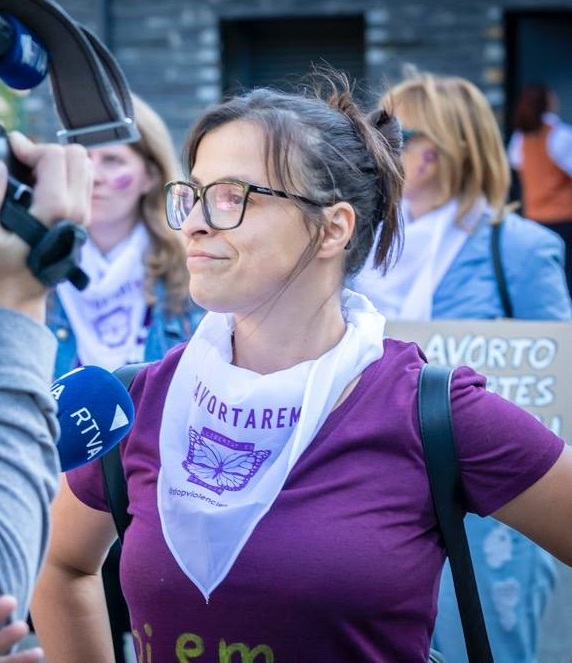
Vanessa Mendoza Cortés

“What [the Andorran authorities] are trying with me is to set a warning example, to silence others who want to fight for this or for other human rights. Our achievement is that, not only have we not kept quiet, but we have continued our work.

We can’t keep quiet. If you keep quiet, you are on the side of the oppression and the oppressor. And we decided a long time ago that we were no longer silent.

We are not the first to fight for rights in Andorra, but we are the first ones to have raised this much international awareness, and that has worked well.  

Through our work, we have seen that women in Andorra now realize that we have no rights, we are not considered equal to men but second-class citizens and cannot decide about our own bodies – creating this understanding that, as women, we are also part of society and we also have rights, is positive: people begin to question the status quo. We want violence to end for all women in the world. And in the world there are also the women who live in Andorra, who live here totally silenced. This has to end and that is what keeps us going.”


Malta: “We know this is right”

In Malta a coalition of pro-choice groups is challenging similar draconian and dangerous abortion laws. Malta is the only EU Member state with a complete ban. Since 2019, the Voice for Choice coalition, currently consisting of 10 different grass roots organizations, has managed to create a national discourse and mobilize the younger generation in particular. They also established a free Family Planning Advisory Service (FPAS) run by trained volunteers who provide free information on reproductive choices to people in Malta.

Prof. Isabel Stabile is a gynaecologist and a member of Doctors for choice in Malta.

We know this is right. We also know it’s inevitable. I am quite sure that the law will change.

Professor Isabel Stabile
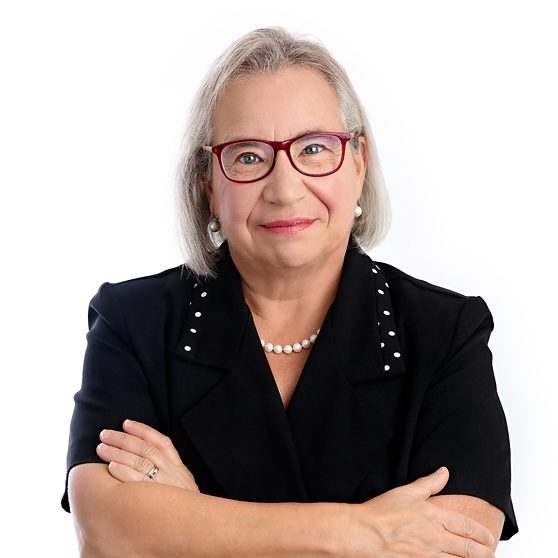
Prof. Isabel Stabile

“The discourse around abortion in the country definitely changed – for one thing we’re talking about abortion. Two years ago we weren’t even doing that; it was completely taboo. And what has helped in that regard is real stories of women, such as the break the taboo page, an online repository set up by a group of young students where women can submit their stories anonymously.

What keeps me going, apart from my patients, is that we know this is right. We also know it’s inevitable. I am quite sure that the law will change. We are at this point, the last bastion in the EU, but it will change because it’s impossible for it not to.

I made a commitment years ago, to do everything in my power to assist people who need help. And that includes safe abortion, because abortion care is healthcare, whatever else some people in Malta might believe.”

Lara Dimitrijevic is founder of the Women’s Rights Foundation (WRF), which is spearheading the work of the coalition:

What keeps me going is the women themselves; I call them sheroes.

Lara Dimitrijevic

Lara Dimitrijevic and Voices for Choice coalition, Malta

“Receiving support on a global level has made a massive difference for us: having organizations all over the world talk about this issue, whether it’s within Europe, Latin America, America, that’s been amazing. As an activist, it’s important to know that somebody is experiencing the same thing, to know and see that you’re not the only one out there, and that we’re all in it together.

It is crucial for people outside of Malta to know how bad the situation is on this tiny island in the middle of the Mediterranean; many people don’t even know it exists. We feel lucky to have that support, wherever it comes from, because it makes you feel that you are bringing the change, that your voice is being heard.

Engaging with young adults and adolescents, seeing them wanting to take lead on this matter, because they feel so strongly about it is, again, for me is another success as a coalition. A recent survey found that especially among the younger generation, people are in favour of decriminalization. And campaigns such as by the Young Progressive Beings are what will keep our coalition growing. Promoting this intergenerational dialogue is a positive trend for the future of our country.”


Poland: challenging backwards steps

In Poland, a Constitutional Court ruling in 2020 restricted access to abortion further, making it illegal even on the grounds of “severe and irreversible fetal defect or incurable illness that threatens the fetus’ life”. This retrogressive step severely undermines people’s right to health by pushing abortions underground or forcing those who can afford it to travel to foreign countries to access abortion care.

The ruling sparked mass protests across the country and internationally, putting a spotlight on organizations such as Abortion Dream team, who have been pushing back against attempts to even further restrict access to abortion since October 2016, around the time when the ruling Law and Justice party backtracked on their attempt to completely ban abortion after millions of Polish women and men participated in the “Black Protests”.

We knew that nothing would change if society’s view on abortion didn’t change.

Abortion Dream Team, Poland
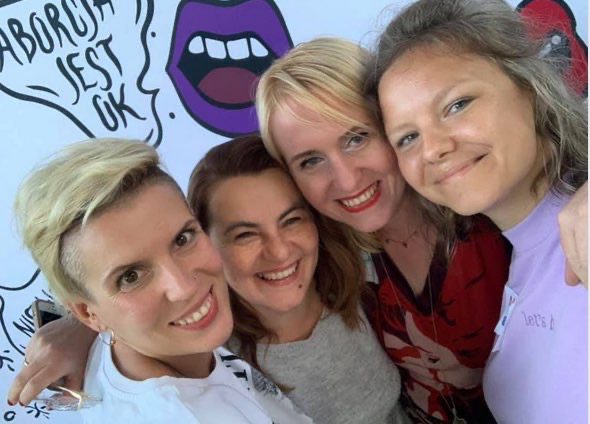
Abortion Dream Team, Poland

“We have been living with the reality of abortion ban, criminalization of abortion and a fetus-oriented debate on abortion for long enough. There was hardly any space for real people and their experiences. Abortion for a long time was a moral issue to talk about, a problem to solve, instead of being treated as a real part of people’s lives. We wanted to change that. We wanted to make people realize that abortion is a common thing, not a political declaration or statement but an experience that many of us have, despite our religions, beliefs, education and political views.

We see that the solidarity, support and empathy we provide to those trying to access abortion services has made a difference. Firstly, we can see the community of those who support others has been growing. Secondly we see how many people, while protesting, are not only expressing their views but also sharing information about possible options for those who need abortions. We think that public opinion on abortion has significantly shifted since 2016, and more people got involved in the movement.

We believe that the work we do is bringing us closer to success. It is going slowly because it is hard to recover from so many years of abortion stigma that has also been present within the feminist and pro-choice movements. We also see hope in the fact that many young queer people have been active in the protests. For them it is obvious that abortion and queer issues are closely connected and driven by the same mechanisms of power and abuse. Education has played a significant role in development of the current views on abortion. Not only lack of sexuality education but also the presence of religion classes in schools, anti-abortion propaganda, and the restrictive legislation caused a common understanding that abortion is bad. Sexuality education is not seen as a chance to teach people about safe abortion options and methods and about abortion being a part of human sexuality.”


The impact of COVID 19

The COVID-19 pandemic further exposed the lack of access to sexual and reproductive rights, which are part of the structural and systemic discrimination that women and girls have long faced. It also made it more difficult for activists to come together and campaign for that access. Nonetheless, their advocacy pushed some European governments, including  France, England, Wales and Scotland, Ireland, Spain, and Germany, to take measures to facilitate easier access to medical abortion, including by extending legal time limits, permitting self-management of medical abortion at home and conducting consultations via telemedicine.

Authoritarian governments and groups opposing reform might be challenging this progress but it is the voices of courageous activists all around the world who are demanding better access to safe abortion, in law and in practice. We have also seen real change in South Korea, Thailand , Argentina, Mexico. It is the community these activists create, united in solidarity and a common vision, that makes change possible.  And with each positive reform momentum is built for further progress in relation to women’s rights around the world.


Unity and strength in Ireland

Jennifer Ryan is an activist and member of Termination for Medical Reasons (TFMR), a campaign and support group seeking to change the law in Ireland to allow terminations in cases of fatal foetal abnormalities. The campaign for abortion law reform in Ireland resulted in 66.4% voting Yes in a referendum in 2018, followed by legislation making abortion on request legal in Ireland. The new law has been a significant win in Ireland – and beyond – but as Jennifer herself says “it isn’t perfect” and the campaign continues.

That unity and strength that you get from each other, it really carries you through. 

Jennifer Ryan
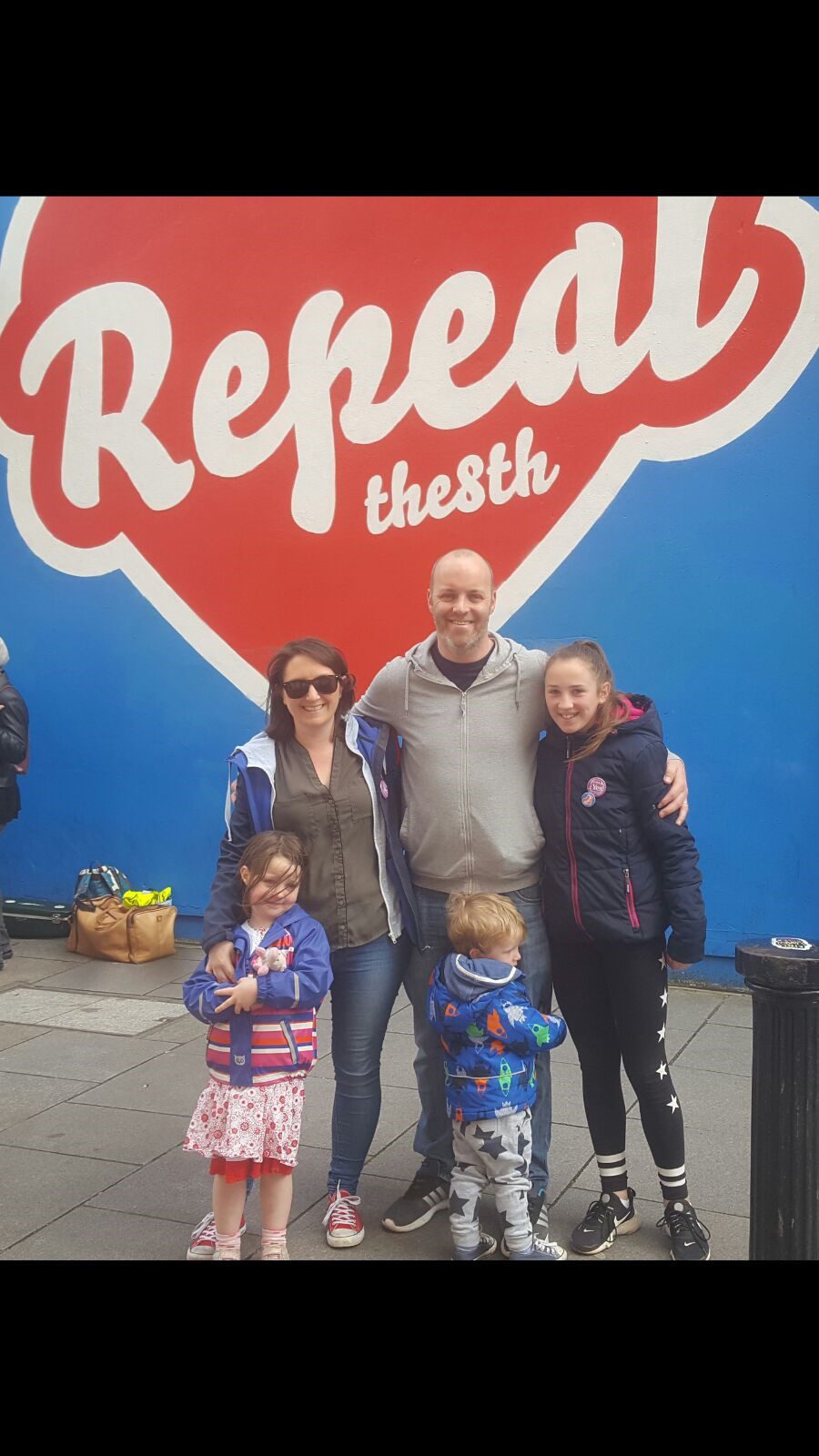
Jennifer Ryan, abortion activist in Ireland

“The Yes vote felt like a justification that what had happened to us, that we had to travel to be able to get health care, was wrong, and that the people had recognized that it was wrong. And that shouldn’t have happened. And we voted to correct that for the women coming. We had been campaigning for what felt like forever like at that point, for me it had been six years of campaigning. And most of the people in the group went straight from our bereavement to campaigning, so we never really got a chance to  grief properly with the anger and upset and annoyance of the legal restrictions.

We were thrilled about the outcome, that there was such a huge margin that we had won by, really we felt amazing. All the heartache, all the media appearances; that meant something and our work had really helped.

In Ireland, the government’s view of abortion, abortion services and the Eighth Amendment was miles behind public opinion. And no one in the government wanted to have anything to do with it, they were too scared, because they thought there would be a really huge divide. But when you look at the votes it actually wasn’t that big. There were plenty of people who were saying we need to look at this, but they weren’t the ones in power. And you need these conversations to start in places of power.

At first, we genuinely felt like we were hitting our heads up a brick wall, like shouting into the void, and no one’s hearing you, but then a few more voices appeared. And then there was a huge amount of people behind and the whole logic of change for abortion rights. Going to events, like the marches that were organized, and demonstrations and things like that really gave you a sense of unity. And you knew, right, we’re not alone in this, we’re not shouting into the void. And when you’re having a really bad day and you feel like no one cares, having other people and groups reach out and say ‘No, we care too, we are still here.’ That unity and strength that you get from each other, it really carries you through. 

And obviously I can say that, looking back in hindsight, knowing that we accomplished some legislation change in Ireland. But for a long time we really didn’t think anything was happening. And then it just kind of spurred on and  there was just this new fire which had grown within people. And as we saw that through, it was amazing.

This is the year for their review of the legislation… we really hope that they will look at it carefully and recognize that it is too restrictive and make that legislation broader, so that more women can be cared for, whether they need medical or surgical abortions…and also look at the timeframe which is still very restrictive, considering the difficult situation women might find themselves in.”


Change is inevitable: San Marino

Progress is continually being made in Europe – most recently a resounding popular vote in favour of reforming a 156-year-old ban of abortion in San Marino. The referendum – held on Sunday 26 September 2021 – was the result of tireless campaigning by women’s rights activists and their allies in San Marino.

 Elena D’Amelio is a member of the feminist group Unione donne sammarinesi.

We cannot take our rights for granted, at any time.

Elena D’Amelio
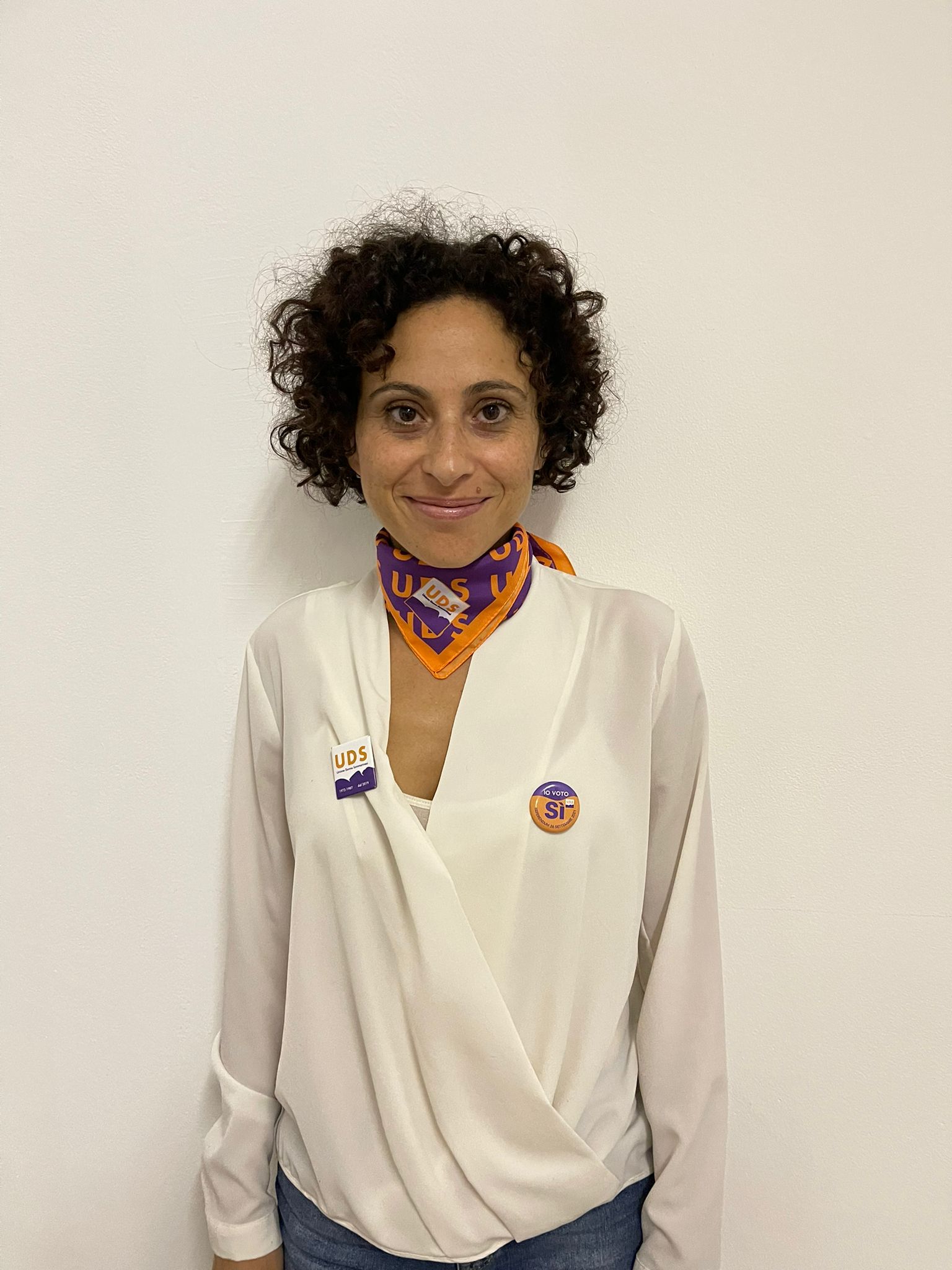
Elena D’Amelio

“All our attempts to modify the legislation through democratic tools were stopped by the governments that have been in power over the years, so we decided to start the referendum. This really was a last resort, but we felt we had to resort to it as the government didn’t have the courage to legislate. The campaign hasn’t been very easy, a referendum often can be very divisive, and it’s been tough, emotionally, for the entire population.

We don’t know how many people in San Marino travel to get abortions outside the state, but we know for sure there are some. And even if there’s only one, it is still wrong, the state needs to protect even that one.”

 As a group, we did everything we could, we met with people, we campaigned, we used social media, we were on TV, at discussions, in the streets.  And we also campaigned against anti-abortion groups that are not only rooted in San Marino but backed by the church and the anti-abortion movement in other countries, if you look at Texas or Nepal. So we felt a bit of like David against a Goliath. But the people confirmed that the anti-abortion groups are a minority in the country, and we would like to thank everyone who supported us throughout the campaign and said yes to change.”

The fight that we’re fighting it might look, and sound like something from the past, but it’s not, because there is a lot of backlash against women’s rights across the world. And I think that keeping an eye on San Marino will also be very important to understand the powers that are active in undermining women’s rights elsewhere. So it’s a small country, it seems like a small fight, but I think is very, very important. And we cannot take our rights for granted, at any time.”


Harmful and discriminatory abortion laws in Liechtenstein, Monaco and the Danish territory of the Faroe Islands are due to be challenged next.

The amazing activists fighting for reforms – and increasing numbers of women courageously speaking out about the harm and pain they have endured as a consequence of being denied their right to safe abortion services – give us hope about the possibilities for change.

Demand the right to safe abortion

Read and share these inspiring stories of the activists fighting for the right to safe abortion across Europe: https://www.amnesty.org/en/?p=138889

The post Change is inevitable: people demand the human right to access safe abortion across Europe appeared first on Amnesty International.

Algeria: Stop using bogus terrorism charges to prosecute peaceful activists and journalists

The Algerian authorities are increasingly resorting to broadly worded terrorism-related charges to prosecute journalists, human rights defenders and political activists and to criminalize two political organizations by labelling them as “terrorists” in a new clampdown on dissent, Amnesty International said today.

In June, the authorities amended the definition of “terrorism” to allow the prosecution of peaceful activists and critical voices. Journalists Hassan Bouras and Mohamed Mouloudj are the latest to be subjected to this alarming new trend. Both face potential prosecution for their online publications criticizing the authorities and for their affiliation with two organisations, the unregistered political opposition group, Rachad, and the group Movement for the Self-determination of the Kabylie (MAK). They have been charged for terrorism-related offences, including under Article 87bis, which carries the death penalty and vaguely defines terrorism as any act “against state security, the integrity of the territory, the stability and normal functioning of state institutions.”

“The Algerian authorities have escalated their tactics to silence peaceful dissent by using terrorism-related charges to demonize and delegitimize peaceful activists and journalists. This is merely a smokescreen to hide their bitter repression of activism,” said Amna Guellali, Amnesty International’s Deputy Director for the Middle East and North Africa.

“Amnesty International calls on the Algerian authorities to immediately release Hassan Bouras and Mohamed Mouloudj and drop these unfounded charges against them. It is abhorrent to see those seeking to exercise their right to freedom of expression prosecuted in such a systematic way.”

In May, the Algerian High Security Council labelled the two organisations as “terrorist” entities. Since then, dozens of individuals have been arrested and prosecuted under terrorism charges for their alleged ties to the two organizations, including human rights defenders and journalists Kaddour Chouicha, Said Boudour and Djamila Loukil along with 12 other civil society and political activists.

In June, the authorities broadened the definition of terrorism in Article 87bis of the Penal Code to include “attempting to gain power or change the system of governance by unconstitutional means.”

On 6 September, police arrested Hassan Bouras in the city of El Bayadh, west of Algeria, and on 12 September, Mohamed Mouloudj was arrested in Algiers. Police seized their phones and computers. Investigative judges from the Sidi M’hamed tribunal ordered their provisional detentions on 12 and 14 September, respectively, pending investigation into charges including “spreading fake news,” “harming national security” and committing “a terrorist act,”– a charge that carries the death penalty if convicted.

In Algiers, a judge tasked with prosecuting electronic crimes interrogated Bouras for his alleged links with Rachad and reviewed his Facebook profile. Amnesty International also reviewed several of his Facebook posts published in recent weeks and found nothing that called for violence or hatred. Instead, Bouras mostly used Facebook to comment on the latest developments in Algeria, including the oxygen crisis due to the surge in Covid-19 cases and the murder of activist Djamel Bensmail on 11 August, who was lynched by a mob during the fires in Kabylie.

According to his wife, police officers arrested Mohamed Mouloudj in front of the headquarters of the Liberté newspaper, where he works in Algiers. Police transferred him to the gendarmerie station in the eastern city of Tizi Ouzou, and held him in pre-charge detention for two days.  The gendarmerie then presented him before the Sidi M’hamed tribunal in Algiers, where a judge ordered his pre-trial detention after reviewing his social media profile. They accused him of alleged ties with MAK and its president Ferhat Mehenni after he requested an interview with him in January 2021, although it did not happen.

Amnesty International reviewed Mouloudj’s most recent posts and found them to be comments about the latest events in the Kabylie region.

“There is nothing to suggest that either Hassan Bouras or Mohamed Mouloudj have done anything wrong other than exercise their right to express themselves freely. It is clear that the authorities are shamefully resorting to counter-terrorism legislation as a tactic to silence dissent”, said Amna Guellali.

Both journalists are now awaiting their trials. Bouras is detained in the prison of Kolea, near Algiers but hundreds of kilometres away from his family. Mouloudj is detained in El Harrach prison in Algiers.

Background

Hassan Bouras is a journalist, a political activist and a member of the Algerian League for the Defense of Human Rights, who has denounced government corruption in his home city El Bayadh. He was previously sentenced in November 2016 to one year in prison, which was reduced to six months on appeal, for denouncing security officers’ bribes, and spent three months in jail.

Mohamed Mouloudj is a journalist who joined national newspaper Liberté, one of the few remaining independent newspapers in Algeria, in 2012. He is the second Liberté journalist to be detained on baseless accusations after Rabah Kareche was arrested in April and sentenced to a year in prison in August, four months of which are suspended, for articles he published about a protest by Tuaregs in Tamanrasset, southern Algeria. 

The post Algeria: Stop using bogus terrorism charges to prosecute peaceful activists and journalists appeared first on Amnesty International.

Maldives: New bill threatens journalistic right to protection of sources

The Maldivian authorities must drop the deeply problematic provision in the Evidence Bill that would compel journalists to reveal their sources, said a joint statement signed by the International Federation of Journalists (IFJ), its affiliate the Maldives Journalist Association (MJA), the Maldives Editors Guild, Transparency Maldives and Amnesty International.

The Evidence Bill, which was sent by the government of Maldives to the People’s Majlis for debate on August 30, includes a provision that empowers courts to demand disclosure of sources of reports produced by journalists, in contravention with the right to freedom of expression.

Article 136 of the proposed Evidence Bill, includes an affirmation of Article 28 of the Constitution, which guarantees press freedom and the protection of sources, however it also adds two exceptions left at the discretion of the court under which courts can compel journalists to reveal their sources.

The two instances specified are; if the court decides that there is no negative impact or significantly less negative impact to the source or others even if the source is revealed and; if the impact of revealing a source does not significantly impact the ability of journalists to find sources of factual information.

The introduction of these provisions will significantly restrict the freedoms enshrined in Article 28 of the Constitution, which states with absolute clarity that “no person shall be compelled to disclose the source of any information that is espoused, disseminated or published by that person”. The obligation to disclose journalistic sources is also in contravention of the right to freedom of expression protected in article 19 of the International Covenant on Civil and Political Rights, to which the Maldives is a party.

The signatories of this joint-statement also note that the two exceptions are not something that can be objectively quantified, especially since courts will not know the identity of the source when determining if the vague criteria outlined in the exceptions fit a particular case.

The vagueness of the criteria set in the exceptions, along with the near-impossibility of reaching an objective and qualitative assessment on an anonymous source, will lead to a significant reversal of press freedom in the Maldives and carries the risk of generating a wider effect of fear and self-censorship.

Without a doubt, the mere enactment of this bill into law, as it is, will have a dramatic impact on the work of journalists, including losing access to important sources, who might refuse to talk to journalists due to fear of being exposed in a court of law.

MJA President, Mohamed Hamdhoon said: “The negative impact this will have on press freedom is quite clear and it will reverse the progress we have made. The Maldives Journalist Association calls on the government and the People’s Majlis to take immediate action to restore confidence in the journalistic right to source protection and withdraw Article 136 (b) of the new Evidence Bill without delay.”

IFJ’s Asia Pacific Director Jane Worthington said : “This is a deeply disturbing development and, if approved, totally undermines all of the media reform progress that has been made in the country. This is against international standards for press freedom and we strongly oppose this attempt to stifle press freedom in the Maldives.”

Maldives Editors Guild President Ahmed Zahir (Hiriga) said: “The government has previously repealed the anti-defamation act and enacted whistleblower protections, which enable people to disclose wrongdoing and abuses anonymously. Now the government seems to be moving to reverse this progress. It is not at all clear what the intentions are here. The Editors Guild calls on the government to withdraw these provisions immediately.”

Transparency Maldives Executive Director Asiath Rilweena said: “Journalists play a key role in defending democracy and human rights. Transparency Maldives calls on the government to immediately withdraw any provision that impedes on press freedom and the journalistic right to source protection.”

Amnesty International’s Asia-Pacific Director Yamini Mishra said: “Forcing journalists to reveal their sources is in contravention of media ethics and the rights and safety of journalists enshrined in international human rights law and standards. The vague language of the proposed provision also leaves room for intimidation and harassment of journalists and their sources, who will be deterred from speaking the truth out of fear of reprisals. We urge the Maldivian authorities to uphold their obligations under international human rights law and do away with this deeply problematic provision that would put dangerous restrictions on journalists by creating a climate of fear and intimidation.”

The post Maldives: New bill threatens journalistic right to protection of sources appeared first on Amnesty International.

Universalizing Human Rights

This image has an empty alt attribute; its file name is Nils_photo-1024x681.jpg
Nils Muižnieks, Director, Amnesty International Europe Regional Office

Human rights education (HRE) is something I keep coming back to over and over again in my career. When I embarked in human rights 27 years ago, my colleagues and I wanted to feel and understand the values we were seeking to promote, which is why we organized practical activities for human rights for ourselves and teachers from the United Nations ABC’s of human rights [1] and Council of Europe materials [2]. Now, as I work for Amnesty International, HRE is an integral part of our country and thematic work and an important tool to reach out to young people, build membership and complement our research and campaigning.

The old story of human rights goes something like this: human rights were born out of the ashes of World War II to prevent war, genocide and dictatorship. Unfortunately, for many this story no longer has any traction, as World War II is considered to be ancient history, something largely irrelevant to contemporary concerns. In many countries, especially in Europe, people no longer fear war, genocide or dictatorship.  More often, they fear economic uncertainty, bad health care, migration, terrorism, and increasingly, climate change. We need a new story that addresses the yearning for social and economic rights, for predictability in an age of rapid change. We need a story that is not so intertwined with World War II.

Many are trying to weave this new story, but it remains an ongoing challenge. My take at the moment is as follows: human rights guarantee that you can be you, they shield the weak from the strong; they are an insurance policy against having the rug pulled out from under us by globalization, bad government or greedy corporations. I encourage you all to try to retell the story of human rights in ways that are relevant in your local context.  

We need to retell the story and link it to broader regional and global concerns. In other words, we need to localize, nationalize, regionalize and universalize human rights. Regarding localization, nobody said it better than Eleanor Roosevelt: 

Where, after all, do universal human rights begin? In small places, close to home – so close and so small that they cannot be seen on any maps of the world. Yet they are the world of the individual person; the neighbourhood he lives in; the school or college he attends; the factory, farm or office where he works. Such are the places where every man, woman and child seeks equal justice, equal opportunity, equal dignity without discrimination. Unless these rights have meaning there, they have little meaning anywhere. Without concerned citizen action to uphold them close to home, we shall look in vain for progress in the larger world.[3]

I have sought to localize human rights at various points in my career. I remember organizing a human rights seminar with educators in a small village in Latvia. We talked about who were the most vulnerable – lone pensioners, women and kids subject to domestic violence by drunk fathers, persons with disabilities, but we also touched on regional and global concerns. I remember when I was Council of Europe Commissioner for Human Rights from 2012 to 2018. Every week I travelled to one of the 47 member states. At a certain point, I remember talking to my team, and asking “what about human rights in Strasbourg?” So we visited a migrant detention centre, met with local NGOs, then met with the local government prefect. We visited Roma squats on the outskirts of town and a municipal facility. My point is that it is important to look around you, not just to faraway places.

I have been most comfortable not at the local, national or global level, but at the regional level. My work as member and chair of the European Commission against Racism and Intolerance, as Commissioner, and as director of the Europe Regional Office at Amnesty all attest to this. I get a bit bored working only in one country, I am interested in regional trends and believe that regional human rights mechanisms can be put to good work. Moreover, the regional level is manageable in terms of knowledge and understanding the landscape, whereas I find the global level a bit daunting.  

However, we in Europe have a special responsibility globally – because of the history of colonialism, because of our wealth, because of our interconnectedness with the rest of the world through climate change, migration and other processes. Colleagues in Amnesty push me to look beyond Europe almost every day. When I joined Amnesty I was told by colleagues from the global South that one of my tasks was to continue the decolonization of the organization with regard to North-South funding, decision-making, etc. But Europe’s externalization of migration to neighbouring countries and vaccine nationalism also require us to look to the effects of our actions beyond the continent. Our past involvement in Afghanistan implicates us heavily in the current woes of this country and its people.

When trying to work globally, however, we face many risks, including that of facilitating homogenization and replicating old patterns of paternalism. In a book on Amnesty’s history, I found a harsh quote attributed to an Indian human rights activist who told a senior Amnesty staffer:

You, Amnesty, you are the McDonalds of human rights. You are the face of globalization in human rights terms. You come in here, you build your prefabricated restaurants, you displace local cuisine and local activism.[4]

While being sensitive to the risks, we need to universalize human rights to cover all people, because there are many who are ignored by the mainstream. I encourage you to ask yourself who lacks legitimacy in your space? Who is it socially acceptable to discriminate against?  Is it indigenous people? Persons with intellectual and psycho-social disabilities? Ethnic and/or religious minorities? LGBTI persons?

In the European space it is first and foremost migrants – otherwise the mainstream would never tolerate the mass scale and violent nature of pushbacks all around the European Union’s external border. It is also Muslims, especially Muslim women, who are the only religious minority that has been targeted numerous times by specific legislation in a number of European countries. And in many parts of Europe it is Roma, Europe’s most marginalized, excluded minority.  

We need to keep retelling the story of human rights. We need to move back and forth between local, regional and global levels. We need to actively search for those who are invisible, those whom it is socially acceptable to ostracize and to discriminate against. And we need to fight back.  HRE is an excellent weapon in our arsenal.


[1] See, e.g., OHCHR, ABC: Teaching Human Rights – Practical Activities for primary and secondary schools (United Nations: New York and Geneva, 2004).

[2] See, e.g., Rui Gomes, ed., Compass: Manual for Human Rights Education with Young People (Council of Europe: Strasbourg, 2012).

[3] https://unfoundation.org/blog/post/10-inspiring-eleanor-roosevelt-quotes/.

[4] Stephen Hopgood, Keepers of the Flame: Understanding Amnesty International (Cornell University Press: Ithaca and London, 2006), pp. 174-5.

The post Universalizing Human Rights appeared first on Amnesty International.

Iran: Stop imminent execution of Farhad Salehi Jabehdar

Responding to the news that Iranian authorities have transferred Farhad Salehi Jabehdar, a 30-year-old man sentenced to death for the rape of a child, to solitary confinement in preparation for his execution on 29 September at dawn, Diana Eltahawy, Middle East and North Africa Deputy Director at Amnesty International, said: 

“The Iranian authorities must immediately halt the planned execution of Farhad Salehi Jabehdar. Regardless of the crime, the death penalty is the ultimate cruel inhuman and degrading punishment and its use cannot be justified in any circumstance. Under international law, states that retain the death penalty must restrict its use to the most serious crimes involving intentional killings. Iran, the world’s second most prolific executioner, continues to cruelly violate the right to life with little regard to its obligations under international law.    

“In addressing horrendous sexual and gender-based violence, Iran’s authorities should improve access to justice and reparations for victims and survivors, including by adopting and implementing adequate prevention measures and protection mechanisms, and pursuing effective criminal investigations instead of perpetuating the cycle of violence by resorting to yet another execution. 

“There is no credible evidence that the death penalty has a greater deterrence effect on crimes than prison terms, and justice is never served by taking a life. We urge the Iranian authorities to halt the execution of Farhad Salehi Jabehdar, and to set a moratorium on the death penalty pending its complete abolition.” 

Background 

Farhad Salehi Jabehdar was arrested on 10 June 2018 over the sexual assault of a 10-year-old child in 2017. He was convicted of “forced male-male intercourse” (lavat-e be-onf) and sentenced to death by Criminal Court One of Alborz Province on 12 March 2019. The conviction and sentence were upheld by the Supreme Court. 

The father of the child formally requested that the authorities not impose the death penalty on Farhad Salehi Jabehdar in November 2019. His lawyer appealed to President Ebrahim Raisi in his former capacity as head of the judiciary to stop the execution, and order a review of the case, but Ebrahim Raisi did not accept the request. Multiple requests for judicial review to the Supreme Court have also been rejected. A number of religious opinions from several high-profile Shia clerics have also been submitted in support of legal efforts to halt his execution. His execution, which had previously been scheduled for April 2021, was postponed following domestic and international interventions.  

There is no credible evidence that the death penalty has a greater deterrence effect on crimes than prison terms, and justice is never served by taking a life.

Diana Eltahawy, Middle East and North Africa Deputy Director

In 2020, Iran carried out 246 recorded executions, making it the world’s second top executioner. Executions were carried out following convictions and death sentences in grossly unfair trials marred by claims of torture-tainted “confessions”, as well as following convictions for crimes that do not meet the threshold of most serious crimes involving intentional killing.  

Amnesty International opposes the death penalty in all cases without exception, regardless of the nature or circumstances of the crime; guilt, innocence or other characteristics of the individual; or the method used by the state to carry out the execution. 

The post Iran: Stop imminent execution of Farhad Salehi Jabehdar appeared first on Amnesty International.