Stories of hope and humanity to end the year

Despite the stark challenges currently facing humanity, Amnesty International continues to witness how people from all over the world are demonstrating the importance of activism and the life-changing power of solidarity.

From holding governments to account and pursuing justice for survivors of gender-based violence, to freeing human rights defenders, here are some inspiring stories of hope and humanity from the past six months to take you into the new year.

July

Global

Two landmark Advisory Opinions this year significantly contributed to clarifying the states’ human rights obligations in the face of the climate emergency, bolstering the fight for climate justice and accountability. In July, the International Court of Justice’s (ICJ) made clear that the full enjoyment of human rights cannot be ensured without protection of the climate system and other parts of the environment. The world’s highest court stressed that states have a duty to act now, including to regulate the activities of private actors, and cooperate to protect current and future generations and ecosystems from the worsening impacts of human induced climate change. Earlier in the month, the Inter-American Court of Human Rights issued its Advisory Opinion setting transnational standards that could also shape legal jurisprudence in courts across the world.

Togo

Following calls from Amnesty International and other civil society organizations, an investigation was launched on 6 July into the deaths of five protesters recovered from rivers in the capital, Lomé. Authorities had initially refused to provide information about the deaths of the five individuals who had participated in protests that were violently repressed by security forces in the days prior, claiming that they had drowned.

Argentina

The perpetrator of a targeted arson attack that killed three lesbian women in 2024 was finally charged with aggravated homicide, motivated by homophobia.

Amnesty International is supporting Sofia, the only survivor of the attack, in her pursuit of justice.

A couple dance together during a march.

On May 6, 2024, in Barracas, Buenos Aires, a man threw a firebomb into the room of two lesbian couples. Andrea, Pamela, and Roxana were killed in the attack, while Sofía survived.

Senegal

Following calls from Amnesty International, the Minister of Justice requested the General Prosecutor open an investigation into “political violence” that had taken place in Senegal from 2021 to 2024. Over that period, Amnesty International conducted research and denounced the killings of at least 65 people during demonstrations and the arbitrary detention of hundreds of people ahead of the 2024 presidential elections.

Slovenia

On 31 July, Slovenia banned all arms trade with Israel, including imports, exports, and transit, becoming the first EU member state to do so.

A week later, on 6 August, the Slovenian government also banned the import of goods from Israel that originate from illegal Israeli settlements in the OPT.

Amnesty International Slovenia, together with other non-governmental organizations and support from civil society, had long urged the government to adopt these measures.

August

Israel and the Occupied Palestinian Territory

On 24 July, an Israeli court lifted the travel ban on Ahmad Khalefa, a Palestinian citizen of Israel, allowing him to accept an invitation from Amnesty International to travel to Italy with his family. Amnesty International organized the trip for Ahmad, securing an invitation letter from its Italian office which was used in court by his lawyers at the Adalah Center  to challenge the travel ban, which significantly strengthened his case.
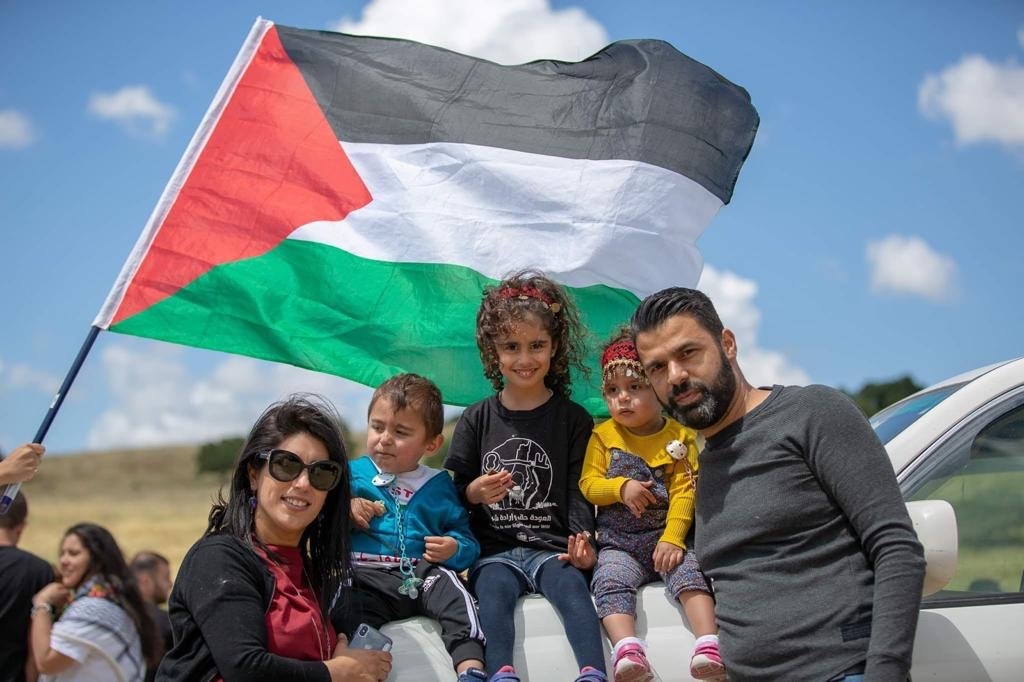
A family of four sit on a white car, with a Palestine flag blowing in the background.

Ahmad Khalefa, a Palestinian citizen of Israel, is a lawyer, human rights defender, community organiser and newly-elected city council member. He is pictured here with his family.

The ban was imposed on Ahmad, as part of the conditions of his release in February 2024, after he was detained for almost four months for chanting slogans during a protest against the Israeli war on the Gaza Strip.  

After returning from Italy, Ahmad thanked Amnesty International: “This trip meant the world to me and my family – we truly appreciate it. It was incredibly meaningful to feel the care and effort that went into organizing this trip and it gave us the opportunity to breathe and enjoy quality time together.”

Syria

In 2023, Syrian asylum seeker Ahmad Aabo had his temporary protection revoked while he was living in Türkiye, due to an HIV diagnosis. On 26 August 2025, he had his status restored following calls from Amnesty International. His social security was reactivated, restoring his access to free healthcare.

Amnesty’s urgent action appeal helped me breathe again. I want to send my sincere gratitude to everyone.

Syrian asylum seeker Ahmad Aabo

“The urgent action appeal helped me breathe again. I want to send my sincere gratitude to everyone. Simply because of my HIV+ status, I endured persecution, I was detained. I feared being detained every time I saw a police officer,” said Ahmad Aabo.

“Now I have my ID card again, I have regained my rights. This is the impact of the urgent action. Thanking you is not enough. I wish that no one goes through what I have been through. People living with HIV should be supported. They should not endure torture. I thank all those who signed appeals for me, all those who stood by me from the bottom of my heart.”

Türkiye

Amnesty International launched an urgent action that helped secure the release of three activists – Hivda Selen, Sinem Çelebi, and Doğan Nur – who were arbitrarily detained on 29 June, the day of the Istanbul LGBTI+ Pride march, and remanded in pre-trial detention on baseless charges.

Doğan Nur was released on 30 July after his lawyer’s appeal. On 8 August, Sinem Çelebi and Hivda Selen were released at their first hearing in a trial involving 53 people.

“The ever-expanding patterns of repression and intimidation, coupled with detentions, have become a form of punishment in Türkiye. In such a climate, it is more vital than ever that we build social solidarity and speak out against the increasing unlawfulness,” said Doğan Nur.

“With the urgent action that Amnesty International launched on our behalf, many people have heard about it and joined the quest for justice to ensure this unlawful detention ends. I would like to thank Amnesty International and its supporters for their contribution to this process. Solidarity keeps us going!’’

September

Egypt

Alaa Abdel Fattah is an Egyptian-British activist, writer, and software developer. He rose to prominence during the 2011 Egyptian revolution and has been repeatedly targeted by Egyptian authorities for his peaceful activism and criticism of the government. His most recent arrest was on 29 September 2019, amidst a widespread crackdown on protests. In December 2021, he was sentenced to five years in prison by an Emergency State Security Court on spurious charges of “spreading false news,” related to a social media post. He was due to be released in 2027, as the Egyptian authorities decided not to deduct his pretrial detention period from the prison sentence.
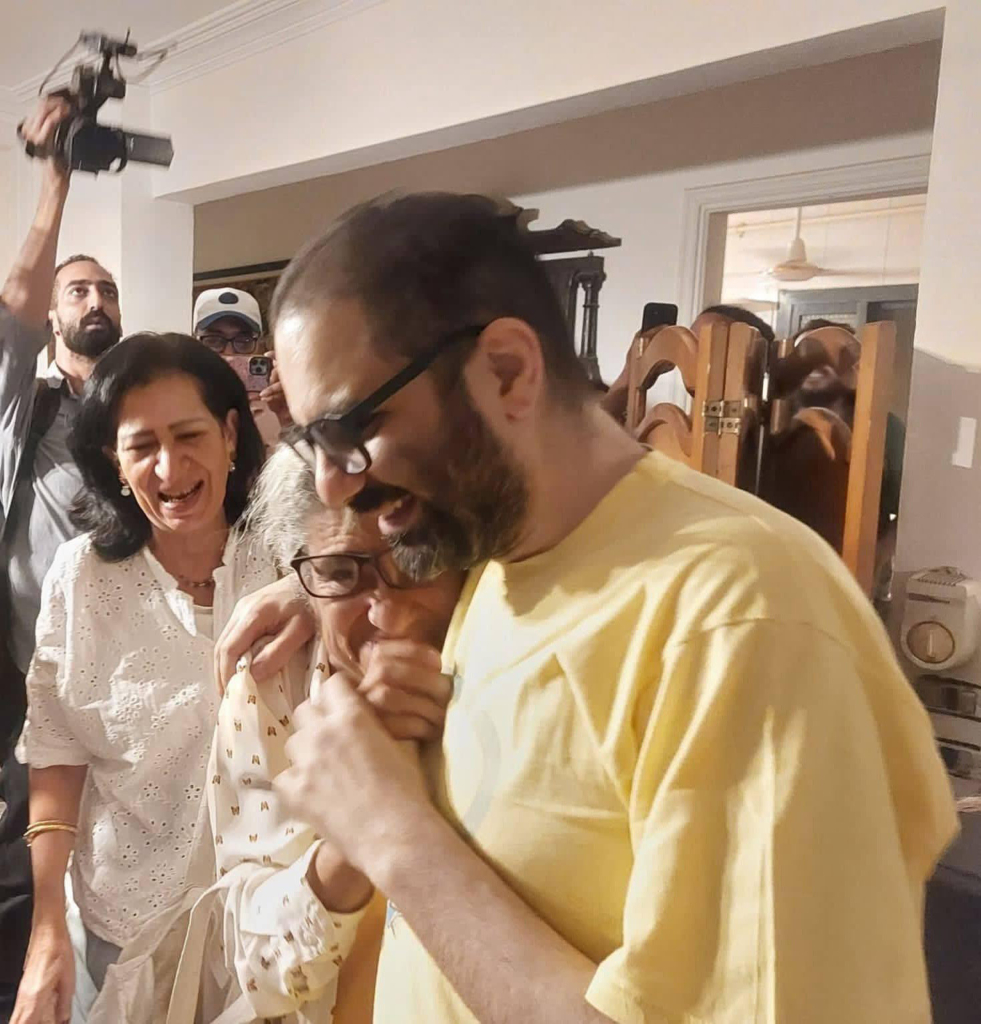
Alaa Abdel Fattah wears a yellow as he holds his elderly mother, who is nestled into his chest.

Alaa Abdel Fattah hugging his mother Laila Soueif the day he was released from prison. Prisoner of conscience Alaa Abdel Fattah granted presidential pardon after six years of unjust imprisonment.

Amnesty International and Amnesty UK have extensively campaigned for his release for years. He was finally granted presidential pardon and released in September 2025. His release would have never happened without the tireless campaigning and pressure by his mother Laila Souif and his sisters Mona and Sanaa Saif.

Türkiye

Tens of thousands of appeals sent by Amnesty activists helped secure the release from pre-trial detention of human rights defender and LGBTI+ activist Enes Hocaoğulları, who was imprisoned after he criticized the crackdown on mass protests following the detention and imprisonment of Istanbul Mayor Ekrem İmamoğlu during a speech at the Council of Europe in March 2025.

When he returned to Türkiye on 5 August, he was taken into police custody and remanded to pre-trial detention the same day. On 8 September, he was released at the first hearing, after Amnesty International issued an urgent action on his behalf. His next hearing is scheduled for 23 February 2026.

A person with slicked back hair, wearing a grey suit and black poloneck, looks to camera

Tens of thousands of appeals sent by Amnesty activists helped secure the release of human rights defender and LGBTI+ activist Enes Hocaoğulları, who was imprisoned after he criticized the crackdown on mass protests following the detention and imprisonment of Istanbul Mayor Ekrem İmamoğlu during a speech at the Council of Europe in March 2025.

Following his release, Enes Hocaoğulları said:

“Thanks to a successful campaign, I was released from pre-trial detention at my initial hearing. However, the fight is not over for my case, nor for freedom of expression more broadly. But it goes without saying that I’d be in a much different place without to the success of these campaigns – especially the one co-ordinated and operated by Amnesty International.

“I’m one of the lucky human rights defenders. There are so many that have been facing and will continue to face reprisals for their activism – that receive little to no support. 

LGBTI+ activist Enes Hocaoğulları

“I’m one of the lucky human rights defenders. There are so many that have been facing and will continue to face reprisals for their activism – that receive little to no support. To remind you of the importance of the protection of human rights defenders and the effectiveness of such campaigns, I leave you these words from a Roman poet: ‘Who guards the guards?’ I ask you: ‘Who defends the rights of the human rights defenders?’”

Burkina Faso

Burkina Faso ’s Transitional Legislative Assembly passed a law on 1 September  setting 18 as the minimum age for marriage for boys and girls, establishing consent  as the basis of marriage.

A smiling man, stands in a sunfilled field.

Médard Ouédraogo , 50, farmer, is a member of an alert committee set up by Amnesty International and member of a partner association in the Passoré province. Amnesty International, as a leading member of the National Coalition Against Child Marriage proposed amendments to the draft bill on family and persons’ code to increase the legal age of marriage to 18 years for both boys and girls and lobbied for the draft bill to be passed into law.

Amnesty International has long called for an end to gender-based violence, including forced marriage, through its human rights education programme. As a leading member of the National Coalition Against Child Marriage, Amnesty International also proposed amendments to the draft bill to increase the legal age of marriage to 18 years for both boys and girls and lobbied for the draft bill to be passed into law.

October

Afghanistan

Following months of advocacy by the Sports & Rights Alliance and Amnesty International, FIFA finally announced that it would establish and fund an Afghan women’s refugee team.

Forced to flee Afghanistan after the Taliban came to power, players of the Afghan women's national football team practice in a suburban stadium of Lisbon in 2021

Players of Afghanistan national women football team attend to a training session at Odivelas, outskirts of Lisbon.

The Afghanistan women’s football team, which was first formed in 2007, had disbanded after the Taliban took over in 2021, with players forced to evacuate the country for fear of reprisals. Since leaving Afghanistan, the team had continued to campaign for their right to play and to represent their country.

In October, FIFA organized a tournament in Morocco so the team could play its first international matches against Chad, Tunisia and Libya. The team were renamed Afghan Women United.

According to Khalida Popal, founder and former captain of the team, “We have been fighting for so long, it’s kind of tiring, it’s too much. But at the end of the day, when you see the players returning back on the pitch, you get this feeling that it’s all worth it. It was all worth it to see this young generation of women representing our country. It was quite emotional for me.”

November

Greece

Following an Amnesty International campaign, the head of the Greek coastguard, along with three executives, were charged for their role in the Pylos shipwreck, in which over 600 people died. This followed the charges brought against 17 officers in May.

Eswatini

Former Eswatini Member of Parliament (MP) Mthandeni Dube and an Amnesty prisoner of conscience was released from prison in November, after more than three years behind bars on politically motivated charges. These charges were linked to his calls for democratic reform. His release comes in a context of severe repression. Although it is not the end of the struggle for justice, it is an important and hard-won step forward. 

Argentina

Progress was made in the fight for justice for Sofía Fernández, a 39-year-old trans woman who died in police custody in April 2023, in Pilar, Buenos Aires province, two days after being arrested by local police. In July, nine of the ten officers charged in the case were initially dismissed; however, in November, the Court of Appeals ordered all ten officers to stand trial.
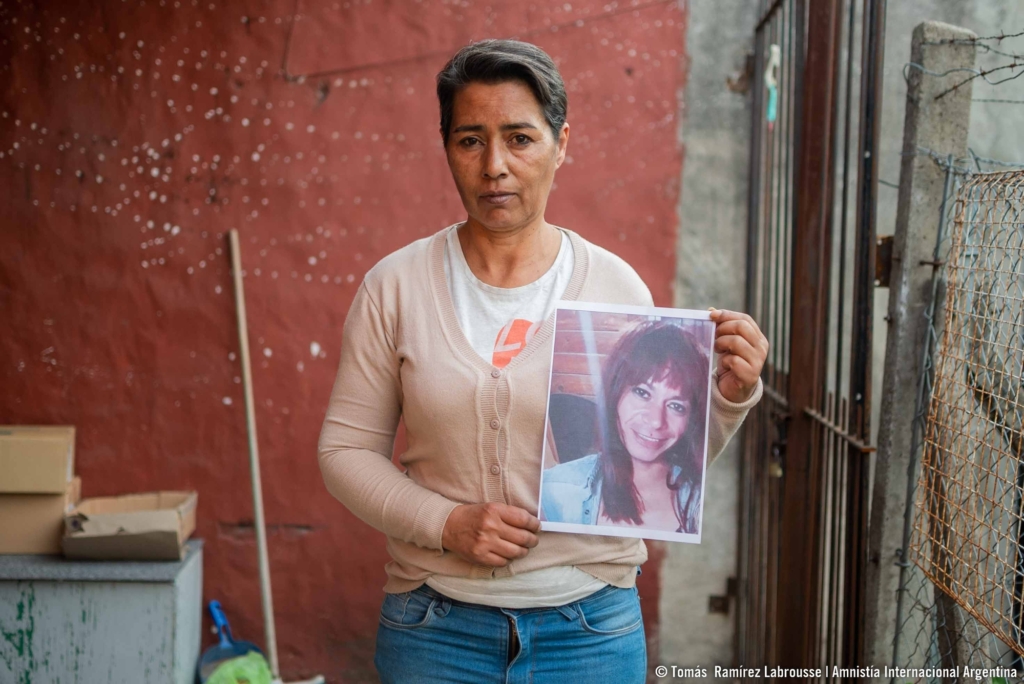
A woman with short salt and pepper hair, holds up a picture of Sofia Fernandez.

Progress has been made in the fight for justice for Sofía Fernández, a 39-year-old trans woman who died in police custody in April 2023. Amnesty International has supported Sofía’s family, including her sister Mabel (pictured above), for over two years, providing financial assistance for expert reports and legal representation.

Three of them will face charges of aggravated homicide motivated by transphobia and committed by police officers.

Amnesty International has supported Sofía’s family for over two years, providing financial assistance for expert reports and legal representation.

Libya

Following investigations into the wave of killings, arbitrary detentions, and enforced disappearances of Tebu men in south-east Libya, Amnesty International called on the Libyan Public Prosecutor to open an impartial, transparent and thorough investigation into the violations documented by the organisation against Tebu men. Two weeks later, the Public Prosector posted on Facebook announcing either opening investigations or referring defendants to trial in connection with the killings of Tebu men. Around the same time the authorities also released at least 12 men arrested during the wave documented by Amnesty International.

Finland

In November, the Finnish government adopted its fourth National Action Plan on Fundamental and Human Rights. The aim of the action plan is to strengthen the core structures of the rule of law and promote the realization of human rights in Finland. This comes after ongoing advocacy from Amnesty International Finland.

Malaysia

In a landmark case, the wife of a Malaysian pastor who was forcibly disappeared eight years ago won a lawsuit against the police and the government.

Raymond Koh was pulled out of his car by masked men in a suburb of the capital Kuala Lumpur in 2017. His whereabouts remain unknown and his family has long maintained he was taken by police. Amnesty has called for accountability in the case for years, in support of families and lawyers pushing for justice

However, in November the high court ruled he had been forcibly disappeared, with the judge holding the government and police responsible for his abduction, in Malaysia’s first such judgement.

Guinea

Workers linked to the state-owned Guinean Oil Palm and Rubber Tree Company (Société Guinéenne de Palmiers à huile et d’Hévéas – Soguipah) were awarded a fixed and structured payment schedule, thanks to calls from Amnesty International.

In October, Amnesty International launched a report revealing how workers’ rights were being abused in plantations linked to Soguipah. The report highlighted how family planters linked to Soguipah were often paid with delay and often below market prices.

Americas

The commitment to develop a Just Transition mechanism was the most prominent win at the annual UN Climate Summit COP30 held in Brazil this year. A hard-won victory from civil society pressure and organizations including Amnesty International, once established, it will streamline and coordinate ongoing and future efforts to protect the rights of workers, other individuals and communities affected by fossil fuel phase out. The new Gender Action Plan also included important protections for women environmental defenders.
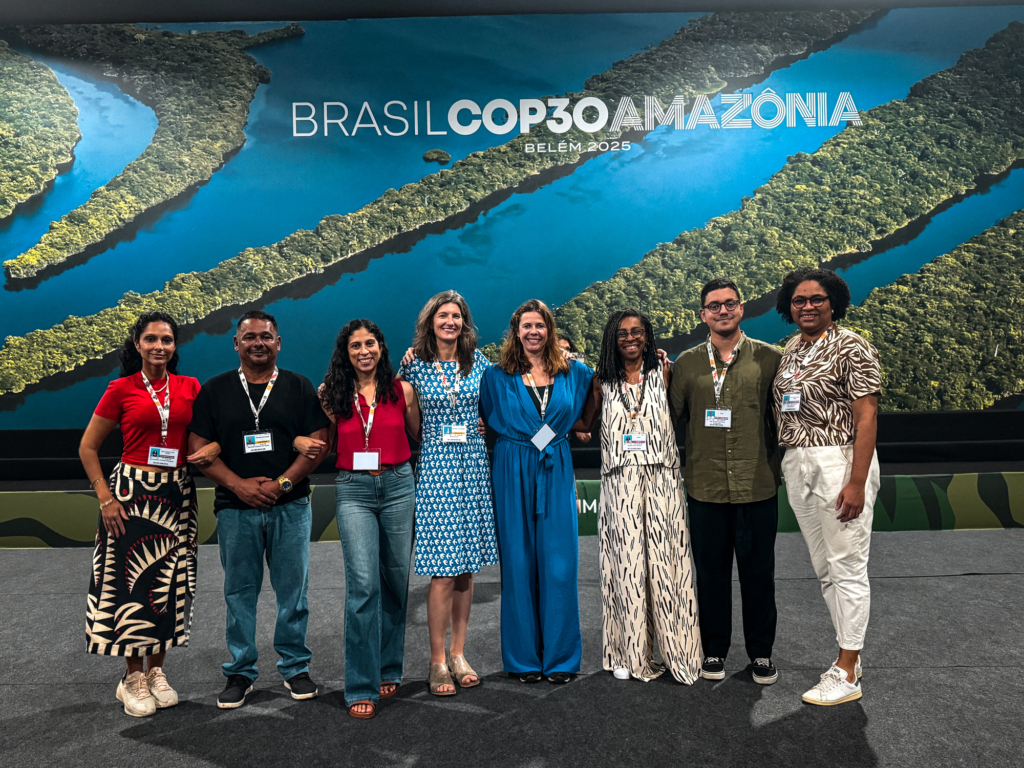
A group of colourfully dressed people from Amnesty International stand against a backdrop of waterways. The sign reads Brasil COP30 Amazonia.

Amnesty International delegates at COP30 in Belem, Brazil. 12 November, 2025. Amnesty Launched the report; Extraction Extinction: Why the lifecycle of fossil fuels threatens life, nature, and human rights at the UN Climate Conference.

Tunisia

After 18 months of unjust imprisonment, Tunisian lawyer and media commentator Sonia Dahmani was conditionally released.

Amnesty has been campaigning for Sonia’s release since she was arrested and sentenced on bogus charges of “spreading false news” in 2024. The organization has issued urgent actions on her behalf and Sonia features in this year’s Write for Rights campaign.
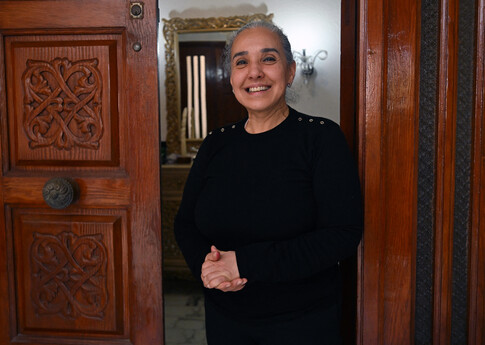
A smiling lady stands between two wooden doors, hands clasped.

Tunisian lawyer and writer Sonia Dahmani poses outside her home in Tunis on November 27, 2025 after her conditional release from prison.

This outcome is a tangible demonstration that persistent pressure and solidarity can make a real difference. We will continue to support Sonia in Write for Rights, demanding her full freedom by calling on the Tunisian authorities to quash her unjust sentences and drop all other charges against her.

December

Global

This year, Write for Rights is calling on millions of people to come together to change the lives of individuals whose rights have been violated around the world. By taking just a few minutes to write a letter, post on social media or sign a petition, anyone can help change the world and even save a life. 
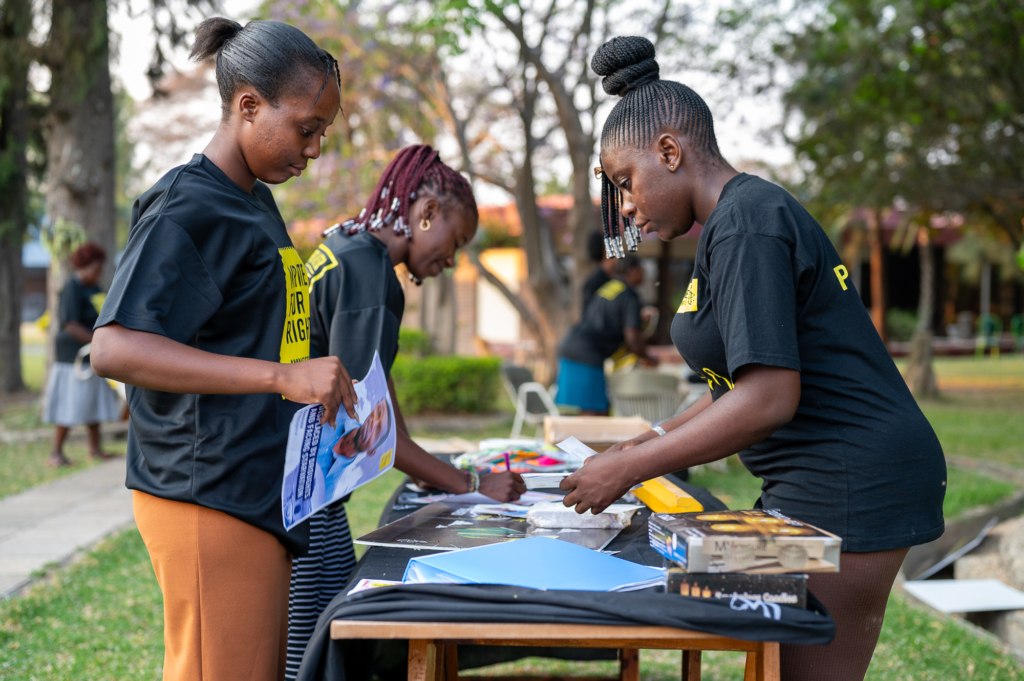
Three women, wearing black t shirts emblazoned with Write for Rights, stand at table, sorting campaign materials.

On 16 September 2025, Amnesty International Zimbabwe held a Write for Rights event in Gweru, Zimbabwe. The event was attended by Amnesty International Zimbabwe’s Climate Justice Champions. These Champions are community activists who are driving climate justice initiatives within their communities. A total of 189 letters and petitions were signed during the event.

“Together we will prove that, even in the most adverse of circumstances, humanity can, must and will win out,” said Amnesty International’s Secretary General, Agnes Callamard. 

You can also read Amnesty’s human rights wins from January to June 2025.  

The post Stories of hope and humanity to end the year appeared first on Amnesty International.
Angola: Authorities must provide urgent medical care to detained UNTRA leader

Responding to news that the leader of the National Union for Total Revolution of Angola (UNTRA) Serrote José de Oliveria – whose health has been deteriorating since being held in arbitrary detention since 28 July – has begun a hunger strike to protest his unlawful detention, Amnesty International’s Deputy-Director for East and Southern Africa, Flavia Mwangovya, said:

“Reports that Serrote José de Oliveria has gone on hunger strike and that his health is deteriorating is extremely concerning. Angolan authorities must allow him immediate access to all necessary medical care, and unless he is charged with a recognizable criminal offence, they must immediately release him.

Angolan authorities must allow Serrote José de Oliveria immediate access to all necessary medical care, and unless he is charged with a recognizable criminal offence, they must immediately release him.

Flavia Mwangovya,
Amnesty International’s Deputy-Director for East and Southern Africa

“His continued arbitrary detention is an ongoing injustice that points to the Angolan authorities’ growing intolerance towards those with dissenting voices.”

Background

On 28 July, officers believed to be linked to the Angolan Criminal Investigation Services, arrested Serrote José de Oliveira while he was filming a live video with fellow activists during the first day of a protest against rising fuel prices in Luanda, Angola’s capital. Serrote José de Oliveira was shot in the left leg during the incident. He has been held in arbitrary detention at Calomboloca Prison ever since.   

The post Angola: Authorities must provide urgent medical care to detained UNTRA leader appeared first on Amnesty International.

Myanmar: Deadly military air strike on hospital shows vicious disregard for right to life

Responding to reports of a Myanmar military air strike on a hospital in Rakhine State on Wednesday night, international Human Rights Day, Amnesty International’s Myanmar Researcher Joe Freeman said:

“Nowhere and no one is safe from the violence of the Myanmar military, which is widening its repression ahead of an election later this month which has been marked by human rights abuses. The latest attack on a hospital must be investigated as a violation of humanitarian law.

“Bombing a hospital on a global day dedicated to human rights shows the utter disregard that the Myanmar military has for civilians. Harrowing images of the aftermath of this attack, shared with Amnesty, indicate this was yet another air strike.

“The prevalence of such strikes by the Myanmar military in 2025, which have reached record levels this year, underline the urgent need to suspend jet fuel, weapons and dual-goods shipments to the country.

“Almost five years after the military coup, the international community must take concerted, targeted and effective action to hold perpetrators to account in Myanmar, including the much-needed and long-overdue referral by the UN Security Council of the full situation in all of Myanmar to the International Criminal Court.”

Background

The Myanmar military bombed the Mrauk-U General Hospital in Rakhine State on the evening of 10 December, according to multiple media reports, which suggest that two bombs were dropped.

According to information from the political wing of the Arakan Army, a resistance group that took Mrauk-U from Myanmar military control in 2024, 33 civilians were killed, including a baby. About 80 people were injured.

Photos and video of the damage to the hospital as well as the corpses of the victims were shared with Amnesty International. Footage of the damage, which was verified by Amnesty’s Evidence Lab, is consistent with an air strike.

Hospitals are protected under international humanitarian law and can only be targeted if being used for committing acts harmful to the enemy outside of their humanitarian functions.

Since a ceasefire broke down in 2023, the Arakan Army has taken control of 14 out of 17 townships in Rakhine State, where members of the Rohingya minority have been trapped in the conflict.

The post Myanmar: Deadly military air strike on hospital shows vicious disregard for right to life appeared first on Amnesty International.

Sustainable peace requires international justice for all victims of all crimes in Israel and the OPT

States must demonstrate their commitment to international justice to ensure genuine accountability for victims of war crimes, crimes against humanity and genocide for all those in the Occupied Palestinian Territory (OPT) and in Israel, said Amnesty International following the recent conclusion of the International Criminal Court’s (ICC) Assembly of States Parties in the Hague.

“The international justice system is under attack and faces existential threats. There is no greater litmus test for this than in Israel and the Occupied Palestinian Territory. States must demonstrate their commitment to international justice by supporting institutions such as the ICC and protecting their ability to pursue accountability,” said Agnès Callamard, Amnesty International’s Secretary General. 

Amnesty International has extensively documented how Israel has committed and is continuing to commit genocide against Palestinians in Gaza, even despite the ceasefire, and how its ongoing system of apartheid amounts to crimes against humanity. Today the organization has also published in-depth research documenting war crimes and crimes against humanity committed by Hamas and other armed groups during and after the attacks launched on 7 October 2023. 

“World leaders hailed last month’s UN Security Council resolution setting out a plan for Gaza as a blueprint for sustainable peace. But decades of international crimes cannot be swept under the carpet with deals that ignore accountability and entrench injustice. Truth, justice and reparations are the bedrocks of lasting peace,” said Agnès Callamard.

“Amnesty calls on all those in Israel and the Occupied Palestinian Territory, as well the international community concerned about the evident flaws of the UN Security Council Resolution, to develop and commit to a roadmap for justice and reparations. This roadmap should aim to end Israel’s genocide, its system of apartheid and unlawful occupation of Palestinian territory, while also addressing crimes under international law by Hamas and other Palestinian armed groups.”

To guarantee genuine, effective and meaningful justice and non-recurrence, Amnesty International recommends that the roadmap be predicated on the complementarity of a variety of justice institutions and mechanisms.

These include ICC investigations into Israeli and Palestinian crimes, which must take place free from any obstruction and with access to investigators and other justice actors. Such investigations should consider Israel’s genocide and crimes against humanity of apartheid, as well as crimes committed by Palestinian armed groups before the 7 October 2023 attacks, during the attacks and since, with a view to ensuring that all individuals, including – where they are still alive – those most responsible, are brought to justice.

Victims of atrocities in Israel and the Occupied Palestinian Territory deserve genuine justice. This does not just mean seeing perpetrators prosecuted and convicted but ensuring adequate and effective remedy and delivering guarantees of non-repetition

Agnès Callamard, Secretary General

The roadmap should commit states to support and fully cooperate with bodies such as the UN Commission of Inquiry and the ICC. They should enforce ICC arrest warrants and take all necessary steps to ensure the lifting of sanctions and restrictions imposed on Palestinian human rights organizations, which for decades have been documenting violations of international law and representing victims regardless.  

In parallel to international mechanisms, states can chart a new course for peace rooted in justice by exercising domestic, universal or other forms of extraterritorial criminal jurisdiction for international crimes committed in the Occupied Palestinian Territory and Israel.  

“Victims of atrocities in Israel and the Occupied Palestinian Territory deserve genuine justice. This does not just mean seeing perpetrators prosecuted and convicted but ensuring adequate and effective remedy and delivering guarantees of non-repetition. There is no escaping the reality that these are crucial steps towards lasting peace and security,” said Agnès Callamard.

Israel’s ongoing genocide, apartheid and unlawful occupation

Two months since the ceasefire was announced and all living Israeli hostages were released, Israeli authorities are still committing genocide against Palestinians in the occupied Gaza Strip with total impunity by continuing to deliberately inflict conditions of life calculated to bring about their physical destruction, without signalling any change in their intent.

Amnesty International recently published a legal analysis of the current situation showing how the crime of genocide continues, along with testimonies from local residents, medical staff and humanitarian workers highlighting the dire ongoing conditions for Palestinians in Gaza. The organization found that despite a reduction in the scale of Israeli attacks, and some limited improvements, there has been no meaningful change in the conditions Israel is inflicting on Palestinians in Gaza and no evidence to indicate that its intent has changed.

At least 370 people, including 140 children, have been killed in Israeli attacks since the ceasefire was announced on 9 October. As part of its genocide for more than two years, Israel deliberately starved Palestinian civilians, restricting critical aid and relief provisions, including medical supplies and equipment necessary to repair life-sustaining infrastructure, despite some limited improvement. It has subjected them to wave after wave of inhumane forced displacement compounding their catastrophic suffering. Overall, more than 70,000 Palestinians were killed and over 200,000 injured, many of whom have sustained serious, life changing injuries.  

The objective probability that the current conditions would lead to the destruction of Palestinians in Gaza persists. Yet Israeli authorities have not signalled a change in their intent: they have ignored three sets of binding decisions by the International Court of Justice; they have failed to investigate or prosecute those suspected of responsibility for acts of genocide or hold accountable officials who have made genocidal statements. Israeli officials responsible for orchestrating and committing genocide remain in power, effectively granting them free rein to continue to commit atrocities.

Israel’s genocide against Palestinians in Gaza has taken place in the context of pervasive impunity for its ongoing crime against humanity of apartheid alongside decades-long unlawful occupation of Palestinian territory.

“It is against this backdrop of apartheid and unlawful occupation that Israel deliberately unleashed mass starvation, unprecedented bloodshed, apocalyptic levels of destruction, massive, forced displacement and placed a deliberate stranglehold on humanitarian aid – all illustrations of the ongoing crime of genocide,” said Agnès Callamard.

In the West Bank, including East Jerusalem, Israel’s cruel apartheid system and unlawful occupation have exacted a heavy toll on Palestinians. Israeli military operations, including aerial attacks, have killed at least 995 Palestinians including at least 219 children, displaced tens of thousands and caused extensive damage to essential civilian infrastructure, homes and agricultural land. The last two years have been marked by an escalation in state-backed settler attacks, leading to the killing, injuries and displacement of Palestinians. OCHA has documented more than 1,600 settler attacks that resulted in casualties and/or property damage since January 2025. And Palestinian herding communities in Area C are particularly affected by this wave of unrelenting state-backed violence. Despite international condemnations and some restrictive measures adopted by third states against individual settlers and settler organizations, settler violence continues to increase due to Israeli government backing and virtually total impunity.

The Trump peace plan is the latest in a series of fatally flawed initiatives, which seek to propose ‘solutions’ that sideline international law, implicitly rewarding Israel for its unlawful occupation, illegal settlements, and its system of apartheid, which are the root causes of the continuous atrocities Israel inflicts upon Palestinians.

The conditions established during the current ceasefire further entrench Israel’s system of apartheid and its unlawful occupation and compound injustice. Israel’s imposition of a ‘security perimeter’ (buffer zone) in Gaza risks making Israel’s unlawful occupation permanent and deprives Palestinians of their most fertile land. It also risks perpetuating the territorial fragmentation that underpins Israel’s system of apartheid by failing to ensure freedom of movement for Palestinians with the rest of the occupied territory.

Similarly, impunity is enjoyed by Israeli forces responsible for arbitrarily detaining, forcibly disappearing and systematically torturing Palestinian detainees. In a recent review of Israel’s record the UN Committee against Torture described “a de facto state policy of organized and widespread torture and ill-treatment, which had gravely intensified since 7 October 2023” and expressed grave concerns over “widespread allegations of sexual abuse of Palestinian detainees, both men and women, amounting to torture and ill-treatment.”  

The international community’s willful inaction towards holding Israel accountable for its crimes under international law and the failure to press it into adhering to the recommendations of UN mechanisms and international human rights organizations have entrenched Israel’s unlawful occupation and apartheid and have directly enabled Israel’s genocide against Palestinians in Gaza

Agnès Callamard

“The international community’s willful inaction towards holding Israel accountable for its crimes under international law and the failure to press it into adhering to the recommendations of UN mechanisms and international human rights organizations have entrenched Israel’s unlawful occupation and apartheid and have directly enabled Israel’s genocide against Palestinians in Gaza today,” said Agnes Callamard.

Crimes against humanity committed by Hamas and other armed groups

It is critical to also ensure accountability for crimes committed by Palestinian armed groups. More than two years after the Hamas-led attacks on southern Israel on 7 October 2023, accounts of the atrocities committed by Palestinian armed groups on that day and their subsequent treatment of those held in captivity in Gaza are still emerging. Survivors of the attacks, including former hostages, as well as their families, continue to shed light on their own experiences, while calling for justice and redress.

Amnesty International is publishing a report today that sets out how Hamas’s military wing, the Al-Qassam Brigades, and other Palestinian armed groups committed war crimes and crimes against humanity during their assault on southern Israel, and against hostages held in Gaza thereafter.

Amnesty International has documented how, in the early hours of 7 October 2023, Hamas forces and other Palestinian armed groups conducted a coordinated attack targeting mostly civilian locations. Around 1,200 people were killed – more than 800 of them civilians, including 36 children. The victims were primarily Jewish Israelis, but also included Bedouin citizens of Israel, and scores of foreign national migrant workers, students and asylum seekers. More than 4,000 people were injured, and hundreds of homes and civilian structures were destroyed or rendered uninhabitable. 

Through the analysis of the patterns of the attack, evidence and the specific content of communications between fighters during the attack, as well as statements by Hamas and leaders of other armed groups, the organization found that these crimes were committed as part of a widespread and systematic attack against a civilian population. The report found that fighters were instructed to carry out attacks targeting civilians.

“Our research confirms that crimes committed by Hamas and other Palestinian armed groups during their attacks on 7 October 2023 and against those they seized and held hostage were part of a systematic and widespread assault against the civilian population and amount to crimes against humanity,” said Agnès Callamard.

“Hamas and other Palestinian armed groups showed an abhorrent disregard for human life. They deliberately and systematically targeted civilians in locations such as their homes, or while at a music festival, with the apparent goal of taking hostages, which amounted to war crimes. They deliberately killed hundreds of civilians, including by using gunfire and grenades to drive terrified people, including families with young children, out of their safe rooms and hiding places or attacked them while they fled. Amnesty International also documented evidence that some Palestinian assailants beat or sexually assaulted people during the attack and mistreated the bodies of those they had killed.”

Our research confirms that crimes committed by Hamas and other Palestinian armed groups during their attacks on 7 October 2023 and against those they seized and held hostage were part of a systematic and widespread assault against the civilian population and amount to crimes against humanity

Agnès Callamard

Hamas has claimed that its forces were not involved in the targeted killing, abduction or mistreatment of civilians during the 7 October 2023 attacks and that many civilians were killed by Israeli fire. However, based on extensive video, testimonial and other evidence, Amnesty International has concluded that, while some civilians were indeed killed by Israeli forces as they sought to repel the attack, the vast majority of those who died were intentionally killed by Hamas and other Palestinian fighters who targeted civilian locations far from any military objectives. Palestinian fighters, including Hamas forces, were likewise responsible for abducting civilians from multiple locations and committing physical, sexual and psychological abuse against people they captured.

Another 251 people – mostly civilians, including older people and young children – were taken as hostages to Gaza on 7 October 2023. The majority of these 251 people were seized alive and held in captivity, but reportedly 36 of them were already dead when captured. They were held for weeks, months or, in some cases, over two years, with some hostages who returned alive describing to Amnesty International or in public forums being chained in underground tunnels for some or all of their captivity and enduring intense violence, deprivation and psychological abuse, including threats of execution. Some hostages were subjected to sexual violence, including sexual assault, threats of forced marriage or forced nudity. At least six hostages were killed by their captors.

Amnesty International interviewed 70 people, including 17 people who survived the 7 October 2023 attacks, victims’ family members, forensic experts, medical professionals, lawyers, journalists and other investigators. Researchers visited some of the sites of the attacks and reviewed over 350 videos and photos of scenes from the attacks and of people held in captivity in Gaza. 

Amnesty International’s investigation found that Hamas and other Palestinian armed groups committed the crimes against humanity of “murder”; “extermination”; “imprisonment or other severe deprivation of physical liberty in violation of fundamental rules of international law”; “enforced disappearance”; “torture”; “rape… or any other form of sexual violence of comparable gravity”; and “other inhumane acts”.

“Israel’s appalling record of violations against Palestinians including decades of unlawful occupation, apartheid against Palestinians and its ongoing genocide against Palestinians in Gaza, can in no way excuse these crimes. Nor does it relieve Palestinian armed groups of their obligations under international law. The violations by Palestinian armed groups in the context of the 7 October 2023 attacks must be recognized and condemned as the atrocity crimes that they are. Hamas must also unconditionally return the remaining body in Gaza of a person killed during the attacks as soon as it is located,” said Agnès Callamard.

In recent weeks, Prime Minister Benjamin Netanyahu announced the formation of a committee to examine the government decision-making surrounding the 7 October 2023 attacks. However, this move has been widely criticized, including by survivors of the attacks, and families of those killed, for a lack of independence and a failure to follow precedents of judge-led commissions of inquiry.

The authorities of the State of Palestine should publicly acknowledge and denounce the serious violations of international law committed by Palestinian armed groups. They should also conduct independent, impartial and effective investigations to identify those suspected of violations and crimes and fully cooperate with international investigative mechanisms, including by sharing evidence.

International justice needed for all victims

The ongoing ICC investigation into the “situation in Palestine” and the arrest warrants the court has issued against Prime Minister Netanyahu and former Defense Minister Yoav Gallant on charges of war crimes and crimes against humanity remain critical to the prospect of ensuring genuine accountability.

Taking steps to hold senior Israeli officials accountable for their crimes under international law is an essential step in the path towards bringing Israel’s genocide in Gaza to an end, to restore faith in international law as well as ensuring that all victims of war crimes and crimes against humanity are granted access to justice, truth and reparations.

Accountability is non-negotiable. The perpetrators of international crimes must face justice and the institutions they represent must commit to a new path rooted in human rights and international law, including by adopting legislation to prevent recurrence of future violations

Agnes Callamard

The ICC should also continue to investigate crimes committed by Palestinian armed groups before, during and after the 7 October 2023 attacks, with a view to ensuring that individuals suspected of responsibility for crimes against humanity and war crimes, are brought to justice.

“Accountability is non-negotiable. The perpetrators of international crimes must face justice and the institutions they represent must commit to a new path rooted in human rights and international law, including by adopting legislation to prevent recurrence of future violations,” said Agnès Callamard.

“All parties must acknowledge their responsibility and cooperate with investigative bodies and international justice mechanisms such as the UN Commission of Inquiry and the ICC by implementing their recommendations and allowing them to collect, preserve and analyse evidence for accountability. Victims must be heard, acknowledged, and granted effective remedy, including reparations. Without such concrete steps to ensure truth and justice there can be no lasting peace.”

The post Sustainable peace requires international justice for all victims of all crimes in Israel and the OPT appeared first on Amnesty International.

Swe Win: “Photojournalist Sai Zaw should be able to report freely. He should not be in prison.”

In 2023, celebrated photojournalist Sai Zaw Thaike travelled to Rakhine state determined to report on the widespread destruction caused by Cyclone Mocha. However, after a week he was arrested, interrogated and allegedly beaten. In September 2023 he was sentenced to 20 years in prison with hard labour after a trial that lasted just one day.

Sai Zaw’s friend and colleague, Swe Win, editor of Myanmar Now, is campaigning for his release, together with organizations like Amnesty International. Since 2021, more than 200 journalists have been imprisoned and at least seven have reportedly been killed in Myanmar. Media outlets have been banned – including Myanmar Now, which now operates from Australia – and journalists have been forced into exile.

In this piece, Swe Win describes the reality of being a journalist in a country under military control and shares insights into Sai Zaw’s life in prison.

I lead an independent news agency called Myanmar Now, where my team and I report on the most critical issues facing Myanmar, including politics, conflict and human rights abuses.  

Our team of professional journalists deliver accurate reporting at a time when our country is once again in a military dictatorship backed by powerful allies such as China, Russia, India.

I used to work closely with Sai Zaw – a well-known photojournalist in Myanmar. Brave, fearless and unafraid to defy authorities, Sai Zaw was at the forefront of a number of major news events in our country.

In 2021, as a result of the military coup, our country became more violent and journalism became an extremely dangerous profession. Journalists started fleeing the country, our newsroom was raided and we were all declared “terrorists”.

Sentenced to 20 years in prison

Things took a turn for the worse when the military came to power and Sai Zaw was one of the first people advised to leave the country after the coup. However, he decided to stay and document the junta’s violent crackdown, moving from one house to another, like a fugitive. He was living and working underground in Yangon as a photojournalist for our news outlet.

Sai Zaw was sentenced to 20 years in prison, with hard labour. His trial lasted one day. I was shocked.

Swe Win, Editor of Myanmar Now

When Cyclone Mocha slammed into our country, he was determined to report on it, despite the scrutiny he was under.  He travelled to Rakhine State, hundreds of miles from his hometown and embedded himself with a relief team. However, someone tipped off military intelligence, and Sai Zaw – my colleague and my friend – was arrested on 28 May 2023 and charged with causing fear and spreading false news.

Sai Zaw was sentenced to 20 years in prison, with hard labour. His trial lasted one day. I was shocked. This was one of the longest known prison sentences handed down to a journalist since the 2021 military coup in Myanmar.

The prison conditions are horrific

The prison conditions for Sai Zaw are horrific. Earlier this year he was allegedly beaten. He has been targeted not only for his background in journalism, but for speaking out on behalf of all the fellow prisoners who are suffering abuse in front of him.

Under military rule, lawlessness prevails. And despite his ordeal, he refuses to remain silent.

It’s been incredibly difficult to see the impact Sai Zaw’s arrest has had on his family. His mother is older now and his younger brother is disabled, having contracted polio as a child. Sai Zaw is the breadwinner and primary carer for his family members.

Only family members are permitted to visit Sai Zaw in prison, so this puts an added pressure on them. As a friend and colleague, I am not allowed to go and see him, even though I desperately want to.

Sai Zaw wants to be able to report freely

You could say Sai Zaw’s defiant nature, coupled with his passion for journalism, is what brought him notoriety. His aim was to defy the age-old power structure in our country through his camera and that’s what drove him to be one of the bravest, best photographers in Myanmar.

Sai Zaw Thaike is a photographer for the independent Myanmar media outlet Myanmar Now. In 2023, he was sentenced to 20 years in prison for taking photographs of the aftermath of a Cyclone in the country.

He started as a reporter, driven by curiosity, reporting on socio-economic issues affecting communities. He also reported on topics such as political prisoners, land confiscation by the military, and the struggles of factory workers.

Over the years he has worked for almost all the big major national news outlets as a photojournalist and he started getting recognized for his powerful coverage of major human rights issues, including the military crackdown on student protests and the rise of an ultra nationalist movement targeting Muslim minorities in our country.

Understanding our reality

All Sai Zaw wants is to live in a free country, unfettered by military rule. He should be able to report freely. He should be at home, spending time with his family and doing the things he loves, like playing football, watching Manchester United and seeing friends. Sai Zaw should be with his family who he adores. Instead, he is being beaten and subjected to periods of solitary confinement.

As long as Sai Zaw and other journalists remain in prison, simply for doing their work, people around the world must understand that the regime we are under is not changing for the better. Some may think that a stable dictatorship is better than war, but that is a misguided assumption. We need people to understand the reality of what we’re living.

Signs of solidarity and hope

I am calling for the military to immediately release Sai Zaw and I hope others will join me. I am so pleased Sai Zaw is part of Amnesty International’s Write for Rights campaign this year. It really gives journalists in Myanmar hope. With every letter written and every petition signed, it makes me feel like we’re taking a step forward. Sai Zaw and others have been cut off from the outside world, from their family and loved ones, but this means so much for their psychological survival. I know that any signs of solidarity and hope boosts Sai Zaw’s morale.

As journalists, our right to report freely deserves to be supported. We deserve to live in a just society, where we can do our jobs, protecting our communities and promoting truth and justice in a country that is free.

This story was originally published on The Diplomat.

Free Myanmar photojournalist Sai Zaw

.

The post Swe Win: “Photojournalist Sai Zaw should be able to report freely. He should not be in prison.” appeared first on Amnesty International.