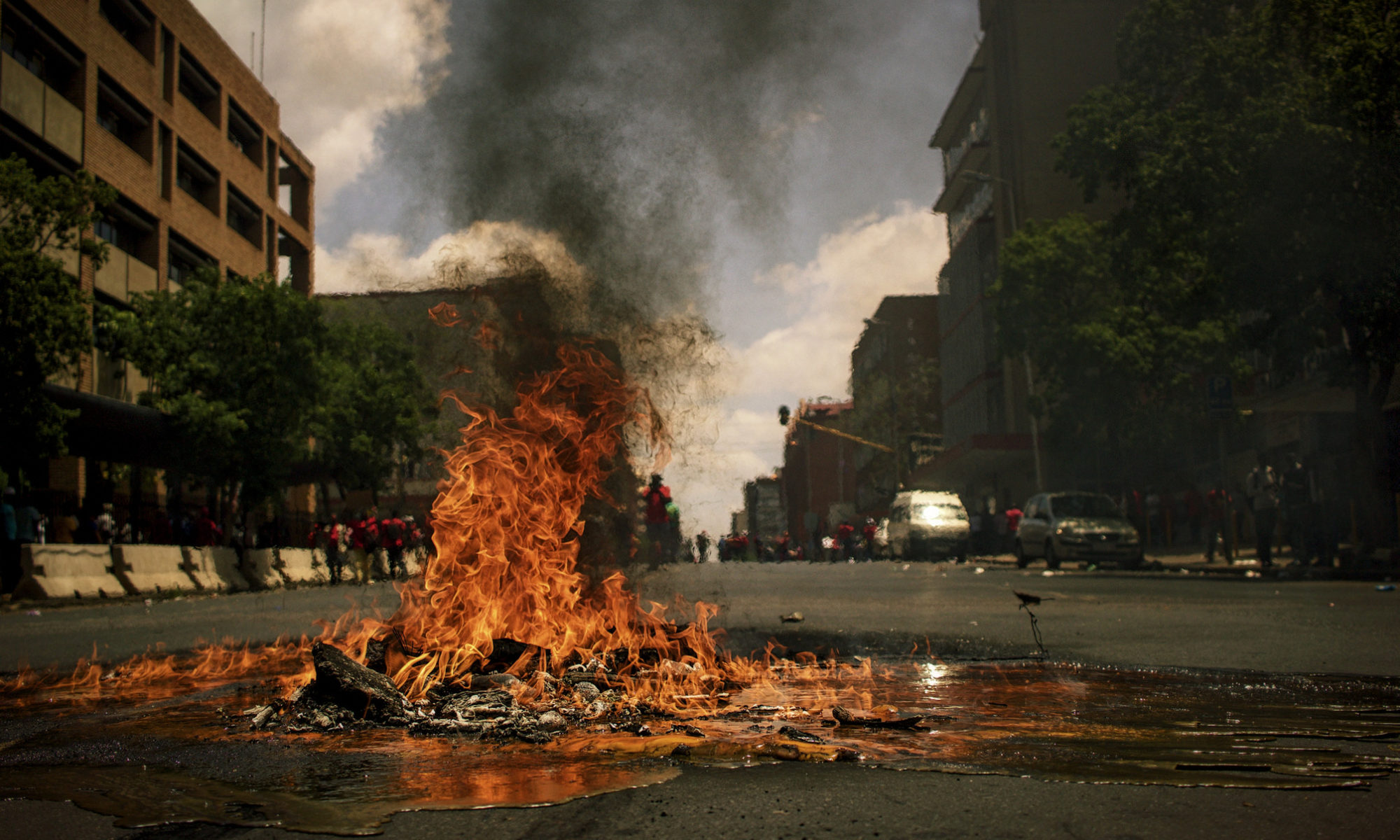
Amerikas: Amnesty International fordert WM ohne Angst und Ausgrenzung

Amnesty International warnt, dass Millionen Fußballfans bei der FIFA-Weltmeisterschaft der Männer 2026 in Kanada, Mexiko und den USA erheblichen Menschenrechtsrisiken ausgesetzt sein werden. Besonders in den USA, wo drei Viertel der Spiele stattfinden, gefährden eine gewaltvolle und diskriminierende Einwanderungspolitik sowie Einschränkungen der Meinungsfreiheit und des Rechts auf friedlichen Protest das von der FIFA versprochene „sichere, einladende und integrative“ Turnier.

Global: FIFA and World Cup hosts must prevent tournament becoming a threat to fans and communities

Millions of football fans attending the 2026 FIFA Men’s World Cup in Canada, Mexico and the USA risk coming face to face with troubling attacks on human rights, not least those stemming from abusive and deadly US immigration policies, Amnesty International said today. The human rights organization warned that severe restrictions on freedom of expression and peaceful protest threaten the “safe, welcoming and inclusive” tournament promised by FIFA.

Its new report, Humanity Must Win: Defending rights, tackling repression at the 2026 FIFA World Cup, details significant risks to and impact on fans, players, journalists, workers and local communities in all three host countries. The USA under President Trump – where three-quarters of World Cup matches will be held – is facing a human rights emergency marked by discriminatory immigration policies, mass detentions and arbitrary arrests by masked, armed agents from US Immigration and Customs Enforcement (ICE), US Customs and Border Protection (CBP) and other agencies.  

“The US Government has deported more than 500,000 people from the USA in 2025 – more than six times as many people than will watch the World Cup final in the MetLife Stadium,” said Amnesty International’s Head of Economic and Social Justice, Steve Cockburn.

“The record-breaking surge of unlawful arrests and deportations has only been possible because of the erosion of due process safeguards, undermining the rights to liberty and security of hundreds of thousands of migrants and refugees. These policies have torn communities apart and created a climate of fear throughout the USA. It’s a deeply troubling time in the US, which will certainly extend to fans who want to take part in World Cup celebrations.”

World Cup host cities have been impacted by the US government’s crackdown on rights. President Trump federalized and deployed approximately 4,000 California National Guard troops to Los Angeles in June 2025, in response to protests against immigration raids. Host cities Dallas, Houston and Miami have all signed problematic agreements for local law enforcement agencies to collaborate with ICE, which increases racial profiling and targeting of immigrants, and erodes trust between communities and local law enforcement, leading to reduced public safety.

A man holds up banner reading Canada Land of the homeless

In Canada, the impact of the 2010 Winter Olympics in Vancouver and a growing housing crisis have raised fears that people experiencing homelessness will again be displaced.

In the other host countries, Mexico has mobilized 100,000 security personnel, including the military, in response to high levels of violence, raising risks for people protesting. This includes women activists who are planning a peaceful protest for the opening match at Estadio Azteca in Mexico City, seeking truth justice and remedy for the disappearance of loved ones. In Canada, the impact of the 2010 Winter Olympics in Vancouver and a growing housing crisis have raised fears that people experiencing homelessness will again be displaced and pushed further to the margins. On 15 March, authorities in Toronto closed a winter warming centre providing shelter for people experiencing homelessness, as the venue had been pre-booked for use by FIFA.

US travel restrictions and abusive immigration policies mar the beautiful game

In 2025 alone, the U.S. government deported over 500,000 people, including 230,000 arrested in the interior of the country and 270,000 at the border, according to analysis of official government data by the New York Times. Many have been deported in violation of the principle of non-refoulement to third countries to which they have no connection, to face arbitrary and prolonged detention.

Throughout the US, federal agents, behaving in the manner of a paramilitary-style operation, have repeatedly targeted Latino, Black, Asian and other communities of colour, violently and arbitrarily detaining people, including children, near their homes, schools and workplaces.

With many immigrant communities in the USA likely to want to come together to watch the World Cup, and millions of fans travelling from all over the world, ICE and other agencies pose a chilling threat to people living in the US, those traveling to see a game, and players themselves.

Due to travel bans under the Trump administration, fans from Côte d’Ivoire, Haiti, Iran and Senegal will be unable to travel and enter the US to support their team unless they had valid visas before 1 January 2026. Other fans face intrusive surveillance, with proposals to force visitors to make their social media accounts available for vetting, and screening for “anti-Americanism”.

This World Cup is no longer the ‘medium risk’ tournament that FIFA once judged it to be… urgent action is needed to make sure the reality of this World Cup matches its original promise.”

Steve Cockburn, Amnesty International’s Head of Economic and Social Justice

“Despite the astounding numbers of arrests and deportations, neither FIFA nor the US authorities have provided any guarantees that fans and local communities will be safe from ethnic and racial profiling, indiscriminate raids, or unlawful detention and deportation,” said Steve Cockburn.

“Only four of the 16 host cities have so far published their human rights plans, and none of those that have done so to date say anything about protection from abusive immigration enforcement. This World Cup is no longer the ‘medium risk’ tournament that FIFA once judged it to be – whether it is to protect people from ICE, guarantee the right to protest or prevent homelessness, urgent action is needed to make sure the reality of this World Cup matches its original promise.”

Right to protest and freedom of expression under threat

World Cups are often the focus of protests and there are risks that demonstrations could be repressed.

Across the USA, Canada and Mexico, there have been restrictions on the rights to freedom of expression and peaceful assembly. The Trump administration has particularly targeted foreign-born students protesting the Israeli government’s ongoing genocide in Gaza, while US citizens protesting and monitoring aggressive immigration enforcement actions have been killed by federal agents.

A person is handcuffted by authorities in the USA

Hennepin County sheriff’s deputies detain a demonstrator outside the Bishop Henry Whipple Federal Building during a protest opposing US Immigration and Customs Enforcement (ICE) operations, in Minneapolis, Minnesota.

Canada has seen a wave of protests against the genocide in Gaza, including large scale peaceful demonstrations and student encampments that were unduly dispersed or cleared by the police.

Mexico has also experienced a series of World Cup-related protests by residents angry about the disruptions to water supplies, access to land, rising costs and gentrification linked to infrastructure development in host cities. The militarized nature of Mexico’s security mobilization for the tournament brings risks that further protests could be repressed.

Human rights must remain at heart of tournament

With just over 10 weeks until the World Cup kicks off, FIFA’s commitment to a tournament where everyone “feels safe, included, and free to exercise their rights” requires urgent action to ensure the beautiful game is not at risk of an ugly outcome.  Members from LGBTQI+ groups in the UK and across Europe have said it is not safe for them to have a visible presence at the tournament.

“While FIFA generates record revenues from the 2026 World Cup, fans, communities, players, journalists and workers cannot be made to pay the price. It is these people – not governments, sponsors or FIFA – to whom football belongs, and their rights must be at the centre of the tournament,” said Steve Cockburn.

Background

Amnesty International is part of Sports & Rights Alliance, a movement of fans, athletes, workers, local community members, and human rights organizations calling on FIFA to work with host countries to protect host city residents and communities.

The post Global: FIFA and World Cup hosts must prevent tournament becoming a threat to fans and communities appeared first on Amnesty International.

India: Parliament must reject proposal to extend restrictions on overseas funding for NGOs

Responding to the tabling of an amendment to the Foreign Contribution (Regulation) Act (FCRA) in Lok Sabha (lower house of the Indian Parliament) that would grant the authorities sweeping new powers over the assets of NGOs that have had their licenses withdrawn, Aakar Patel, Chair of Board at Amnesty International India, said:

“Since coming into force in 2010, the FCRA has been cynically amended and misused to harass, intimidate and censor human rights defenders and NGOs carrying out vital human rights work across India.

“As of 26 March 2026, official data shows that 21,933 organizations had lost their FCRA licenses, depriving them of essential funds and often resulting in their closure or severe restrictions on their activities. Our research has demonstrated that those most impacted are organizations associated with minority rights, right to freedom of expression, environmental rights and climate action.

This amendment would be a blatant abuse of this legislation designed to further crack down on civil society under the pretext of national security.

Aakar Patel, Chair of Board at Amnesty International India

“This amendment would extend these sweeping powers even further. The FCRA already enables the authorities to cancel, suspend or refuse to renew FCRA licenses on arbitrary and vague grounds. These changes would grant them sweeping new powers to create a mechanism to appropriate, manage and dispose of the assets of organizations that have lost their licenses.

“Many organizations are currently litigating in various courts against the cancellation, suspension or non-renewal of their FCRA licenses. This amendment would be a blatant abuse of this legislation designed to further crack down on civil society under the pretext of national security. The Lok Sabha must reject this abusive amendment and uphold the country’s Constitution and international human rights obligations regarding the rights to freedom of expression and association.”

Background

Under the proposed changes, a “designated authority” would take over, manage or dispose of assets created out of foreign funds by an NGO or association, which has had its FCRA registration suspended, cancelled, or not renewed. The Indian government has repeatedly amended the Act to make it more stringent and burdensome for the civil society to carry out their legitimate human rights activities.

In 2024, the Financial Action Task Force found India only “partially compliant” on safeguards for non-profits, warning that measures such as the FCRA risk being misused to restrict legitimate civil society activity, and urged as a priority that they be made risk-based, proportionate, and developed in consultation with the sector. In 2016, the UN Special Rapporteur on the rights to freedom of peaceful assembly and of association warned the Indian government that the FCRA contains overbroad and vague provisions that undermine the right to freedom of association.

The post India: Parliament must reject proposal to extend restrictions on overseas funding for NGOs appeared first on Amnesty International.

Malta: Seven years of injustice. Drop the charges against the El Hiblu 3

Saturday 28 March marks seven years since Amara Krumak, Abdalla Bari and Kone Tiemoko Abdul Kader – known as the El Hiblu 3 – were arrested in Malta for opposing their forced return to Libya, where they would be at risk of persecution, torture and other serious human rights violations. For this act of resistance, they were charged with “acts of terrorism” and other offences by the Maltese authorities.

“It is unconscionable that the El Hiblu 3, who survived abuse in Libya, a shipwreck, and an attempted unlawful return, are now facing the prospect of life imprisonment simply for asserting their rights and trying to prevent further harm,” said Dinushika Dissanayake, Amnesty International’s Deputy Regional Director for Europe. 

In March 2019, the three teenagers, (aged 15, 16, 19) fled Libya on a crowded rubber boat alongside 108 others. When the boat began to deflate, they were rescued by the El Hiblu cargo ship, which had been requested by the European Union’s (EU) naval operation in the Mediterranean to assist the vessel in distress.

Following the rescue, the ship’s captain attempted to return those on board to Libya, an act that would have violated international law, which requires rescued persons to be taken to a place of safety. When those onboard realized they were being returned, panic ensued. After they pleaded with the El Hiblu’s captain, with some people saying they’d rather die than return to Libya, the ship turned around and set off for Malta instead.

When the ship arrived in Malta, the Maltese authorities claimed the three youths had taken over the ship by force. They were charged with serious crimes punishable by life in prison under Maltese terrorism legislation, and to this day are still caught in court proceedings that should never have been brought.

No one should be punished for seeking protection.

Dinushika Dissanayake, Deputy Regional Director for Europe.

“Libya is not a safe country. By resisting their return, they helped prevent a serious breach of international law which would most likely have resulted in horrible suffering for themselves and many others. No one should be punished for seeking protection. Amnesty International stands in solidarity with Amara, Abdalla and Kone as they endure a seventh year of an unjust legal ordeal.”

A catalogue of failures

Over the past seven years Malta has consistently failed these three young men, two of whom were children at the time of their arrest. The Maltese authorities failed to assess their best interests as children, detained them in a high-security adult prison and subjected them to adult court proceedings.

Amnesty International is also concerned by procedural issues and gaps in the investigation that have further affected the fairness of proceedings, for example, key witnesses never being summoned, including other people who were rescued. Despite the absence of evidence of violence, the authorities have persisted with terrorism-related charges that are unfounded.

“Malta has instituted a catalogue of failures in its handling of this case. These young men have been denied a fair trial and were treated as adults, spending seven years of their youth in legal limbo – time that should have been spent in education, work, and simply growing up free from the shadow of prosecution,” said Dinushika Dissanayake.

Kone is currently in migration detention in the UK and faces extradition to Malta. Amnesty International opposes his extradition as it would return him to a prosecution that should never have been brought.

Growing recognition of injustice

Amnesty International welcomes the recent remarks of four UN independent experts, who in January firmly criticized Malta’s handling of the case and called for the charges to be dropped. They specifically raised concerns about laying charges of “terrorism” which “do not appear to be based on violent or coercive criminal conduct” and the violation of fair trial rights, as well as failures to uphold the rights of the child.

The UN experts also recalled that the EU’s naval operation in the Mediterranean had instructed the El Hiblu on behalf of the Libyan Coast Guard to return the people rescued to Libya, thus directing an unlawful pushback. This is a reminder of the EU’s persistent cooperation with Libya where systematic and widespread violations against refugees and migrants are ongoing with impunity.

Reports of the EU seeking to extend its cooperation on migration and border control with the Libyan Arab Armed Forced (LAAF’s) armed group, the de facto authorities in eastern Libya and southern Libya, are deeply alarming, given the LAAF’s record of involvement in war crimes and other violations of international law.

“As Amnesty International has said from the outset, this case exemplifies all that is fundamentally wrong with European migration policies in the Central Mediterranean. There is a growing recognition that these charges are unjustified and deeply unfair.

“Criminalizing people for seeking protection only prolongs their suffering and compounds their trauma. After seven years, these young men have endured enough. Malta must drop the charges and dismiss this case,” said Dinushika Dissanayake.

Background

On 22 January 2025 the Court of Appeal in Valletta found that Malta has jurisdiction over the case, which must therefore continue to be heard by Malta’s criminal court. The preliminary hearings are ongoing.

For more information see here.

The post Malta: Seven years of injustice. Drop the charges against the El Hiblu 3 appeared first on Amnesty International.

Jehosheba Bennett: “If we don’t address colonialism, we will never tackle racism.”

In 2024, a Belgium court ordered the government to pay reparations to five ‘Metis’ women, born of an African mother and a European father between 1948 and 1952, who were kidnapped from their mothers during the colonial-era in Belgian Congo. 

It was a historic ruling and Jehosheba Bennett was one of the lawyers who represented the women. Born in French Guiana, which since 1946 became integrated into the French Republic as an “overseas territory”, Jehosheba moved to France when she was four. Affected by the systemic racism her family faced, she wanted to find a way to change things for the better.

Now an international criminal lawyer, living in Belgium, Jehosheba works on cases that address historical colonial crimes. In this piece, Jehosheba shares what working on the Metis case meant to her and why reparations are still relevant today…

When I moved to France, I remember learning about the history of slavery at school. I spent my early childhood in French Guiana – a colonised country. However, it was clear the impacts of racism were still being felt, especially in countries across Europe.

I lived in a neighbourhood alongside people of African and Arab descent. However, we faced a lot of systemic racism. My brother, who was just 10 at time, was often targeted and beaten by the police.

I was shocked by how we were being treated and I wanted to find a way to change things. I was torn between a career in art or law – but I thought it would be more useful to learn how the world worked, so I could change it.  

Abducted from their mothers

I am now a lawyer, focusing on cases involving violence against women, and colonial wrongs and reparations. Most recently, I worked on a groundbreaking case, involving five Métis women – children born to European fathers and African mothers – who took Belgium to court for colonial kidnappings.

When my law firm took on the case, we asked the women to share their stories. It was the first time they’d been asked to relive their experience with someone who wasn’t from their community. It was a big deal.

The stories of Marie-Josée Loshi, Noëlle Verbeken, Léa Tavares Mujinga, Simone Ngalula and Monique Bintu Bingi from the Democratic Republic of Congo were all very similar – between the ages of two and five, they were snatched from their mothers and sent to live in a Catholic mission hundreds of kilometres from their home.

Public servants working for the Belgian colony were tasked with identifying any mixed-race children, who they would kidnap and take to the Commission of Tutorship.

Jehosheba Bennett

At the time, public servants working for the Belgian colony were tasked with identifying any mixed-race children, who they would kidnap and take to the Commission of Tutorship. The commission had the power to consider them abandoned even though they weren’t. From there, they were taken to the Catholic mission to live.

The young African mothers, many of whom were just 15, couldn’t oppose the public servants – they were threatened, forced to sign papers they couldn’t understand and told if they didn’t hand over their children, they of their family members would be put in jail.

Many of these Metis children were put in missions over 500 kilometres from home. The young mothers would try and visit their children, but they weren’t allowed to stay, so they would sleep in the village just to stay for an hour or two.

It was an awful situation. While the children were in the mission, they were forced to speak a different dialect, attend a village school, where they couldn’t understand the teacher, and they faced discrimination because they were Metis – or seen as white.

Even though they were raised by sisters, they weren’t baptised as they were “children of sin”. Instead, they were insulted, beaten and treated as bad seeds. There was a total absence of care, attention and love.

A web of lies

I learnt how it was common practice for Belgian colonial public servants to have more than one woman. These young mothers were seen as concubines. They birthed the children, breastfed them, and then they were taken away. The women told us how they grew up thinking their mothers were sex workers and their father was unknown – although it was all untrue.

When Marie-Josée, Noëlle, Léa, Simone and Monique spoke, it was so powerful. They didn’t prepare what to say. It wasn’t constructed, but it was clear the life they’d been forced to live was awful and unjustifiable. They showed me a file with documents from the Catholic mission that had shed light on their past.

A group of people stand facing to camera, in a beautiful courthouse, with high ceilings and marbled floors.

In 2024, a Belgium court ordered the government to pay reparations to five ‘Metis’ women, born of an African mother and a European father. It was a historic ruling and Jehosheba Bennett, fourth from left, was one of the lawyers who represented the women.

I started looking through it. I found letters from the sisters to the governors saying they didn’t have the space to accept these children, but government said they had to.

I also discovered a book with the women’s original names, along with the names of their fathers and mothers. From there, the children were given a new name and birth document. Under father, it stated “unknown”… As I learnt more about their stories, it became clear that this was a case of systemic organization of the segregation of these children.

Crimes against humanity

I worked on the case alongside three other lawyers. We knew it wouldn’t be straightforward. The first time we took Belgium to court, in 2021, we were told crimes against humanity were only applicable to those that had taken place during World War Two. It was deeply racist, as they were essentially saying we don’t include Africans in our definition of humanity – but surely humanity means everyone.

We appealed as we knew we had a case. A few years earlier the Belgian government had publicly said discrimination against Metis children was a violation of humanity, yet the courts were saying something else. It was incredibly hypocritical and further validated our case.

We appealed again in 2024. When we received the verdict – Belgium was guilty of crimes against humanity for the abduction and systematic racial segregation of Métis children under Belgian colonial rule – we screamed, laughed and cried. We couldn’t believe our work had finally paid off.

We wanted to celebrate these brave women who became sisters by chance. They were witness to the whole trial, listening to the lawyers denying what they went through. Yet, they remained strong and powerful throughout. They spent their whole life not knowing their past. They didn’t have a family link and were torn away from their mothers and fathers. It was a real break in their construction. They didn’t have any roots; it was as though history had erased their right to exist.

Racism is the root of colonialism

This case needs to serve as a turning point when it comes to addressing colonial wrongs. If we don’t address colonialism, we will nevertackle racism. Racism has its roots in the ignorance of what happened in the past. And if we ignore what happened and don’t ask for reparations, things will never change – all non-white people will still be treated as less human. That’s the reality.

Until European governments offer reparations to those who suffered, there will be an imbalance in equity across the world.  

Jehosheba Bennett

Western countries benefitted from slavery, colonialism and neo colonialism, and it continues today. Until European governments offer reparations to those who suffered, there will be an imbalance in equity across the world.  

It’s not a story of money, but it’s a story of equity and asking for equality. After all, how can you have equality if you don’t offer to repair the crime – it’s what we teach our children every day. It should be the same for States.

This piece was originally published by La Libre.

In our series, Voices of Reparatory Justice, we speak with artists, activists and leaders who share their stories of repair and resilience in fighting against the negative impacts of historical injustices, slavery, and colonialism.  Despite existential challenges, their journey to secure dignity and rights of racialised groups, restores hopes for our collective future, humanity must always prevail. This is one of those stories. Find out more about our work.

learn about descent-based discrimination and
how to tackle it

The post Jehosheba Bennett: “If we don’t address colonialism, we will never tackle racism.” appeared first on Amnesty International.