Russia: Kremlin designates Dozhd TV “foreign agent” in yet another attack on press freedom

Reacting to the news that Russia’s Ministry of Justice has branded Dozhd TV, one of the last remaining independent television channels in Russia, Vazhnye Istorii, an investigative online media organization, and seven journalists as “foreign agents,” Natalia Zviagina, Amnesty International’s Moscow Office Director, said:

“These latest designations further prove that the Kremlin is unleashing its repressive “foreign agents” law against independent media and decimating unbiased reporting and investigative journalism in the country. The Russian authorities’ blatant attempt to classify independent media as “foreign agents” must end. This stifling “foreign agents” legislation must be abolished immediately.”

Kremlin is unleashing its repressive “foreign agents” law against independent media and decimating unbiased reporting and investigative journalism in the country

Natalia Zviagina, Amnesty International’s Moscow Office Director

Background

The Russian Ministry of Justice added Dozhd (TV Rain) television, Vazhnye Istorii news website (based in Latvia), and seven journalists, including Vazhnye Istorii’s editor-in-chief Roman Anin, to the list of “foreign agents.” This move will obligate these media outlets and journalists to identify themselves as “foreign agents” in their publications, including on social media, and to submit to invasive audits.

In April, Roman Anin’s flat was searched and he was interrogated for seven hours overnight under Article 137(2) of the Criminal Code (“violation of privacy”). Repression against independent journalism has deepened with searches of Proekt.Media journalists’ homes, the subsequent banning of this investigative media outlet as an “undesirable organization,” and reprisals against The Insider and its editor-in-chief Roman Dobrokhotov. Currently the “foreign agents” list includes 18 media organizations and 25 people.

The post Russia: Kremlin designates Dozhd TV “foreign agent” in yet another attack on press freedom appeared first on Amnesty International.

Indonesia: Papuan protesters shot, beaten and racially abused by security forces – new research

Indonesian security forces have used discriminatory excessive force and racially abused protesters peacefully opposing the renewal of the Papuan Special Autonomy Law, new research by Amnesty International has revealed.

Papuan protesters told how they were targeted with water cannons, kicked and punched, and beaten with guns and rubber batons in peaceful protests during the last month. At least one person was injured after security forces opened fire on protesters on 16 August. Three protesters reported being called “monkey” while being arrested during protests in July.

Amnesty International has analysed videos and photos which show police using unlawful force on peaceful protesters, and verified injuries suffered by protesters.

The Indonesian security forces’ excessive use of force and racial abuse towards peaceful Papuan protesters is abhorrent,

Richard Pearshouse

“The reports of assault – both physical and verbal – that we have gathered reveals the true contempt the security forces have for the rights of Papuans.

“The Indonesian authorities must immediately investigate the reports of use of discriminatory excessive force and racial abuse against protesters, and also ensure the right to freedom of expression and peaceful assembly is respected.”

To date, protests against the controversial renewal of the Papua Special Autonomy Law have taken place in several cities, from July 14 to August 16. Amnesty International interviewed 17 people who participated in protests in the cities of Jakarta, Jayapura, Sorong and Yahukimo, and verified their accounts using open source video footage.

The protests have also called for the release of Victor Yeimo, a pro-independence activist from Papua facing life imprisonment for his political views.

Shootings, beatings and racial abuse

On August 16, security forces opened fire on protesters in Yahukimo, injuring one person. One protestor told Amnesty International he heard multiple gunshots, and that several bullets were also found close to where the protest took place.

In a protest in Jayapura on the same day, protesters confirmed the use of water cannons, and beatings with rubber batons and guns by security forces. Amnesty International has verified video showing the use of water cannons against peaceful protesters and security forces beating them with rubber batons.

Other testimonies collected by Amnesty International from the protests in July also reveal the excessive use of force deployed by Indonesian security forces.

One student who took part in a protest in Jakarta on July 15 told Amnesty International that security forces beat and racially abused him before he was arrested.

He said: “I was dragged down and taken far from the action, then I got punched, about seven times. When I tried to escape, the police pulled me in and stepped on me, on my shoulders and thighs, and called me ‘monkey’. I had to cover my face with my hands to protect from kicks. Then, I was arrested and pulled in the truck.” This was corroborated by another protestor who reported having witnessed police officers kicking a man and stepping on him.

Two other protesters in Jakarta told Amnesty International that security forces also called protesters “monkey” while pushing them into the police truck.

A protestor who participated in the demonstration in Sorong on July 19 told Amnesty International that police officers beat him as he was arrested. He said: “I was kicked in the stomach and on my head. I was arrested because I only asked the National Police Chief for help to free the protesters who were arrested by the police.” The arrest and beating were corroborated by another protestor and video footage.

A protestor in Sorong criticized the excessive use of force by security forces. He said: “They just want us Papuans not to speak out about our rights. That’s why every time we take action, it’s always forced to disband like that.”

In the protest in Jayapura on July 14, two protesters told how police beat protesters using their fists, guns, and rubber batons. Video verified by Amnesty International shows two security forces officials beating protesters with batons.

Amnesty International has decided not to publish the videos and photos analysed to protect the identity of protesters.

Papua and West Papua Special Autonomy Law

Protests initially began against the decision of the Indonesian House of Representatives to renew the Special Autonomy Law for Papua and West Papua provinces. Protesters have also demanded freedom for Victor Yeimo, highlighted the Indonesian government’s ongoing racial discrimination against Papuans, and called for the right to self-determination.

The Papua Special Autonomy Law was adopted in 2001. The law was intended to give the Papuan people more powers to govern themselves while remaining part of Indonesia, in response to calls for Papuan self-determination.

The new Special Autonomy Law introduces changes that strengthen the authority of central government and reduce the autonomy of Papuan institutions. The new law creates a special agency responsible for coordinating and evaluating the implementation of Special Autonomy, chaired by the Indonesian Vice President and with an office in the region. The new law also removes the right of the Papuan population to form local political parties, previously established in the article 28(1) of the Special Autonomy Law.

“The protests against the renewal of the Special Autonomy Law shows the failure of the Indonesian government to adequately consult with the Papuan indigenous people,” said Usman Hamid, Amnesty International Indonesia Executive Director.

“The government must ensure the respect for the rights of the Papuan indigenous people. This can be only done by effectively involving the Papuan indigenous population in the design and implementation of the Special Autonomy Law.”

Background

The International Covenant on Civil and Political Rights explicitly guarantees freedom of opinion and expression, as contained in Article 19, and the right to freedom of peaceful assembly, as contained in article 21. This instrument is binding on all countries that have ratified it, including Indonesia. Referring to the Covenant, political expression is also part of the freedom of expression and opinion.

In Indonesia, the right to freedom of assembly and expression has also been guaranteed in the Indonesian Constitution, namely Article 28E clause (3) of the 1945 Constitution, as well as Article 24 clause (1) of Law No. 39/1999 on Human Rights.

Amnesty International does not take any position regarding the political status of any province in Indonesia. However, we uphold human rights, including the rights to freedom of expression and peaceful assembly, which safeguard the right to voice political opinion or views, as long as they do not advocate hatred, discrimination or violence.

The post Indonesia: Papuan protesters shot, beaten and racially abused by security forces – new research appeared first on Amnesty International.

Russia: Anniversary of Navalny poisoning marks one year of shameful injustice

The anniversary of Aleksei Navalny poisoning and attempted killing marks one year of shameful injustice, says Amnesty International. The Russian authorities last week hit Navalny with yet another absurd criminal charge, while his supporters’ calls for accountability have been brutally repressed, and those behind the assassination attempt enjoy absolute impunity.

“One year ago today, the Kremlin’s most vocal critic was attacked with a banned chemical weapon, an outrageous crime which should have been the subject of an urgent investigation by Russian authorities. Instead, the Russian government chose to throw Aleksei Navalny behind bars on false grounds – in conditions which almost killed him – and to pursue a relentless campaign of reprisals against his supporters,” said Agnès Callamard, Amnesty International’s Secretary General.

“The Russian authorities’ failure to investigate the attempt on Navalny’s life is damning proof of their utter disregard for justice and for the right to life. We reiterate our call for an immediate and impartial investigation into the attempted poisoning of Aleksei Navalny, and for an end to the persecution of Navalny and his supporters.

The Russian authorities’ failure to investigate the attempt on Navalny’s life is damning proof of their utter disregard for justice and for the right to life

Agnès Callamard, Amnesty International’s Secretary General

“Most urgently, we call on the Russian authorities to immediately and unconditionally release Aleksei Navalny, who is a prisoner of conscience deprived of liberty solely for exercising his right to freedom of expression. The international community must do everything in its power to ensure those behind the poisoning are brought to justice; to end the unlawful detention of Aleksei Navalny; and to halt the spiraling campaign of repression which Russian authorities have unleashed on their people.”

Background

Aleksei Navalny, a leading Russian opposition activist and founder of the Anti-Corruption Foundation, collapsed while flying from Tomsk (Siberia) to Moscow on 20 August 2020. He was transferred to Germany for treatment where he spent 18 days in a coma. International experts later concluded that the politician had been poisoned with Novichok-class military-grade nerve agent which is prohibited under the Chemical Weapons Convention.

Since then, the Russian authorities have failed to launch a meaningful investigation, blocked Navalny’s lawyers’ attempts to challenge their inaction in various courts, and ignored strong evidence that agents of the Russian Federal Security Service were involved in the poisoning.

After his return to Moscow on 17 January 2021, Aleksei Navalny was arrested and sentenced to serve 2,5 years in a penal colony for violating the probation terms of his earlier, politically motivated sentence. The Anti-Corruption Foundation and the “Navalny Headquarters” support network were listed as “extremist” and banned. On 11 August 2021, Navalny was additionally charged with “creation of a non-profit organization undermining rights of citizens”, under an obscure article of the Russian Criminal Code. He faces an additional prison sentence of up to three years if found guilty.

The post Russia: Anniversary of Navalny poisoning marks one year of shameful injustice appeared first on Amnesty International.
Afghanistan: Taliban responsible for brutal massacre of Hazara men – new investigation

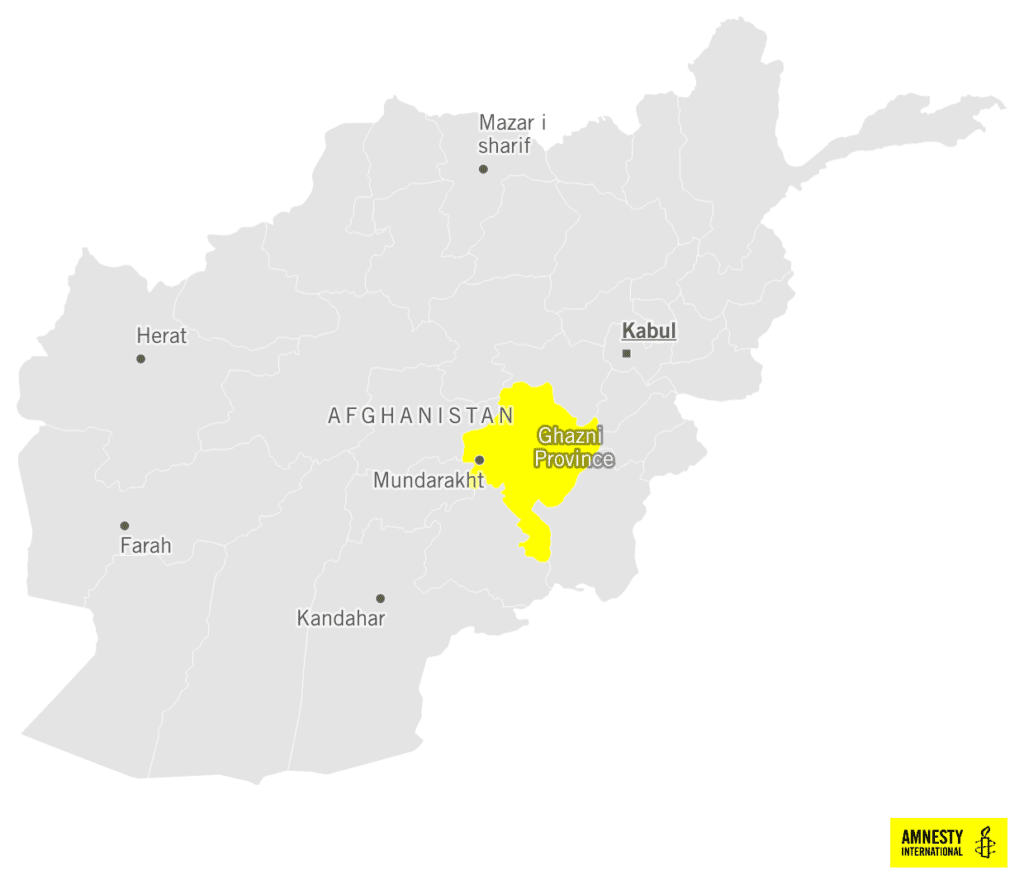
Taliban fighters massacred nine ethnic Hazara men after taking control of Afghanistan’s Ghazni province last month, Amnesty International said today.

On-the-ground researchers spoke to eyewitnesses who gave harrowing accounts of the killings, which took place between 4-6 July in the village of Mundarakht, Malistan district. Six of the men were shot and three were tortured to death, including one man who was strangled with his own scarf and had his arm muscles sliced off.

The brutal killings likely represent a tiny fraction of the total death toll inflicted by the Taliban to date, as the group have cut mobile phone service in many of the areas they have recently captured, controlling which photographs and videos are then shared from these regions.

The cold-blooded brutality of these killings is a reminder of the Taliban’s past record, and a horrifying indicator of what Taliban rule may bring,

Agnès Callamard

These targeted killings are proof that ethnic and religious minorities remain at particular risk under Taliban rule in Afghanistan.

Agnès Callamard

“We urge the UN Security Council to adopt an emergency resolution demanding that the Taliban respect international human rights law, and ensure the safety of all Afghans regardless of their ethnic background or religious beliefs.

“The UN Human Rights Council must launch a robust investigative mechanism to document, collect and preserve evidence of ongoing crimes and human rights abuses across Afghanistan. That will prove critical to ensure informed decision-making by the international community, and combat the impunity which continues to fuel grave crimes in the country.”

Torture and murder in the context of an armed conflict are violations of the Geneva Conventions, and constitute war crimes under the Rome Statute of the International Criminal Court, which is already considering crimes committed in relation to the conflict in Afghanistan.

Tortured and murdered

Amnesty International interviewed eyewitnesses and reviewed photographic evidence in the aftermath of the killings in the village of Mundarakht.

On 3 July 2021, fighting intensified in Ghazni province between Afghan government forces and the Taliban. Villagers told Amnesty International that they fled into the mountains to traditional iloks, their summer grazing land, where they have basic shelters.

There was little food for the 30 families that fled. The next morning, 4 July, five men and four women returned to the village to gather supplies. On their return, they found that their homes had been looted, and that Taliban fighters were lying in wait for them.

One man, 45-year-old Wahed Qaraman, was taken from his home by Taliban fighters who broke his legs and arms, shot him in the right leg, pulled his hair out, and beat his face with a blunt object.

Another man, 63-year-old Jaffar Rahimi, was severely beaten and accused of working for the Afghan government, after cash was found in his pocket. The Taliban strangled him to death with his own scarf. Three people involved in the burial of Rahimi said that his body was covered in bruises, and that the muscles of his arms had been carved off.

Sayed Abdul Hakim, 40, was taken from his home, beaten with sticks and rifle butts, had his arms bound, and was shot twice in the leg and twice in the chest. His body was then dumped next to a nearby creek.

One eyewitness, who assisted with the burials, told Amnesty International: “We asked the Taliban why they did this, and they told us, ‘When it is the time of conflict, everyone dies, it doesn’t matter if you have guns or not. It is the time of war.’”

Callous executions

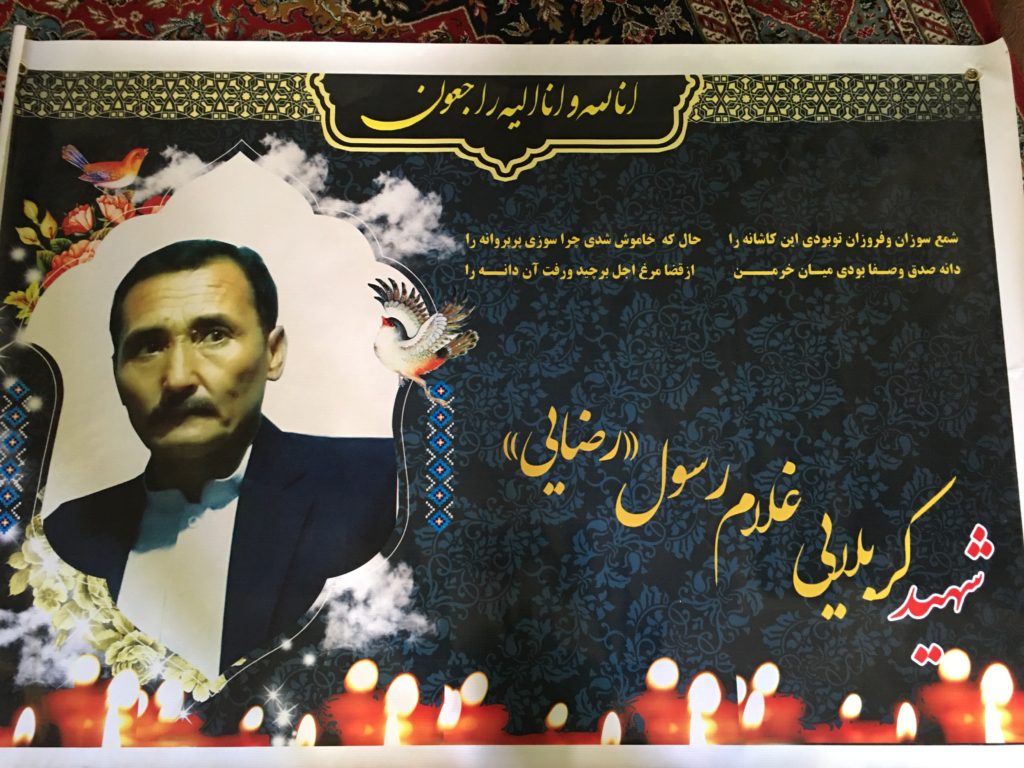
During the two-day killing spree, three other men – Ali Jan Tata (65), Zia Faqeer Shah (23), and Ghulam Rasool Reza (53) – were ambushed and executed as they left the iloks, and attempted to pass through Mundarakht to reach their homes in the nearby hamlet of Wuli.

In Mundarakht, they were stopped at a Taliban checkpoint, where they were executed. Ali Jan Tata was shot in the chest, and Rasool was shot in the neck. According to witnesses, Zia Faqeer Shah’s chest was so riddled with bullets that he was buried in pieces. The men’s bodies were thrown into the creek alongside Sayed Abdul Hakim.

Three more men were also callously killed in their home village. Eyewitnesses told Amnesty International that Sayeed Ahmad, 75, insisted the Taliban would not harm him as he was an elderly man, and that he intended to return to feed his cattle. He was executed with two bullets to the chest and another in his side.

Zia Marefat, 28, suffered from depression and rarely left his home in Mundarakht. He refused to leave after the Taliban took control of the village on 3 July, but eventually did so after being urged by his mother and others to flee for his own safety. However, as he walked alone to the ilok, he was captured by the Taliban, who killed him with a shot to the temple.

Karim Bakhsh Karimi, 45, who had an undiagnosed mental health condition which caused him to act erratically, did not flee with the rest of the villagers. He was also shot, execution-style, in the head.

A memorial poster of Ghulam Rasool Reza, 53, one of the nine ethnic Hazara men killed by the Taliban in Malistan district in Ghazni province in July 2021

Background

The Taliban have seized power in Afghanistan following the collapse of the government in recent days. Amnesty International has called for the protection of thousands of Afghans at serious risk of Taliban reprisals, from academics and journalists to civil society activists and women human rights defenders.

The post Afghanistan: Taliban responsible for brutal massacre of Hazara men – new investigation appeared first on Amnesty International.