Internal documents obtained by the Wall Street Journal reportedly show that Facebook is using a system that exempts high-profile users from some or all of the platform’s terms of use. Responding to the reports, Agnès Callamard, Secretary General of Amnesty International, said:
“These shocking allegations show, once again, how Facebook’s platform fuels the spread of harmful and abusive content globally.
“Facebook claims it ‘does not profit from hate’. Yet according to company documents provided by an anonymous whistleblower, it has created a system that gives powerful users free rein to harass others, make false claims, and incite violence.
“The message from Facebook is clear – if you’re influential enough, they’ll let you get away with anything.
“The fact these internal documents seem to contradict the assurances that Facebook has made publicly also calls into question how much we can trust the company and what they tell us.
“Ultimately, we need to fix the root cause of this problem: Facebook’s surveillance advertising business model, that relies on aggressive data harvesting and profiling on a vast scale. Facebook’s algorithms amplify misinformation and divisive content and fuel racism, because such content is most likely to keep us engaged for longer and increase their advertising revenues.
“Urgent government regulation is needed to ensure the online world is one in which human rights are effectively protected. These disclosures underscore the fact that we simply cannot rely on companies to self-regulate.”
Background
Facebook’s programme of “Cross-check”, or “X-check”, was intended to provide an additional layer of internal review before Facebook made enforcement decisions on high-profile accounts.
However,the Wall Street Journal has obtained documents from a whistle blower that suggest Facebook did not follow through with these reviews. This is reportedly because Facebook used X-Check to “white-list” high profile users and make them immune from any punitive action if and when they violated the platform’s terms of use, including harassment or incitement to violence.
Facebook responded to the newspaper, saying: “We remove content from Facebook, no matter who posts it, when it breaks our standards.”
The Vietnamese authorities must take urgent steps to avert a looming humanitarian and human rights crisis on top of the country’s Covid-19 battle, as strict lockdown measures increasingly harm society’s most vulnerable, Amnesty International’s Deputy Regional Director for Research Emerlynne Gil said today:
“Military-enforced lockdowns are preventing many vulnerable people, especially in Ho Chi Minh City, from accessing enough food to survive during a devastating public health crisis.”
“The government must not allow a two-pronged tragedy of Covid-19 deaths and unendurable hunger to envelop a population where many were already suffering serious economic hardship before lockdowns began.”
“We are alarmed by credible reports that huge numbers of people have received next to nothing in terms of food. If the country is to carry out military-enforced lockdowns, sustenance supplied by the army must reach vulnerable people and meet nutritional needs.”
“Amid this period of intense suffering, police have also fined and arrested people who criticize the state’s handling of the crisis on social media and unleashed a disproportionate criminal crackdown on individuals caught spreading Covid-19.”
“Heavy-handed measures to enforce public health restrictions risk undermining the effectiveness of Viet Nam’s Covid-19 response. Instead of relying on punishment and other coercive approaches, Vietnamese authorities should implement a response rooted in respect for human rights.”
“The Vietnamese authorities must ensure that Covid-19 restrictions are the minimum necessary and proportionate to the aim of protecting public health as defined under international human rights law. Lengthy prison terms for Covid-19 spreaders and lockdowns that prevent people from accessing food clearly do not pass this test.”
Background
Viet Nam is battling its deadliest outbreak of Covid-19 since the pandemic began. After initially proving a success story in its response to the pandemic, recording fewer than 1,500 Covid-19 cases and only 35 deaths by the end of 2020, cases have since skyrocketed to over 570,000, with just over 15,000 deaths. The majority of new cases and deaths have been reported in Ho Chi Minh City.
In response, Vietnamese authorities have enacted strict lockdowns in the nation’s hardest-hit regions. On 23 August 2021, officials in Ho Chi Minh City, the nation’s most populous urban area, imposed a severe, military-enforced lockdown that prevents people from leaving their homes even to access food. People must wait for the military to deliver supplies to their homes, a system that has failed to consistently fulfil the right to food for the city’s most vulnerable people, leaving many in a position of severe food shortages and hunger. The restrictions are expected to remain in place until the end of September.
Harrowing images and videos of hardship and suffering – and calls for help – have spread across social media, yet those caught criticizing the government’s handling of the pandemic have faced fines and arrest.
On 2 September 2021, police in Ho Chi Minh City fined Facebook user Nguyen Thuy Duong VND 5 million (approximately $210) after she shared a post online saying the authorities had neglected city residents and allowed them to go hungry during the lockdown. In early August, police arrested 33-year-old Tran Hoang Huan for sharing criticism of the government’s Covid-19 response on Facebook.
Vietnam is a party to the UN International Covenant on Economic, Social and Cultural Rights, which guarantees amongst others the rights to health and to food. The UN Committee on Economic, Social and Cultural Rights’, which monitors states’ compliance with the Covenant, states in its General Comment 14 that any restrictions and limitations on the grounds of public health “must be in accordance with the law, including international human rights standards, compatible with the nature of the rights protected by the Covenant, in the interest of legitimate aims pursued, and strictly necessary for the promotion of the general welfare in a democratic society”. They should be of limited duration, subject to review, and the least restrictive alternative must be adopted where several types of limitations are available. The Committee has also emphasized in the context of the pandemic that authorities must ensure sufficient food supplies reach all those in need.
An Nigers Grenzen zu Mali und Burkina Faso werden Kinder häufig Opfer von tödlichen Angriffen, Gewalt und Rekrutierungen durch bewaffnete Gruppen. Das dokumentiert ein neuer Amnesty-Bericht.
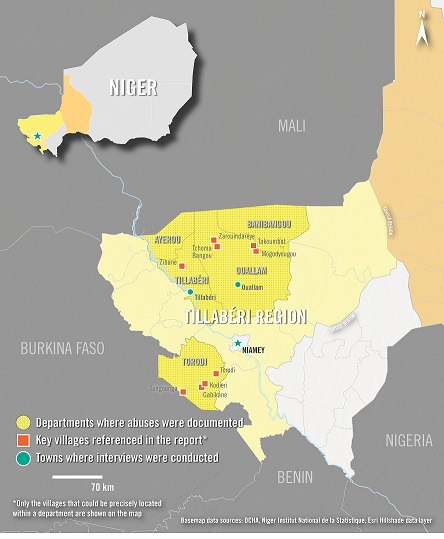
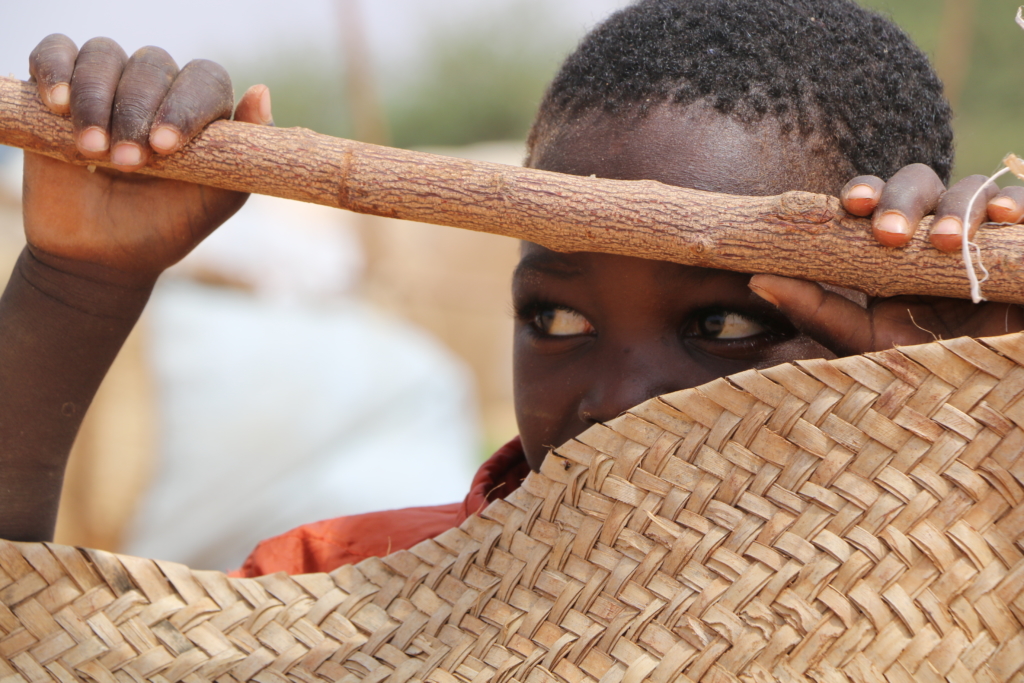
Increasing numbers of children are being killed and targeted for recruitment by armed groups in conflicts raging at Niger’s borders with Mali and Burkina Faso, Amnesty International said in a new report published today.
Both ISGS and JNIM have committed war crimes and other abuses in the conflict, including the murder of civilians and targeting of schools. Many children are experiencing trauma after witnessing deadly attacks on their villages. In some areas, women and girls have been barred from activities outside the home, and risk abduction or forced marriage to fighters.
In Niger’s Tillabéri region, an entire generation is growing up surrounded by death and destruction
Matt Wells
“In Niger’s Tillabéri region, an entire generation is growing up surrounded by death and destruction. Armed groups have repeatedly attacked schools and food reserves, and are targeting children for recruitment,” said Matt Wells, Amnesty International’s Crisis Response Deputy Director – Thematic Issues.
“The Nigerien government and its international partners must urgently take action to monitor and prevent further abuses and protect the basic rights of all those affected by this deadly conflict – especially children.”
The Nigerien authorities have failed to protect civilians. Witnesses to attacks described how, despite their urgent calls, Niger’s Defense and Security Forces (FDS) frequently arrived long after killing and looting had ended.
Amnesty International considers the situation in Niger a non-international armed conflict, given the intensity of violence and level of organization of both ISGS and JNIM.
Targeted killing of civilians
The conflict in Tillabéri has escalated significantly since the start of this year. According to the Armed Conflict Location & Event Data Project, violence against civilians has led to 544 conflict-related deaths between 1 January and 29 July 2021 in Niger, already exceeding the 397 people killed in 2020.
Armed groups have killed more than 60 children in Niger’s tri-border area in 2021. ISGS, which operates primarily on the border with Mali, appears responsible for most of the large-scale killing.
Amnesty spoke to 16 boys who had narrowly survived ISGS attacks on their villages. They described how masked attackers on motorbikes opened fire, particularly targeting men and older boys. One boy, aged around 13 or 14, said: “We all are used to hearing gunshots and to seeing [dead] people layered on top of [dead] people.”
Sometimes I have nightmares of being chased by people on motorbikes or seeing Wahab pleading with the [attackers] again.
A boy who witnessed the murder of his 12-year-old friend
Another boy, who witnessed the murder of his 12-year-old friend Wahab in March 2021, said: “I think of Wahab and how he was killed. Sometimes I have nightmares of being chased by people on motorbikes or seeing Wahab pleading with the [attackers] again.”
Fighters have fired into homes, killing or injuring civilians attempting to hide. One woman and her baby daughter suffered gunshot wounds while hiding at home during a likely ISGS attack.
The FDS withdrew from some border areas after suffering losses to ISGS and JNIM in late 2019, leading to an absence of state authorities. Witnesses to attacks said the FDS often failed to respond, as killing and looting unfolded over several hours.
A 50-year-old man, in words echoed by many others, told Amnesty International: “We have been abandoned.”
Recruitment of children
The recruitment of children by JNIM has increased significantly this year in Torodi department, near the Burkina Faso border.
Witnesses said JNIM has targeted younger men and boys aged between 15 and 17, and possibly younger. JNIM members offer incentives such as food, money, and clothes to attract recruits.
Recruits reportedly receive weapons training for periods ranging from one week to three months. JNIM is also known to use children as spies, scouts, and lookouts, among other functions defined as participation in hostilities under international law.
As part of their opposition to education they consider ‘Western’, ISGS and JNIM have burned schools and threatened teachers, resulting in widespread school closures. As of June 2021, at least 377 schools in the Tillabéri region had closed, depriving more than 31,000 children of access to education.
Amnesty International documented armed group attacks which targeted and burned schools in at least four departments of Tillabéri region. In rural areas, most school structures are made from straw, making them easy to burn.
Teachers have also been threatened for their work. One 15-year-old boy from Mogodyougou said: “The teachers… left. They’d be killed [if they stayed].”
School closures have left many children from conflict-affected areas without access to education for extended periods. A 14-year-old boy said: “We didn’t like that the school closed… After our school closed, we stayed at home. There wasn’t anything for us.”
Under international humanitarian law, attacks against schools are prohibited unless the school building is being used for military purposes. As such, attacks against schools or other buildings dedicated to education documented by Amnesty International constitute war crimes.
The conflict has significantly undermined children’s access to healthcare, as armed groups have looted health facilities, and the Nigerien authorities have restricted civilians’ movement and impeded aid access at times. Immunization rates have plummeted, and diseases such as measles are on the rise.
Attacks on food security
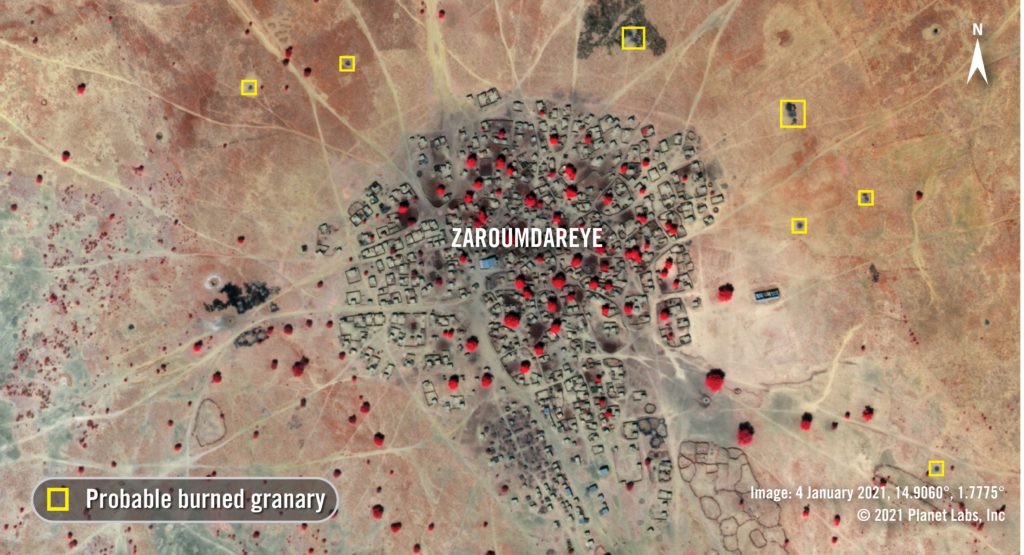
During attacks, ISGS has burned grain stores and looted shops and livestock, leaving families destitute and without adequate food. Children face heightened risks of malnutrition and related illness.
A woman with seven children told Amnesty International that ISGS fighters torched her family’s granaries during an attack on Zibane village. She said: “Everything was burned… I have nothing left, except myself.”
Through satellite imagery analysis, Amnesty International corroborated the targeted burning of grain stores. Such attacks have forcibly displaced tens of thousands of people, often emptying entire villages due to lack of food.
Both ISGS and JNIM also regularly impose ‘taxes’ on communities, often enforced through violence. Humanitarian agencies have predicted that an estimated 2.3 million people in the region are likely to suffer from food insecurity due to the attacks, as well as from drought and floods.
The relentless attacks have had a profound impact on children’s mental health and wellbeing. Very few children interviewed had received psychosocial support.
Amnesty International documented symptoms of trauma and distress among children, including nightmares, disturbed sleep patterns, fear, anxiety, and loss of appetite. Many reported how the sound of motorbikes triggered memories of attacks.
The Nigerien authorities and international partners must take urgent steps to ensure children are better equipped to build a future for themselves
Matt Wells
One 15-year-old boy who had been displaced from his village told Amnesty International: “What I want is the true return of peace. And [the government] need[s] to pay attention to our lives, even here [in the IDP camp] in terms of food and water. And school. We need to go to school.”
“The Nigerien authorities must take swift action to ensure conflict-affected children across Tillabéri region have access to school and psychosocial care,” said Matt Wells.
“Niger is at a precipice. The Nigerien authorities and international partners must take urgent steps to ensure children are better equipped to build a future for themselves.”
Background
Conflict erupted in Mali in 2012, and has since spilled into neighbouring Burkina Faso and Niger. Armed groups have competed for control in the border areas, and frequently clashed with the Nigerien military, and forces from countries including Chad, Mali, Burkina Faso, and France.
An estimated 13.2 million people in the three countries will need humanitarian assistance this year, and around 1.9 million people have been internally displaced.
Methodology
Amnesty International interviewed 119 people, including 22 children, three young adults between 18 and 20, and 36 parents and other individuals affected by the conflict. Other individuals interviewed included staff from NGOs and humanitarian agencies, UN officials and government officials.
Responding to the arrest on “extremism” charges of Rostov-on-Don journalist, Igor Khoroshilov, who appealed in a post on Facebook for “smart voting” against the ruling United Russia party, Natalia Zviagina, Amnesty International’s Moscow Office Director, said:
“This is a blatant violation of the right to freedom of expression. Anyone should be able to express their views about the upcoming parliamentary election and candidates. The Russian authorities’ attempts to silence any dissent – be it on the streets, in the independent media or social media – have reached the point of absurdity.
The Russian authorities’ attempts to silence any dissent – be it on the streets, in the independent media or social media – have reached the point of absurdity
Natalia Zviagina, Amnesty International’s Moscow Office Director
“This arrest shows the authorities are determined to shut down public support for prisoner of conscience Aleksei Navalny and his “smart voting” campaign.
“Igor Khoroshilov must be released immediately and unconditionally. The authorities must stop their shameless persecution of Aleksei Navalny’s supporters and other dissenters.”
Background
Igor Khoroshilov, editor-in-chief of the independent online news outlet Golos, from Rostov-on-Don in southern Russia, was detained by police on the morning of 10 September. In a Facebook post, he said he had been accused of disseminating “extremist materials” (Article 20.3 of the Code of Administrative Violations) in connection with a previous Facebook post that referred to ‘smart voting’. He was later put under administrative arrest for 10 days.
Aleksei Navalny, the prominent jailed critic of the Kremlin, has urged Russians to vote tactically in parliamentary elections scheduled for 17-19 September. However his “Smart Voting” website and mobile app has since been banned by Russia’s Roskomnadzor communications regulator, which also blocked 49 websites associated with Navalny and his Anti-Corruption Foundation in June 2021, for being “extremist”.
By early September, over 1,000 Russians who had registered with the “Smart Voting” platform, and whose personal information had been leaked online, were visited by the police and warned that supporting Aleksei Navalny’s organizations could lead to criminal prosecution.
On 5 September, the Moscow Arbitration Court ordered Google and its Russian counterpart Yandex to stop displaying the term “smart voting” in its search results.