
Das myanmarische Militär verlegt im Bundesstaat Kayah massenhaft Landminen. Amnesty International bezeichnet dies als Kriegsverbrechen.
Myanmar: Military’s use of banned landmines in Kayah State amounts to war crimes
- Inherently indiscriminate landmines kill and injure civilians
- Military laid landmines in homes, on farming lands and on church grounds
- Myanmar increasingly isolated globally in its use of antipersonnel landmines
The Myanmar military is committing war crimes by laying antipersonnel landmines on a massive scale in and around villages in Kayah (Karenni) State, Amnesty International said today after an on-the-ground investigation in conflict-affected parts of the state.
Antipersonnel landmines are inherently indiscriminate and their use is internationally banned. The landmines laid by the Myanmar military have killed and seriously injured civilians and will have significant long-term consequences, including on displaced people’s ability to return home and to farm their lands.
“The Myanmar military’s use of landmines is abhorrent and cruel. At a time when the world has overwhelmingly banned these inherently indiscriminate weapons, the military has placed them in people’s yards, homes, and even stairwells, as well as around a church,” said Matt Wells, Amnesty International’s Crisis Response Deputy Director – Thematic Issues.
The Myanmar military’s use of landmines is abhorrent and cruel.
Matt Wells, Amnesty International’s Crisis Response Deputy Director – Thematic Issues
“The world must urgently respond to the military’s atrocities against civilians across Myanmar. Countries around the world must cut off the flow of weapons to Myanmar and support all efforts to ensure those responsible for war crimes face justice.”
From 25 June to 8 July, Amnesty International researchers interviewed 43 people in Kayah State’s Demoso, Hpruso, and Loikaw Townships. These areas have been at the centre of fighting between the military and Karenni armed groups since May 2021, when conflict in Kayah State re-ignited following the military coup.
The organization interviewed landmine survivors and other witnesses, as well as health professionals who treated landmine injuries and people who had discovered and deactivated landmines in villages. It also visited several recently demined villages.
The Myanmar military is laying several types of landmines that it manufactures itself. These include the M-14, which typically blows off the victim’s foot at the ankle, and the more powerful MM-2, which often blows off the victim’s leg at the knee and causes injuries to other parts of the person’s body, with severe risk of death due to blood loss.
Antipersonnel landmines, including the M-14 and MM-2, are inherently indiscriminate and their use is banned under customary international humanitarian law, as well as the 1997 Mine Ban Treaty, which 164 states have joined. According to Landmine Monitor, Myanmar’s military is the only state armed forces confirmed to have used antipersonnel landmines in 2020-21.
Civilians killed and injured
Lu Reh, 62, and his family were displaced from Daw Thea village in Demoso Township in late February 2022 after a Myanmar military air strike killed two people in a neighbouring village. On 10 June, he and others returned to collect things from their property.
As he walked along a dirt path to collect jah fruit, Lu Reh stepped on a landmine that ripped off his right leg just below the knee, leaving the bone exposed at the calf. According to a witness and another person with direct knowledge of the incident, it also wounded his left leg and right hand and caused significant blood loss. Lu Reh died on the way to the hospital.
The Myanmar military has controlled that area since February 2022 and soldiers from the 66th Light Infantry Division (LID) have based themselves out of several nearby villages.
The Karenni Human Rights Group (KnHRG) has documented at least 20 civilians killed or seriously injured by landmines in Kayah State since June 2021. According to activists, local aid workers, and people without formal training who have tried to demine villages, the military’s use of landmines there has soared in recent months, especially as they retreat from certain areas.
In early April 2022, Rosie, 52, and her daughter Ma Thein Yar Lin, 17, were trying to return to their home in Loikaw town after being displaced by fighting in January. Rosie parked their motorbike near a rocky path, and Ma Thein Yar Lin walked a short distance away to go to the bathroom.
I heard the explosion, then I looked and saw a lot of smoke. I heard my daughter yelling, ‘Mama, Mama,’ and I went to look and saw her lying on the ground…my daughter had no leg anymore.
Rosie, whose daughter was injured in a landmine incident
“I heard the explosion, then I looked and saw a lot of smoke,” Rosie recalled. “I heard my daughter yelling, ‘Mama, Mama,’ and I went to look and saw her lying on the ground.”
“I noticed that my daughter had no leg anymore… I went searching for [her leg], but the man who [was passing by and stopped] to help us said, ‘Stop! There will be another landmine. The most important thing is to stop the bleeding.’”
Ma Thein Yar Lin lost her right leg from the mid-calf down and had landmine fragments throughout her left leg. She now uses a wheelchair donated by a friend. She and her mother cannot return to their home partly because the house and bathroom are not accessible.
She told Amnesty International that she wants to continue her studies; she had reached Grade 11 before the Covid-19 pandemic and the coup stopped her schooling. She said she also wants to ensure her leg recovers so that she can be fitted with a quality prosthetic.
Attack on a church
On 27 June 2022, Amnesty International researchers visited St Matthew’s church in Daw Ngay Khu village in Hpruso Township. The military had planted at least eight landmines on church grounds in mid-June, when there was fighting in the area.
Amnesty International photographed areas where landmines had been removed, including along the main entrance path and behind the church. People involved in demining the church believed there were more landmines there that had yet to be discovered.
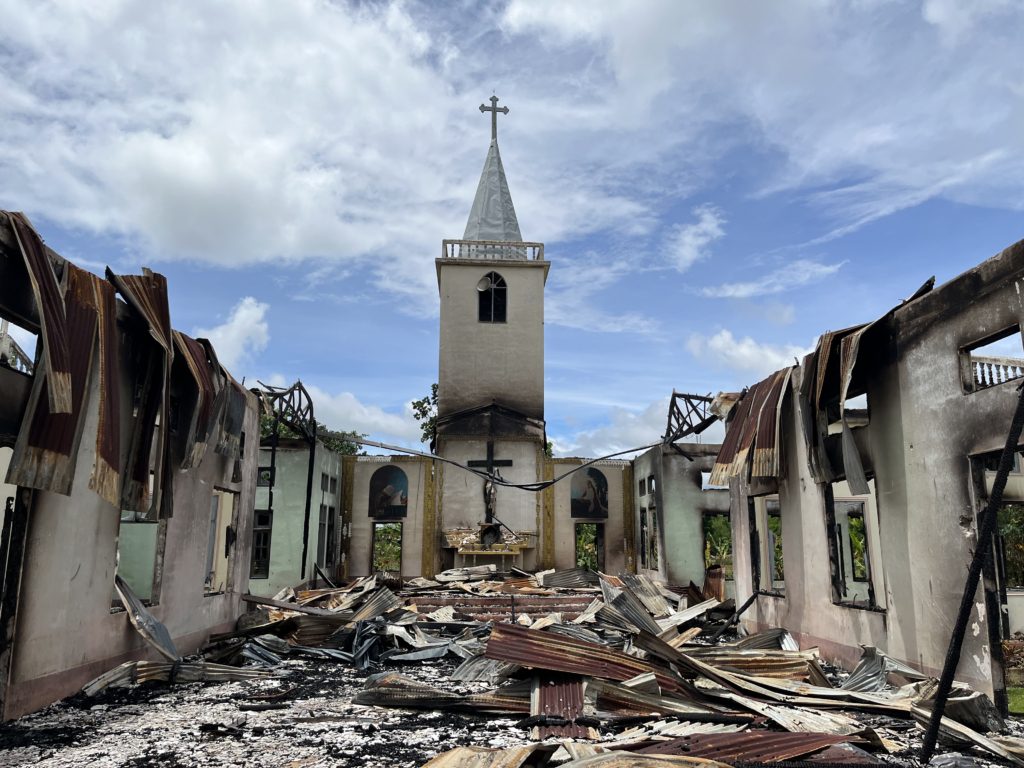
On the afternoon of 15 June, soldiers also burned down the church and the priest’s house next door. When Amnesty International researchers visited 12 days later, the grain stored in the priest’s house was still smouldering.
A 41-year-old woman from Daw Ngay Khu told Amnesty International: “That church was the centre of our village. We worried about our things [when the military started coming], so we brought them to the church to keep [them] there. We thought the Myanmar military would not attack the church, that it was a hallowed place.”
Researchers saw a discarded uniform of the 66th LID on the church grounds, along with bullet casings and a used round from a 40mm grenade launcher.
Amnesty International previously implicated the 66th LID in war crimes and likely crimes against humanity in Kayah State, in a report published in June 2022.
In addition to the church, Myanmar soldiers laid landmines in and near homes in Daw Ngay Khu village, according to six people who lived there as well as people who had demined parts of the village. Other areas of Daw Ngay Khu likely remain contaminated.
Widespread displacement and fear
Amnesty International received credible information that the Myanmar military has laid landmines in at least 20 villages in Hpruso, Demoso, and Loikaw Townships in recent months. There are likely many more contaminated villages across Kayah and southern Shan States.
The military appears to be systematically laying landmines near where it is based as well as in areas from which it retreats. The region along the main road between Moe Bye in southern Shan State and Hpruso town in Kayah State is particularly contaminated. The military systematically burned homes in the same area from February to April 2022, as Amnesty International reported previously.
Soldiers have placed landmines in people’s yards, at the entrance of homes, and outside toilets. In at least one documented case, soldiers boobytrapped a house stairwell with a trip-wire improvised explosive device (IED). They have also placed landmines on paths to rice fields, and credible evidence indicates that at least one civilian was seriously injured recently from stepping on a landmine when going to their field.
Displaced civilians across these areas of Kayah State told Amnesty International that fighters from ethnic armed groups had warned them about the military’s use of landmines in their villages and said they should not go back. The warnings have helped to limit civilian casualties so far, but many people are desperate to see their property and to work their fields during the planting season.
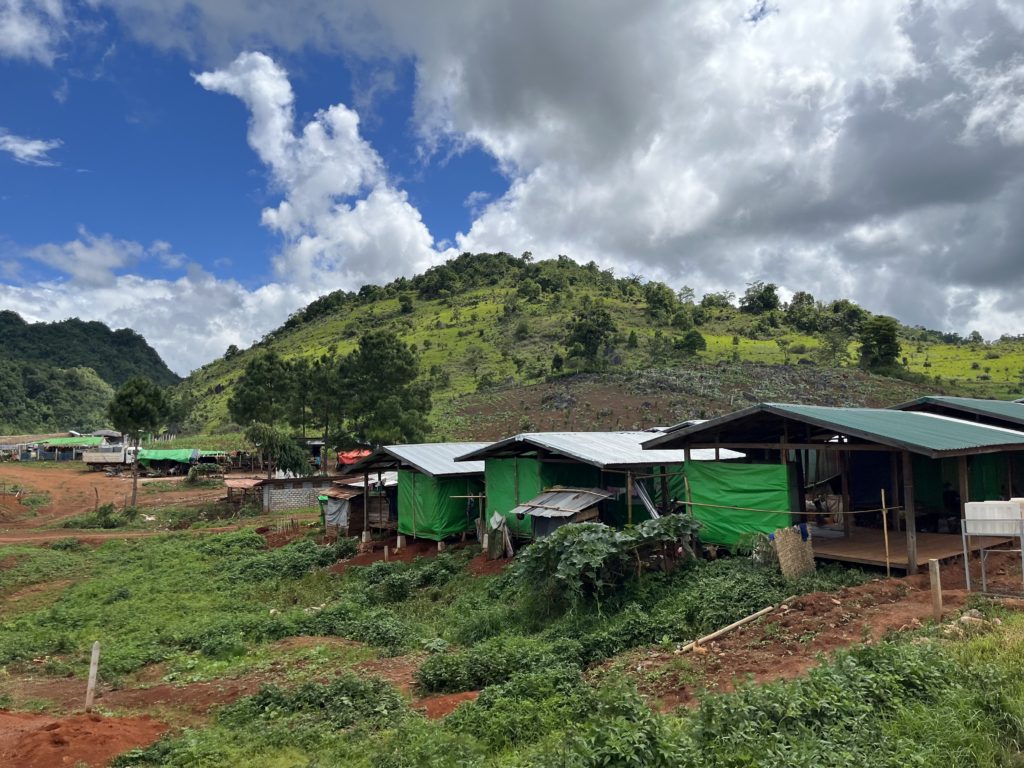
Paulina, 20, a teacher from Daw Ngay Khu village, said her house was damaged by a military mortar during fighting and that soldiers then based themselves in the village. She said:
“Last year we could move back and forth and get things from our village. But this year we dare not go back… We are worried about landmines, because they plant them anywhere.”
Limited demining is overwhelmingly being undertaken by members of armed groups, who do it by hand with only rudimentary equipment and without any professional training. Contamination remains widespread.
The threat to lives and livelihoods posed by landmine contamination remains an issue in other parts of Myanmar where the military has engaged in conflict with armed groups. In 2017, Amnesty International documented several incidents of landmines injuring Rohingya women, men and children along the border of Myanmar’s Rakhine State and Bangladesh.
The military’s depraved use of landmines in homes and villages will continue to have devastating effects on civilians in Kayah State for years to come.
Rawya Rageh, Senior Crisis Adviser at Amnesty International
“The military’s depraved use of landmines in homes and villages will continue to have devastating effects on civilians in Kayah State for years to come. We know from bitter experience that civilian deaths and injuries will mount over time, and the widespread contamination is already blocking people from returning to their homes and farmland,” said Rawya Rageh, Senior Crisis Adviser at Amnesty International.
“Myanmar’s military leadership should immediately end its use of landmines and join the majority of the world in supporting the Mine Ban Treaty, which includes provisions for demining and victim assistance. “There is an urgent need for a scaled-up humanitarian response that addresses rising food insecurity and ensures proper rehabilitative, psychosocial, and other needed care for landmine survivors, as well as adequate planning for and resourcing of post-conflict demining operations to clear contaminated areas.”
The post Myanmar: Military’s use of banned landmines in Kayah State amounts to war crimes appeared first on Amnesty International.
Amnesty International launches global campaign to confront unprecedented worldwide threat to the right to protest
Amnesty International launches global campaign to confront unprecedented worldwide threat to the right to protest
The right to protest is under unprecedented and growing threat across all regions of the world, Amnesty International said today, as the organization launched a new global campaign to confront states’ widening and intensifying efforts to erode this fundamental human right.
From Russia to Sri Lanka, France to Senegal, and Iran to Nicaragua, state authorities are implementing an expanding array of measures to suppress organized dissent. Protesters across the globe are facing a potent mix of pushbacks, with a growing number of laws and other measures to restrict the right to protest; the misuse of force, the expansion of unlawful mass and targeted surveillance; internet shutdowns and online censorship; and abuse and stigmatization. Meanwhile, marginalized and discriminated groups are subjected to even further barriers.
Amnesty International’s “Protect the Protest” campaign will challenge attacks on peaceful protest, stand with those targeted and support the causes of social movements pushing for human rights change.
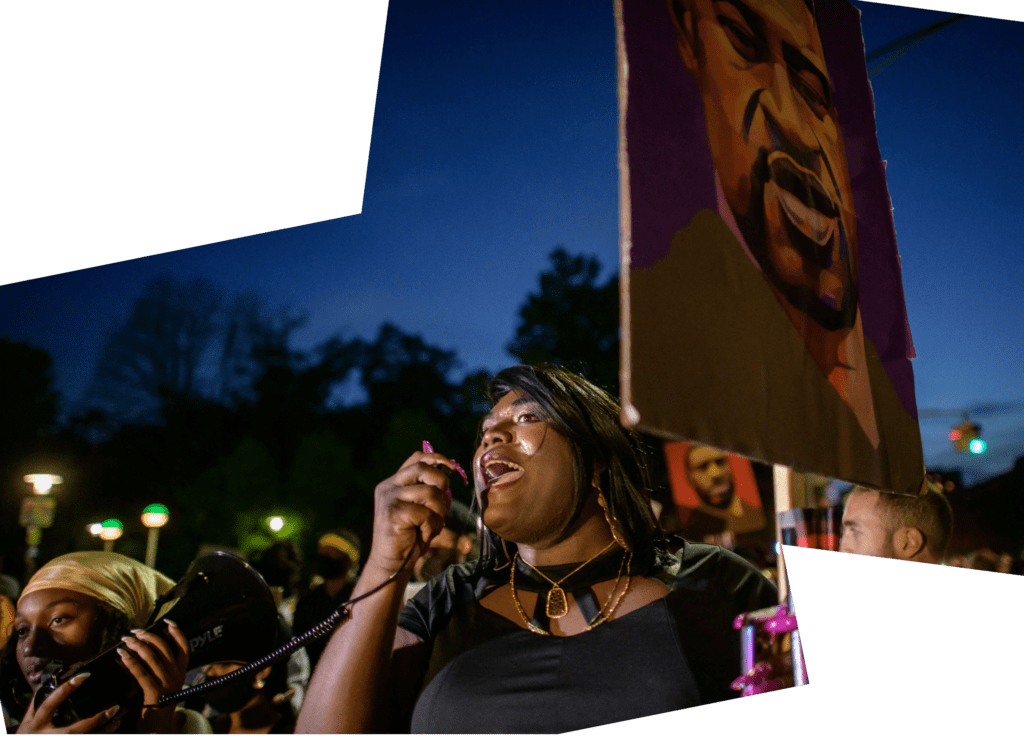
“In recent years we have seen some of the biggest protest mobilizations for decades. Black Lives Matter, MeToo, and the climate change movements have inspired millions the world over to take to the streets and online to demand racial and climate justice, equity and livelihoods, and an end to gender violence and discrimination. Elsewhere, people have stood up in their thousands against police violence and killings, state repression and oppression,” said Agnès Callamard, Amnesty International’s Secretary General.
“Almost without exception, this wave of mass protest has been met with obstructive, repressive and often violent responses by state authorities. Instead of facilitating the right to protest, governments are going to ever greater lengths to quash it. This is why, as the world’s biggest human rights organisation, we have chosen this moment to launch this campaign. It’s time to stand up and loudly remind those in power of our inalienable right to protest, to express grievances, and to demand change freely, collectively and publicly.”
Instead of facilitating the right to protest, governments are going to ever greater lengths to quash it.
Agnès Callamard, Amnesty International’s Secretary General
Protest under attack around the world
It’s time to stand up and loudly remind those in power of our inalienable right to protest, to express grievances, and to demand change freely, collectively and publicly.
Agnès Callamard, Amnesty International’s Secretary General
Restrictive legislation, blanket bans, and emergency powers
A range of issues including the environmental crisis, growing inequality and threats to livelihoods, systemic racism and gender-based violence have made collective action ever more necessary. Governments have responded by introducing legislation imposing illegitimate restrictions on the right to protest. For example, we have seen blanket bans on protests, as seen in Greece and Cyprus during the Covid-19 pandemic. In the UK, a new law contains provisions providing police officers with wide-ranging powers, including the ability to ban ‘noisy protests’, while in Senegal, political demonstrations in the centre of Dakar have been banned since 2011, precluding protests near government buildings.
Governments of all kinds are also increasingly using emergency powers as a pretext to clamp down on dissent. This was seen at the height of the Covid-19 pandemic in countries including Thailand, while in the Democratic Republic of Congo, a government-imposed ‘state of siege’ has provided military and police officers with extensive powers to restrict protest in the provinces of Ituri and North Kivu since May 2021.

Demonization of protestors
Governments across the world are justifying restrictions by arguing that protest constitutes a threat to public order and by stigmatizing protesters; branding them “troublemakers”, “rioters”, or even “terrorists”. By casting protesters in this light, authorities have justified zero-tolerance approaches: introducing and misusing vague and draconian security laws, deploying heavy handed policing, and taking pre-emptive deterrent measures.
This approach was witnessed in Hong Kong, where the National Security Law and its expansive definition of “national security” have been used arbitrarily, among other things, to restrict protest.
And, in India, the anti-terror Unlawful Prevention (Activities) Act (UAPA) and the crime of “sedition”, have been used repeatedly against peaceful protesters, journalists, and human rights defenders.

Protesters at risk
Vahid Afkari

Vahid Afkari was arbitrarily arrested following his peaceful participation in nationwide protests that took place across Iran in 2017 and 2018.
Chow Hang-Tung

Human rights lawyer and labour rights advocate Chow Hang-tung, currently imprisoned, was charged for “inciting subversion” under the new National Security Law on 9 September 2021 and faces up to 10 years’ imprisonment.
Joanah Mamombe, Cecillia Chimbiri and Netsai Marova

Political activists Cecillia Chimbiri, Joana Mamombe and Netsai Marova were arrested in May 2020 at a police roadblock in Harare, Zimbabwe’s capital, for leading an anti-government protest over the authorities’ response to the Covid-19 pandemic and widespread hunger in the country.
Gustavo Gatica

Chilean university student who was blinded after being shot with riot shotguns by the police while peacefully participating in the wave of mass protests that took over Chile in late 2019.
The Saturday Mothers

On 25 August 2018, police in Istanbul used tear gas and water cannons to disperse a peaceful gathering, mainly of women, some of whom were in their 80s, known as ‘Saturday Mothers’.
Militarization of policing
While governments have long relied on aggressive tactics to police protests, security forces have increased the amount of force they use in recent years.
So-called less lethal weapons, including batons, pepper spray, tear gas, stun grenades, water cannons, and rubber bullets are routinely misused by security forces. And, since the early 2000s, Amnesty International has documented a trend towards the militarisation of state responses to protests, including the use of armed forces and military equipment. In countries including Chile and France security forces in full riot gear are often backed by armoured vehicles, military-grade aircraft, surveillance drones, guns and assault weapons, stun grenades and sound cannons.
During the mass uprising that followed the 2021 coup in Myanmar, the military used unlawful lethal force against peaceful protesters. More than 2,000 people have been killed, according to monitors, and more than 13,000 arrested since the military seized power.

Inequality and discrimination
People who face inequality and discrimination, whether based on race, gender, sexual orientation, gender identity, religion, age, disability, occupation, social, economic or migratory status are also more affected by restrictions on their right to protest and face harsher repression.
For example, women, LGBTI and gender-non-conforming people are facing different types of gender-based violence, marginalization, social norms and legislation. In countries including Sudan, Colombia and Belarus, women have been sexually assaulted for participating in protests, while in Turkey, for example, Pride marches have been banned for years.
“Our campaign comes at a critical juncture. The precious right to protest is being eroded at a terrifying pace, and we must do all we can to push back,” said Agnès Callamard.
“Countless protesters have been killed in recent years, and it is partly on their behalf that we must now raise our own voices and defend our right to speak truth to power through protests in the streets and online.”
Background
International human rights law protects the right to protest through a number of separate provisions enshrined in various international and regional treaties which, taken together, provide protests with comprehensive protection. Even though the right to protest is not codified as a separate right in human rights treaties, when people engage in protests, whether individually or collectively, they are exercising a variety of rights, which can include the rights to freedom of expression and peaceful assembly.
Throughout history, protest has been a powerful tool for change. But governments around the world are cracking down on protests and it must be protected.
Protect the protest
Add your voice to our global call to protect the protest and join our campaign today.
The post Amnesty International launches global campaign to confront unprecedented worldwide threat to the right to protest appeared first on Amnesty International.
Thailand: Pegasus spyware found on phones of dissidents involved in mass protests
Thailand must thoroughly investigate the use of the invasive Pegasus spyware found on the phones of dozens of activists, Amnesty International said today, after a new report identified 30 people who were targeted or infected with the harmful software, the first time its use in the country has been confirmed through technical analysis.
The joint report by the Thai NGO iLaw, Digital Reach and The Citizen Lab found that the infections spanned 2020 to 2021 and involved prominent individuals leading the mass pro-democracy protests, which called for major political and economic reforms, as well as academics and human rights defenders who have publicly criticized the Thai government.
These findings stemmed from alarming notifications sent by Apple to many Thai activists that they had been targeted with the spyware in November 2021. Amnesty International’s Security Lab independently confirmed five of the cases in the report through forensic analysis.
“We can now officially add Thailand to the growing list of countries where people peacefully calling for change, expressing an opinion, or discussing government policies may trigger invasive surveillance with a profound toll on an individual’s freedom of expression, privacy, and sense of security,” said Etienne Maynier, Technologist at Amnesty International. “It is worth remembering that this is only what has been found so far, and the scale of surveillance attempts could be bigger and more damaging.”
It is worth remembering that this is only what has been found so far, and the scale of surveillance attempts could be bigger and more damaging.
Etienne Maynier, Technologist at Amnesty International
According to the report, Pegasus spyware was found on the phones of leading Thai protest organizers, including Arnon Nampa, Benja Apan and Panusaya Sithijirawattanakul, also known as Rung, who authorities have targeted with multiple unwarranted criminal proceedings for peacefully exercising their rights to assembly and freedom of expression.
“Instead of listening and engaging with these protesters, academics, and human rights defenders, intrusive surveillance has been used to harass, intimidate, and target them in an attempt to break their spirit and create a society-wide chilling effect. These new revelations are a shocking example of just how low authorities might stoop to control peaceful dissent.”
NSO Group, the company behind Pegasus, claims that it only sells products to government intelligence and law enforcement agencies.
States have binding obligations under international law to not only respect human rights, but also to protect them from abuse by third parties, including private companies.
Amnesty International continues to call for a global moratorium on the sale, transfer, and use of spyware until human rights regulatory safeguards that govern its use are in place.
“Thai authorities must launch an independent, prompt, thorough, and effective investigation into the use of Pegasus spyware and take necessary measures to foster a safe environment for civic engagement. Such measures must include the amendments of legislation enabling state surveillance, including the Computer Crimes Act, the Cybersecurity Act, and the National Intelligence Act in line with international human rights law, as well as implementing safeguards to protect the right to privacy and freedom of expression, association and peaceful assembly.”
Background:
The new report was released one year after the global Pegasus Project revelations, which uncovered how governments worldwide were using NSO Group’s invasive Pegasus spyware to put human rights activists, political leaders, journalists and lawyers under unlawful surveillance.
The lack of a global moratorium on the sale of spyware is allowing the surveillance industry to continue unchecked, Amnesty International warned in a separate statement today.
Following repeated calls for the surveillance industry to be regulated, some steps have been taken in the right direction – but government action has not yet been enough.
The Pegasus Project was a collaboration by journalists from 17 media organizations in 10 countries, coordinated by Forbidden Stories. Amnesty International’s Security Lab used cutting-edge digital forensic tests and research methodologies to confirm evidence of targeting and infections on scores of phones around the world.
In the last year, the Security Lab uncovered new instances of targeting using Pegasus in Morocco-Western Sahara and Poland. In addition, the Security Lab independently confirmed numerous additional cases where Pegasus was still being used to unlawfully target people, including cases in El Salvador, Israel/Occupied Palestinian Territories, Poland, and Spain.
The post Thailand: Pegasus spyware found on phones of dissidents involved in mass protests appeared first on Amnesty International.