Algeria: Authorities must immediately drop charges against Mohamed Tadjadit and 12 Hirak activists

The Algerian authorities must immediately drop charges against prominent Hirak activist and poet Mohamed Tadjadit and 12 other activists who face state security charges punishable with long terms of imprisonment, or even possibly the death penalty, for exercising their human rights, Amnesty International said ahead of the start of their trial on 30 November. The organization is calling on the authorities to immediately and unconditionally release all activists who have been detained solely for exercising their right to freedom of expression and peaceful assembly. 

It is utterly appalling that activists in Algeria, like Mohamed Tadjadit, are facing heavy prison sentences and even the possible risk of the death penalty, simply because they advocated for political reforms.

Hussein Baoumi, Deputy Regional Director for the Middle East and North Africa.

“It is utterly appalling that activists in Algeria, like Mohamed Tadjadit, are facing heavy prison sentences and even the possible risk of the death penalty, simply because they advocated for political reforms,” said Hussein Baoumi, Deputy Regional Director for the Middle East and North Africa.  

“The Algerian authorities’ misuse of vaguely worded security laws to silence their critics is a grave injustice that must cease. These baseless charges must be dropped, and the activists released immediately and unconditionally.” 

Algeria has not carried out any executions since 1993. However, Algeria is yet to abolish the death penalty and ratify the Second Optional Protocol to the International Covenant on Civil and Political Rights. Authorities have sentenced people to death, including dissidents following unfair trials in recent years. The imposition of the death penalty after unfair proceedings renders the use of this punishment arbitrary under international law and standards.  

Amnesty International opposes the death penalty unconditionally, in any cases and under any circumstances. 

The trial of the 13 Hirak activists will commence in front of the Dar El Beïda tribunal of first instance in Algiers on 30 November. They are facing state security charges solely based on their peaceful activism advocating for political reforms. 

Unjust prosecution and risk of death sentence for expressing dissent 

The activists are facing charges of “conspiring to incite citizens against the authority of the state and to undermine national unity” (Articles 77 para 1, 78 and 79 of the Penal Code). This criminal charge is punishable by up to 30 years in prison and by the death penalty.  

The public prosecution also accused them of “receiving funds to carry out actions undermining state security or stability (…) as part of a premeditated plan inside or outside the country,” “publishing content harmful to national interest,” and “inciting to unarmed gathering,” respectively under Article 95bis, 95bis 1, 96 and 100 of the Penal Code that together carry penalties of 11 to 30 years’ imprisonment.  

These vaguely and overly-broad criminal provisions, which stipulate heavy penalties, lack legal clarity, directly criminalize the peaceful exercise of human rights, and are open to arbitrary and discretionary application in contravention with international human rights law and standards. In addition, the actions subject to prosecution do not meet the threshold of the “most serious crimes”, interpreted as intentional killing, to which the use of the death penalty must be restricted under international human rights law and standards. 

The public prosecution is solely relying on the activists’ social media posts and private digital communications lamenting socio-economic conditions in the country and supporting Hirak protests as ‘evidence’.  

In some instances, the public prosecution is using online publications for which the defendants have already been previously convicted, thus indicating a violation of the principle of double jeopardy. For example, the prosecution is relying on a video shared by Mohamed Tadjadit and four co-defendants who posted the testimony of a child tortured in police custody, an act for which those five men were previously sentenced to 16 months in prison. 

Mohamed Tadjadit has previously been convicted and sentenced in at least seven separate cases since 2019. On 11 November, he was sentenced to five years in prison in another case for unfounded terrorism-related charges. Multiple defendants among the 13 are also facing multiple sentences related to their peaceful activism in separate cases.

Algeria: Further Information: Activists & poet could face death sentence: Mohamed Tadjadit – Amnesty International

On 30 November 2025, a new trial will commence for activist and poet Mohamed Tadjadit and 12 other activists who all face state security charges punishable by long-term imprisonment and the death p…

“The Algerian authorities’ repeated prosecution of activists simply for expressing dissenting opinions or for participating in peaceful assemblies reveals a deliberate attempt to close the civic space and silence any form of criticism,” said Hussein Baoumi. 

 Algerian authorities must reverse course urgently: free these activists immediately and unconditionally and cease the criminalization of dissent.

Hussein Baoumi

“Algerian authorities must reverse course urgently: free these activists immediately and unconditionally and cease the criminalization of dissent.” 

Background 

Since the outbreak of the “Hirak” protests in 2019, the Algerian authorities have maintained a relentless crackdown on all forms of dissent by arresting, detaining and convicting activists, journalists, and critics expressing opposition to the government’s policies or other opinions critical of the authorities. 

The post Algeria: Authorities must immediately drop charges against Mohamed Tadjadit and 12 Hirak activists appeared first on Amnesty International.

Why are workers’ rights in the garment industry a gender discrimination issue?

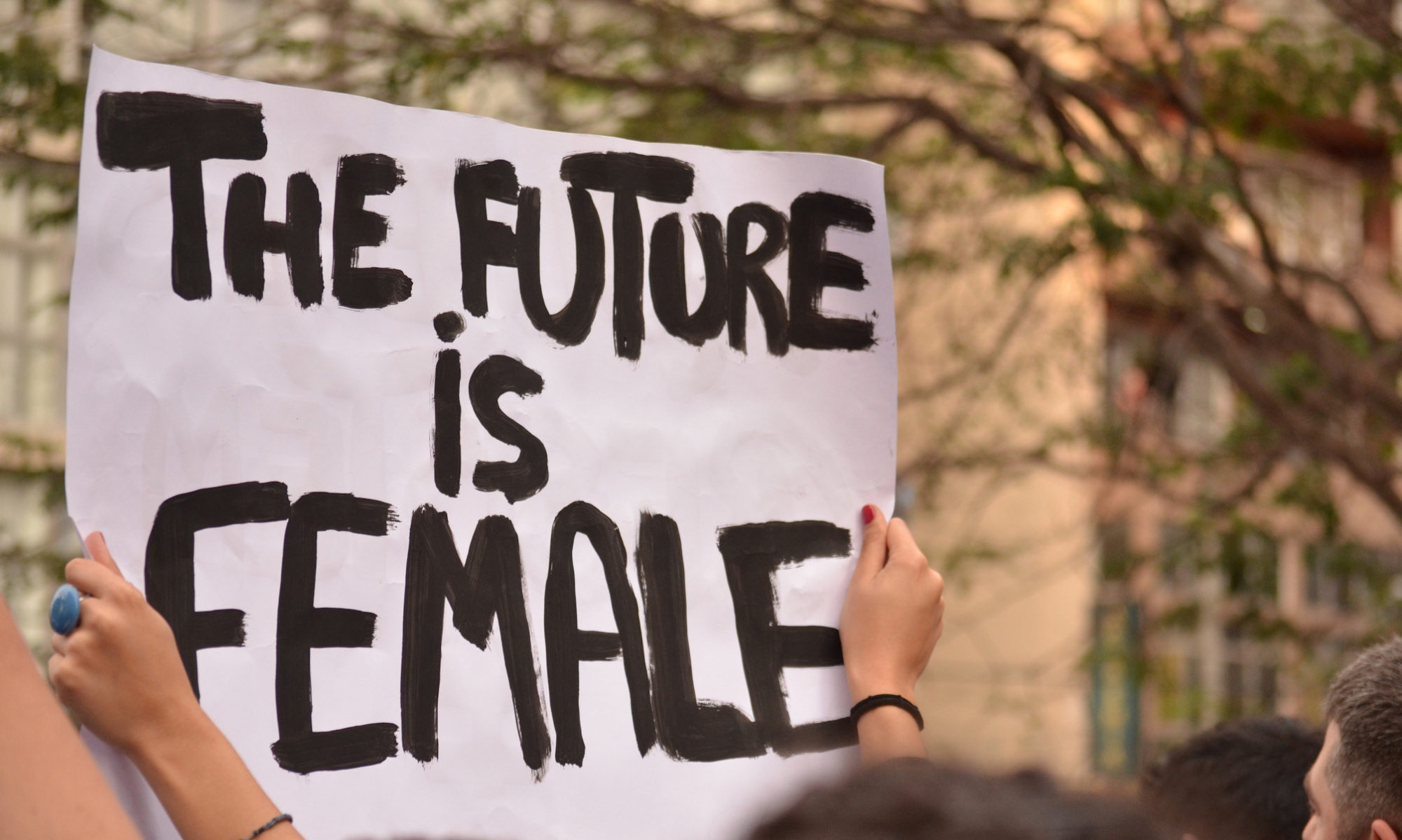
Most factory workers who produce garments for the fashion industry are women. Studies show that women constitute 60-80% of the global garment workforce. This means that when we talk about protecting human rights in the garment and fashion industry, we must also specifically consider the rights of women. Many of the issues facing garment workers, like low wages and precarious employment, disproportionately affect women.  

Gender discrimination is rife in the garment industry. Women face a persistent wage gap, earning less than men for comparable work. They also endure rampant gender-based violence and harassment in the workplace.  

Empowering women workers is crucial for combating gender discrimination. When states and companies suppress labour rights, such as the right to form unions, they not only undermine workers’ rights but also specifically impede women’s ability to advocate for change.  

The garment industry lacks sufficient safeguards for workers, especially women workers. Empowering women workers with greater authority and decision-making opportunities to ensure that new safeguards are designed and implemented based on the genuine, lived experiences of those they aim to protect.  

Who are the workers that make garments for the fashion industry?

The garment industry provides jobs to around 94 million workers globally. Due to high levels of informal employment across the industry, it is hard to determine the precise number and gender makeup. However, the International Labour Organization estimates that between 60-80% of global garment industry workers are women.  

Asia is the largest employer of garment sector workers, accounting for 75% of all workers. Historically, China has long held the top spot for garment production and while it is still the number one producer, recent years have seen rapid industry growth across countries in South Asia.  

Most garment workers in Bangladesh, India, Pakistan and Sri Lanka are internal migrants, predominantly young women. Many of these women moved from rural areas to the city to find employment. Without their families and support networks, they are even more vulnerable to abuse and exploitation.  

Workers with multiple, intersecting identities based on their gender, race, caste, migration status or religion face compounding discrimination.  

Why do women make up most of the workforce in the garment industry?

In many South Asian countries, garment work is seen as an opportunity for women to enter the workforce. Women and girls form the cornerstone of the garment workforce and yet they bear the brunt of its unequal pay and poor working conditions.  

Low minimum wages attract business from rich, powerful fashion brands and distributors who bring in foreign investment. Governments in many developing economies view the garment industry as a pathway to industrialization and growth. However, this economic growth, which disproportionately benefits the richest and most privileged, is often built on the exploitation of poorly paid workers who cannot access some of their most fundamental human rights. 

Those who applaud the garment industry for its role in economic growth cannot ignore how those at the helm of the garment industry, from factory managers to multinational fashion brands, fail to meet their responsibilities to workers, especially women workers.

What is it like to be a garment worker?

Human rights abuses are systemic in the garment industry.  

Workers often endure poverty wages, dangerous working conditions, and precarious employment contracts. Without a living wage they cannot access essentials like food, healthcare, clean water, education, safe housing and other economic, social, and cultural rights.  

Attempts by workers to self-organize or advocate for better conditions are often stamped out by employers and even the state. This suppression of freedoms of expression  and the right to unionize creates a climate of fear and intimidation, hindering workers’ ability to demand justice, accountability and remediation.  

What does gender discrimination look like in the garment industry?

Human rights and labour rights campaigners have highlighted an urgent need to address widespread gender discrimination in the garment industry. Women are paid far less than male workers and lack access to childcare, maternity pay and other benefits.  

Additionally, women workers face a heightened risk of gender-based violence and harassment at work. This is exacerbated by a working culture that often favours men in management positions, despite women constituting most of the workforce.  

Research in India and Bangladesh warns that male managers and supervisors often bully, harass and sexualize the women who work for them. Women from marginalized communities, such as Dalit women in India or Tamil women in Sri Lanka and Christians in Pakistan, are particularly vulnerable to such abuse.  

Harassment and violence are carried out with impunity, which in turn fuels the cycle of abuses against women workers and other marginalized people.  

There is legislation on anti-discrimination, but the problem is that there’s impunity for the perpetrators and no implementation of that legislation. Access to justice is minimal generally for women and this is doubly so with Dalit women. If women report abuse – if they go to a police station for example, then the chances are the police will also abuse them sexually in one way or another. So, cases are very, very rarely reported. 

Meena Varma from the International Dalit Solidarity Network

What needs to change to improve women’s rights in the garment industry?

A rights-based approach to reforming the garment industry must be driven by the voices of women workers themselves.  

Enabling garment workers’ right to organize and unionize is essential. Unions provide a platform for women workers to collectively address concerns about rights abuses, negotiate with employers and advocate for improved working conditions.  

Both governments and companies are responsible for implementing measures that counter gender discrimination and gender-based violence in the workplace and ensure equitable working conditions for all garment workers, including the right to freedom of association. To hold them accountable to those obligations, we need to achieve greater awareness of the human rights abuses against women in garment factories, including impartial reviews of working conditions. By unveiling the truth, we can call out factory owners, employers and states to own up to their human rights and take concrete steps to promote the rights of women garment workers.  

Join Amnesty International in the fight for justice

Garment workers in South Asia are being silenced for speaking out. Together, we can demand their right to organize and fight for fair treatment.   

The post Why are workers’ rights in the garment industry a gender discrimination issue? appeared first on Amnesty International.

Thailand: Extradition of Montagnard activist to Viet Nam places him at grave risk of torture

Responding to the extradition of Montagnard and Ede Indigenous human rights defender Y Quynh Bdap from Thailand to Viet Nam, Amnesty International’s Thailand Researcher Chanatip Tatiyakaroonwong said:

“This extradition is a grave failure of Thailand’s human rights obligations. Sending an Indigenous activist back to a country with a well-documented pattern of torture and discrimination against Montagnards puts Y Quynh Bdap in serious danger.

“Vietnamese courts have a long track record of convicting activists in proceedings that fall far short of international fair trial standards. By handing Y Quynh Bdap over to the very authorities he fled on the basis of a conviction obtained through an unfair trial, Thailand has violated one of the most fundamental protections in international law.

“Following the return of Uyghurs to China earlier this year, this is the second time Thailand has blatantly returned people to their countries despite risks of grave human rights violations despite a domestic law prohibiting torture and non-refoulment that came into force in 2023.

“Thai authorities must ensure safety and protection for all those fleeing persecution – including Indigenous and religious minorities from Viet Nam – rather than putting them at risk of harm.”

Background

On 26 November 2025, Thailand’s Court of Appeal delivered a verdict authorizing the extradition of Y Quynh Bdap, a UN-recognized refugee who had lived in Thailand since 2018. According to Bdap’s lawyers, the verdict hearing was only scheduled one day in advance.

Bdap was removed to Viet Nam despite long-standing concerns about the safety of Indigenous activists returned there. He had been arrested for overstaying his visa in June 2024 after Vietnamese authorities requested his extradition, claiming he had been sentenced in absentia to 10 years’ imprisonment on terrorism charges earlier that year. Previously, Amnesty International had called for Thai authorities not to extradite Bdap due to high risks of torture.

Bdap, a member of the Ede ethnic minority, co-founded Montagnards Stand for Justice, an organization that documents abuses against Central Highlands Indigenous communities and advocates for their religious and cultural rights. Vietnamese authorities accused him and five other Montagnard individuals of involvement in an attack on a government building in Dak Lak province in June 2023. Bdap has consistently rejected these allegations.

Amnesty International has repeatedly documented widespread persecution of Montagnard communities who face arbitrary arrest, torture, and severe restrictions on religious practice and movement. Following the 2023 attack in Dak Lak, Montagnards reported mass detentions, security lockdowns and violent interrogations. Several people described being beaten, electrocuted or injected with unknown substances during questioning.

According to Bdap, he was tortured during an arrest in 2010, describing severe beatings and mistreatment at a police station. His account echoes patterns Amnesty International has reported for more than a decade, including cases where prisoners were confined in tiny cells for months, chained for extended periods, or given contaminated food and water.

Despite ratifying the UN Convention against Torture in 2015, Viet Nam continues to rely on abusive detention practices. Prisoners of conscience, political detainees and members of ethnic and religious minorities are particularly targeted.

Thailand’s decision to extradite Bdap also breaches its obligations under international and domestic law. The principle of non-refoulement—contained in the UN Convention against Torture and reflected in Thailand’s Act on Prevention and Suppression of Torture and Enforced Disappearance—strictly prohibits sending anyone to a country where they are in danger of torture. Despite these obligations, Thailand recently deported 40 Uyghur men to China, placing them at high risks of severe human rights violations.

The post Thailand: Extradition of Montagnard activist to Viet Nam places him at grave risk of torture appeared first on Amnesty International.