Just 4 months old and weighing only 29 kilos (about 64 pounds), a black bear cub had apparently wandered into Castaños, a municipality in Coahuila, looking for water. But instead of leaving the cub alone, several residents reportedly decided to subdue the animal.
Graphic images of the incident appear to show the villagers, some of whom seem to be minors, tying up the cub with ropes while others hold the frightened animal by the legs. Unwilling to let the cub go, the villagers apparently beat the animal and tightened the rope around their neck until they suffocated.
The images also appear to show some villagers and members of the municipal police, who apparently did not intervene, smiling for the camera afterward. Reports say the cub’s body was taken to a veterinarian to be weighed and to determine the cub’s age, then buried near the animal’s natural habitat.
Black bears are considered an endangered species in Mexico—the result of shrinking habitat and illegal hunting—and are protected in other areas of Coahuila.
Earlier this month, police in Norway killed a walrus after she chased a woman taking a selfie. In June, a woman at Yellowstone National Park was gored by a bison when she got too close. Those incidents, like the reported one in Castaños, are graphic reminders to respect wildlife and leave them alone.
The Federal Attorney for Environmental Protection is reportedly pursuing a criminal complaint against the bear’s suspected killers. We can help save wildlife now by leaving them alone—and by going to @profepa_mx and @fgecoahuila to call for swift action against the bear’s alleged abusers and the police who reportedly failed to stop them.
A powerful new documentary highlights the now-possible outcome for animals confined at marine parks—a life in which they can return to naturalistic habitats, finally free from exploitation.
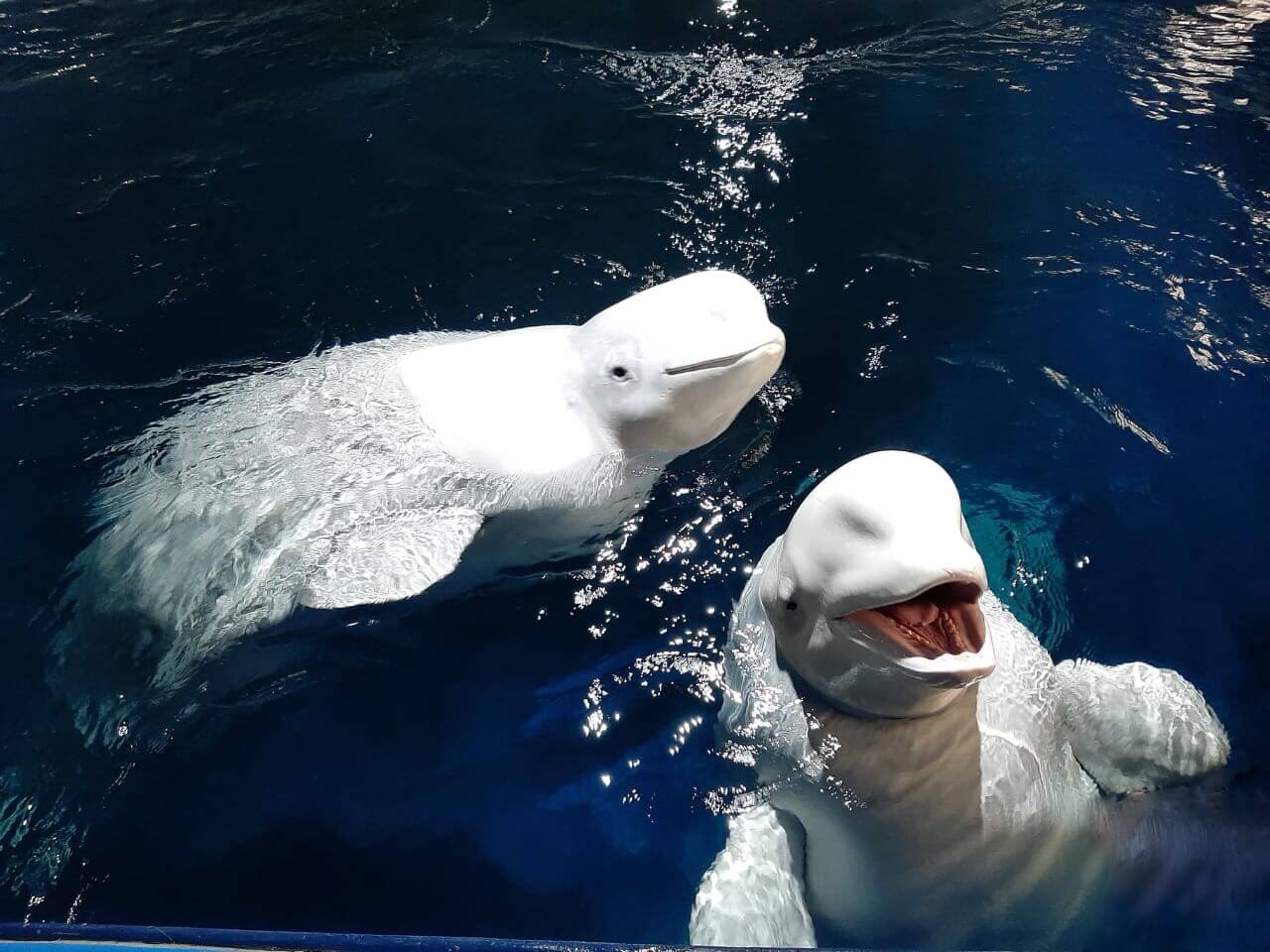
Both heartwarming and gut-wrenching, The Great Whale Rescue follows the story of two beluga whales—Little White and Little Grey—from their marine park rescue in China to their relocation at the first-ever real open-water beluga sanctuary on the island of Heimaey, off Iceland’s southern coast.
SEA LIFE Trust and Press Association
The two whales were taken from their homes when they were only 2 years old to be used in a “research” program before they were shipped off to Changfeng Ocean World in Shanghai, where they remained for more than eight years. Following a change in leadership at the marine park, the plan to return Little White and Little Grey to the ocean where they belong was set in motion.
SEA LIFE Trust and Press Association
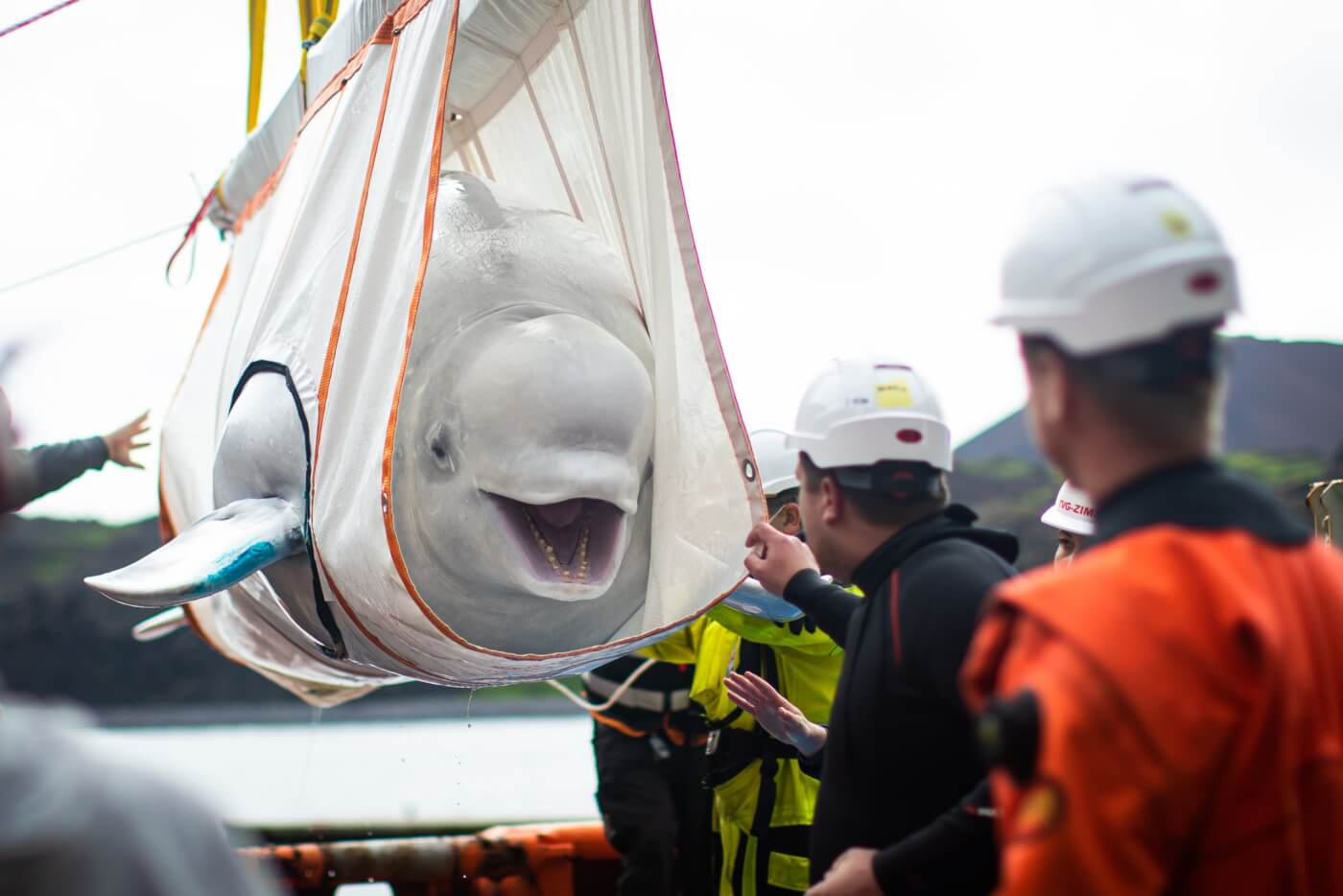
The two-part documentary takes viewers behind the scenes of the epic journey, from the years of intense planning and preparation leading up to the rehoming to the actual transportation of the two 1-ton whales 6,000 miles by land, air, and sea to freedom.
Aaron Chown PA Wire
Spearheaded by the SEA LIFE Trust, the rescue of Little White and Little Grey drives home one key message: Freeing animals from marine parks isn’t just possible—it’s necessary.
As PETA has been saying all along, it’s time for marine parks like SeaWorld to develop a plan to retire the imprisoned dolphins and whales to seaside sanctuaries.
The Great Whale Rescue is coming soon to PBS, so keep an eye on your local TV listings. In the meantime, tell SeaWorld to stop stalling and release the animals it imprisons to real sanctuaries!
No more excuses—it’s time for SeaWorld to establish a firm and rapid plan to end its use of animals, stop breeding all dolphins and whales, and relocate them to seaside sanctuaries. Take action below to send a message to SeaWorld:
Declawing has already been banned in many countries as well as in some U.S. cities and states. In Europe, it’s recognized as a cruel and unnecessary amputation, and as widespread conversation about it flourishes in North America, the list of places where declawing is illegal keeps growing.
What Is Declawing?
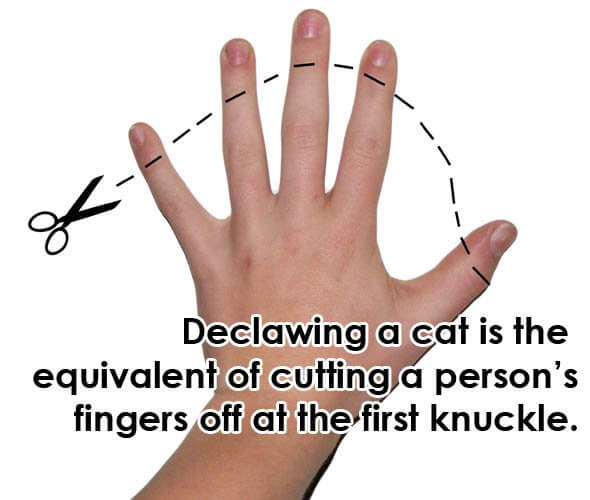
“Declawing” is a deceptively named surgical mutilation of cats’ paws usually performed electively on healthy cats for human convenience. Although the term may sound innocuous, it’s a barbaric procedure—cats’ claws are integrated into their fingers, and removing them is the equivalent of cutting off a human’s fingers at the top knuckle.
This typically unnecessary and cruel amputation requires that cats relearn how to walk. Walking on the affected legs remains painful for the rest of their lives and permanently disables them, affecting their balance and climbing abilities. As a result of their chronic pain and weakened defenses, declawed cats suffer from mental anguish and are fearful in situations in which they were once confident.
Thankfully, more and more people understand the grave harm declawing presents to animals, and no veterinarian worth their salt would ever declaw cats.
U.S. States With Declawing Bans
Only two states in the U.S. have successfully passed declawing bans so far—Maryland (2022) and New York (2019). But the tide is turning, and several states are making progress on introducing legislation that would make declawing illegal.
Cities in the U.S. With Declawing Bans
These U.S. cities have become leaders in compassionate cat care by outlawing declawing procedures:
Austin, Texas
Berkeley, California
Beverly Hills, California
Burbank, California
Denver, Colorado
Madison, Wisconsin
Pittsburgh, Pennsylvania
Louis, Missouri
San Francisco, California
Santa Monica, California
West Hollywood, California
Countries Where Declawing Is Illegal
In these countries, declawing operations are either illegal or only available in cases of “severe injury or disease of the claw,” in which case the procedure would help the animal regain comfort in a disabled paw and promote good health:
Australia
Austria
Belgium
Bosnia and Herzegovina
Brazil
Bulgaria
Cyprus
The Czech Republic
Denmark (does not apply to Greenland or the Faroe Islands)
England
Finland
France
Germany
Greece
Ireland
Israel
Italy
Latvia
Lithuania
Luxembourg
Macedonia
Malta
Montenegro
The Netherlands
New Zealand
Northern Ireland
Norway
Portugal
Romania
Scotland
Serbia
Slovenia
Spain
Sweden
Switzerland
Turkey
Ukraine
Wales
Where Is Declawing Banned in Canada?
Canada has made great progress on declawing bans, as eight of its 10 provinces have banned the procedure:
Alberta
British Columbia
Manitoba
New Brunswick
Newfoundland and Labrador
Nova Scotia
Prince Edward Island
Québec (effective February 2024)
Learn More About Cats’ Needs
Cats need vocal advocates in places where declawing hasn’t been banned yet. Unless it’s medically necessary, declawing should never be done. If you ever have the opportunity to intervene in someone’s decision to put their feline companion through this hell, start a conversation.
Most people are horrified when they discover what declawing really is. Declawing bans are a direct consequence of people learning more about cats—most loving human companions don’t want to mutilate their friends.
When it comes to understanding cats, there are many feline cues we humans miss. PETA President Ingrid Newkirk’s book 250 Vital Things Your Cat Wants You to Know: The Cat Guardian’s Bible has plenty of valuable advice that will help you better understand the felines in your life.
In 2016, the U.S. Department of Agriculture (USDA)—the agency responsible for enforcing the federal Animal Welfare Act (AWA)—implemented its infamous “teachable moments” program. Rather than being written up in an inspection report for failing to comply with minimum animal welfare provisions, facilities that ran afoul of the law would simply be asked to do better—pretty please with brown sugar on top. When animals such as bear cubs, monkeys, and dogs suffered as a result of AWA violations, their abusers got off scot-free. Happily, the use of “teachable moments” has ended. Here’s why PETA is glad to see it laid to rest.
What Kinds of Violations Were Considered ‘Teachable Moments’?
The USDA began using “teachable moments” to document violations that its inspectors interpreted as minor violations, in an attempt to “work together” with licensees and registrants and bring them into compliance before recording a citation on their inspection reports.
“Minor” violations that could be recorded as a “teachable moment” were supposed to meet the following criteria:
Did not adversely impact animal welfare
Was unlikely to become serious, direct, critical, or repeatedly noncompliant in a short time frame
Represented something the facility was willing and able to correct quickly
Had not been recorded previously as a teachable moment or cited in an inspection report
However, some serious violations were written off by inspectors as “teachable moments” instead of earning violators the citations they deserved, failing the animals the inspections were supposed to protect. Now that the “teachable moments” system has ended, exploiters will be cited for their mistreatment of animals, which is the only way they can be held accountable, since citations are the basis for more severe enforcement actions such as warnings, fines, penalties, administrative lawsuits, court cases, and even animal confiscations or license suspensions or revocations.
Who Did ‘Teachable Moments’ Fail?
The use of “teachable moments” gave animal exploiters a pass, even as they failed to comply with minimum animal welfare regulations, and some inspectors incorrectly treated serious animal welfare violations as nothing more than learning opportunities. Incidents that were written off as “teachable moments” but should have been cited in an inspection report include the following.
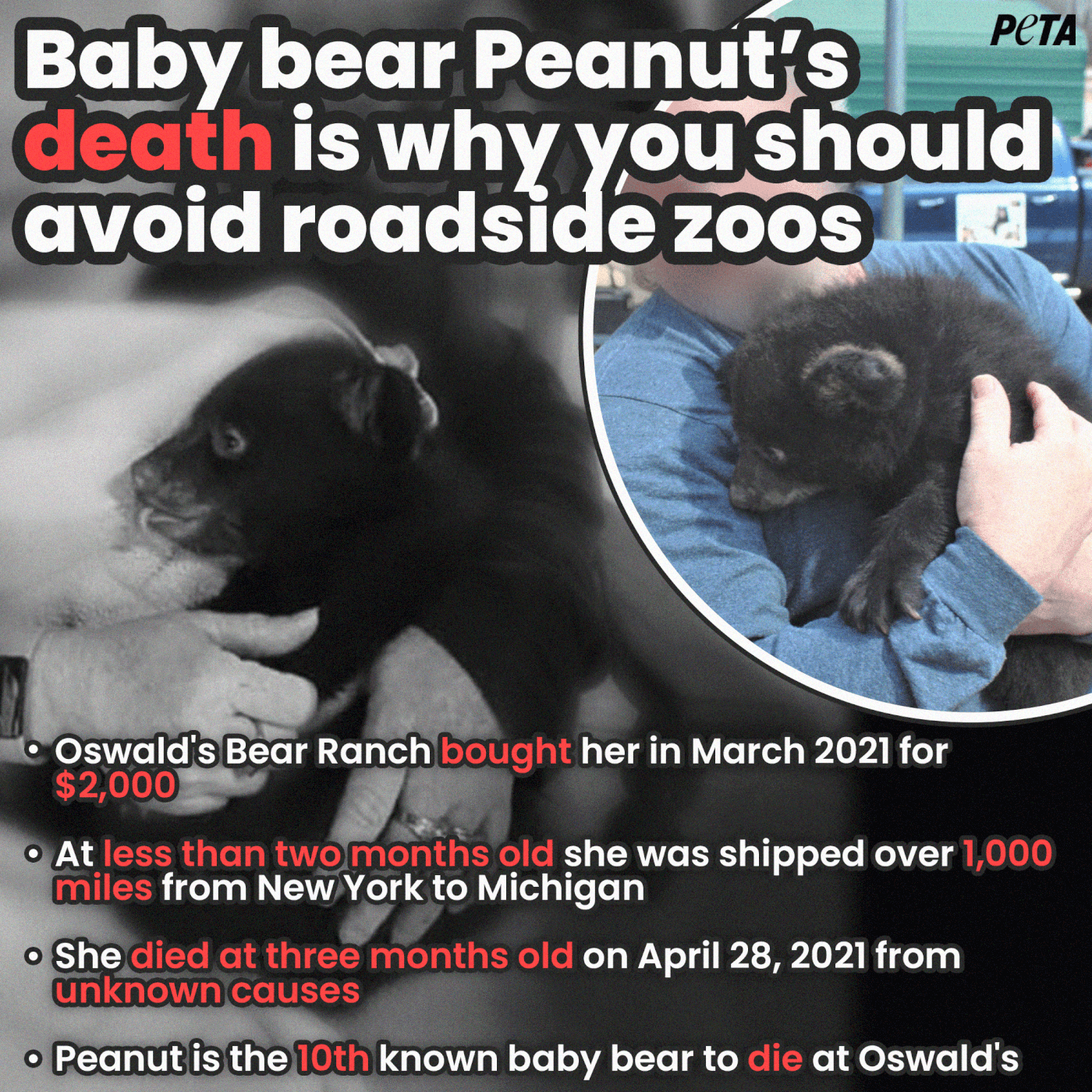
Oswald’s Bear Ranch transported three bear cubs in a sealed plastic tote. A USDA inspector issued a “teachable moment” on April 18 for inadequate ventilation.
Why this should have been a citation: The USDA’s guidance for its inspectors states that any noncompliance that adversely affects animal health and well-being should be cited on an inspection report and includes lack of ventilation as an example of something that warrants a citation. Without proper ventilation, the cubs risked not getting enough oxygen, which would have led to respiratory acidosis as well as increased intracranial pressure—a condition that can cause permanent neurological damage or even death. Also, “teachable moments” weren’t supposed to be issued to facilities with poor compliance records. At the time of this issuance, Oswald’s had just four months earlier agreed to pay $2,400 to settle alleged violations of the AWA.
SeaQuest failed to protect animals and the public—multiple incidents in which an animal bit or scratched guests during encounters were reported. Since then, the same type of violation has been cited on 10 inspection reports, with many noted to be repeat, critical violations.
Why this should have been a citation: Clearly, this issue was serious because the incidents had occurred at an interactive petting zoo—and subsequently were unlikely to be corrected anytime soon.
Oswald’s Bear Ranch failed (again!) to provide infant cubs with nutritionally sufficient food. At the time of inspection on June 11, 2019, the facility’s owners had bottle-fed nearly 90 cubs (who were all vulnerable and immunocompromised because they had been removed from their mothers prematurely) in the span of more than two decades and were apparently not providing the animals with an adequate diet—and still the USDA didn’t cite them for this failure. Several infant cubs have died on Oswald’s watch, including at least two cubs in 2021.
Why this should have been a citation: “Teachable moments” cannot have an impact on animal welfare—and not providing cubs with proper food absolutely falls within this realm.
Banana Derby and Pompeyo Family Dogs failed to provide dogs with adequate space. Banana Derby exhibitor Philip Dolci was issued a “teachable moment” on July 15, 2019, and Pompeyo Family Dogs was issued one on January 14, 2020—both for not providing dogs with the minimum floor space required when they weren’t forced to travel.
Why this should have been a citation: Insufficient space has an adverse effect on animal health and well-being and can lead to psychological distress and physical suffering—making these serious apparent violations of animal welfare regulations.
Weber State University, Wayne State University, and Experimur failed to ensure proper oversight of experiments that caused animals pain and distress. Additionally, Experimur’s Institutional Animal Care and Use Committee (IACUC) failed to ensure that an experimental protocol was classified in the correct pain category. Because the IACUC classified the protocol as causing less pain and distress than was actually the case, the experimenter wasn’t required to conduct a search for alternatives.
Why this should have been a citation: In all three cases, the institutions’ oversight committees failed animals. These failures are particularly concerning as IACUCs are intended to be animals’ last line of defense. The USDA itself considers IACUC violations to be gravely problematic, because such failures represent a breakdown of the system of oversight governing the use of animals in experimentation.
No More Learning Curve—Increase the Pressure on Oswald’s Bear Ranch to Send Animals to Reputable Sanctuaries
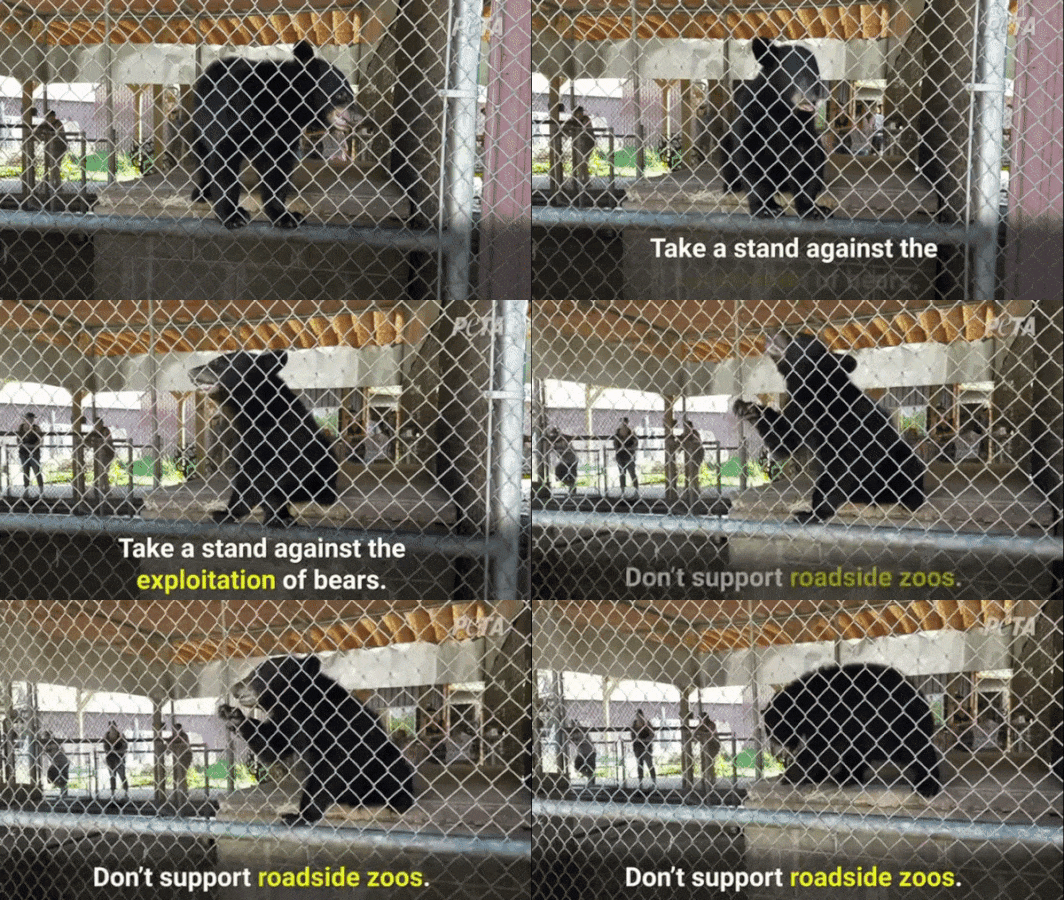
In nature, bear cubs spend their time playing, exploring, and socializing, but at Oswald’s Bear Ranch, they’re used for photo ops and handled by the public—highly disruptive practices that often result in long-term psychological and physical issues for the cubs. Bears at Oswald’s have suffered greatly at the hands of exploiters and unknowing tourists who paid to feed cubs torn away from their mothers by profit-hungry breeders. The roadside zoo was issued several “teachable moments” and citations, but the only way it can show that it really learned its lesson is to turn the bears over to a reputable sanctuary.
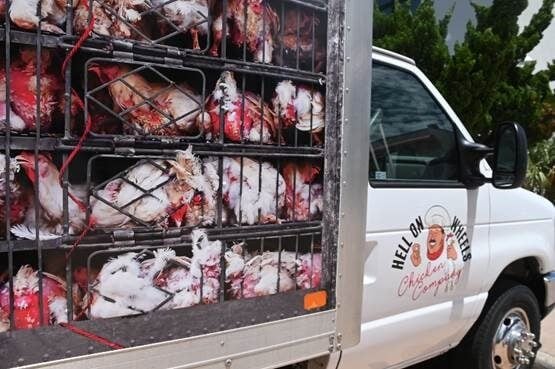
PETA just obtained U.S. Department of Agriculture documents revealing that 1,000 chickens were killed in a horrific fire that engulfed a chicken-transport truck at Costco supplier Lincoln Premium Poultry (LPP) in Fremont, Nebraska, on June 17. Of the 6,000 chickens caged on the trailer, 1,000 died and were “completely burnt” and another 1,500 were injured in the 50-minute fire.
According to the documents, the truck caught fire after the rear wheels “exploded” in “huge flames.” LPP management blamed the fire on overheated brakes, and an LPP whistleblower told PETA that they suspected the truck driver had left the emergency brake on.
LPP staff broke the necks of chickens who had escaped from the burning trailer and killed all other survivors by gassing them with carbon dioxide over the course of nearly four hours.
PETA is calling on the Dodge County Attorney’s Office to charge those responsible under state law, because federal officials haven’t prosecuted any inspected slaughterhouses for acts such as those at LPP since at least 2007.
Chickens—who can recall the faces and social order of more than 100 other birds—should never be subjected to the cramped, extreme conditions of transport trucks, helpless to escape when their lives are so obviously in danger. But not all humans have moved past accepting this kind of cruelty, which the meat industry has made harder to document—in no small part through “ag-gag” laws that make it more difficult to expose. PETA’s “Hell on Wheels” truck brings the stark reality to the people: It exposes observers to the horrors that chickens who are killed for food endure on a daily basis.
The best way you can help reduce this kind of senseless suffering is by going vegan, which saves nearly 200 lives a year. Being vegan means you won’t participate in funding the industries that torment animals as LPP does—all with little to no oversight.