East and Southern Africa: Media freedom under attack amid prevailing impunity

Authorities across East and Southern Africa continued their campaigns of harassment and arbitrary arrests and detention of independent journalists over the past year, Amnesty International said today ahead of World Press Freedom Day.

The organization documented sustained intimidation, harassment, and attacks on independent media in several countries in the region. Amnesty International also documented increased internet blockades or shutdowns and the use of restrictive cyber security laws to restrict media freedom, especially in countries that held elections in 2025 and early 2026.

“Across the region, governments and in some instances non-state actors, intensified their crackdowns on the media and journalists through shutdowns and arrests and arbitrary detentions. They weaponized criminal justice systems to target journalists and continued to use broad and vaguely worded laws to silence and intimidate them. This all came at a time when media revenues were low, putting an even greater strain on press freedom,” said Tigere Chagutah Amnesty International’s Regional Director for East and Southern Africa.

Freedom under siege

In Ethiopia, journalists have faced a renewed wave of crackdowns by the authorities in recent months. Prominent outlets such as Wazema Radio and Addis Standard have had their licenses arbitrarily revoked.

Across the region, governments and in some instances non-state actors, intensified their crackdowns on the media and journalists through shutdowns and arrests and arbitrary detentions.

Tigere Chagutah, Amnesty International’s Regional Director for East and Southern Africa

Journalists have been detained following unlawful surveillance, while reports of enforced disappearances of journalists have increased. Most recently, on 15 April 2026, Million Beyene, managing editor of independent media outlet Addis Standard, was abducted in Addis Ababa, Ethiopia’s capital, by members of the national intelligence agency, according to the media house. Millions were held for two weeks in an undisclosed facility without access to his lawyer or family. His abduction appears to be linked to his work as a journalist. He was subsequently handed over to his family and legal team on 28 April.

Measures targeting Ethiopian journalists and media outlets have increasingly extended to international media.

In Tanzania, in August 2025, the home affairs minister ordered police to conduct “online patrols” to apparently monitor “individuals who used digital platforms to disrupt peace and security”.

In September, the Tanzania Communications Regulatory Authority imposed a 90-day ban on online platform JamiiForums, alleging it had published misleading and defamatory content about the government, in contravention of the 2020 Online Content Regulations and its amendments. 

In October, Tanzania’s authorities imposed a partial internet shutdown during the general elections. Both local and international media were barred from covering the human rights situation in the country in the lead up to and after the elections.

In Uganda, security forces attacked dozens of journalists covering the March 2025 parliamentary by-elections in Kawempe in the capital, Kampala.  Journalists from NTV Uganda and the Daily Monitor newspaper were also subsequently banned from covering parliamentary proceedings and the presidency. The 2023 Anti-Homosexuality Act, which criminalizes the “promotion of homosexuality” through publishing, broadcasting, distribution, and online expression, and imposes penalties of suspension or cancellation of licenses, continued to create a restrictive and intimidating environment for journalists, editors, podcasters, human rights reporters, and community media outlets covering LGBTQI+ lives, public health, violence, forced evictions, court cases, or advocacy.

In Zimbabwe, journalist Blessed Mhlanga remains in exile following his speech at the Geneva Summit for Human Rights and Democracy on 18 February 2026 where he spoke about media repression and shrinking civic space. Gideon Madzikatidze, a journalist with Bulawayo24, has remained in custody since 18 February 2026 after he was detained for publishing a story alleging corruption involving a waste management company. He has been charged with cyberbullying and “broadcasting without a licence,” despite the story being published online. He has been denied bail three times. 

 Media freedom in armed conflicts

In the Democratic Republic of Congo (DRC), control of large swathes of eastern DRC by the March 23 Movement (M23) armed group has had a chilling effect on the media. M23’s detention, torture, and threats against journalists have forced numerous journalists to flee M23-controlled areas and influenced coverage by other independent journalists of M23 abuses and other sensitive issues.

In Mozambique, the National Institute of Communication suspended for 48 hours Vida and Encontro radio stations in Nampula city in February 2025. It claimed, without evidence, that their broadcasting was disrupting the connection between the local airport’s control tower and aircraft. At least one of the stations – Radio Encontro – was known to be critical of the government and of the 2024 elections.

In June, around 16 journalists were arrested and their equipment confiscated by the security forces in Muidumbe district, Cabo Delgado. They were interrogated and intimidated for two hours in nearby Macomia district in connection with their attempt to photograph the destruction of public infrastructure in Macomia during armed conflict. The district administrator had previously authorized the journalists to take photographs.

Journalism is not a crime. Amnesty International reiterates its call to authorities in the region to immediately release all journalists being held for doing their work, quash their convictions and sentences, and drop ongoing charges against them. They must also refrain from enacting laws that stifle media freedom

Tigere Chagutah

In Somalia, journalists were attacked by security forces and subjected to threats, harassment, intimidation, beatings, arbitrary arrests and prosecution. The government stepped up attempts to control and censor journalists reporting on public interest issues, including insecurity, corruption and forced evictions.  

In South Sudan, President Salva Kiir Mayardit signed into law the Cybercrimes and Computer Misuse Act in February 2026. South Sudanese human rights defenders and the Committee to Protect Journalists raised alarm about the act, warning that it could criminalize legitimate online activity and be abused to further restrict media freedom.

In Sudan, amid the ongoing conflict, journalists have been targeted by both sides with arrests, detentions, abductions and killings.

“In all the cases of attacks against journalists that Amnesty International has documented, no one has been held accountable. Victims also continue to be denied access to justice and effective remedies. This increased hostility against the media threatens people’s access to information and weakens accountability,” said Tigere Chagutah.

“Journalism is not a crime. Amnesty International reiterates its call to authorities in the region to immediately release all journalists being held for doing their work, quash their convictions and sentences, and drop ongoing charges against them. They must also refrain from enacting laws that stifle media freedom”.

The post East and Southern Africa: Media freedom under attack amid prevailing impunity appeared first on Amnesty International.

Sabancaya Volcano Volcanic Ash Advisory: NO EMISSION DETECTED

Satellite image of Sabancaya volcano on 2 May 2026

Volcanic Ash Advisory Center Buenos Aires (VAAC) issued the following report:

FVAG01 at 02:40 UTC, 02/05/26 from SABM
VA ADVISORY
DTG: 20260502/0250Z

VAAC: BUENOS AIRES

VOLCANO: SABANCAYA 354006
PSN: S1547 W07150

AREA: PERU

SUMMIT ELEV: 19576 FT [5967 M]

ADVISORY NR: 2026/297

INFO SOURCE: GOES-E. GFS. WEBCAM. VOLCAT.

AVIATION COLOUR CODE: NOT GIVEN

ERUPTION DETAILS: NO EMISSION DETECTED

EST VA DTG: 02/0200Z

EST VA CLD: SFC/FL270 S1544 W07151 – S1626 W07108
– S1629 W07123 – S1544 W07151 MOV SE 20KT

FCST VA CLD +6 HR: 02/0800Z SFC/FL270 S1546 W07150
– S1643 W07053 – S1641 W07113 – S1546 W07150

FCST VA CLD +12 HR: 02/1400Z SFC/FL270 S1547
W07152 – S1626 W07106 – S1650 W07020 – S1653
W07041 – S1629 W07117 – S1547 W07152

FCST VA CLD +18 HR: 02/2000Z NOT AVBL

RMK: NO VA EMISSION DETECTED IN LAST HOURS IN
SATELLITE IMAGERY NOR WEBCAM. OBS WAS ESTIMATED
BY A PREVIOUS FCST. …SMN

NXT ADVISORY: WILL BE ISSUED BY 20260502/0850Z=

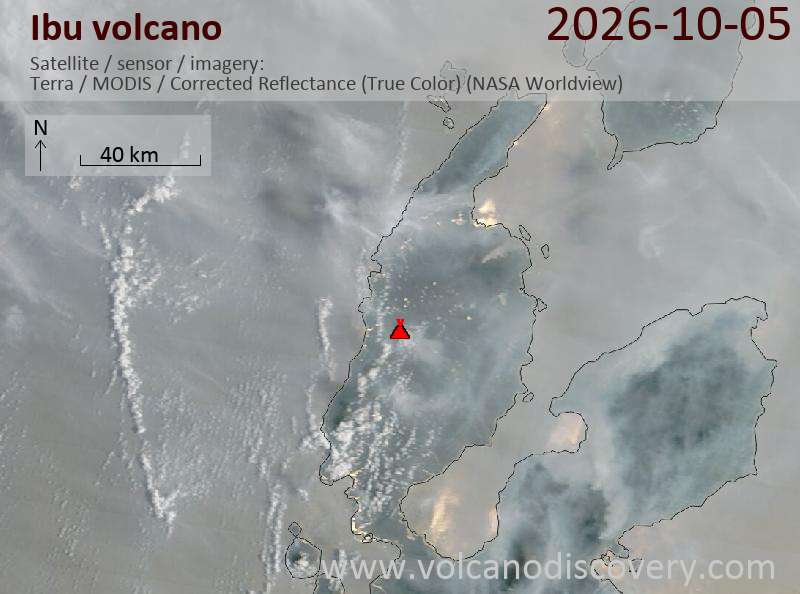
Ibu Volcano Volcanic Ash Advisory: VA ERUPTION REPORTED AT 01/2159Z EST VA DTG: 01/2310Z

Volcanic Ash Advisory Center Darwin (VAAC) issued the following report:

FVAU01 at 23:31 UTC, 01/05/26 from ADRM
VA ADVISORY
DTG: 20260501/2330Z
VAAC: DARWIN
VOLCANO: IBU 268030
PSN: N0129 E12738
AREA: INDONESIA
SOURCE ELEV: 1325M AMSL
ADVISORY NR: 2026/493
INFO SOURCE: HIMAWARI-9, CVGHM
ERUPTION DETAILS: VA ERUPTION REPORTED AT 01/2159Z
EST VA DTG: 01/2310Z
EST VA CLD: SFC/FL070 N0127 E12733 – N0134 E12733 – N0156
E12746 – N0139 E12802 – N0115 E12751 MOV E 05KT
FCST VA CLD +6 HR: 02/0510Z SFC/FL070 N0127 E12733 – N0134
E12733 – N0146 E12800 – N0121 E12807 – N0107 E12745
FCST VA CLD +12 HR: 02/1110Z SFC/FL070 N0134 E12733 – N0138
E12803 – N0121 E12807 – N0106 E12753 – N0107 E12733
FCST VA CLD +18 HR: 02/1710Z SFC/FL070 N0134 E12733 – N0153
E12756 – N0132 E12808 – N0111 E12801 – N0105 E12737
RMK: VA NOT IDENTIFIABLE ON SATELLITE IMAGERY DUE TO MET
CLOUD. RECENT GROUND REPORTS INDICATE DISCRETE EMISSIONS ARE
ONGOING. HEIGHT AND MOVEMENT BASED ON GROUND REPORTS AND
MODEL GUIDANCE.
NXT ADVISORY: NO LATER THAN 20260502/0530Z=

Volcanic activity worldwide 1 May 2026: Santiaguito volcano, Pacaya, Fuego, Popocatépetl, Krakatau,…

Map of today's active volcanoes

Map of today’s active volcanoes

Canlaon (Central Philippines): The Philippine Institute of Volcanology and Seismology (PHIVOLCS) reported that the eruption continued at Kanlaon on 30 April 2026 (local). Plume(s) rose to a maximum of 150 m (492 ft) above the vent. Volcanic seismicity was recorded 4 times. Sulfur dioxide (SO₂) emissions averaged 1,697 tonnes per day on 30 April. The alert level remained at „1 – Low-Level Unrest“ (on a 0–5 level scale). Activity also included: inflationary deformation, volcanic seismicity.
Source: Philippine Institute of Volcanology and Seismology (PHIVOLCS)
… [read more]

Taal (Luzon, Philippines): The Philippine Institute of Volcanology and Seismology (PHIVOLCS) reported that the eruption continued at Taal on 30 April 2026 (local). Plume(s) rose to a maximum of 400 m (1,312 ft) above the vent. The alert level remained at „2 – Moderate Level of Volcanic Unrest“ (on a 0–5 level scale). Activity also included: inflationary deformation.
Source: Philippine Institute of Volcanology and Seismology (PHIVOLCS)
… [read more]

Mayon (Luzon Island, Philippines): Volcanic Ash Advisory Center Tokyo (VAAC) issued the following report: ERUPTION AT 20260501/2016Z VA CLD UNKNOWN REPORTED OBS VA DTG:01/2020Z
…1 May:
The Philippine Institute of Volcanology and Seismology (PHIVOLCS) reported that the eruption continued at Mayon on 30 April 2026 (local). Lava effusion continued from the summit crater. As of 30 April, lava flow lengths remained at 3.8 km in the Basud Gully (E flank), 3.2 km in the Bonga Gully (SE flank), and 1.6 km in the Mi-isi Gully (S flank). Minor episodic Strombolian activity was recorded at 0901 and 2302 on 30 April. Short-lived lava fountaining was observed between 0215 and 0217 on 30 April. Plume(s) rose to a maximum of 400 m (1,312 ft) above the vent. Volcanic seismicity was recorded 28 times. Tremor episodes were recorded 13 times. There were 221 seismically detected rockfalls. Seismicity related to pyroclastic density currents was recorded 3 times. Crater glow was visible to the naked eye. Sulfur dioxide (SO₂) emissions averaged 1,657 tonnes per day on 30 April. Ground deformation indicated short-term deflation across the volcanic edifice, with shorter-term inflation localized on the NE flank. The alert level remained at „3 – Increased Tendency Towards Hazardous Eruption“ (on a 0–5 level scale). Activity also included: seismically detected pyroclastic density current(s) (PDCs), tremor, volcanic seismicity.
Source: Philippine Institute of Volcanology and Seismology (PHIVOLCS)
… [read more]

Bulusan (Luzon Island, Philippines): The Philippine Institute of Volcanology and Seismology (PHIVOLCS) reported that unrest continued at Bulusan on 30 April 2026 (local). Plume(s) were reported. Volcanic seismicity was recorded 92 times. The alert level remained at „1 – Low Level of Volcanic Unrest“ (on a 0–5 level scale). Activity also included: inflationary deformation, volcanic seismicity.
Source: Philippine Institute of Volcanology and Seismology (PHIVOLCS)
… [read more]

Telong (northern Sumatra, Indonesia): The Center for Volcanology and Geological Hazard/Pusat Vulkanologi dan Mitigasi Bencana Geologi (CVGHM/PVMBG) reported that unrest continued at Telong, Bur ni on 30 April 2026 (local). The alert level remained at „Level 2 – Alert“ (on a 4-level scale).
Source: Center for Volcanology and Geological Hazard/Pusat Vulkanologi dan Mitigasi Bencana Geologi (CVGHM/PVMBG)
… [read more]

Karangetang (Siau Island, Sangihe Islands, Indonesia): The Center for Volcanology and Geological Hazard/Pusat Vulkanologi dan Mitigasi Bencana Geologi (CVGHM/PVMBG) reported that unrest continued at Karangetang on 30 April 2026 (local). Gas and vapor plume(s) rose to a maximum of 400 m (1,312 ft) above the vent. Gas emission seismicity was recorded 7 times. The alert level remained at „Level 2 – Alert“ (on a 4-level scale). Activity also included: gas emission seismicity.
Source: Center for Volcanology and Geological Hazard/Pusat Vulkanologi dan Mitigasi Bencana Geologi (CVGHM/PVMBG)
… [read more]

Raung (East Java): The Center for Volcanology and Geological Hazard/Pusat Vulkanologi dan Mitigasi Bencana Geologi (CVGHM/PVMBG) reported that unrest continued at Raung on 30 April 2026 (local). The alert level remained at „Level 2 – Alert“ (on a 4-level scale).
Source: Center for Volcanology and Geological Hazard/Pusat Vulkanologi dan Mitigasi Bencana Geologi (CVGHM/PVMBG)
… [read more]

Gamalama (Halmahera): The Center for Volcanology and Geological Hazard/Pusat Vulkanologi dan Mitigasi Bencana Geologi (CVGHM/PVMBG) reported that unrest continued at Gamalama on 30 April 2026 (local). The alert level remained at „Level 2 – Alert“ (on a 4-level scale).
Source: Center for Volcanology and Geological Hazard/Pusat Vulkanologi dan Mitigasi Bencana Geologi (CVGHM/PVMBG)
… [read more]

Slamet (Central Java, Indonesia): The Center for Volcanology and Geological Hazard/Pusat Vulkanologi dan Mitigasi Bencana Geologi (CVGHM/PVMBG) reported that unrest continued at Slamet on 30 April 2026 (local). Gas and vapor plume(s) rose to a maximum of 100 m (328 ft) above the vent. The alert level remained at „Level 2 – Alert“ (on a 4-level scale).
Source: Center for Volcanology and Geological Hazard/Pusat Vulkanologi dan Mitigasi Bencana Geologi (CVGHM/PVMBG)
… [read more]

Ibu (Halmahera, Indonesia): Explosive activity continues. Volcanic Ash Advisory Center (VAAC) Darwin warned about a volcanic ash plume that rose up to estimated 7000 ft (2100 m) altitude or flight level 070 and is moving at 05 kts in NE direction.
The full report is as follows: VA TO FL070 OBS AT 01/0330Z EST VA DTG:01/1110Z to 7000 ft (2100 m)
…1 May:
The Center for Volcanology and Geological Hazard/Pusat Vulkanologi dan Mitigasi Bencana Geologi (CVGHM/PVMBG) reported that the eruption continued at Ibu on 30 April 2026 (local). Gas and vapor plume(s) rose to a maximum of 200 m (656 ft) above the vent. There were 103 explosions reported, with plumes rising to a maximum of 500 m (1,640 ft) above the vent. The alert level remained at „Level 2 – Alert“ (on a 4-level scale).
Source: Center for Volcanology and Geological Hazard/Pusat Vulkanologi dan Mitigasi Bencana Geologi (CVGHM/PVMBG)
… [read more]

Tangkubanparahu (West Java): The Center for Volcanology and Geological Hazard/Pusat Vulkanologi dan Mitigasi Bencana Geologi (CVGHM/PVMBG) issued a report for Tangkuban Parahu on 30 April 2026 (local). Gas and vapor plume(s) were reported. The alert level remained at „Level 1 – Normal“ (on a 4-level scale).
Source: Center for Volcanology and Geological Hazard/Pusat Vulkanologi dan Mitigasi Bencana Geologi (CVGHM/PVMBG)
… [read more]

Tambora (Sumbawa): The Center for Volcanology and Geological Hazard/Pusat Vulkanologi dan Mitigasi Bencana Geologi (CVGHM/PVMBG) reported that unrest continued at Tambora on 30 April 2026 (local). There was 1 seismically detected rockfall. The alert level remained at „Level 2 – Alert“ (on a 4-level scale).
Source: Center for Volcanology and Geological Hazard/Pusat Vulkanologi dan Mitigasi Bencana Geologi (CVGHM/PVMBG)
… [read more]

Lewotobi (Flores): The Center for Volcanology and Geological Hazard/Pusat Vulkanologi dan Mitigasi Bencana Geologi (CVGHM/PVMBG) reported that the eruption continued at Lewotobi (Laki-Laki) on 30 April 2026 (local). Gas and vapor plume(s) rose to a maximum of 100 m (328 ft) above the vent. The alert level remained at „Level 2 – Alert“ (on a 4-level scale).
Source: Center for Volcanology and Geological Hazard/Pusat Vulkanologi dan Mitigasi Bencana Geologi (CVGHM/PVMBG)
… [read more]

Soputan (North Sulawesi, Indonesia): The Center for Volcanology and Geological Hazard/Pusat Vulkanologi dan Mitigasi Bencana Geologi (CVGHM/PVMBG) reported that unrest continued at Soputan on 30 April 2026 (local). The alert level remained at „Level 2 – Alert“ (on a 4-level scale).
Source: Center for Volcanology and Geological Hazard/Pusat Vulkanologi dan Mitigasi Bencana Geologi (CVGHM/PVMBG)
… [read more]

Lewotolo (Lesser Sunda Islands): The Center for Volcanology and Geological Hazard/Pusat Vulkanologi dan Mitigasi Bencana Geologi (CVGHM/PVMBG) reported that the eruption continued at Lewotolok on 30 April 2026 (local). Gas and vapor plume(s) rose to a maximum of 200 m (656 ft) above the vent. There were 25 seismically detected explosions reported. There was 1 seismically detected rockfall. The alert level remained at „Level 2 – Alert“ (on a 4-level scale).
Source: Center for Volcanology and Geological Hazard/Pusat Vulkanologi dan Mitigasi Bencana Geologi (CVGHM/PVMBG)
… [read more]

Sorikmarapi (Sumatra): The Center for Volcanology and Geological Hazard/Pusat Vulkanologi dan Mitigasi Bencana Geologi (CVGHM/PVMBG) reported that unrest continued at Sorikmarapi on 30 April 2026 (local). Gas and vapor plume(s) rose to a maximum of 25 m (82 ft) above the vent. The alert level remained at „Level 2 – Alert“ (on a 4-level scale).
Source: Center for Volcanology and Geological Hazard/Pusat Vulkanologi dan Mitigasi Bencana Geologi (CVGHM/PVMBG)
… [read more]

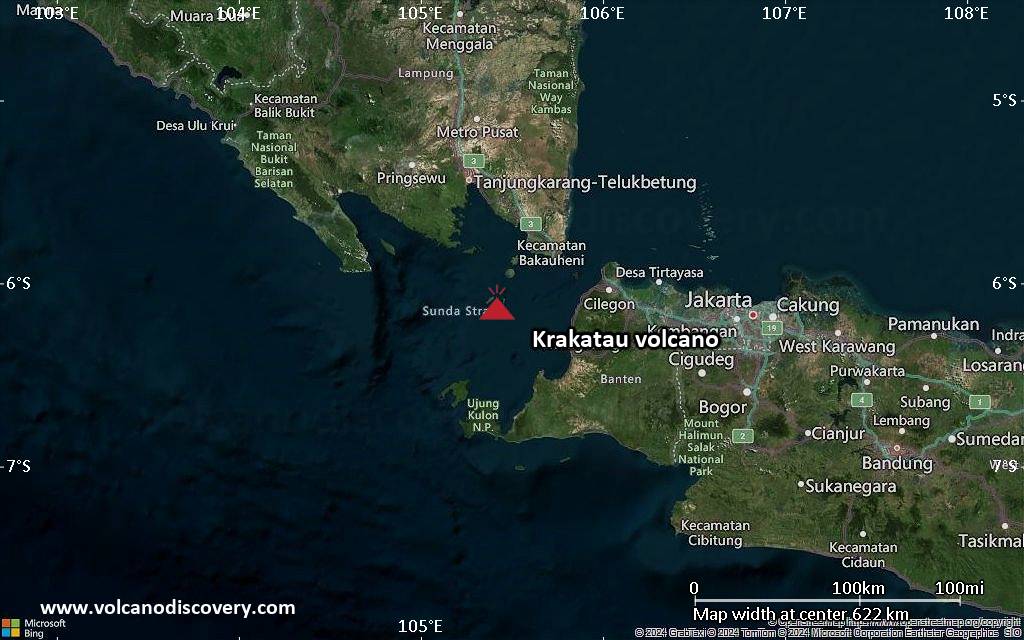
Krakatau (Sunda Strait, Indonesia): The Center for Volcanology and Geological Hazard/Pusat Vulkanologi dan Mitigasi Bencana Geologi (CVGHM/PVMBG) reported that unrest continued at Krakatau on 30 April 2026 (local). Gas plume(s) rose to a maximum of 5 m (16 ft) above the vent. The alert level remained at „Level 2 – Alert“ (on a 4-level scale).
Source: Center for Volcanology and Geological Hazard/Pusat Vulkanologi dan Mitigasi Bencana Geologi (CVGHM/PVMBG)
… [read more]

Merapi (Central Java, Indonesia): The Center for Volcanology and Geological Hazard/Pusat Vulkanologi dan Mitigasi Bencana Geologi (CVGHM/PVMBG) reported that the eruption continued at Merapi on 30 April 2026 (local). Gas and vapor plume(s) rose to a maximum of 200 m (656 ft) above the vent. Two pyroclastic density currents (PDCs), or pyroclastic flows, were observed traveling 1,200 m along Kali Boyong. Seismicity related to pyroclastic density currents was recorded 1 times. There were 8 hot rockfalls, traveling up to 1,900 m. There were 124 seismically detected rockfalls. The alert level remained at „Level 3 – Standby“ (on a 4-level scale). Activity also included: seismically detected pyroclastic density current(s) (PDCs).
Source: Center for Volcanology and Geological Hazard/Pusat Vulkanologi dan Mitigasi Bencana Geologi (CVGHM/PVMBG)
… [read more]

Semeru (East Java, Indonesia): Volcanic Ash Advisory Center Darwin (VAAC) issued the following report: ERUPTION REPORTED AT 01/0650Z EST VA DTG:01/1030Z
…1 May:
The Center for Volcanology and Geological Hazard/Pusat Vulkanologi dan Mitigasi Bencana Geologi (CVGHM/PVMBG) reported that the eruption continued at Semeru on 30 April 2026 (local). There were 67 explosions reported, with plumes rising to a maximum of 600 m (1,969 ft) above the vent. There was 1 seismically detected rockfall. Seismically detected flowage events were recorded 1 times. The alert level remained at „Level 3 – Standby“ (on a 4-level scale). Activity also included: seismically detected flowage event(s).
Source: Center for Volcanology and Geological Hazard/Pusat Vulkanologi dan Mitigasi Bencana Geologi (CVGHM/PVMBG)
… [read more]

Marapi (Western Sumatra, Indonesia): The Center for Volcanology and Geological Hazard/Pusat Vulkanologi dan Mitigasi Bencana Geologi (CVGHM/PVMBG) reported that the eruption continued at Marapi on 30 April 2026 (local). Gas and vapor plume(s) rose to a maximum of 400 m (1,312 ft) above the vent. The alert level remained at „Level 2 – Alert“ (on a 4-level scale).
Source: Center for Volcanology and Geological Hazard/Pusat Vulkanologi dan Mitigasi Bencana Geologi (CVGHM/PVMBG)
… [read more]

Dempo (Sumatra): The Center for Volcanology and Geological Hazard/Pusat Vulkanologi dan Mitigasi Bencana Geologi (CVGHM/PVMBG) reported that unrest continued at Dempo on 30 April 2026 (local). The alert level remained at „Level 2 – Alert“ (on a 4-level scale).
Source: Center for Volcanology and Geological Hazard/Pusat Vulkanologi dan Mitigasi Bencana Geologi (CVGHM/PVMBG)
… [read more]

Dukono (Halmahera): Explosive activity continues. Volcanic Ash Advisory Center (VAAC) Darwin warned about a volcanic ash plume that rose up to estimated 7000 ft (2100 m) altitude or flight level 070 .
The full report is as follows: VA TO FL070 OBS AT 01/0900Z MOV NW EST VA DTG:01/1240Z to 7000 ft (2100 m)
…1 May:
The Center for Volcanology and Geological Hazard/Pusat Vulkanologi dan Mitigasi Bencana Geologi (CVGHM/PVMBG) reported that the eruption continued at Dukono on 30 April 2026 (local). There were 64 explosions reported, with plumes rising to a maximum of 1,200 m (3,937 ft) above the vent. The alert level remained at „Level 2 – Alert“ (on a 4-level scale).
Source: Center for Volcanology and Geological Hazard/Pusat Vulkanologi dan Mitigasi Bencana Geologi (CVGHM/PVMBG)
… [read more]

Kerinci (Sumatra): The Center for Volcanology and Geological Hazard/Pusat Vulkanologi dan Mitigasi Bencana Geologi (CVGHM/PVMBG) reported that unrest continued at Kerinci on 30 April 2026 (local). Gas and vapor plume(s) rose to a maximum of 150 m (492 ft) above the vent. The alert level remained at „Level 2 – Alert“ (on a 4-level scale).
Source: Center for Volcanology and Geological Hazard/Pusat Vulkanologi dan Mitigasi Bencana Geologi (CVGHM/PVMBG)
… [read more]

Iya (Flores): (1 May) Explosive activity continues. Volcanic Ash Advisory Center (VAAC) Darwin warned about a volcanic ash plume that rose up to estimated 3000 ft (900 m) altitude or flight level 030 and is moving at 10 kts in NW direction.
The full report is as follows: VA TO FL030 REPORTED AT 01/0513Z EST VA DTG:01/0620Z to 3000 ft (900 m)

Lokon-Empung (North Sulawesi, Indonesia): The Center for Volcanology and Geological Hazard/Pusat Vulkanologi dan Mitigasi Bencana Geologi (CVGHM/PVMBG) reported that unrest continued at Lokon-Empung on 30 April 2026 (local). Gas and vapor plume(s) rose to a maximum of 25 m (82 ft) above the vent. The alert level remained at „Level 2 – Alert“ (on a 4-level scale).
Source: Center for Volcanology and Geological Hazard/Pusat Vulkanologi dan Mitigasi Bencana Geologi (CVGHM/PVMBG)
… [read more]

Kilauea (Hawai’i): The United States Geological Survey – Hawaiian Volcano Observatory (USGS-HVO) reported that there was a pause in eruptive activity at Kilauea between 29 April 2026 (local) and 30 April 2026 (local). Webcam footage captured persistent glow from the south vent, and intermittent glow from the north vent throughout the night. The number of earthquakes detected at the summit decreased compared to 28–29 April; however, activity remained elevated, with 19 small earthquakes recorded (all at or below M2.0), primarily occurring within Halemaʻumaʻu Crater. Seismic tremor gradually increased at the summit, with regular and more frequent pulses. Both the north and south vents occasionally produced flames. The alert level remained at „Advisory“ (level 2 on a 4-level scale). The aviation alert level remained at „Yellow“ (level 2 on a 4-level scale).
Source: United States Geological Survey – Hawaiian Volcano Observatory (USGS-HVO)
… [read more]

Shishaldin (Aleutian Islands, Alaska): The United States Geological Survey – Alaska Volcano Observatory (USGS-AVO) reported that unrest continued at Shishaldin between 29 April 2026 (local) and 30 April 2026 (local). The alert level remained at „Advisory“ (level 2 on a 4-level scale). The aviation alert level remained at „Yellow“ (level 2 on a 4-level scale).
Source: United States Geological Survey – Alaska Volcano Observatory (USGS-AVO)
… [read more]

Great Sitkin (United States, Aleutian Islands): The United States Geological Survey – Alaska Volcano Observatory (USGS-AVO) reported that the eruption continued at Great Sitkin between 29 April 2026 (local) and 30 April 2026 (local). Lava continued to slowly erupt in the summit crater. Rockfalls generated by the growing lava dome were seismically recorded. The alert level remained at „Watch“ (level 3 on a 4-level scale). The aviation alert level remained at „Orange“ (level 3 on a 4-level scale).
Source: United States Geological Survey – Alaska Volcano Observatory (USGS-AVO)
… [read more]

Popocatépetl (Central Mexico): Volcanic Ash Advisory Center Washington (VAAC) issued the following report: NO FURTHER VA EMISSIONS
…1 May:
The Centro Nacional de Prevención de Desastres (CENAPRED) reported that the eruption continued at Popocatépetl between 29 April 2026 (local) and 30 April 2026 (local). Ash, gas, and vapor plume(s) were reported. The alert level remained at „Yellow Alert – Phase 2“ (level 4 on a 7-level scale).
Source: Centro Nacional de Prevención de Desastres (CENAPRED)
… [read more]

Santiaguito (Guatemala): Volcanic Ash Advisory Center Washington (VAAC) issued the following report: OCNL VA EM
…1 May:
The Instituto Nacional de Sismología, Vulcanología, Meteorología e Hidrología (INSIVUMEH) reported that the eruption continued at Santa María between 29 April 2026 (local) and 30 April 2026 (local). There were explosions reported, occurring at a rate of up to 3 per hour, with plumes rising to a maximum of 800 m (2,625 ft) above the vent.
Source: Instituto Nacional de Sismología, Vulcanología, Meteorología e Hidrología (INSIVUMEH)
… [read more]

Pacaya (Guatemala): The Instituto Nacional de Sismología, Vulcanología, Meteorología e Hidrología (INSIVUMEH) reported that unrest continued at Pacaya between 29 April 2026 (local) and 30 April 2026 (local). Activity also included: fumarolic activity.
Source: Instituto Nacional de Sismología, Vulcanología, Meteorología e Hidrología (INSIVUMEH)
… [read more]

Fuego (Guatemala): Volcanic Ash Advisory Center Washington (VAAC) issued the following report: VA EMS ONGOING
…1 May:
The Instituto Nacional de Sismología, Vulcanología, Meteorología e Hidrología (INSIVUMEH) reported that the eruption continued at Fuego between 29 April 2026 (local) and 30 April 2026 (local). There were explosions reported, occurring at a rate of up to 10 per hour, with plumes rising to a maximum of 1,037 m (3,402 ft) above the vent. Some explosions ejected incandescent material up to 300 m above the crater.
Source: Instituto Nacional de Sismología, Vulcanología, Meteorología e Hidrología (INSIVUMEH)
… [read more]

Poas (Costa Rica): The Observatorio Vulcanológico y Sismológico de Costa Rica – Universidad Nacional (OVSICORI-UNA) reported that the eruption continued at Poás between 29 April 2026 (local) and 30 April 2026 (local). Background seismic tremor significantly decreased following the 28 April eruption, then started to increase again by 30 April. Long-period (LP) seismic events continued to be recorded, though at a reduced rate compared to recent months. For reference, the highest number of LP earthquakes at Poás was 500 on 15 March 2026. The alert level remained at „Level 2 – Warning“ (on a 0–4 level scale). The aviation alert level remained at „Yellow“ (level 2 on a 4-level scale).
Source: Observatorio Vulcanológico y Sismológico de Costa Rica – Universidad Nacional (OVSICORI-UNA)
… [read more]

Sangay (Ecuador): Volcanic Ash Advisory Center Washington (VAAC) issued the following report: PSBL VA EMS
…1 May:
The Instituto Geofísico-Escuela Politécnica Nacional (IG-EPN) reported that the eruption continued at Sangay between 29 April 2026 (local) and 30 April 2026 (local). There were 471 seismically detected explosions reported. Ash and gas plume(s) rose to a maximum of 1,500 m (4,921 ft) above the vent. The alert level remained at „2 – Yellow“ (on a 4-level scale). Activity also included: thermal anomaly(ies).
Source: Instituto Geofísico-Escuela Politécnica Nacional (IG-EPN)
… [read more]

Reventador (Ecuador): Explosive activity continues. Volcanic Ash Advisory Center (VAAC) Washington warned about a volcanic ash plume that rose up to estimated 15000 ft (4600 m) altitude or flight level 150 .
The full report is as follows: VA EM DETECTED to 15000 ft (4600 m)
…1 May:
The Instituto Geofísico-Escuela Politécnica Nacional (IG-EPN) reported that the eruption continued at Reventador between 29 April 2026 (local) and 30 April 2026 (local). There were 98 seismically detected explosions reported. Ash and gas plume(s) rose to a maximum of 1,000 m (3,281 ft) above the vent. There were incandescent rockfalls, descending 1,000 m below the crater. The alert level remained at „3 – Orange“ (on a 4-level scale). Activity also included: thermal anomaly(ies).
Source: Instituto Geofísico-Escuela Politécnica Nacional (IG-EPN)
… [read more]

Sabancaya (Peru): Volcanic Ash Advisory Center Buenos Aires (VAAC) issued the following report: INTERMITTENT EMISSION
…1 May:
The Centro Vulcanológico Nacional del Instituto Geofísico del Perú (CENVUL-IGP) reported that the eruption continued at Sabancaya between 29 April 2026 (local) and 30 April 2026 (local). There was 1 explosion reported, with plumes rising to a maximum of 2,500 m (8,202 ft) above the vent. A total of 12 earthquakes related to the movement of magma and gases were recorded. Thermal anomalies were detected 4 times. The alert level remained at „Orange“ (level 3 on a 4-level scale). Activity also included: thermal anomaly(ies).
Source: Centro Vulcanológico Nacional del Instituto Geofísico del Perú (CENVUL-IGP)
… [read more]

Volcano Activity Summary for 1 May 2026: