
Write for Rights: World’s biggest human rights campaign marks 20th birthday

Amnesty International’s record-breaking Write for Rights campaign launches today, marking 20 years of the global letter-writing drive. Since 2001, the organization has collected millions of messages written in support of people who are unjustly detained or persecuted, and Write for Rights has become the world’s biggest human rights event.

This year, Amnesty International is calling for justice for 10 more brave individuals and groups, including a citizen journalist imprisoned in China for reporting on Covid-19, an environmental activist imprisoned in Guatemala for campaigning against the destruction of one of his country’s sacred rivers, a teenage journalist from the occupied West Bank and a Mexican women’s rights activist who survived a police shooting.

“Every year, Write for Rights offers a lifeline for people around the world whose human rights are under attack, simply because they stood up for what they believe in. They are challenging inequality, discrimination, political repression and campaigning to protect all our rights, whether for environmental justice or against the death penalty. The Write for Rights campaign signifies everything Amnesty stands for – people from all over the world coming with one voice, in global solidarity, to challenge injustice,” said Agnès Callamard, Amnesty International’s Secretary General.

“They need you to stand with them – whether that’s through a tweet, a signature or a letter to those in authority. Sometimes the smallest act can make the biggest difference. The last 20 years of Write for Rights shows words really do have power.”

The last 20 years of Write for Rights shows words really do have power

Secretary General, Agnès Callamard

Every December, people around the world write millions of letters, emails, tweets, Facebook posts and postcards in support of those whose human rights are under attack. Write for Rights has helped transform the lives of more than 100 people since 2001, freeing them from torture, harassment, or unjust imprisonment. 

One of the cases featured in this year’s campaign is 15-year-old Janna Jihad, who grew up in the small Palestinian village of Nabi Saleh. In 2009, when Janna was three, her community began to hold weekly peaceful demonstrations against the occupation, which were met with violence by Israeli forces. When Janna was seven, she began using her mother’s phone to record the experiences of her community, and she has been recognized as one of the youngest ever human rights reporters.

Janna has faced death threats and intimidation for her work, but is determined to keep speaking out. She said:

“Being raised in an activist family – hearing the stories of my grandma or grandpa, listening to my uncles talk about getting arrested, learning about the resistance — inspired me to not stay silent. Staying silent in such situations is impossible. Why would I stay silent if I want to change the reality of what we’re living through and what we’re still going through?”

Amnesty International is calling on supporters to write letters to demand protection for Janna.

Amnesty International is also calling for justice for:    

  • Mikita Zalatarou, who just 16 when he was arrested after being caught up in crowds leaving a protest in Belarus. He was held in solitary confinement where he was reportedly tortured.
  • Wendy Galarza, who was shot after attending a protest to demand justice for a murdered woman in Cancún, Mexico.
  • Bernardo Caal Xol, who is imprisoned in Guatemala for campaigning against the destruction of the river Cahabón.
  • Citizen journalist Zhang Zhan, imprisoned in China for her work reporting on the Covid-19 outbreak in Wuhan.
  • Panusaya (“Rung”) Sithijirawattanakul, a 22-year-old activist who is facing life in prison for calling for freedom and democracy in Thailand.
  • Imoleayo Adeyeun Michael, who is facing prison for taking part in the #EndSARs movement in Nigeria.
  • Anna Sharyhina and Vira Chernygina, who run an LGBTI organization in Ukraine. Anna and Vera have been attacked and abused, and the authorities have failed to protect them.
  • Mohamed Baker, a lawyer imprisoned in Egypt. Mohamed has dedicated his life to protecting the human rights of others.
  • Ciham Ali from Eritrea, who has been missing for more than eight years. When she was 15, she was taken by the Eritrean authorities while trying to leave the country and has not been seen since.

Write for Rights began 20 years ago in Warsaw, Poland, when a group of friends decided to celebrate Human Rights Day (10 December) with a 24-hour letter-writing marathon. From 2,326 letters in 2001 to 4.5 million letters, tweets and petition signatures in 2020, Write for Rights has grown into the world’s biggest human rights campaign.

It’s a campaign that really does work – as Jani Silva, an environmental activist from Colombia, can attest. Jani’s fearless opposition to environment contamination and human rights violations has led to harassment, intimidation and death threats. In 2020, more than 400,000 people took action through Write for Rights, calling for her protection.

Jani said:

“I am so very grateful for the letters. From the bottom of my heart, this campaign has kept me alive. It’s what has stopped them from killing me because they know that you are there.”

The post Write for Rights: World’s biggest human rights campaign marks 20th birthday appeared first on Amnesty International.
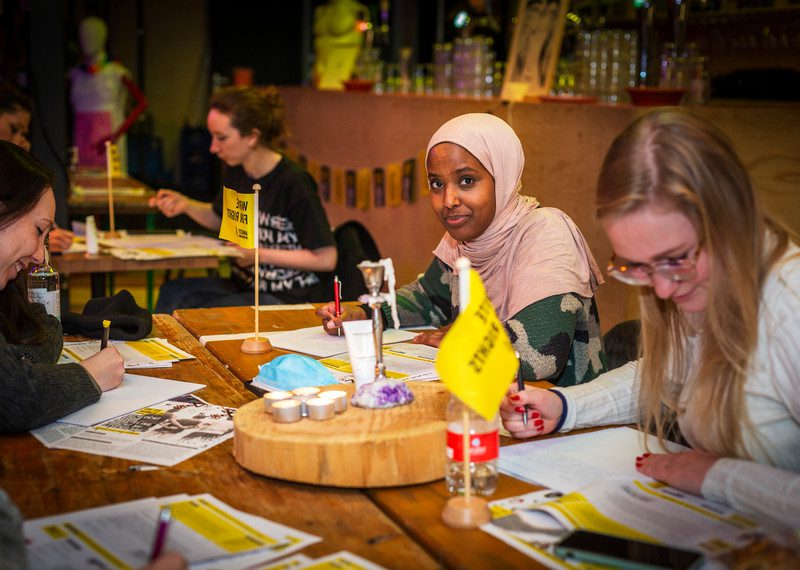
Write for Rights: Celebrating 20 years of change

A slam poet imprisoned in Myanmar, an NGO worker arrested in Burundi, Pride protestors detained in Turkey, a sixteen-year-old sentenced to death in Nigeria. All these people faced terrible injustices, and all are now free – a handful of the hundreds of lives changed by the Write for Rights campaign.

In October 2001, a small group of Amnesty members met in Warsaw, Poland to plan activities for Human Rights Day on 10 December. Little did they know that 20 years later their ‘simple plan’ would change the lives of innumerable people around the world.

In 2001, activists in Poland wrote letters to authorities for 24 hours straight and every letter aimed to end a human rights injustice – and with those 2,326 letters, Write for Rights was born!

Writes for Rights events take place around the world.

In 2002, the campaign went global, with activists from 18 other countries joining those in Poland. By 2005, the campaign got even bigger, with 37 countries taking part. Starting at midday on 10 December in Japan and Malaysia, crossing to Mongolia and Nepal, then onto countries in Europe, Africa and the Middle East and ending in the Americas. At the culmination of the 24-hours, over 80,000 letters had been written.

From small seeds, mighty trees grow and what started as a group of friends taking part in a 24-hour ‘letter writing marathon’, has now become the biggest human rights campaign in the world. By 2019, the 24 hours had become two weeks of activities, with over 100 countries taking part and 6.6 million letters, emails, SMS’ and Twitter actions collected. From music concerts in Burkina Faso, to theatre shows in Morocco, speakers’ tours in Norway, art exhibitions in Brazil and over 700 schools in Poland, Write for Rights has grown and morphed into something truly amazing.

Student activist and poet, Paing Phyo Min.

As the campaign has grown in numbers, so too have the successes. The impact of Write for Rights has been life changing for those featured. In 2019, student activist and poet, 24-year-old Paing Phyo Min, was arrested after performing satirical poetry criticizing the military in Myanmar. The charges against him included “incitement”; the authorities claiming that the poetry performance would encourage military officers to abandon their duties. Paing Phyo Min was sentenced to six-years behind bars. Over 300,000 letters and cards, signatures and Tweets were collected on behalf of Paing Phyo Min. A few months after the campaign, in April 2021, Paing Phyo was released from prison.

Burundian human rights defender Germain Rukuki.

On 30 June 2021, Burundian human rights defender Germain Rukuki was released after serving more than four years in prison. He should never have been imprisoned in the first place – Germain was arrested, prosecuted and convicted simply for his human rights work.

During Write for Rights, supporters from around the world took more than 436,000 actions calling for Germain’s freedom. Germain’s wife Emelyne Mupfasoni shared her thanks with all those who acted, “From the bottom of my heart, I want to thank you all to have mobilized and made it possible for Germain to soon reunite with us…”

Student activists, Melike Balkan and Özgür Gür.

Eighteen students and one member of faculty were on trial for more than two years for organising a Pride event at the Middle Eastern Technical University (METU) in Ankara, Turkey, in 2019. Over 445,000 actions were taken on behalf of the METU Pride defendants, who faced up to three years in prison if found guilty. Melike Balkan and Özgür Gür, two of the 19 defendants, wholeheartedly joined the campaign, taking part in many activities. While the Covid-19 pandemic prevented travel, they joined over 20 online meetings with Amnesty members and students across the world. On 8 October 2021 they were acquitted of almost all charges. Melike and Özgür have gone on to form their own NGO, advocating, campaigning and defending the rights of young LGBTI+ people and students in Turkey.

Melike and Özgür aren’t the only people featured in Write for Rights to take an active role in campaigning.

Moses Akatugba.

During Write for Rights 2014, hundreds of thousands of people around the world called for the release of Moses Akatugba. In 2005, Moses was just 16 years old when he was accused of stealing three mobile phones, tortured by the police into ‘confessing’ and sentenced to death.

In June 2015, after over 800,000 messages were directed to the Governor of Nigeria’s Delta State, Moses was pardoned. When Moses finally left prison, he expressed his huge gratitude to all those who had written on his behalf, stating: “I want to assure them that this great effort they have shown to me will not be in vain, by the special grace of God I will live up to their expectation. I promise to be a human rights activist – to fight for others.”

I want to assure them [Amnesty supporters] that this great effort they have shown to me will not be in vain… I will live up to their expectation

Moses Akatugba

And fight he did.

In December 2019, Moses travelled to the European Parliament in Brussels to take part in Write for Rights actions for fifteen-year-old Magai Matiop Ngong from South Sudan, who featured in the campaign that year. Like Moses, Magai had been sentenced to death when only a child. Moses used his unique experience to campaign on behalf of Magai. Following more than 700,000 letters, tweets, postcards and messages, the Court of Appeal in South Sudan repealed the death sentence imposed on Magai, noting that he was a child at the time of the crime.

From Moses to Melike and Özgür, these inspiring people represent just a handful of those who have been released over the past 20 years, thanks to your incredible work. Nothing compares to the power of people and Amnesty International’s campaign shows how writing a letter, sending a tweet or signing a petition really can change a person’s life.

The post Write for Rights: Celebrating 20 years of change appeared first on Amnesty International.
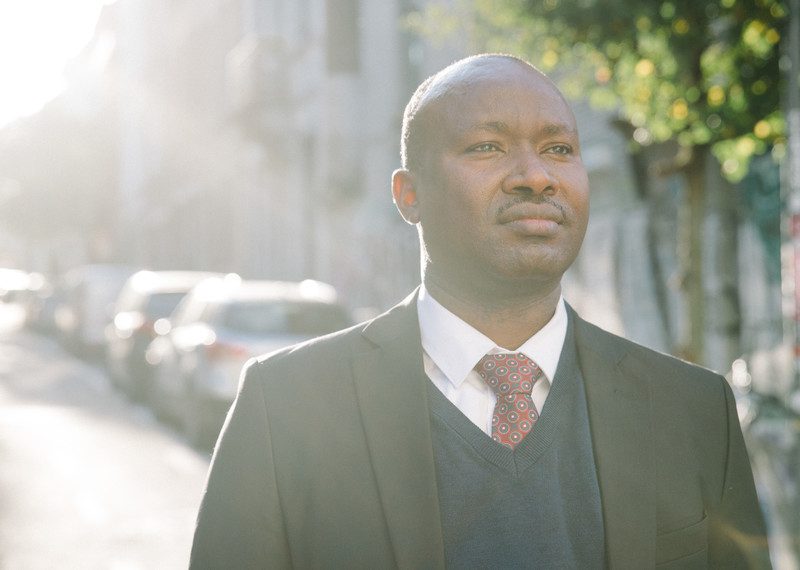
Iran: Release arbitrarily detained rights activist at imminent risk of flogging

Responding to the arbitrary arrest of prominent human rights defender Narges Mohammadi on 16 November 2021 in Karaj, Alborz province, while attending a memorial for Ebrahim Ketabdar, who was killed by Iranian security forces during nationwide protests in November 2019, Heba Morayef, Regional Director for the Middle East and North Africa said:

“Narges Mohammadi is a prisoner of conscience targeted solely for her peaceful human rights activities and is now at imminent risk of receiving 80 lashes. We call on the Iranian authorities to immediately and unconditionally release her, quash her unjust sentence and ensure she is protected from all forms of torture and other ill-treatment, including floggings.

“To arrest a human rights defender for calling for truth and justice on the two-year anniversary of the November 2019 protests, where hundreds of men, women and children were killed by Iranian security forces, is a callous act – and another reminder of the crisis of systemic impunity in Iran for crimes under international law.

“For far too long, the Iranian authorities have subjected Narges Mohammadi to arbitrary detentions, unjust prosecutions, torture and other ill-treatment for her human rights work. Amnesty International urges the international community, including the United Nations and the European Union, to speak out about her case and put the unbridled repression of Iranian human rights defenders into scalpel-sharp focus.”

Background

Narges Mohammadi is the vice president of the Centre for Human Rights Defenders in Iran and worked with the Campaign for Step-by-Step Abolition of the Death Penalty (known as Legam, its Persian acronym). Following the November 2019 nationwide protests and unlawful killing of hundreds of protesters, Narges Mohammadi vocally supported bereaved family members seeking truth and justice for their loved ones’ killings.

In May 2021, Branch 1188 of Criminal Court Two in Tehran sentenced Narges Mohammadi to two-and-a-half years in prison, 80 lashes and two separate fines for charges that include “spreading propaganda against the system.” Four months later, in September, Narges Mohammadi received a summons to begin serving this sentence, but she did not respond as she considered the conviction unjust.

She was arbitrarily arrested on 16 November 2021 by agents from Iran’s ministry of intelligence who, according to her husband, brutally beat Narges Mohammadi before taking her to an unknown location. The following day, she called her family and informed them that she was in Tehran’s Evin prison and told she was to serve a two-and-a-half-year prison sentence.

Narges Mohammadi had also been arbitrarily arrested in May 2015 and sentenced in 2016 to 16 years in jail on charges solely related to her freedom of expression and assembly.

Following global action, including by Amnesty International, Narges Mohammadi was released from prison in October 2020, yet since then the Iranian authorities have repeatedly subjected her to harassment, torture and other ill-treatment.

Flogging as carried out in Iran invariably constitutes torture, which is a crime under international law and prohibited absolutely under Article 7 of the International Covenant on Civil and Political Rights (ICCPR), to which Iran is a state party.

The post Iran: Release arbitrarily detained rights activist at imminent risk of flogging appeared first on Amnesty International.

Pakistan: Legalization of forced chemical castration a cruel and retrograde step

Responding to the news that Pakistan’s parliament has formally adopted a bill that will allow for the forced chemical castration of repeat rapists, Rimmel Mohydin, Amnesty International’s South Asia Campaigner, said:

“This cruel and inhuman legislation not only violates Pakistan’s international and constitutional legal obligations. It will also do nothing to address the scourge of sexual violence. Rather than ratcheting up punishments, the authorities should address the deep-seated problems in the criminal justice system that invariably deny justice to victims. Chemical castrations will not solve a deficient police force or inadequately trained investigators.

“Earlier this year, Pakistan’s parliament passed a bill criminalizing the cruel, inhuman and degrading treatment of prisoners and those held in custody. They cannot possibly reconcile that with this legislation, and we urge the authorities to reverse this retrograde step.”

Background

On Wednesday 17 November 2021, the Parliament passed the Criminal Law (Amendment) Bill 2021 which set out forced chemical castration as a punishment for repeat offenders of sexual violence. This comes at a time when Pakistan’s Senate has approved the Torture and Custodial Death (Prevention and Punishment) Act 2019 to criminalize torture by the Pakistani police. While the anti-torture bill is yet to be brought into law, Pakistan must reject torture and other cruel, inhuman and degrading treatment and punishment, including the use of forced chemical castration.

Forced chemical castration violates the absolute prohibition of torture and other cruel, inhuman and degrading treatment or punishment under international human rights law.

The post Pakistan: Legalization of forced chemical castration a cruel and retrograde step appeared first on Amnesty International.

UK: CONSTRUCTION GIANT JCB’S PRODUCTS USED FOR PALESTINIAN HOUSE DEMOLITIONS AND ILLEGAL ISRAELI SETTLEMENTS

Major new report reveals digger firm ignores use of its products for unlawful destruction of Palestinian homes and construction of Israel’s illegal settlements

JCB wrongly says selling goods to an Israeli agent means Staffordshire company bears no responsibility for its diggers being used in acts constituting war crimes

‘For many Palestinians, JCB’s distinctive yellow-and-black bulldozers are an ominous sign of their impending homelessness’ – Sacha Deshmukh

Amnesty International is calling on the UK construction equipment giant JCB to take measures to prevent its diggers and other machinery from being used in the Israeli-occupied Palestinian Territories for the unlawful destruction of Palestinian homes or the construction of Israel’s vast network of illegal settlements.

In a major new report – JCB Off Track – Amnesty reveals that JCB’s sole agent in Israel has contracts for the maintenance of JCB’s equipment with Israel’s Ministry of Defence, including for the type of bulldozer known to have been used in the extensive and ongoing demolition of Palestinian properties and the construction and expansion of Israeli settlements on Palestinian land which are illegal under international law.

Alongside its 92-page report, Amnesty’s specialist Evidence Lab has produced an interactive digital map showing dozens of specific incidents where JCB machinery was used in recent years to demolish residential and farm buildings belonging to Palestinians, to destroy water pipes and uproot large numbers of olive trees and other agricultural produce.

During Israel’s 54-year-long military occupation of Palestinian territory, tens of thousands of Palestinian homes and properties have been demolished by Israeli forces, with thousands of Palestinians displaced. In the first nine months of this year alone, some 673 structures were demolished, displacing nearly 1,000 Palestinian people. During the past half-century, the Israeli authorities have allowed almost 700,000 settlers to move into often purpose-built settlements in the West Bank and East Jerusalem, which the UN has repeatedly called a “flagrant violation under international law”. Last month, Israel reportedly approved the construction of a further 3,100 new settler homes in the West Bank.

Amnesty has written to JCB warning that its failure to take appropriate steps to prevent the use of its equipment in widespread human rights violations in the Palestinian Territories puts the company in breach of its responsibilities under international human rights standards applicable to business and may be sufficiently serious to carry legal liability.

JCB, a privately-owned British company headquartered in Rocester, Staffordshire, whose formal name is JC Bamford Excavators Limited, sells its well-known demolition and earthmoving equipment via a sole agent in Israel – Comasco Ltd. Comasco, also a private company, in turn sells JCB goods to an extensive list of clients in Israel and provides a range of aftersales and maintenance services.

Amnesty’s report shows that one of the recipients of Comasco’s aftersales services is Israel’s Ministry of Defence. Documents examined by Amnesty show that Comasco’s aftersales work for the Israeli MoD relates to JCB’s backhoe loaders, which are specifically used in demolitions. This means that it is likely that Comasco is buying the loaders from JCB in the UK, selling them to the Israeli military and then servicing and repairing them as required, including after their use in house demolitions or settlement building.

The backhoe loaders, familiar from many construction sites in the UK, come in a range of specifications, but are relatively expensive items at between £60,000 and £85,000 each. However, JCB’s trade with Israel is thought to represent a relatively small proportion of its overall business operations and the company could take steps to prevent its equipment being improperly used in the Palestinian Territories.

JCB defends its sales on the grounds that it doesn’t itself operate in the Occupied Territories and only sells its products to Israeli firm Comasco, arguing that it is not responsible for how they are used thereafter. However, Amnesty’s report explains that JCB has a clear responsibility under international standards to take effective measures to prevent its products being misused.

The report also shows that JCB has the technological means via its own computer diagnostics software (known as “LiveLink”) to track where its products are being used at any given time and even to remotely decommission them in the event of misuse. The company has so far appeared reluctant to deploy such means of preventing JCB machinery being used in serious human rights violations in the Occupied Territories.

Last year, Amnesty wrote to former International Trade Minister James Cleverly calling on him to act in relation to JCB and two other UK companies – Opodo and Greenkote – after the firms were included on a United Nations list of 112 companies conducting “substantial and material” business activities in the Israeli settlements.

Sacha Deshmukh, Amnesty International UK’s CEO, said:

“JCB’s diggers have demolished countless Palestinian homes in the Occupied Territories, while clearing the ground for the construction of illegal Israeli settlements.

“For many Palestinians, JCB’s distinctive yellow-and-black bulldozers are an ominous sign of their impending homelessness and of more Palestinian land being stolen to make way for illegal Israeli settlements.

“JCB is completely wrong to say it has no responsibility for what third-party buyers do with its equipment.

“Under international business standards, JCB has a clear responsibility to take measures to ensure its goods are not used in the commission of human rights violations – this should be viewed as an essential part of human rights due diligence.

“JCB should do the right thing and address situations where its equipment ends up in the hands of the Israeli demolition crews in the Palestinian Territories.

“JCB needs to turn its engines off and stop ignoring the use of its products for Israeli war crimes in the Occupied Palestinian Territories.

“Now that the Government has found JCB to be in breach of international human rights standards for not conducting proper due diligence, there should be consequences for the company – such as denial of public procurement contracts.

“This adjudication should prompt ministers to adopt a legal framework requiring companies to conduct human rights due diligence in their global operations, including in relation to the end-use of their products.”

National Contact Point for OECD Guidelines

Last week (11 November), the UK’s National Contact Point for the Organisation for Economic Co-operation and Development Guidelines for Multinational Enterprises found that JCB was in breach of two elements of the Human Rights Chapter of the OECD Guidelines, while clearing JCB of other breaches. This came after a complaint made against JCB by Lawyers for Palestinian Human Rights in 2019. The National Contact Point, the UK body which manages complaints about the practices of UK multinational companies in relation to the OECD guidelines, has put JCB on notice that it will now review the company’s progress in developing a human rights policy and undertaking human rights due diligence.

Settlement goods campaign

In June 2017, to mark the 50th anniversary of Israel’s occupation of the West Bank, including East Jerusalem and the Gaza Strip, in June 2017 Amnesty launched a campaign calling on all countries to prohibit goods produced in the Israeli settlements from their markets and to prevent their companies from operating in settlements or trading in settlement goods. In February last year, JCB was included on a UN list of 112 companies conducting “substantial and material” business activities linked to the supply of equipment for the construction of Israeli settlements or the demolition of Palestinian housing and property.

*Note to editors on international law

Israeli settlements in Occupied Palestinian Territory are illegal under international humanitarian law as they breach the Fourth Geneva Convention. Similarly, under the Rome Statute of the International Criminal Court, the “extensive destruction and appropriation of property not justified by military necessity and carried out unlawfully and wantonly”, and the “transfer, directly or indirectly, by the Occupying Power of parts of its own civilian population into the territory it occupies”, constitutes war crimes.

ENDS

Media contacts:

Neil Durkin: neil.durkin@amnesty.org.uk / 07972 718826

Media team out-of-hours: media@amnesty.org.uk / 07721 398984

www.amnesty.org.uk/amnesty-media-team

The post UK: CONSTRUCTION GIANT JCB’S PRODUCTS USED FOR PALESTINIAN HOUSE DEMOLITIONS AND ILLEGAL ISRAELI SETTLEMENTS appeared first on Amnesty International.