The Iranian authorities have embarked on an execution spree, killing at least 251 people between 1 January and 30 June 2022, according to research by the Abdorrahman Boroumand Centre for Human Rights in Iran and Amnesty International. The organizations warned that if executions continue at this horrifying pace, they will soon surpass the total of 314 executions recorded for the whole of 2021.
Most (146) of those executed in 2022 had been convicted of murder, amid well-documented patterns of executions being systematically carried out following grossly unfair trials. At least 86 others were executed for drug-related offences which, according to international law, should not incur the death penalty. On 23 July, the authorities executed one man in public in Fars province, after a halt in public executions for two years during the pandemic.
“During the first six months of 2022, the Iranian authorities executed at least one person a day on average. The state machinery is carrying out killings on a mass scale across the country in an abhorrent assault on the right to life. Iran’s staggering execution toll for the first half of this year has chilling echoes of 2015 when there was another shocking spike,” said Diana Eltahawy, Deputy Regional Director for the Middle East and North Africa at Amnesty International.
“The renewed surge in executions, including in public, shows yet again just how out of step Iran is with the rest of the world, with 144 countries having rejected the death penalty in law or practice. The Iranian authorities must immediately establish an official moratorium on executions with a view to abolishing the death penalty completely,” said Roya Boroumand, Executive Director of Abdorrahman Boroumand Centre, an Iranian human rights organization.
The figures compiled by Abdorrahman Boroumand Centre and Amnesty International draw from a variety of sources, including prisoners, relatives of those executed, human rights defenders, journalists, and reports by state media as well as independent media outlets and human rights organizations.
The real number is likely higher, given the secrecy around the number of death sentences the authorities impose and carry out.
Mass executions in prisons
Information gathered shows that since early 2022, the authorities have regularly carried out mass executions across Iran.
On 15 June 2022, authorities in Raja’i Shahr prison in Alborz province executed at least 12 people. This followed the mass execution of at least 12 people on 6 June 2022 in Zahedan prison in Sistan and Baluchistan province.
On 14 May 2022, the authorities executed nine people: three in Zahedan prison, one in Vakilabad prison in Khorasan-e Razavi province, four in Adelabad prison in Fars province, and one in Dastgerd prison in Esfahan province.
The state machinery is carrying out killings on a mass scale across the country in an abhorrent assault on the right to life.
Diana Eltahawy, Amnesty International
According to an informed source interviewed by Amnesty International in June 2022, since early 2022, authorities in Raja’i Shahr prison, which has one of the largest numbers of people on death row, have been executing five people each week on average, with up to 10 executions carried out some weeks. The figure corresponds with public letters written separately in recent months by human rights defenders Saeed Eghabli and Farhad Meysami who are unjustly jailed in Raja’i Shahr prison. The former referred to weekly executions of up to 10 people in Raja’i Shahr prison while the latter warned that the total number of executions there could surpass 200 by the end of 2022.
The informed source also said that Raja’i Shahr’s associate prosecutor (dadyar) recently told prisoners that the Office for the Implementation of Sentences had written to the families of about 530 murder victims, asking them to decide whether to pardon or seek the execution of those convicted of murdering their kin by late March 2023.
The same source said repeated statements by the head of judiciary Gholamhossein Mohseni Ejei and other senior judicial officials in recent months about the need to address prison overcrowding have raised widespread fears among prisoners that the rise in executions is related to official efforts to reduce prisoner numbers. The fears expressed are supported by past patterns monitored by Abdorrahman Boroumand Centre that indicate spikes in executions coincide with periods when the authorities make repeated public statements about their goals to address case backlogs and reduce overcrowding.
Renewed surge in drug-related executions
The execution of at least 86 people for drug-related offences in the first six months of 2022 has grim echoes of the authorities’ anti-narcotics practices in the years between 2010 and 2017, when most recorded executions were for drug-related offences.
Between 2018 and 2020, the authorities considerably reduced drug-related executions. However, in 2021, at least 132 people were executed for drug-related offences, accounting for 42% of overall recorded executions and representing more than a five-fold rise from 2020 (23).
The international community, including the EU and the United Nations Office on Drugs and Crime, must urgently undertake high-level interventions, calling on the Iranian authorities to end the death penalty for all drug-related offences. They must ensure that any cooperation in anti-drug trafficking initiatives does not directly or indirectly contribute to the arbitrary deprivation of the right to life, which is the defining characteristic of Iran’s anti-narcotics operations.
The Iranian authorities must immediately establish an official moratorium on executions with a view to abolishing the death penalty completely.
Roya Boroumand, Abdorrahman Boroumand Centre
Baluchi minority disproportionately affected
At least 65 (26 %) of those executed since 2022 were members of Iran’s impoverished Baluchi ethnic minority, who make up about 5% of Iran’s population. Over half (38) were executed for drug-related offences.
“The disproportionate use of the death penalty against Iran’s Baluchi minority epitomizes the entrenched discrimination and repression they have faced for decades and further highlights the inherent cruelty of the death penalty, which targets the most vulnerable populations in Iran and worldwide,” said Roya Boroumand.
Abdorrahman Boroumand Centre and Amnesty International oppose the death penalty without exception regardless of the nature of the crime, the characteristics of the offender, or the method used by the state to kill the prisoner. The death penalty is a violation of the right to life and the ultimate cruel, inhuman and degrading punishment.
Background
The number of executions in Iran in 2021 was the highest since 2017. The rise began in September 2021, after the head of judiciary, Ebrahim Raisi, rose to the presidency and the Supreme Leader appointed a former Minister of Intelligence, Gholamhossein Mohseni Ejei, as the new head of judiciary.
The death penalty is imposed in Iran following trials that are systematically unfair, with torture-tainted “confessions” routinely used as evidence. The UN Special Rapporteur on Iran has stated that “entrenched flaws in law … mean that most, if not all, executions are an arbitrary deprivation of life.”
Under Iranian law, the death penalty applies to numerous offences including financial crimes, rape and armed robbery. Activities protected by international human rights law such as consensual same-sex sexual conduct, extramarital sexual relations and speech deemed “insulting to the Prophet of Islam” as well as vaguely-worded offences such as “enmity against God” and “spreading corruption on earth” are also punishable by death.
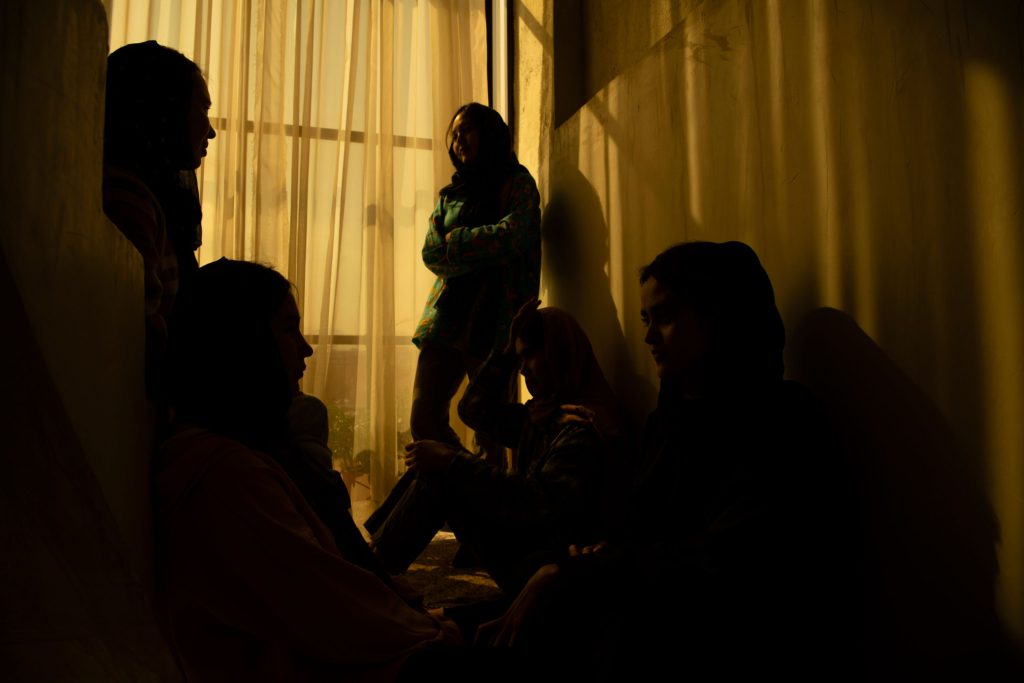
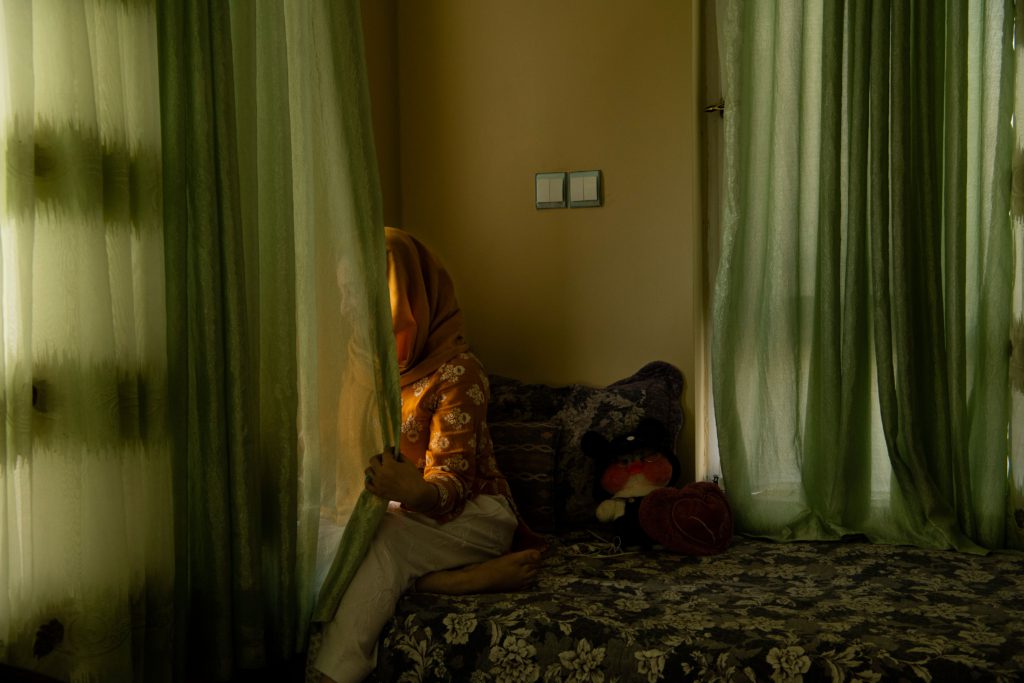
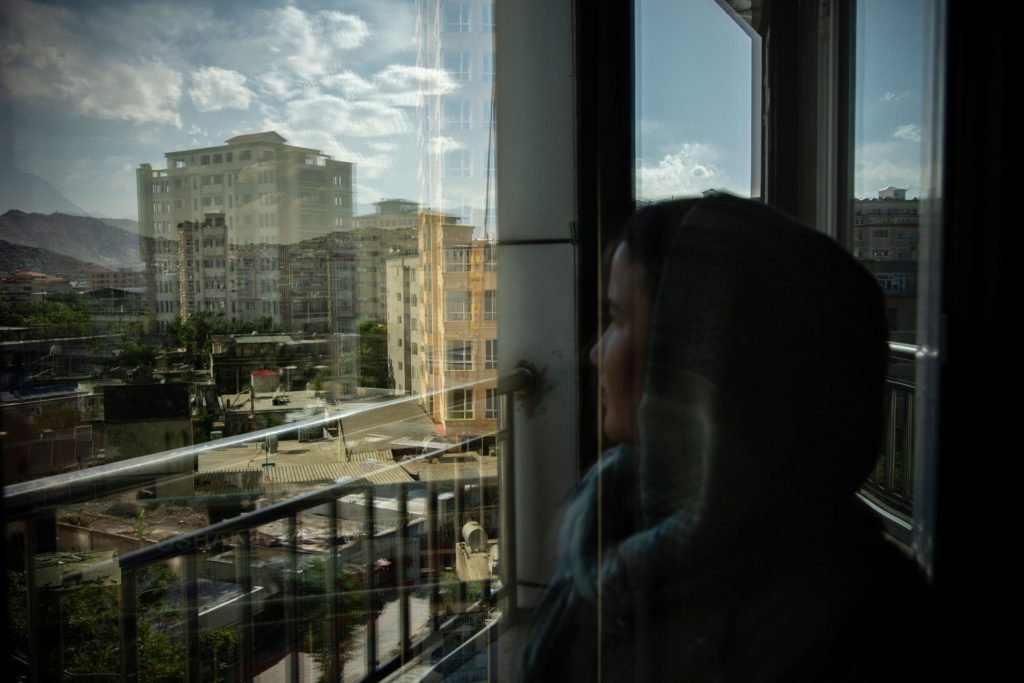
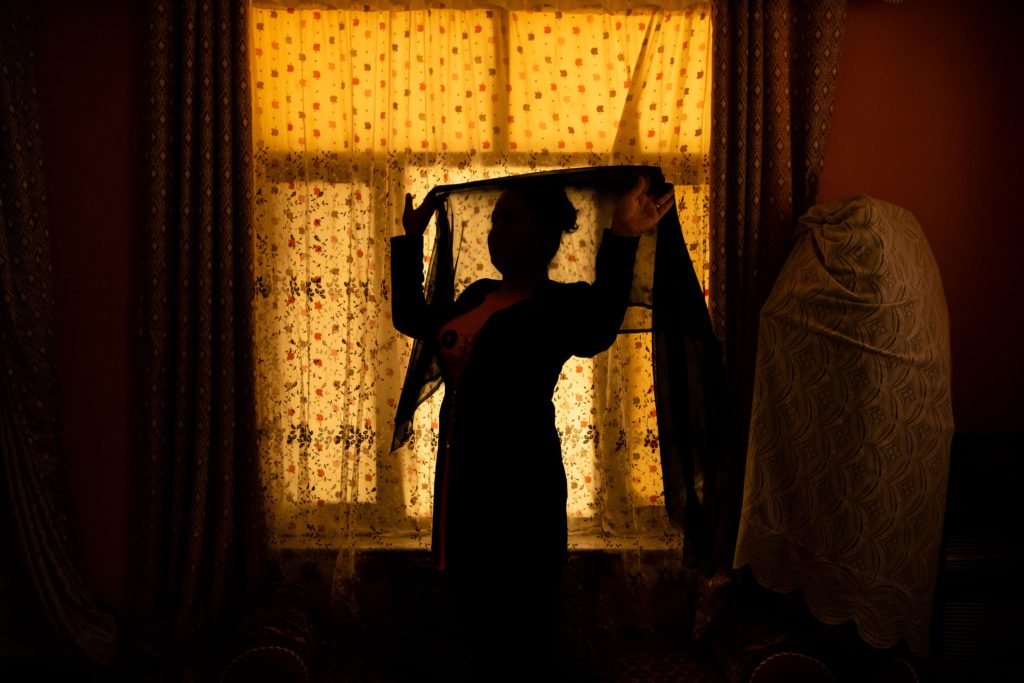
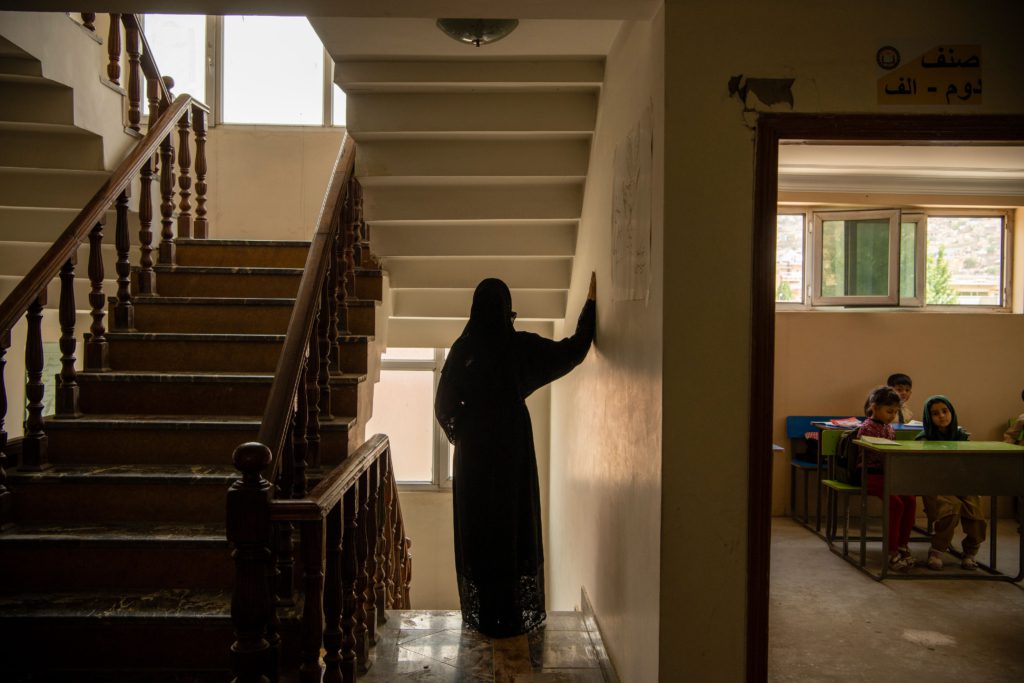
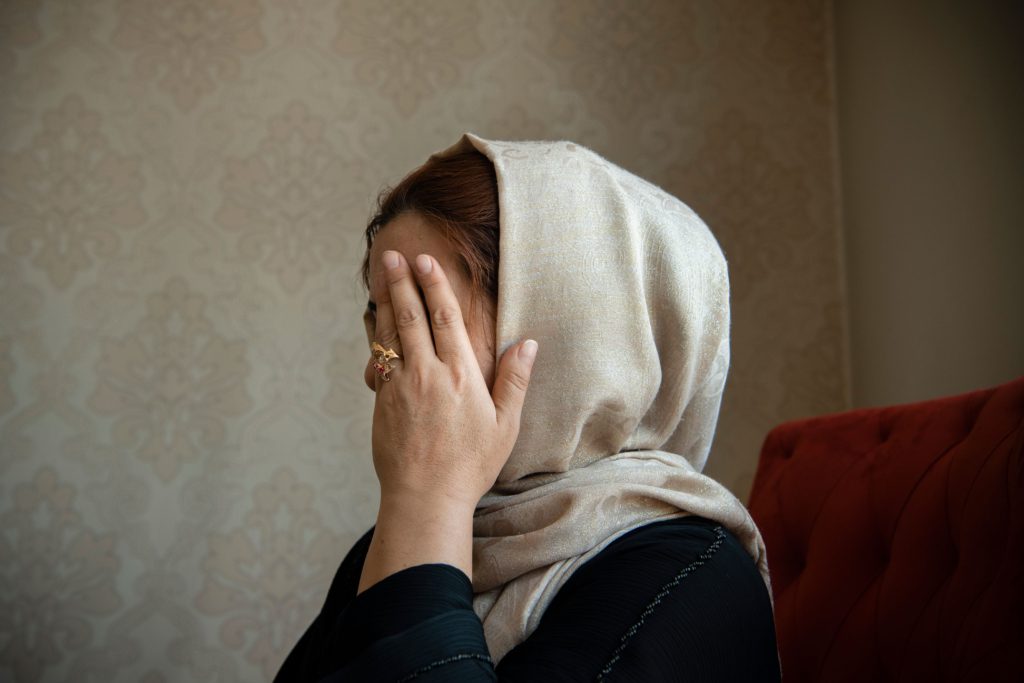
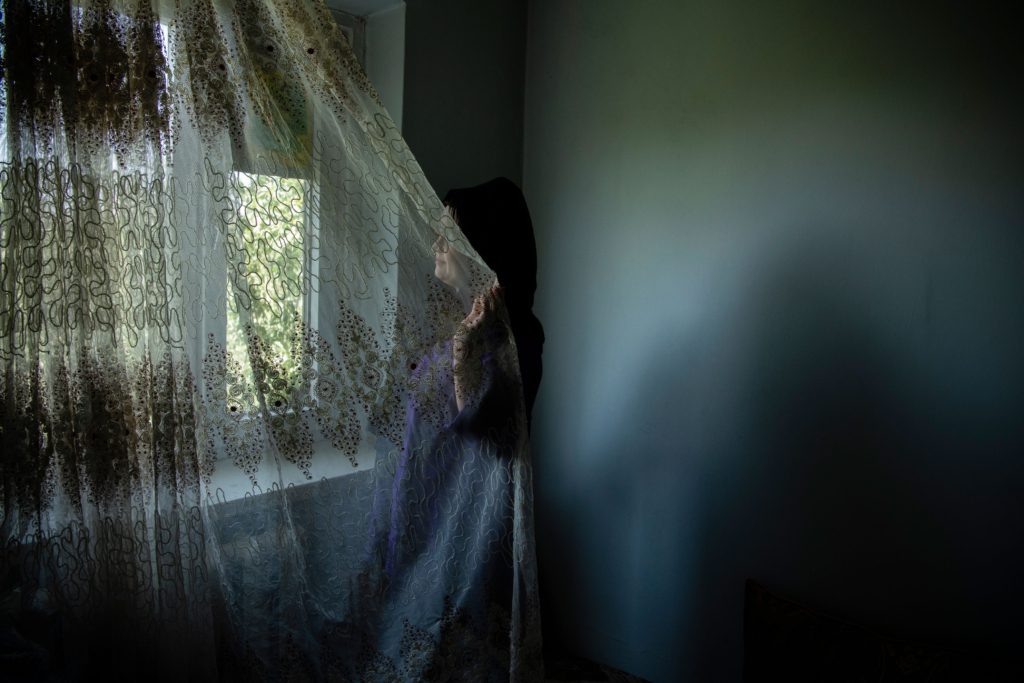
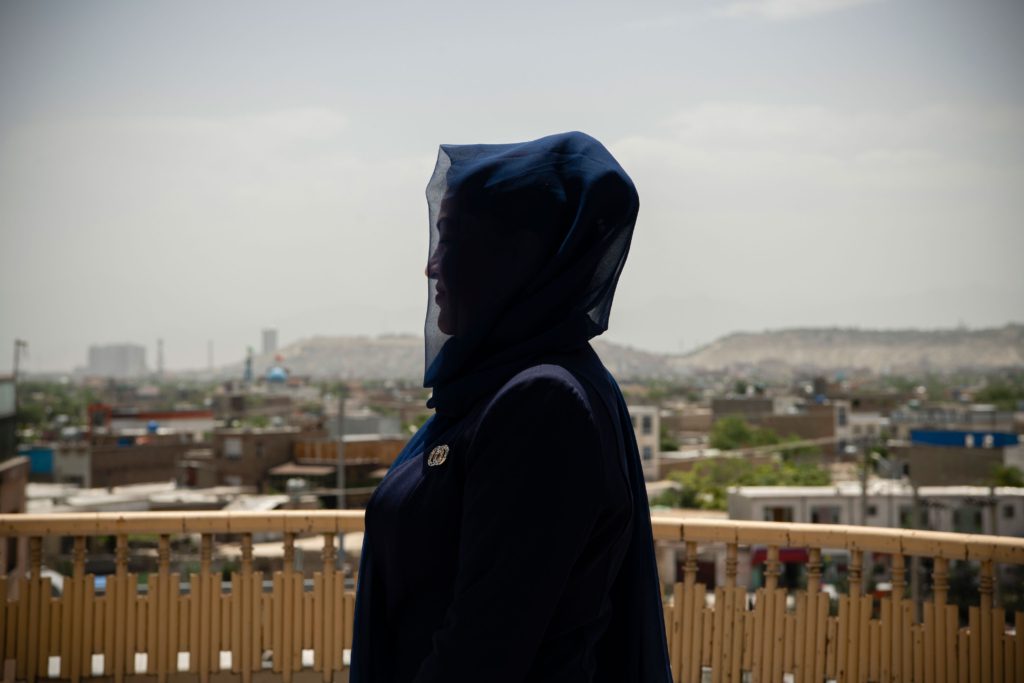
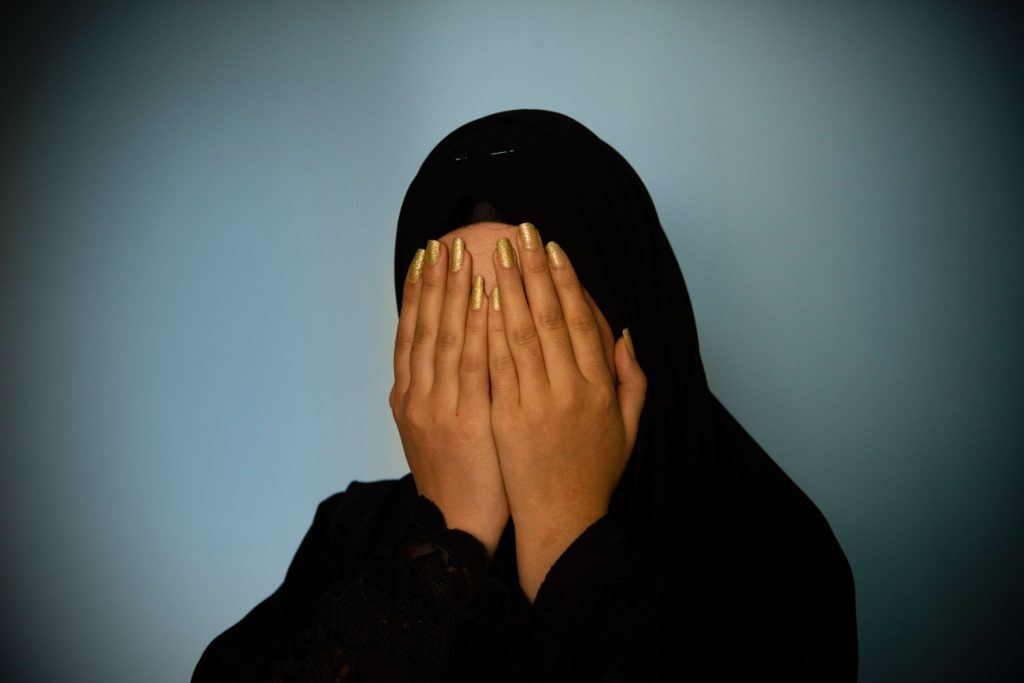
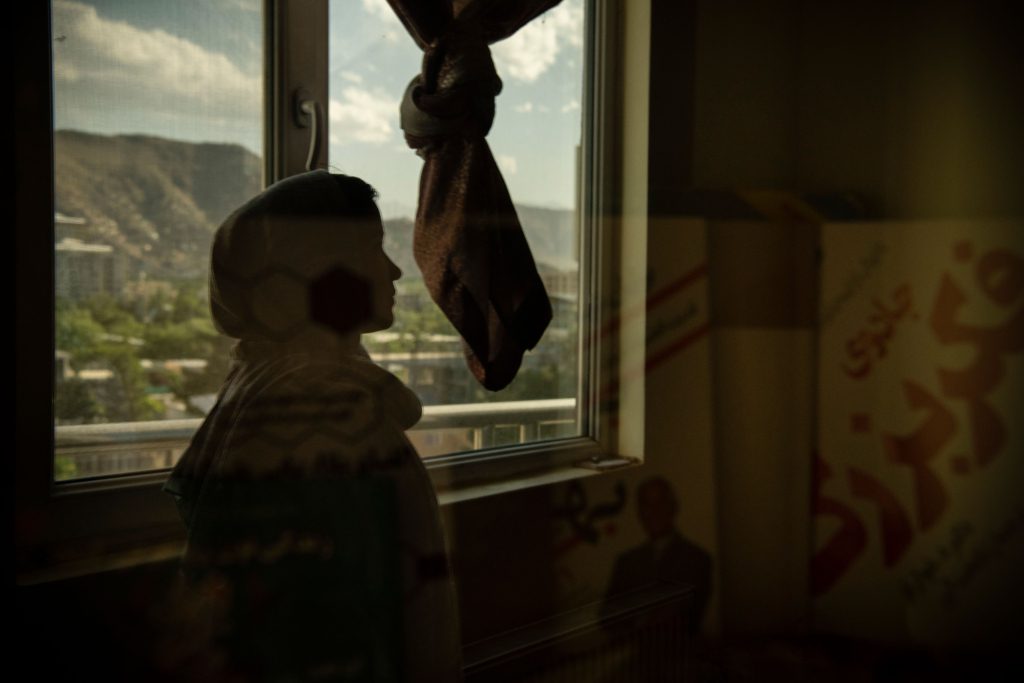
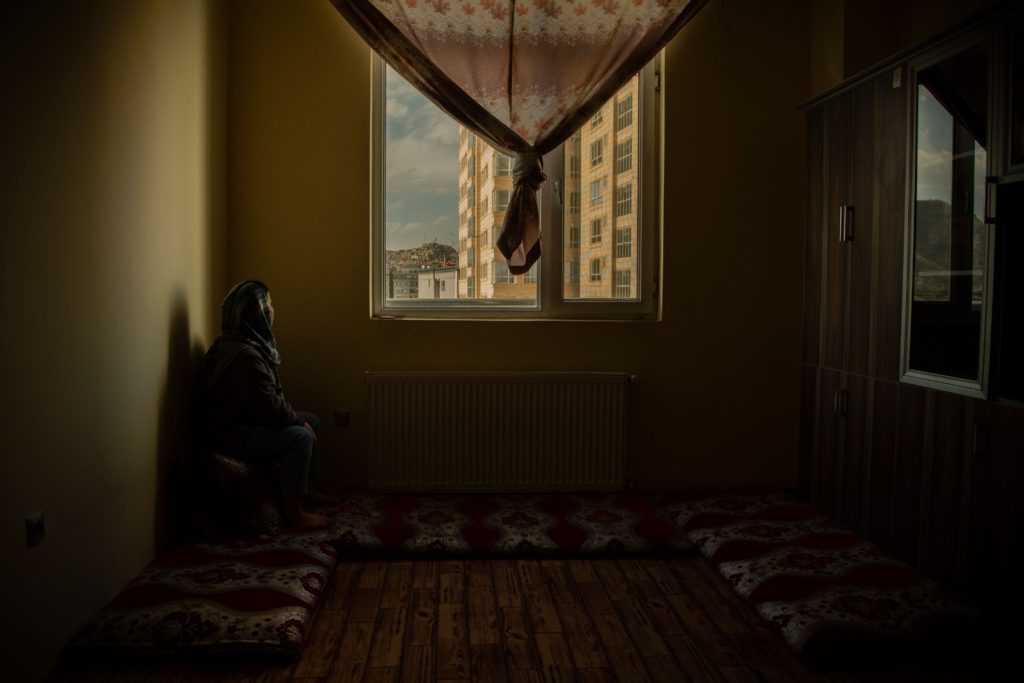
In less than a year, the Taliban have decimated the rights of women and girls in Afghanistan. Soon after they took control of the country’s government, the Taliban said they were committed to upholding the rights of women and girls. Yet they have violated women’s and girls’ rights to education, work and free movement; demolished the system of protection and support for women and girls fleeing domestic violence; arbitrarily detained women and girls for infractions of the Taliban’s discriminatory rules; and contributed to a surge in the rates of child, early and forced marriage in Afghanistan. Women who peacefully protested against these restrictions and policies have been harassed, threatened, arrested, forcibly disappeared, detained and tortured.
For women in Afghanistan, it’s death in slow motion.
Adila, journalist
The scope, magnitude and severity of the Taliban’s violations against women and girls are increasing month by month. Within a year of its takeover of Afghanistan, the group’s draconian policies are depriving millions of women and girls of the opportunity to lead safe, free and fulfilling lives. They are being sentenced, as one Afghan woman put it, to death in slow motion. This death sentence for Afghan women and girls can only be lifted by major and wide-ranging policy changes by Taliban. The international community must urgently develop and implement a robust, coordinated and effective strategy that pressures the Taliban to bring about these changes.
Amnesty International conducted research on the situation of women and girls under Taliban rule from September 2021 to June 2022, interviewing a total of 90 Afghan women and 11 girls. The ages of these women and girls ranged from 14 to 74 years old, and they lived in 20 of Afghanistan’s 34 provinces. Amnesty International also interviewed six current or former staff members of Taliban-run detention centres; 22 staff members of national and international NGOs and UN agencies and mechanisms; and 10 Afghan and international experts and journalists. The research was conducted through in-person interviews in Afghanistan from 4 to 20 March 2022, as well as through remote interviews.
This report describes a web of interrelated restrictions and prohibitions in which Afghan women and girls are trapped. It shows how the Taliban’s violation of any single right can have pernicious implications for the exercise of other rights. Cumulatively, Taliban policies form a system of repression that discriminates against women and girls in Afghanistan in almost every aspect of their lives.
On 1 July 2022, Amnesty International communicated the key findings detailed in this report in letters addressed to Minister of Foreign Affairs Amir Khan Muttaqi and Minister of Labor and Social Affairs Abdul Wali. No response had been received as of 15 July 2022, when the report was finalized.
TAKE ACTION NOW
Show solidarity with women and girls in Afghanistan. Send them a message on social media using #YourRightsAreOurRights
Since their takeover, the Taliban have issued a series of policies, decrees and guidelines that violate the human rights of women and girls in Afghanistan, including those related to education, work, free movement and clothing.
In the area of education, the Taliban have prevented the vast majority of girls at the secondary level from returning to school. The Taliban called girls at the secondary level to return to school on 23 March 2022, only to send them home the same day, citing a “technical issue” related to their uniforms. Fatima, a 25-year-old high school teacher based in Nangarhar province, summarized the feelings of her students: “These young girls just wanted to have a future, and now they don’t see any future ahead of them… There are millions of Afghan girls waiting for action.”
At the university level, the Taliban’s harassment of female students as well as restrictions on students’ behaviour, dress and opportunities have contributed to an unsafe environment where female students are systematically disadvantaged compared to male students. As a result, many female students have either stopped attending or decided not to enrol in university. Other challenges affect girls’ and women’s access to education at all levels, including restrictions on their movement, teacher shortages and students’ lack of motivation due to limited career options under the Taliban.
Interview extract
The Taliban have prevented women across Afghanistan from working. Most female government employees have been told to stay at home, with the exception those working in certain sectors such as health and education. In the private sector, many women have been dismissed from high-level positions. The Taliban’s policy appears to be that they will allow only women who cannot be replaced by men to keep working. Women who have continued working told Amnesty International that they are finding it extremely difficult in the face of Taliban restrictions on their clothing and behaviour, such as the requirement for female doctors to avoid treating male patients or interacting with male colleagues.
Taliban restrictions on work have created a desperate situation for many women who were their families’ sole or primary wage-earner. For instance, Farida, an office worker, said: “When Nangarhar collapsed, the office was closed down… because men and women can’t work together… [My family] spent two weeks without food in our household. Previously, I couldn’t even think that we wouldn’t have food on the table.”
Taliban restrictions on women’s and girls’ freedom of movement have become increasingly repressive. Initially, they ordered women and girls to be accompanied by a mahram, or male chaperone, for long- distance journeys. Most recently, they decreed that women should not leave their homes unless necessary. Women and girls told Amnesty International that in light of the numerous and evolving restrictions on their movement, any appearance in public without a mahram carried serious risks. They also said that the mahram requirements made their daily lives almost impossible to manage.
The Taliban have enforced increasingly strict guidelines on permissible clothing for women and girls. On 7 May 2022, the Ministry of Vice and Virtue issued a decree requiring women to cover themselves from head to toe. Male family members were made responsible for women’s adherence to the new rules, and can be detained if women and girls in the family refuse to comply. Zainab, a 27-year-old woman based in Daikundi province, shared her reaction to the decree: “Why would we cover our faces and hide who we are?… I have worn a [head scarf] all my life, but I do not want to cover my face… I can’t breathe now that I’m trying to talk about covering my face.”
Gender-Based Violence
Before August 2021, women and girl survivors of gender-based violence had access to a nationwide network of shelters and services, including legal representation, medical care and psychosocial support. Specialized prosecution units and courts dealt with cases involving violence against women and girls. While the system had its limitations, it served thousands of women and girls each year. As the Taliban took control of Afghanistan, this system collapsed. Shelters were closed, and many were looted and appropriated by members of the Taliban. In some cases, Taliban members harassed or threatened staff. As shelters closed, staff were forced to send many women and girl survivors back to their families. Other survivors were forced to live with shelter staff members, on the street or in other unsustainable situations. Incomprehensibly, as the Taliban advanced across the country, they also systematically released detainees from prisons, many of whom had been convicted of gender-based violence offenses.
Interview extract
Survivors of gender-based violence and the women who worked within the system of protective services are now in grave danger. Meanwhile, women and girls who have fled violence since the Taliban’s takeover have nowhere to turn. Fariha was nine months pregnant when she spoke to Amnesty International. She was desperately seeking a safe place to live after escaping her husband’s abuse. “Before, there was a shelter, and I went to that place,” she said. “They said it’s not running now, and they can’t accept any new cases. There are no options for me now.”
Arbitrary Detention of Women and Girls for “Moral Corruption” and Fleeing Abuse
According to four individuals who worked in Taliban-run detention centres, the Taliban have arbitrarily arrested and detained women and girls for violating their discriminatory policies, such as the rules against appearing in public without a mahram or appearing in public with a man who does not qualify as a mahram. Those arrested have usually been charged with the vague and ambiguous “crime” of “moral corruption”. The four prison staff members also told Amnesty International that survivors of gender-based violence who were formerly based in the shelters are now being detained in the same two detention centres in Afghanistan. Women and girls arbitrarily detained due to alleged “moral corruption” or for fleeing abuse have been denied access to legal counsel and subjected to torture and other ill-treatment as well as inhuman conditions in detention.
Interview extract
One university student was detained in 2022 on charges related to the Taliban’s mahram restrictions. She said that soon after her arrest, Taliban members “started giving me electric shocks [with a taser]… on my shoulder, face, neck, everywhere they could… They were calling me a prostitute [and] a bitch… The one holding the gun said, ‘I will kill you, and no one will be able to find your body.’” She said that like all women and girls detained by the Taliban, her detention would stigmatize her for life. “For an Afghan girl, going to prison is no less than death… Once you enter the door, you are labelled, and you cannot erase it.”
Child, Early and Forced Marriage
According to Amnesty International’s research, corroborated by national and international organizations operating in Afghanistan, local activists and other experts, the rates of child, early and forced marriage in Afghanistan are surging under Taliban rule. This increase is due to several interrelated drivers, many of which are attributable to the actions and policies of the Taliban and its members since they seized control. The most common drivers include the economic and humanitarian crisis; the lack of educational and professional prospects for women and girls; families’ perceived need to protect their daughters from marriage with a Taliban member; families forcing women and girls to marry Taliban members; and Taliban members forcing women and girls to marry them.
Interview extract
Khorsheed, a 35-year-old woman from a central province of Afghanistan, told Amnesty International that as a result of the economic crisis in Afghanistan, she had been forced to marry her 13-year-old daughter to her 30-year-old neighbour in September 2021, in exchange for a “bride price” of 60,000 Afghanis (around US$670). She said that after her daughter’s marriage, she felt relieved. “She won’t be hungry anymore,” Khorsheed said. She said she was considering marrying off her 10-year-old daughter as well, but she was reluctant to do so, as she hoped this daughter might provide for the family in the future. She explained, “She went all the way to fifth grade. I wanted her to study more. She would be able to read and write, and speak English, and earn… I have a hope that this daughter will become something, and she will support the family. Of course, if they don’t open the school, I will have to marry her off.”
The systemic discrimination imposed by the Taliban has led to a wave of peaceful protests by women and girls across Afghanistan. The Taliban has violated the rights of these women and girls to freedom of expression, association and assembly, and subjected them to harassment and abuse during protests, including beating and electric shocks by tasers.
On 30 May 2022, Taliban Foreign Minister Amir Khan Mutaqqi said, “In the past nine months, not a single woman has been imprisoned in the jails of Afghanistan either due to political opposition or raising voice against the government.” This is not true. Based on interviews with 12 women who were involved in protests after the Taliban’s takeover, five of whom were detained, Amnesty International has found that many women protesters in Afghanistan have been subjected to arbitrary arrest and detention, enforced disappearance and torture and other ill-treatment.
Interview extract
One woman who participated in several peaceful protests was arrested and detained for 10 days in 2022. She described her treatment during detention: “[The Taliban guards] kept coming to my room and showing me pictures of my family. They kept repeating… ‘We can kill them, all of them, and you won’t be able to do anything… Don’t cry, don’t make a scene. After protesting, you should have expected days like this.’”
She said that while in detention, she was severely beaten on two occasions. “They locked the door,” she said. “They started screaming at me… [One Taliban member] said, ‘You nasty woman… America isn’t giving us the money because of you bitches’… Then he kicked me. It was so strong that my back was injured, and he kicked my chin too… I still feel the pain in my mouth. It hurts whenever I want to talk.”
Women protesters who were detained by the Taliban said they had inadequate access to food, water, ventilation, sanitary products and medical care. To secure their release, the women were forced to sign “agreements” that they and their family members would neither protest again nor speak publicly about their experiences during detention.
Interview extract
Action Required
The Taliban, as the de facto authorities of Afghanistan, must uphold the rights of women and girls to access education, work, and move freely, as well as the right to access support and legal redress after fleeing violence. The Taliban must also immediately cease practices of arbitrary arrest and detention, and protect the right of all people, including women and girls, to protest peacefully. The Taliban is depriving millions of women and girls of rights enshrined in international law, and they must urgently change course.
Our rights are your rights… You must support the rights of women and girls in Afghanistan.
Sabira, a journalist
Jamila, the principal of a primary and secondary school, told Amnesty International: “[The world] doesn’t hear or see what is happening to us, because they are not affected themselves. Only if this happened to them would they understand.” The international community must demonstrate to Afghan women and girls that it understands their plight. States and international organizations must send a clear, coordinated and resounding message to the Taliban that their current policies on women and girls will never be accepted and take concrete steps that impose consequences on the Taliban for their conduct. Such steps should include identifying and using forms of leverage that may influence the Taliban without harming the Afghan people, such as targeted sanctions or travel bans applied through a UN Security Council Resolution.
For their part, donor states must urgently address the humanitarian and economic crisis unfolding in Afghanistan, which they had a role in creating, and which also undermines the rights of women and girls.
Donor states must ease existing financial restrictions on Afghanistan, which are blocking the provision of healthcare, food and other essential services. They must also strengthen systems for the equitable and adequate distribution of urgent financial support and humanitarian aid in consultation with UN agencies, NGOs and humanitarian agencies operating in Afghanistan, local women activists, and organizations supporting other at-risk groups.
The stakes could not be higher. If the international community fails to act, it will abandon millions of women and girls across Afghanistan and embolden others to undermine the human rights of women and girls around the world. As Sabira, a journalist, said, “Our rights are your rights… You must support the rights of women and girls in Afghanistan.”
*Names have been changed to protect identities.
TAKE ACTION NOW
Show solidarity with women and girls in Afghanistan. Send them a message on social media using #YourRightsAreOurRights
READ THE REPORT
Amnesty International interviewed more than 100 women and girls in Afghanistan. Read the full report.
Women protesters detained, forcibly disappeared and tortured
Women and girls swept up in arrests and detained for ‘moral corruption’
Huge increase in child, early and forced marriages
The lives of women and girls in Afghanistan are being devastated by the Taliban’s crackdown on their human rights, Amnesty International said in a new report published today.
Since they took control of the country in August 2021, the Taliban have violated women’s and girls’ rights to education, work and free movement; decimated the system of protection and support for those fleeing domestic violence; detained women and girls for minor violations of discriminatory rules; and contributed to a surge in the rates of child, early and forced marriage in Afghanistan.
The report, Death in Slow Motion: Women and Girls Under Taliban Rule, also reveals how women who peacefully protested against these oppressive rules have been threatened, arrested, detained, tortured, and forcibly disappeared.
This suffocating crackdown against Afghanistan’s female population is increasing day-by-day
Agnès Callamard, Amnesty International’s Secretary General
“Less than one year after the Taliban’s takeover of Afghanistan, their draconian policies are depriving millions of women and girls of their right to lead safe, free and fulfilling lives,” said Agnès Callamard, Amnesty International’s Secretary General.
“Taken together, these policies form a system of repression that discriminates against women and girls in almost every aspect of their lives. Every daily detail – whether they go to school, if and how they work, if and how they leave the house – is controlled and heavily restricted.
“This suffocating crackdown against Afghanistan’s female population is increasing day-by-day. The international community must urgently demand that the Taliban respect and protect the rights of women and girls.”
Amnesty International is calling on the Taliban to implement major policy changes and measures to uphold the rights of women and girls. Governments and international organizations, including all UN member states and the UN Security Council, must urgently develop and implement a robust and coordinated strategy that pressures the Taliban to bring about these changes.
Amnesty International researchers visited Afghanistan in March 2022. The comprehensive investigation was conducted from September 2021 to June 2022, and includes interviews with 90 Afghan women and 11 girls, aged between 14 and 74 years old, living in 20 of Afghanistan’s 34 provinces.
Detention and torture of peaceful protesters
Since seizing control of Afghanistan in August 2021, the Taliban have been the country’s de facto authorities. Despite initial public commitments to uphold the rights of women and girls, the Taliban introduced policies of systematic discrimination that violate their rights.
Women and girls across Afghanistan reacted to this crackdown with a wave of protests. In response, the Taliban targeted protesters with harassment and abuse, arbitrary arrest and detention, enforced disappearance, and physical and psychological torture.
Amnesty International interviewed one protester who was arrested and detained for several days in 2022. Describing her treatment in detention, she told Amnesty International: “[The Taliban guards] kept coming to my room and showing me pictures of my family. They kept repeating… ‘We can kill them, all of them, and you won’t be able to do anything… Don’t cry, don’t make a scene. After protesting, you should have expected days like this’.”
She also described being severely beaten: “They locked the door. They started screaming at me… [One Taliban member] said, ‘You nasty woman… America is not giving us the money because of you bitches’… Then he kicked me. It was so strong that my back was injured, and he kicked my chin too… I still feel the pain in my mouth. It hurts whenever I want to talk.”
A soldier who was walking next to me hit me in my breast, and he said, ‘I can kill you right now, and no one would say anything’
One woman who was tortured by the Taliban in detention
Two women said that after photos were posted of a fellow protester’s injuries on social media, Taliban members developed a new strategy to prevent them from showing their injuries publicly.
One of the women told Amnesty International: “We were beaten on our breasts and between the legs. They did this to us so that we couldn’t show the world. A soldier who was walking next to me hit me in my breast, and he said, ‘I can kill you right now, and no one would say anything’. This happened every time we went out: we were insulted – physically, verbally, and emotionally.”
Detained protesters had inadequate access to food, water, ventilation, sanitary products and health care. To secure their release, the women were forced to sign agreements that they and their family members would neither protest again, nor speak publicly about their experiences in detention.
Arbitrary arrest and detention, including for ‘moral corruption’
According to four whistleblowers from Taliban-run detention centres, the Taliban has increasingly arrested and detained women and girls for minor violations of their discriminatory policies, such as the rule against appearing in public without a mahram [male chaperone] or with a man who does not qualify as a mahram. Those arrested are usually charged with the ambiguous ‘crime’ of ‘moral corruption’.
A prison staff member explained: “Sometimes they bring the boys and girls from the coffee shop… [Or] if they see a woman who is not with a mahram, she can be arrested… Before these kinds of cases were not in the prison… The numbers are increasing each month.”
One university student, who was detained in 2022, told Amnesty International that she was threatened and beaten after being arrested on charges related to the mahram restrictions.
She said that Taliban members “started giving me electric shocks… on my shoulder, face, neck, everywhere they could… They were calling me a prostitute [and] a bitch… The one holding the gun said, ‘I will kill you, and no one will be able to find your body’.”
The whistleblowers said that survivors of gender-based violence, who previously lived in shelters or who attempted to flee abuse after the Taliban’s takeover, are now being imprisoned in detention centres. One of the staff members said: “Some came by approaching the Taliban themselves, and asking, ‘Where is your shelter?’ [The Taliban] had no place, so they ended up in prison.”
These women and girls have been subjected to solitary confinement, beatings and other forms of torture, and forced to endure inhumane conditions, including overcrowding and inadequate access to food, water, and heating in winter months.
Child, early and forced marriage
According to Amnesty International’s research – corroborated by national and international organizations operating in Afghanistan, local activists and other experts – the rates of child, early and forced marriage in Afghanistan are surging under Taliban rule. The key causal factors for the increase include the economic and humanitarian crisis; the lack of educational and professional prospects for women and girls; families forcing women and girls to marry Taliban members; and Taliban members forcing women and girls to marry them.
Stephanie Sinclair, director of Too Young to Wed, an organization working on child, early and forced marriage, explained: “In Afghanistan, it’s a perfect storm for child marriage. You have a patriarchal government, war, poverty, drought, girls out of school – with all of these factors combined… we knew child marriage was going to go through the roof.”
Khorsheed*, a 35-year-old from a central province of Afghanistan, told Amnesty International that the economic crisis compelled her to marry off her 13-year-old daughter to a 30-year-old neighbour in September 2021, in exchange for a ‘bride price’ of 60,000 Afghanis (around US$670). She said that after her daughter’s marriage, she felt relieved and added: “She won’t be hungry anymore.”
Khorsheed said she was also considering marrying off her 10-year-old daughter, but was reluctant to do so, as she hoped this daughter might provide for the family in the future. She explained: “I wanted her to study more. She would be able to read and write, and speak English, and earn… I have a hope that this daughter will become something, and she will support the family. Of course, if they don’t open the school, I will have to marry her off.”
Lack of access to education
The Taliban continue to block education for the vast majority of secondary school girls. Their scheduled return to school on 23 March 2022 was short-lived. Later the same day, the Taliban sent the girls home, citing a “technical issue” related to their uniforms. Four months later, the Taliban continues to deny girls’ access to education.
Fatima*, a 25-year-old high school teacher based in Nangarhar province, told Amnesty International: “These young girls just wanted to have a future, and now they don’t see any future ahead of them.”
At university level, the Taliban’s harassment of female students – as well as restrictions on students’ behaviour, dress and opportunities – has created an unsafe environment where female students are systematically disadvantaged. Many female students have now either stopped attending, or decided not to enrol in university at all.
Brishna*, a 21-year-old student at Kabul University, told Amnesty International: “[The] guards outside the university yell at us and say, ‘Fix your clothes, your scarf… Why are your feet visible?’… [The] head of our department came to our class and told us, ‘Be careful – we can only protect you when you are inside the faculty building… If Taliban members try to harm you or harass you, we won’t be able to stop them’.”
International community responsibility
Amnesty International is calling for international community to impose consequences on the Taliban for their conduct, such as targeted sanctions or travel bans applied through a UN Security Council Resolution, or employ other forms of leverage that can hold the Taliban accountable for their treatment of women and girls without harming the Afghan people.
“The Taliban are deliberately depriving millions of women and girls of their human rights, and subjecting them to systematic discrimination,” said Agnès Callamard.
“If the international community fails to act, it will be abandoning women and girls in Afghanistan, and undermining human rights everywhere.”
Responding to the news that Japan has carried out its first execution of the year by hanging Tomohiro Kato, a man who was convicted of stabbing seven people to death in 2008, Hideaki Nakagawa, director of Amnesty International Japan said:
“The hanging of Tomohiro Kato is a callous attack on the right to life. Regardless of the crimes he had committed, he should never have suffered the ultimate cruel, inhuman and degrading treatment at the hands of the state.
“Tomohiro Kato was in the process of requesting a second retrial of his death sentence. Carrying out an execution during a request for retrial clearly violates international safeguards set out to protect the rights of those facing the death penalty.
“The Japanese authorities should immediately introduce a moratorium on executions as a first step toward abolishing the death penalty entirely — and commute all death sentences to terms of imprisonment.”
Background
On 21 December 2021, Prime Minister Fumio Kishida ordered the first execution of his administration. Today’s hanging of Tomohiro Kato marks the second execution carried out since Kishida assumed office in October 2021.
Amnesty International opposes the death penalty in all cases without exception, regardless of the nature or circumstances of the crime, guilt, innocence or other characteristics of the individual, or the method used by the state to carry out the execution.
Responding to the news that 92 members of the Ukrainian armed forces have reportedly been charged with “crimes against humanity”, Denis Krivosheev, Amnesty International’s Deputy Director for Eastern Europe and Central Asia, said:
“In charging these 92 members of the Ukrainian armed forces in proceedings that lack transparency and rely on, and seek to feed, misinformation, the Russian authorities have once again revealed their brazen disregard for international fair trial rights and international humanitarian law.
“The Geneva Conventions clearly state that prisoners of war, including members of armed forces, are protected from prosecution for taking part in hostilities. If individuals are to be charged with alleged crimes against humanity, there must be sufficient evidence to support such a claim. The Russian authorities have shared no evidence to support these charges. Instead, they deployed disinformation blaming Ukrainian forces for acts such as the destruction of the Mariupol theatre, a civilian building shattered by a deliberate Russian attack.
“If the Russian authorities try prisoners of war on these charges, they will violate the Third Geneva Convention. Willfully depriving a prisoner of war of fair trial rights constitutes a war crime. The Russian authorities must only prosecute prisoners of war if there is genuine, admissible evidence of war crimes or crimes against humanity, in which case they must be afforded their right to a fair trial in accordance with international standards.”
Background
Alexander Bastrykin, the head of Russia’s Investigative Committee, told government newspaper Rossiiskaya Gazeta on Monday that Russian authorities had enacted more than 1,300 criminal investigations against more than 400 Ukrainian nationals. He added that at least 220 individuals are suspected of committing “crimes against the peace and security of humanity”, while 92 members of the Ukrainian forces have reportedly already been charged.
Ukraine is also carrying out investigations into tens of thousands of war crimes, and war-related crimes, allegedly committed by Russian soldiers. The speed of at least one such trial, which resulted in May in the conviction of Vadim Shishimarin, a 21-year-old Russian soldier who killed a 62-year-old civilian in the first days of the war, has raised concerns over fair trial rights.