States, in line with their human rights obligation of international co-operation and assistance must support Pakistan as floods devastate lives and impact a range of human rights
The floods serve as a stark warning of the devastating impact of climate change and states most responsible for the climate crisis must provide compensation and remedy for the loss and damage caused by the climate crisis.
Wealthier states that have responsibility for climate change must remedy historic injustices and support low-emitting countries like Pakistan after deadly floods have shown the devastating impact of climate change, said Amnesty International.
“States that have enriched themselves using fossil fuels and other unsustainable practices must meet their international obligations. They must provide compensation and other forms of remedy for the loss and damage people are suffering in Pakistan,” said Rimmel Mohydin, Amnesty International’s Pakistan Campaigner.
Since 1959, Pakistan has accounted for 0.4% of historic emissions and yet it is listed as one of the most climate vulnerable places in the world, according to joint findings by the World Bank and Asian Development Bank. These floods alone have by early estimates, cost the country USD 10 billion. The recent floods are a devastating reminder that the consequences of climate change are intensifying, underscoring the importance of states catching up with their adaptation and mitigation efforts.
Pakistan response
According to government reports, the flood damage in Pakistan is far-reaching, leaving close to three quarters of a million people without access to safe and adequate housing. Large swathes of agricultural lands have been flooded, destroying crops and threatening the country’s food supply. The Federal Minister for Climate Change Sherry Rehman said on Monday that a “third of the country is under water,” dubbing it a “crisis of unimaginable proportions.” Damage to infrastructure and internet and phone connectivity is severely hampering rescue and relief operations.
Climate change involves not only rising temperatures, but also extreme weather events. While flooding can be caused by a variety of factors, rising temperatures can make the likelihood of extreme rainfall much higher, overwhelming Pakistan’s river embankments in some areas. The 2010 floods, which killed 1,700 people, were also found to be largely attributable to rising global temperatures.
“The destruction and death in Pakistan has shown how these floods risk entrenching existing inequalities and putting millions at risk of homelessness, hunger, ill-health and even premature death. The government must uphold the human rights of the affected communities and take preventive measures to protect those most at-risk from the impacts of the disaster,” said Rimmel Mohydin.
Poverty and gender affect impact of floods
The floods have had a particularly devastating impact on people living in poverty as many of them live in inadequate and poor-quality housing along riverbanks, low-lying areas and areas that are difficult to reach due to lack of adequate infrastructure. Little has been done so far to protect these communities from the impacts of climate change.
Women are particularly adversely affected by the floods. According to the United Nations Population Fund, there are almost 650,000 pregnant women in the flood-affected areas, with almost 73,000 women expected to deliver in the next month. More than 1,000 health facilities are either partially or fully damaged in Sindh province, whereas 198 health facilities are damaged in affected districts in Balochistan.
There is also a heightened possibility of women and girls being at risk of gender-based violence, according to UNICEF, owing to the breakdown of order and social protection mechanisms during a crisis. Menstrual hygiene must also be given its due consideration when developing relief programs, with the UNFPA estimating the victims of the floods to include 8.2 million women of reproductive age.
“Existing inequalities based on people’s gender, socio-economic status, age, and other identities will no doubt be exacerbated by the floods. Marginalized groups, such as people living in poverty are bound to be much worse off. The newly-formed National Flood Response and Coordination Centre must take into account the needs and requirements of different communities as it plans its strategy on how to protect people from the distressing effects of the floods,” said Rimmel Mohydin.
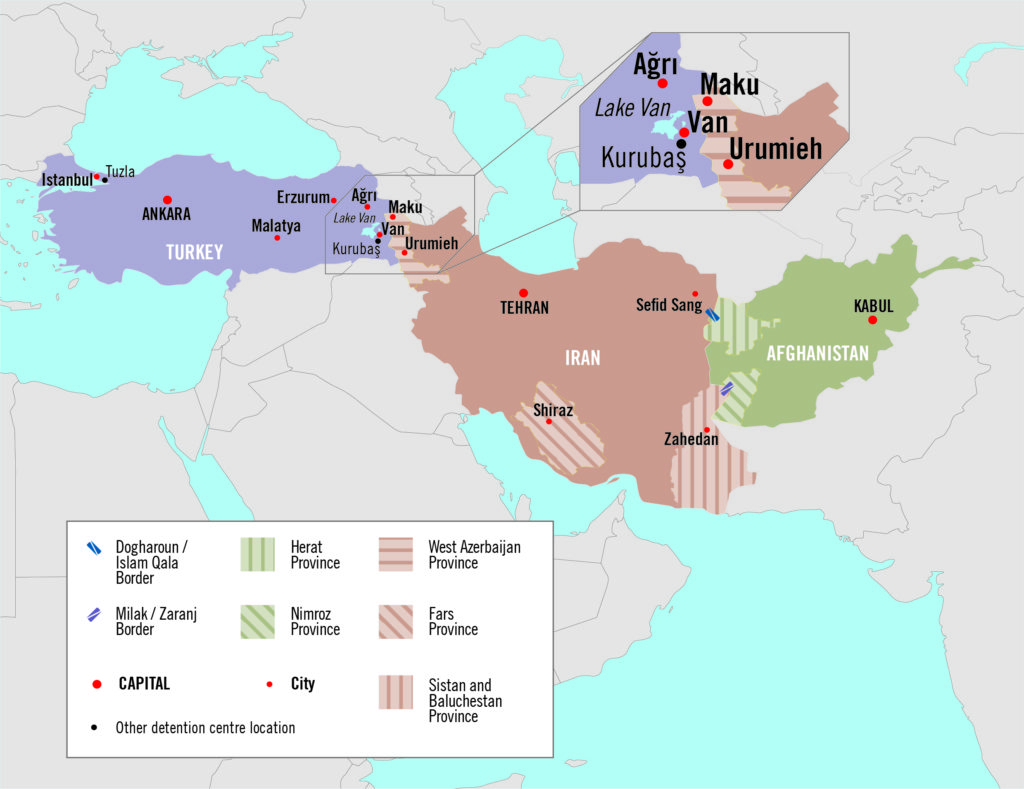
Iranian and Turkish security forces have repeatedly pushed back Afghans who attempt to cross their borders to reach safety, including by unlawfully opening fire on men, women and children, Amnesty International said today. In a new report, They don’t treat us like humans, the organization also documents numerous instances – mostly at the Iranian border – where security forces have shot directly at people as they climbed over walls or crawled under fences. Afghans who do manage to enter Iran or Turkey are routinely arbitrarily detained, and subjected to torture and other ill-treatment before being unlawfully and forcibly returned.
Amnesty International researchers visited Afghanistan in March 2022, and conducted interviews in Herat City and Islam Qala border town. They interviewed 74 Afghans who had been pushed back from Iran and Turkey, 48 of whom reported coming under fire as they attempted to cross the borders. None of the people Amnesty International spoke to had been able to register an asylum claim in either country, and the majority were returned to Afghanistan in violation of international law.
One year after the end of airlift evacuations from Afghanistan, many of those left behind are risking their lives to leave the country.
Marie Forestier, Researcher on Refugee and Migrants Rights
“One year after the end of airlift evacuations from Afghanistan, many of those left behind are risking their lives to leave the country – Afghans who have travelled to the Iranian and Turkish borders over the past year, in search of safety, have instead been forcibly returned under fire. We documented how Iranian security forces have unlawfully killed and injured dozens of Afghans since last August, including by firing repeatedly into packed cars. Turkish border guards have also unlawfully used live ammunition against Afghans, firing into the air to repel people, and also shooting at them in some cases,” said Marie Forestier, Researcher on Refugee and Migrants Rights at Amnesty International.
“The dangers don’t end at the borders. Many Afghans we spoke to had spent time in arbitrary detention, either in Turkey or in Iran, where they were subjected to torture and other ill-treatment before being unlawfully returned. We are calling on Turkish and Iranian authorities to immediately end all pushbacks and deportations of Afghans, end torture and other ill-treatment, and ensure safe passage and access to asylum procedures for all Afghans seeking protection. Security forces must immediately end the unlawful use of firearms against Afghans at the borders, and perpetrators of human rights violations, including unlawful killing and torture, must be held accountable.”
Amnesty International also calls on the international community to provide financial and material support to countries which host large numbers of Afghans, including Iran and Turkey. They must ensure that this funding does not contribute to human rights violations – this is critical, as the European Union has already provided funds for Turkey’s new border wall, as well as for the construction of several ‘removal centres’ where Amnesty International documented Afghans being detained. Other countries must also increase resettlement opportunities for Afghans who need international protection.
A long and risky journey
Hundreds of thousands of Afghans have fled their country since the Taliban took power in August 2021. Afghanistan’s neighbouring countries have closed their borders to Afghans without travel documents, leaving many people with no choice but to travel irregularly. This means entering Iran through informal border crossings – such as through crawling under a fence near an official crossing in Afghanistan’s Herat Province, or climbing over a two-metre-high wall in Nimroz province.
My nephew arrived at the wall of the border, climbed it and he raised his head up over the top. [Iranian forces] shot him in the head.
Ghulam*
Those who are not immediately detained by Iranian border guards then travel on to various cities in Iran, or to the Turkish border nearly 2000 km away in north-western Iran. At both the Afghan-Iranian and Turkish-Iranian borders, Afghans are subjected to violent and unlawful pushbacks – from Iran back into Afghanistan, or from Turkey into Iran.
no copyright
Amnesty International researchers travelled to Afghanistan and Turkey in March and May 2022. They interviewed doctors, NGO workers and Afghan officials, as well as 74 Afghans who had attempted to cross into Turkey or Iran. Some people had made multiple attempts, and some had travelled in groups; based on their accounts, Amnesty International documented a total of 255 instances of unlawful return between March 2021 and May 2022.
Killed trying to enter Iran
Amnesty International interviewed the relatives of six men and a 16-year-old boy who were killed by Iranian security forces as they attempted to cross into Iran between April 2021 and January 2022.
In total, the organization documented 11 killings by Iranian security forces, though the true death toll is likely to be significantly higher. The lack of comprehensive reporting procedures means there are few publicly available statistics, but humanitarian workers and Afghan doctors told the organization they recorded at least 59 deaths and 31 injuries between August and December 2021 alone.
I saw that my son was dead. I was next to his body in a taxi.
Sakeena*
Ghulam* described how his 19-year-old nephew was shot and killed in August 2021:
“He arrived at the wall of the border, climbed it and he raised his head up over the top. They shot him in the head, in the left temple. He fell to the ground on the [Afghan] side of the border.”
Some of the documented shootings took place inside Iranian territory. Sakeena, 35, told Amnesty International how her 16-year-old son was shot dead as they walked away from the Iranian border:
“I heard my son screaming for me. He had been hit by two bullets in his ribs. I don’t know what happened after I fainted […] When I gained consciousness, I was in Afghanistan. I saw that my son was dead. I was next to his body in a taxi.”
Shootings by Turkish security forces
Amnesty International interviewed 35 people who had attempted to cross into Turkey, 23 of whom reported coming under fire. Researchers interviewed one Afghan man who said he had witnessed the killings of three teenage boys by Turkish security forces. Other witnesses described the injury of six men and three boys by Turkish security forces, and Amnesty International interviewed two men who had sustained gunshot wounds at the Turkish border.
A two-year-old child was shot in the kidney, and a six-year-old child was shot on his hand. I was very scared.
Aref*
Aref, a former Afghan intelligence officer who fled after receiving death threats from the Taliban, said he witnessed young children being injured by Turkish security forces:
“They shot directly at us, not in the air (…) I witnessed a woman and two children who were injured. A two-year-old child was shot in the kidney, and a six-year-old child was shot on his hand. I was very scared.”
None of those killed or injured appear to have represented any imminent threat to security forces or others – let alone a threat of death or serious injury -meaning the use of firearms would have been unlawful and arbitrary. In some cases, Iranian security forces appear to have used firearms in a manner that demonstrated an intention to kill, for example by shooting directly at individuals from close range.
“Any killings resulting from deliberate and unlawful use of firearms by agents of the state must be investigated as potential extrajudicial executions,” said Marie Forestier.
A crisis of systemic impunity for widespread patterns of torture, extrajudicial executions and other unlawful killings prevails in Iran. Amnesty International therefore reiterates its call on the UN Human Rights Council to establish an independent investigative and accountability mechanism to collect and analyze evidence of the most serious crimes under international law committed in Iran, including against Afghans in the context of pushbacks, to enable future prosecutions.
Detained and tortured
Almost all interviewees who were intercepted once inside Iran or Turkey, and not immediately pushed back, were arbitrarily detained. Detention time ranged from one or two days to two-and-a-half months. Twenty-three people described treatment that would amount to torture or other ill-treatment while in detention in Iran, as did 21 people detained in Turkey.
The policeman sat on my friend, as if he was sitting on a chair. He sat there and lit a cigarette.
Hamid*
Hamid described how Turkish security forces beat him and his friend in detention:
“One of the policemen beat my friend with the butt of his gun, and then the policeman sat on my friend, as if he was sitting on a chair. He sat there and lit a cigarette. Then he hit me on my legs with his gun as well.”
Several people Amnesty International interviewed were detained in Iran after sustaining gunshot wounds.
Amir was injured when a bullet fired by Turkish security forces grazed his head. After being pushed back to Iran, Amir was detained by Iranian security forces who beat him on his head:
“They would beat me directly on the wound, and it would start bleeding again… One time I said, ‘please don’t beat me on my head,’ and the guard [at the detention facility] said, ‘Where?’ When I showed him, then he beat me in that same spot,” Amir said.
If the EU continues funding detention centres where Afghans are held before being unlawfully returned, it risks being complicit in these violations.
Marie Forestier
Eleven Afghans unlawfully returned by Turkish authorities had been detained in one of the six removal centres in Turkey whose construction the EU has partially funded.
“The European Commission must ensure that migration and asylum related funding to Turkey does not contribute to human rights violations. If the EU continues funding detention centres where Afghans are held before being unlawfully returned, it risks being complicit in these appalling violations,” said Marie Forestier.
Denied international protection
None of the Afghans interviewed by Amnesty International was able to register a claim for international protection, either in Iran or in Turkey. Interviewees said they attempted to tell authorities they would be at serious risk of human rights violations if returned to Afghanistan, but their fears were dismissed.
Iranian security forces transferred detainees by bus to the Afghan border, while Turkish security forces usually transferred them back to Iran at irregular crossings. Ten of those deported from Turkey were sent straight back to Afghanistan by plane. Turkey resumed charter flights to Afghanistan in late January 2022. At the end of April, the Turkish migration authority announced on its websites that charter flights had already returned 6805 Afghan citizens.
They beat me, pushed me to the wall. Two men held my legs and one was sitting on my chest. Two others [made me sign] the paper.
An Afghan man who was returned from Turkey
All interviewees who had been returned said that Turkish and Iranian authorities coerced them to leave. Amnesty International heard how detainees sobbed and fainted when they heard they were being returned to Afghanistan, and how a man attempted to take his own life by jumping out of a window.
Eight people detained and then deported on charter flights from Turkey said Turkish authorities pressured them to sign documents stating they were leaving voluntarily. One man said:
“I told [security forces] that I was at risk in Afghanistan. They didn’t care. They beat me, pushed me to the wall. I fell down on the ground. Two men held my legs and one was sitting on my chest. Two others put my fingers on the paper.”
“The international legal principle of non-refoulement prohibits states from returning anyone to a territory where they are at risk of persecution and other serious human rights violations. We urge the Turkish and Iranian authorities to abide by this obligation and stop forcing people back to danger in Afghanistan,” said Marie Forestier.
“The international community must also arrange safe passage and evacuations for Afghans who are at risk, and step up with a coordinated response to share the responsibility of hosting Afghan refugees.”
Responding to the news that 10 Egyptian Nubian men are at risk of being sentenced to prison in a hearing session on 31 August after a grossly unfair trial for organizing a peaceful remembrance event, Diana Semaan, Amnesty International’s Acting Deputy Director for the Middle East and North Africa, said:
“After over two years of arbitrary detention and a grossly unfair trial marred by due process violations, the Saudi authorities continue to prosecute the 10 Egyptian Nubian men solely for exercising their rights to freedom of expression and assembly in organizing a community event and establishing a community organization to represent them.
The 10 Egyptian Nubian men must be released immediately, and all charges brought against them dropped.
Diana Semaan, Amnesty International
“These men should never have been arrested in the first place, let alone tried by the Specialized Criminal Court, the notorious counter-terrorism court. The 10 Egyptian Nubian men must be released immediately, and all charges brought against them dropped. Some of them are older people and suffer from health problems, such as diabetes and cardiovascular issues. Saudi authorities must ensure that they have full access to medical care pending their release.
“The Saudi Arabian authorities must end this travesty of justice. Authorities must also end their criminalization of free speech and the right to peaceful association, including by ethnic minorities such as the Nubian community in Saudi Arabia. The 10 men are long-term residents of Saudi Arabia, and the Saudi authorities must respect their basic human right to freedom of expression, peaceful assembly and association.”
Background
The 10 men were first arrested on the morning of an event they had planned on 25 October 2019 to mark the 1973 Arab-Israeli war. On 25 December 2019, the men were released without charge and placed on a travel ban list pending resumption of the case. They were then re-arrested in July 2020 and detained incommunicado with no access to their lawyers or family members for the first two months of their detention.
The 10 detained Egyptian Nubian men are: Adel Ibrahim Faqir, Dr. Farjallah Ahmed Youssef, Jamal Abdullah Masri, Mohamed Fathallah Gomaa, Sayyed Hashem Shater, Ali Gomaa Ali Bahr, Saleh Gomaa Ahmed, Abdulsalam Gomaa Ali Bahr, Abdullah Gomaa Ali and Wael Ahmed Hassan Ishaq. All of the men are members of informal Nubian community associations.
They attended their first hearing before the Specialized Criminal Court on 10 November 2021, where they met their lawyer for the first time in almost 16 months. According to one of the men’s relatives, they were charged with establishing an association without a license, showing solidarity with the Muslim Brotherhood and posting on social media.
At the second hearing, which took place on 24 January 2022, the defence statement included allegations that the confessions provided by the men were extracted under coercion. The prosecution objected to this paragraph and the judge ordered the defence lawyer to amend it.
The upcoming hearing before the SCC is in Riyadh on 31 August 2022.
Any moves by Russian-backed armed groups to try Ukrainian prisoners of war in a so-called ‘international tribunal’ in Mariupol are illegal and abusive, and a further act of cruelty against a city that has already suffered extensively under Russia’s war of aggression against Ukraine, Amnesty International said today.
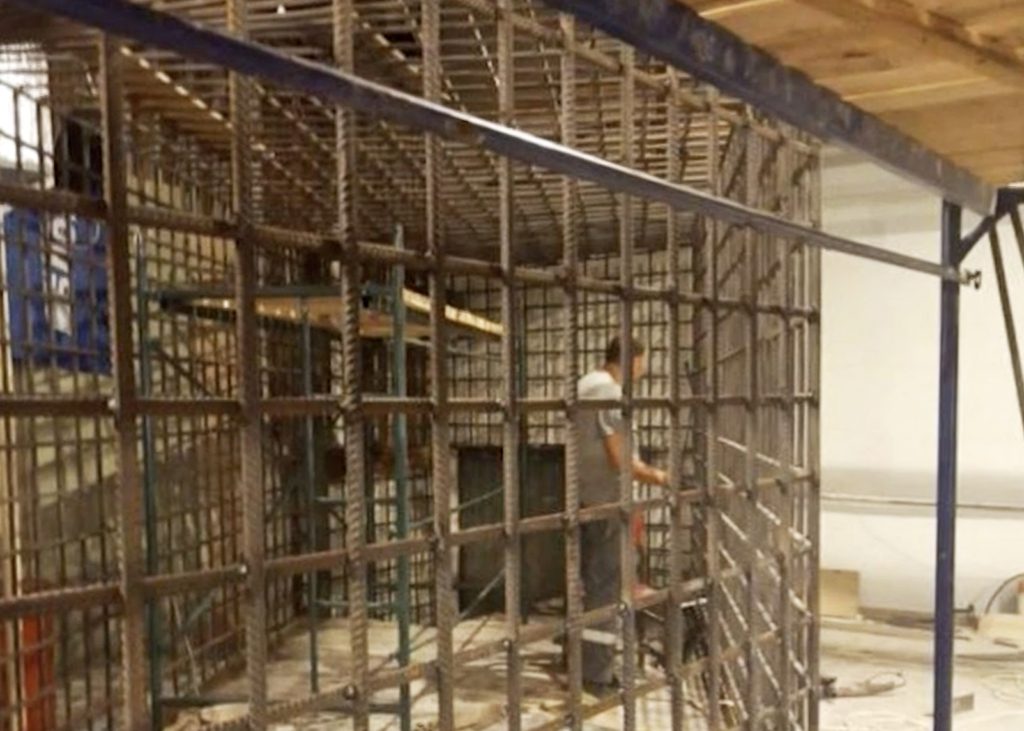
In recent days, concerns have mounted after several reports and pictures shared on social media appear to show cages being built inside the Mariupol Philharmonic Hall to allegedly restrain prisoners who will be put on trial. Amnesty International’s Crisis Evidence Lab confirmed that pictures posted on Facebook by Mariupol City Council were consistent with the interior of the Mariupol Philharmonic Hall.
International law prohibits a detaining power from prosecuting prisoners of war for having participated in hostilities, or for lawful acts of war committed in the course of armed conflict. Under the Third Geneva Convention, prisoners of war charged with crimes are entitled to due process and a fair trial, which can only take place in a regularly constituted court.
By staging such sham ‘trials’, Russia – as the occupying power – is making a mockery of justice
Marie Struthers, Amnesty International Director for Eastern Europe and Central Asia
“Any attempts by Russian authorities to try Ukrainian prisoners of war in so-called ‘international tribunals’ set up by armed groups under Russia’s effective control in Mariupol are illegal and unacceptable,” said Marie Struthers, Amnesty International’s Director for Eastern Europe and Central Asia.
“International humanitarian law prohibits courts being set up solely to try prisoners of war. Wilfully stripping fair trial rights from prisoners of war, which is precisely what Russia’s action will do, amounts to a war crime. The Geneva Conventions also state clearly that prisoners of war are protected from prosecution for taking part in hostilities.
“By staging such sham ‘trials’, Russia – as the occupying power – is making a mockery of justice and a public theatre of courts, transforming them into vehicles for propaganda.
“To choose Mariupol as host of these ‘tribunals’ is particularly cruel and shocking, given Russia’s recent relentless attacks and siege which turned the city into a wasteland before its capture in May. Amnesty International investigated a Russian air strike on the Donetsk Regional Academic Drama Theatre in Mariupol and concluded that Russian forces had deliberately targeted civilians, an attack amounting to a clear war crime.”
Screengrab from a video which shows the construction of cages on the stage at Mariupol’s Philharmonic Hall, Ukraine, August 2022.
Rights of Ukrainian POWs
Russian forces and Russian-backed armed groups must give independent monitors full access to Ukrainian prisoners of war. Amnesty International shares concerns raised by the UN’s human rights agency (OHCHR) that Ukrainian prisoners of war have been held without access to independent monitors, “exposing them to the risk of being tortured to extract a confession”.
Amnesty International also shares OHCHR’s concern that public statements by Russian officials deeming Ukrainian prisoners of war to be ‘war criminals’ directly undermines the presumption of innocence, a fundamental fair trial guarantee.
Amnesty International has also previously documented numerous human rights abuses by such groups since they took control over parts of eastern Ukraine under Russian patronage, including abductions, killings, unlawful deprivation of liberty, torture and other ill-treatment, and suppression of dissent.
Amnesty International is also calling for an immediate international investigation into other alleged war crimes, including the 29 July explosion in Olenivka village that killed more than 50 Ukrainian prisoners of war held by forces of the so-called ‘Donetsk People’s Republic’ in eastern Ukraine. It is imperative that Russian authorities allow international investigators to visit the site to launch a comprehensive probe.
Third Geneva Convention
Protections for prisoners of war facing criminal proceedings are contained in Articles 82 to 108 of the Third Geneva Convention (GCIII). As Article 84 provides, they may only be tried by courts that offer “the essential guarantees of independence and impartiality as generally recognized”.
In addition, Article 13 of GCIII states: “Prisoners of war must at all times be humanely treated. Any unlawful act or omission by the Detaining Power causing death or seriously endangering the health of a prisoner of war in its custody is prohibited, and will be regarded as a serious breach of the present Convention. Likewise, prisoners of war must at all times be protected, particularly against acts of violence or intimidation and against insults and public curiosity.”
Accountability for war crimes
Since the beginning of the conflict, Amnesty International has been documenting Russian war crimes and violations of international humanitarian law committed during Russia’s war of aggression in Ukraine. All of Amnesty International’s outputs published to date – including news updates, reports, briefings and investigations – can be found here.
Amnesty International has called repeatedly for Russian forces responsible for violations to be held to account and has welcomed the ongoing International Criminal Court investigation in Ukraine. Comprehensive accountability in Ukraine will require the concerted efforts of the UN and its organs, as well as initiatives at the national level pursuant to the principle of universal jurisdiction.
The Iranian authorities’ persecution of the Baha’i religious minority has increased in intensity with a recent flurry of raids, arbitrary arrests, home demolitions and land grabs, Amnesty International said today.
Since 31 July 2022, Ministry of Intelligence agents have raided and confiscated dozens of Baha’i properties and arrested at least 30 members of the Baha’i community on account of their faith in various cities throughout Iran. The authorities have subjected many more to interrogations and/or forced them to wear electronic ankle bracelets. The Ministry of Intelligence announced on 1 August that those arrested were “core members of Baha’i espionage party” who “propagated Baha’i teachings” and “sought to infiltrate various levels of the educational sector across the country, especially kindergartens”.
“The despicable onslaught against the Baha’i religious minority is yet another manifestation of the Iranian authorities’ decades long persecution of this peaceful community. Baha’is in Iran cannot feel safe in their homes or while exercising their faith because they are at risk of persecution,” said Heba Morayef, Amnesty International’s Regional Director for the Middle East and North Africa.
“The authorities must immediately and unconditionally release all the Baha’i individuals who were recently detained as well as anyone in prison from before solely for the peaceful exercise of their right to freedom of religion. All convictions and sentences imposed on this basis must be immediately quashed.”
An additional 26 men and women in Shiraz, Fars province, are at imminent risk of arbitrary detention after a Revolutionary court convicted them of spurious national security charges stemming from their identity as Baha’i adherents in a grossly unfair mass trial and sentenced them in June 2022 to prison terms of between two and five years.
According to the Baha’i International Community (BIC), the recent arrests bring the total number of those currently imprisoned in Iran on account of their Baha’i faith to at least 68, including those who have been in prison since as early as 2013. According to the United Nations, over 1000 Baha’i individuals are currently at risk of imprisonment.
Intensified persecution
On 2 August 2022, authorities bulldozed six Baha’i houses and confiscated more than 20 hectares of land in the village of Roshankouh in Mazandaran Province, northern Iran. According to state media reports, the demolitions were carried out in the presence of several senior judicial and executive officials.
The Iranian authorities have brazenly imposed a system of discrimination and oppression against the Bahai’s.
Heba Morayef, Amnesty International
Three victims told Amnesty International that more than 200 agents from various security forces, including plainclothes intelligence agents and riot police, sealed off the village and its access road from 6am to 4pm, confiscating the mobile phones of villagers to prevent filming, beating and/or pepper spraying individuals, including several elderly men, who had peacefully gathered to protest the bulldozing, and firing into the air to disperse crowds. Two men were detained for several hours after sustaining severe beatings.
Since 2016, authorities have been attempting to appropriate Baha’i properties in Roshankouh under the false pretext that they have encroached on protected landscapes. As a result of the recent confiscations, at least 18 Baha’i farmers have been denied their source of livelihood. In 2021, the authorities also demolished two Baha’i houses that were under construction and confiscated about one hectare of land, which was the source of livelihood for two farming Baha’i families.
In a separate case, an appeal court upheld a verdict on 25 June 2022, which authorized the confiscation of 18 Baha’i properties in Semnan Province on the grounds that the owners are leading figures of the “perverse Baha’i sect”, which “engages in illegal activities and espionage to the advantage of foreigners”.
Over the past decade, authorities in Semnan forcibly closed at least 20 Baha’i stores, confiscated the equipment of two Baha’i manufacturing units, and confiscated or blocked access to the lands of two Baha’i businesses involved in agriculture and animal farming.
“The Iranian authorities have brazenly imposed a system of discrimination and oppression against the Bahai’s. Iranian authorities must immediately abolish all discriminatory laws, policies, and institutional practices which have been adopted to expel and dispossess Baha’is of their land and property, and deprive them of their human rights, and ensure that Baha’i people can exist and practise their faith freely and openly,” said Heba Morayef.
Amnesty International issued a call for Urgent Action on 23 August, urging people around the globe to write letters and speak out against the Iranian authorities’ intensified assault on the Baha’i minority.
Background
Baha’is are Iran’s largest non-Muslim religious minority. They suffer widespread and systematic violations, including arbitrary detention, torture and other ill-treatment, enforced disappearance, forcible closure of businesses, confiscation of property, house demolitions, destruction of cemeteries, and hate speech by officials and state media, and are banned from higher education.
In 1991, an official policy was adopted by the Supreme Revolutionary Cultural Council and approved by Iran’s Supreme Leader, which clearly states that “the state’s dealings with the Baha’is must be in such a way that their progress and development are blocked”. The policy adds that “they must be expelled from universities” and that “they shall be denied employment if they identify as Baha’is” and “any position of influence, such as in the educational sector”.
Iranian authorities have used the fact that the Baha’i religion’s headquarters is in the city of Haifa in Israel to denounce the faith and falsely accuse its community of espionage.