Today, PETA sent a letter requesting that the Clark County Board of County Commissioners reconsider its approval—over the objections of citizens and animal protection groups—of an application by New Dewey Strip Holdings, LLC (NDSH), to erect a circus tent on the South Las Vegas Strip featuring tigers exploited by exhibitor Jay Owenhouse.
PETA points out that the board’s approval, on July 22, of an application for a show lasting six months circumvented a county law prohibiting unaccredited exotic or wild animal exhibits from lasting more than 20 days. Owenhouse reportedly made last-minute changes to the application that were read into the record immediately preceding the opportunity for public comment, effectively barring the community from providing meaningful responses to them because most responses had already been submitted in written form.
“The board has a duty and an obligation to take community concerns about this cruel and dangerous spectacle into account,” says PETA Foundation Director of Captive Animal Law Enforcement Rachel Mathews. “PETA is calling on officials to reconsider siding with moneyed interests and sentencing tigers to six months of suffering, especially given the danger of COVID-19.”
PETA and Henderson-based CompassionWorks International had submitted comments opposing NDSH’s application for Owenhouse’s show, noting that the tigers would be caged outdoors in the sweltering desert heat and subjected to high-decibel noise from the McCarran International Airport. Furthermore, Owenhouse expressed no intent to comply with the U.S. Department of Agriculture’s advisory note urging exhibitors to limit contact between humans and nondomestic cats, which was issued after multiple big cats became infected with COVID-19 by asymptomatic humans.
PETA—whose motto reads, in part, that “animals are not ours to use for entertainment”—opposes speciesism, a human-supremacist worldview. For more information, please visit PETA.org.
Awarded more than $90 million from the National Institutes of Health to infect mice and monkeys with Ebola and then observe them as they endured agonizing deaths, animal experimenter Michael Katze seemed to think he was “untouchable.” But his apparent harassment of humans eventually caught up with him. And he’s just one of many animal experimenters whose victims apparently included humans, too.
At the University of Washington (UW), where he was a tenured microbiology professor, Katze seemingly found a legally permissible way to act on his violent impulses.
Katze specialized in infecting mice and monkeys (some of whom stay with their mothers for their entire lives when in their natural habitats) with Ebola, an infectious agent notorious for causing agonizing deaths.
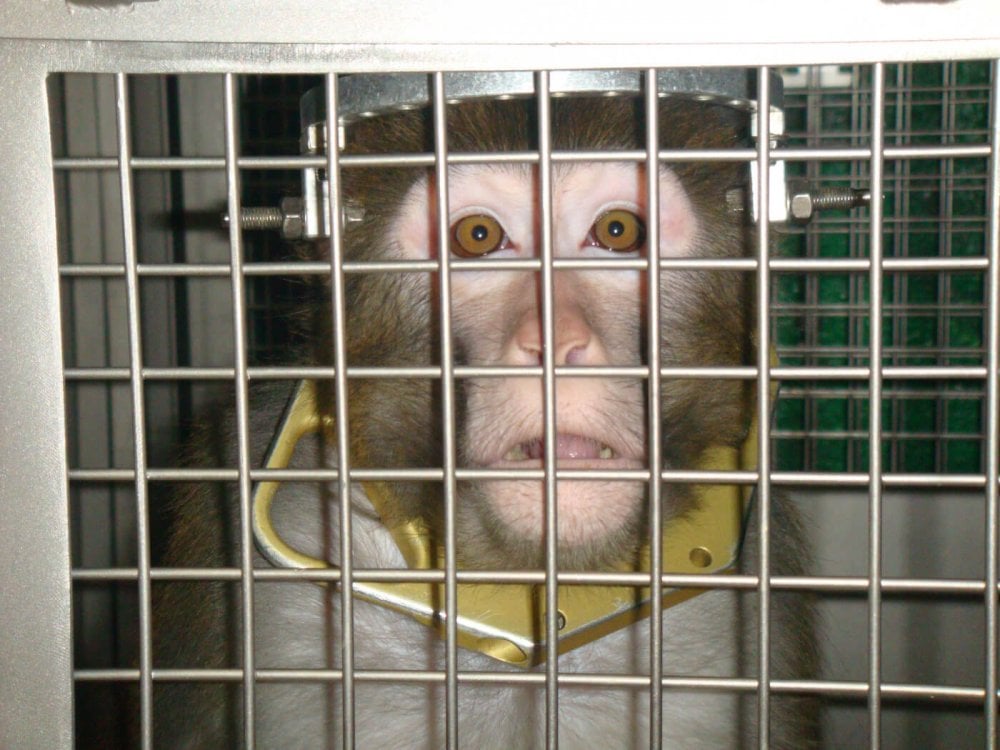
This monkey at the University of Utah was used in invasive neurological surgeries, similar to the way monkeys had been used in University of Washington experiments.
In one experiment, dying mice were allowed to suffer until their weights plummeted by 20% within just five or six days. In another, it took seven days for monkeys whom he had infected with the virus to die—and before they did, they “showed the hallmarks of Ebola hemorrhagic fever.” Such “hallmarks” include severe muscle pain, headaches, vomiting, diarrhea, and internal and external bleeding.
According to UW, during his time as a professor, Katze also routinely made derogatory comments about women as well as gay and Asian employees and made demanding, hostile, and threatening remarks to staff. He apparently asked a staff member to solicit a prostitute for him, too, and he asked another to pick up his mail, vacuum his apartment, and shop for furniture for him.
Katze’s misconduct didn’t stop there.
According to The Seattle Times, Katze “persistently, and for an extended period of time, made unwanted sexual comments and jokes” to a female employee who was under his direct supervision, reminding her multiple times that he could fire her.
He also reportedly watched porn on his university computer and sexually harassed other female employees, including when he allegedly “put his hands all over” one and “ripped her pants,” according to BuzzFeed News.
Also according to BuzzFeed News, one of his alleged sexual harassment victims, referred to as “Jane Doe” in court documents, said that Katze thought he was “untouchable.” However, after years of tolerating Katze’s disturbing behavior, UW finally fired him in August 2017. His laboratory had been shut down the previous year.
Katze showed no remorse for his deplorable actions, reported BuzzFeed News—perhaps unsurprising behavior from a person who profited from vulnerable animals’ suffering and deaths.
During UW’s investigation, the animal experimenter told an officer, “My job is to get grants. I am singularly focused on training scientists. This kind of sh*t is completely unimportant to me,” according to BuzzFeed News.
Every year, TeachKind hosts our Teacher Appreciation Contest and connects with brilliant, creative, and passionate educators who are speaking up for animals all around the country. We chose just one fabulous winner and two runners-up for the 2020 contest, but we heard from so many inspiring educators this year that we wanted to share stories about a few stellar standouts whose actions over the past school year help illustrate that any humane education effort can make a big impact when it comes to inspiring a new generation of compassionate humans.
As educators, we’re always under so much pressure to go above and beyond for our students—so don’t let the perceived added pressure of being a humane educator hinder you. You don’t have to check every single animal rights box or be “perfect” in every way in order to be an effective humane educator. Even taking seemingly small actions—like forgoing a field trip to SeaWorld, reworking a lesson plan to include an animal-friendly message, or volunteering to be the adviser for your school’s animal rights club—can make a huge difference when it comes to setting an example of compassion for students.
You also don’t need to be an expert on every single animal rights issue in order to start dismantling speciesism and speaking up in your school or classroom. Not following a fully vegan lifestyle yet? You can still teach students about the environmental harm caused by eating animal-derived foods. Unsure how to argue a case against animal testing but confident about cutting out dissection in your school? Go for it! Everyone is at a different stage of their animal rights journey, so don’t hesitate to do what feels right.
Meet three inspiring educators TeachKind connected with through this year’s Teacher Appreciation Contest whose actions over the past school year highlight ways educators can make a difference for students and animals.
Wildlife-Saving Warrior: Lisa Cox, Palm Beach Gardens, Florida
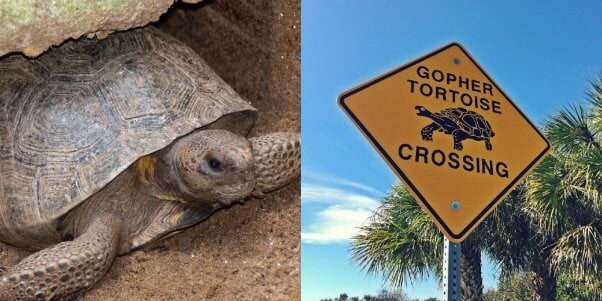
When 11th grade English teacher Lisa Cox and her students realized that they could help gopher tortoises (who are commonly found in the area and at high risk of getting hit by cars on the city’s busy freeways), they immediately jumped into action and began campaigning. The group spent months corresponding with the Florida Department of Transportation, the mayor of their city, and local environmental organizations to get miles of fencing and “Gopher Tortoise Crossing” signs installed along a busy highway in Palm Beach County, which will help keep tortoises safe.
They were inspired to get involved after noticing a problem in their local communities: that gopher tortoises were often getting hit by cars. They also made the connection that this posed a threat to drivers, too—proving that living beings are interconnected and that protecting one group benefits others. From there, Lisa and her students began brainstorming and researching ways they could help the tortoises—and once they had an idea, they began taking action. “We stayed on top of it and never gave up,” Lisa shares with TeachKind. “The kids are learning that their voices can make a difference.”
Lisa also heads up her school’s Marine and Wildlife Protection Club—a group that she founded after watching Blackfish and learning about the cruelty inherent in marine mammal captivity. This was a huge shift for Lisa, as she had once worked as a dolphin trainer at the Miami Seaquarium. Now, she speaks openly with her students about the reasons why she’ll never support field trips to places like the Seaquarium or SeaWorld, educates them on ways they can make a difference for these animals, and empowers them to take action.
Get inspired: If you’re interested in humane education but you aren’t sure where to begin, start by looking at issues affecting animals in your local area—just as Lisa and her students did. Whether you’re addressing an issue related to wildlife (like the gopher tortoises who were getting hit by cars) or an issue related to a local animal-exploiting business (like a zoo or an aquarium), empowering students to speak up for animals in their own communities can help you work animal rights into your curriculum in a relevant and tangible way while also teaching your students the power of activism and community engagement.
High school science teacher Lyndsey Rios grew up participating in FFA and other animal agriculture programs—but after seeing a video about cruelty to animals in the meat industry, she decided to change her curriculum to help her students become more informed and compassionate scientists and consumers. That’s why this past school year, she created a curriculum that she calls the “clean meat initiative” for her pathophysiology students, which combines animal rights with the course’s assigned topics, such as cells and tissues, body systems, and biotechnology.
By sharing videos recorded inside slaughterhouses and engaging students in conversations that challenge their ethics and consumer values, Lyndsey teaches about the cruelty inherent in using animals for food as well as the unsustainability of eating meat—and she then ties this information in with the course material by having students study the process of creating “clean meat” in a lab using cell cultures. During the unit, students also designed their own posters to promote the concept of lab-grown “clean meat,” which were displayed around the school—leading to many conversations within the student body (even among students not in her classes) about minimizing meat consumption and questioning where food comes from.
Lyndsey is inspired to teach her students to make their own informed choices about what’s right and what’s wrong, and she emphasizes freedom of choice throughout her lessons. She sees firsthand the importance of teaching students to question the status quo on their own terms. “The emotions that my students shared with each other about animal cruelty [during the lessons] will always remain with them,” Lyndsey tells TeachKind of the project. “The students and I both learned that there are big choices to make when purchasing food at a local grocery store, chain store, or online. Animal rights are now being taken into consideration before products are being bought.”
Get inspired: It’s hard to find extra time in the school day to incorporate lessons about animal rights, so reworking a curriculum to tie in animal issues in a fully supported and relevant way can be a game-changer—especially for teachers who have to get lessons approved before moving forward with them. Brainstorm ways to incorporate animal issues that you’re passionate about into the subject that you teach—just as Lauren has done in working animal agriculture into pathophysiology via studying lab-grown meat. A little creativity can make a really big impact for animals.
Healthy Food Hero: Lauren Carp, Oak Park, Michigan
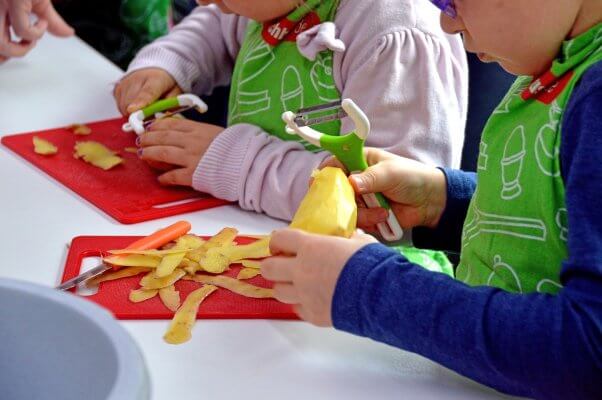
Fifth grade teacher Lauren Carp is passionate about vegan eating, and it shows—she just completed the third consecutive year of running her elementary school’s plant-based Healthy Cooking Club, which meets after school. Students learn how to cook entirely vegan meals that are good for animals, their health, and the environment. The club has become so popular and receives so many applications from students that Lauren has had to start selecting the members raffle-style.
During club meetings, students learn about healthy vegan ingredients and how to prepare them, cook them, and incorporate them into all sorts of yummy, kid-friendly recipes. They keep cooking journals in which they write down the recipes they’ve cooked and note how they turned out. The club hosts visits and cooking demonstrations from local chefs of popular vegan restaurants (which has inspired former club members to try more vegan restaurants and even to return to the club as helpers after they’ve graduated). After Lauren’s principal saw how successful and fun the Healthy Cooking Club was, schoolwide tastings in the cafeteria were arranged during the school day so that the entire student body could sample the delicious and healthy vegan snacks, like smoothies and veggie chips, that the club members were whipping up.
All of Lauren’s efforts are having a big impact on young students, as they’re opting for vegan foods over animal-derived ones both at school and at home—and they’re excited about the compassionate and healthy changes in their eating habits. “Students feel inspired to use more plants in their own diet [and to spread] the word about eating foods that are plant-based instead of animal-based,” Lauren tells TeachKind. “By the end of our after-school classes, families comment on how passionate their children are about eating more plants at home.” Through the club, students are empowered to make compassionate choices that benefit animals and their health, and they leave with the ability to prepare healthy vegan meals for their families at home.
Get inspired: If you’re passionate about an animal rights issue but don’t have the opportunity to work it into your curriculum or face opposition from your school’s administration, consider devoting some extracurricular time to starting a student group or club in which you can explore issues with students outside the classroom setting, as Lauren has done with her plant-based cooking club. By hosting a club and gathering with students during lunchtime or after school, you can explore animal rights with a little more freedom than you would otherwise, and it’s a great way to support students who are already interested in helping animals and help them connect with one another.
*****
Are you ready to up your game for next school year and start making a difference for animals? We’ve got your back: Sign up for TeachKind’s Lesson of the Week for yearlong inspiration on incorporating kindness to animals in your classroom.
All fields in bold are mandatory.
FormBuilder Form – 3364
By submitting this form, you are agreeing to our collection, storage, use, and disclosure of your personal info in accordance with our privacy policy as well as to receiving e-mails from us.
As Hurricane Douglas approaches—and because a hurricane watch is now in effect for Oahu and a warning has been issued that hurricane conditions may occur on the island—PETA reminds everyone to never to leave dogs tethered or penned outside and always to take their animal companions with them if they have to evacuate their homes.
Believe it or not, every time there’s a natural disaster, many dogs and other companion animals are left outside to fend for themselves and even left behind when humans evacuate. Dogs kept tethered will swim to exhaustion and drown—and there are tethered dogs everywhere. PETA’s Animal Rescue Team has witnessed firsthand the trauma that animals endure when left behind to face floodwaters and flying debris. During previous storms, we have found dogs dead. We have also found them up to their necks in water, unable to sit or lie down, and in almost-submerged crates inside houses and seen animals who have been flung around by high winds. And of course, animals are petrified in these kinds of weather conditions.
Please see PETA’s natural disaster–preparedness PSA featuring Dean Winters. It reminds families to make plans to ensure the safety of their animal companions long before evacuating. For more information, please visit PETA.org.
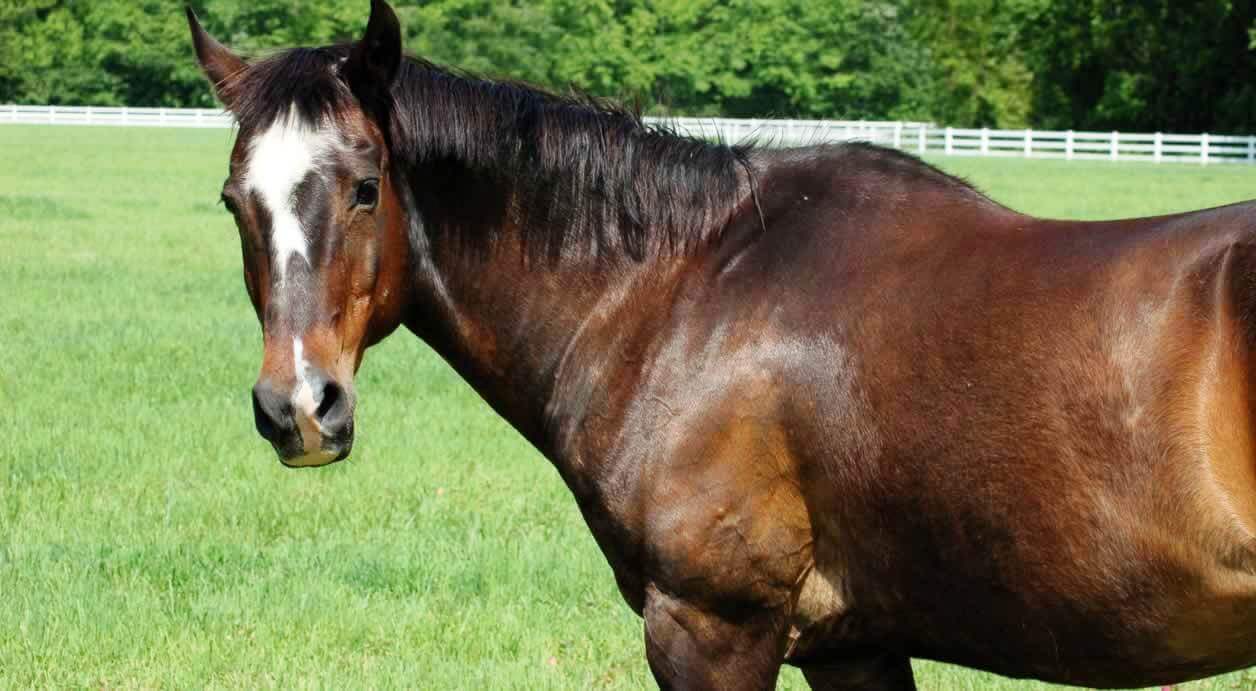
PETA does not support the deadly “sport” of horse racing, and it can never be entirely safe. However, simple changes could make a world of difference for horses. You can help support PETA’s efforts by calling on racetracks to enact the following rules and commit to protecting horses:
1. Ban all medications for two weeks before a race
Thousands of necropsies conducted at the University of California–Davis show that most Thoroughbreds who break bones on tracks had pre-existing injuries at the site of the break.
3. Install cutting-edge CT scan equipment at all tracks
Sometimes, bone injuries can’t be identified visually, even when the horses haven’t been administered multiple pain-masking medications. However, technology developed by CurveBeam can still detect these injuries. This low-radiation technology can provide three-dimensional scans of a horse’s legs in just a few minutes, allowing for many horses to be screened quickly. Horses can be walked onto the scanner, which has no visible moving parts, and then simply walked off.
Such technology is already being used for human sporting events. It is much more practical than time-consuming MRIs and does not require injections of isotopes, as PET scans do.
4. Replace dirt tracks with high-quality synthetic Tapeta
The statistics are clear: Fewer deaths occur on synthetic tracks.
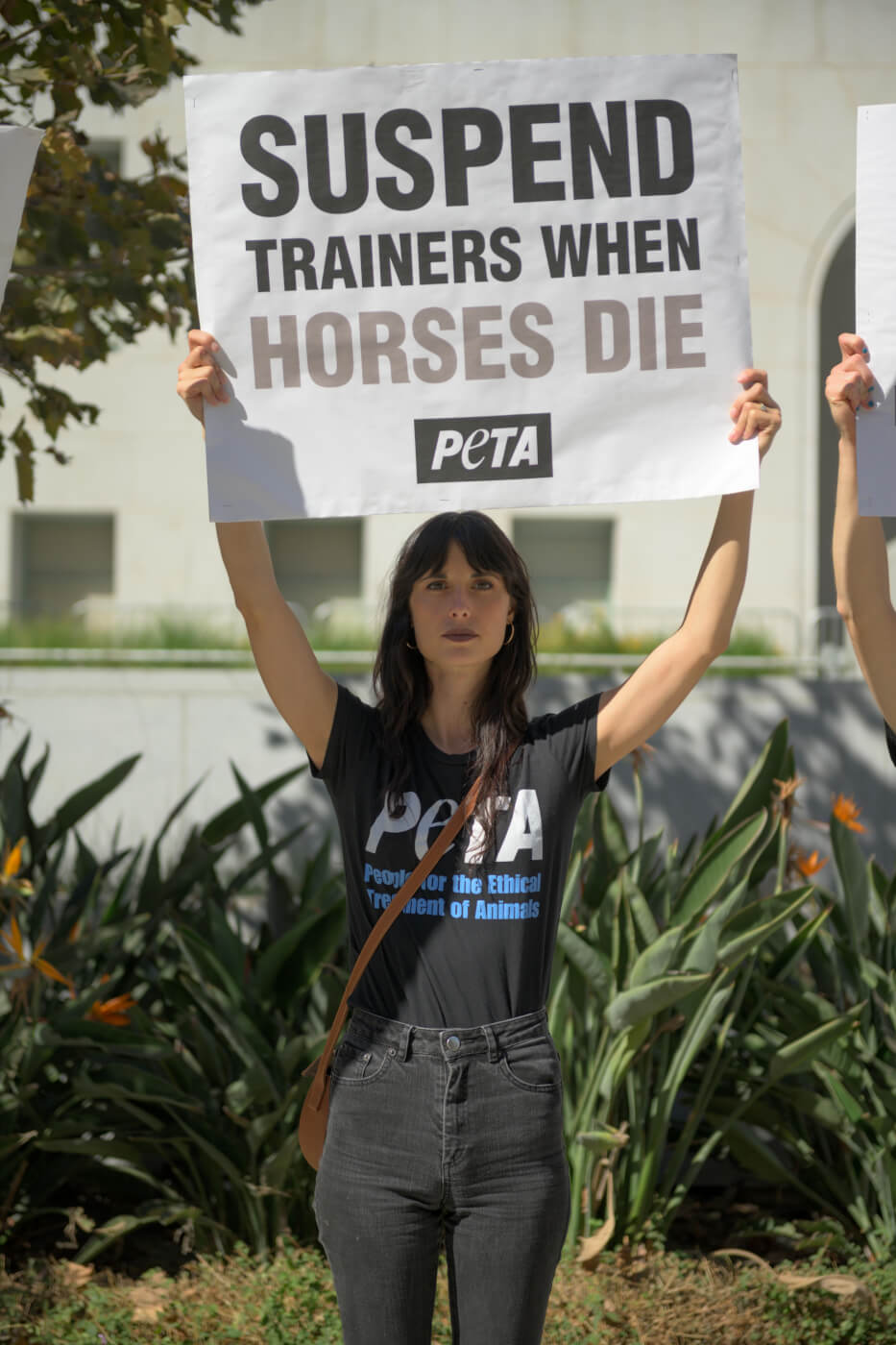
5. Ban trainers who have multiple medication infractions or harm horses in other ways
The days of $500 fines and 30-day suspensions must end.
6. Ban whipping
Striking a horse with a stick, no matter how cushioned it may be, is the most frequent and visible sign of abuse in racing. It’s cruel and unnecessary.
Forcing juvenile horses—whose bones don’t fully mature until five years of age—to run faster than they ever will in the rest of their careers is damaging and dangerous. Young horses are whipped to compel them to accelerate to breakneck speeds, merely to impress potential buyers at auction previews known as “under tack shows.”
PETA footage has revealed catastrophic breakdowns during these auctions:
8. Be transparent
The public doesn’t trust the racing industry—and for good reason. Many tracks outside California hide fatality statistics. Trainers keep injury records secret. The racing industry must take responsibility for all the 21,000 Thoroughbred foals born each year and implement a system of accountability and traceability for every horse through all changes in ownership.
9. Don’t sell horses to foreign racing entities that routinely send them to slaughter
PETA’s investigation of racing in South Korea revealed that U.S.-bred Thoroughbreds and the offspring of American horses were routinely slaughtered when they were no longer considered useful, often at quite a young age.
10. Take care of horses when their racing days are over
There should be substantial and mandatory contributions to the Thoroughbred Aftercare Alliance from all stakeholders. No horse should ever go to auction and slaughter.
These rules are a just starting point, the minimum action that must be taken. They’re not difficult to understand, and they’re entirely doable. The racing industry must pull itself together, stop letting a noisy few hold back progress, and make a commitment to change that will end the carnage. Or call it quits.