
‘Tofu Never Caused a Pandemic’ Ad Blitz Offers Solution Amid Rising COVID-19 Cases

As the number of COVID-19 cases in Los Angeles rises, PETA is posting ads on dozens of city benches encouraging people to choose vegan foods like tofu instead of what comes out of filthy blood-splattered slaughterhouses and factory farms, where animal-borne diseases thrive and workers face a nearly unchecked spread of COVID-19.

“Tasty vegan foods like tofu are the key to preventing deadly zoonotic diseases as well as heart disease, cancer, diabetes, obesity, and strokes,” says PETA President Ingrid Newkirk. “PETA stands ready to help people make the switch with its free vegan mentors, vegan recipes, tips, and more.”

Not only is tofu cheaper than meat, it also is packed with protein, contains zero cholesterol, and can lower one’s risk of suffering from heart disease, diabetes, cancer, and numerous other life-threatening health issues. The novel coronavirus is believed to have originated in a live-animal market in China, where live and dead animals are sold for food. Previous influenza viruses have originated in pigs and chickens—but never in vegan foods like tofu.

PETA offers a variety of delicious tofu-based recipes on its website, such as General Tso’s Tofu and Buffalo Tofu-Scramble Breakfast Tacos.

The ads are located on 50 benches around Los Angeles, including ones at the intersections of Hyperion Avenue and Tracy Street, Fountain Avenue and Hoover Street, and Sunset Boulevard and Micheltorena Street (pictured above).

PETA—whose motto reads, in part, that “animals are not ours to eat”—opposes speciesism, a human-supremacist worldview. For more information, please visit PETA.org.

The post ‘Tofu Never Caused a Pandemic’ Ad Blitz Offers Solution Amid Rising COVID-19 Cases appeared first on PETA.
Country’s First COVID-19 Cases in Minks Prompt Call to Shut Down Local Fur Farms

Following reports that minks in the U.S. have tested positive for coronavirus on two local fur farms—which means that workers there are almost certainly infected, too—PETA has fired off a letter to the executive director of the Utah Department of Health urging him to shut down all of the state’s mink farms immediately, an action that’s been taken by foreign governments in the same situation.

PETA points out that the novel coronavirus is believed to have originated in a live-animal market. Such markets represent a similar public health risk to that posed by fur farms, where minks are confined right next to each other in wire cages and disease can easily spread through inhalation, urine, excrement, pus, and blood. COVID-19 cases in minks have so far been documented at fur farms in Denmark, the Netherlands, and Spain, prompting authorities in those countries to close those farms down out of concern for the workers, their families, and others.

“Even without the current pandemic, filthy fur farms packed with sick, stressed minks are petri dishes for pandemics,” says PETA President Ingrid Newkirk. “PETA is pointing out that the time to shut down these cruel and dangerous facilities was yesterday.”

The Centers for Disease Control and Prevention warns that approximately 75% of recently emerged infectious diseases affecting humans originated in other animals. Minks on fur farms are suspected to be infected with a wide range of pathogens and diseases, including zoonotic ones like tularemia, LA-MRSA, hepatitis E, influenza, and salmonella.

PETA—whose motto reads, in part, that “animals are not ours to wear”—opposes speciesism, which is a human-supremacist worldview. For more information, please visit PETA.org.

The post Country’s First COVID-19 Cases in Minks Prompt Call to Shut Down Local Fur Farms appeared first on PETA.

10 Facts Reveal How North Carolina’s Meat Industry Kills People of Color

The Environmental Working Group’s (EWG) extensive analysis of new and expanding farms in North Carolina makes one thing clear: The Tar Heel State’s meat industry doesn’t give a damn about people of color.

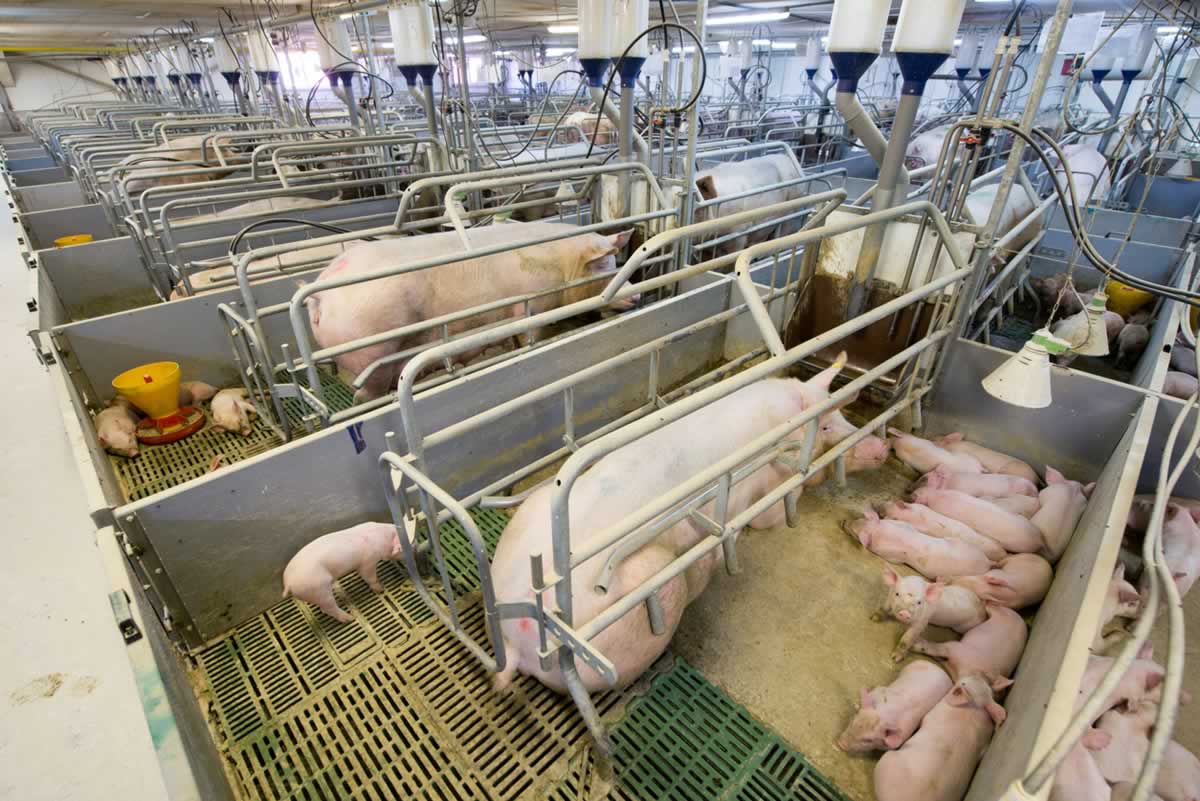
Pigs in gestation crates on factory farm, Environmental Racism © iStock.com/agnormark

Disproportionately, Black, brown, and Indigenous people in North Carolina have long suffered as a result of the enormous quantities of animal waste and its stench in their communities. The overwhelming amount of feces and liquid waste threatens their water and affects their health.

Here are 10 revelations from the EWG showing that the North Carolina pig and poultry industry perpetuates environmental racism:

1. The EWG revealed that in less than a decade, corporations added 30 million chickens and turkeys to Duplin, Sampson, and Robeson counties—where people of color make up over 57% of the residents.

2. These predominantly Black, Native American, and Latino counties already house 4.5 million pigs, which is over half the state’s total.

3. From 2012 to 2019, North Carolina increased the amount of chickens and turkeys by 17%, excluding Duplin, Sampson, and Robeson counties. For those three counties, that number swells to 36%.

4. In Robeson County, farmers now raise 24 million chickens and turkeys—an 80% increase in just eight years. These millions of living, breathing individuals are crammed together in filthy, dank sheds.

5. According to the EWG, “The growing population of chickens and turkeys in the three counties could produce one million tons of waste each year—almost one-fifth of all estimated poultry waste statewide” [emphasis added].

6. An Environmental Protection Agency review of North Carolina’s meat-industry operations found a “linear relationship between race/ethnicity [of residents within 3 miles of industrial hog operations] and … density of hogs.”

7. It took a civil rights lawsuit to regulate the amount of animal waste that pig farms can spray over communities of color. Despite new air- and water-monitoring practices for pig farms, the state has allowed an exponential increase in poultry farms into these same counties with little or no regulatory oversight.

8. Environmental regulators often don’t know where, when, or how much animal waste is sprayed over crop fields by poultry farms. It’s apparent that the meat industry feels that it can treat communities of color like its own dumping grounds.

9. According to a Duke University study, North Carolinians who live near industrial pig farms have a higher rate of mortality from several health conditions than other residents in the state. These include anemia, kidney disease, bacterial infection, and tuberculosis.

10. In general, communities affected by filthy pig farms suffer from higher rates of death, including infant mortality. Children who go to school near these operations reportedly have higher cases of wheezing and asthma.

Anyone surprised by the environmental racism that’s perpetrated by the meat industry hasn’t been paying attention. The meat industry doesn’t care about animals, the Earth, or your health. It only cares about profit—so much so that it will kill for it.

Everyone can take a stand against the meat industry by living vegan. Order a free vegan starter kit from PETA. Sign up for a free vegan mentor. You can make a real difference and save nearly 200 animals a year—simply by not eating them!

The post 10 Facts Reveal How North Carolina’s Meat Industry Kills People of Color appeared first on PETA.

Texas A&M Faces Second Lawsuit Over Facebook, YouTube Censorship

PETA has filed a federal lawsuit against Texas A&M University (TAMU) challenging the school’s deletion of comments on its official Facebook page and YouTube channel during its graduation ceremonies in the spring, which were held virtually in light of the novel coronavirus pandemic. TAMU manually deleted visitor comments associated with PETA’s high-profile campaign against its muscular dystrophy experiments on golden retrievers and other dogs.

This lawsuit follows one brought by PETA against TAMU over the automatic filtering and manual deletion of posts and comments on its Facebook page. As a result of that groundbreaking lawsuit, TAMU agreed not to discriminate against its critics on the basis of their viewpoint on its social media pages, an agreement that PETA now alleges it has violated.

“How and when a government-operated social media account becomes a ‘public forum’ is a critically important free speech issue,” says PETA Senior Vice President Kathy Guillermo. “Texas A&M is violating its own social media policy because it can’t defend its cruel experiments on dogs.”

PETA’s latest lawsuit argues that TAMU’s Facebook page constitutes a public forum and that the school’s censorship represents viewpoint-, content-, and speaker-based discrimination, which is a violation of PETA’s constitutional right to free speech. The group is again represented, in part, by attorneys with the Electronic Frontier Foundation (EFF), a nonprofit advocacy organization dedicated to protecting the privacy and free speech rights of all people in the digital era.

“Our First Amendment rights are infringed when agencies and officials block comments they don’t like or disagree with,” says EFF Civil Liberties Director David Greene. “And the rights of all readers are affected when the government manipulates its social media pages to make it appear that its policies and practices are universally embraced, rather than widely condemned.”

PETA—whose motto reads, in part, that “animals are not ours to experiment on”—has released eyewitness video footage showing that dogs who were deliberately bred to develop a crippling and painful form of muscular dystrophy are left struggling to walk, swallow, and even breathe. These experiments have continued for 37 years, and no cure for the disease has been found.

For more information, please visit PETA.org/TAMU or EFF.org.

The post Texas A&M Faces Second Lawsuit Over Facebook, YouTube Censorship appeared first on PETA.

Feds Suspend License of Jeff Lowe of ‘Tiger King’

PETA has just learned that yesterday, the U.S. Department of Agriculture (USDA) suspended the federal Animal Welfare Act exhibitor’s license of Jeff Lowe of Greater Wynnewood Exotic Animal Park (aka “G.W. Zoo”) and Netflix’s Tiger King. Effective immediately, Lowe cannot exhibit big cats, bears, primates, or other USDA-regulated species at the G.W. Zoo or any other property, including at his reportedly forthcoming new roadside zoo in Thackerville, Oklahoma.

This rare step of a license suspension follows another unprecedented move by the USDA: In June, it halted its inspection of the facility and ordered Lowe to seek immediate veterinary care for a juvenile lion named Nala (see page 19), who was lying in mud, lethargic, depressed, and thin.

Below, please find a statement from PETA Foundation Deputy General Counsel for Captive Animal Law Enforcement Brittany Peet:

Jeff Lowe’s license has been suspended, a permanent revocation should be next, and his tiger-terrorizing days may soon be over. PETA looks forward to seeing every one of the long-suffering animals at the G.W. Zoo be transferred to an appropriate facility where it won’t take federal intervention for a sick cat to receive veterinary care.

PETA—whose motto reads, in part, that “animals are not ours to use for entertainment”—opposes speciesism, a human-supremacist worldview. More information about recent developments at G.W. Zoo is available here.

The post Feds Suspend License of Jeff Lowe of ‘Tiger King’ appeared first on PETA.