The Camel Farm Permanently Closes to the Public After Years of Vet Care Failures

After sustained complaints from PETA urging the U.S. Department of Agriculture (USDA) not to renew The Camel Farm’s exhibitor’s license, a USDA enforcement proceeding against the roadside zoo was resolved yesterday with the permanent revocation of its license.

The Camel Farm can never again be licensed, and it also faces a $126,000 penalty, held in abeyance, for nearly 50 alleged violations of the federal Animal Welfare Act (AWA) between August 2015 and January 2020, including for failing to provide numerous sick or injured animals with adequate—or any—veterinary care. If the roadside zoo violates the AWA again within the next two years, the penalty will become due.

“The Camel Farm must now pay the piper for its years of causing suffering to the animal prisoners in its awful facility, ignoring their illnesses, injuries, and deaths,” says PETA Foundation Associate Director of Captive Animal Law Enforcement Debbie Metzler. “PETA hopes every one of the remaining animals will be transferred to reputable facilities where they’ll finally receive the care they need.”

According to USDA records, one coatimundi at The Camel Farm, Shyla, had an eye that was swollen, protruding from the socket, and leaking fluid—but instead of contacting a veterinarian as her condition deteriorated, The Camel Farm’s manager attempted an unapproved procedure that involved trying to “pop” the eye with a needle and his fingers, which caused Shyla additional suffering and worsened her condition. She was eventually euthanized. The USDA also cited The Camel Farm for failing to provide a lame goat named Thor with proper veterinary care seven times, and an ibex named Pixie was found dead two weeks after a veterinarian recommended that she be euthanized.

The revocation follows a 2017 PETA lawsuit challenging the USDA’s automatic renewal of AWA licenses, including The Camel Farm’s. The AWA prohibits licensing a facility that can’t demonstrate that it’s operating in accordance with it, and The Camel Farm has been cited for more than 90 violations of the law in the past seven years. PETA urged the USDA not to renew the facility’s license in 2018 and 2019, but the roadside zoo remained in business—until now.

PETA—whose motto reads, in part, that “animals are not ours to use for entertainment”—opposes speciesism, which is a human-supremacist worldview. For more information, please visit PETA.org.

The post The Camel Farm Permanently Closes to the Public After Years of Vet Care Failures appeared first on PETA.
NIH to Face Student Protest Over Cruel ‘Monkey Fright’ Experiments

Over the next two Saturdays, a group of Students Opposing Speciesism members wearing monkey masks will gather in Lee’s Summit for socially distanced protests to demand an end to National Institutes of Health (NIH) experimenter Elisabeth Murray’s painful, invasive, and deadly experiments on primates, in which monkeys are permanently brain damaged and then frightened with fake snakes and spiders.

When:    Saturday, August 29, 12 noon

Where:    In front of Walgreens, 901 S.W. State Rte. 150 (at the intersection with S.W. Ward Road), Lee’s Summit

When:    Saturday, September 5, 1–3 p.m.

Where:    In front of City Hall, 220 S.E. Green St., Lee’s Summit

Murray has received more than $36 million in taxpayer funding in the past 13 years alone for these “psychology” experiments. She cuts into monkeys’ heads, saws off a portion of their skulls to expose the brain, and then injects toxins into it to inflict permanent and traumatic brain damage. In some monkeys, she suctions out part of the brain. Afterward, they’re placed alone in a small metal cage, and experimenters terrorize them with rubber snakes and spiders, wooden mechanical snakes, and fake jumping spiders. In 30 years of these tests, Murray’s laboratory has failed to develop a single treatment or cure for humans.

“These students are demanding a better world, one in which millions of tax dollars aren’t spent on tormenting sensitive monkeys in laboratories,” says PETA Future Director of Student Campaigns and Influence Rachelle Owen. “PETA is proud to stand with the younger generation as they call on NIH to stop these deranged experiments and empty the cages now.”

PETA—whose motto reads, in part, that “animals are not ours to experiment on”—obtained video footage from Murray’s laboratory revealing that 23 monkeys are held alone in stark cages, including one named Wilfork, who is nearly bald, likely as a result of severe stress. After Murray is finished with the monkeys, they are all killed.

PETA opposes speciesism, which is a human-supremacist worldview. For more information, please visit SOS.PETA.org.

The post NIH to Face Student Protest Over Cruel ‘Monkey Fright’ Experiments appeared first on PETA.

Protesters to ‘Flock’ to Walmart Over Filthy, Cruel Egg Supplier

Armed with signs proclaiming, “Gassed. Decapitated. Left for Dead,” supporters of PETA and Eradicate Speciesism will descend on a local Walmart store to urge the company to reconsider its relationship with supplier Trillium Farm Holdings, whose eggs Walmart sells under its Great Value brand. The protest comes after a PETA undercover investigation into one of Trillium’s farms in Ohio revealed widespread, severe abuse of laying hens.

When:    Saturday, August 29, 5 p.m.

Where:    Walmart, 1380 W. Elliot Rd. (at the intersection with S. Priest Drive), Tempe

The investigation found hundreds of bodies of dead hens, many of which had been left to decompose alongside the survivors in small, cramped cages. In one incident, PETA’s investigator found a severely injured bird still alive in a trash bin. A supervisor had clumsily attempted but failed to kill the hen then let her languish for two more days before another worker finally killed her. Yet another worker was seen pulling a live hen’s head off. Birds had no place to stand, sit, or lie down except on the bare wire flooring of the cages, and many were missing feathers, often the result of stress-induced self-mutilation or fighting, as each bird had less than a square foot of space.

“Chickens are curious individuals who have distinct personalities, but most importantly, they feel pain and fear just as intensely as any human does,” says PETA Senior Vice President Daphna Nachminovitch. “PETA is calling on Walmart to reconsider its ties with this supplier and asking kind people to choose vegan foods that no animal suffered for.”

In late June, workers at the Ohio farm killed more than 100,000 unwanted “spent” hens, yanking them from their cages and stuffing and slamming them by the dozens into metal boxes, in which they were smothered and gassed with carbon dioxide.

PETA—whose motto reads, in part, that “animals are not ours to eat”—opposes speciesism, a human-supremacist worldview. For more information, please visit PETA.org.

The post Protesters to ‘Flock’ to Walmart Over Filthy, Cruel Egg Supplier appeared first on PETA.

Brands That Don’t Use Coconuts Monkeys Were Forced to Pick

PETA Asia blew the lid off the Thai coconut industry’s use of captive monkeys—a shocking investigation revealed that terrified young monkeys in Thailand are kept chained, abusively trained, and forced to climb trees to pick coconuts that are used to make coconut milk and other products (not coconut sugar or coconut water), including some sold in the U.S.

Many of these monkeys are reportedly illegally abducted from their families and homes when they’re just babies. They’re fitted with rigid metal collars and kept chained or tethered. Apparently, the teeth of some who defend themselves are pulled out. So, what’s a compassionate, coconut-loving consumer to do? We’re making shopping simple with a list* of brands that have confirmed that they source only from farms that don’t use monkey labor:

  • Ape Snacks
  • AYAM
  • Chef’s Choice
  • The Coconut Collaborative
  • The Coconut Company
  • Coconut Merchant
  • Coconuts Organic
  • Daiya
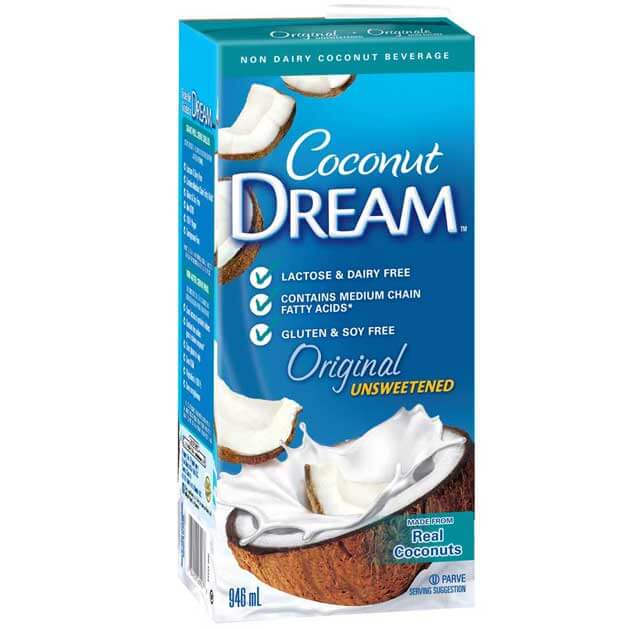
  • DREAM Coconut Milk

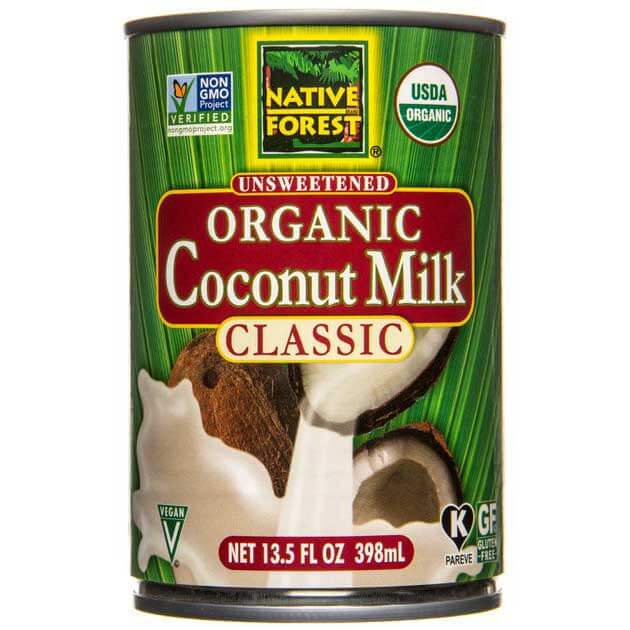
  • Edward & Sons (Native Forest, Let’s Do Organic, Nature Factor)

  • Follow Your Heart (aka “Earth Island”)
  • The Groovy Food Company
  • Harmless Harvest
  • Kara
  • Koko
  • Lucy Bee
  • Miyoko’s Creamery
  • Nature’s Charm
  • Nature’s Way
  • Raglan Food Co
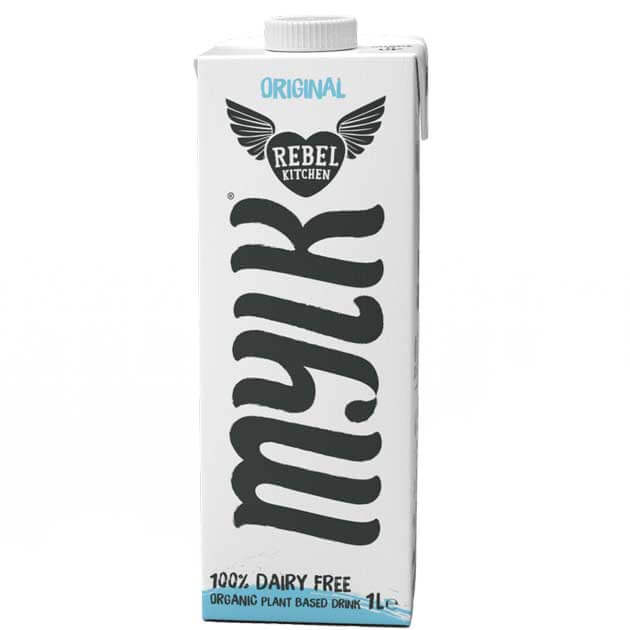
  • Rebel Kitchen

  • Siam Kitchen
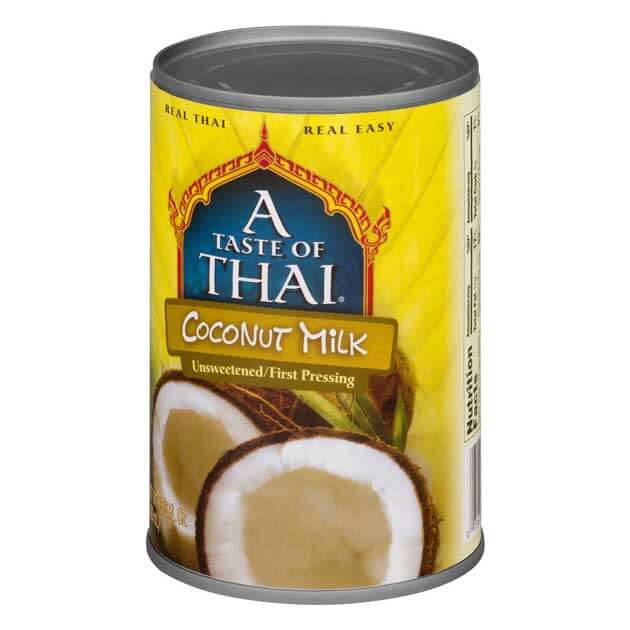
  • A Taste of Thai

  • TIANA Fairtrade Organics
  • Violife

Coconut water typically comes from coconuts grown on dwarf trees, including the Nam Hom variety, so harvesting them doesn’t require monkey labor. And coconut sugar is derived from cutting into the flower of the coconut palm, which monkeys aren’t forced to do. While many coconuts from Thailand are picked by monkeys, not all are, and other coconut-growing regions—including Brazil, Colombia, and Hawaii—harvest coconuts using monkey-free methods such as tractor-mounted hydraulic elevators, willing human tree-climbers, rope or platform systems, or ladders.

By purchasing from brands that support monkey-free coconut-harvesting methods, you’ll be helping to end the cruel practice of exploiting vulnerable monkeys while also sending a powerful message to companies like Chaokoh that still make products from coconuts picked using abusive methods.

Take Action for Chained, Abused Monkeys

Curious, highly intelligent monkeys are denied mental stimulation, companionship, freedom, and everything else that would make their lives worth living—all so that they can be used to pick coconuts. Please urge Chaokoh to join the companies listed above in ensuring that the products it sells aren’t from coconuts picked by monkeys.

Monkeys Used and Abused for Coconuts Need Your Help

*This list is not comprehensive and may be updated at any time in accordance with the findings of PETA Asia’s investigations or new information received by PETA.

The post Brands That Don’t Use Coconuts Monkeys Were Forced to Pick appeared first on PETA.

Outraged Over Chicks Dying in the Mail? We Understand—Join Us to Stop It!

Thousands of live chicks shipped to farmers via the United States Postal Service (USPS) have arrived dead in recent weeks following budget cuts to mail-delivery operations. These reports are giving many people their first glimpse into the deadly egg industry.

Vulnerable chicks go from shell to hell when they’re sent through the mail on long, terrifying journeys without food or water. Even before the current issues that the USPS is facing, one Maine farmer stated that typically, she expected between 1% and 2% of chicks to die when mailed.

Many news outlets fail to mention that death via mail service—as tragically common as it may be—is only one of the shocking ways the meat and egg industries kill baby birds. But we have some good news!

While chickens are arguably the most abused species on the planet, you have the power to help stop their suffering.

In the U.S. alone, the meat industry kills approximately 9 billion chickens for their flesh each year while farmers imprison 376 million hens for their eggs. A baby chick used by the meat or egg industry will never be allowed to have contact with his or her parents, let alone be raised by them. These chickens are deprived of the chance to take dust baths, feel the warmth of the sun on their backs, breathe fresh air, roost in trees, and build nests.

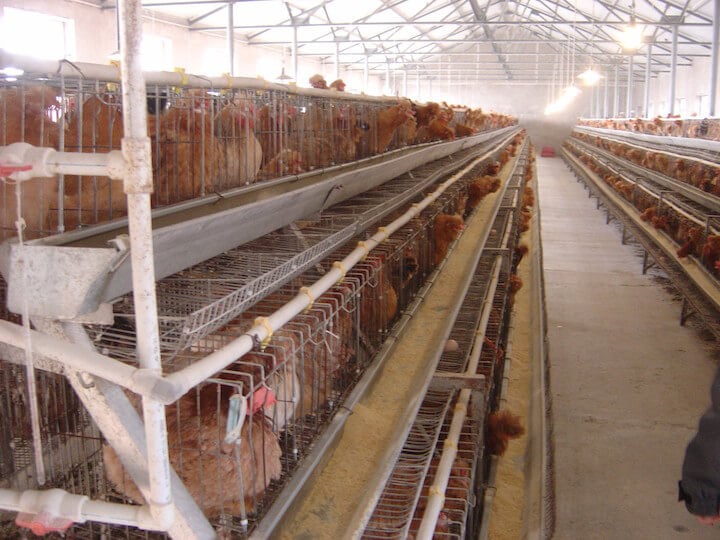
Each hen lives her entire life in a space smaller than a sheet of notebook paper. The wire mesh of the cages rubs off hens’ feathers, chafes their skin, and causes them to become crippled. They don’t have enough room to stretch out their wings or walk more than a step or two without jostling a cagemate.

Marketing terms like “cage-free”—used to trick consumers—mean absolutely nothing when it comes to a hen’s well-being. After a visit to a supplier of Nellie’s Free Range Eggs, PETA revealed that 20,000 birds were jam-packed so tightly into one shed that it was difficult to avoid stepping on them.

After roughly two years of this cruel confinement, they’re either killed on-site or sent to a slaughterhouse, where they’re hung upside down, their throats are slit (often while the animals are still conscious), and they’re bled to death.

It’s never been easier to find vegan egg replacements for baking. Shoppers can also find plenty of vegan options to make scrambled eggs, omelets, quiches, and more, all without harming chickens.

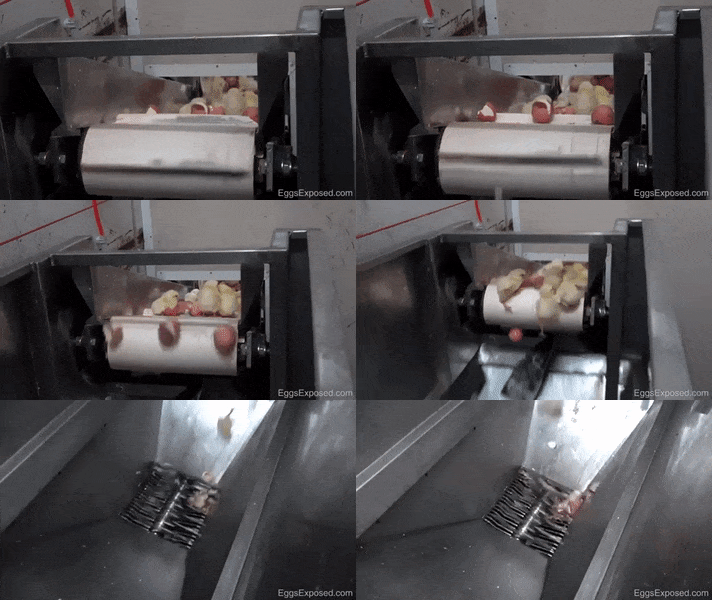
The USPS isn’t throwing baby birds into industrial grinders—the egg industry is.

Every year, farmers kill some 200 million day-old male chicks, typically by throwing them into a high-speed grinder or suffocating them, because they’re considered worthless.

Baby Chicks Ground Up Alive

Have you ever heard of “debeaking”?

Using a searing-hot blade and offering no pain relief, farmers cut off a portion of chicks’ beaks. This is called “debeaking,” and it’s intended to prevent the animals from pecking each other to death out of the frustration caused by their intense confinement in the egg industry.

Many birds defecate in distress during this procedure and cry out in fear and pain. Many also die of shock from the trauma, and some die of starvation because it hurts too much to eat.

Chickens deserve better than to be treated like merchandise.

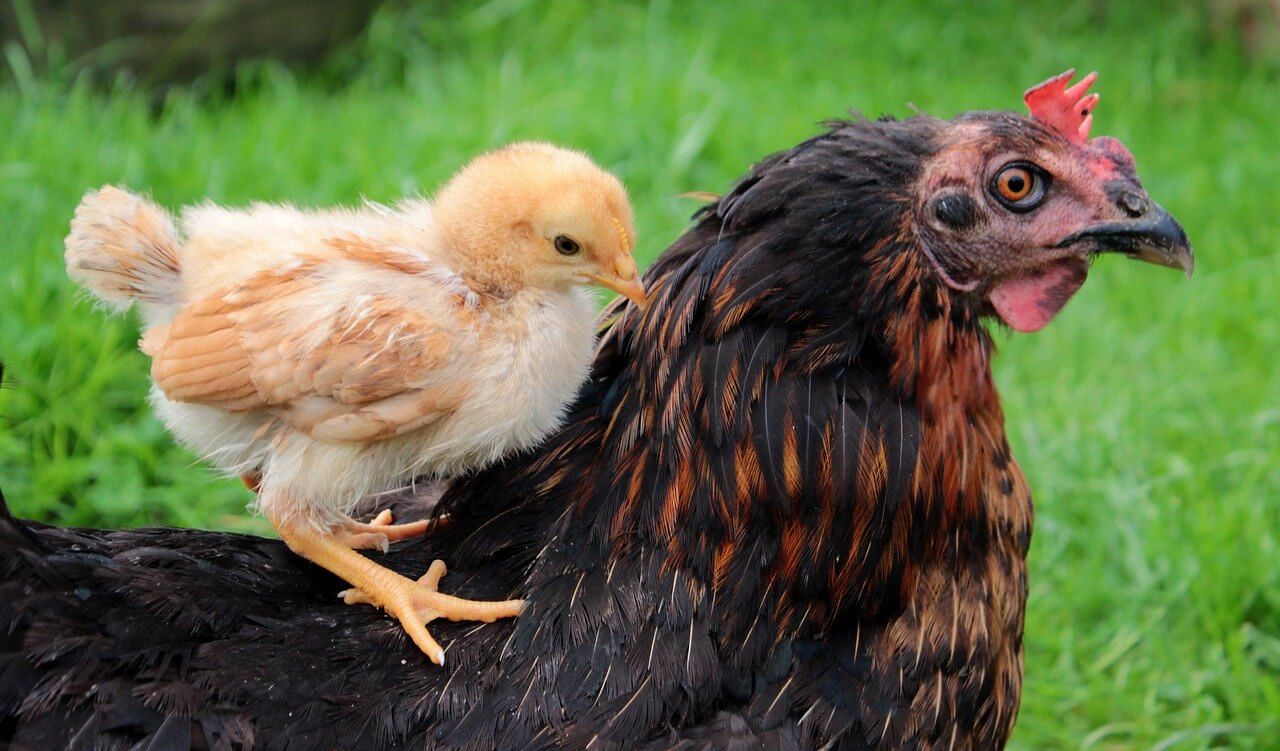
Chickens are caring mothers—a hen will “talk” to her chicks in the shell before they’ve hatched to teach them to recognize her voice in a flock. Every animal has feelings and traits that make their life just as interesting as ours.

A mother hen with her chick on her back, in green grass

All of them are terrified when their throat is slit at a slaughterhouse. All of them suffer when kept inside cramped cages and dingy sheds.

PETA has two words for anyone disturbed by the thought of a package filled with bird bodies or countless babies being thrown into a grinder: Go vegan.

The best thing that you can do for chickens is to stop eating them and their eggs. Thankfully, eating animal-derived foods is completely unnecessary. Humans can live healthy, compassionate lives by leaving animals off their plates.

Order a free vegan starter kit from PETA. Sign up for a free vegan mentor. You can make a real difference and save nearly 200 animals a year—simply by not eating them!

The post Outraged Over Chicks Dying in the Mail? We Understand—Join Us to Stop It! appeared first on PETA.