‘Breaking the Chain’ Started a Movement—Help Dogs in Your Neighborhood

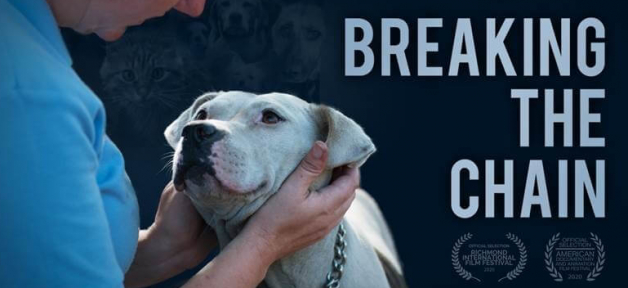
The acclaimed documentary Breaking the Chain exposes the nationwide crisis of neglected and abused dogs languishing on chains and inside pens—and reveals the power of a small group of people who make a world of difference for them.

You don’t have to stop at watching the film—you, too, can take action for animals suffering in backyards in your own neighborhood! Here’s how to get started:

Watch Breaking the Chain

PETA fieldworker showing dog some love

Available on numerous streaming platforms, the documentary will not only open your eyes to the all-too-common plight of dogs like Edith and Zena but also inspire you to help dogs in your own community.

Research Laws and Cases in Your Area

So what can you do if you spot a dog kept chained or penned outside 24/7? Every state has laws pertaining to standards of care, cruelty, and neglect. Familiarize yourself with local and state laws, and check to see if there are any tethering bans in your region. However, even if there are laws on the books, they’re not necessarily enforced and your local law-enforcement entity may not be aware of the individual dogs you’re concerned about.

Gather Information

chained dogs, breaking the chain

It’s perfectly fine to knock on someone’s door and talk with them or leave them a note with your information, but you shouldn’t walk around private property without the owner’s permission. However, dogs and their living conditions may be visible from the street, the sidewalk, the neighbor’s yard (if the neighbor allows you access), etc. You can take photos or video footage of what you observe from those vantage points, and having visuals could be a huge help if you file a complaint. Carefully note what you see, keeping the following in mind.

  • Location: Record the address, and accurately describe the location and description of the home if there is no visible house number. Note the temperature at the time, too.
  • Description of animal: If you can tell the dog’s breed, approximate age, size, and sex, record that information, too.
  • Dog’s health: If the situation appears dire (for instance, if the dog is downed or hunched over or has difficulty breathing or walking), don’t hesitate to call 911.

Look for Shelter

Casper the dog and an old dog house

Note whether the dog is tethered, chained, penned, or loose as well as whether they have access to adequate shelter. A doghouse should have four walls, a raised floor, a solid roof, and an opening covered by a flap in the winter, and it must be waterproof. It should be small enough that the dog’s own body heat can help provide some warmth but large enough to allow for standing up, turning around, and lying down comfortably.

If the only accessible shelter is an airline carrier, a wire crate, a barrel, or something else that collects water, ices up, or lets the cold and wind in—or if the dog has no shelter at all—that is not adequate and could be very serious, especially during bad weather.

Look for Food and Water
peta fieldworkers

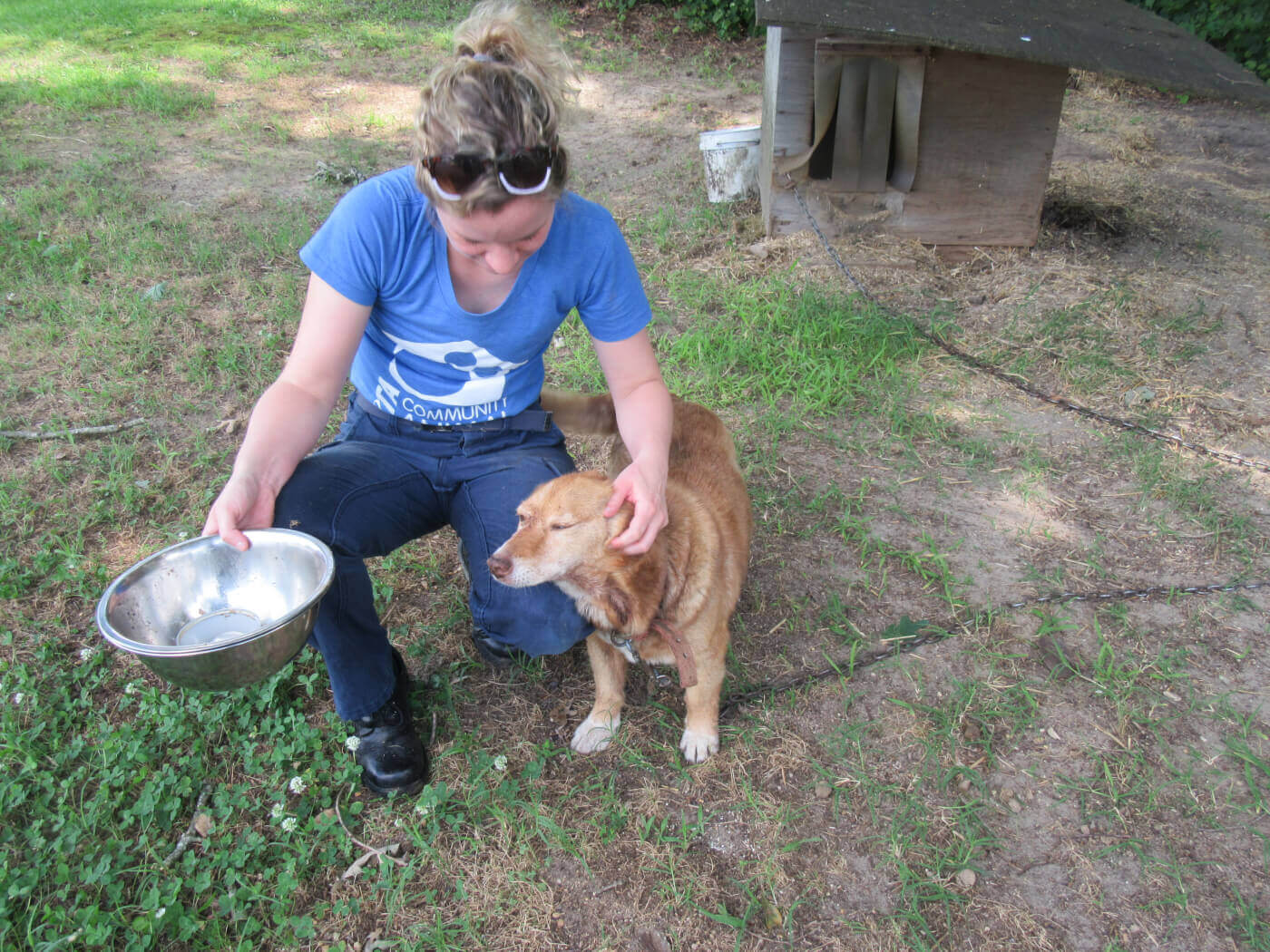
In Halifax County, North Carolina, a PETA fieldworker who gave Miss Willie food, toys, and treats and cleaned and refilled her water bowl lingers to scratch her ears, kiss her nose, and tell her how special she is.

Try to see if there are any buckets or bowls of food and water. If the water is frozen in the winter or there’s none at all, take action, as described in the next steps. If the dog seems underweight (with ribs, spine, or hipbones showing), look for any evidence of food and fecal matter.

Talk to the Owner
peta fieldworker and dog, breaking the chain

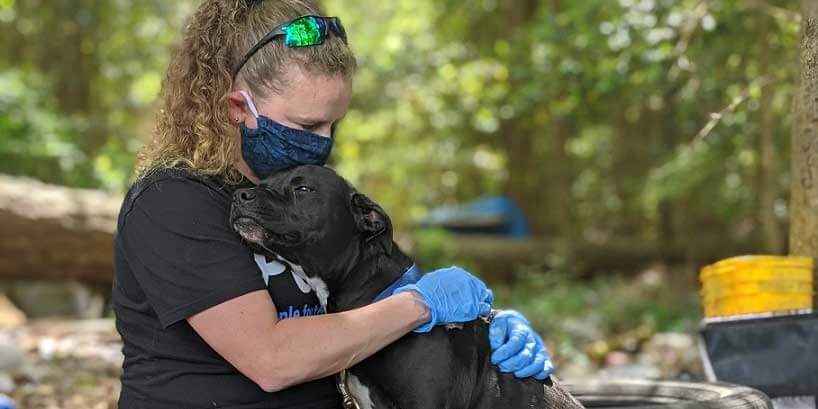
Knock on the door, and be very polite. If applicable, mention that it’s cold out and say that you were wondering if the owner would let the dog, who appears to be shivering, in the house. In warmer months, let the owners know how dangerous sweltering heat is for dogs exposed to the elements. If the owner is worried that the dog would make a mess indoors or gives another excuse, suggest allowing the animal to stay overnight in the laundry room, a bathroom, or even a heated garage—anywhere warm.

If the owner refuses to allow the dog indoors, politely ask for permission to help. Ask if you can provide the dog with fresh water, food, and/or straw bedding. Emphasize that this will all be free of charge—you just love dogs and would like to help.

Call the Authorities

chained dogs, Breaking the chain

If the owner won’t let the dog indoors or allow you to help, be polite, leave the property, and call local animal control. If the agency is unresponsive or closed, call the local police or sheriff. Clearly describe the conditions for the animal, saying that the dog has no access to water or shelter (or whatever is accurate) and needs to be taken indoors or provided with adequate protection and care as required by law.

Be calm, firm, polite, and precise, and mention the temperature. Carefully note the time that you called and the name of the person you spoke with. If the dog has no shelter or is sick or injured, stay there until an officer arrives. Remember that your involvement could mean the difference between life and death.

Work to Get a Tethering Ban Passed to Outlaw Chaining Dogs

The best way to prevent dogs from suffering and dying on chains is to get a tethering ban passed.

PETA has everything you need to convince your local officials that chaining should be outlawed. Please contact us for materials to hand out at council and commissioner meetings or to put in packets to inform people about the nationwide crisis of animal neglect. Print literature from PETA detailing why chaining dogs creates unsafe neighborhoods, and hand out copies in your community. Click here for more information on getting a tethering ban.
 

The post ‘Breaking the Chain’ Started a Movement—Help Dogs in Your Neighborhood appeared first on PETA.


Celebrate ‘Voktoberfest’ With These PETA Recipes

The plug may have been pulled on official Oktoberfest celebrations in Munich, Germany, but here at home, PETA is putting the oom-pah-pah into Voktoberfest menus with a round-up of the best vegan versions of traditional German foods that’ll have everyone putting on a dirndl—and yes, there’s even vegan lederhosen—and grabbing a stein to celebrate.

Guests will shout, “Wunderbare!” when they’re served spicy and savory tofu Weißwurst; smoky, seasoned Thüringer brats; creamy beer and “cheese” soup in a pretzel bowl; and apple strudel with vanilla sauce for dessert. There’s even a list of vegan beers for washing it all down, including Beck’s and Schlenkerla—German favorites that are available right here in the U.S. Prost!

“With vegan versions of everything from sausage to schnitzel and pilsner to pretzels, it’s time for a ‘Voktoberfest’ that doesn’t harm a hair on an animal’s head,” says PETA President Ingrid Newkirk. “PETA will have you slapping your knees in satisfaction as you dance the Schuhplattler.”

PETA—whose motto reads, in part, that “animals are not ours to eat”—notes that vegan food should be everyone’s “new normal,” considering that swine flu began on a U.S. factory farm and the novel coronavirus originated in a Chinese live-animal market. Vegan foods also save pigs from being hung upside down and bled to death, often while they’re still conscious.

For more information, please visit PETA.org.

The post Celebrate ‘Voktoberfest’ With These PETA Recipes appeared first on PETA.

Celebrate Voktoberfest at Home With These Authentic German Recipes

Many Oktoberfest events have been canceled this year, but that doesn’t mean you have to miss out on the celebrations. Making your own Voctoberfest (vegan Oktoberfest) at home is a fun way to try new recipes to serve alongside your favorite vegan-friendly German beers. While Oktoberfest cuisine is typically known for being heavy on the meat, we’ve found authentic German recipes that leave out the animal suffering. In fact, some of these recipes are so authentic that they’re in the original German! However, you can easily translate them with just a click using Google Translate, and it’ll be totally worth it for that true Oktoberfest taste.

Here’s how you can plan the best vegan Oktoberfest at home:

Beer

Oktoberfest is well known for being a time to enjoy cold German beer. Most beer is vegan, including many kinds made in Belgium and Germany, in part because of strict purity laws that limit the ingredients these beers can contain, including animal-derived substances such as gelatin. However, it’s always best to check Barnivore to make sure. Two brands we suggest are Beck’s and Schlenkerla. You can also consult our vegan beer list. (Just remember always to drink responsibly and only if you’re of legal drinking age.)

‘Sausage’ (Served With Mustard, Beer, and Pretzels)

Sausage is one of the traditional Oktoberfest dishes, usually served with mustard, beer, and pretzels. Beyond Sausage Brat Original, Field Roast Bratwurst Sausage, and other vegan sausage brands are great in a pinch, but making your own from scratch is very rewarding. This Thüringer Brat is made from vital wheat gluten, beans, and tons of seasonings that give it a smoky taste. Or try this Weißwurst made from tofu, which we’ll take over one made from pigs or baby cows any day.

‘Schnitzel’

You can make vegan schnitzel with anything from tofu to portobello mushrooms or use a breaded vegan cutlet such as Gardein’s Turk’y Cutlets.

Pretzels (Brezeln)

Many store-bought soft pretzels are “accidentally vegan”—just be sure to check the label for ingredients like eggs before you buy. You can also make your own with this recipe for Vegan Soft Baked Pretzels.

Other German Dishes for Vegan Oktoberfest

Vegan Beer Cheese Soup in a Pretzel Bowl

Everyone loves a bread bowl, and this one is filled with a beer cheese soup that’s a bit healthier than those made with cow’s milk cheese, since it’s made from vegetables. Make mini bread bowls to enjoy this as an appetizer, or have it the medieval way—for breakfast!

Bavarian Potato Salad

Lighter than American potato salad, the Bavarian version uses a broth, oil, and vinegar dressing rather than mayonnaise.

Vegan Bread Dumplings with Mushroom Cream Sauce (Vegane Semmelknödel)

Soft bread dumplings smothered in a creamy mushroom sauce are warming and hearty, and they wash down well with a cold lager.

Vegan Pesto Cheese Spätzle (Vegane Pesto-Käsespätzle)

Spätzle is very similar to noodles or small dumplings, and it’s wonderful in a variety of sauces. This recipe features a cheesy pesto sauce and caramelized onions.

Vegan Bavarian Obazda

Obazda is a cheese spread traditionally served on a Bavarian snack plate (think charcuterie board), but this version is made from sweet potatoes.

Bavarian Radish Salad

This refreshing radish salad is the perfect dish to accompany richer dishes like sausage and schnitzel.

Coleslaw (Krautsalat)

Kneading the cabbage with salt makes this salad light and juicy.

Hearty Pretzel Salad (Herzhafter Brezel-Salat)

Toast your pretzels and serve them in this simple, filling salad.

Vegan Kaiserschmarrn with Plums

For dessert, try this recipe for kaiserschmarrn, a fluffy, shredded pancake with fresh plums and raisins.

Apple Strudel with Vanilla Sauce

Paper-thin dough is the key to this decadent apple strudel, served with a thick vanilla sauce.


When you eat vegan meals, you spare animals immense suffering in the meat industry, which squeezes mother pigs into narrow metal stalls barely larger than their bodies. Pigs’ tails are chopped off, their teeth are cut with pliers, and males are castrated—all without painkillers. With pig-friendly vegan options for everything from sausage to schnitzel, it’s never been easier to celebrate a hearty Voktoberfest. By going vegan, you’ll save more than 200 animals a year, and it’s the best way to combat climate change and improve your personal health.

Learn More About Going Vegan From a Vegan Mentor

The post Celebrate Voktoberfest at Home With These Authentic German Recipes appeared first on PETA.

6 Latinx-Owned Beauty Brands to Try For a Vegan Glow-Up

Next time you’re reviving yourself with a makeover, why not support companies that are kind to animals and Latinx-owned? Advocate for animal rights with vegan and animal test–free products while celebrating and empowering entrepreneurs from various Latinx cultures. Check out some of our picks for Latinx-owned vegan beauty brands:

Rare Beauty

Pop singer Selena Gomez is known for her hit tracks, but she’s also taking on the world of makeup with Rare Beauty, a natural beauty-inspired cosmetics line with all vegan and animal test-free products. The brand’s ethos is about embracing individuality, which it shows by respecting animals’ right to live individual lives without being subjected to cosmetic testing.

Alamar Cosmetics

Motivated by her experience as a makeup artist, Gabriela Trujillo founded Alamar Cosmetics, named after her birthplace in Cuba. The company celebrates culture and self-expression with products that are all 100% vegan.

Vive Cosmetics

Joanna Rosario-Rocha and Leslie Valdivia founded Vive Cosmetics, an inclusive makeup brand offering exclusively vegan products.

Bomba Curls

Wanting to share her expert tips and magic hair formula with the world, Lulu Cordero founded Bomba Curls. Based on generations of Dominican beauty secrets, her vegan hair-care products are made to promote healthy, flourishing curls.

Tata Harper

Made with high-quality, natural ingredients, Tata Harper’s skin-care line is a luxury vegan remedy for your skin. From nutrient-dense serums to hydrating moisturizers, the company has all the products that will make your home feel like a spa.

CIRCA Beauty

Cruelty-free CIRCA Beauty was founded by actor and animal advocate Eva Mendes. CIRCA is part of PETA’s Beauty Without Bunnies program, promising customers that it will never test its products or ingredients on animals anywhere in the world.

When you support Latinx-owned brands, you aren’t just uplifting the Latinx community– you’re uplifting all of us advocating for products without animal cruelty. There are tons of other ways to do this, and sharing PETA’s love for animal-friendly businesses is just a start!

*****

If you can’t get enough of these Latinx-owned beauty brands, check out some of PETA’s Picks for Latinx-owned clothing and food brands! Share your favorite products from these Latinx-owned vegan brands by tagging us on Instagram @peta. Check out PETA’s Beauty Without Bunnies database to find more animal-friendly brands to support.

The post 6 Latinx-Owned Beauty Brands to Try For a Vegan Glow-Up appeared first on PETA.

Video: Monkeys Driven Mad, Denied Basic Care at Wisconsin National Primate Research Center

A six-month PETA undercover investigation shows widespread suffering and neglect at the Wisconsin National Primate Research Center (WNPRC), a taxpayer-funded facility at which nearly 2,000 monkeys are confined small, barren steel cages in windowless rooms. PETA is calling on the National Institutes of Health (NIH) and the U.S. Department of Agriculture (USDA) to investigate WNPRC for more apparent violations of federal law. The USDA has fined WNPRC’s host institution, the University of Wisconsin–Madison, repeatedly for denying animals basic care—including $74,000 just this spring.

Video footage and photographs show highly intelligent primates who have been driven mad by extreme, near-constant long-term confinement—over two decades for some—deprived of their most basic needs, and treated with cruelty and contempt. One worker said that some of them can’t be housed with other monkeys “because they are a**holes” to one another in the highly stressful grim and substandard conditions, leading them to sustain deep, painful lacerations, fingers so badly damaged that they require amputation, and other injuries from attacks. Other monkeys mutilated themselves or paced and circled endlessly, a well recognized way of trying to cope with mental anguish. Some of them pull out their own hair and end up nearly bald. Many were found to have chronic diarrhea lasting for months or even years. Cornelius, a monkey who has been at WNPRC for a decade and is usually kept in isolation, is constantly found hunched over or with his face pressed against the cage bars. As one supervisor said, staff are “not supposed to say” that monkeys “look depressed … but sometimes they just do.”

Macaques are forced to give birth alone in cages with wire flooring. Terrified mothers and infants cry and frantically try to cling to each other as workers pull them apart. Some infants were put in a bleak basement room before being tattooed for identification purposes. Workers transfer the monkeys from their cages to a restraint chair by the heavy metal neck collars that they’re forced to wear and then electroshock their penises until they ejaculate.

“These are our fellow primates, social and intelligent and desperate to be free from pain and isolation, yet they’re treated like prisoners in a Third World country jail at the Wisconsin National Primate Research Center,” says Dr. Alka Chandna, PETA’s vice president of laboratory investigations. “WNPRC receives tens of millions of taxpayer dollars every year and yet over the years has shown itself incapable of compliance with even the very minimal animal welfare standards required by law.”

PETA is also calling on WNPRC—which, along with UW-Madison, received more than $300 million in taxpayer money in 2019—to release all the animals in its labs, starting with Cornelius, to sanctuaries and to return the base grant that it receives from NIH.

PETA—whose motto reads, in part, that “animals are not ours to experiment on” and which opposes speciesism, a human-supremacist worldview—is asking supporters to urge NIH to stop using taxpayer money to lock up primates and fund tests on them and instead to focus on relevant, state-of-the-art non-animal research.

For more information, please visit PETA.org.

The post Video: Monkeys Driven Mad, Denied Basic Care at Wisconsin National Primate Research Center appeared first on PETA.