Students to Protest Anthropologie Over Cruelty

Tomorrow, members of the Kansas City hub of PETA-backed Students Opposing Speciesism (SOS) will gather across from Anthropologie in the Town Center Plaza mall as part of PETA’s new international campaign demanding that all Urban Outfitters, Inc., brands—which include Anthropologie, Free People, and Urban Outfitters—stop selling alpaca fleece and anything else cruelly obtained from animals. The protesters will hold signs showing the terrified faces of exploited animals and reading, “The Face of Fashion Is Fear.”

When:    Saturday, November 14, 1–3 p.m.

Where:    Town Center Plaza, 5024 W. 119th St. (outside Anthropologie, between Houlihan’s and Restoration Hardware), Leawood

PETA launched the campaign after Anthropologie was implicated in a first-of-its-kind PETA investigation into the alpaca industry revealing that workers at a farm in Peru tied crying alpacas to a rack, pulling their legs so hard that they nearly came out of their sockets, and left them with bloody wounds from rough shearing. The mutilated animals spit and vomited in fear.

“These outspoken students are holding Anthropologie accountable for marketing itself as progressive even as it continues to exploit animals for clothing,” says Rachelle Owen, director of the SOS program. “PETA is proud to help them push for a better world, one in which gentle animals aren’t beaten, mutilated, and killed for fashion.”

PETA and its affiliates have released dozens of videos revealing that during shearing, workers hit, kick, and mutilate gentle sheep for their wool; leave sensitive goats with bloody, gaping wounds at mohair and cashmere operations; burn, electroshock, beat, and slaughter cows for leather; yank out the feathers of ducks and geese by the fistful for down; and boil silkworms alive to produce silk.

PETA’s SOS program is a youth-led revolt against speciesism—the old belief that, despite their unique talents and abilities, other animals are inferior to humans and it’s acceptable to exploit them.

PETA’s motto reads, in part, that “animals are not ours to wear.” For more information, please visit PETA.org or follow the group on Twitter, Facebook, or Instagram.

The post Students to Protest Anthropologie Over Cruelty appeared first on PETA.
New Clothes… and Live Monkeys? PETA Alerts Feds After Cruel PR Stunt

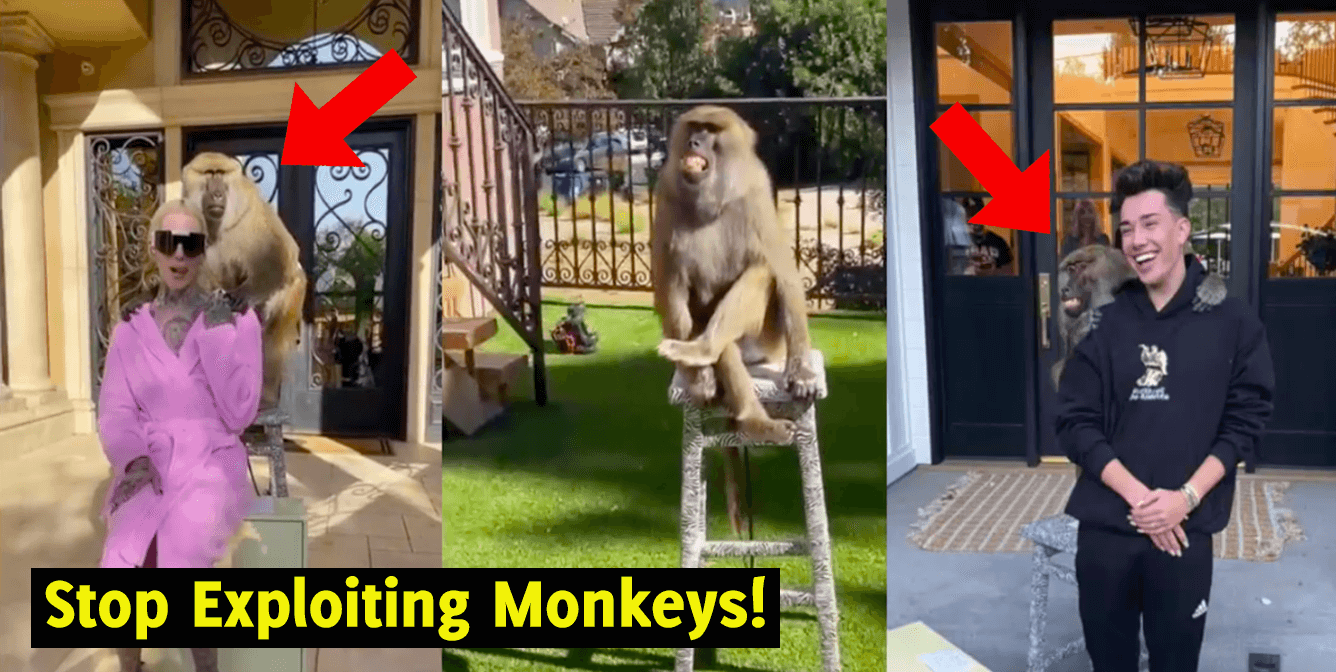
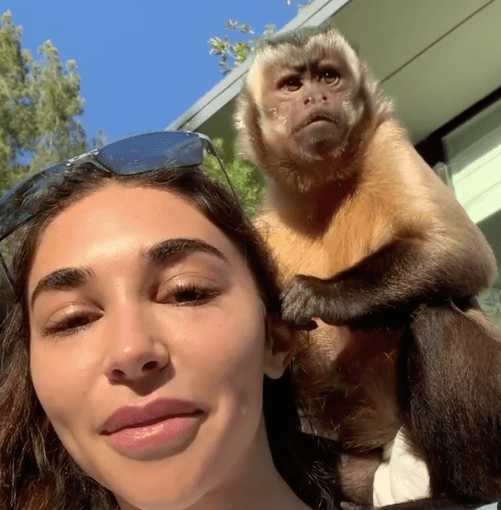
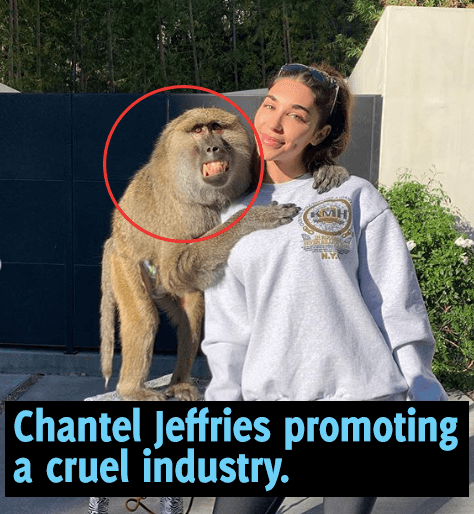
Clothing brand Bananas Monkey carted two live monkeys—a baboon named Mickey and a capuchin named Chiquita—to the Los Angeles homes of influencers. Videos posted on social media show this bizarre and cruel promotion stunt. The only thing the twisted company promoted was speciesism: One of the monkeys was tethered to a barstool and grimaced as people shook his hand. Kevin Keith, the man behind these vile gimmicks, has a history of public endangerment. PETA submitted a complaint urging the U.S. Department of Agriculture to investigate the incidents, as they’re apparent violations of the federal Animal Welfare Act.

Chantel Jeffries with live monkeys

Beauty Influencers in Ugly Stunts

Exploiting defenseless monkeys in a beauty campaign is ugly. True beauty means treating others with respect and kindness—not putting someone on a leash and dragging them around a city for clout. Journalist Yashar Ali stated in a tweet, “Using primates like this is not only abusive, but also ends up encouraging private ownership of primates.”

Among the influencers who are helping to fuel this harmful trade are James Charles and Jeffree Star. Charles already showed poor judgment when he bought a dog instead of adopting one from an animal shelter. There are over 70 million homeless dogs and cats struggling to survive on the streets in the U.S. alone, but Charles chose to support a breeder, fueling the companion animal overpopulation crisis. Star shared photos and videos of the publicity stunt involving the two monkeys with his 14 million followers on Instagram.

Beauty influencers pose with monkeys

Terror Is Not Entertaining

Fashion never needs to include the suffering of sentient beings. Bananas Monkey and these influencers are gaining shame, not fame, as they promote an industry full of abuse. The exotic-animal trade tears baby monkeys away from their mothers and trains them through fear.

“Anyone who cashes in on an industry that separates baby monkeys from their mothers and forces them to endure miserable lives, subjected to cameras and cages, is ugly inside and out.”

—Debbie Metzler, PETA Foundation Associate Director of Captive Animal Law Enforcement

It’s industry standard for trainers to hit, chain, and yell at wild animals to get them to perform. Baboons like Mickey and capuchins like Chiquita should be living in African savannahs and South American rainforests, respectively, in large social groups with others of their species. Instead, Mickey the baboon has been forced to appear in commercials and TV productions. Keith, the supplier of both Chiquita and Mickey, has repeatedly been cited for failing to maintain direct control of primates during public exhibitions, including in 2014 and again in 2016 when a baboon was tethered to a platform and allowed to have direct physical contact with the public.

Chantel Jeffries with a capuchin monkey

Animals are not props. No one should be exploited on social media for “likes.”

What Does It Mean When Monkeys Bare Their Teeth?

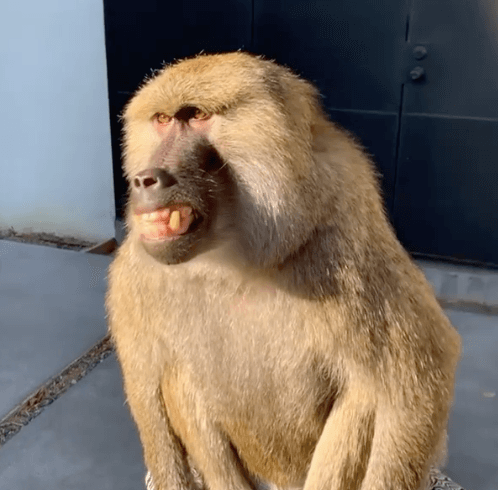
The “smile” shown by these monkeys is actually called a “fear grimace.” They’re trained to make this expression on command out of fear of punishment.

Baboon grimacing

Mickey grimaced as people shook his hand.

No monkey should be forced to perform for a fashion campaign or for movies or TV shows. Animals are not props, and no one should be exploited on social media for “likes.”

How You Can Help

Never promote cruelty to animals on social media, and always support vegan fashion brands.

The post New Clothes… and Live Monkeys? PETA Alerts Feds After Cruel PR Stunt appeared first on PETA.

PETA’s Winter Weather Survival Tips for Animals in West Virginia

Ahead of Winter Weather Awareness Week (November 18 to 22), PETA is sharing tips for keeping animals safe. They are especially vulnerable in cold weather, and there were at least 37 cold weather–related companion animal deaths in 2019. (Those are just the ones that were reported—most aren’t.)

The following steps can go a long way in helping animals survive West Virginia’s fierce winter:

  • Bring Them Indoors

Companion animals should always live indoors. “Backyard dogs” and “outdoor cats”—like those featured in Breaking the Chain, the new documentary produced by Oscar winner Anjelica Huston—often go without adequate food, water, shelter, and veterinary care. They are no better equipped to survive freezing temperatures or extreme weather conditions than humans are, they suffer terribly from frostbite, and they can die of exposure.

  • Gear Up

Coats will keep dogs comfortable in cold weather, secure harnesses can help prevent them from getting loose on walks, and booties will protect their sensitive paw pads from the frozen ground. Keep walks short in cold weather, especially for shorthaired dogs.

  • Don’t Forget Birds

During extreme winter weather, provide birds and other wild animals with access to an emergency water supply by filling a heavy nonmetal water bowl (tongues can freeze to metal) and breaking the surface ice at least twice a day.

Good Samaritans who see companion animals kept chained or penned outside 24/7 or without adequate shelter from the elements should note the animals’ exact location and alert local law-enforcement authorities immediately. Anyone who leaves animals outside to suffer in severe weather may be prosecuted.

PETA has released a cold-weather public service announcement. For more information, please visit PETA.org or follow us on Twitter, Facebook, or Instagram.

The post PETA’s Winter Weather Survival Tips for Animals in West Virginia appeared first on PETA.

PETA Releases First-Ever Video From Inside Washington National Primate Research Center

This morning, PETA released a video showing monkeys living alone in small metal cages, without companionship or even bedding, inside the Washington National Primate Research Center (WaNPRC) at the University of Washington (UW). The group obtained the video via an open records request to the University of Massachusetts–Amherst, where an experimenter led a study on the effects of caging monkeys at several laboratories. The video shows the public the stark living conditions for monkeys inside the federally funded research center.

In response, during the morning, lunch, and evening rush hours on Thursday, a group of PETA supporters wearing masks and practicing social distancing will unfurl a gigantic banner from busy overpasses to demand that UW shut down the WaNPRC.

When:    Thursday, November 12, 7:30–9 a.m.

Where:    The E. Denny Way overpass over I-5, Seattle

When:    Thursday, November 12, 11:30 a.m.–1 p.m.

Where:    The Husky Stadium pedestrian bridge over Montlake Boulevard N.E. and N.E. Pacific Street, Seattle

When:    Thursday, November 12, 3–5 p.m.

Where:    The E. Denny Way overpass over I-5, Seattle

“UW has destroyed the lives of tens of thousands of monkeys in archaic, dubious, and painful experiments that have produced no effective vaccines for HIV/AIDS, tuberculosis, or malaria,” says primatologist, former UW professor, and PETA science adviser Dr. Lisa Jones-Engel. “PETA is calling on UW to shut down this cruel, failed laboratory and focus its resources on human-relevant, 21st century science.”

The U.S. Department of Agriculture has repeatedly cited UW for violating the federal Animal Welfare Act. Monkeys have died from strangulation, dehydration, starvation, being mauled by other stressed monkeys, and veterinary mistakes. The agency is now investigating recent escapes of monkeys—another violation of the act.

PETA—whose motto reads, in part, that “animals are not ours to experiment on”—opposes speciesism, which is a human-supremacist worldview. For more information, please visit PETA.org or follow the group on Twitter, Facebook, or Instagram.

The post PETA Releases First-Ever Video From Inside Washington National Primate Research Center appeared first on PETA.

New PETA Billboard Calls Out Dog-Buying Celebs

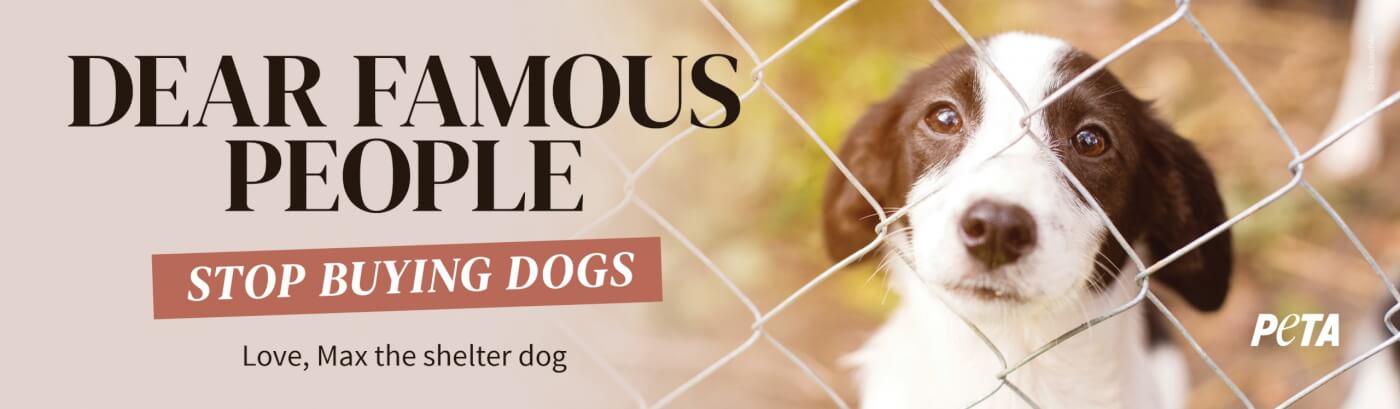
You’d never know that there are millions of homeless dogs and cats in the U.S.—a crisis worsened by the pandemic—from the newly purchased “purebred” puppies that have popped up on the Instagram pages of Channing Tatum, Viola Davis, Jennifer Lopez, J Balvin, Julia Louis-Dreyfus, James Charles, and others. That’s why a new PETA billboard makes a pointed appeal from “Max the shelter dog,” calling out stars and influencers who, through their irresponsible purchases, are fueling pet store and breeder sales while so many dogs waiting in shelters and suffering on the streets have nowhere to call home.

An appeal from Max recently appeared in The Hollywood Reporter: “I’m trying to keep my spirits up, but to be honest, it’s getting harder and harder to keep my tail wagging,” he writes. “I guess I just want to know what’s wrong with me. Sure, I may not be a puppy—but I still have years of life ahead of me and so much love to give.”

PETA notes that around 70 million dogs and cats are homeless in the U.S. at any given time. An estimated 10% of those end up at animal shelters, where many have to be euthanized because there simply aren’t enough good homes for them.

PETA’s motto reads, in part, that “animals are not ours to abuse in any way,” and the group opposes speciesism, which is a human-supremacist worldview. For more information, please visit PETA.org or follow the group on Twitter, Facebook, or Instagram.

PETA’s billboard is located at the intersection of Melrose Avenue and Cahuenga Boulevard.

The post New PETA Billboard Calls Out Dog-Buying Celebs appeared first on PETA.