Mamma mia! National Meatball Day—March 9—is just around the corner! As interest in going vegan climbs to all-time highs and conscientious eaters recognize the beef and dairy industries’ role in climate change, more people than ever are looking for animal- and eco-friendly meatballs that rival their grandparents’ classic recipes.
Making juicy vegan meatballs is as easy as combining cauliflower and breadcrumbs or Soyrizo and meatless crumbles—or just picking up a convenient pre-made option from vegan havens like Trader Joe’s and Whole Foods. Beyond Meat, Gardein, 365 Everyday Value, and even IKEA offer their own hearty—but meatless and cholesterol-free—meatballs.
In addition to saving nearly 200 animals every year, each person who goes vegan reduces their risk of suffering from illnesses such as cancer, heart disease, strokes, and diabetes. Eating vegan also helps prevent future pandemics: SARS, swine flu, bird flu, and COVID-19 all stemmed from confining and killing animals for food.
More recipes are available on our website—they’re perfect for National Meatball Day and every day.
To make ends meet during the pandemic shutdown, Naro Expanded Cinema is renting space on its marquees—and this week, it’s displaying this message from PETA.
“Most major pandemics in history began because humans confine and kill animals for their flesh, so we can play a part in preventing the next one by going vegan, which would not only be healthier for us all but also reduce the number of meat markets and factory farms,” says PETA President Ingrid Newkirk. “PETA is eager to help anyone make the switch to delicious cuisine that keeps animals off our plates and out of filthy slaughterhouses.”
Each person who goes vegan saves nearly 200 animals every year; reduces their risk of suffering from heart disease, diabetes, obesity, and cancer; and helps prevent future pandemics. SARS, swine flu, bird flu, and COVID-19 all stemmed from confining and killing animals for food.
PETA offers delicious meatless recipes on its website, a vegan starter kit filled with tips, and a Vegan Mentor Program to provide one-on-one personalized guidance on cooking, shopping, and more.
The Naro is located at 1507 Colley Ave., near Spotswood Avenue, in Norfolk.
PETA—whose motto reads, in part, that “animals are not ours to eat”—opposes speciesism, a human-supremacist worldview. For more information, please visit PETA.org or follow the group on Twitter, Facebook, or Instagram.
Following appeals from PETA and two PETA Asia undercover investigations into the use of captive monkeys who are kept chained and caged in Thailand’s coconut-picking industry, Nam Dae Mun Farmers Market has ended its sale of coconut milk from major producer Chaokoh.
“By dropping Chaokoh, Nam Dae Mun is joining thousands of retailers that refuse to profit from chained monkeys’ misery,” says PETA Executive Vice President Tracy Reiman. “PETA exposés have confirmed that Thai coconut producers are exploiting monkeys and lying about it, so there’s no excuse for any grocery store to keep Chaokoh on its shelves.”
PETA Asia’s first investigation found cruelty to monkeys on every farm, at every monkey-training facility, and in every coconut-picking contest that used monkey labor. When not being forced to pick coconuts or perform in circus-style shows for tourists, the animals were kept tethered, chained to old tires, or confined to cages barely larger than their bodies. After a global outcry, the coconut industry claimed to have changed these practices—but PETA Asia’s second investigation found producers still using monkey labor and industry insiders discussing how farms conceal this practice by simply hiding monkeys until auditors leave or by hiring contractors to bring in monkeys only during harvest time.
Nam Dae Mun Farmers Market joins more than 26,000 other companies—including chains Target, Wegmans, Costco, Walgreens, Food Lion, and Stop & Shop—that have banned coconut milk brands that use coconuts picked by monkeys. PETA is now turning its attention to other retailers that still do business with Chaokoh, including Kroger, Albertsons, and Publix.
Photos from the most recent investigation are available here, and broadcast-quality footage is available upon request. PETA—whose motto reads, in part, that “animals are not ours to abuse in any way”—opposes speciesism, a human-supremacist worldview. For more information, please visit PETA.org or follow the group on Twitter, Facebook, or Instagram.
Women’s History Month (March) is a time to celebrate the accomplishments of women who moved mountains throughout history. It should come as no surprise that many celebrated, forward-thinking feminist icons have refused to eat animals.
That’s because women win when we stand against the oppression and exploitation of all animals—from humans to the countless other individuals who are slaughtered by the food industry every single day. When we oppose violence and supremacy in all its forms—such as debeaking, dehorning, and castrating animals (sometimes without painkillers)—and defend the rights of slaughterhouse workers, we inspire compassion and empathy in others.
This Women’s History Month, celebrate these five iconic women who are just some of the inspiring feminist figures who have spoken up for animals:
Award-winning actor Cicely Tyson made a name for herself in the film and television industry by delivering memorable performances for more than 70 years. In addition to collecting several accolades for breaking down barriers in Hollywood—as the first Black actor to star in a primetime drama, the first Black woman to win an Emmy Award in a leading role in a television movie, and the first Black woman to receive an honorary Oscar—Tyson was a dedicated vegetarian. This Presidential Medal of Freedom recipient credited her long-term health to being vegetarian in an interview, saying, “If you have a Rolls-Royce and you pull up to a gasoline station, you don’t put crud in it. You put the most expensive oil and gas in your car. You want it to be treated well in order for it to serve you well. We should start thinking that about this body of ours.”
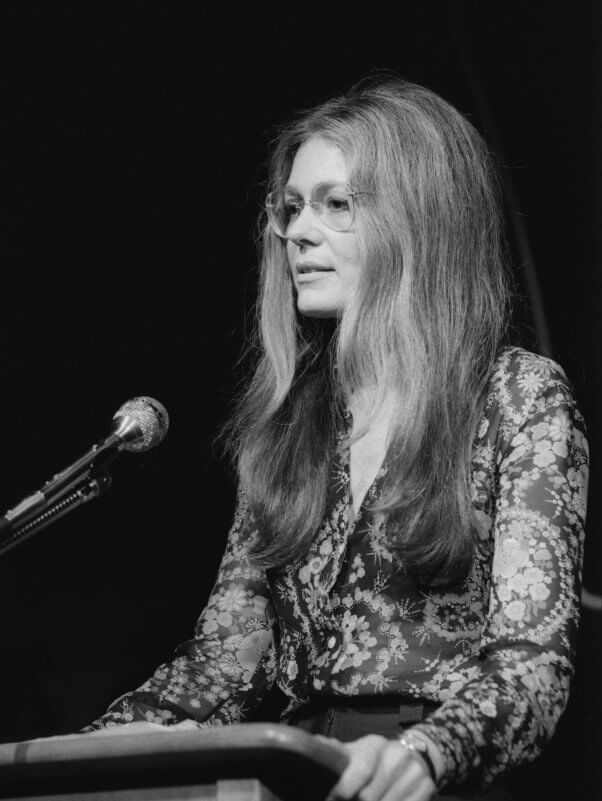
Gloria Steinem at a women’s conference held at the LBJ Library on Nov. 9, 1975.
LBJ Library photo by Frank WolfeIf you’ve heard the term “second-wave feminism”—the push against gender discrimination from the 1960s to the 1980s—you’ve probably heard the name Gloria Steinem. A journalist, a writer, a passionate activist, and a National Women’s Hall of Fame inductee, she was a leader of the feminist movement in the late ’60s who inspired young women everywhere to be outspoken against injustice. In addition to her advocacy for a wide range of women’s issues, from underprivileged girls to the depiction of women in the media, Steinem—a vegetarian for several years—has spoken up about animal issues as well, joining with PETA to call out the National Institutes of Health for putting women’s health at risk by funding cruel, useless experiments on animals:
I am adding my voice to others calling for an end to these and other cruel and useless experiments—on behalf of the animals who are being pointlessly made to suffer and die, on behalf of women whose health concerns are starved for funds, and on behalf of taxpayers who are being defrauded.
Educator, grassroots organizer, and prominent prison abolitionist Angela Davis has done much to further racial, economic, and gender justice. Her long-term work focuses heavily on dismantling the “prison industrial complex”—a term she helped popularize with her collection of essays about the systemic oppression of women and people of color in the prison system.
As a vegan, Davis has encouraged others to examine the link between cruelty to humans and cruelty to other animals. In one interview, she said, “I think there is a connection between … the way we treat animals and the way we treat people who are at the bottom of the hierarchy. Look at the ways in which people who commit such violence on other human beings have often learned how to enjoy that by enacting violence on animals.”
Coretta Scott King was a central figure in the American civil rights movement, and many consider her one of the most influential women leaders in history. She devoted years of her life to issues involving social, racial, gender, economic, and environmental justice. Following the death of her husband, the renowned Dr. Martin Luther King Jr., she added animal rights to the list by going vegan. Both she and her son Dexter Scott King believed empathy toward animals was a logical extension of Dr. King’s philosophy of nonviolence.
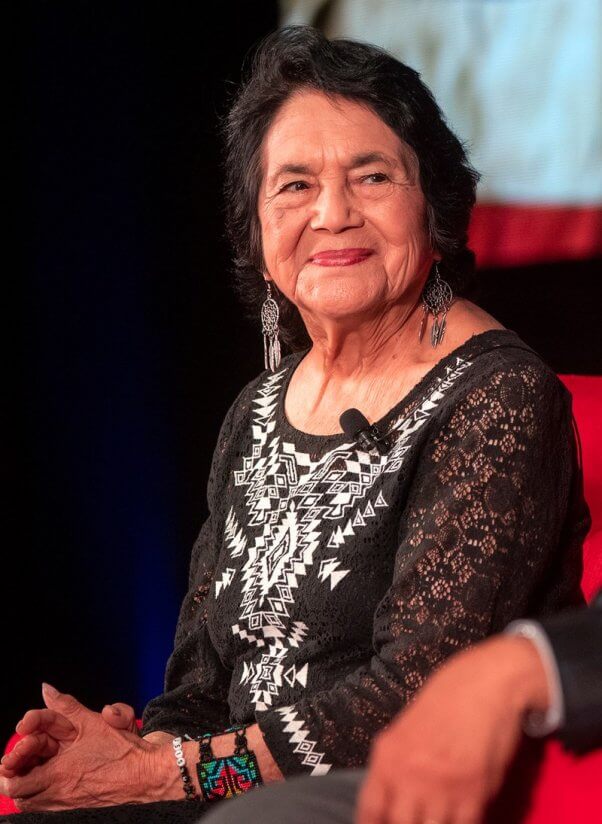
Dolores Huerta’s major role in leading successful strikes, negotiating better contracts for workers, securing better working conditions, fighting for unemployment and healthcare benefits, and helping to establish unions in the face of gender and ethnic bias is why she is recognized as one of the most influential labor activists of the 20th century. Her steadfast devotion to labor organizing and fervent participation in the Chicano civil rights movement were lauded by many, and she received the Eleanor Roosevelt Human Rights Award in 1998 and the Presidential Medal of Freedom in 2012. Huerta is also an uplifting vegetarian role model.
Be an Icon for Animals: Leave Your Mark on History by Going Vegan Today
PETA makes it easy to align your activism with your actions. Going vegan is the single best thing that you can do for animals, the environment, and your health. That’s why we offer free resources to help you go—and stay—vegan.
Today, PETA Honorary Director Alan Cumming sent a letter to Starbucks CEO Kevin Johnson, writing, “[I]t’s been over a year since your company acknowledged that cow’s milk is its biggest source of carbon dioxide emissions, yet you are still charging more for vegan milk. I’m urging you to put your words into action by dropping the surcharge on it.”
Cumming’s PETA appeal comes after Johnson declared at a Starbucks investor meeting, “[T]he most dominant shift in consumer behavior is … to plant-based [products]. And this is a shift both in beverage and in food.” Yet Johnson refuses to join other chains like Costa Coffee, Stumptown, Wawa, Panera Bread, and many others that don’t charge extra for vegan milk. The upcharge has been particularly controversial among Black customers, many of whom are lactose intolerant.
Cumming’s full letter appears below. PETA—whose motto reads, in part, that “animals are not ours to eat”—opposes speciesism, a human-supremacist worldview.
As a vegan and an honorary director of PETA, I was heartened to read that Starbucks plans to expand its plant-based menu to meet the increasing demand. As you make these changes, I’d like to point out that it’s been over a year since your company acknowledged that cow’s milk is its biggest source of carbon dioxide emissions, yet you are still charging more for vegan milk. I’m urging you to put your words into action by dropping the surcharge on it.
Please show us that Starbucks knows it’s time to wake up and smell the coffee. The secretary-general of the United Nations has urged world leaders to declare a “climate emergency,” and President Joe Biden has signed an executive order for the U.S. to rejoin the Paris climate agreement. Greenhouse gases are released at nearly every stage of milk production, and manure from dairy farms contaminates our waterways and creates dead zones in the oceans where no life can survive. The most responsible move would be to stop selling cow’s milk altogether. But at the very least, you can end the upcharge on vegan milk that penalizes customers who are making the humane, environmentally friendly choice, along with those who are lactose intolerant—most of whom are people of color.
In response to the pandemic, many companies are attempting to become a greater force for good in the world, and people want to support responsible businesses that are making a genuine effort to combat climate change.
Please demonstrate that you care about animals, the environment, and your customers by ending the surcharge on vegan milk. My friends at PETA and I will sing your praises when you do!