Below, please find a statement from PETA President Ingrid Newkirk in response to the World Health Organization’s new announcement that—because of the zoonotic disease threat posed by live-animal markets—it’s urging governments to suspend the trade in live-caught mammals:
The World Health Organization (WHO) has now taken one of the two steps that PETA requested of it during a solid year of appeals, undercover video recordings of live-animal markets, “blood”-soaked protests, and gathering signatures from more than 200,000 supporters. WHO is recommending a suspension of the trade in live mammalian wild animals but ignoring the plight of chickens, ducks, fish, and frogs who are caged and slaughtered in filth and leaving the door open for the next pandemic to emerge. Every live-animal market must close, whether it sells bats in Indonesia or birds in Brooklyn.
PETA—whose motto reads, in part, that “animals are not ours to eat”—opposes speciesism, a human-supremacist worldview. For more information, please visit PETA.org or follow the group on Twitter, Facebook, or Instagram.
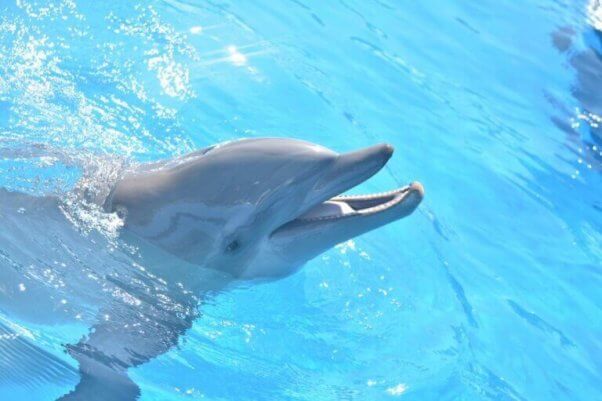
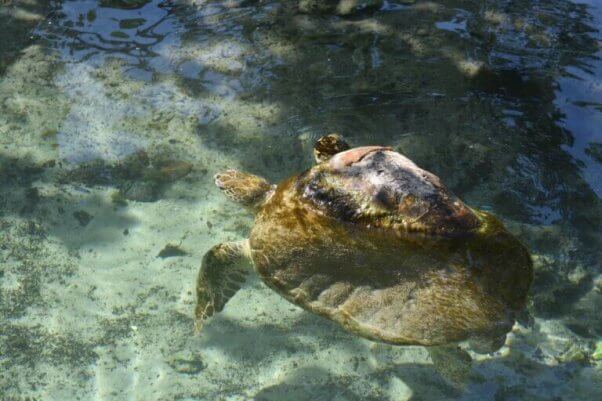
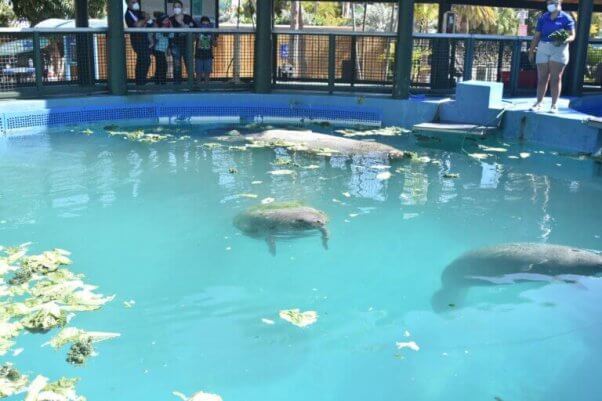
Lolita the orca has suffered for years at the Miami Seaquarium, but unnatural conditions and social isolation also cause physical and psychological damage to other animals there. This facility’s cramped, barren tanks and cages are unsuitable for any animal. A recent visit showed how those at the Miami Seaquarium are languishing as a result of isolation, an apparent lack of adequate veterinary care, and general stress. They include a bottlenose dolphin, a yellow-crested cockatoo, a sea turtle, and several manatees. None of them belong at the Miami Seaquarium.
Bottlenose Dolphins: Sore Mouths and Worn Teeth
PETA observed that one of the bottlenose dolphins at the Miami Seaquarium has completely worn-down teeth—all the way to the gum line. When the sensitive inner pulp cavity is exposed, it can be painful and prone to infection. Unnatural captive environments are more likely to harbor infection-causing bacteria, including antibiotic-resistant strains, because of the routine use of antimicrobial drugs and confinement to land-based tanks, resulting in exposure to higher concentrations of feces and pathogens from human hands or dirt. Dental infections can cause a number of other illnesses, including heart disease, diabetes, and pneumonia, which is the most common cause of death for dolphins in captivity.
While some tooth wear occurs in wild dolphins, it comes as a result of feeding, hunting, catching prey, and exploring. At marine parks, dolphins can’t engage in these fundamental types of behavior but are instead restricted to hard, artificial surfaces, such as concrete walls and metal bars, and often bite them out of stress or frustration. Dolphins held at the Miami Seaquarium get no natural enrichment from their environment. Instead, they’re expected to perform tricks and swim with human visitors, so they’re more likely to come into contact with germs that can cause infections.
Yellow-Crested Cockatoo: This Bird Has No One to Flock With
Even though birds need the company of other birds and the opportunity to fly freely in order to thrive, PETA observed that a lone cockatoo continually flips his or her head, a neurotic and abnormal behavior common in stressed captive birds.
Yellow-crested cockatoos form strong, often lifelong, pair bonds in their natural environment. They have large and dynamic social networks within flocks, coming together for feeding and roosting. They are highly emotional and communicate with one another through complex verbal and body language, nurturing their intimate bonds through physical affection by frequently preening and attending to their partners. Their deep emotional lives make them particularly vulnerable to suffering when they’re kept alone in cages.
Sea Turtle: Inadequate Habitat, Inadequate Life
Sea turtles swim thousands of miles in the ocean each year between their feeding grounds and hatching beaches. They have remarkable navigational abilities, using the Earth’s magnetic fields, the sun, and the currents—and they’re unable to engage in this or other natural forms of behavior inside a tank like those at the Miami Seaquarium. Sea turtles belong in the ocean. If they’re unable to be released, they should be housed in natural or naturalistic environments that provide ample space, natural diversity, and enrichment.
Manatees: Cramped Conditions Lacking Enrichment
In their natural environments, manatees move freely through thousands of miles of rivers, estuaries, canals, and coastal areas. The four in captivity at the Miami Seaquarium are forced to live in two small tanks made of concrete and metal. This artificial environment gives them little enrichment and leaves them exposed to the elements, and it’s simply an unacceptable habitat for these animals. Rescued manatees who are unable to live in a natural environment should be retired to seaside sanctuaries, not kept in cramped tanks.
The Miami Seaquarium can never come close to providing Lolita and the other animals there with everything they need to live happy, healthy lives. Don’t visit it or any other marine park, and help Lolita by urging the Miami Seaquarium’s parent company to retire her to a seaside sanctuary:
Please see PETA Senior Vice President Kathy Guillermo’s statement on the video released by Elon Musk’s Neuralink of a monkey with a chip implanted in his brain manipulating a video screen in exchange for liquid:
The monkey wasn’t fooled by the jungle photo screen, and no one else should be, either. Monkeys in neuroscience experiments are kept constantly thirsty or hungry to coerce them to cooperate and stare at a screen for hours, and when the session is over, they go back into a cage. Experiments similar to Neuralink’s have been done many times before, always at the expense of animals whose lives have been stolen, and nothing has come of it. Neuralink would break real scientific ground if its research left animals out and actually helped humans.
PETA—whose motto reads, in part, that “animals are not ours to experiment on”—opposes speciesism, a human-supremacist worldview. For more information, please visit PETA.org.