As California prepares to reopen and many people are getting ready to head back to the office, PETA is launching a new ad campaign—that will run on NBC 11—asking animal guardians to include their dogs and cats in their back-to-work plans. The new video spot—available here—is told from the perspective of dogs who want to know, “What’s your plan for me?”
“When you start spending more time away from home, it’s going to be a big change for me,” one dog says. “Even the cat’s nervous!” The spot directs viewers to PETA.org/BackToWork, where they’ll find tips for easing the transition, from taking dogs for long walks before and after work to finding a doggie daycare to keeping cats busy and stimulated when they’re home alone.
“After over a year of enjoying their families around them 24/7, our dogs and cats are bound to be confused when we go back to the office,” says PETA Senior Vice President Daphna Nachminovitch. “PETA’s PSA urges everyone to ease animals into the ‘new normal’ so that they don’t end up feeling lonely and abandoned.”
PETA—whose motto reads, in part, that “animals are not ours to abuse in any way”—opposes speciesism, a human-supremacist worldview. For more information, please visit PETA.org or follow the group on Twitter, Facebook, or Instagram.
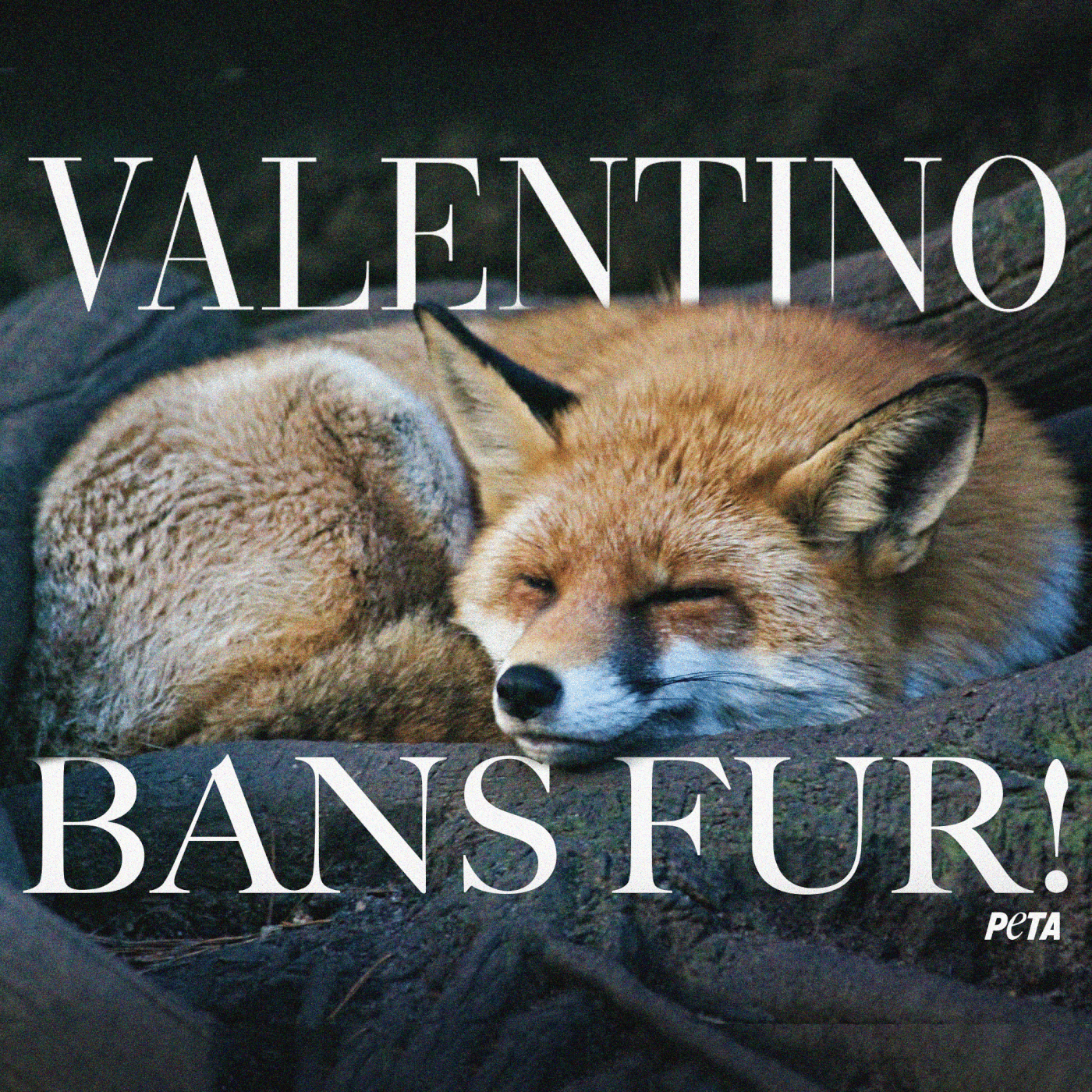
Was it the more than a decade of PETA protests and behind-the-scenes letters? Maybe it was our jaw-dropping runway disruptions. Perhaps the COVID-19 outbreaks at mink fur factory farms had something to do with it. Or maybe it was your consumer activism as you spoke up for animals. Likely, it was all of the above that finally persuaded Valentino to go fur-free!
Cheers rang out at PETA’s headquarters yesterday at the news that even the fashion house that sewed mink fur on sneakers is changing with the times.
At this rate, not a single designer will still be selling fur next year—and no wonder, since no kind shopper will buy it.
Valentino joins hundreds of other companies—including Calvin Klein, Coach, Burberry, Gucci, Michael Kors, Ralph Lauren, and Versace—that have banned fur after hearing from PETA and our supporters about the suffering that goes into every fur coat, collar, and trinket. For decades, PETA and our international affiliates have documented and exposed that foxes, minks, and other animals exploited for fur live on filthy, cramped fur farms before they’re electrocuted, gassed, or beaten to death.
The exciting news also comes after Valentino became the first luxury brand to ban alpaca fleece, in 2020. The brand’s bans will help the planet, too—raising and killing animals for any material is devastating to the environment. According to the Higg Materials Sustainability Index, alpaca fleece as the second-most environmentally damaging material (after silk), and the negative environmental impact from producing a fur coat and trim can reportedly be up to 10 times higher than for making a faux-fur coat.
Our Work’s Not Done
Animals are still suffering in the fur trade—and they need your help. Please keep the momentum going by calling on Canada Goose to join Valentino and countless others in dropping fur:
Because the Cloverdale fire continues to threaten areas near Prince Albert and evacuations are underway, please include in your coverage that animals must be kept indoors and will die if abandoned. This information will undoubtedly save many animals’ lives and avoid much human remorse.
Residents in areas affected by smoke and falling ash should keep animals indoors and avoid all outdoor activities, such as running with dogs. If visibility is less than 5 miles, smoke has compromised the air quality and reached unsafe levels. Anyone who sees animals in distress and is unable to help should note their locations and alert authorities immediately.
Trapped horses and other animals can’t outrun wildfires. They should never be locked in their stalls or confined in any way, unable to flee. Anyone who evacuates and intentionally abandons animals to fend for themselves may be prosecuted.
PETA has released a wildfire-preparedness public service announcement featuringDean Winters. It will remind everyone to make plans to ensure the safety of animal companions in advance of trouble in order to avoid being caught unprepared. PETA also offers a video about keeping animal companions safe during fires for you to share. For more information, visit PETA.org or follow the group on Twitter, Facebook, or Instagram.
For decades, I have studied how diseases move between and affect monkey and human populations. In 2002, my work led me to the WaNPRC, where I worked as a primate scientist for 14 years and then served for nearly two years on UW’s Institutional Animal Care and Use Committee (IACUC)—the committee charged with ensuring compliance with minimum animal welfare standards in the university’s laboratories.
During my tenure, I saw tuberculosis, uncontrolled staph infections, and chronic diarrhea ravage the monkeys, destroying their bodies and making experimental findings even more unreliable than they already were.
The IACUC—which lacked any ethicists and was instead dominated by institutional employees and community members whose livelihoods are linked to experimenting on animals—gave experimenters carte blanche.
Veterinary and research staff were approved to do the following:
Restrain monkeys in dark booths for up to 10 hours a day
Repeatedly implant devices in monkeys’ skulls, eyes, hands, and limbs
Separate mother monkeys from their babies, which is severely distressing for the highly social, emotionally intelligent animals
Cage monkeys alone
Subject monkeys to intensive testing (One protocol allowed investigators to collect 62 pinch biopsies of the gut twice monthly, take lymph node biopsies, collect bone marrow, and draw blood.)
Experiment on a rarely used and endangered species, the pig-tailed macaque
Throughout my tenure as an IACUC member, I was consistently rebuked by the leadership of UW’s animal use program when I attempted to raise questions about aspects of animal use protocols. My concerns about study design, appropriate selection of animals, screening of animals for possible undetected co-infection, number and frequency of sample collections requiring sedation, and other issues were repeatedly shot down—even though these issues could have affected the results of the experiments that were being performed.
Can an Animal Welfare Advocate “Work Within the System” to Change It?
I have lived and worked in the countries that supply the macaques used at the WaNPRC. I have followed and studied macaques in nearly every environment that they inhabit: through the swamps of Borneo, along the streets of Singapore, and around temples and villages throughout Asia. I have been inside overseas monkey-breeding facilities, where I heard the monkeys’ cries of distress, smelled their fear and disease, and witnessed how utterly broken they had become in cages.
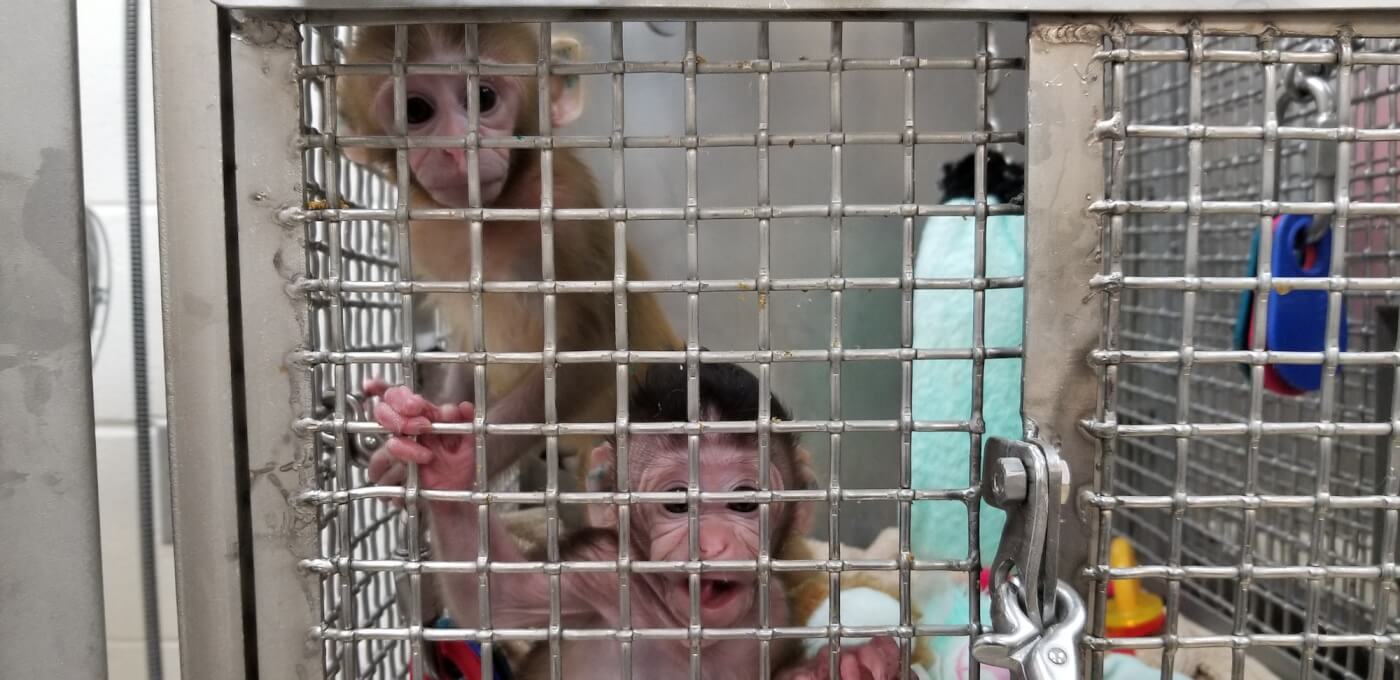
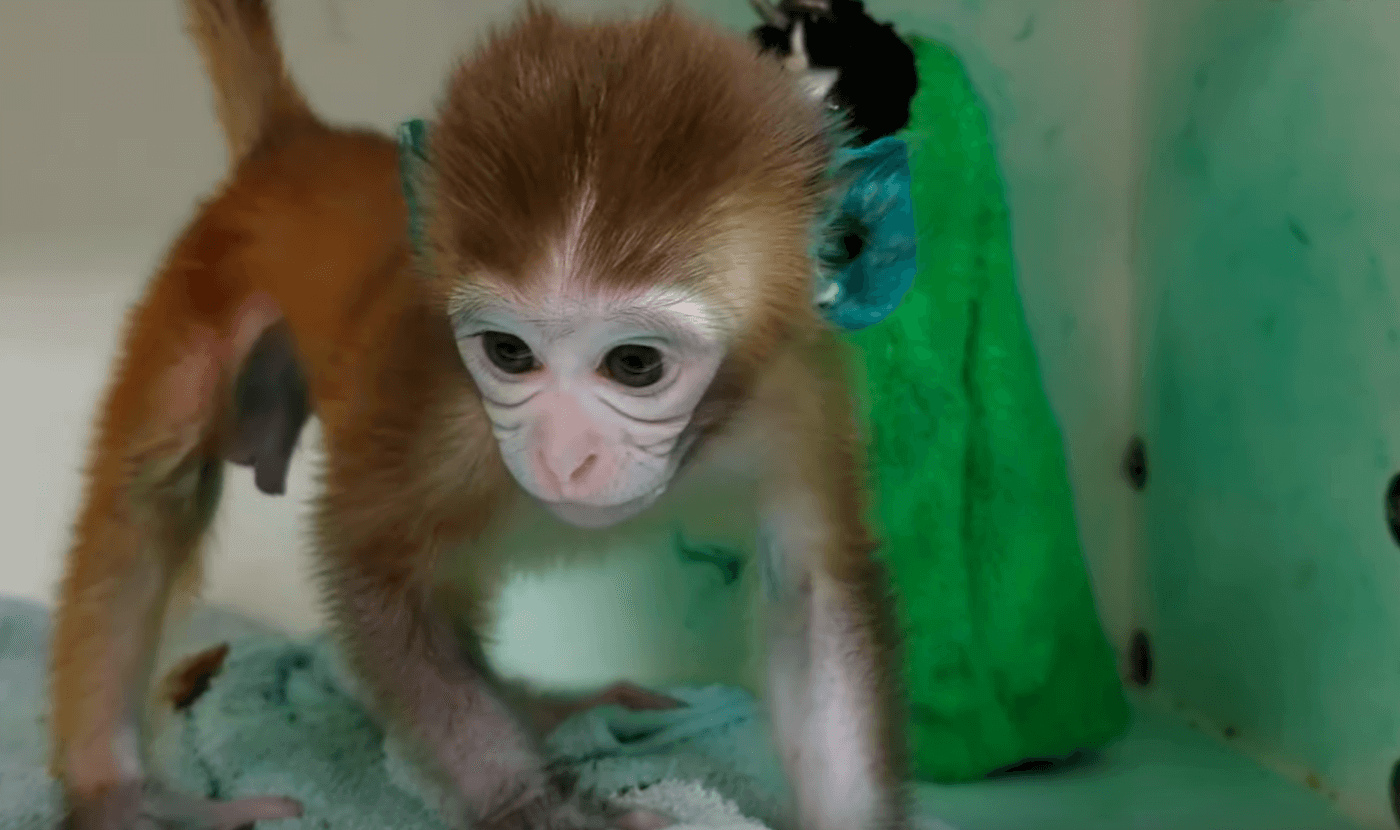
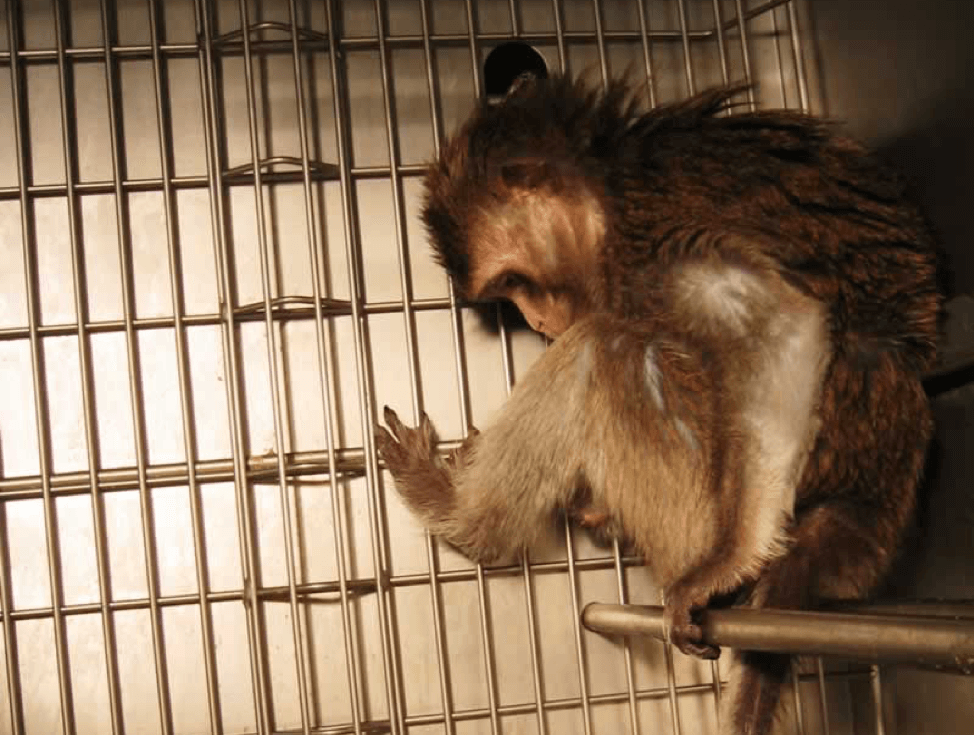
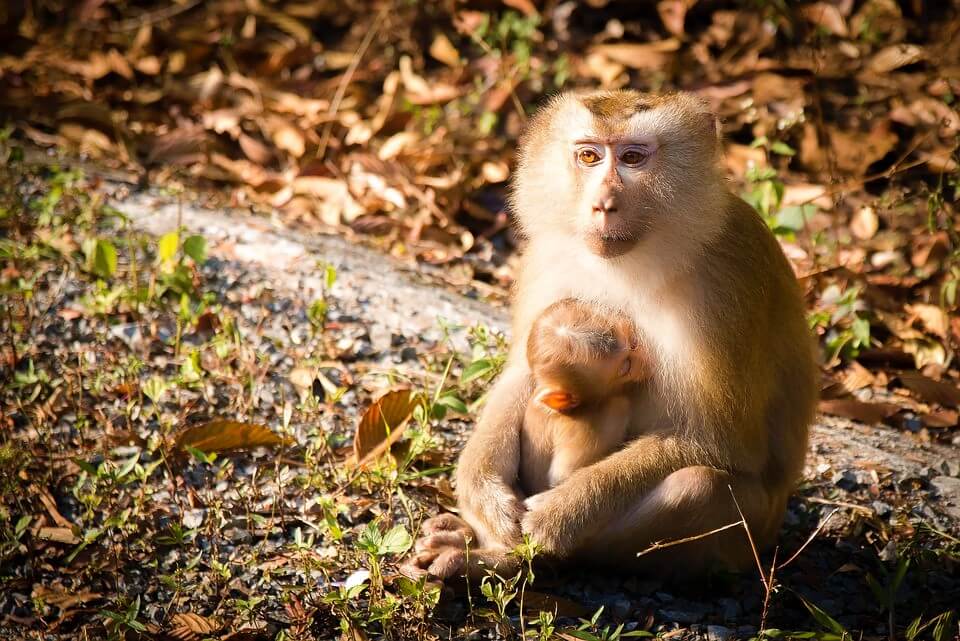
Monkeys used in experiments—like this one—are often housed inside small, virtually barren cages for their entire lives, unable to fulfill their natural desires to live in large family groups, form strong bonds with one another, and play, explore, and socialize together.
By working within the primate biomedical system, I thought I would be able to inform staff and researchers about the needs of captive macaques in order to maintain some semblance of their natural lives. I was convinced that if I could improve the husbandry and experimental conditions, it would result in improved animal welfare, which would lead to better scientific outcomes. But I was wrong.
Neither the laboratory nor the IACUC wanted to change. Regulatory box-checking triumphed over best practices. It was immediately clear that the UW’s IACUC did not want a primatologist advocating for macaque welfare. I was not an animal activist when I was seated on the IACUC, but after witnessing the utter contempt for animal well-being and the consequences that this disregard has for science, I knew that my work on the inside was done.
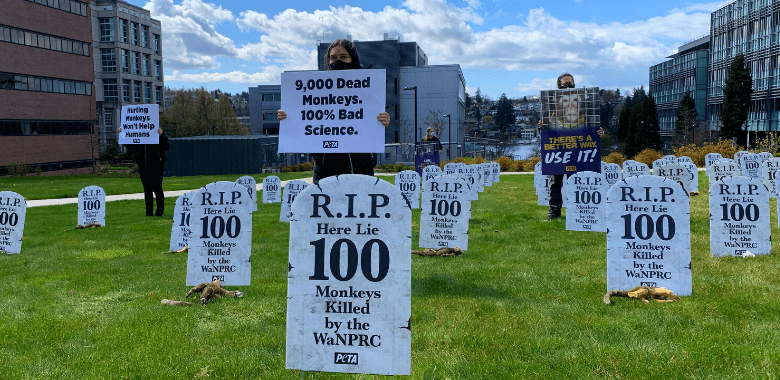
PETA protesters set up tombstones in Seattle, each representing 100 of the monkeys killed at the Washington National Primate Research Center since 1961. Take action at PETA.org/Seattle.
Macaques are extraordinary monkeys whose ecological, behavioral, and immunological adaptability helps them thrive in all kinds of environments. But a macaque in the cramped and impoverished environment of a laboratory cage is nothing like highly social, adaptable, clever, and beautiful monkeys in their natural habitats, whom I knew so well. At the WaNPRC, the notion that monkeys are expendable widgets in a machine whose suffering doesn’t matter reigns supreme.
The WaNPRC Is Failing Everyone, Including the Public
The facility is currently failingin anumber of critical areas:
The WaNPRC conducts poor and increasingly misleading and irrelevant experiments. Unintended infections are common at the center, including methicillin-resistant Staphylococcus aureus (MRSA), valley fever, tuberculosis, and others. The stress of captivity, loneliness, and despair wreak havoc on the monkeys’ immune systems, distorting already questionable experiments. Inadequate screening and surveillance for chronic or unrecognized infections compromise the research even further (for example, in vaccine and drug trials).
UW fails at animal welfare. The WaNPRC has a history of gruesome violations of the federal Animal Welfare Act (AWA), as staff and investigators consistently fail to follow even the most basic federally mandated requirements. Monkeys have died of strangulation, starvation, dehydration, veterinary error, and choking on their own vomit. The WaNPRC is currently under investigation by the USDA for alleged failure to report violations of the AWA and by the Washington State Department of Agriculture for apparent violations of state regulations that govern the importation of animals and the requirement to notify government officials about the presence of diseases in the colony.
UW’s animal experimentation oversight committee (the IACUC) is rife with conflicts of interest that compromise animal welfare and scientific integrity. The IACUC’s oversight functions have been co-opted and circumvented. UW has refused to allow animal ethicists to serve on the IACUC and even seated as the “community” representative the executive director of the Northwest Association of Biomedical Research (NWABR), a pro-animal experimentation organization that counts UW as a Platinum Member. NWABR explicitly states on its website that one of the benefits of membership is assistance with “recruiting and placing community members on ethics review boards for animal and human research.” Multiple members of the UW IACUC also serve on the board of NWABR.
The WaNPRC is in freefall. Over the past decade, multiple WaNPRC directors have come under scrutiny and faced disciplinary action following charges of sexual harassment, financial mismanagement, and failure to ensure animal welfare. The moral and intellectual bankruptcy have affected animal care and staff morale and have jeopardized scientific integrity and productivity.
No Monkey Should Have to Endure Cruel Experiments—It’s Time to Shut Down the WaNPRC
In 2013, Harvard University’s New England National Primate Research Center faced a similar crisis. Harvard’s leadership looked at the multiple animal welfare violations, the problems with keeping monkeys in laboratories, and the future of research priorities and decided to close the primate center. This was the right course of action, and UW should follow suit byclosing the WaNPRC.
Join tens of thousands of PETA supporters calling for the immediate closure of the WaNPRC and the release of the monkeys to appropriate sanctuaries so that they can live out their lives with the safety and dignity that they deserve.
Primatologist Lisa Jones-Engel, Ph.D., is a Fulbright scholar who has studied the human-primate interface for 36 years. Her scientific career has spanned the field, the research laboratory, and the undergraduate classroom. Dr. Jones-Engel serves as senior science adviser on primate experimentation with PETA’s Laboratory Investigations Department.
Because today’s kids are going vegan, speaking out against cruelty to animals, and coming up with all sorts of creative ways to help animals in their communities and beyond, PETA Kids is launching its first-ever All-Star for Animals Contest, open to anyone 12 or under who cares about animals and doesn’t eat, wear, or use them in any other way. The winner will receive a shipment of delicious vegan cookies from San Diego–based Maya’s Cookies each month for a year, a gift bag of merchandise from PETA Kids, and a unique award.
“If you’re a kid who is passionate about animal rights and wants to change the world, we’re eager to hear from you,” says PETA Senior Director of Youth Programs Marta Holmberg. “PETA Kids can’t wait to celebrate all the inspiring young people who are wise beyond their years and going to bat for animals every day.”
The All-Star for Animals Contest is a revamped version of PETA Kids’ past Cutest Vegan Kid Contest. Previous winners and runners-up include a gymnast, a wrestler, and a football player, all of whom credited vegan eating with helping them get strong and fit; a kindergartner who designed his own pro-vegan T-shirts; and a 10-year-old who protested the fur industry as well as a marine-mammal park and encouraged her teacher and classmates to go vegan, too.
The nominating round ends on June 2, public voting to help determine the finalists ends on June 14, and voting to help determine the winner and runner-up ends on June 25. The kids will be notified and featured on the PETA Kids website by June 29. See the full contest details here.
PETA Kids’ motto is “Animals are not ours to experiment on, eat, wear, use for entertainment, or abuse in any other way,” and the group opposes speciesism, a human-supremacist worldview. For more information, please visit PETAKids.com or follow the group on Instagram and Facebook.