As Iberville Parish is under a flash flood warning and evacuations are underway because of an AquaDam failure, animals could die if left behind.
Never leave animals outdoors, tied up, crated, caged, in hutches, or confined in any other way, as they will be unable to flee rising waters. Anyone who sees animals in distress and is unable to help should note their locations and alert authorities immediately.
Anyone who evacuates and intentionally abandons animals to fend for themselves may be prosecuted.
Please see the following statement from PETA Senior Vice President Kathy Guillermo concerning U.S. Department of Agriculture documents showing that the University of Colorado–Boulder was cited for critical violations of the federal Animal Welfare Act. A meadow vole was found dead with his or her head pinned between a PVC tube and the cage’s metal grid containing food and water. According to a federal report, up to six days passed before staff realized that the vole was dead. In another incident, two prairie voles died of thirst when water was not accessible to them because of a water bottle malfunction.
The University of Colorado–Boulder needs to get out of the animal-experimentation business. Just-released government documents obtained by PETA reveal that the university was cited for two critical violations of federal animal welfare laws for obscene neglect resulting in the death of small animals from thirst, one with his or her head caught, unable to get to food and water. Workers didn’t even notice this for nearly a week. Voles are known to be intelligent, sensitive, and empathetic, but the same cannot be said about the workers in CU-Boulder’s laboratory.
Disney’s 1996 live-action remake of 101 Dalmatians set off a Dalmatian-buying frenzy among families who fell in love with the pups on screen. But this impulse-buying boom was quickly followed by the surrender of countless Dalmatians to animal shelters. Others were dumped on the streets or chained in backyards after people realized that taking care of an animal is no easy task. With Cruella set to be released on May 28, PETA is trying to prevent a disastrous sequel by urging viewers to adopt, never shop.
There are simply not enough good homes for the millions of homeless dogs and cats out there.
Once the novelty of a new puppy wore off, many people who bought Dalmatians on a whim discovered that, like all animals, their new puppies required large amounts of time, attention, patience, and money.
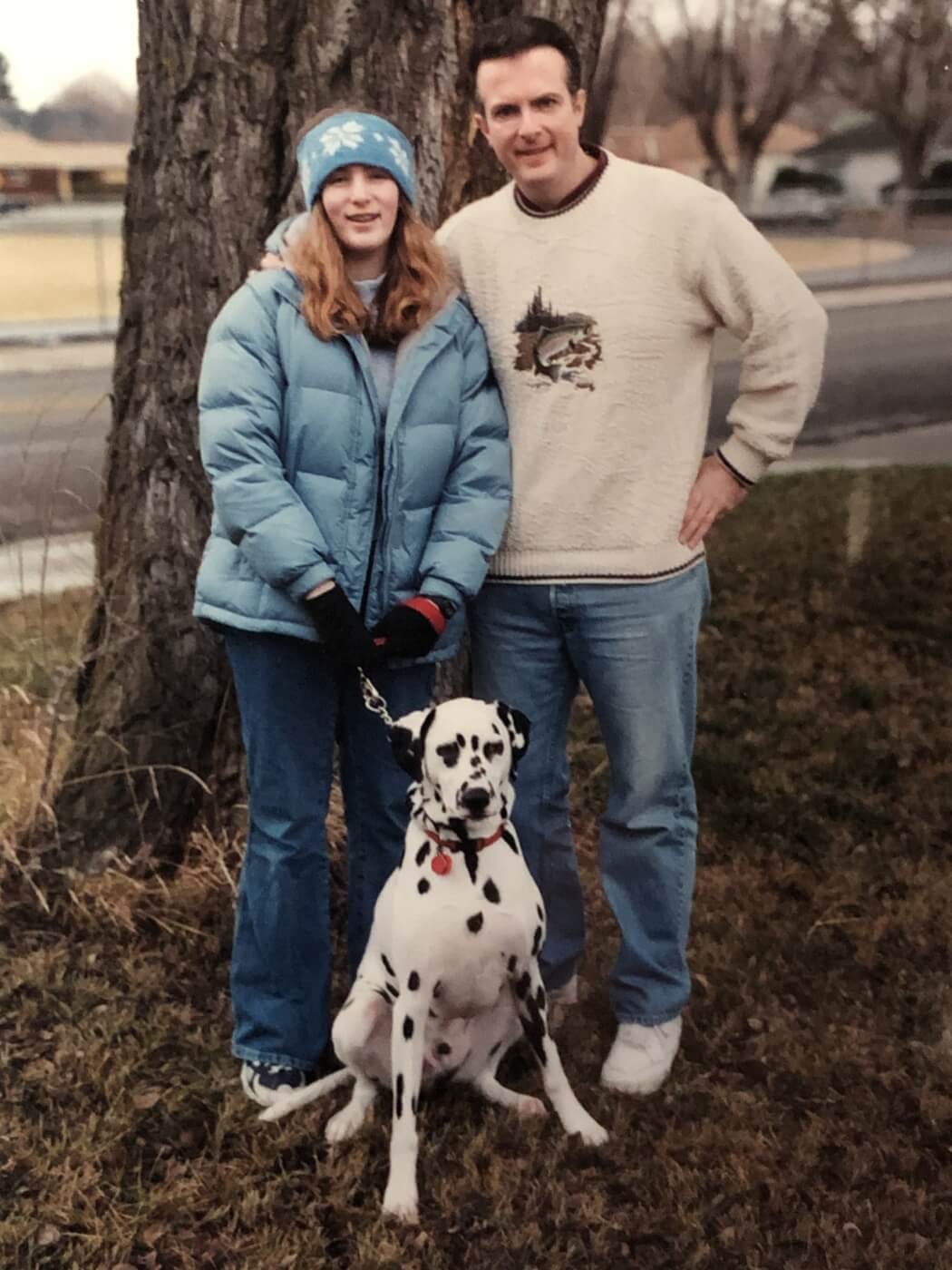
A PETA Foundation staffer whose father bought a Dalmatian from a breeder after the release of 101 Dalmatians now shares her experience as a warning to others: “My dad said that it’s never a good idea to buy a dog from a breeder and that Dalmatians in particular are very energetic dogs who require more attention and patience than people may expect.”
A PETA staffer whose family bought a Dalmatian after the release of 101 Dalmatians now urges everyone to never buy from breeders, pet stores, or anywhere else.
Not only are Dalmatians highly active dogs who need plenty of outlets for their energy every day (including long walks, safe opportunities to run, and playtime), they’re also predisposed to several serious health problems, which can make caring for them more challenging. Around 30% of these dogs are deaf to some extent, and the breed is prone to developing kidney and bladder stones, which are excruciatingly painful and can even kill them. “Purpose breeding” has made these issues more prevalent, as breeders and puppy mills prioritize the appearance of Dalmatians’ spotted coat pattern over their health.
Animal shelters already take in more than 6 million animals each year—they can’t afford another wave of “101 Dalmatians syndrome,” which led to a reported 300% increase in Dalmatian intake in shelters across the country. When shelters are overwhelmed by such a sharp influx of unwanted dogs, many animals have to be euthanized.
Leave the Cruelty to ‘Cruella’
Cruella-like cruelty doesn’t just exist on the big screen—puppy mills that churn out litter after litter of Dalmatians and other breeds confine dogs to cramped, filthy cages and hutches, typically outdoors; deny them adequate veterinary care; and kill or auction off female dogs when they can no longer reproduce.
And every animal sold by a breeder or pet store means one less home for an animal awaiting adoption at a shelter. An estimated 70 million homeless dogs and cats are struggling to survive on the streets each day, so the last thing that people should do is buy “purebreds” (who make up 25% of dogs in shelters).
Help Us Prevent Another Dalmatian Inundation
Dogs are sensitive, living beings with emotions and interests of their own—they’re not toys or trends. We’re hopeful that audiences will finish watching the film wanting to help solve the companion animal overpopulation crisis instead of exacerbating it. One simple way to do that is by refusing to buy animals from breeders, puppy mills, pet stores, or anywhere else. Industries that profit from animals are no better than the de Vil herself.
“I Want You to Change. Wear Vegan.” That’s the message a cow, a goat, an alpaca, and a sheep have for would-be Urban Outfitters shoppers, courtesy of new PETA ads that just went up on bus shelters and kiosks across the city.
Pittsburgh is consistently ranked as a top city for millennials—a major market for Urban Outfitters, Inc. brands (which include Urban Outfitters, Anthropologie, and Free People, with five stores in the city) and one PETA hopes to reach as pandemic restrictions ease and shoppers seek out back-to-“real life” wardrobes.
“Urban Outfitters wants to appeal to progressive young people, but it’s missing the mark by selling bags and shoes made with bits of animals’ stolen skin, fleece, and feathers,” says PETA Executive Vice President Tracy Reiman. “PETA is encouraging kind shoppers to refresh their closets with vegan styles that leave animals in peace.”
The ads are part of PETA’s international campaign demanding that all Urban Outfitters, Inc. brands stop selling leather, cashmere, alpaca, wool, and anything else cruelly obtained from animals.
PETA originally tried to place ads showing insider photos from the fashion industry, in which workers hit, kick, and mutilate gentle sheep for their wool; leave sensitive goats with bloody, gaping wounds at cashmere operations; burn, electroshock, beat, and slaughter cows for leather; and abuse animals in other ways. The images included a still from a PETA investigation into one of Anthropologie’s own alpaca suppliers, which revealed that alpacas spit and vomited in fear from rough shearing—but the city of Pittsburgh refused to place the ads. “We cannot display an animal under duress or being mistreated,” an ad rep explained.
PETA—whose motto reads, in part, that “animals are not ours to wear”—opposes speciesism, a human-supremacist worldview. For more information, please visit PETA.org or follow the group on Twitter, Facebook, or Instagram.
PETA’s ads are on bus shelters and kiosks at the following locations:
Right now, dogs, cats, cows, sheep, and other animals are being horrifically abused in the fashion industry—donate now and your gift will have twice the impact!