
The post PETA Asia Exposé: Chickens Stuffed Into Plastic Bags, Left to Suffocate for Mayo appeared first on PETA.
Feds Ax Funding for Racist Mouse Fight Study of Black Violence After PETA Complaint
Following a brief, vigorous campaign by PETA, the University of Illinois at Chicago (UIC) has notified the group that the National Institute on Minority Health and Health Disparities (NIMHD) pulled funding for a racist study. Experimenters there subjected mice to “episodic aggression”—meaning the animals were forced to fight or one would be attacked by a larger, more aggressive one—purportedly to “mimic … structural violence observed in urban [African American] communities.”.
After uncovering the experiment, PETA contacted NIMHD, its National Advisory Council, White House Domestic Policy Council Director Susan Rice, and the Illinois Legislative Black Caucus and rallied more than 40,000 supporters to demand an end to the insensitive test. PETA pointed out that exposing mice to aggression cannot mimic the real-life experiences of Black Americans, since it ignores the complex historical and socioeconomic factors that have created health disparities in communities of color.
“This mouse study was cruel to animals, racist, and a waste of money,” says PETA Senior Vice President Kathy Guillermo. “We urge the National Institutes of Health to build upon this progress by funding superior, non-animal research to advance human health ethically and equitably.”
In its letter to Rice, PETA pointed to studies showing that the National Institutes of Health (NIH) is less likely to fund or even review proposals by Black researchers, who are more likely to focus on health disparities, prevention, and patient intervention and significantly less likely to experiment on animals than white experimenters are.
PETA is now calling on NIMHD, which is part of NIH, to implement PETA’s Research Modernization Deal, which offers a strategy for phasing out animal testing, which fails to produce treatments for humans 90% of the time. It has received support from the National Medical Association and the National Hispanic Medical Association, which seek to eliminate disparities in health care and collectively represent 100,000 Black and Hispanic physicians across the country.
PETA—whose motto reads, in part, that “animals are not ours to experiment on”—opposes speciesism, a human-supremacist worldview. PETA’s letters to federal officials are available upon request. For more information, please visit PETA.org or follow the group on Twitter, Facebook, or Instagram.
The post Feds Ax Funding for Racist Mouse Fight Study of Black Violence After PETA Complaint appeared first on PETA.
Experimenters Remain in the Dark Ages Despite Technology’s Constant Evolution
The idea of holding a powerful computer in the palm of your hand was almost unimaginable in the 1950s (back when personal computers didn’t even exist). And yet, smart phones are an everyday necessity for many of us today. Thanks to the constant, mold-breaking evolution of technology, current phone models allow us to do everything from streaming live footage of outer space to ordering a vegan burger online.
As technology keeps advancing, experimenters who use animals as test subjects—and government agencies that fund them—are still stuck in the Dark Ages. While many forward-thinking, humane research methods are available, including organs-on-chips, brain organoids, and advanced computer modeling, experimenters are still subjecting monkeys and other animals to painful and invasive experiments that have no relevance to human health. In primate laboratories, experimenters pump experimental drugs into animals’ stomachs, infect monkeys with deadly diseases, take infant monkeys away from their mothers, and much more.
Imagine if a cell phone call failed 95% of the time, like the estimated percentage of new drugs that fail in human trials after testing safe and effective in animals. Or if a smart phone didn’t work at all, like 100% of the HIV vaccines that failed to provide sufficient protection in humans, despite their effectiveness in monkeys. Would we still be pouring multiple millions of dollars into using the same failed methods? Probably not—but this is exactly what experimenters who use monkeys, mice, rats, rabbits, cats, dogs, and others as “models” do, supposedly to study human diseases.
You may be shocked by a side-by-side comparison showing how much phone technology has advanced through the decades—and how little experiments on monkeys have changed:
The 1950s: Rotary Phones Were Welcomed Into Households While Harry Harlow Devised His Infamous Nursery-Rearing Experiments
By the 1950s, bulky rotary phones were common household utilities. To save money, some homes shared a number, known as a “party line,” with another one. At the same time, Harry Harlow began his infamously cruel experiments. He tore infant monkeys away from their mothers and replaced them with cloth “mothers” to induce depression in the young animals. His sadistic experiments left them with debilitating trauma.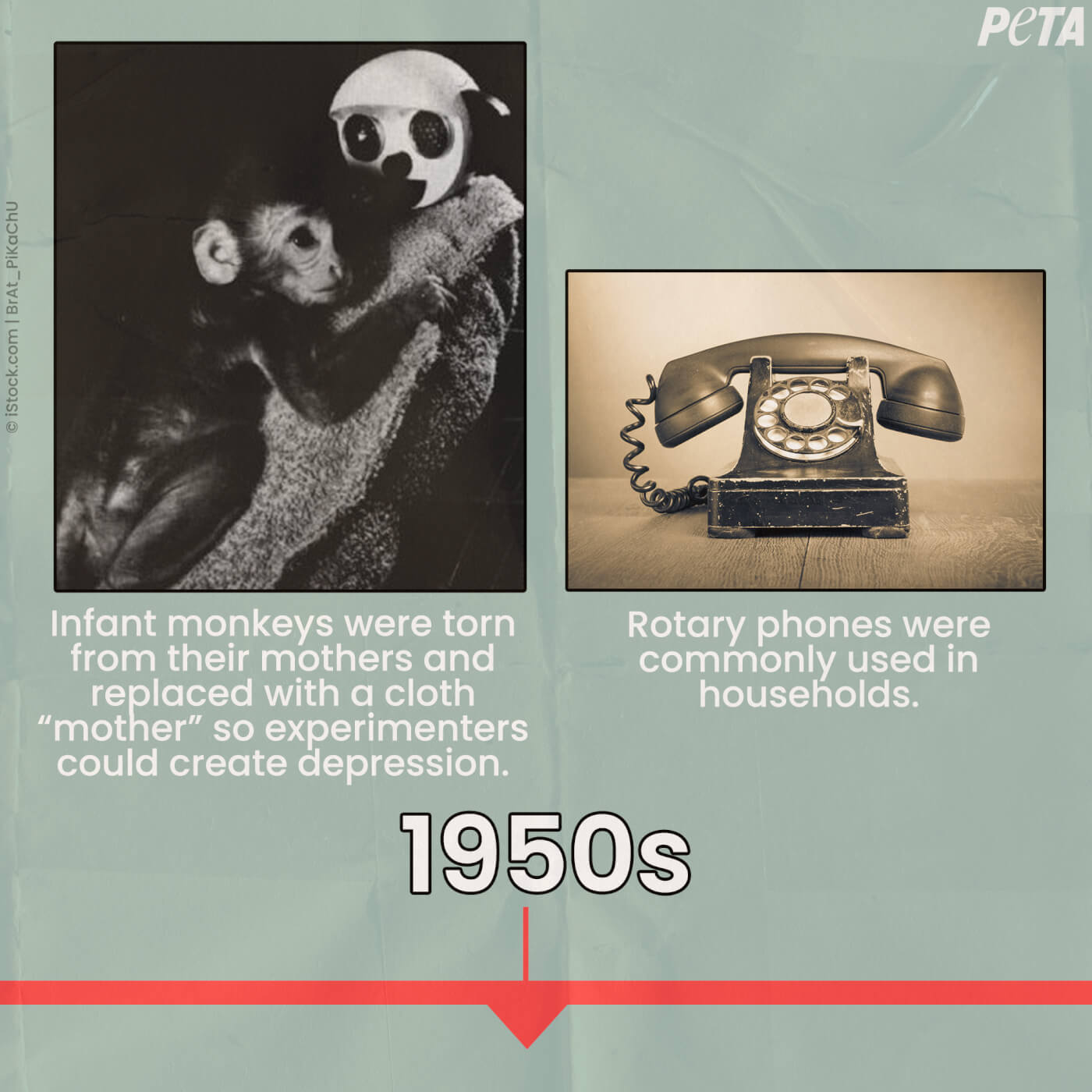
The 1960s: A Sleeker ‘Princess Phone’ Was Released While Experimenters Launched a Monkey Into Space
In 1963, the Princess phone, featuring a more compact design with the ringer inside the phone, was marketed to young women for making convenient calls to friends. Six years later, a monkey named Bonny was launched into space to “test the limits of human endurance in space.” He died within days after returning.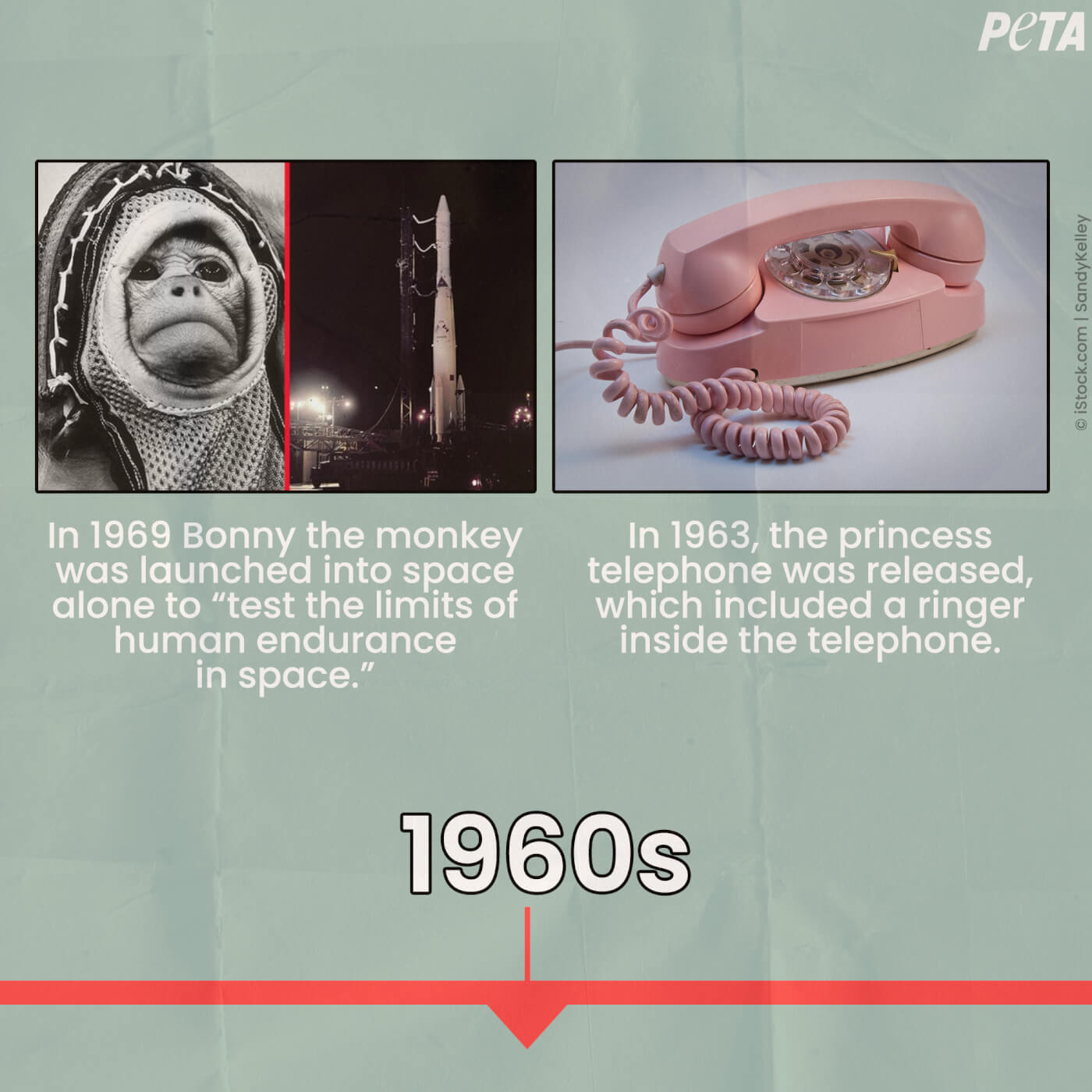
The 1970s: Telephones Were Updated With Buttons Instead of Dials While Experimenters Were Shocking Monkeys in Labs
By the 1970s, the rotary phone was largely replaced by the push-button phone, making it much easier to dial numbers. While phones were becoming streamlined, experimenters were conducting a test in which they restrained a monkey and delivered painful shocks through metal plates under his feet, after repeatedly exposing him to radiation and nerve gas.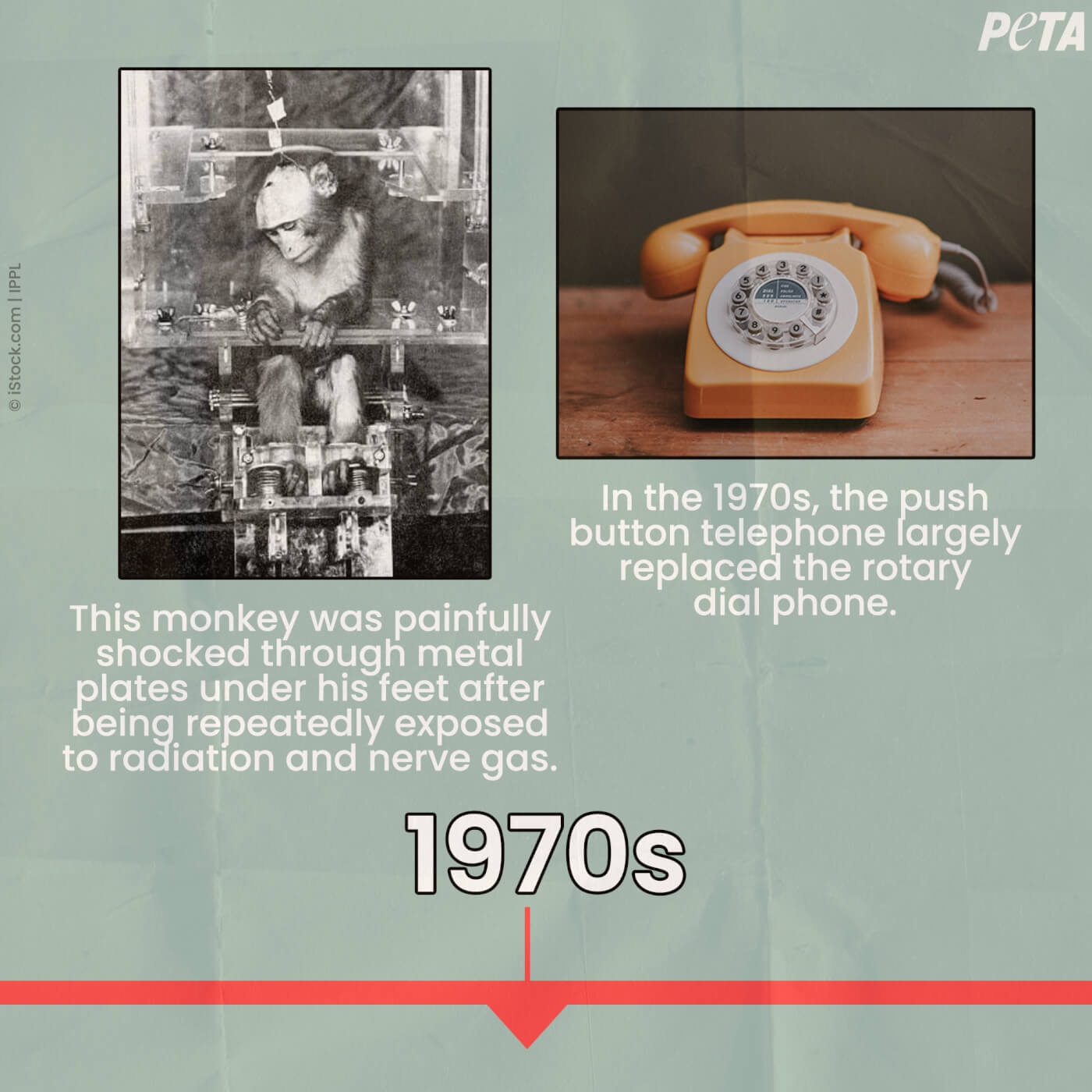
The 1980s: The World Was Introduced to the First Handheld Cell Phone, While Experimenters Were Paralyzing Monkeys
In 1983, the first commercial mobile phone hit the market, changing the way we use phones forever. While society was being introduced to this technological revolution, the Institute for Behavioral Research (IBR) was subjecting monkeys to debilitating surgeries in which experimenters severed their spinal nerves, rendering one or more of their limbs useless. Using electric shocks, food deprivation, and other cruel methods, experimenters forced them to try to regain the use of their impaired limbs to pick up raisins from a tray—or else go without food. PETA launched a shocking investigation into the IBR, revealing severely disabled, injured, distressed, and underfed monkeys living inside desolate cages caked with feces.
PETA’s landmark investigation led to the nation’s first arrest and criminal conviction of an animal experimenter for cruelty to animals, the first confiscation of abused animals from a laboratory, and the first U.S. Supreme Court victory for animals used in experiments. Later, the IBR closed its doors.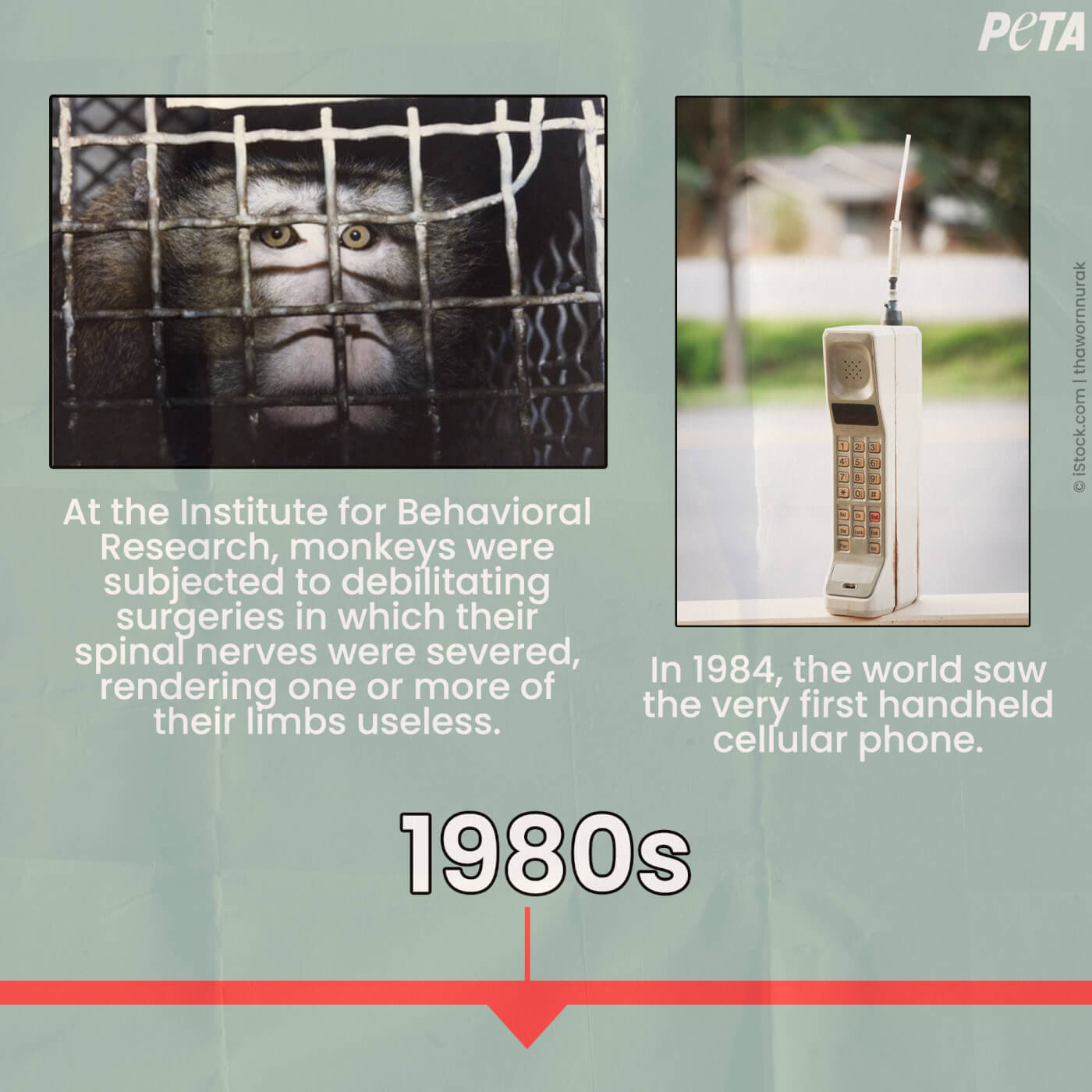
The 1990s: The Cell Phone Gained Popularity While Experimenters Were Restraining Monkeys in Straitjackets
In 1996, the StarTAC mobile phone set off the revolution of flip phones. In the same decade that pocket-sized cell phones were taking off, French, Russian, and U.S. experimenters were restraining monkeys in straitjackets, implanting electrodes into their bodies, and launching them into space.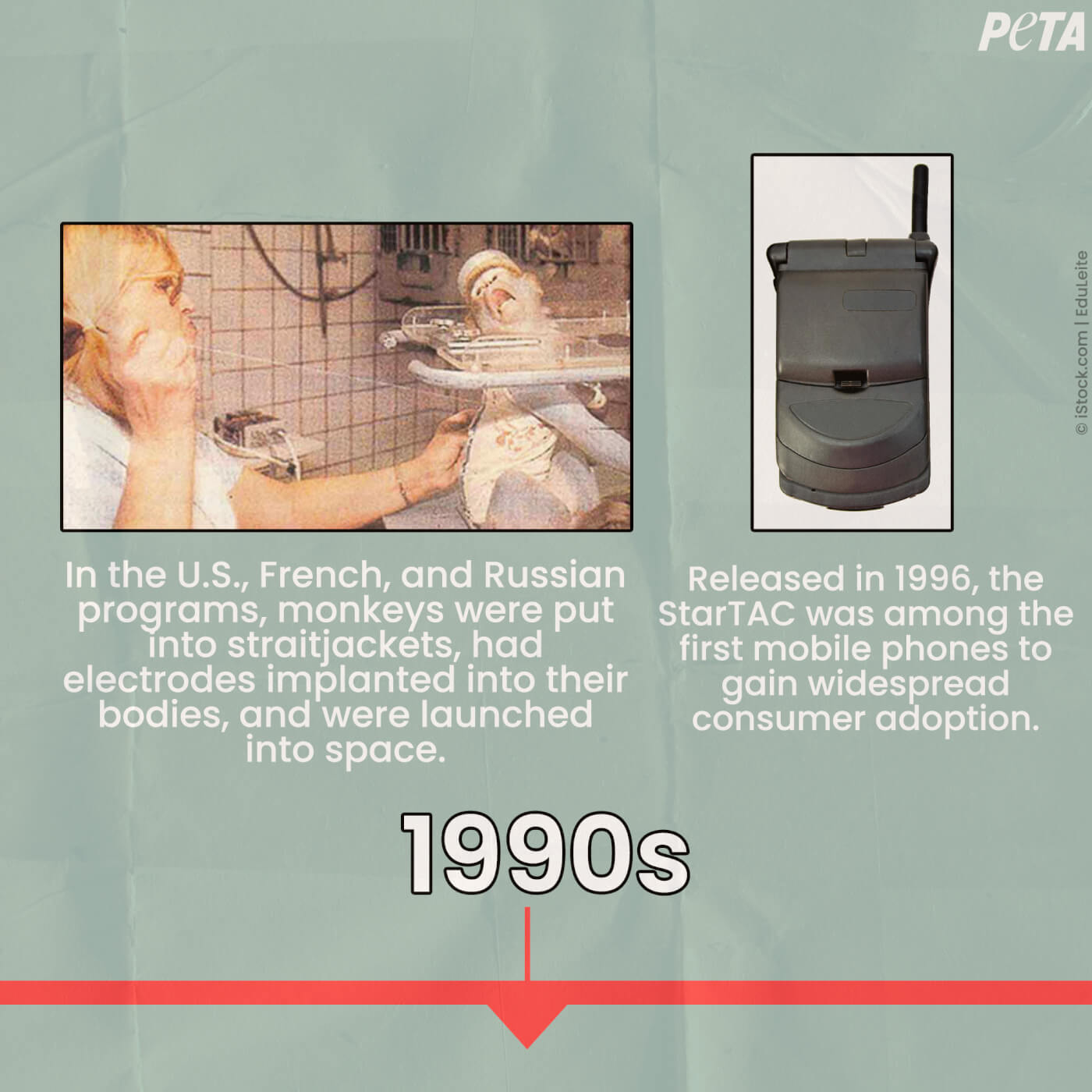
The 2000s: Razr Phone vs. Monkey Skull Experiments
The Razr phone was unveiled in 2004, featuring a thin, sleek design that gave it a trendy appeal. As texting became ubiquitous, the University of Utah was imprisoning monkeys in cages, keeping them thirsty, and drilling holes into their skull.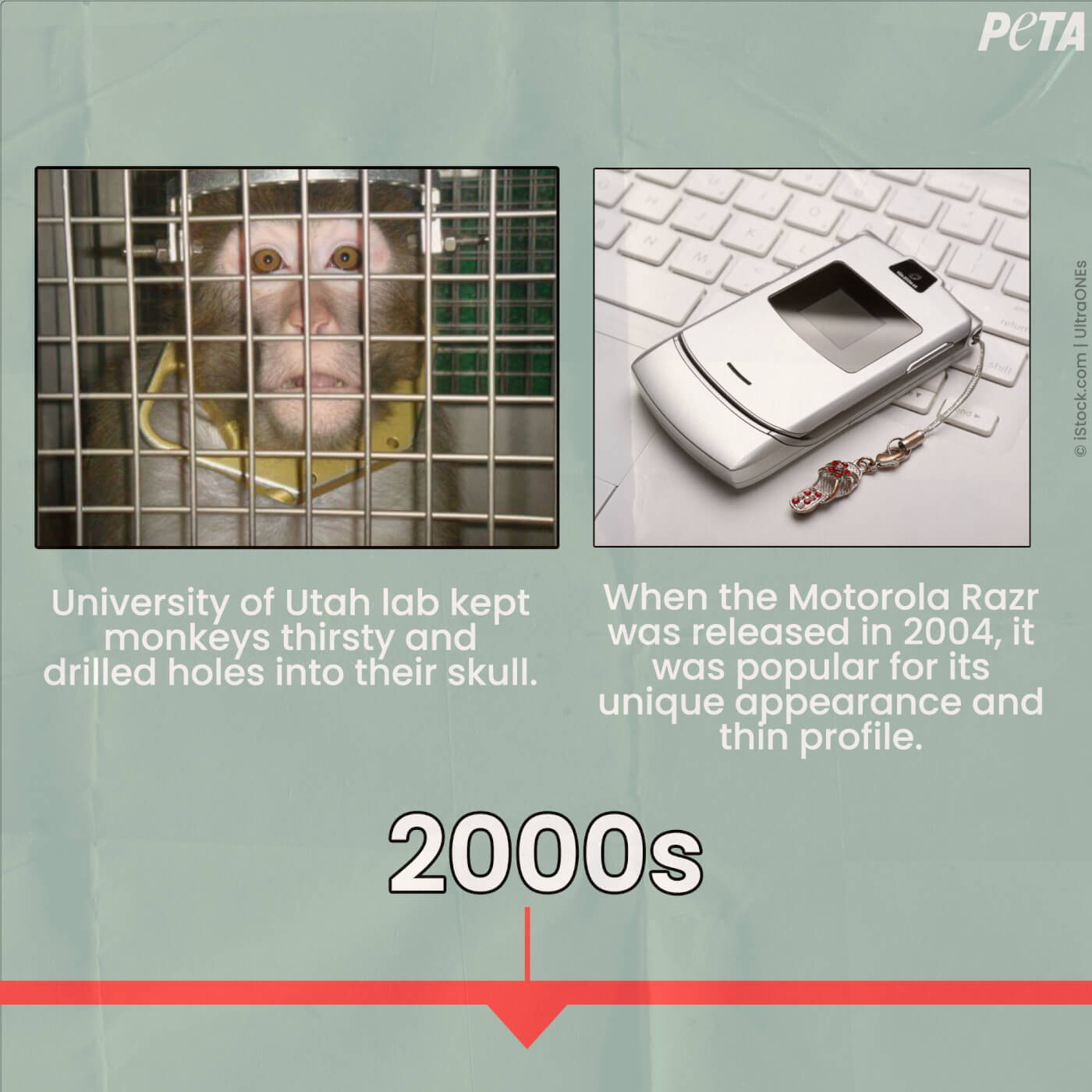
The 2010s: The iPhone 6 Sparked Global Hype While NIH Induced Severe Psychological Trauma in Monkeys
In 2014, Apple released the iPhone 6, introducing a redesign with a better camera, a longer battery life, and more user-friendly features. Meanwhile, the National Institutes of Health (NIH) was forcing monkeys to undergo years of terrifying and often painful experiments to exacerbate their symptoms of mental illness and test the severity of their psychological trauma.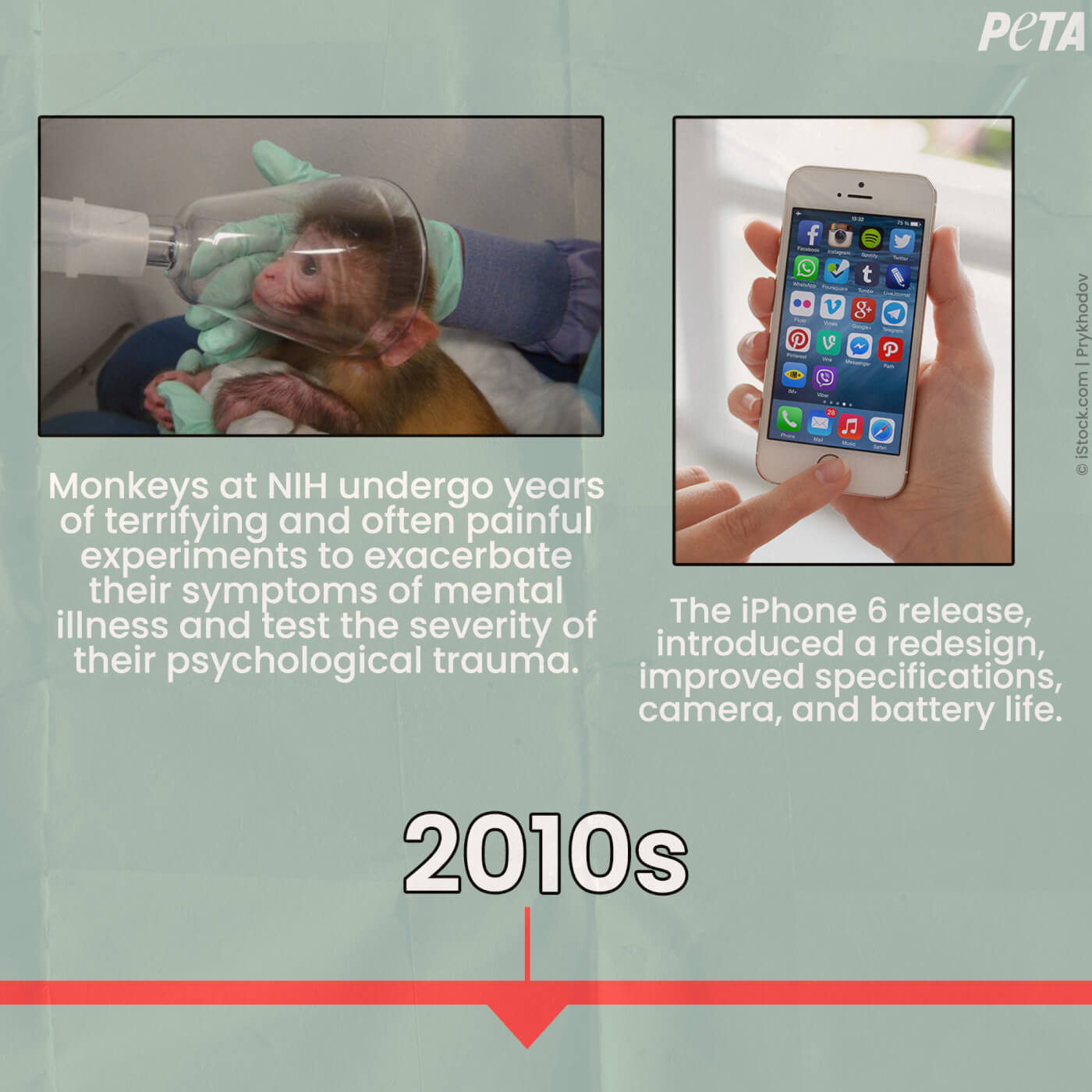
The 2020s: The iPhone 12 Was Released While NIH Continued Its Torment
By 2020, several new models of the iPhone had been released. Still, not much has changed for monkeys in laboratories in the decades following Harlow’s traumatizing tests. Infant monkeys are still taken from their mothers, and government experimenter Elisabeth Murray damages monkeys’ brains and induces trauma by scaring them with realistic-looking plastic spiders and snakes.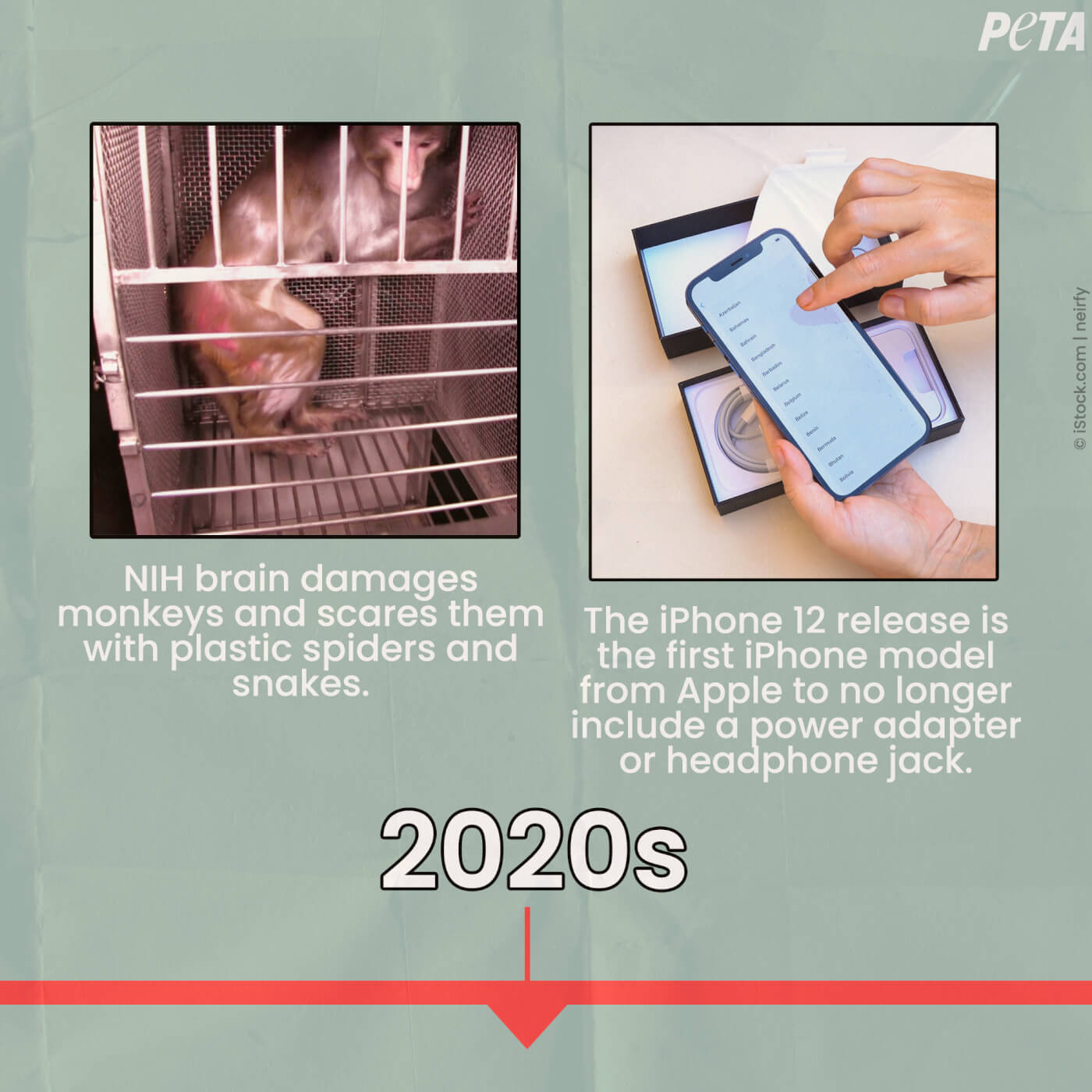
Monkeys are intelligent, social animals—not test subjects. It’s clear that inhumane, archaic methods of testing on animals aren’t working to advance science—and it’s time to adopt a progressive, ethical approach to research. With PETA’s Research Modernization Deal, which maps out a strategy for replacing the use of animals in experiments with human-relevant methods, we can finally help create a kinder and more advanced world.
Support PETA’s Research Modernization Deal
The post Experimenters Remain in the Dark Ages Despite Technology’s Constant Evolution appeared first on PETA.
Fireworks Cancellation Nets Praise From PETA—and a Plea for a Permanent Ban
A box of animal-shaped vegan chocolates from Divine Treasures is on its way from PETA to Hampton Beach Village District Chair Chuck Rage along with a letter thanking him for canceling fireworks shows for two weeks to safeguard the nesting season of the beach’s piping plovers.
PETA’s letter asks Rage to go one step further and make the ban permanent, as fireworks at any time can cause panicked birds to abandon their nests or fly into buildings, wildlife to flee onto roads, and dogs to jump fences and even break through glass doors in order to escape the terrifying noises. Military veterans and other noise-sensitive individuals can also become deeply distressed by the sounds.
“Booms and blasts threaten the well-being of everyone, from piping plovers to those with PTSD,” says PETA President Ingrid Newkirk. “PETA is encouraging local officials to let fireworks fizzle for good and promote fun, animal-friendly festivities that leave the most vulnerable among us in peace.”
PETA—whose motto reads, in part, that “animals are not ours to abuse in any way”—opposes speciesism, a human-supremacist worldview. For more information, please visit PETA.org or follow the group on Twitter, Facebook, or Instagram.
PETA’s letter to Rage follows.
June 15, 2021
Chuck Rage
Hampton Selectman
Hampton Beach Village District
Dear Mr. Rage:
I’m writing on behalf of People for the Ethical Treatment of Animals (PETA) and our more than 6.5 million members and supporters worldwide, including many across New Hampshire, in response to your decision to cancel fireworks on Hampton Beach during the piping plovers’ nesting season. Thank you for protecting vulnerable animals, including humans, by canceling this display. Please, will you make this cancellation permanent to protect all residents of Hampton Beach?
Traditional fireworks sound like an all-out war—not only to those suffering from post-traumatic stress disorder but also to dogs, cats, and wildlife—and their use has devastating consequences. Terrified dogs climb or dig their way out of fenced-in yards as they frantically try to escape the chaos, resulting in increased stray-animal intakes at shelters across the nation, which further strains community resources. Many arrive with bloody paws or broken bones, some are never reunited with their families, and others are doomed to a worse fate.
Fireworks produce plumes of smoke laden with particles that are harmful to the respiratory systems of humans and other animals. Birds caught in or near fireworks displays easily choke on the toxic residue. The California Coastal Commission banned the city of Gualala’s display when, following a 2006 show, seabirds fled their nests, leaving their chicks vulnerable to predators. Most birds cannot see well in the dark, so this type of disruption can lead to injuries if they inadvertently crash into power lines, cars, buildings, trees, or each other. In one case, 5,000 birds died on a New Year’s Eve in Arkansas after a fireworks display caused them to take flight and slam into objects such as houses and cars.
In addition, humans have been injured in fireworks accidents, and the displays can exacerbate asthma and other respiratory problems. Veterans and others suffering from post-traumatic stress disorder are also sensitive to and can be deeply disturbed by the noise of the explosives and the smell of the gunpowder. On average, 180 people go to emergency rooms daily with fireworks-related injuries for an entire month around July 4.
We hope you’ll consider financing other celebratory displays and skip the fireworks this year. Thank you for your time and consideration. We look forward to hearing from you.
Very truly yours,
Ingrid Newkirk
President
The post Fireworks Cancellation Nets Praise From PETA—and a Plea for a Permanent Ban appeared first on PETA.
The Naughty/Nice List: Is Your Charitable Donation Hurting Animals?
The holiday season is a time of giving. But could your generosity inadvertently harm animals? It could if you donate to a charity that funds experiments on them.
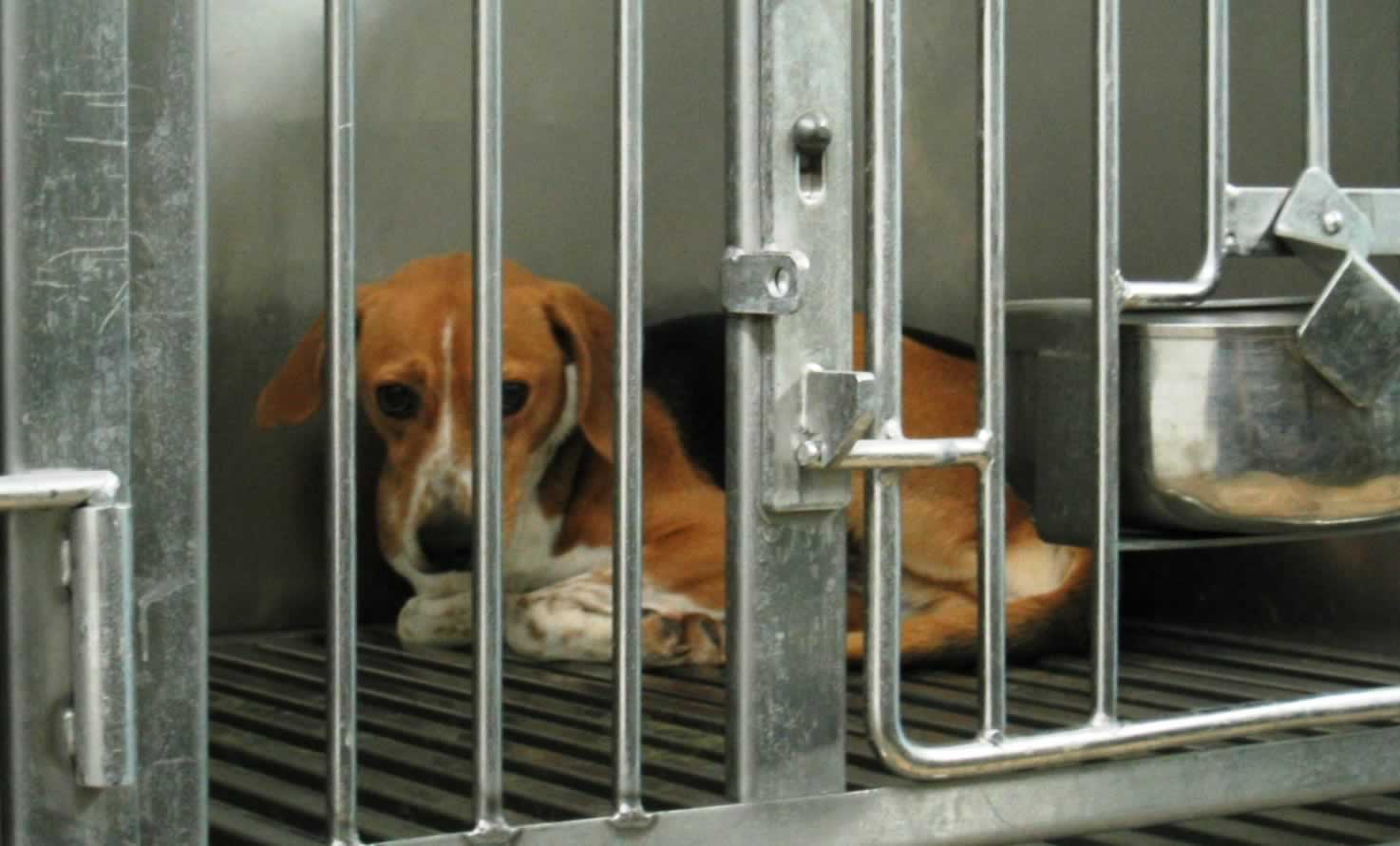
Numerous health charities—including St. Jude Children’s Research Hospital, Susan G. Komen, the March of Dimes, the Muscular Dystrophy Association, and others—have a dirty secret that you won’t see in their infomercials or telethons: They funnel donations toward appallingly cruel and pointless animal experiments.
For instance, experimenters funded by the American Heart Association severed the nerves in dogs’ hearts and forced chickens to breathe concentrated cigarette smoke—even though scientists have known for years that smoking is linked to atherosclerosis. Experimenters funded by the March of Dimes sewed the eyes of newborn kittens shut for a year, then killed them, to show that depriving cats of normal vision alters brain development—already a long-accepted scientific fact.
Earlier this month, the French animal-protection group Animal Testing revealed heartbreaking footage from a laboratory funded by the French charity AFM-Téléthon, in which dogs intentionally bred to suffer from muscular dystrophy had difficulty swallowing, breathing, and walking as their muscles wasted away.
The good news is that many reputable charities—including Easterseals, the Dr. Susan Love Research Foundation, and the Children’s Oncology Group—help people with diseases or disabilities, without harming animals, by funding only modern, high-tech, human-relevant, non-animal research.
To ensure that your holiday donations help both people and animals, we’ve compiled a handy list of health charities to support (and others to avoid). This list is not exhaustive: If you want to support a charity that you don’t see listed here, please contact it directly and ask if it funds animal tests. Be sure to let charities know that you won’t support them as long as they hurt living beings.
HIV/AIDS
Do Test
- Aaron Diamond AIDS Research Center
- amfAR, The Foundation for AIDS Research
- Canadian Foundation for AIDS Research (CANFAR)
- Elizabeth Glaser Pediatric AIDS Foundation
- International AIDS Vaccine Initiative
Don’t Test
- AIDS Action Committee
- AIDS United
- Bebashi
- Gay Men’s Health Crisis
CANCER
Do Test
- Alberta Cancer Foundation
- Alex’s Lemonade Stand Foundation
- American Brain Tumor Association
- American Cancer Society
- American Institute for Cancer Research
- Bear Necessities Pediatric Cancer Foundation
- Breast Cancer Alliance
- Breast Cancer Research Foundation
- Cancer Research Institute
- Children’s Brain Tumor Foundation
- Children’s Cancer Research Fund
- City of Hope
- Colon Cancer Alliance
- The University of Arizona Cancer Center
- University of Colorado Cancer Center
Don’t Test
- American Breast Cancer Foundation (ABCF)
- CancerCare
- Cancer Recovery Foundation International
- Children’s Cancer Association
- Susan Love Research Foundation
- Gateway for Cancer Research
CARDIOVASCULAR DISEASES
Do Test
- American Heart Association
- American Stroke Association
- British Heart Foundation
- Molecular Cardiology Research Institute (Tufts Medical Center)
- Texas Heart Institute
Don’t Test
MENTAL HEALTH
Do Test
- Brain & Behavior Research Foundation
Don’t Test
- Depression and Bipolar Support Alliance
- International Association for Suicide Prevention
- The Trevor Project
NEUROGENERATIVE DISEASES
Do Test
- Alzheimer’s Association
- American Parkinson Disease Association
- BrightFocus Foundation
- Cure Alzheimer’s Fund
- The Michael J. Fox Foundation for Parkinson’s Research
- National Parkinson Foundation
Don’t Test
OBESITY/DIABETES
Do Test
- American Diabetes Association
- Canadian Diabetes Association
- JDRF
- Joslin Diabetes Center
- William Sansum Diabetes Center
Don’t Test
At this time, we’re not aware of any reputable charities in this category that don’t test on animals.
The post The Naughty/Nice List: Is Your Charitable Donation Hurting Animals? appeared first on PETA.