
Fireworks Shortage Presents the Perfect Opportunity for Change

In the era of COVID-19, “shortage” is becoming a familiar word. But unlike the absence of toilet paper, cleaning supplies, and flour, the fireworks shortage could prove beneficial.

In its most recent Fireworks Annual Report, the Consumer Products Safety Commission estimated that in 2019, U.S. hospital emergency rooms treated 10,000 patients for fireworks-related injuries. The agency received reports of at least 12 fireworks-related deaths but points out that the actual number is likely higher.

In addition, the National Fire Protection Association found that pyrotechnics start an average of almost 20,000 fires every year, causing more than $100 million in property damage. And insurance often won’t pick up the tab. Sadly, these explosives also cause thousands of wildfires every year with devastating consequences for forests and the animals in them. And with current drought conditions in many parts of the country, wildfires this year could be especially destructive.

Wildfire

Fires aren’t the only threat posed to wildlife by pyrotechnics. In areas where fireworks have been set off, surfaces and groundwater frequently become contaminated with perchlorate—a carcinogen common in explosives. Animals can also ingest or be injured by the unexploded shells, pieces of plastic, and other debris left behind.

And during loud displays, startled deer and other animals frequently run into roadways and birds flee their nests. After one fireworks show in Arkansas, the bodies of about 5,000 red-winged blackbirds began raining down from the sky. The birds had panicked and taken flight but, because of their poor night vision, had crashed into houses, signs, and other obstacles, causing blunt-force trauma and death.

On New Year’s Eve last year, people set off fireworks in Rome, Italy, despite the city’s ban, resulting in hundreds of dead birds covering the city streets. The International Organization for Animal Protection surmised that in addition to dying in collisions, another cause of death was heart attacks brought on by fear. Other birds have died after choking on the thick plumes of chemical-laden smoke.

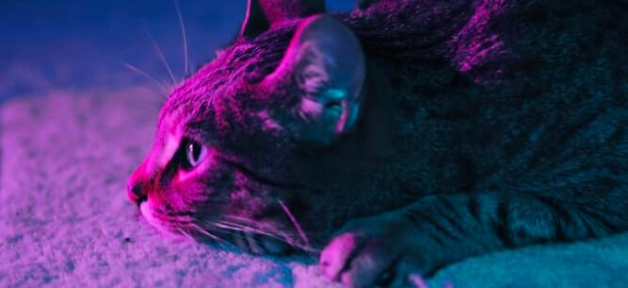
Bombs bursting in air can be upsetting to veterans, small children, and anyone else with a sensitivity to loud sounds—but they are often deadly to dogs and cats, whose hearing is more sensitive than ours.

Animal shelters have found that following New Year’s Eve and the Fourth of July, they receive record numbers of reports from guardians whose animals have jumped fences, torn through screen doors, or leapt through windows in an attempt to escape the noise. Many never make it back home. The problem has become so pervasive that last July, animal rescue organizations in Los Angeles set up microchip-scanning stations throughout the city to which residents could take wandering animals in hopes of reuniting them with their families.

Black dog lays on floral purple and blue bed

But there is an easy solution. And we don’t have to give up our celebrations—or even drastically alter them. This year’s scarcity of fireworks and skyrocketing prices present the perfect opportunity for cities to try out cool laser light shows, which are safer, more eco-friendly, and more humane. They’re also more economical, as municipalities can use the same lights year after year to create different dazzling displays. Lasers can mimic traditional fireworks as well as any other image imaginable and can even be choreographed with fountains and music.

And there’s no shortage of options for safe celebrations at home, either. Parenting suggests confetti poppers, glow-in-the-dark bubbles, exploding foam, glow sticks, “fancy sparklers” made from glittery ribbons, and “firecracker goop” made out of Pop Rocks.

We don’t need actual rockets to celebrate Independence Day any more than we need actual ghosts to enjoy Halloween. When one simple change can protect the environment and save countless lives, isn’t it worth a try?
The post Fireworks Shortage Presents the Perfect Opportunity for Change appeared first on PETA.

Urgent: PETA Warns That Dogs May Die in Extreme Heat Wave in Idaho—Vital Tips Here

This weekend’s scorching temperatures—expected to reach the 90s in areas of Idaho including Boise, Idaho Falls, Pocatello, and Twin Falls—will put dogs at high risk of heat prostration and death, so PETA is issuing an urgent warning to anyone with a dog. Please be sure to do the following:

  • Touch the pavement to ensure that it won’t burn dogs’ foot pads.
  • Be alert to a long, curled-up tongue and heavy panting, as dogs cannot sweat as humans can and heat builds up inside their bodies.
  • Walk only in the shade or on earth or grass, and never leave animals outdoors in extreme heat or inside vehicles.

This month, PETA fieldworkers discovered the body of a dog who had died after being left chained up in the hot sun, and similar reports nationwide are starting to roll in. Recently, a law-enforcement officer mistakenly left his patrol car with a dog inside it, and the K-9 succumbed to heat prostration and died. Last year, more than 31 dogs were reported dead from heat-related causes. (Figures are far likely higher, as most heat-related deaths go unreported.)

Anyone who leaves animals outside to suffer in severe weather may be prosecuted for cruelty.

The post Urgent: PETA Warns That Dogs May Die in Extreme Heat Wave in Idaho—Vital Tips Here appeared first on PETA.

PETA to ‘Welcome’ Wienermobile

PETA supporters will gather to give the Oscar Mayer Wienermobile a killer welcome when it stops in Fishers on Sunday. They’ll be urging passersby to practice kindness to pigs—and avoid the risk of cancer that’s been linked to eating hot dogs—by skipping the meaty wieners and trying tasty veggie dogs made by Beyond Meat, Field Roast, Lightlife, Tofurky, Nathan’s Famous Hot Dogs, and others.

When:      Sunday, June 27, 3 p.m.

Where:     13559 Alston Dr. (near the intersection with Cosel Way)

“Who would want to be an Oscar Mayer Wiener if they realized that they’re made with sensitive pigs’ snouts, spleens, and other unsavory body parts?” asks PETA Executive Vice President Tracy Reiman. “PETA will be encouraging families to steer clear of the Wienermobile and flee from the franks linked to cancer, diabetes, and obesity.”

PETA—whose motto reads, in part, that “animals are not ours to eat”—opposes speciesism, a human-supremacist worldview. For more information, please visit PETA.org or follow the group on Twitter, Facebook, or Instagram.

The post PETA to ‘Welcome’ Wienermobile appeared first on PETA.

PETA Statement on Animal Welfare Violations at Toxikon Corporation

PETA Vice President Dr. Alka Chandna’s statement regarding a just-obtained federal document indicating a critical animal welfare violation at Toxikon Corporation in Bedford, Massachusetts:

Force-feeding potentially poisonous chemicals to vulnerable dogs, monkeys, rabbits, and other animals in painful and deadly tests is business as usual for the contract killers at Bedford-based Toxikon Corporation, but incompetence and a culture of disregard add to the animals’ suffering. According to a just-posted federal inspection report obtained by PETA, experimenters failed to notify veterinarians that a rabbit was in serious decline and had experienced a 27% loss of bodyweight. The animal was found trapped in an e-collar, which resulted in “a laceration and swelling of the muzzle … causing narrowing of the animal’s airway leading to respiratory distress.”

Toxikon has a history of serious animal welfare violations, and federal reports document no fewer than 10 violations since 2017. A rabbit sustained a spinal fracture because of improper handling and had to be killed, an animal died while being anesthetized because an experimenter failed to open a valve, and a dog died unattended on a surgical table when experimenters failed to notify veterinarians of his elevated respiratory rate. The tens of thousands of animals experimented on and killed every year in Toxikon’s laboratories feel pain and value their lives just as much as any of the company’s executives—so Toxikon would do well to modernize its testing program by leaving archaic and cruel animal tests behind and using only sophisticated, human-relevant testing methods.

The post PETA Statement on Animal Welfare Violations at Toxikon Corporation appeared first on PETA.

Ban the Bang! PETA Blasts Anti-Fireworks Message to Mayor

“Fireworks: Your Fun = Their Nightmare.” That’s the message PETA—and the group’s seal mascot—will send to Mayor Todd Gloria’s office on Tuesday in a push to scrap a fireworks display set for La Jolla, right next to a sea lion birthing area.

When:      Tuesday, June 29, 12 noon

Where:     Mayor Gloria’s office, at the intersection of C St. and 2nd Ave.

“These war-like booms could panic mother sea lions, leading them to abandon their newborn pups,” says PETA Vice President Colleen O’Brien. “PETA is asking Mayor Gloria to make this holiday safe and enjoyable for all with a drone display, a light show, or another option that respects vulnerable wildlife.”

PETA—whose motto reads, in part, that “animals are not ours to abuse in any way”—opposes speciesism, a human-supremacist worldview. For more information, please visit PETA.org or follow the group on Twitter, Facebook, or Instagram.

The post Ban the Bang! PETA Blasts Anti-Fireworks Message to Mayor appeared first on PETA.