This week’s high temperatures—expected to reach the 90s today in Baltimore and Washington—will put dogs at high risk of enduring heat prostration and dying, so PETA is issuing an urgent warning to anyone with a dog. Please be sure to do the following:
Touch the pavement to ensure that it won’t burn dogs’ foot pads.
Be alert to a long, curled-up tongue and heavy panting, as dogs cannot sweat as humans can and heat builds up inside their bodies.
Walk only in the shade or on earth or grass, and never leave animals outdoors in extreme heat or inside vehicles.
This month, PETA fieldworkers discovered the body of a dog who had died after being left chained up in the hot sun, and similar reports nationwide are starting to roll in. Recently, a law-enforcement officer mistakenly left his patrol car with a dog inside it, and the K-9 succumbed to heat prostration and died. Last year, more than 31 dogs were reported dead from heat-related causes. (Figures are far likely higher, as most heat-related deaths go unreported.)
PETA also urges everyone to support the Hot Cars Act of 2021, which would require automakers to install technology in vehicles to detect the presence of a child or an animal and alert drivers when someone is in the backseat.
Anyone who leaves animals outside to suffer in severe weather may be prosecuted for cruelty.
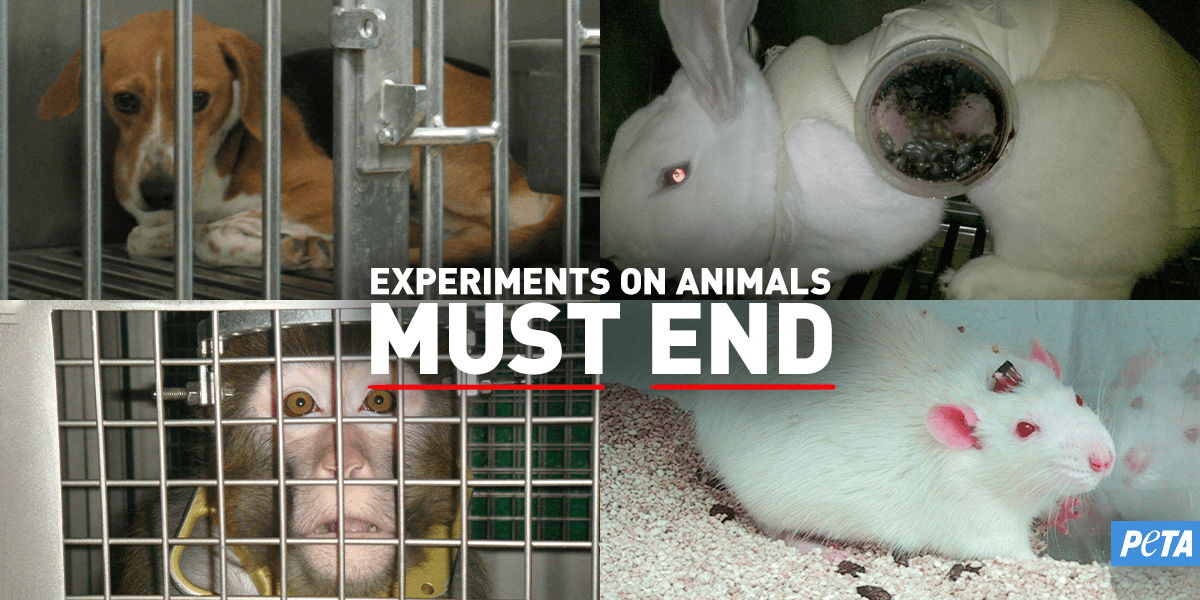
With a well-oiled machine like PETA’s global team, it’s easy to see why we’ve achieved so many successes in the scientific community. Our work to get animals out of laboratories—where experimenters force them into tests in which they nearly drown, take babies from their mothers, drip harmful chemicals into their eyes, and much more—continues, but that doesn’t mean we can’t celebrate our part in achieving milestones that have spared countless lives.
We’ve funded forward-thinking, humane testing methods that push the boundaries of scientific research. We proposed a Research Modernization Deal to replace the use of animals in labs with human-relevant methods. PETA’s science team gets to see these momentous victories firsthand—and for some, certain triumphs stand out. Here’s what PETA scientists have to say about their favorite victories for animals in laboratories:
“When PETA carried out an undercover investigation into a contract testing facility misleadingly called Professional Laboratory and Research Services (PLRS), I prepared a formal complaint summarizing the company’s flagrant violations of animal welfare laws, which we submitted to federal authorities. Our investigator documented that the animals imprisoned in the North Carolina laboratory were kept in filthy conditions. Workers kicked and dragged dogs, threw and slammed cats into cages while yelling at them, and lifted puppies violently by their throats. They sprayed animals with a corrosive bleach solution that burned their skin and irritated their eyes. Raw, open sores covered some dogs, who were forced to sit and lie in their own urine—and the animals were denied veterinary care. As a result of our investigation and our complaint, PLRS was shut down and the nearly 200 dogs and more than 50 cats at the facility were adopted by families who could give them the love and comfort that they so richly deserved.
Another success came after a PETA investigation revealed that vulnerable monkeys were kept in abysmal conditions and suffered from violent mistreatment at the hands of the world’s largest contract testing company, Covance, in its facility outside Washington, D.C. When the company planned to open a new laboratory in Arizona, we jumped into action, mobilizing local activists and securing the support of experts and others—including Sir Paul McCartney. The opposition would have prevented Covance from getting its property rezoned, and a public hearing would have shut the plans down. It was awful when we learned that the company had covertly purchased land that did not require this permission—and it cut the ribbon on its new building. Less than a year later, however, Covance was forced to shut down this new Arizona facilitybecause it didn’t have enough customers, thanks to a shift away from experimenting on animals in favor of non-animal methods.”
—Dr. Alka Chandna, Vice President, Laboratory Investigations Department
“I’m Taiwanese, so I get excited when I can use my science training to persuade the government and other animal-using/abusing entities in Taiwan to ditch cruel experiments on animals. The Taiwan Food and Drug Administration’s groundbreaking decision to remove all experiments on animals from a regulation covering food and drinks with anti-fatigue claims sets a precedent in Asia. It’s rewarding to know that countless animals are being saved by this regulatory change, and we’ll use it to build momentum in pushing the health-food industry and other regulatory agencies in Asia to follow suit.”
—Dr. Frances Cheng, Senior Science Adviser, International Laboratory Methods
“I was grateful to work with PETA to end a series of horrific experiments being conducted at the National Institutes of Health involving baby monkeys. These experimenters deliberately bred baby monkeys to be susceptible to depression, removed them from their mothers, and subjected them to a lifetime of terror. The monkeys were deliberately traumatized, forced to become addicted to alcohol, and in some cases put through invasive brain surgeries. PETA worked with numerous scientists, animal welfare experts, and members of Congress to end these barbaric and useless experiments.”
—Dr. Katherine Roe, Senior Research Associate, Laboratory Investigations Department
“During my time at PETA, I’ve felt fortunate to have the opportunity to do so much for animals used and abused in laboratories. One set of victories that’s close to my heart involves our campaign to end the use of the forced swim test. When I was a graduate student studying neuroscience, even the professors who experimented on animals made fun of the scientific uselessness of this test. And it is so obviously cruel. So far, 16 institutions—including most of the top pharmaceutical companies in the world—have banned the test after hearing from PETA.
Another case that I find compelling is PETA’s 1984 release of Unnecessary Fuss, a film that uses footage taken by University of Pennsylvania experimenters in which they subjected primates to horrific head injuries and then mocked them. Witnessing the callousness of these “scientists” and their treatment of the monkeys would turn almost anyone into an animal rights activist. As a result of PETA’s exposé, the government cut off funding to this lab.”
—Dr. Emily Trunnell, Research Associate, Laboratory Investigations Department
“In 2020, PETA was approached by engineers from the Bolivian Catholic University in La Paz who had developed an automated ventilator to treat severe cases of COVID-19. They wanted to test the ventilator without using animals, so PETA scientists recommended a human simulator containing an artificial lung. This spared pigs being experimented upon, and the engineers were able to show that the ventilator was functional and safe for human patients—without harming any animals.”
—Dr. Ingrid Taylor, Research Associate, Laboratory Investigations Department
Support PETA Scientists’ Hard Work
Such victories wouldn’t be possible without the dedication of our entire team. One way you can support their hard work to replace the use of animals with ethical, animal-friendly research is by asking your legislators to adopt PETA’s Research Modernization Deal!
This week’s scorching temperatures—expected to reach the 90s in Boston—will put dogs at high risk of enduring heat prostration and dying, so PETA is issuing an urgent warning to anyone with a dog. Please be sure to do the following:
Touch the pavement to ensure that it won’t burn dogs’ foot pads.
Be alert to a long, curled-up tongue and heavy panting, as dogs cannot sweat as humans can and heat builds up inside their bodies.
Walk only in the shade or on earth or grass, and never leave animals outdoors in extreme heat or inside vehicles.
This month, PETA fieldworkers discovered the body of a dog who had died after being left chained up in the hot sun, and similar reports nationwide are starting to roll in. Recently, a law-enforcement officer mistakenly left his patrol car with a dog inside it, and the K-9 succumbed to heat prostration and died. Last year, more than 31 dogs were reported dead from heat-related causes. (Figures are far likely higher, as most heat-related deaths go unreported.)
PETA also urges everyone to support the Hot Cars Act of 2021, which would require automakers to install technology in vehicles to detect the presence of a child or an animal and alert drivers when someone is in the backseat.
Anyone who leaves animals outside to suffer in severe weather may be prosecuted for cruelty.
Protect dogs, rabbits, sheep, and other animals from the fashion industry. Until June 30, every gift will be TRIPLED, up to $250,000. Don’t miss out—give now!
Barbecue is a crowd-pleasing summer staple, but there’s no reason why any animal should die for you to enjoy it. Plenty of restaurants across the country are serving vegan barbecue favorites that leave pigs, cows, chickens, and all other animals off your plate. Creative dishes from these spots include “ribs” made from seitan, jackfruit “pulled pork,” and smoked “chicken”—plus all the fixin’s, too.
It’s hard to choose just one item from Boss ChickNBeer’s vegan menu—so why not try a few? The Vegan Chili Dawg is smoky tofu planks, three-bean ancho chili, melted vegan cheese, and green onion garnish on a pretzel dog bun. Order yours with a side of vegan mac topped with tempura fried cauliflower.
The Big Daddy Special at Kale My Name features two grilled Beyond Sausages in a bun with grilled onions, relish, mustard, and a side of fries. Other specialties here include burgers, cauliflower wings, and fried mac and cheese balls.
This all-vegan restaurant has an eclectic menu, including a BBQ sandwich topped with crispy tempura onions and homemade blue cheese. While this one’s a special, you can find the BBQ Burger, BBQ Beef Sandwich, and BBQ Chicken Sandwich on the menu year-round.
While Southern Fried Vegan is based in the San Diego area, you can sample its food at pop-ups across the country. Find out when it’ll be near you by following it on Instagram:
Burgers, fried “chicken,” and even Southern-style breakfast options are on the menu at this soul-food spot in Nashville.
Vegan Mob (Oakland, San Francisco, and San Jose, California)
Vegan Mob has barbecue classics like “brisket,” “links,” “rib tips,” and fried “shrimp,” served alongside vegan mac and cheese and smoky collard greens.
You can always find a satisfying burger at vegan chain Veggie Grill, but this summer, you can also pick up the Summertime Plant-Based BBQ Kit complete with all the classics.
Owner Brad Taylor started BBQ4Life as a food truck. It has since expanded to a brick-and-mortar location, from which it serves vegan barbecue prepared separately from its nonvegan items.
Vegan options abound on this menu, and they’re clearly labeled, so they’re easy for you to find. Try the oyster mushroom “pulled pork,” and finish with a mini raspberry cheesecake for dessert.
The BBQ Tofu at Brothers BBQ is flash-fried, then finished on the grill for a great smoky taste.
Please note: Menu offerings may vary, so check with the restaurant to find the most up-to-date information. Going vegan means not only getting to enjoy more delicious vegan barbecue but also helping to save the lives of nearly 200 animals per year. Plus, you’ll reduce your carbon footprint and your chances of developing various illnesses. Learn more: